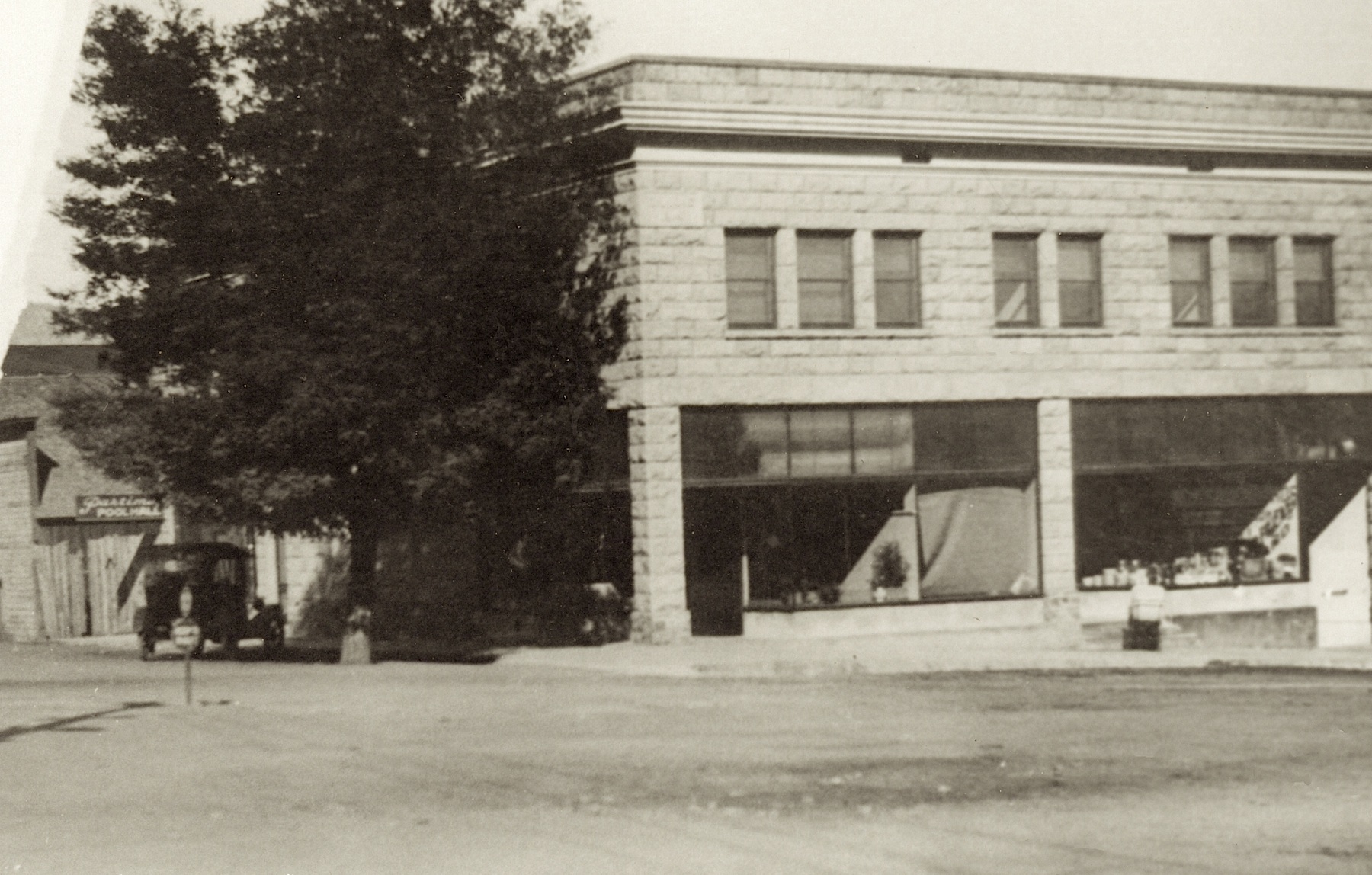
T.H. Long Building aka The Telephone Building. Courtesy of Phil Long
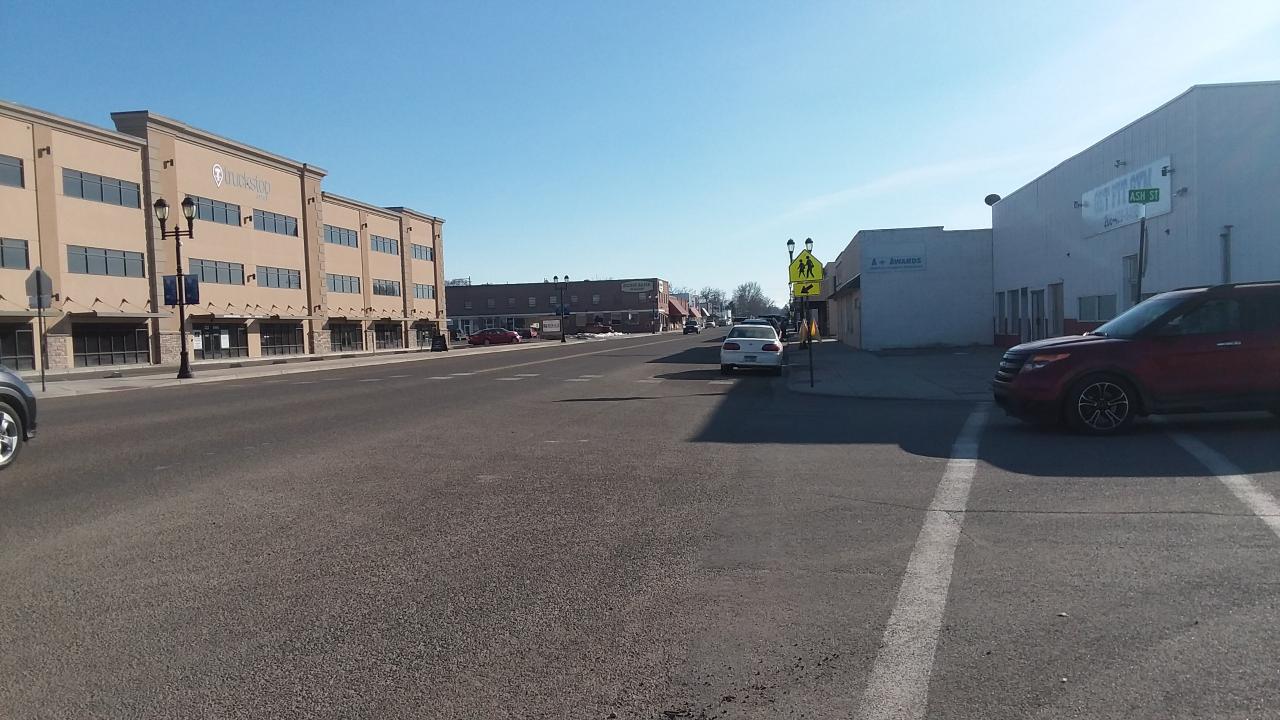
December 1, 1928 was interesting day in Susanville, especially at the intersection of Susanville and North Gay Streets. On this date, Bank of America took over the Lassen Industrial Bank. Safeway opened its store in the telephone building. Safeway would move several times, first to the Del Mar building on the 600 block of Main Street. In 1939, Safeway built its first store at 60 South Roop, known today as LMUD. In 1963, Safeway relocated to the 1600 block of Main Street, now the current home of Grocery Outlet. Then in the early 1990s to its current location.
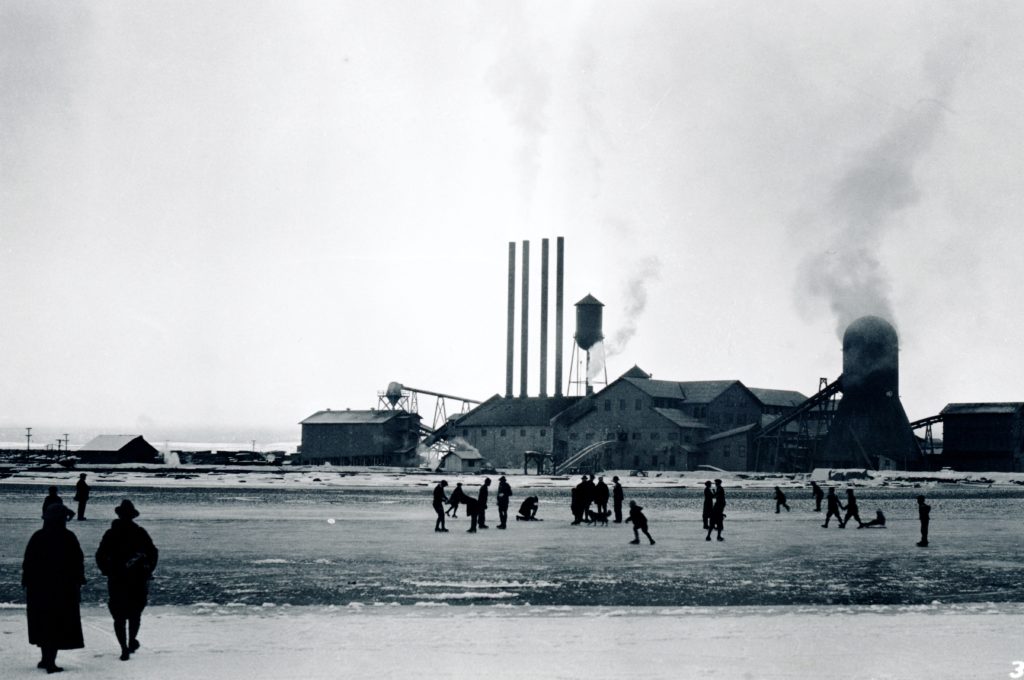
Ice skating on the Fruit Growers millpond, 1921. Courtesy of Ed Standard
Way back in the day, and I am talking over a century ago, the two most popular spots to go ice-skating was Leavitt Lake and Honey Lake. There were on times, in Susanville, where the current Memorial Park is located, it would flood naturally, and with winter conditions freeze and the locals took that opportunity to ice skate there.
When the Fruit Growers Supply Company constructed their mill in Susanville it came with the pre-requisite millpond. In the winter, when the millpond froze, some took advantage to ice skate on the pond. It all seemed relatively harmless. On Monday evening, January 23, 1922, about twenty-five people were skating on the pond. Percy N. Wemple, age 11, ventured too far out, where there was still open water and fell in. O.O. Winn without hesitation jumped into save Wemple. However, Winn struggled to get out. F.L. Shank came to the rescue and both Winn and Wemple were pulled out. They were both rushed to Riverside Hospital. The shock of the cold water, was too great for young Wemple and he could not be revived. After this incident, Fruit Growers prohibited skating or any other activity on the millpond.
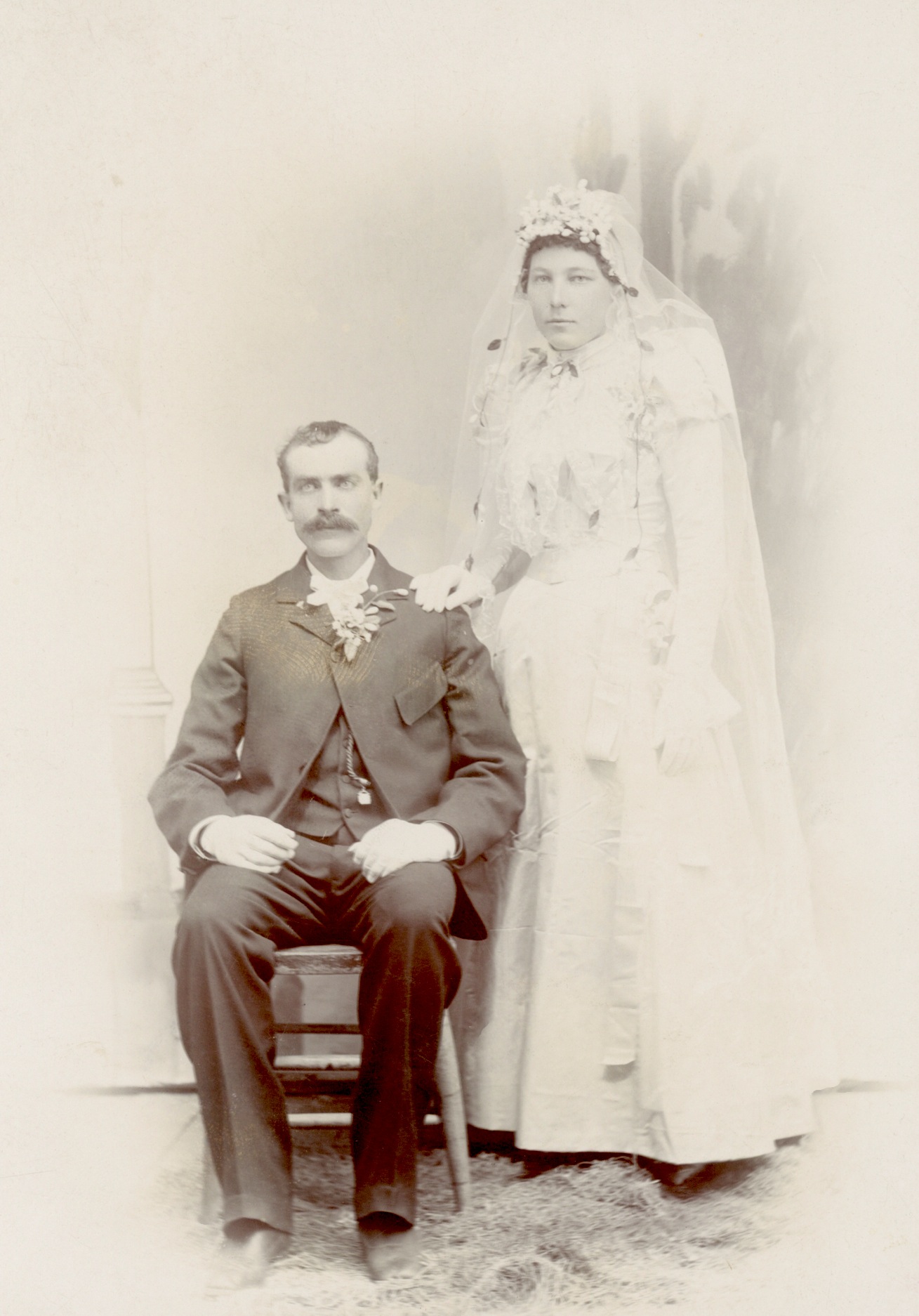
While compiling an article on the naming of Chappuis Lane, for an illustration I scanned the wedding photograph of Ed Chappuis and Nancy Johnston. Then, it dawned on me, that many wedding portraits of the 1890s and early 1900s, the man is always seated and woman is always standing. To me it seems rather peculiar and may be there is story about the custom that I am not aware of.
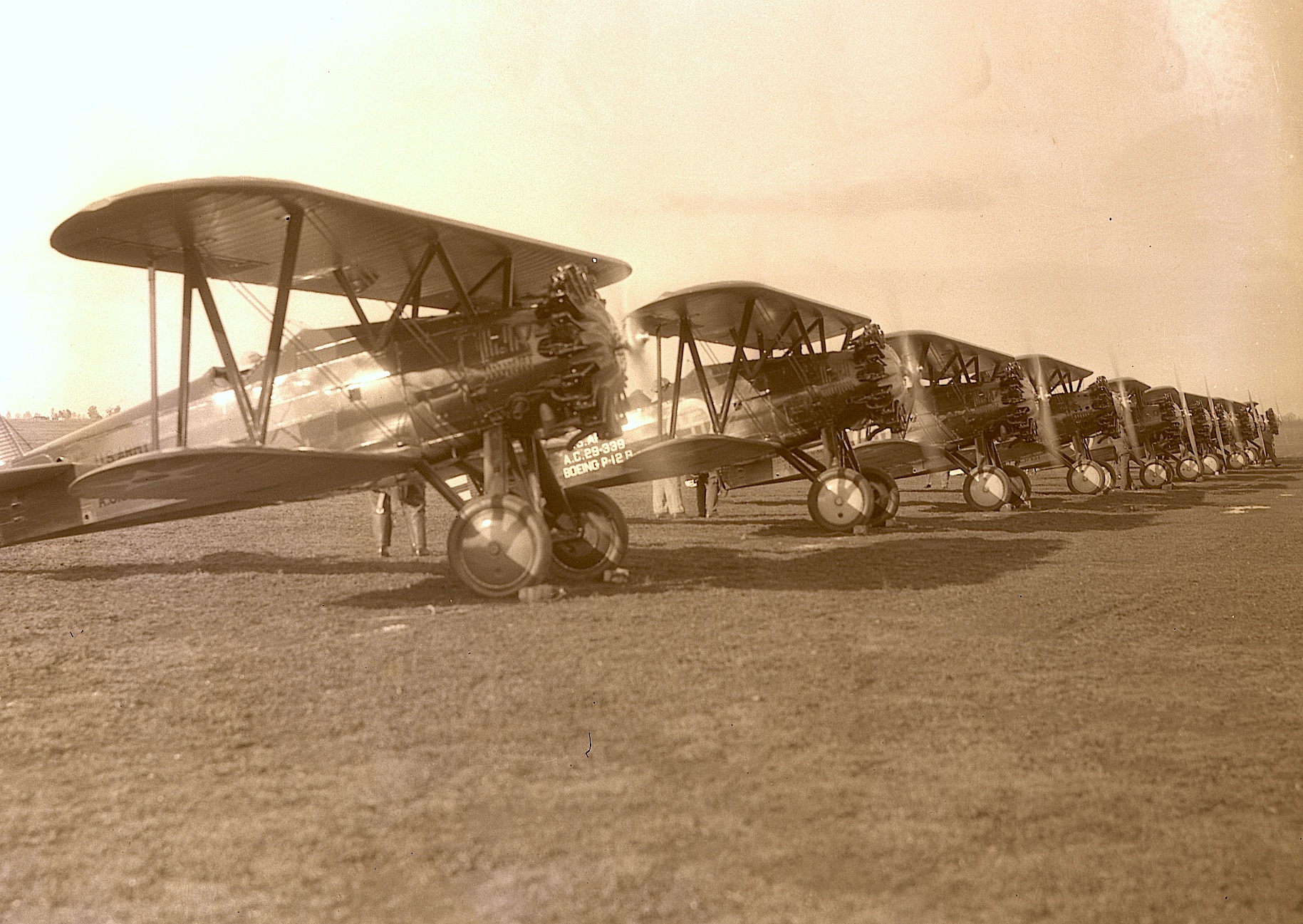
A group of P-12’s pf the 55th Squadron at Mather Field, which would be assigned to Honey Lake.
In the late 1920s the United States Army sought a place where army fliers could train for wartime manuevers and aerial gunnery practice. Susanville attorney, Ben Curler an avid pilot had just the place—Honey Lake. In the spring of 1931, Curler gave Captain Thomas Boland of the Mather Field in Sacramento a tour of the region and it met with the Army’s approval.
In the summer of 1931, supplies and equipment were shipped from Sacramento to the Wales Ranch, about four miles north of Milford. A summer base camp was established and operated for two months.
The following year the camp resumed operations. This consisted of forty-three flyers, thirty-nine pursuit planes, three transports and a squadron of one-hundred men. The Army was pleased with conditions at Honey Lake and it was their intention to make it a permanent summer training camp and the State obliged. Once the Army obtained ownership of the lake, they no longer used it. When the Sierra Ordnance Depot was formed in 1942, it was annexed to the depot. Jere Baker provides a complete account the air field operations at Honey Lake in Untold Stories.
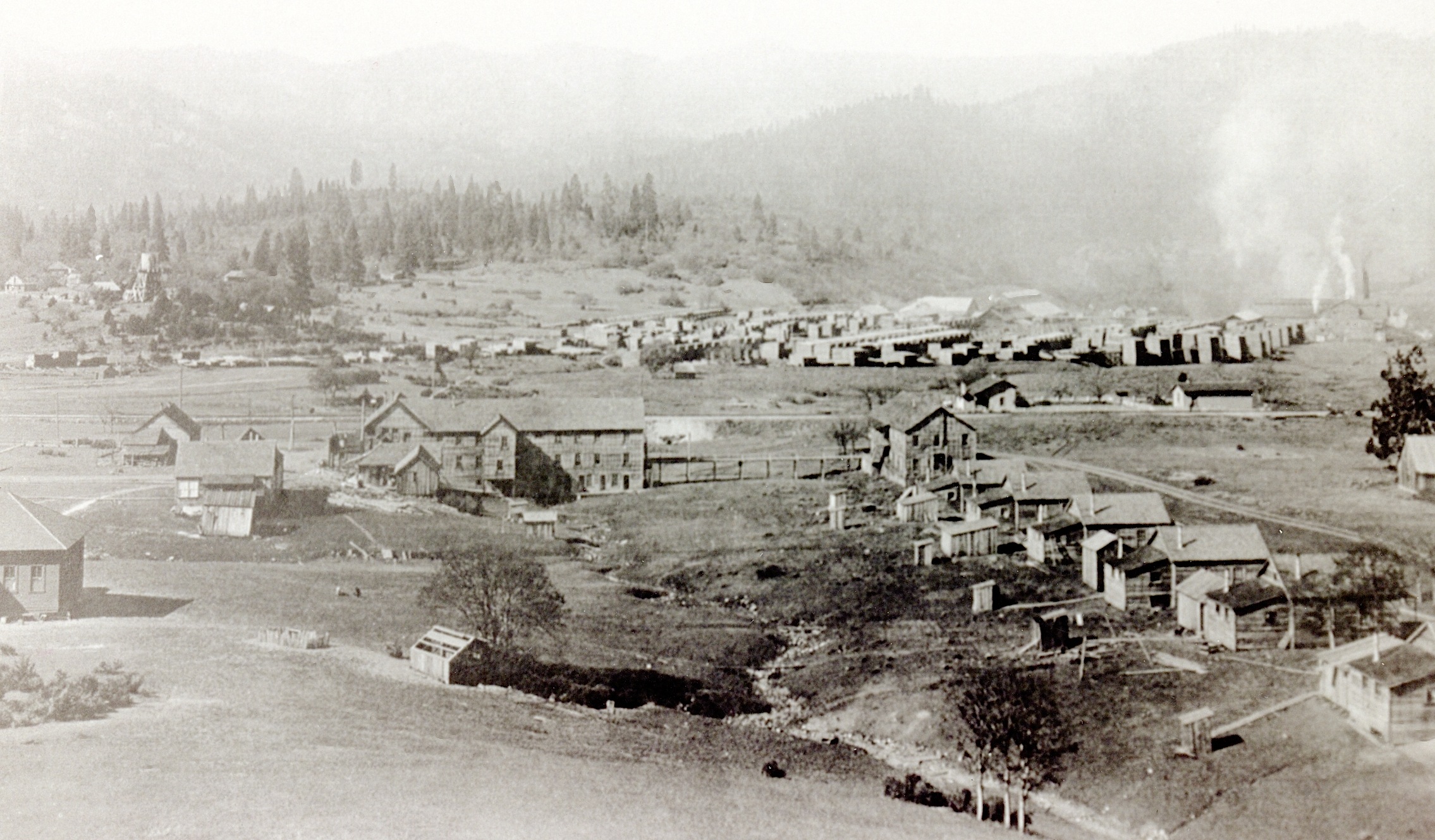
The most commented post on this site is about the former town of Hiltlocated in Siskiyou County near the Oregon border. While Hilt is far removed from the Lassen region, it has a unique relationship to the area. This was Fruit Growers Supply Company’s first sawmill, which proved successful. With the expansion of the citrus industry, created the need for an additional lumber to manufacture box shook, the wooden components to make a wooden box, which was the standard container. In 1919, Fruit Growers established a second mill in Susanville and in 1944 the company purchased Red River Lumber Company’s mill at Westwood.
The origins of Hilt started in 1855, when John Hilt began mining along Cottonwood Creek, just south of the Oregon border. In 1878, he purchased his son-in-law’s sawmill. In 1887 when the railroad was built through there, Hilt did not take advantage of it and continued with a small time operation. That changed in 1901 when he sold out to some Grants Pass, Oregon businessmen who formed the Hilt Sugar Pine Company. That was short lived. It was acquired in 1907 by Shasta County investors who formed the Northern California Lumber Company. From day one they had financial problems.
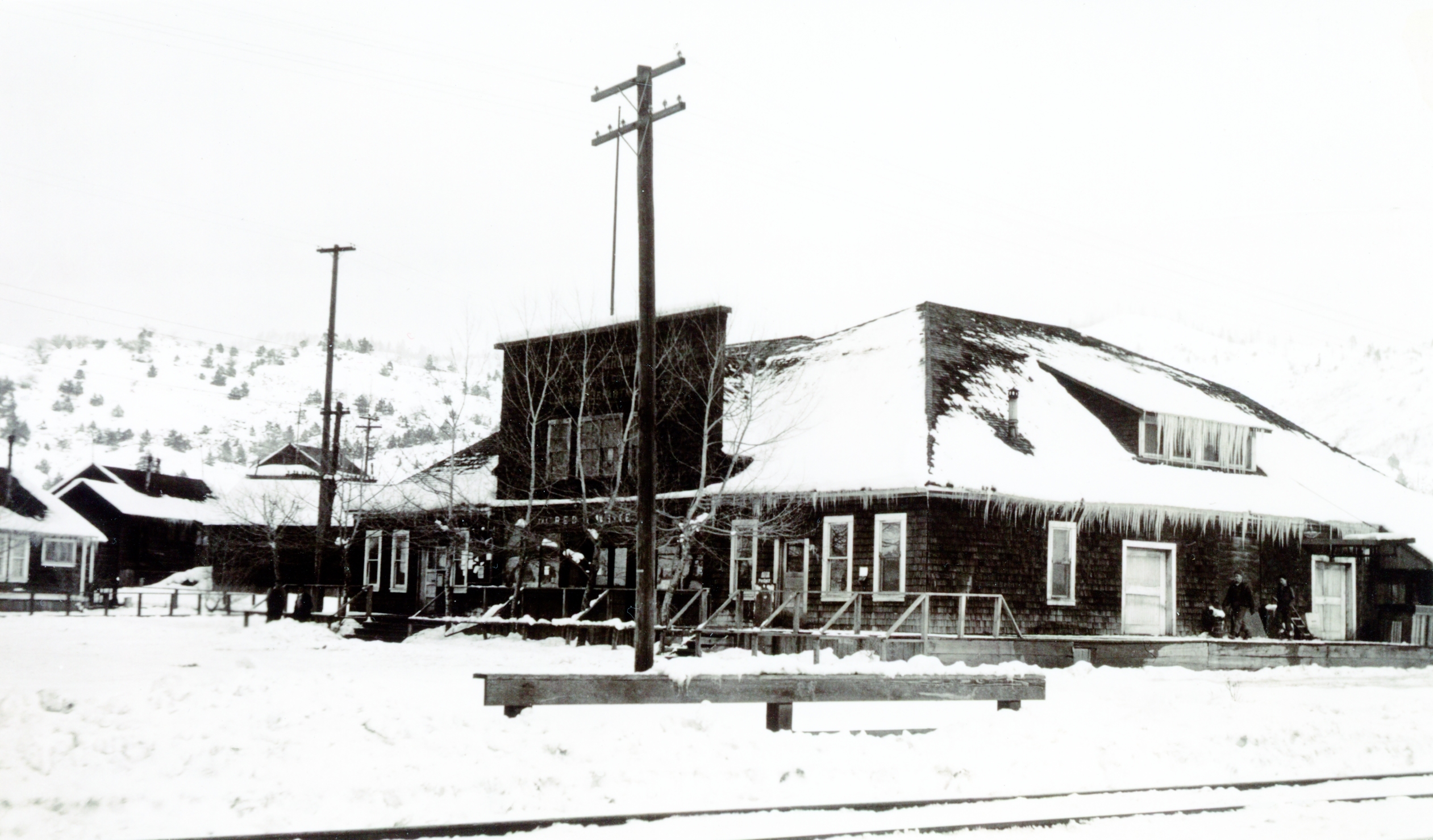
Hilt Company Store and Post Office, 1937.
Enter Fruit Growers. Fruit Growers reluctantly lent the lumber company $100,000, however, they were not impressed with its operation. Their logging operations deemed primitive, as they still used oxen with no intent to convert to modern railroad logging. It was stipulated that a portion of the cash advance was to be used to construct four miles of logging railroad. Progress, was slow but sure, with the construction of a box factory, but again needed additional money. By 1910, the day of reckoning was at hand, whether Fruit Growers should cut their losses or take over the troubled lumber company. After careful consideration, Fruit Growers went ahead and acquired Hilt and entered into the lumber industry. They would operate the Hilt mill for sixty-one years.
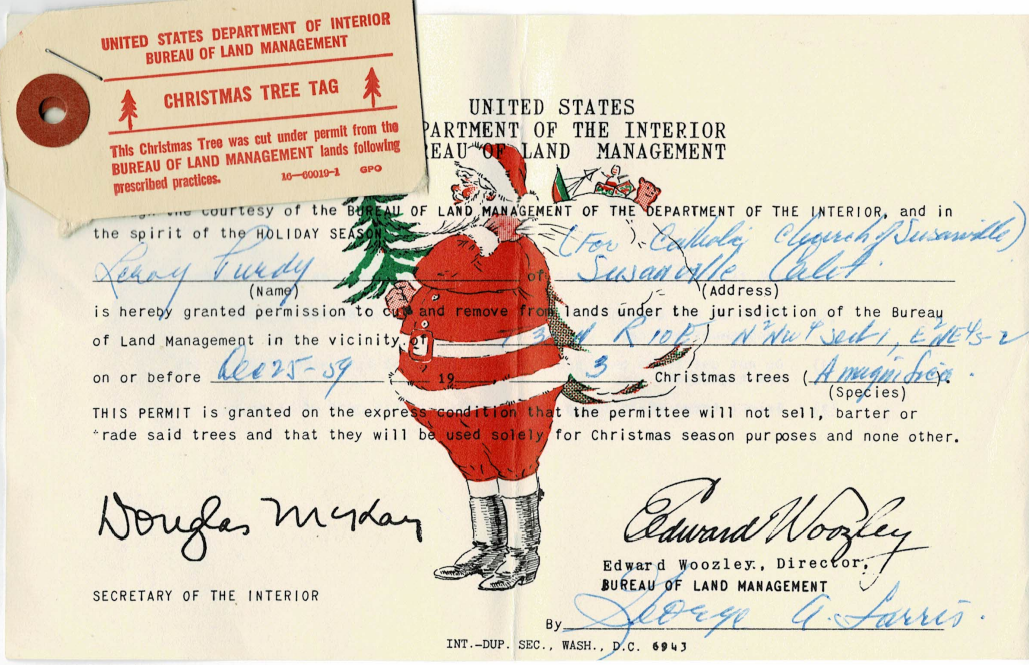
It is Thanksgiving weekend and for many it is a family outing into the forest in search of the “perfect” Christmas tree. Earlier this year, Calvin Farris shared with me this 1959 BLM Christmas tree permit. It was issued by his father to my father. My father cut many Christmas trees over the years, but I never recalled him possessing permits. However, these Christmas trees were for the Sacred Heart Church, and his mother, Margaret was a faithful member.
Anyhow, as Calvin duly noted, back in the day, how special touches were added to such documents, and this is a perfect example.
If Standish were to have a sister city, it would be New Plymouth, Idaho located in the Payette Valley of southwestern Idaho. Both communities had the same founder, William E. Smythe of the Associated Colonies of New York.
Established in 1895, Smythe noted the Plymouth Colony of Idaho will be the model of communities to be established hereafter. Its plan was made by the President of the Associated Colonies, with the co-operation of men of the largest practical experience in western life. Two years after its founding, the official head of Plymouth Colony writes, “We have not a single colonist who is discontented, or one who regrets that he located here.”
New Plymouth’s was a fairly successful venture. While its counterpart Standish was not. The Associated Colonies expended large sums at Standish and was forced into bankruptcy in 1901, thus ending the colony system.
The Cover of th 1897 brochure The Standish Colony in the. Highlands of California.
Since it is Thanksgiving, how appropriate to note one of the best known pilgrims of yore-Myles Standish—for whom Standish, California is named for. The founders of Standish did not quite follow all the Puritan beliefs. They took a little here, a little there. The main goal was for everyone in the Standish community to be self sufficient. They noted in the above publication, what a standard diet consisted of from examining a bill of fare published in San Francisco. Every item on the menu for breakfast, supper (i.e. lunch) and dinner could be raised in the Honey Lake Valley, with the exception of coffee and tea.
Since this is holiday where food is an integral here is the menu for a typical supper (.i.e dinner) meal. Mushrooms and Sweatbreads in Chafing Dish; Cucumber sandwiches; Compote of Pears; Layer Cake; Cheese and Tea.
Davis Cut near Johnstonville of the Fernley & Lassen Railroad, 1912
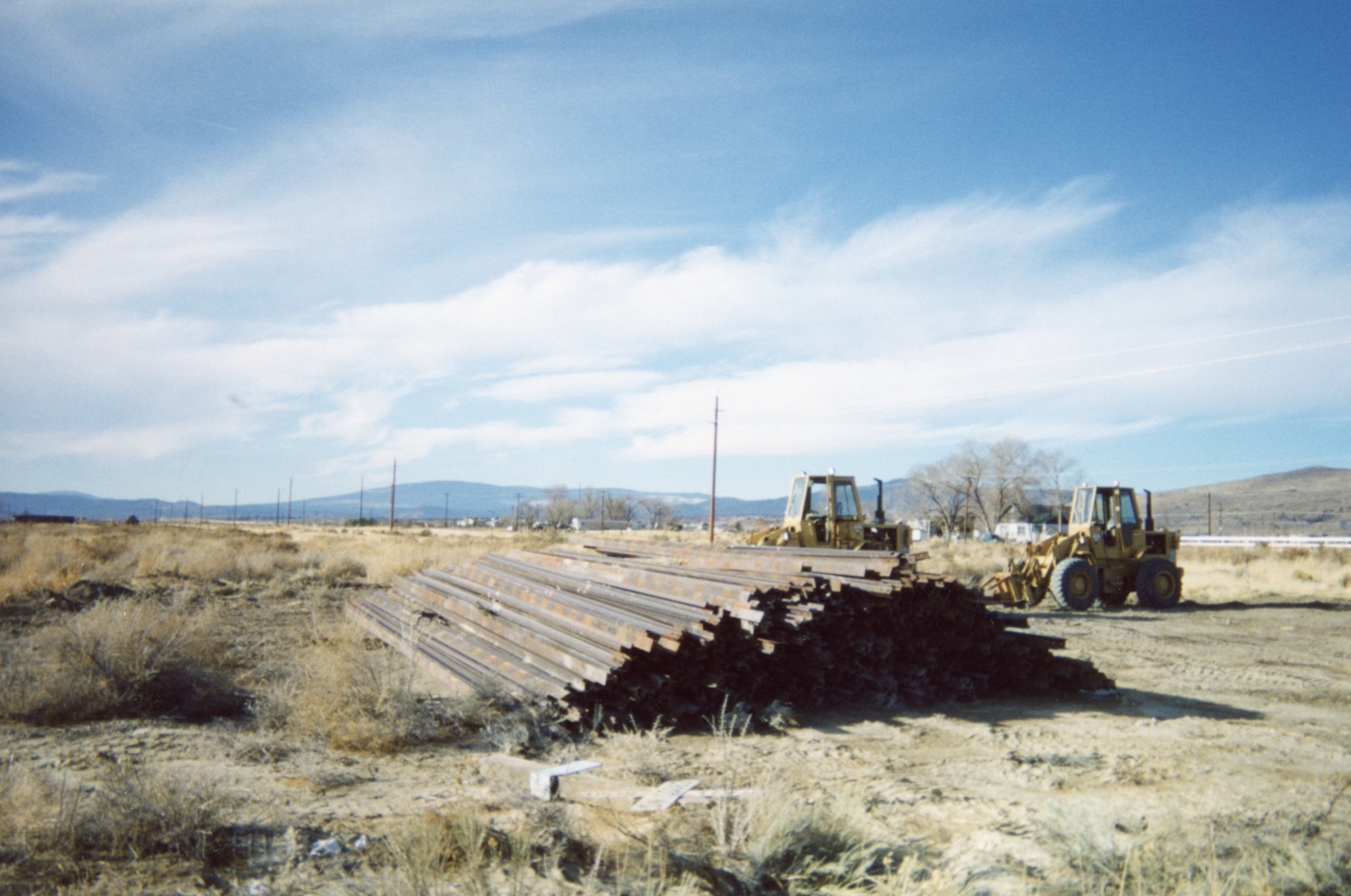
In the fall of 2006, a major event occurred that went largely unnoticed. The last segment of rails from the Fernley & Lassen Railroad from Susanville to Wendel were removed. The railroad had such a major impact on the region and its final passing was relegated to a mere footnote. The local press did not even make a note of it.
Rails piled up at the defunct Leavitt Station, November 24, 2006
The whole process of dismantling the line was done in segments. In 1970, the first segment to go was from Fernley to Flanigan. In 1955, the segment from Susanville to Westwood was shuttered, but not abandoned. That came in 1976, and then the rails were removed in 1981 as the conversion process of Rails to Trails.
Awhile back the Modoc County Record reported that Termo would have a new lease on life—a state highway rest area. According to the Modoc Transportation Commission that the request for an improved rest area has been decades in the making. It was noted that it will probably not be operable until 2028. In all probability the rest area north of Secret Valley will close at that time.