Susanville Country Club

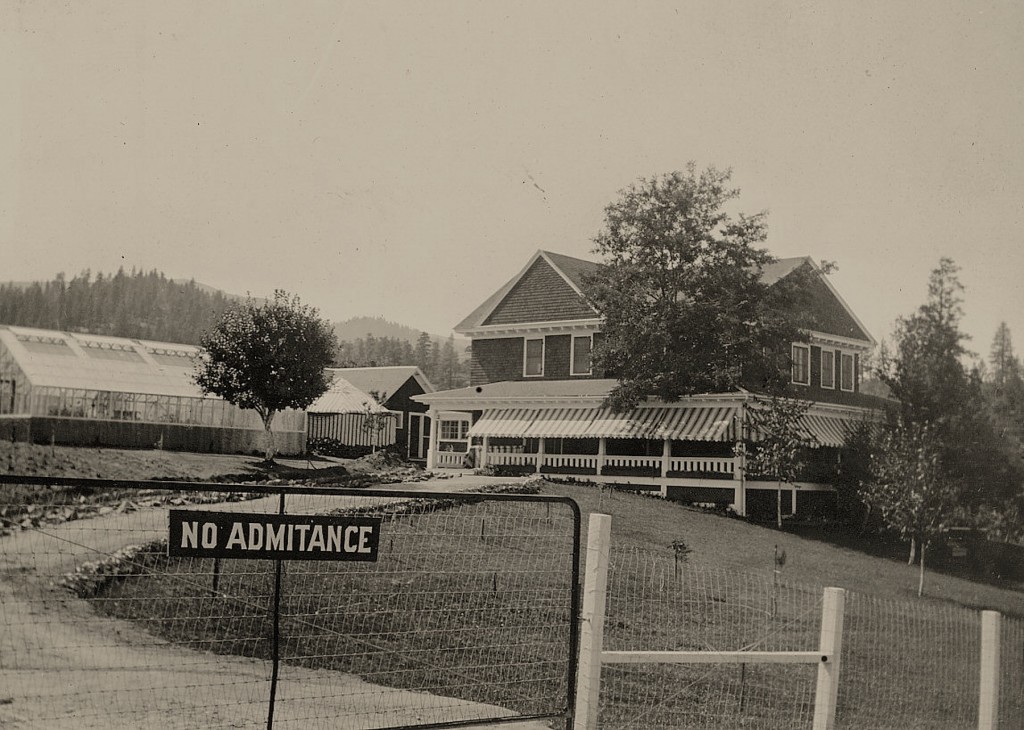
Susanville Country Club, 1931. Courtesy of Fred and Alyce Bangham

In the spring of 1924 witnessed the development of Susanville’s first golf course. It was an outstanding success that gave birth to the Susanville Country Club.  For the new organization the timing was exquisite. It just happened that in the summer of 1924, the Lassen Lumber & Box Company purchased George Wingfield’s summer home some eight miles south of Susanville along the base of Diamond Mountain. Equally important one of the lumber company’s executives, A.G. Breitwieser was a big proponent of golf.

In the fall of 1924, not only had the local “duffers” outgrown the first golf course, that a golden opportunity came there way. The Lassen Lumber & Box offered the Wingfield property to the Susanville Country Club at a bargain price of $20,000.  It was reported that Wingfield had spent $335,000 to develop the property.
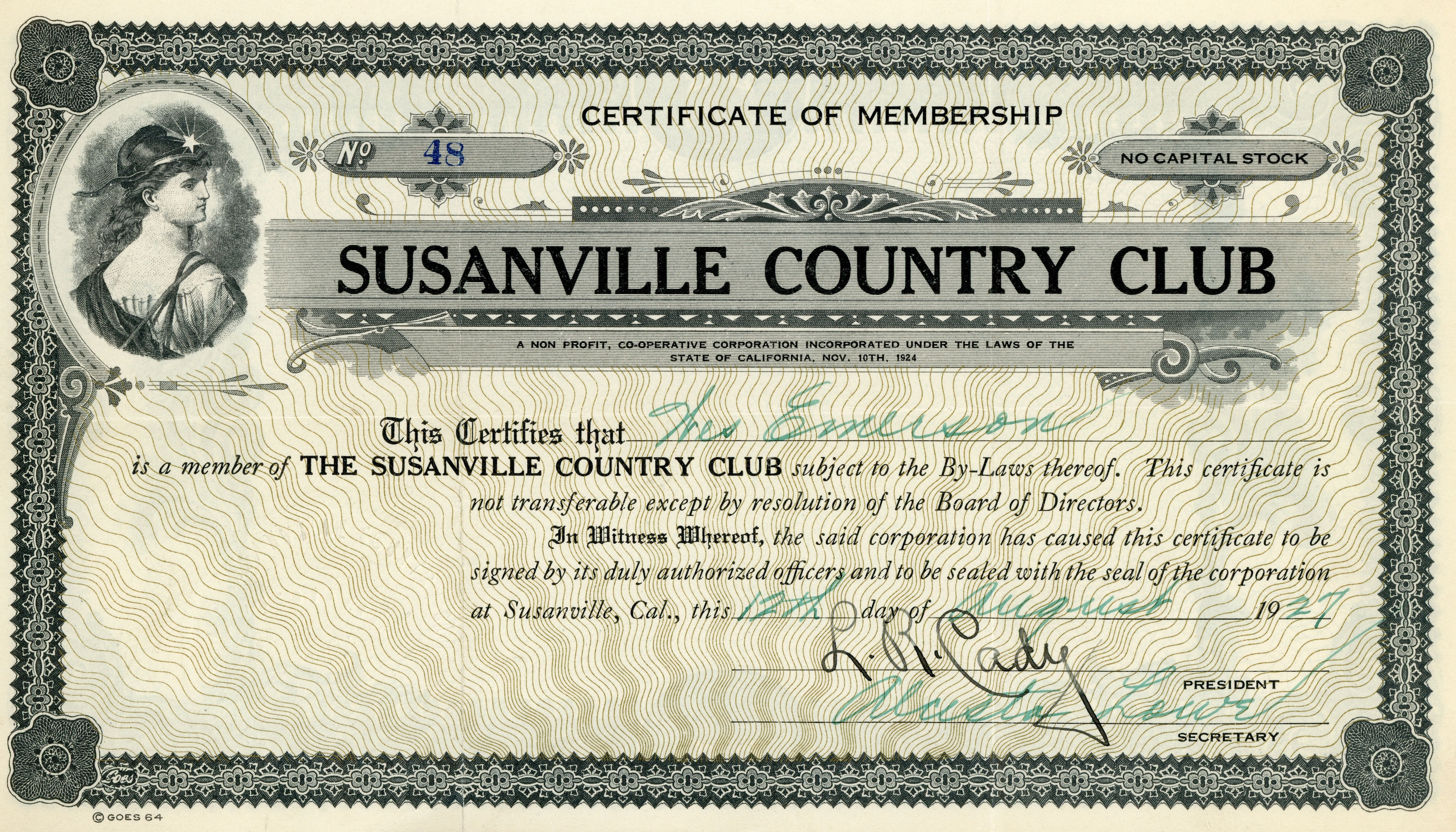
Stock Certificate issued to Wes Emerson

The club sold stock to finance the purchase. In addition, the club offered an exclusive 100 resident membership and 50 non-resident.  The cost $250. that, however, included a lot to build a personal cottage. In addition, there was a a five dollar monthly dues. This was not a deterrent and within a few short weeks, the club had a full charter membership.

The good times did not last that long. In the fall of 1931, L.R. Cady and Frank Coffin purchased the property, thus ending a chapter in the Susanville Country Club.

Never miss a story, click here.
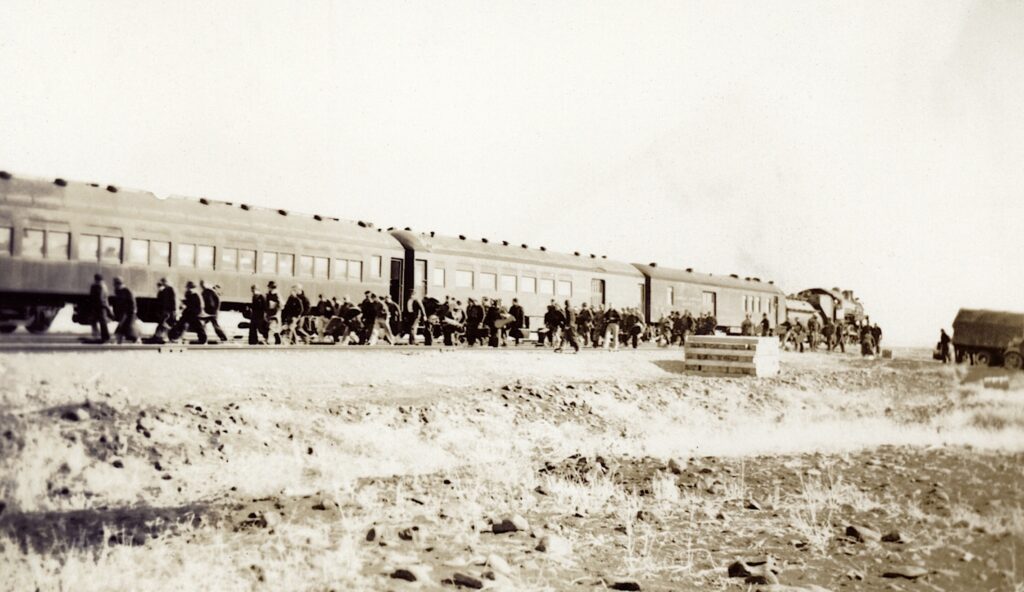


Welcome Company 740, CCC, Secret Valley

A train picking picking up CCC departures at Secret Valley, April 4, 1936—C.H.Bennett Collection

Once a week for the next several months we will explore the Civilian Conservation Corp Camp at Secret Valley, partially through the photographs of Charles H. Bennett, Company Clerk, who was stationed there from 1936 to 1938. Before the CCC camp was established at Secret Valley, there was a much smaller camp at the Fleming Ranch, known today as the Fleming Unit of the Honey Lake Wildlife Refuge. This consisted of approximately thirty men. It served two-fold. One for the men to get acquainted with the area to formulate what work would need to undertaken. Fleming Ranch had ample housing accommodations while the Secret Valley was being constructed. On August 20, 1935 the Secret Valley Civilian Conservation Corp Camp opened some thirty-five miles northeast of Susanville. One hundred and sixty-one young men arrived on a special 14-car train. The men came from New York and New Jersey. It was reported that it was quite a shock for them seeing this new environment of sagebrush and sand. These men would be sent to other camps, and Secret Valley became the home of Company 740 from men transferred from Piedmont, Missouri. The Secret Valley camp was also referred to District Grazing Camp No. 13. In future posts we will explore some of the work they did and during their short days off, some of their excursions.

When one enrolled into the CCC program one could enlist for six months and re-up to serve a maximum of two years.

Support

Lathrop City, Honey Lake Valley

Mapes Ranch
Mapes Ranch, with Shaffer Mountain in the background, 1906. Courtesy of Madelyn Mapes Dahlstrom

You probably never heard of it. Guess what, most people in the Honey Lake Valley during the 1860s, never heard of it either. Today, it is known today as the Mapes Ranch, located four miles east of Litchfield.

In June 1859, George W. Lathrop and Thomas J. Harvey claimed 1,280 acres there. Located adjacent to the Susan River and the Nobles Emigrant Trail, it quickly developed into a station for travelers. On September 8, 1862, Lathrop sold this place to Uriah and James Shaffer for $4,250 and then the place was called either Lathrops or Shaffers Station. By 1863, it consisted of Shaffers station/trading post, Henry Lomas’ cabin and blacksmith shop, and a house belonging to Wilmans & Bass. At this same time, traffic along the emigrant trail increased dramatically as it was the shortest route to the mining discoveries in Idaho and Northwestern Nevada. With bright prospects, the residents plotted out a town and a name was needed. The place was best known as Lathrops. It was decided to name it Lathrop City. Henry Lomas, the “city’s” blacksmith recalled years later that the name was “Just too much for the town and it died a natural death.”

Support by subscribing.

Church of Jesus Christ Latter Day Saints

LDS Church
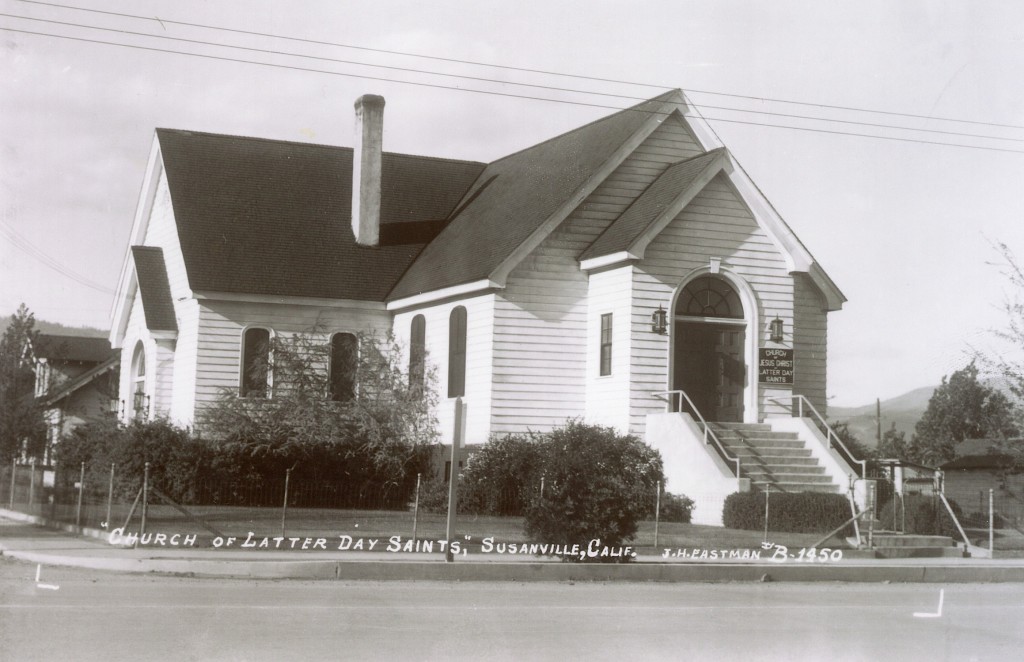
The LDS Church was located on the corner of Main and North McDow.

The Church of Jesus Christ Latter Day Saints, also referred toas Mormons were slow to make an appearance in Susanville. It was not until1911, two missionaries, Elders Harry Janson and L.R. Halverson arrived in Susanville, though it appears their stay was brief. It was not until 1922, that the members of this church organized in Susanville. The initial families included those of Frederick Johnson, W.K. Davis, William Mortimer, Afton White, James C. White, John Heath and Peter F. Olsen.

Initial services were held in member’s homes. By 1924, their numbers had grown and they rented the Knoch Hall  for $2.50 a week. From there they moved to the Orpheum Theater and later to the OddFellows Hall.

Like so many religious institutions, they wanted a church of their own. On November 13, 1927, discussions were held to build a chapel. The site chosen was the northeast corner of Main and McDow Streets. On November 10, 1929, the church was dedicated by Heber J. Grant, President of the Church of Jesus Christ of Latter Day Saints

Thirty years later the members had outgrown the church. They selected a new site on Richmond Road. On November 5, 1961, groundbreaking ceremonies were held for the $300,000 chapel.

Support by subscribing.

Tuesday Tidbit – Antelope Grade, 1947

Antelope Grade, 1941

Beauty may be in the eye of the beholder, but for me when it comes to old photographs it is the little things at times, that pique my interest. During the winter, I obtained a box from storage that contained a little bit of everything, but not necessarily what I was looking for.

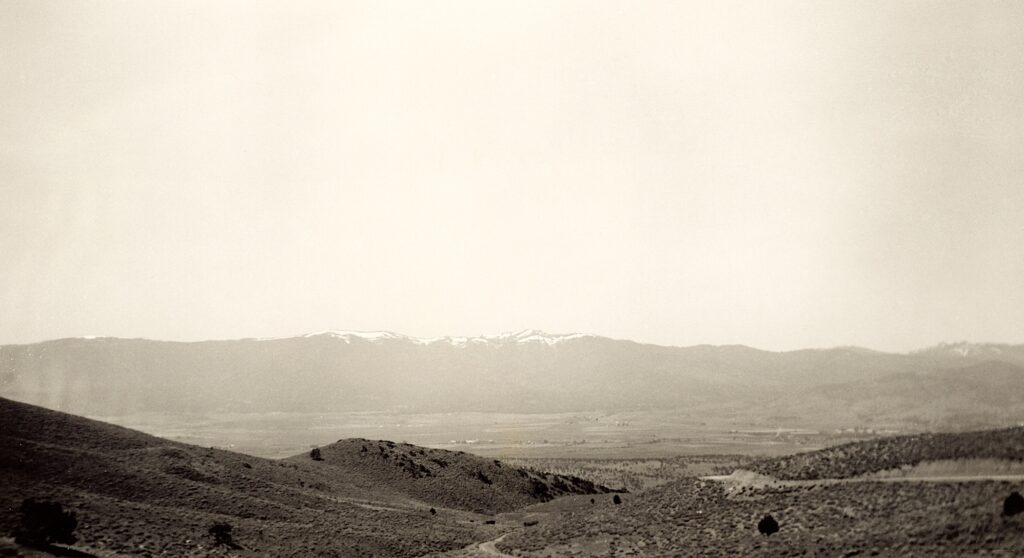
This photograph was taken near the summit of Antelope Grade. What is interesting is you can clearly see the old and new grade, When researching the archives, it appears I have not wrote about the construction of the current Antelope Grade. I will have to add to my to do list.

Tim

The Chester Rodeos of Yesteryear

Chester Rodeo, 1928—Margaret Purdy

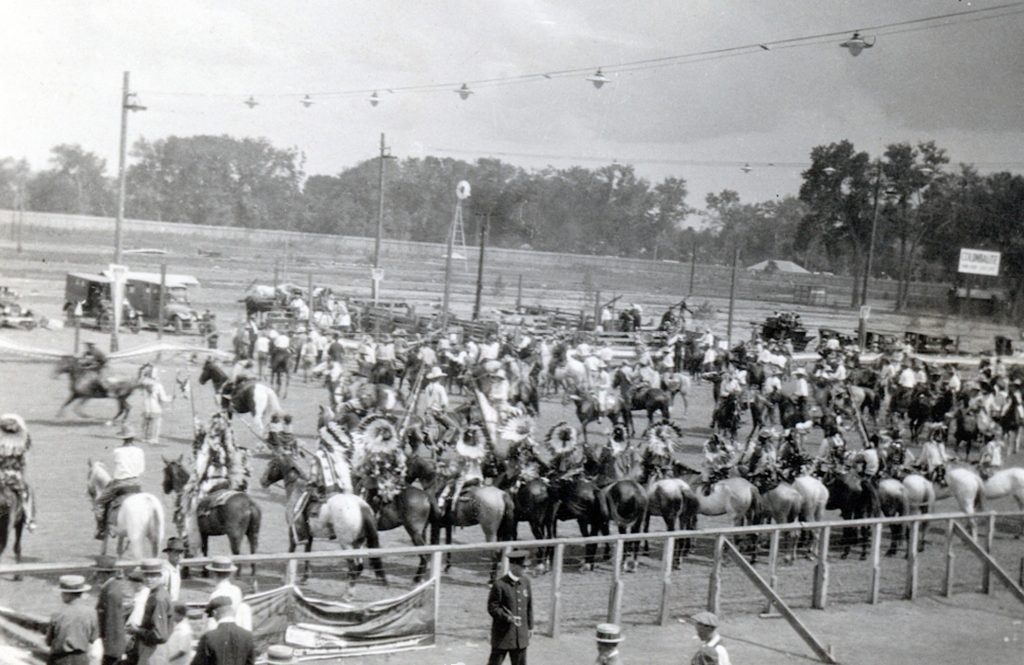
Long before Chester’s big July 4, celebration, the first major special event that helped bring awareness to the fledgling community of Chester was a rodeo. In 1920, McKenzie & Stover sponsored the first rodeo in Chester at the Stover Ranch, and it was held there for the next eighteen years. Within a short time it became quite popular, initially attracting about a thousand spectators. As the word spread, by the early 1930s the crowds had swelled to between 2500 and 3000.

If the word-of-mouth advertisement was not enough to entice a person to attend, how could one not go wrong after reviewing this promotional literature of the event? “Cowboys, broncos wild steers, Indians, thrills, action and the shores of Lake Almanor takes on a scene of the old frontier. The wild west days of yore live and breathe in the 15th annual Chester Rodeo Pageant, Sunday July 28.

”Suddenly, like the roaring echo of Mount Lassen, the calm little logging hamlet, banked on either side by the tranquility of pine covered thickets of the Sierras, burst forth in gala Cowboy Rodeo Fashion almost overnight. A Cowboy’s curdling yipes-prancing cow ponies-the whirl of lariats-the snort of wild-steers careening, untamable broncos-strong wooden gates and corrals, wheezing and groaning with impending mass of animal flesh-a cloud of dust cheering grandstands; lack-a-day friends, it’s rodeo time.

”Join the throngs as they sit side by side in the tense moment, viewing the spectacle! Feel the thrills of your favorite cowboy. Give voice to your emotions as a wild bull bites the dust and is tamed to the tune of a husky cowboy’s bull-dogging yodel! Be red-blooded American and rejoice as history of the old wild west repeats itself. Plan now to have the adventure of a lifetime.”

In 1938, Stover & McKenzie held their last Chester Rodeo. It should be noted two years later saw the dissolutioon of that venerable partnership.

Donate

Lassen Park’s Inferno Ski Race

1937 Ski Jump across the park highway. Courtesy of the National Park Service

In the 1920s, three sports became mainstream in the nation’s recreation sector—golf, snow skiing and tennis. By the 1930s, in the region there were nearly a half dozen ski clubs, that were very active and creative, too.

In 1936, the Mt. Lassen Ski Club of Mineral created a mid-summer ski tournament. It was held on Lassen Peak, Lake Helen being the base, during the Fourth of July weekend,. However,  depending on conditions, it was sometimes held a bit earlier or later than the patriotic date. The club introduced a new event, known as the Inferno Race. This was no ordinary race, and definitely not one for novice skiers. The course was interesting and required a great deal of stamina just to reach the starting point, the summit of Lassen Peak, a climb of 2,200 feet. Usually only a dozen or more skiers participated in this slalom race, which had four gates, and two turns and one jump across the park highway. The event continued through 1941, but conditions created by World War II brought an abrupt halt. This is one of many prime examples that after World War II was never resurrected.

It should be noted that there some individuals who climb the peak to the top and ski down during the summer months.

Subscribe or Donate

Susanville’s Edsel Dealership

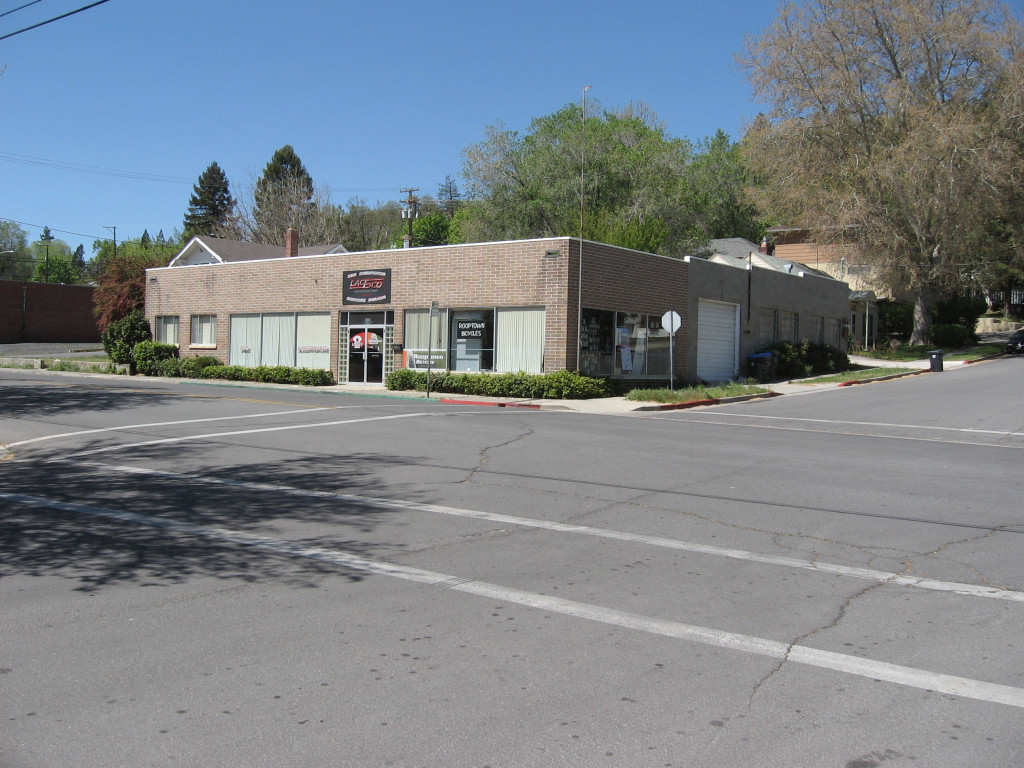
80 N. Roop St.
80 N. Roop Street, Susanville, May 3, 2015

For a brief time, Susanville had its own Edsel Dealership though it did not last long. In 1957 it was housed in a brand new building at 80 North Roop Street.  Of course, Ford’s Edsel automobile was a failure and the model soon abandoned. Many seasoned residents will recall this building housed the California Department of Motor Vehicles for many years. It is now the home to Lasco and Rooptown Bicycles.

Tim

Gov. Brown Opens New Facility at Susanville

Humboldt Times, July 14, 1963

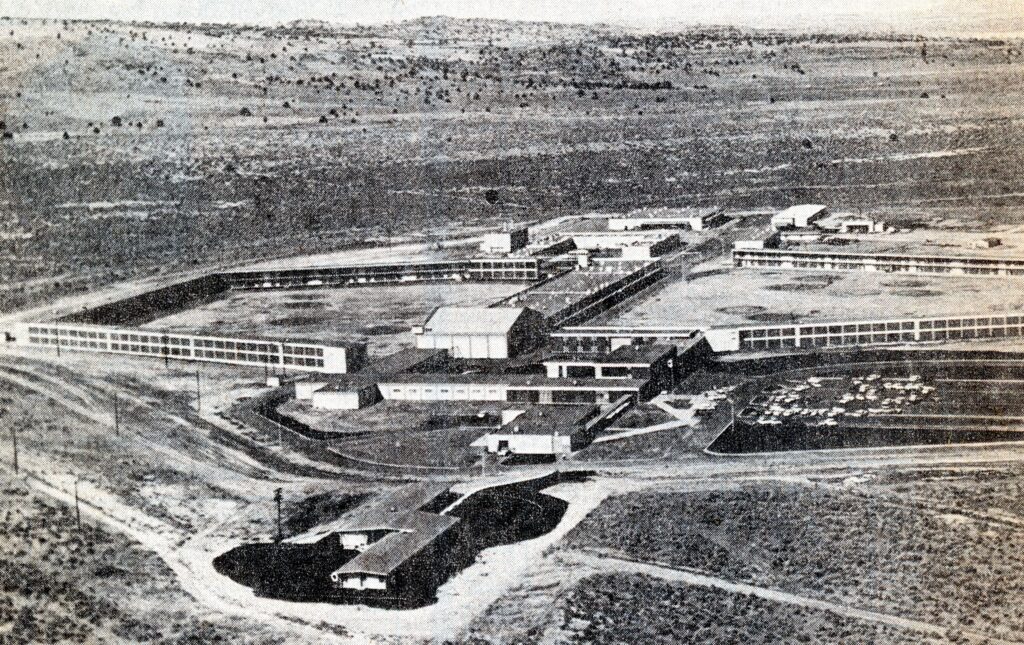
Supposedly, today marks the closure of the California Correctional Center on the eve of its dedication sixty years ago. The following is an extract from the Humboldt Times of Eureka California about the dedication:

”Before a throng of enthusiastic home townsmen, plus scores of interested correction officials. from other Western States, Governor Edmund G. Brown Saturday [July 13, 1963] dedicated the California Correctional Center the nation’s newest concept in corrections.

The $9 million institution for 1200 inmates is a pioneering idea, the first of four such centers to be built in California.

”In a former timber economy now reverting to agricultural and recreation, business leaders of Susanville and Lassen County look upon the new facility as their own. They threw a banquet for state Senator Stanley Arnold of Susanville, author of the enabling legislation for the entire program, and the laurels were almost unprecedent.

”Besides the stimulus of actual construction, the new facility has 260 Department of Corrections employees and 30 from the Division of Forestry. These are permanent, mostly with families, and their annual payroll is more than $1,750,000”

Support by subscribing.

Exploring Lassen County's Past