1917 Advertisement of the first St. Patrick’s Dinner
Mark your calendar as next Saturday, March 18, will be Sacred Heart Church’s annual St. Patrick’s Dinner at Monsignor Moran Hall. Did you know that it is Susanville’s oldest continuous annual event? If you were wondering what the second is, it is the Lassen County Fair established in 1922.
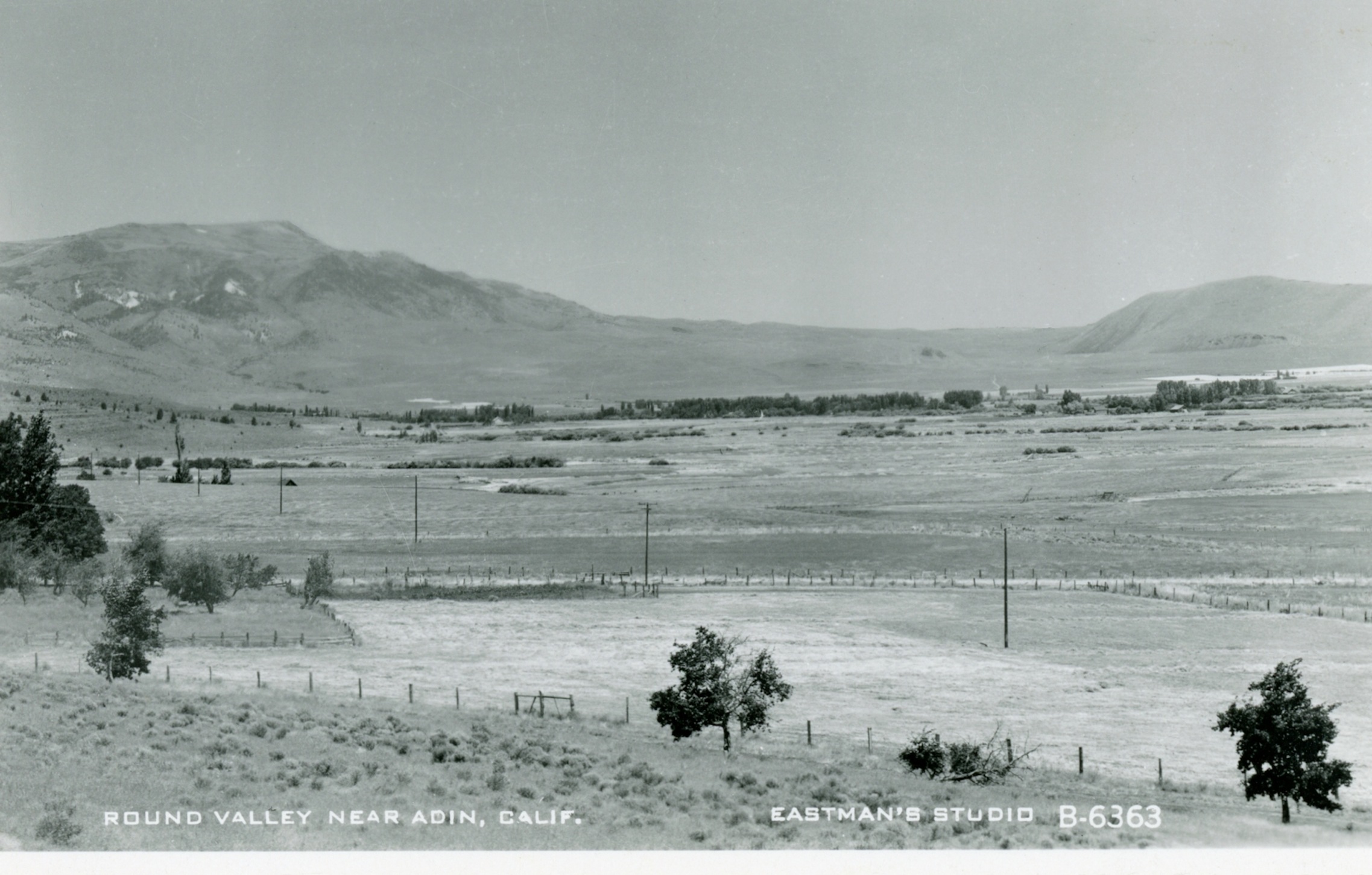
One of the most prevalent place names in California is Willow Creek. By some estimates there are over 1100 Willow Creeks in California. Another common place name is Round Valley: There is one near Greenville in Plumas County; in Lassen there is one north of Susanville and in Modoc County there is a Round Valley just north of Adin.
But, the original Round Valley in this part of California is not called such anymore. Big Valley which straddles Lassen and Modoc Counties was originally named Round Valley.
It was John C. Fremont who named it Round Valley on April 29, 1846. Fremont wrote: “Here we found a region very different from the valley of California. We had left behind the soft, delightful climate of the coast, from which we were cut off by the high snowy mountains, and had ascended into one resembling that of the Great Basin, and under the influence of the same elevation above the sea; but more fertile and having much forest land and well watered.”
It was Adin G.McDowell who settled on the east side of the valley in 1869, and for whom to the town of Adin is named for, and referred to the locale as Big Valley. Even so, by 1880 some cartographers continued to designate it as Big Valley.
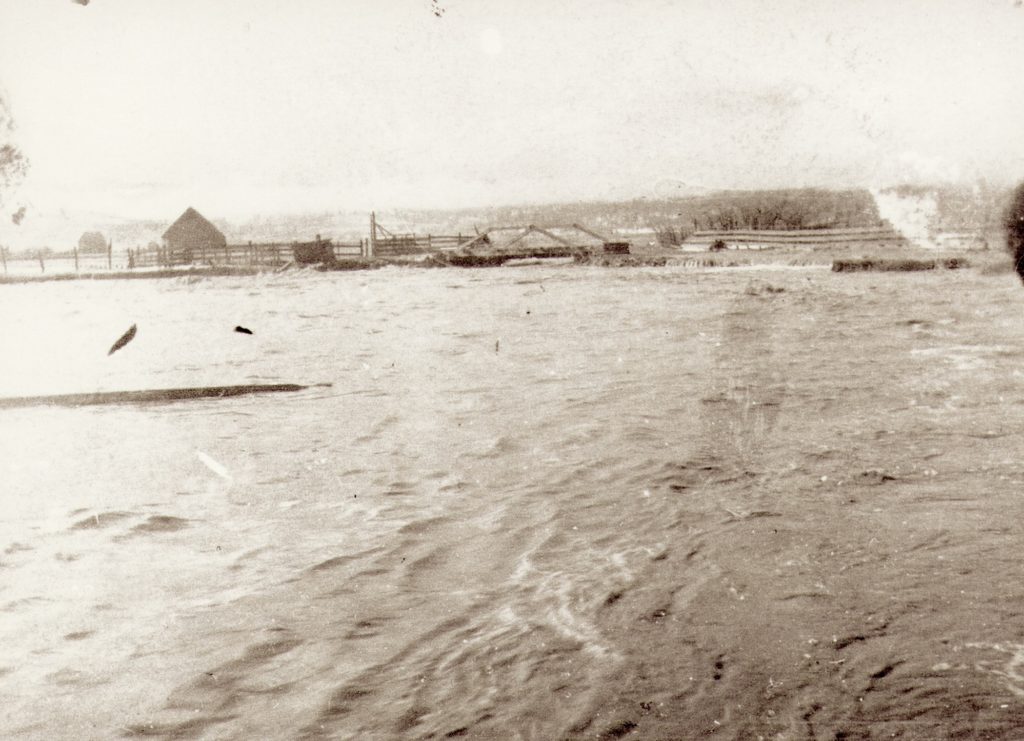
The Susan River near Johnstonville, just before the bridge floated away—G.L.Morrrill
Note: This originally appeared on March 17, 2021. I thought with the latest weather predictions, will we see some kind of repeat of March 1907.
March 1907 was no doubt one of the wettest on record.The storms were widespread across Northern California, practically turning the Sacramento Valley into one vast lake. After all there no reservoirs such as Oroville and Shasta to retain some of the flood waters.
On March 16, 1907 it began to rain in the Honey Lake Valley. It was one continuous downpour and after 96 hours eight inches of rain drenched the region. Tremendous flooding was to be found everywhere. The majority of the bridges were either washed out or so severely damaged they were unsafe to cross. However, a lot of property damage was minimal. F. Peissker of Susanville suffered one of the biggest casualties. He was located on Richmond Road near the Susan River and the flood waters swept away some 100 cords of firewood, which was how he made his living.
The respite from the wet weather was brief. Two days later it began to snow. By March 22, forty inches of heavy wet snow blanketed Susanville. Travel was brought to a complete standstill. It took a two-horse team seven hours to haul mail one-way from Janesville to Susanville.
In all, some 13 inches of precipitation was recorded that month.
By the fall of 1940, the day of reckoning was at hand as to the future of Red River Lumber Company’s Westwood Operation. . A decision had to be made. The responsibility fell on Ted Walker, the General Manager, to provide options for everyone in the family to consider. Some of his suggestions would no doubt seem radical to his grandfather, T.B.Walker, Red River’s founder. Ted wanted to get away from the company town image, and heaven forbid actually spruce up the town by painting the houses. Ted suggested they even allow the opening of the cocktail lounges, so Westwood would look like any other American community.
Clinton Walker agreed to the house-painting program on one condition that there was an appropriate increase in the rents to
offset the cost. In summation, Ted wrote: “In general, I believe we
will be far better off to get away from the idea of a closed, one man
company town as much and as quickly as is practicable. There was, no doubt, merit to the closed town idea at the time operations were
started. It was then practicable, legally, geographically and politically to control mercantile, labor and moral conditions to a substantial degree. None of these things can safely be controlled today. Practically all the benefits of a closed town set-up have been
eliminated by changing times, and all that remains is the unfavorable
reaction and publicity connected with an archaic and obsolete policy
and philosophy. “
Actually, it should be noted, the transformation of the company began in the the mid-1930s in which operations such as the Big Store were leased to concessionaires.
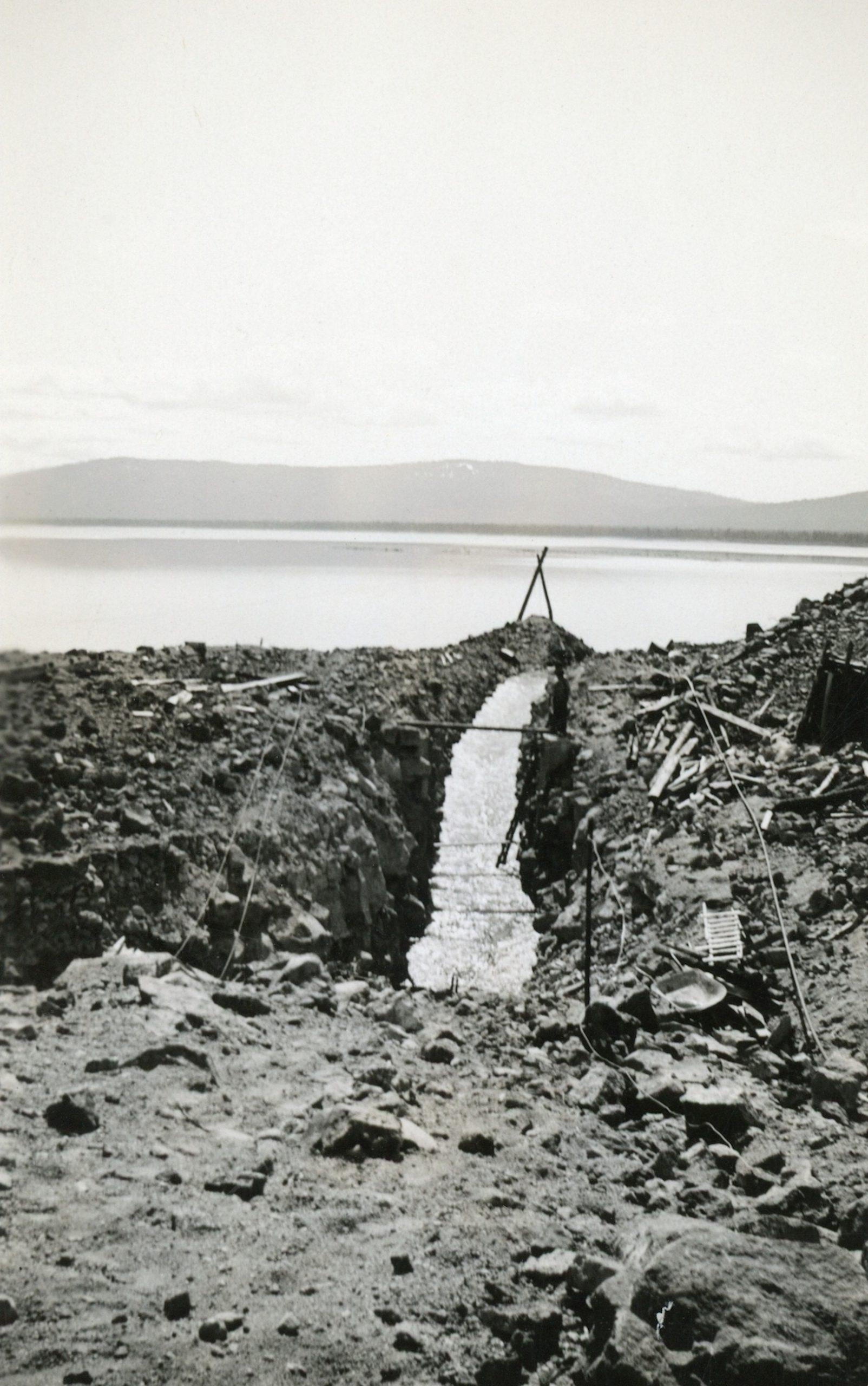
Desperate times, calls for desperate measures. This was the predicament the Tule and Baxter Creek Irrigation Districts were dealing with in 1928, with the problems associated with the Bly Tunnel at Eagle Lake. What had transpired was when Leon Bly contracted with Grant Smith Company the inlet was to be eight to nine feet below the lake surface. That company encountered solid rock and only did three below the surface, thus not an adequate supply of water.
On the first go around the districts hired a contractor to correct the problem by lowering the inlet by five feet, but the contractor failed to do so.
In the summer of 1928 the districts consulted with Alex Wise, the superintendent of the three largest mines at Virginia City, Nevada. Wise agreed to examine the Bly Tunnel, and was sympathetic about the district’s plight and waived his standard $200 a day fee, but asked the districts to pay for his travel expenses.
Wise said it was feasible to lower the intake by ten feet. He estimated the cost at $35,000. Before the work could move forward the districts and the bondholders would have to agree and on top of that figure out how to finance it.
As of March 1, meteorologically speaking is the first day of spring. So with that in mind, I am going to add a spring in my step, and step away from scanning photographs for the Tuesday tidbit for awhile, because I am also experiencing technical difficulties in that department.
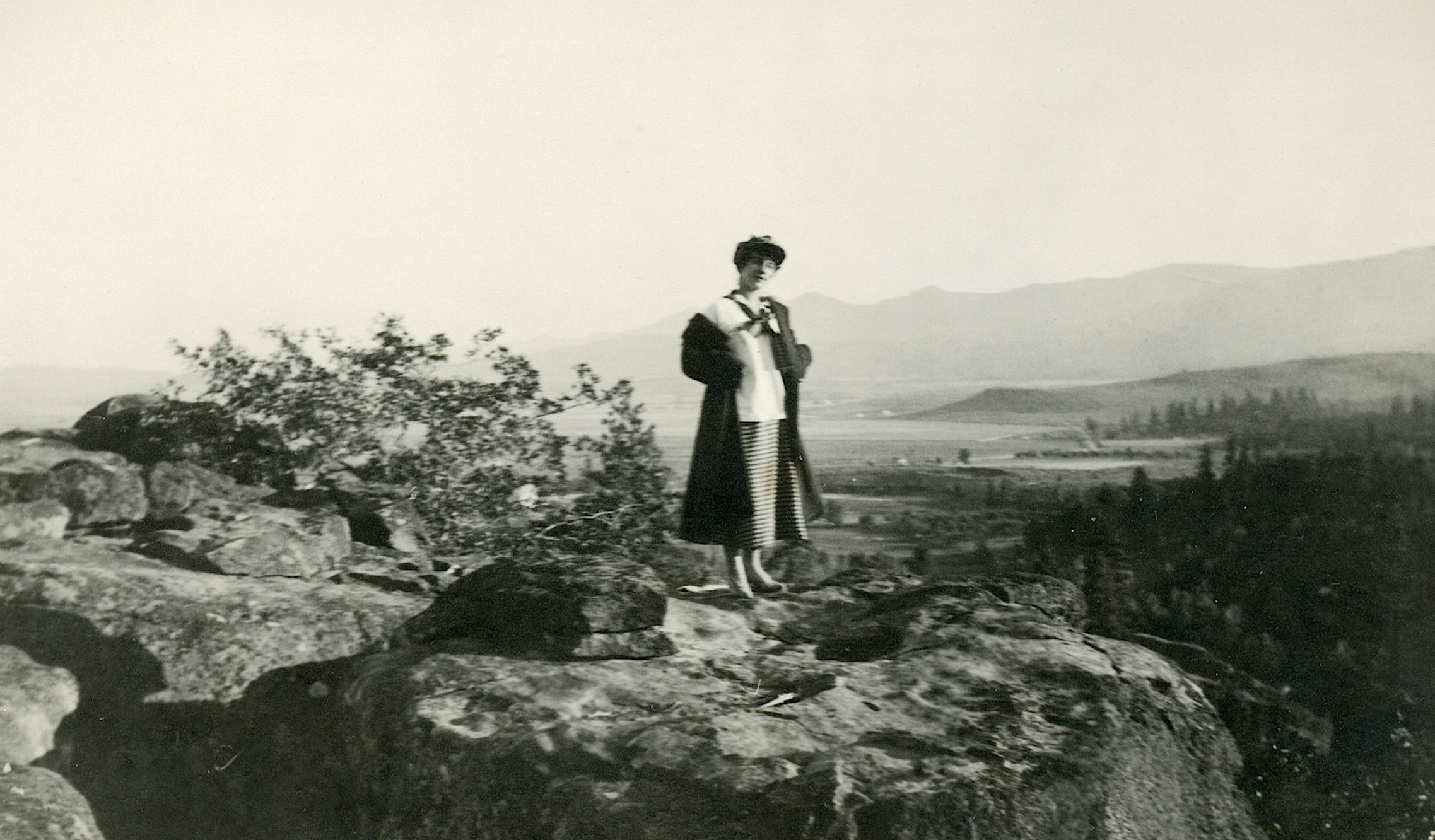
What is interesting about this photograph of Susanville’s Inspiration Point, is that prior to the 1930s when the “point was developed” the best natural spot were the flat boulders before approaching the point we know today. The next time you happen visit, take in the surroundings and notice the difference. By the way, when looking down to see the Susan River, it just happens to be the natural divide between the northern Sierra and southern Cascades.
In my years of research, I constantly learn something new. Numerous occupations of the past century no longer exist, while new ones are created. Examining early death and voter registration records one never knows what might appear. Take the case of Hayden Hill resident, Mable Gallagher. Alas, I have never been able to learn much about her. She died on December 31, 1903 at the tender age of 30 from pneumonia. She is the only personI have ever come across to have an occupation listed as the “sporting life.” She carries another distinction as she was buried in the Hayden Hill Cemetery.
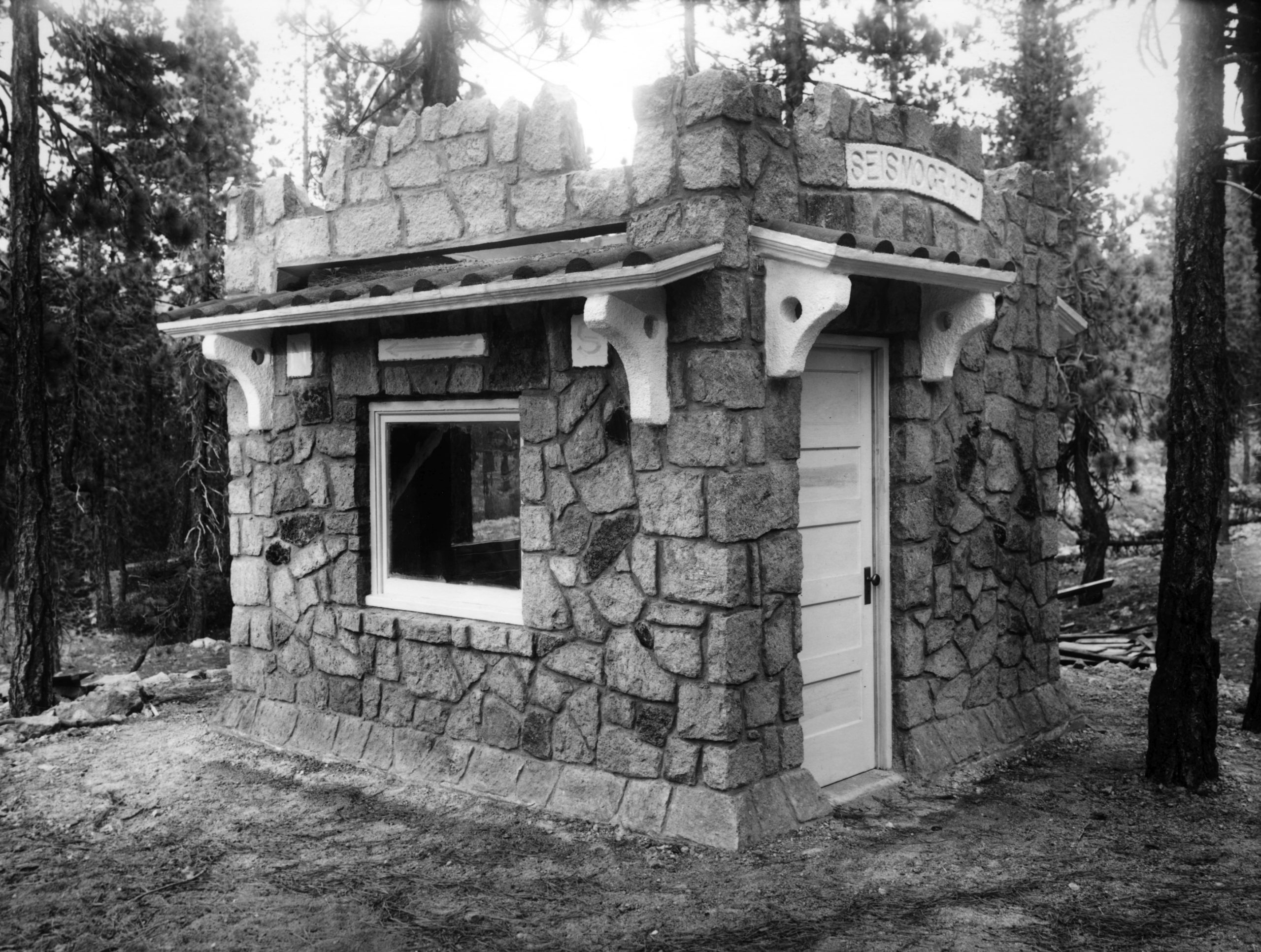
The Seismograph Station, 1930—National Park Service
During the 1920s, the volcanic activity at Lassen Peak had greatly diminished. However, that did not mean that interest lessened. Dr. Thomas A. Jagger, a leading volcanologist of that era, had plans for Lassen. In June 1925, he visited Lassen Park to address a congressional delegation that was on a fact-finding trip. He urged that funding be appropriated so that Lassen Peak could be monitored, as had been done in Hawaii. His request was granted, and in July 1926, he announced the forthcoming establishment of the Lassen Volcanic Observatory by stating, “We intend to have the observatory in operation by September 1. By placing an observatory at Lassen the government indicates the importance of carefully recording all data concerning active volcanoes.” In September the observatory became a reality under the auspices of the United States Geological Survey (USGS) which put R.H. Finch in charge. Seismographic instruments were installed at Manzanita Lake and Mineral. A third machine was placed in the fire lookout on Mount Harkness when the lookout was built in 1930. The USGS closed the observatory operations in 1935.
On a final note Jaggar stated that Lassen Peak’s next eruption would occur on its southwestern flank.
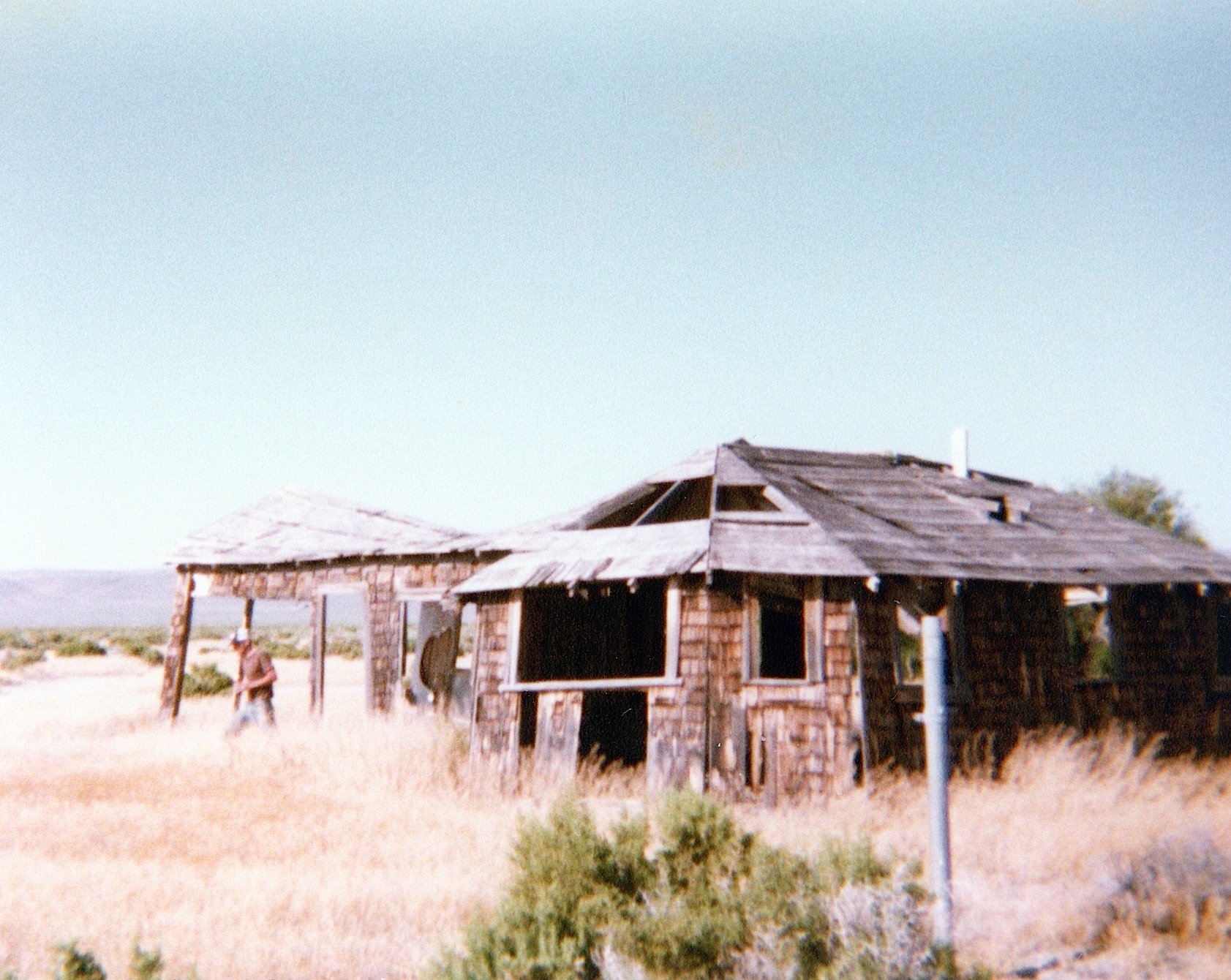
The abandoned Montgomery homestead, eastern Honey Lake Valley, 1983
Every region throughout time has various colorful characters—some passing through, others become part of a community’s fabric. One such notable was the famed Midwest Farmer Artist, Alfred Montgomery (1857-1922). According to folklore, it was attributed that Montgomery’s painting of corn was so realistic that birds would swoop down and peck at his canvass.
In the Midwest, Montgomery, like many a struggling artist, travelled around a lot. In 1911, when traveling back home to his family in Illinois, he was accompanied by a lady friend. His. wife, not pleased with the surprised guest, filed for divorce. All of sudden, Montgomery packed his bags and relocated to Los Angeles. Before he was settled in Southern California, he was looking at a homesite on the east side of Honey Lake. In the fall of 1911, Montgomery did two things in Lassen County—he located a desert land claim south of Amedee, and he held a lecture series at Lassen High School, which he had display of paintings worth $10,000 as part of an exhibit. There was a twenty-five cent admission, with all the proceeds going to the school to establish an art department.
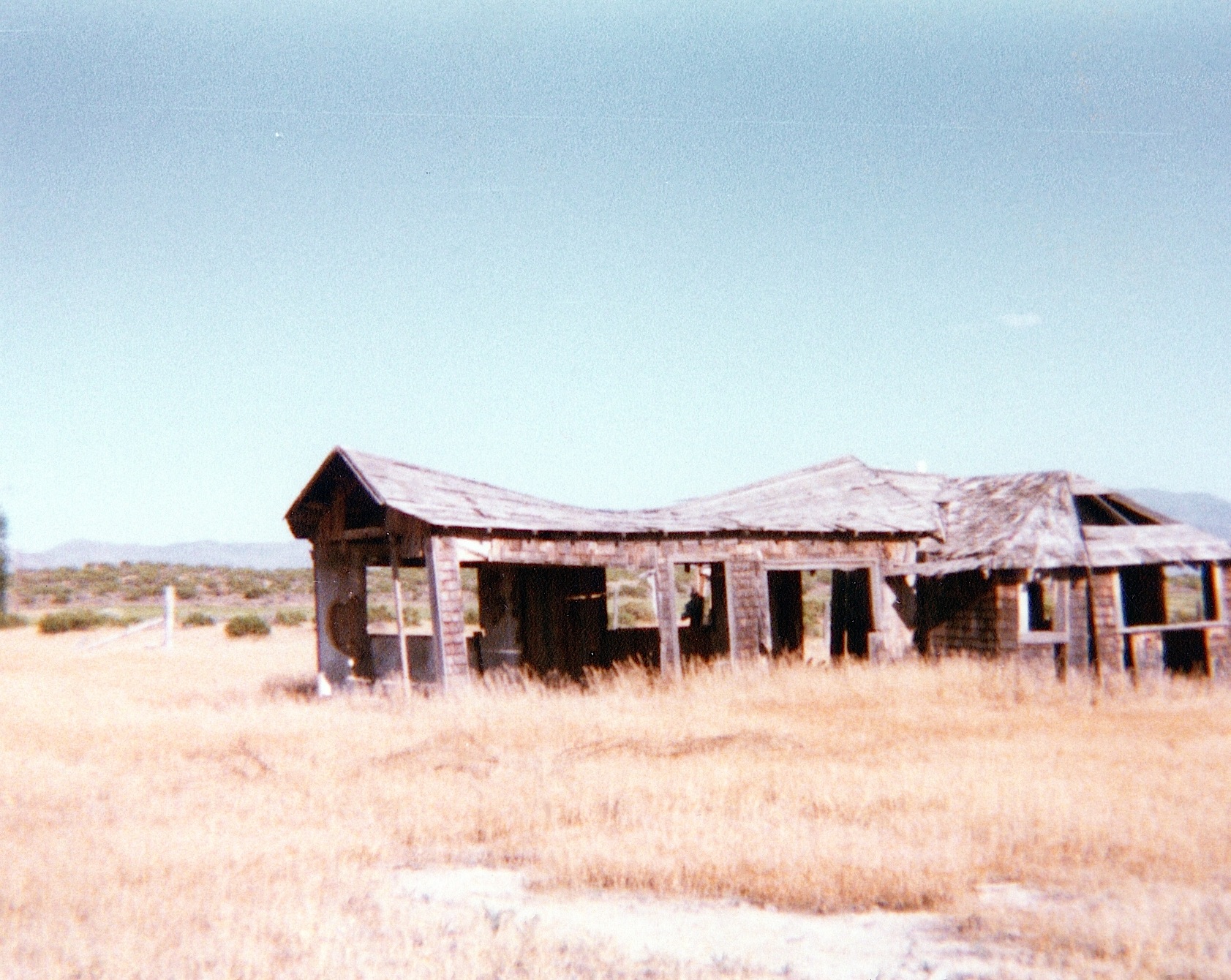
Another view.
In the spring of 1912, Montgomery hired local contractor Fred Rummel to construct a home on his place he dubbed Nowhere. Montgomery, like in his days in the Midwest, would come and go as he saw fit. However, on June 6, 1919, the Lassen Mail reported: “A. Montgomery, ‘the painter who farms and the farmer who paints’ arrived recently from Los Angeles and will spend the summer at his claim south of Amedee. He is now conducting a series of experiments to determine the kind of vegetables best adapted to the soil in that locality. He is firmly convinced that peas, brans, Soudan grass, pumpkins and barley will prove successful, but admits with regret. that is old favorite, pie plant, cannot be raised there on the amount of the mineral salts in the soil.”
After this there is no record of Montgomery returning. When he passed away in 1922, a number of accounts referred to his place at death at Nowhere, which confused a lot of people, when in fact he died in Los Angeles.
The former Gerig Ranch, Grasshopper Valley—California Outdoor Properties, 2019
In early November 1928, the major daily newspapers in Sacramento, San Francisco and elsewhere reported on a proposed plan of a grand colonization scheme for Grasshopper Valley on the old Gerig Ranch. It would a Polish settlement of some 5,000 people. The primary occupation would be dairy farming and that it would include a cheese factory. Some of the reports were sketchy but it was noted there would a be five churches established there. Lassen County residents found the whole matter absurd.
Because of the extensive news coverage, it alerted the State Colonization Bureau to investigate. This state agency’s primary duties was to inspect all colony proposals to make sure that they were not fraudulent land schemes to bilk immigrants.
On December 26, 1928, 210 Polish colonists arrived in California, but instead of inspecting Grasshopper their itinerary was Stanislaus, Tulare and Merced counties. The Grasshopper project was abandoned.