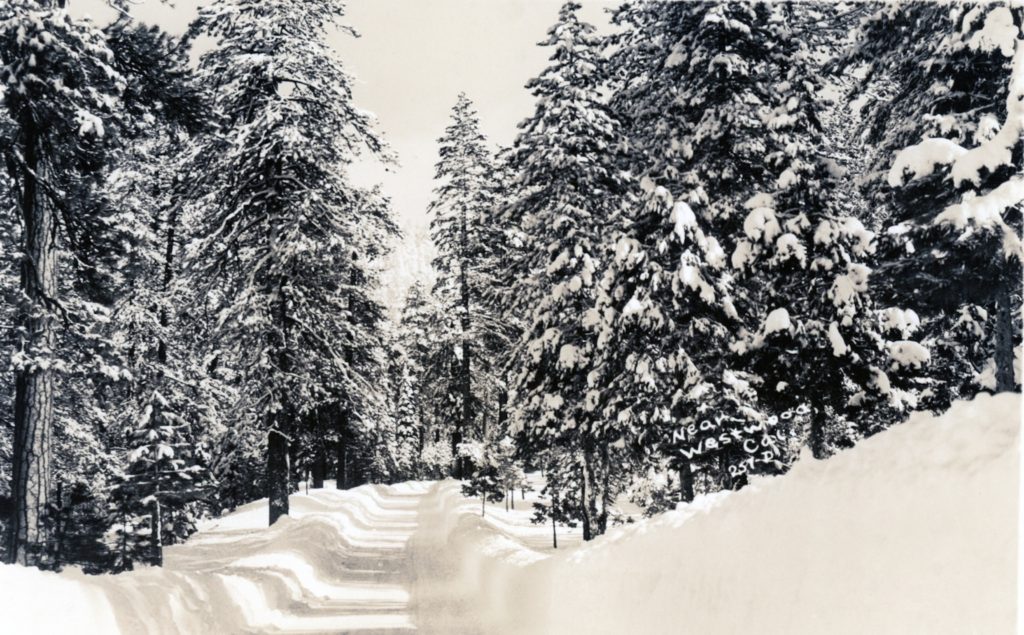
The road has been plowed, but what do you do if there is an oncoming vehicle?
The caption states taken “near Westwood,” but when it was taken remains unknown. When winter snows arrived on the east slope of the Sierra, travel across the mountains came to an abrupt halt. It was that natural barrier why east slope residents since the 1850s sought for their own self governance.
What is intriguing about this photograph is the road is plowed. In the late 1910s when Westwood was established, there was a competition with that community and those in Susanville to see who would be first to cross over Fredonyer in the spring. In addition, no doubt with a ting of spring fever, the two communities led a joint effort to clear each other’s side of the mountain of the snow.
When Highway 36 was completed between Susanville and Red Bluff in the late 1920s, when winter arrived the California Highway Department closed the highway. After intense lobbying, in 1929 the state agreed to plow the road for snow removal, thought initially it was sporadic.
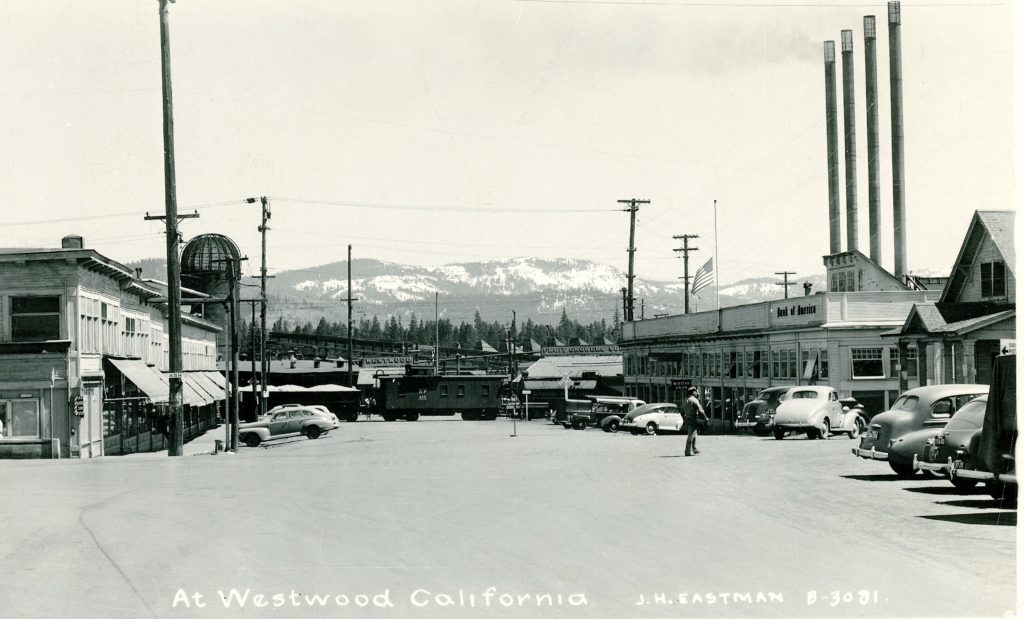
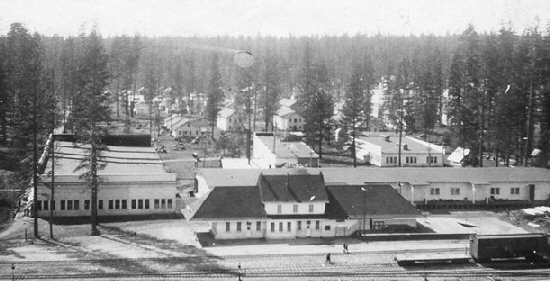
In late November 1940, Susanville painter James Daugherty landed a very big job. Maybe the largest paint job ever in Lassen County. Red River Lumber Company hired him to spruce up downtown Westwood with paint. Company towns were drab affairs and Westwood was no exception. After all in the company’s mind, paint cost money.
Daugherty had the task to the paint the main office building, pearl white; Physicians building ivory and green; fire hall, brown and gray; cafeteria, tea green and the post office as well as the Big Store, buff.
While some Red River officials wanted to paint the residential houses, the majority did not.
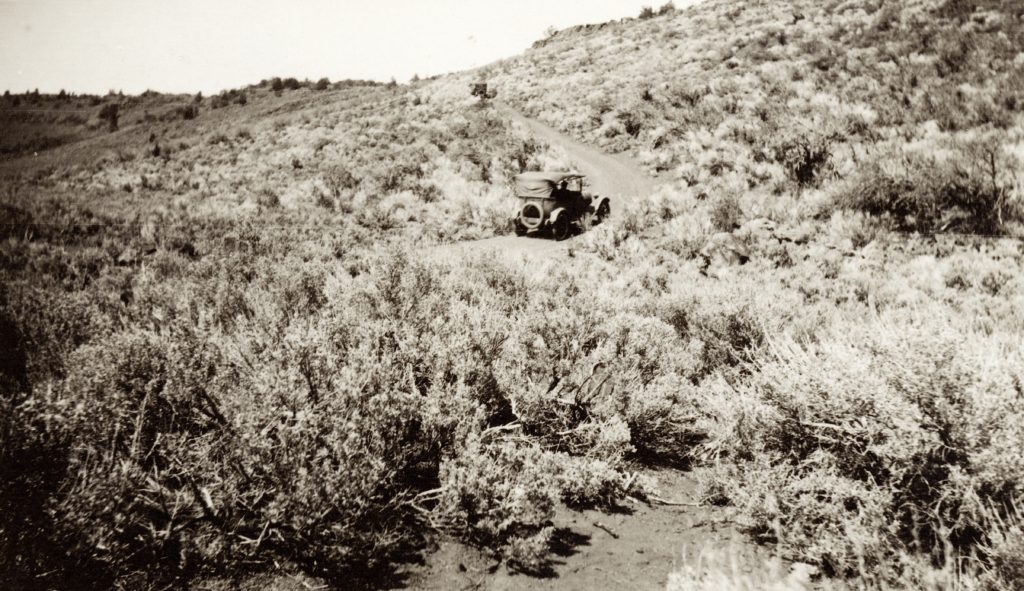
Heartfailure Grade, Eagle Lake, 1921. Courtesy of Lola L. Tanner
By 1920, Westwood residents made up a large segment of visitors to the south shore of Eagle Lake during the summer season. What they desired was the ability to drive to the north shore of the lake. There was a crude wagon road, between the south shore and Spaulding Tract, but it was not in any condition for automobile use.
Enter the Westwood Auto Club. This was an unusual organization created by the Red River Lumber Company. In many ways it served as a de-facto chamber of commerce. The auto club were true to their name in road development and played an important role during the construction of Highway 36.
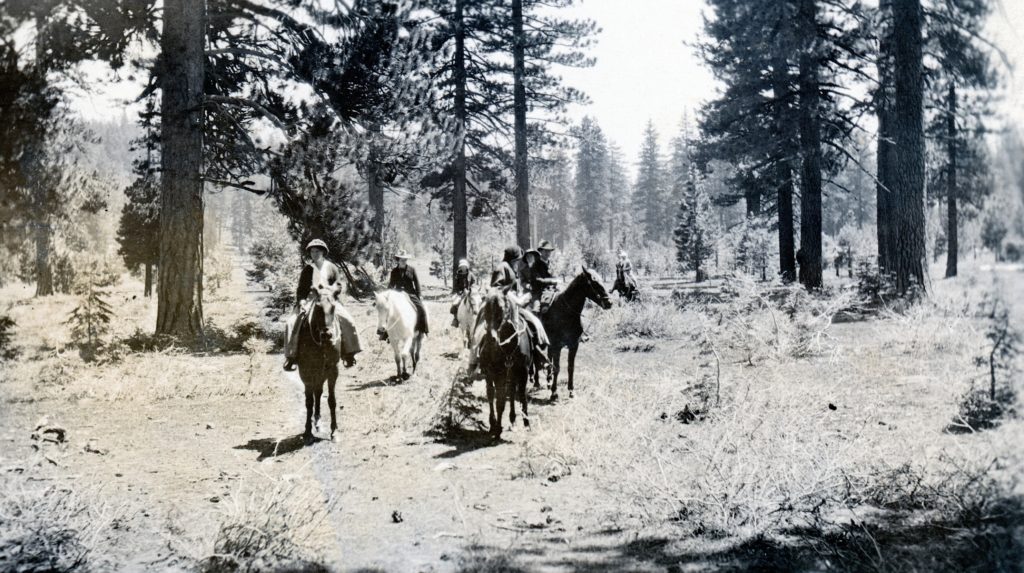
Eagle Lake trail to Gallatin Beach, 1914. Courtesy of Dolores Gasperoni
In the summer of 1921, the Westwood Auto Club led a group of Lassen County and Red River Lumber Company officials on a reconnaissance survey for a road to connect the north and south shores of Eagle Lake. All agreed that the obstacles could be easily overcome, with the only major outlay for a bridge to cross Pine Creek. On the other hand the over all cost would be minimal and Red River would assist with its equipment to make it possible. They all stressed the benefit of people to have access to various features along the lake, and shortly after this outing, work was slowly undertaken. In the 1940s, the road between the south shore and Spaldings was greatly improved when the Paul Bunyan Lumber Company was logging the west side of Eagle Lake.
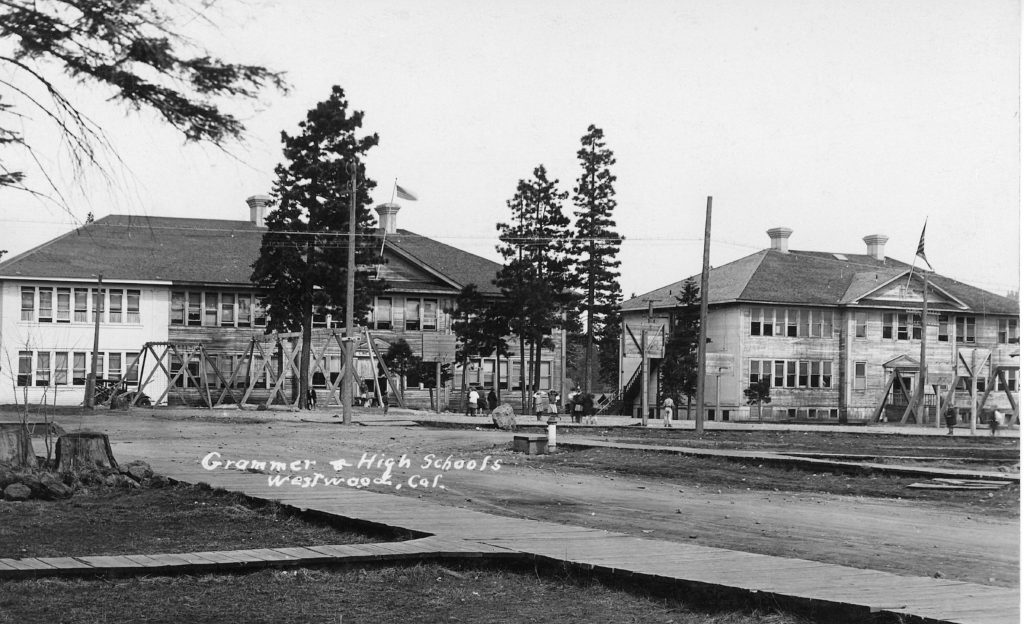
In 1914, Red River Lumber Company opened a private high school, that even included night courses for the benefit of the employees. In the fall of 1916, the high school was converted into a public one with an enrollment of forty students. Initially, the grammar and high school shared the same building, but with increasing enrollments it was determined the high school have a building of its own. In the fall of 1918, a new two-story high school was built adjacent to the grammar school. Dedication of the new high school did not occur until March 8, 1919. Red River paid for the construction of the high school, which normally residents of the school district would have passed a bond measure to do so. However, the State of California paid the teacher’s salaries.
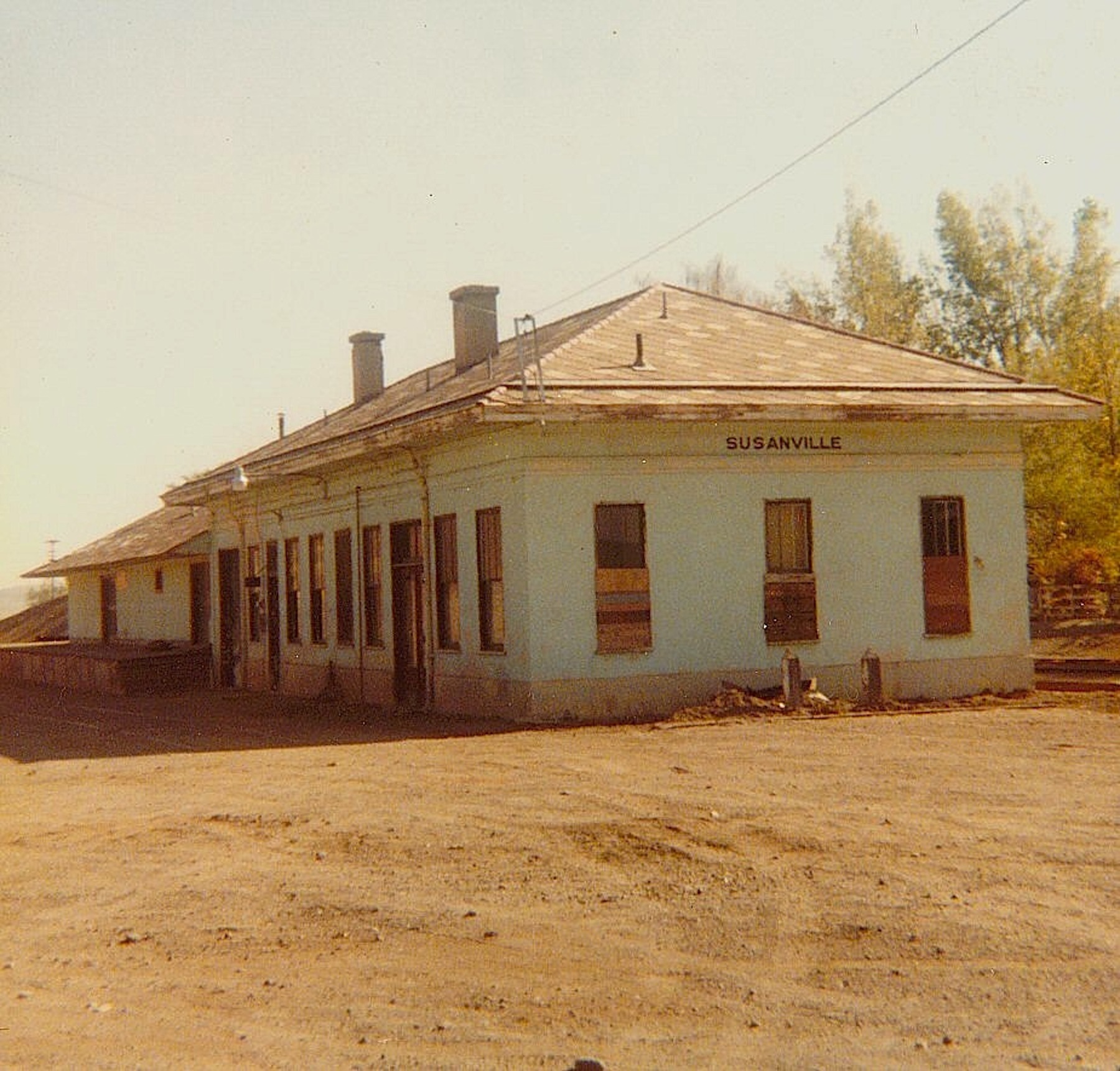
In December 1955, the Southern Pacific Railroad track between Susanville and Westwood experienced severe damage from unusual winter flooding in the Susan River Canyon. Earlier that year, Fruit Growers Supply Company announced it was closing the sawmill at Westwood. With the closure of the mill, freight traffic from Westwood would be minimal, so the Southern Pacific decided it was not worth the cost to make the repairs and closed down that segment of the line between Westwood and Susanville.
Two decades later, witnessed the slow decline of lumber shipments by rail with Susanville’s two remaining sawmills, Coin Lumber and Sierra Pacific Industries. It was just a matter of time when the railroad would shutter the Susanville Depot. That day came on October 12, 1979.
Susanville Depot, September 1978.
Subscribe and support this site for as little as five dollars a month.
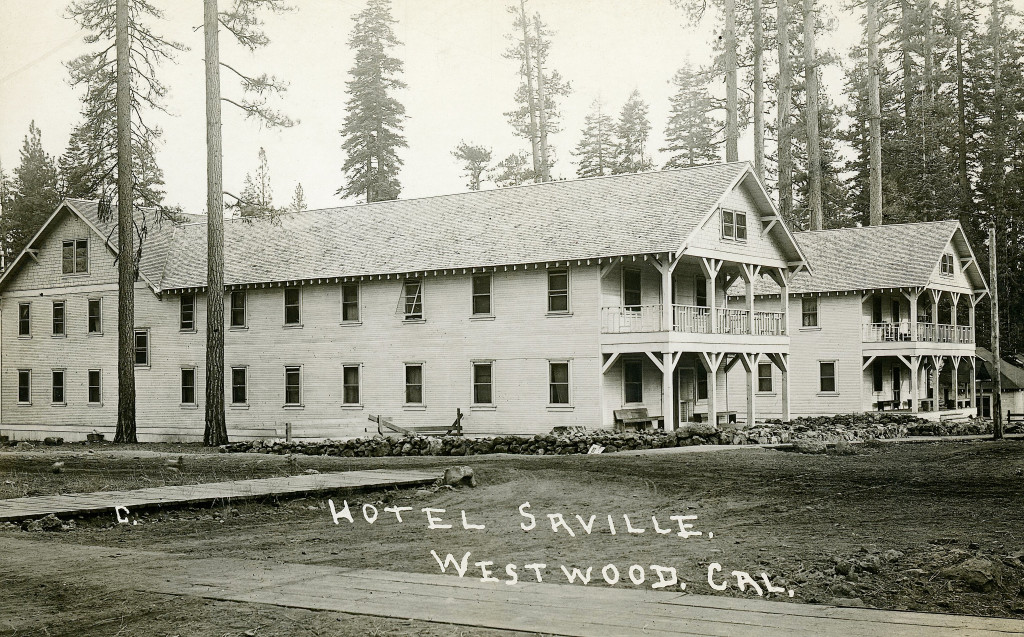
This was a real misnomer, for it was not a hotel, but a boarding house in Westwood. Built in 1913, it was one of the first rooming houses constructed there for Red River’s employees. It was a substantial structure with 250 rooms. Initially it housed Spaniards, though in time many of them relocated across the millpond to Old Town. It was destroyed by fire on March 30, 1918.
Some readers may recall awhile back when I wrote about the 1913 Suppression/Control Burns at Clear Creek. Forest officials who attended documented that event, whether those records exist is not known, discussion about that a little bit later.
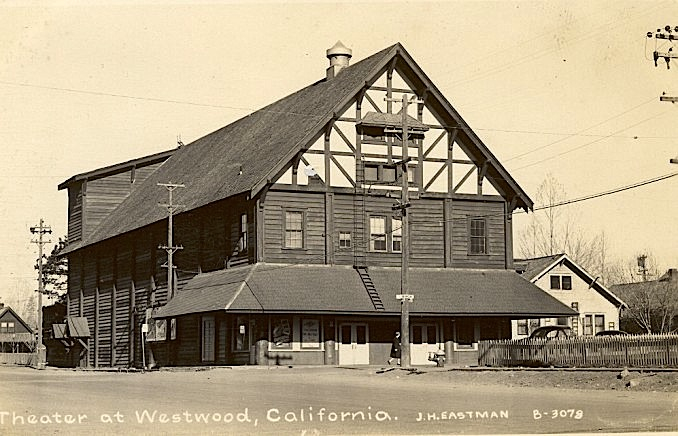
The other day, while reviewing the Lassen Mail, one of two Susanville newspapers, in the Westwood section contained a very short piece concerning news reels doing an educational piece about forest fires, one in particular filmed at Westwood. For those of a younger generation or two, newsreels, which were short educational/documentary pieces previewed in movie theaters and schools. They would eventually go by the wayside with the advent of television.
Anyhow, the Lassen Mail reported on April 30, 1926 12;3 – Fire Pictures for News Reels—One of the news reel companies have a company in Westwood this week making pictures of methods of fire fighting used in the timber industry. A fire was set in order on Wednesday and the fire train rushed to the scene, pictures of various operations being secured.
Westwood’s Fire Train courtesy of Doug Luff
Do the films exist, is an interesting question. I am aware of numerous movies filmed in the region during the 1920s and 30s, but each of those film’s existence has been problematic to locate. Then again, I am aware those who filmed the Westwood Strikes of the 1930s, and offered to share them, but that never panned out. Another instance, Leslie “Les” Mastolier, for seasoned residents founder of Susanville’s Leslie’s Jewelry, was an avid photographer, but also cinematographer. Les filmed everything from skiing down Diamond Mountain in the 1930s, to numerous wildlife studies and interesting community events for decades. His son, Gary, a Alaska resident, contacted me that he had his father’s collection of films and offered the films. That never materialized, so who knows the fate of those films. The bottom line is you just never when and where some interesting archives will surface.
In 1912, witnessed the Red River Lumber Company’s westward expansion from Minnesota to California. The founder, T.B. Walker, turned the enterprise over to his four sons. The site selected at Mountain Meadows, Lassen County initially had no name. Rather peculiar in my thinking that a company is going to spend $3 million to build a mill and company town, and it does not even have name.
Fletcher Walker was in charge of the new town and would be its resident manager. On October 3, 1912 he wrote to the Red River board, i.e., his brother’s soliciting a name. In his letter he wrote:
“I have thought over the name TRRLCO, first letter each word and the abbreviation of company, and talked it over with Clinton and Della [Walker]. They are not very enthusiastic over the name but said it seems like a good business name and sounded pretty good. I have written you on several occasions mentioning the name, but up to present time have not had a very enthusiastic adopting of the name. It seems that unless someone else can come through with a better name that we should officially adopt it.”
There was a sense of urgency as they needed a name to submit an application to the postal authorities. Several names were bounced around including Fletcher’s favorite, “City of Trees.” That, too, was rejected, and the name of Westwood was decided, though it is not known who coined it.
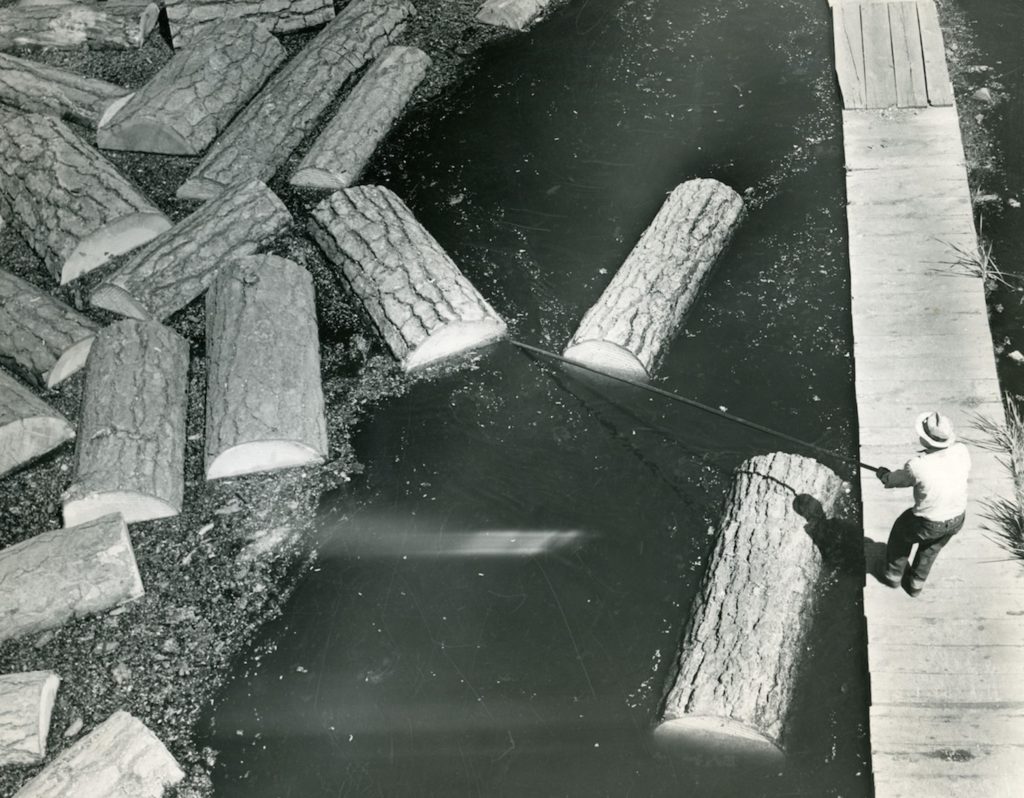
Some times I find it strange to write about the lumber industry that is non-existent in area, with the exception of Collins Pine at Chester. The above photograph are real premium peeler logs. These logs were literally peeled into sheets of plywood. Unlike regular logs that went through the sawmill, these logs were cut into eight foot lengths, unlike the standard thirty-two foot log. In 1924, Red River Lumber Company invested a half-million dollars to add a veneer plant at its Westwood facility. Red River used the trademark Paul Bunyan’s Pine Plywood for its final product. Red River, like so many other lumber companies, did not allow anything to go to waste. The peeler cores were made into railroad ties.
One of the most driest was the winters was that of 1923-24. It also occurred during a twenty year drought from 1917-1937. Susanville received less than five inches of precipitation during 1923-24. It was so dry that winter that in the middle of March, a one-inch snow fall at Susanville caused great excitement. There was even a greater commotion in Westwood when eighteen inches of snow fell. It disappeared in a matter of hours. That was the extent of precipitation for the winter. Continue reading The Dry Winter of 1923-24→