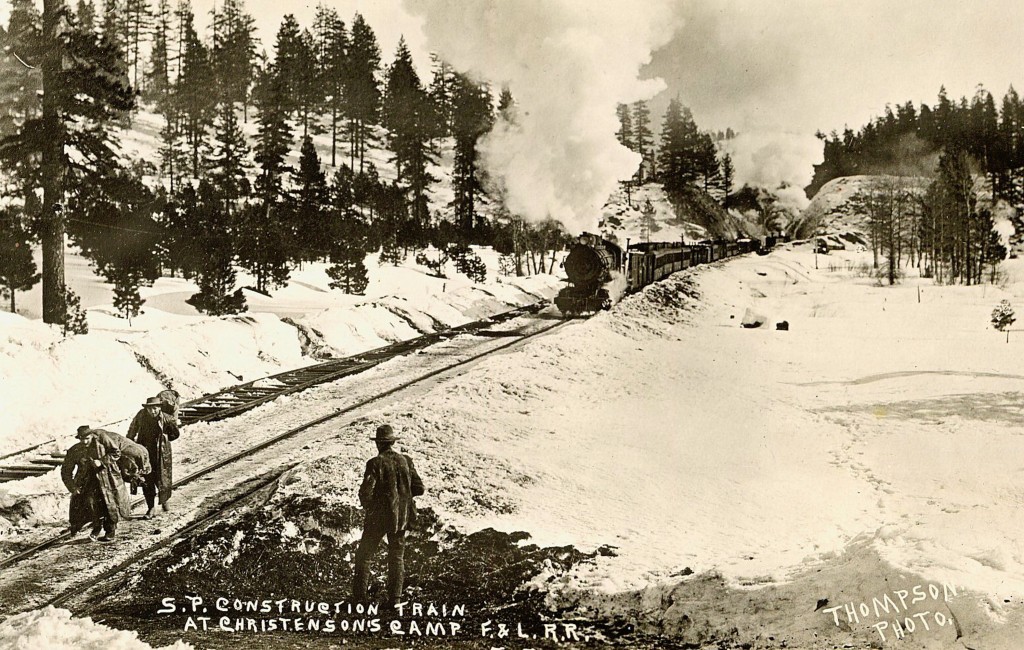
In February 1914, the Fernley & Lassen Railroad reached Westwood. This was welcomed news, since the newly founded community was cut-off from the rest of the world. The first rail shipment to Westwood was a carload of hay. Some today, may find that peculiar. However, the town heavily relied upon horses for most everything. While there were a handful automobiles there, with the heavy snows that winter, they were totally useless. On the other hand, for the railroad’s return trip, 12 million board feet of high grade lumber awaited it. After all, that was the main purpose for the railroad to be constructed in the first place.
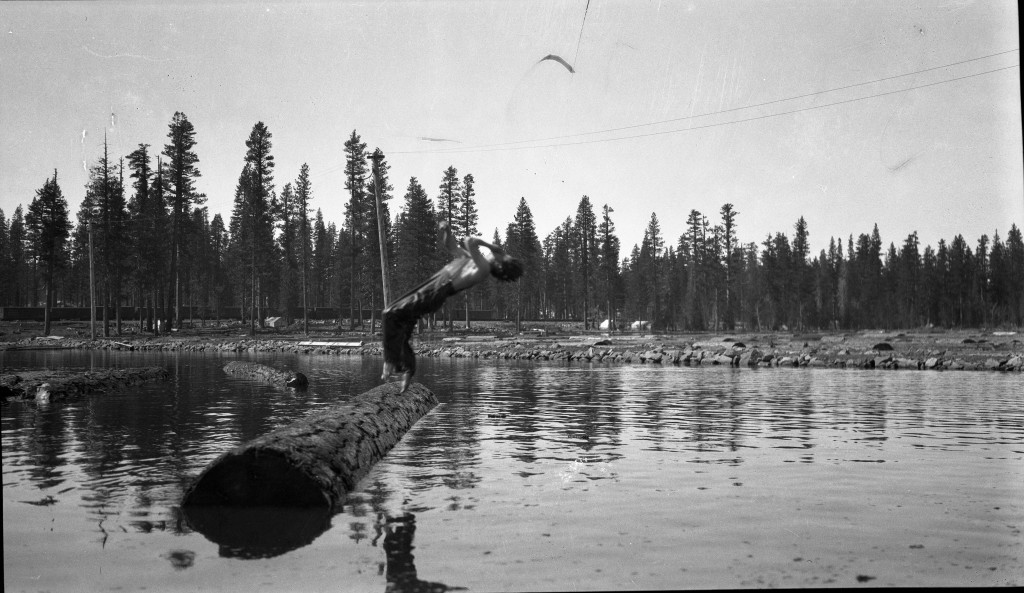
Westwood millpond, 1915, courtesy of Otto Katzner collection
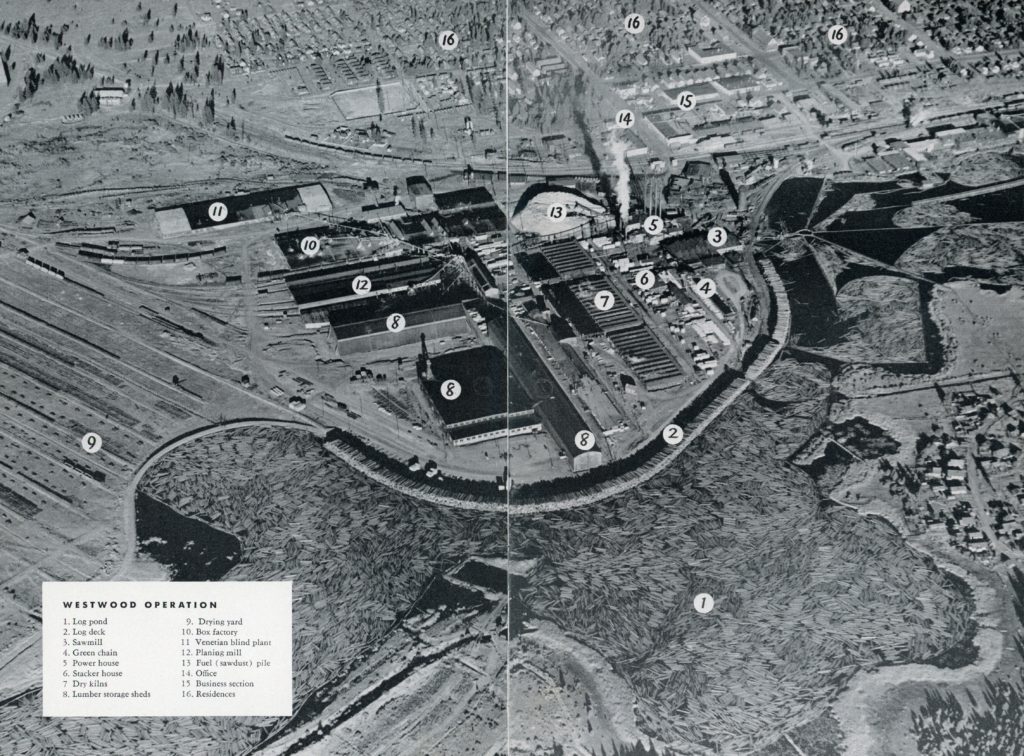
Red River was not only the nation’s largest electrical sawmill, it also built one of the largest millponds, in which several people met an untimely end in it. During the afternoon of July 29, 1914, 19-year-old, Willard Pierce was fishing where Robbers Creek entered the millpond. Others the vicinity were swimming and later left. Later in the day, John Jeffreys discovered Pierce’s body face down in about three inches of water. Jeffreys and Charles Phelan pulled him out of the water, and attempted to resuscitate to no avail. During the Coroner’s Inquest it was revealed that last year Pierce was swimming in the millpond with friends. After swimming, Pierce had a fainting spell and collapsed for no apparent reason. It was presumed that he must have had a spell causing him to fall into the water resulting in an accidental drowning.
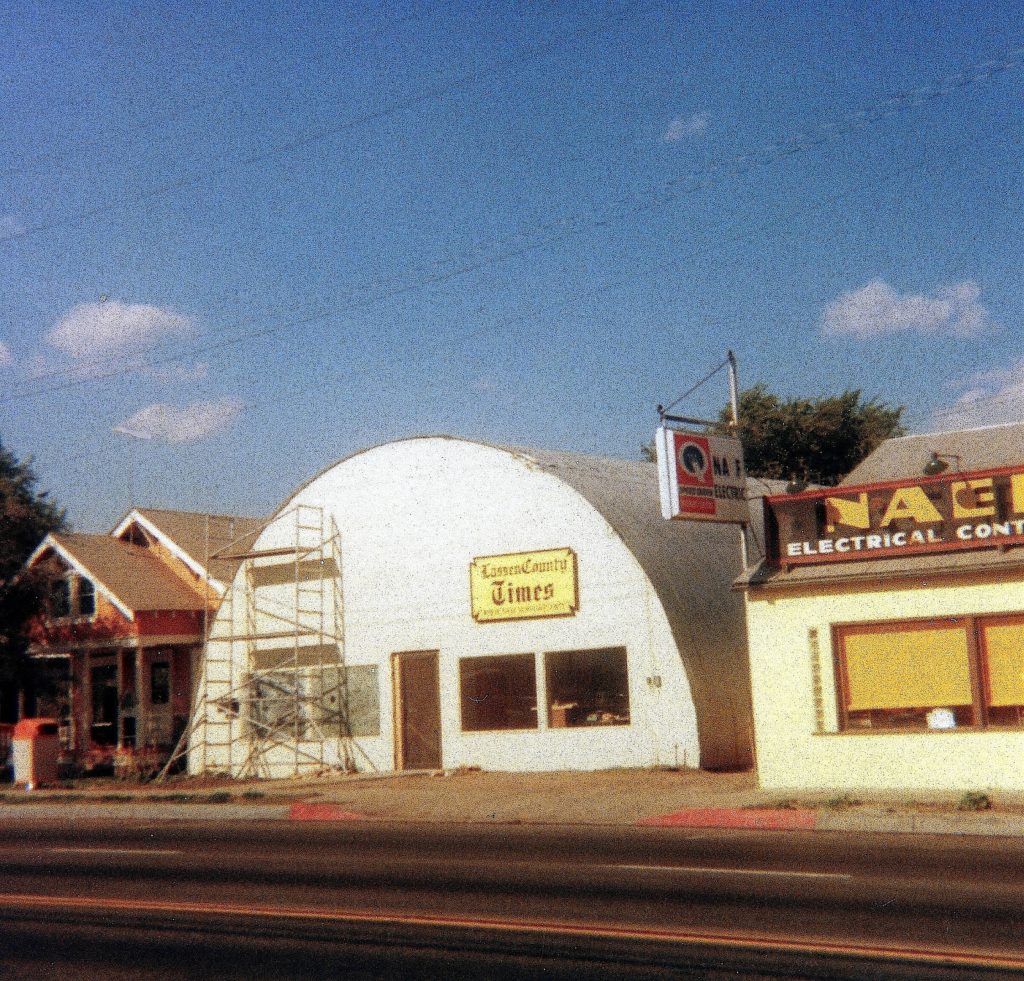
On this date, forty years ago, the Lassen County Times made its debut. At the helm was Martin Hickel, editor, Margie Teeter, city editor and yours truly penned a column entitled “Historic Moments.’
Some of the headline news was the rate hike hearings for CPN, then the local electric company. Congressman Harold “Bizz” Johnson was about to pay the community a visit. Then, there was the ongoing saga over the logging of the Westwood Cemetery.
From time to time, the Red River Lumber Company struggled to keep up with the demand for housing. There was a lot of debate, especially the cost. Initially, the life-span of Westwood was to be twenty years. Fletcher Walker, the resident manager had different ideas.
On September 12, 1922, Fletcher wrote his brother, Gilbert, who resided in Minneapolis, to convince him for his support. Fletcher wrote: “Additional houses would very well materially build up the morals of the crew as it is a conceded fact men with families to support will take more interest in their work and in making good than single men who have gotten into the habit of wandering from job to job and no particular responsibility or care to work steadily. A campaign along the line to build 200 houses and as soon as they are completed build 200 more, if the demand still held out as we could fill 200 houses at this time, if we had them with men of family. Two hundred houses would add more than $200,000 to the annual sales of the mercantile departments as it is impraticable for an average family to get along on less than $1,000 a year. The $1,000 being less than a year’s salary and minimum pay and usually there is more than one employed out of each family.”
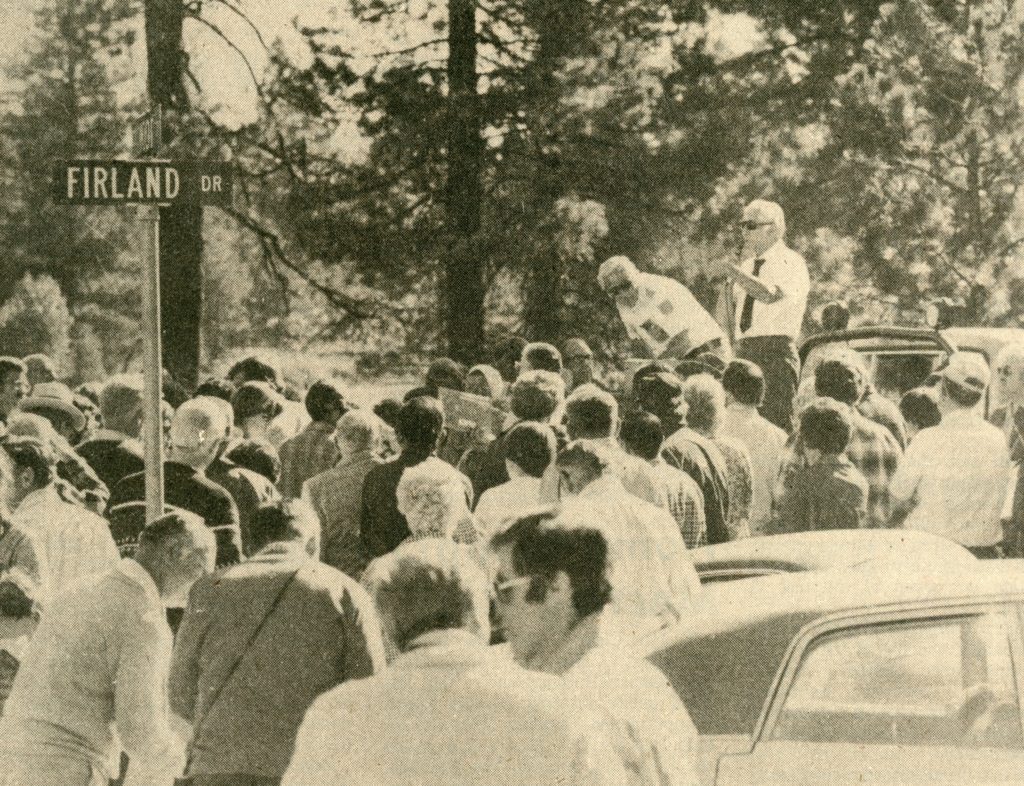
On September 12, 1956, the Fruit Growers Supply Company sold its Westwood operations, i.e., the mill and town to Milton Wershow and David Weiz of Los Angeles for $625,000. The two men operated a liquidation company and it was their original intent to attract other industries to Westwood. When the mill burned down unexpectedly on November 8, 1956 that changed their plans. To handle real estate sales they formed Greater Westwood Inc. After twenty years, on October 9, 1976 they held an auction to sell of the remainder of their Westwood properties. With several hundred people in attendance they sold 76 residential lots and 28 commerical lots.
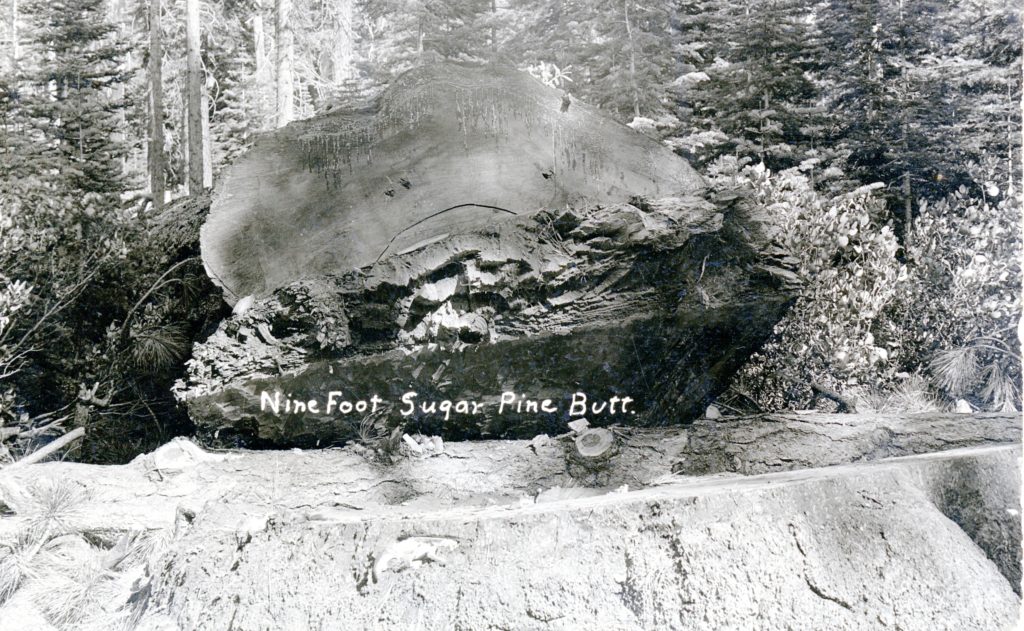
This mammoth tree was cut in 1922 on Fruit Growers property west of Eagle Lake.
In November 1928 the Red River Lumber Company reported that they had felled a 650 year-old sugar pine tree at Camp 74, in Plumas County, west of Chester. It required three railroad flat cars to bring the tree to the mill in Westwood. It was 101 inches in diameter at the stump and 84 inches at the second cut.* The tree contained 27,570 board feet. Red River noted that this was the largest tree ever brought into the mill.
*For those not familiar trees are bucked/cut into 32 foot lengths.
Yesterday, I briefly mentioned how Red River Lumber Company sold a mill site at Chester to the Collins Pine Company. What I did not include, was the Red River offered its plant at Westwood to Collins, which the latter declined. Red River was so desparate to unload its Westwood plant, but no one wanted it for various reasons. The plant itself, as one can see from the above illustration, just how large a facility it was. It did not help either that many of its facilities were showing their age. Then, of course, there was one other huge factor was the lack of timber tributary to Westwood.
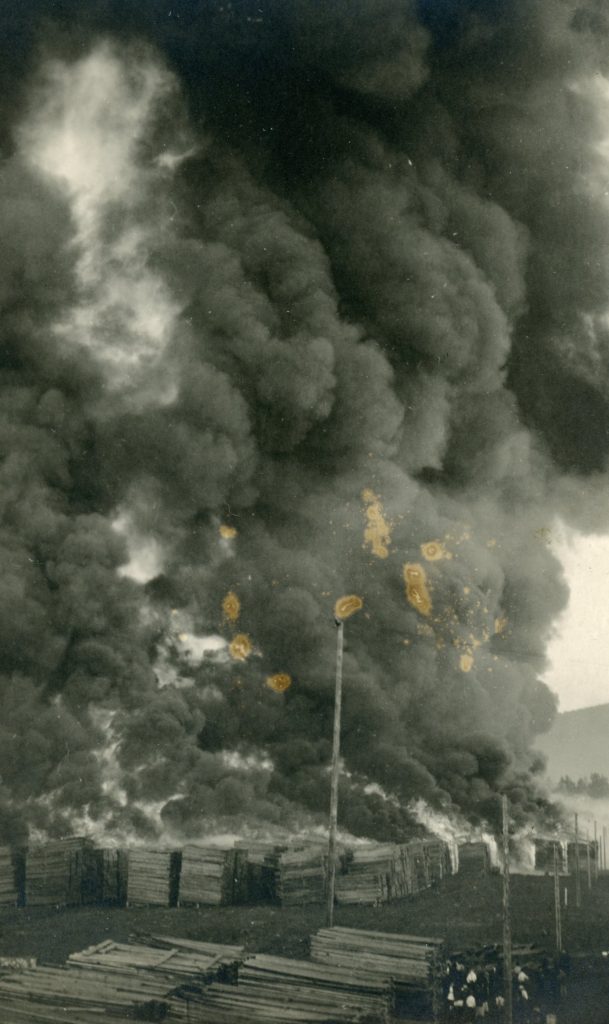
September 17, 1917. Courtesy of Walter “Doug” Luff
On September 17, 1917 at approximately three in the morning, a fire of unknown origin erupted in the middle of the south lumberyard. It was not until noon, with 2,000 men battling the fire, that it was contained. Fortunately, it was one of those typical fall days with no wind otherwise the entire plant would have been in jeopardy. The final result was that 60 million board feet of lumber was destroyed. If there was one bright spot, it was that the lumber that was destroyed was deemed of such low grade as to be only suitable for the box factory. However, it was still a considerable loss to Red River, as the value set at two million dollars. Insurance adjusters, however, placed the loss at $800,000. It was determined the fire was of suspicious origin, no doubt started by an arsonist. While an investigation did not provide any real clues as to the individuals responsible, phosphorous bombs were found on the property.
One of the reasons the Red River Lumber Company located and created the town of Westwood, was due to its remoteness, thus creating a buffer from outside influences such as organized labor. By the 1930s, however, Red River had to deal with labor unions, and it was not by choice. There would be some very ugly labor disputes at Westwood. Continue reading Westwood’s Kangaroo Court→
The reservoir as it appeared in 1914. Minnesota Historical Society
The drought of 1924 caught many people off guard. Springs that had never gone dry, went dry. At Westwood the unthinkable happened when Duck Lake the main water source of Goodrich Creek went dry. Up until this time, it was Westwood’s water supply. Red River’s resident manager, Fletcher Walker wrote on May 10, 1924: The water supply for the town is failing us quite rapidly and it is now a race to get water from Clint’s Camping Ground Spring [Clear Creek] before the Goodrich Ditch fails us. We are running the town on meal hours so every one can get water for their meals and then closing it off. To do this requires water taken from the millpond.” As Walter Luff, Jr. recalled they used millpond water to bathe with, and the water tasted like turpentine.