Tag Archives: Susanville

St. Francis Hotel

St. Francis Hotel, circa 1919. Courtesy of Art Almeda

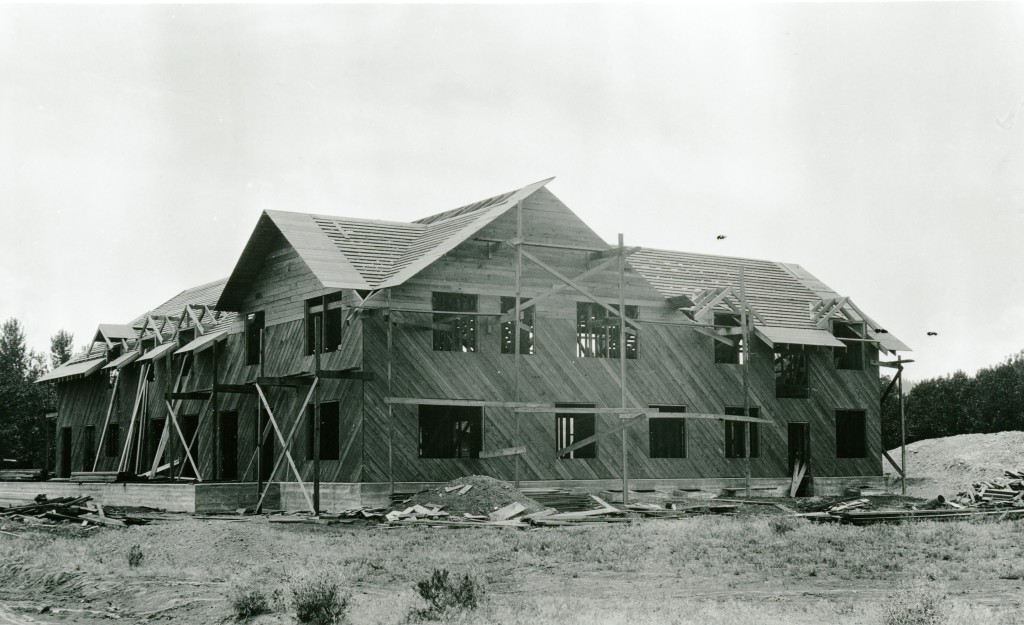
In 1907, Franceska Murrer Neuhaus, with her husband, Ben, retired from their Willow Creek Valley ranch and moved to Susanville. Not to be idle, she  kept busy investing in several commercial enterprises. In 1913, flush with money from the sale of the ranch, to her son, Edward Murrer, she had one more venture to undertake.  At this time, she hired Nevada architect Frederick deLongchamps to design a hotel at corner of Main and Union Streets.* She named her new enterprise the St. Francis Hotel.  Franceska was well versed in the innkeeping business. For years, the Neuhaus home in Willow Creek was well known for its hospitality to accommodate travelers. Her daughter, Rose Bagin, operated hotels at Hayden Hill and Susanville. Rose’s home in Susanville happened to be conveniently located behind the St. Francis, and her elaborate flower garden complimented the hotel. When the St. Francis opened its doors in 1914, Franceska’s son and daughter-in-law, Bill and Flora Neuhaus managed it.

*deLongchamps first Susanville building was the Lassen County Jail completed in 1911.

Become a supporter for just $5 a month to ensure quality history continues. Click here. After all you do not want to miss the second installment on the St. Francis.

Lassen Weekly Mail

Lassen Mail391
Click to enlarge

For over a fifty year stretch Susanville was home to two newspapers the Lassen Advocate and the Lassen Weekly Mail. 

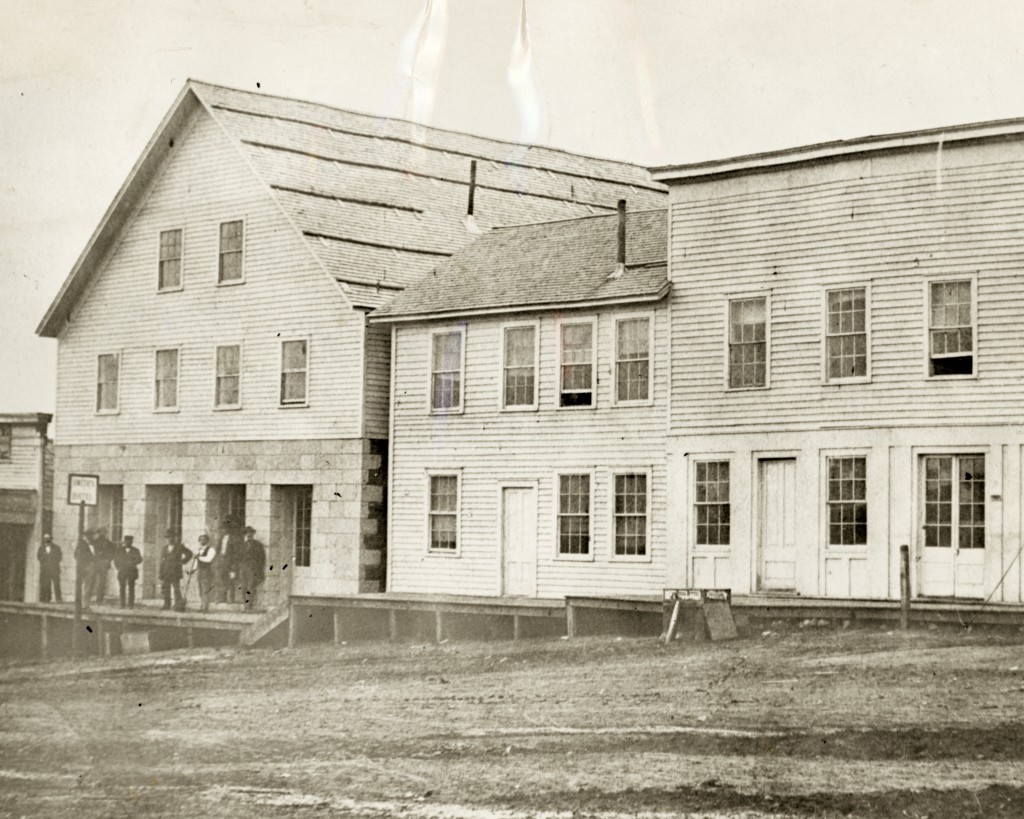
On October 25, 1886, the Mail made its debut on the streets of Susanville with Nevada newspaperman Benjamin M. Barney at its helm.  Barney, however, lacked capital for his new enterprise and made M.B. Bransford, a partner. In addition, he borrowed $1,088.38 from Robert Tremain to purchased a new printing press.  In 1891, Bransford became sole proprietor and  moved the printing office into the Masonic Building.

In 1893, the Masonic Building and much of Susanville’s business district was destroyed by fire. Bransford abandoned the newspaper, and Tremain who was still owed money for the printing press, took over the paper. Tremain’s son, Joseph Mellow operated the paper and eventually purchased his parent’s interest.

Tremain had newspaper experience, and even worked at a time as foreman of the Lassen Advocate. Tremain’s journalistic endeavors bordered on the mundane, with the exception of one big topic, the Red River Lumber Company. Tremain and Red River’s owners, the Walkers became real cozy. This paid big dividends, and the Mail published the inside scoop on all of Red River’s proposed activities.

In 1911, when Susanville was on the verge of tremendous growth, Tremain sold the newspaper, and soon ushered in the era of the Cook family, more about that later.

Become a supporter for just $5 a month to ensure quality history available to all. Click here.

The Grand Cafe – Early Years

Interior of the original Grand Cafe, though some the fixtures and furnishings were used in the current building. Courtesy of Helen Sargent
Interior of the original Grand Cafe, 1931. Standing behind the counter Ted Zuber, Vaso Gurasevich, Ernie Martin and Pete Zigura. To the right standing is Steve Sargent, with  his eldest son, Steve Jr. and seated Ed Zalac. Courtesy of Helen Sargent

In the early 1900s a number of Susanville’s restaurants were operated by Chinese, though serving American cuisine.  The Grand Cafe was just such an establishment. It was established in 1909 by Kwan Wong in the rear of the Pioneer saloon. Continue reading The Grand Cafe – Early Years

Susanville, Oregon

Old stamp mill at Susanville, 1978. Courtesy of Tom Armstrong

Besides Susanville, California there is another Susanville, just up Highway 395 near John Day, Oregon.  However, it has seen more livelier times.

It was a mining camp dating back to the mid-1860s, though its post office was established in 1901 in a dubious manner. Its biggest claim to fame was in 1913 and the discovery of the Armstrong nugget, that weighed 80.4 ounces and was believed to the largest of its kind found in Oregon. The nugget is on display at US Bank in Baker City, Oregon. After the 1930s, prosperity there dwindled and in 1952 the post office was closed. Today, its only inhabitants are prospectors during the summer, and a few curious seekers.

Never miss a story, Subscribe.

Susanville – Riverside Hospital

Riverside Hospital, courtesy of Betty Barry Deal

This hospital was located at 2005 River Street, Susanville. There was a time in the area’s past that there were two local institutions where one was born–Potter’s and Riverside.  My siblings were born at Potter’s, while I was born at Riverside, a few years ago. Rarely, did births occur at the Lassen County Hospital. During the 1950s, my Aunt Irene Purdy Trout worked at the latter, which they affectionally referred to as “County.” She recalled only one birth there for nearly a decade that she worked there.  That all changed in the early 1960s, when a new Lassen County Hospital was constructed next to the old one.  By that time, Ma Potter after some 30 plus years as a midwife was ready to retire and changes were on the horizon with Riverside and its aging facility in which it would be torn down in 1969.

It is never too late, subscribe today and enjoy tomorrow with daily notifications. You can also surprise someone with a gift subscription.

Sergi-Sacco Wedding

Sergi Cake
The Sergi-Sacco wedding cake. Courtesy of C. Derek Anderson

One just never knows how pieces of history make it to the surface. The above photograph is just one example. When the  bar from Marion’s on Weatherlow Street was being moved to a new home in Chester, some interesting material somehow managed to get lodged behind the bar. There was an assortment of about a dozen Red River Lumber Company photographs and this wedding cake picture.

On 10:00 a.m. Sunday, November 15, 1936 at Sacred Heart Church, Rose Agnes Sergi and James Sacco were married. The bridesmaids were Louise Saffores, Concha Larrea and Camilla Alosi. The best man was Marion Larrea. After the ceremony a wedding breakfast was held at the Veteran’s Memorial Hall, with 500 guests. The centerpiece at the bride’s table was a magnificent five-foot tall wedding cake, weighing 250 pounds.

Subscribe and support this site at $5.00 a month, that is a bargain costing 16 cents a day.


Susanville Ranch Park, Part II

The ranch as it appeared in 1922, when Fruit Growers owned it.

On October 30,1919, the Fruit Growers Supply Company purchased it from McKissick Cattle Company, for approximately $29,000. Fruit Growers anticipated using Bagwell Springs for a water supply and they would use the ranch land to provide winter pasture for the horses they used in logging. Fruit Growers constructed a water pipeline from the ranch to the mill, but it was never used due to litigation filed by other water right users. Fruit Growers briefly operated their own dairy there and, in 1923, leased it to the O’Kelly family who operated Lassen Dairy through the 1950s. In 1934, Fruit Growers offered to sell the ranch to the City of Susanville. Fruit Growers cited it would make an ideal golf course, that the money received from the golf course could be used to develop the remainder of the property into a park. The City liked the idea, but said no. In 1935, Fruit Growers sold the ranch to the Republic Electric Power Company who wanted to acquire Bagwell Springs as an additional water supply for Susanville. Over the years, that Company went through numerous reorganizations and became CP National. In 1984, CP National donated the ranch to Lassen County, and it is now a county park.

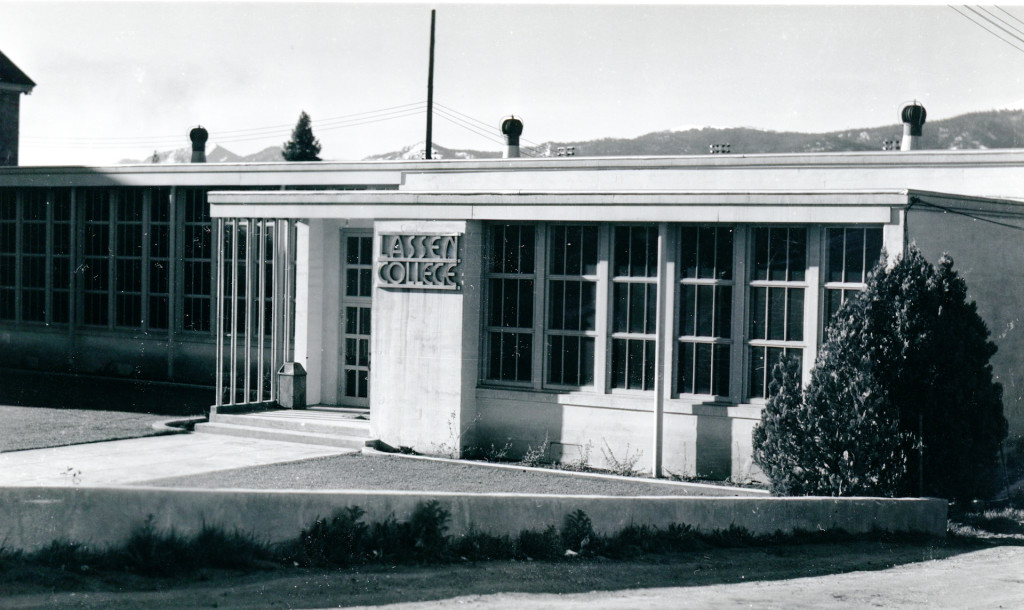
An interesting footnote to the story is that Lassen Community College examined the property for a future campus back in the 1960s, but the asking price was too expensive.

It is never too late, subscribe today and enjoy tomorrow with daily notifications. You can also surprise someone with a gift subscription.

Susanville Ranch Park, Part I

This is how the ranch appeared in the early 1900s when the Longs owned it.

In November 1855, Moses Mason claimed this property and became the second person to file a land claim in the Honey Lake Valley. On September 12, 1856, William Weatherlow located on Mason’s abandoned claim and lived there until his death in 1864. William B. Long purchased the property from Weatherlow’s Estate. In the early 1880s, James Bagwell located at the north end of the Susanville Ranch. In the mid-1870s, Abner and Margaret Van Buren settled on the western end of the property. By 1898, William B. Long’s son, John T., had not only purchased Van Buren’s and Bagwells’ properties, but that of his father. He consolidated these lands into one ranch. On June 2, 1913, Long, heavily in debt with his extensive ranch properties and a slaughterhouse in San Francisco, deeded this property to Alexander & Knoch, whom he owed $13,362.11. Alexander & Knoch, in turn, sold it to the McKissick Cattle Company.

It is never too late, subscribe today and enjoy tomorrow with daily notifications. You can also surprise someone with a gift subscription


Knoch Building Fire

The aftermath.
The aftermath.

On August 9, 1898, the Ladies’ Literary Society held a fundraiser on the courthouse lawn to benefit the Mountain Echo Band. The event was well attended, and was to be followed by midnight banquet at the Masonic Hall, which had recently been acquired by David Knoch. At around 10:30 p.m. the alarm of fire originated with the clanging of the fire bell three blocks to the north. At first, those gathered at the Courthouse thought it was a false alarm. They could not see any signs of smoke or flames. By the time when it was realized the Masonic Hall was on fire, everyone quickly dispersed. Continue reading Knoch Building Fire