Tag Archives: Susanville

Freak Parties!

This 1931 gathering was held at the home of Blanche & Ike Knoch, frequent hosts of such events. Courtesy of Hank Martinez
This 1931 gathering was held at the home of Blanche & Ike Knoch, frequent hosts of such events. Be sure to click on the photograph for a larger image. Courtesy of Hank Martinez

Back in the 1920s and 1930s certain segments of Susanville’s Society entertained in a variety of formats. While there were numerous card groups to pass the time, others craved something a bit more exciting. These, of course, were costume parties and the themes as varied as the host/hostess.

It is interesting to note that these “freak parties,” as they were called, were quite popular during prohibition and less so afterwards. Whether alcohol refreshments were served, is anyone’s guess, but Susanville residents enjoyed their libations during prohibition.

In any event, maybe there is some creative type who might like to host a freak party in the near future. If you do,  be sure to send me an invite. It certainly appears to be enjoyable way to spend an evening versus other entertainment venues available.

It is never too late, subscribe today and enjoy tomorrow with daily notifications. You can also surprise someone with a gift subscription

Built When?

The J.A. Gilman Residence at 1913 Main Street was built in 1898. Today it is the office of Town & Country Real Estate.

Awhile back, when browsing through the Lassen County Times I noticed a local realtor’s display ad that stated the original First Baptist Church located on the corner of Nevada and South Gay Street was built in 1940. This ad appeared again in the October 27 issue, and now provides the correct date of construction of 1913-14.

This got me interested in what other erroneous material realtors have in their listings.  According to the online listings 1940 was a banner year for both commercial and residential construction.  The listing for 506 Cottage Street, where the Carver family has resided for many decades the realtor states it was built in 1940. However, it was built in 1889 for A.E. DeForest. Further down Cottage at 705, the current home of Iron Horse Gym the realtor states it was built in 1965. For many a seasoned resident can clearly dispute that, as it was built in 1946 for Williams Furniture.

The list goes on and there are some real extreme ones out there. As the old saying goes, “buyer beware.”

It is never too late, subscribe today and enjoy tomorrow with daily notifications. You can also surprise someone with a gift subscription

Susanville Bordellos – The Early Years

Devil's Corral Bridge  & Trestle, 1935.
Devil’s Corral Bridge & Trestle, 1935.

Just an update, and it is not my intent to do this as teaser! The text is ready, but I need to photograph two locations, one a grave and the other the oldest house of prostitution still standing. The latter is not where one would think.  My ability to get around improves, and if all goes well this weekend, I will have an assistant to photograph the above, plus more, like the original location of Soldier’s Bridge, the 1860 military encampment.

The location of the above photograph has some significance to Susanville’s early brothel history for an event that occurred there in 1908. Stay tuned.

It is never too late, subscribe today and enjoy tomorrow with daily notifications. You can also surprise someone with a gift subscription

Susanville’s Quonset Huts

October 18, 2015
Paulson Welding Shop, October 18, 2015

World War II ushered in a new architectural style, that after the War was adopted by the civilian population.

The two most notables one was the old Naef Electric building in the 1800 block of Main Street. After it closed its doors circa 1977, it has been home to numerous enterprises. In the fall of 1978, it is where the Lassen County Times made its debut.

The other is Poulsen Welding Shop located on Richmond Road and Riverside Drive, and carries with it, an important historic significance.

In the 1930s, Bigelow and Poulsen operated a blacksmith shop at this location, in which Poulsen would take over the business and branching out into welding. On July 11, 1946 a fire destroyed Poulsen’s shop and provided the catalyst for city annexation.  The City was unable to respond to the fire as the city limits stopped on the north side of the Susan River, while Poulsen’s was on the south side, and outside the City. Efforts over the years to annex areas to the east of Weatherlow and south of Susan River had failed. The Red River Lumber Company which owned the Milwood subdivision fought efforts for fear of property tax hikes.  Residents of the outlying areas wanted services such as fire protection.

Thus, the movement for “unification” was born.  On April 8, 1947 a special annexation was approved by the voters. Susanville’s Main Street now extended from Weatherlow to Fairfield Avenue.  The City’s land mass quadrupled in size.

It is never too late, subscribe today and enjoy tomorrow with daily notifications. You can also surprise someone with a gift subscription

Queen Lena I

Queen Lena
Queen Lena the first, September 24, 1902. Courtesy of Betty Barry Deal

As promised, here is the story behind the coronation.

On September 24, 1902, Miss Lena Long won a lively contest to be crowned Queen, which was part of the festivities of the first Lassen County Fair to be held in ten years.

The coronation was a highlight of the fair, which began at 10:00 a.m. Queen Lena I and her attendants rode in decorated carriages from South Gay Street to Main and then to the head of Main Street where the new bandstand had been erected. When she arrived at her throne the Lord Mayor, E.V. Spencer performed the Crowning Ceremony. It was reported that, “Queen Lena as she sat on her throne looked the ideal Queen. Her robe, one of the most handsome money could procure, could not have been worn by a more lovely woman. Tall, stately, of the brunette type of beauty, Queen Lena is one of the most handsome of California’s fair daughters and as every one knows, California contains more lovely women than any spot on earth. “

The conclusion of the coronation was followed by a street parade. In the evening a reception and dance was held at the Emerson in honor of Queen Lena.

Lena later married Fred D. Hall and spent most of her life on their ranch near Standish. She passed away in Susanville in 1946.

It is never too late, subscribe today and enjoy tomorrow with daily notifications. You can also surprise someone with a gift subscription

Susanville – 30 South Roop Street

LCT 4:7:79203
30 South Roop Street, Susanville, 1979.

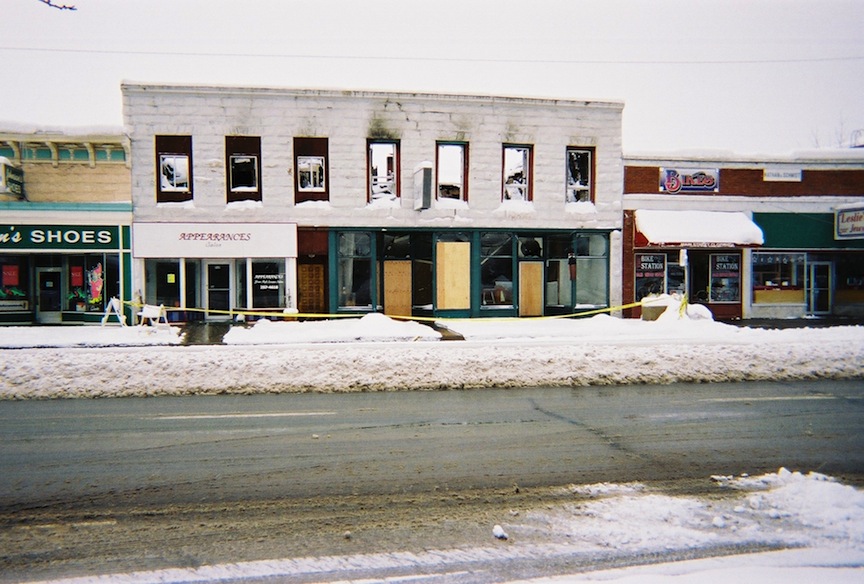
Only two structures were built on this lot. The first was the residence built in the mid-1870s, and that structure stands today at 250 South Roop Street.

In the 1920s saw the invasion of chain stores to Susanville. They were met with mixed reaction. No matter what your opinion they were here to stay.

In 1939 the residence was moved to its current location to 250 South Roop Street.  It was replaced with the current structure which when completed housed Susanville’s first Western Auto. Business was so good it had to move to larger quarters on Main Street.  Since then it has a few different occupants. For many years, it was the office of Dr. C.I. Burnett. It was also the dentist office of Dr. Frank  Packwood. In 1979 for a brief period it was the home of the Lassen County Times. Since then it has been the office of Carol Curry, CPA.

It is never too late, subscribe today and enjoy tomorrow with daily notifications. You can also surprise someone with a gift subscription


Susanville – Knoch Building

Knoch Building, courtesy of Verna M. Wood

Susanville’s Knoch building has endured a lot since it was first constructed back in 1893-94. The building’s location on the northwest of corner of Main and Lassen Street was originally occupied the local Masonic Lodge. The town’s horrific fire of 1893, where a majority of its business district was destroyed, including the Masonic Lodge, changed its landscape.

The Masons determined like the proverbial phoenix embarked on an ambitious plan to rebuild. The two-story native stone was dedicated on July 4, 1894.  The $20,000 structure was more than the Masons could afford and seven months later looked at options to dispose of it. One of the biggest creditors was David Knoch who lent the Masons $7,650.  Knoch, a Mason himself, offered to forgive the debt in return the Masons would deed the property to him. A lot of contentious wrangling took place, but in 1898 Knoch became owner of the property, and it remained in the family until the 1950s when his granddaughter Jeanette Worley sold it.

It is never too late, subscribe today and enjoy tomorrow with daily notifications. You can also surprise someone with a gift subscription

Susanville – Richmond Road Bridge

Richmond Road Bridge, circa 1910. Courtesy of Lola L. Tanner

Yesterday, we examined the route out of Susanville’s western boundary. For some odd reason, I must have transportation issues on my mind.  To leave town to the south, required crossing the Susan River. Just like how Pine Street at one point became Prattville Road, the same name change occurs wherein South Weatherlow Street ends on the north side of Susan River and after one crosses the bridge, the route becomes Richmond Road.  The wooden bridge crossing the river was a contentious issue between Lassen County and the City of Susanville once the railroad was constructed. Back then, the river served as the southern boundary of Susanville. The wooden bridge could not support the heavy freight arriving at depot on Richmond Road.  It took some time for the two entities to agree to split the costs for a new bridge.

It is never too late, subscribe today and enjoy tomorrow with daily notifications.

Prattville Road

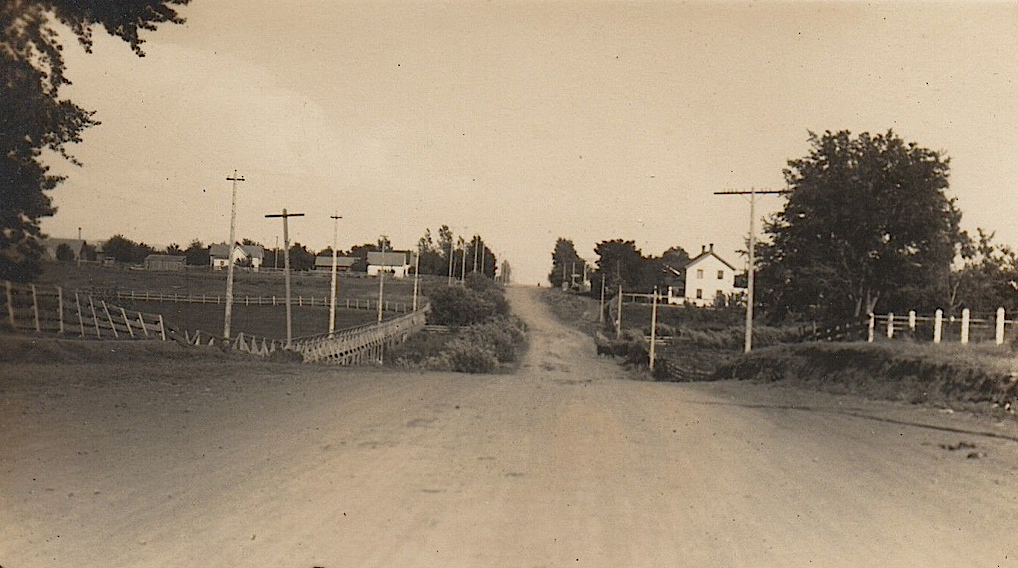
Susanville's North Pine Street, January 1916.
Susanville’s North Pine Street, January 1916.

Last month when I wrote about Plumas Pines, someone inquired about Prattville Road.  Prior to the construction of State Highway 36, west bound travelers from Susanville ventured up North Pine Street, which at that time ended at North Street. From that point onward it was designated as Prattville Road. The original town of Prattville was located at Big Meadows, Plumas County prior to the construction of Lake Almanor. At that time, Prattville was the next community west of Susanville, hence the name of Prattville Road. Continue reading Prattville Road

Building Westwood

One of the nice features using this forum, instead of traditional print, some photographs will not print well. The above is a perfect example, yet it is an interesting photograph. This is at 501 Main Street, now Uptown Cinemas. This caravan of equipment is headed to Westwood while the first sawmill was under construction. Courtesy of Marcella Mathews Searles.

When the Red River Lumber Company finally decided, or actually more to the point Fletcher Walker demanded the Mountain Meadows location or otherwise he was going to quit, there were numerous hurdles to overcome.

During the initial construction phase of 1912-13, everything would have to be freighted in, while the railroad was under construction, and it would not be completed to Westwood until February 1914.

Highway 36 Fredonyer
The road over Fredonyer as it appeared in 1914.

The bulk of the machinery was shipped by rail on the Western Pacific to Doyle. Smaller shipments also went by the Western Pacific to Keddie. In either instance, that is still a long haul for all the machinery to build one of the largest electric sawmills. In addition, all the auxiliary items needed to build a company town. This is before paved highways no less, and the truck traffic certainly made its imprint on the roads, though not in a favorable way.

Hopefully, bringing you this information, it might give you a tiny incentive to part with five dollars a month to keep things running.