Estate Sale: I need to make room for items from my mother’s estate. This a great bargain 50% off, a big deal your cost $12.50 plus shipping. What a deal!

Estate Sale: I need to make room for items from my mother’s estate. This a great bargain 50% off, a big deal your cost $12.50 plus shipping. What a deal!

While researching the pre-history of Eagle Lake’s Spaulding Tract, one just never knows what I locate in the search. I thought the following would be an interesting tidbit to share.
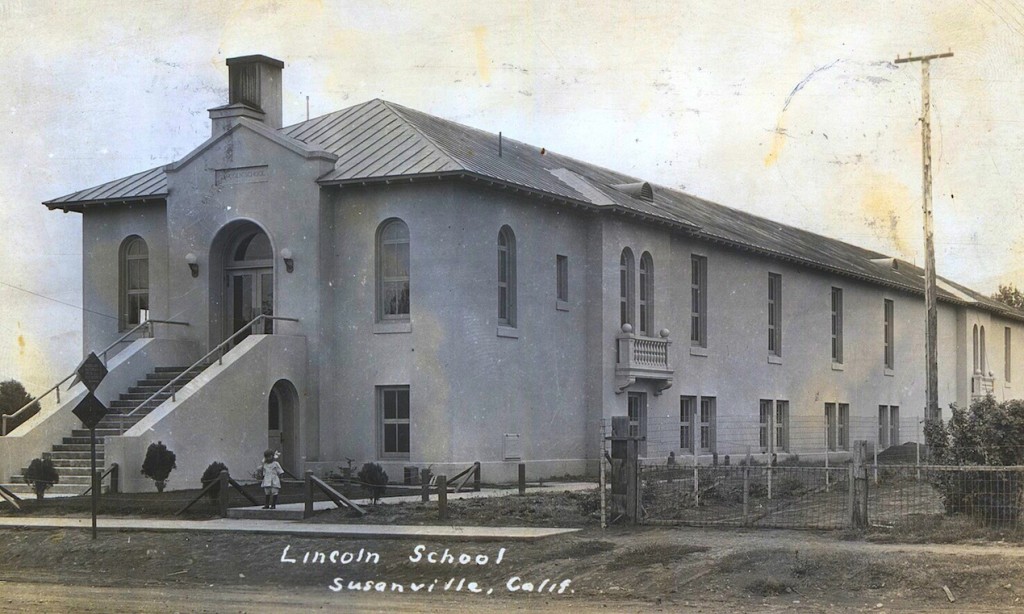
In 1940, the school enrollments for elementary (Washington, McKinley, Lincoln and Roosevelt) along with the Lassen High School and the junior college totaled 1,445. In contrast, the population for Susanville was 1,575. Confused? First of all, the Susanville city limit stopped at Weatherlow Street to the east, and to Susan River on the south. The Lincoln and Roosevelt elementary schools, as well as Lassen High School, were located in the county.

Yesterday marks the second anniversary of the daily postings. The first topic I covered was Roosevelt Pool. At that time the pool was being demolished. A lot has happened since then. I asked Jim Chapman to provide us with an account along the way, and he obliged. So without further ado . . .
After almost two years of going thru every imaginable bureaucratic hoop, the JPA board was finally able to award a Design-Build contract to Modern Building Company Inc (MBC) of Chico for the new pool in late 2015. It must be noted that during the first couple of years of the existence of the JPA, considerable time was spent evaluating potential locations for a new pool, along with the demolition of the old Roosevelt Pool, so the process to begin constructing the new pool really didn’t begin until the middle part of 2015.
Resolution 15-07 was adopted on December 3, 2015 authorizing Phase 1 for the design portion, based on months of discussion preceding the action. MBC had 120 days to complete that task. The 120 days ended around the first of April 2016. Based on their initial presentation, another 6 weeks was taken by Jared and his staff to narrow the proposal down to something that fit within the expected budget.
One of the big sticking points that frustrated the JPA board was the fact that MBC in putting together the their design, they based it on communications from city staff, and initially designed the pool to be heated by the city natural gas service and not the geothermal resources that are available. Whether it was intentional or not will probably be debated for years to come. So a part of the delay in April and May was necessitated by the fact that MBC had to modify its construction documents to incorporate how to utilize the city geothermal heating system. To the distress of some of the board members, the on-site low-temperature geothermal well that produces 106˚ warm water is not being utilized in the new pool. The on-site well was the water that not only filled the pool, but it heated the original Roosevelt Pool. From its construction in the late 1930s until around 1985, Roosevelt Pool used the on-site well to fill it and keep it warm. Around 1985 the city shifted the heat source to the new city “hot” geothermal well (aka, Richardson-1) located on South Lassen Street near the Susan River producing 180˚ water. The old pool was served on the back end of the city geothermal system loop to maintain the heat in the pool. It is Richardson-1 well that will be the primary heat source for the new pool, with the natural gas system being considered a back-up heat source. One issue still to be worked out between the JPA board and the city is the cost of the domestic water being provided and then heated by the hot geothermal well. When the city operated the old pool, it was an in-house budget and finance issue. Now that the JPA is an independent agency, the city will be treating the service like they would with any other customer. The JPA will have, at some point, decide if it is more feasible to obtain water and heating from the city or to utilize the JPA-owned on-site geothermal well, which sits about 20 feet from the new pool and the new pool house.

Susanville’s Paul Bunyan Lumber Company was located in the current neighborhood of Wal-Mart. It was built in 1936 and originally referred to the Cedar Mill, as it was operated by the Springfield Cedar Company.
In 1945, during the long dissolution process of the Red River Lumber Company, one family member, Kenneth Walker continued to carry on in the family business and he took over the Cedar Mill. He also retained Red River’s company Paul Bunyan logo, and he named his new enterprise the Paul Bunyan Lumber Company.
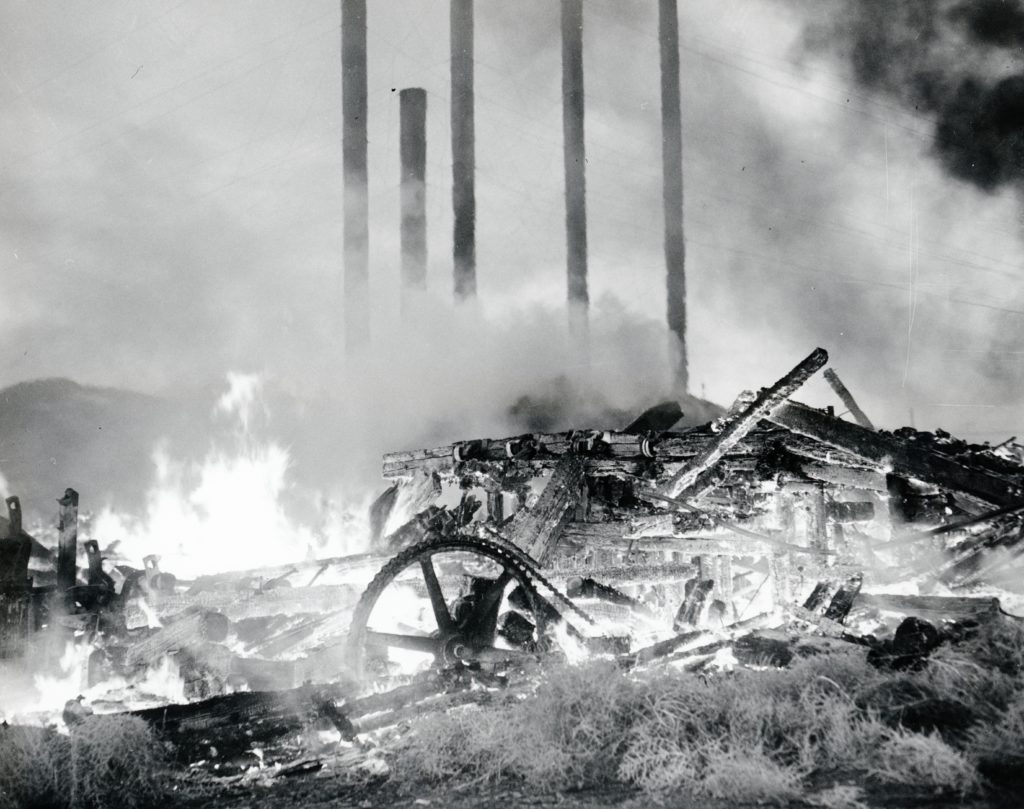
However, it was not too long when disaster struck. A little after midnight on May 22, 1946, Charles Bannerman, the night watchman, signaled the fire alarm. By dawn the mill had been completely destroyed. Like the proverbial phoenix rising from the ashes, Walker would build a new mill, which was placed into operation on February 16, 1947.

In the 1850s, the Anglo settlers of the Honey Lake Valley routinely petitioned the U.S. Military for aide and protection. Many of those pleas went ignored. The Civil War changed that. In the future we will explore the various encampments, and some non-military sites such as Fort Janesville.
Today, we examine Camp Susan, the nearest appearance of a military encampment the town would experience. In late August 1864, the 1st Nevada Territorial Infantry, a mobile military unit from Fort Churchill, under the command of Malachi R. Hassett, established a base camp near Susanville. Their mission was to scout the territory from Susanville, north to Surprise Valley and east to the Humboldt mines. In October 1864, the unit was ordered back to Fort Churchill. On September 12, 1864, Private Ebenezer Williams died at Camp Susan. Williams, a native of Wales, had just enlisted in February 1864.

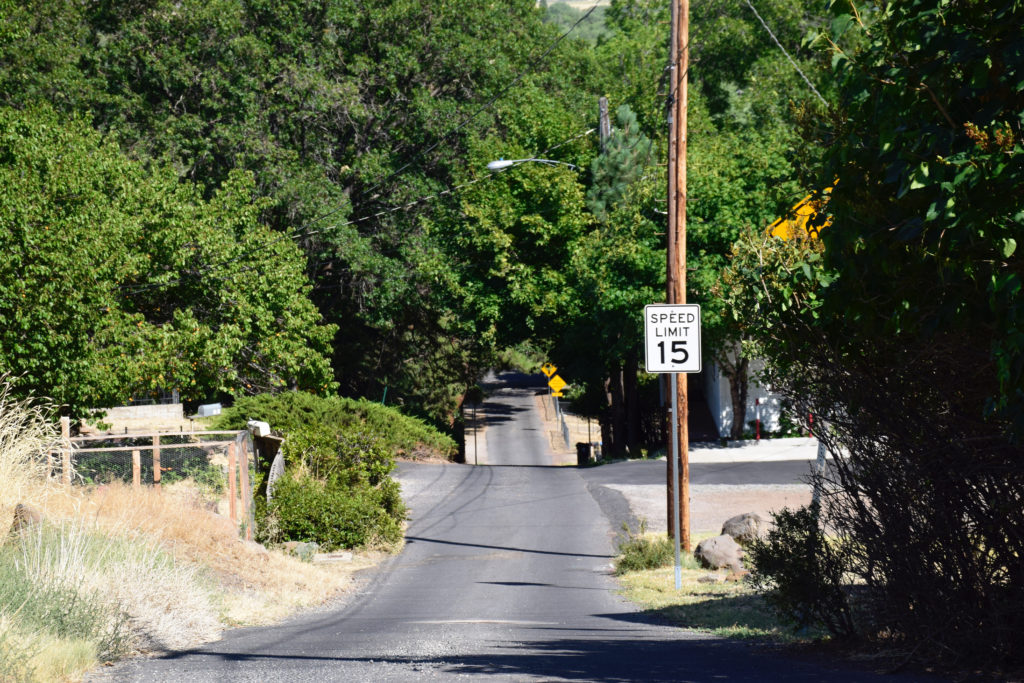
One of the city’s most interesting streets, does in fact has an interesting story of how it came to be. It originally started as a alley behind North Street. One of its first residents was Bernie Dillinger who gave it the name of Burma. Back in the 1940s as Bernie recalled “A rough, rocky, unpaved road.” Dillinger’s mailing address was 507 1/2 North Street. The 1/2 referred that he was located in the alley, and not fronting North Street.
Dillinger gave it the name Burma, for the famed road in Indochina of the same name. He was attempting to get the city’s attention, since the city did nothing to maintain and it never qualified for snow removal. This, of course, made it treacherous in the winter months, especially at that time Burma did not connect to Roop Street. Instead near the bottom of the hill it made a sharp turn and exited out onto Hill Street. With Dillinger’s due diligence the city finally started to maintain it, and even placed a street sign with the name of Burma Road.

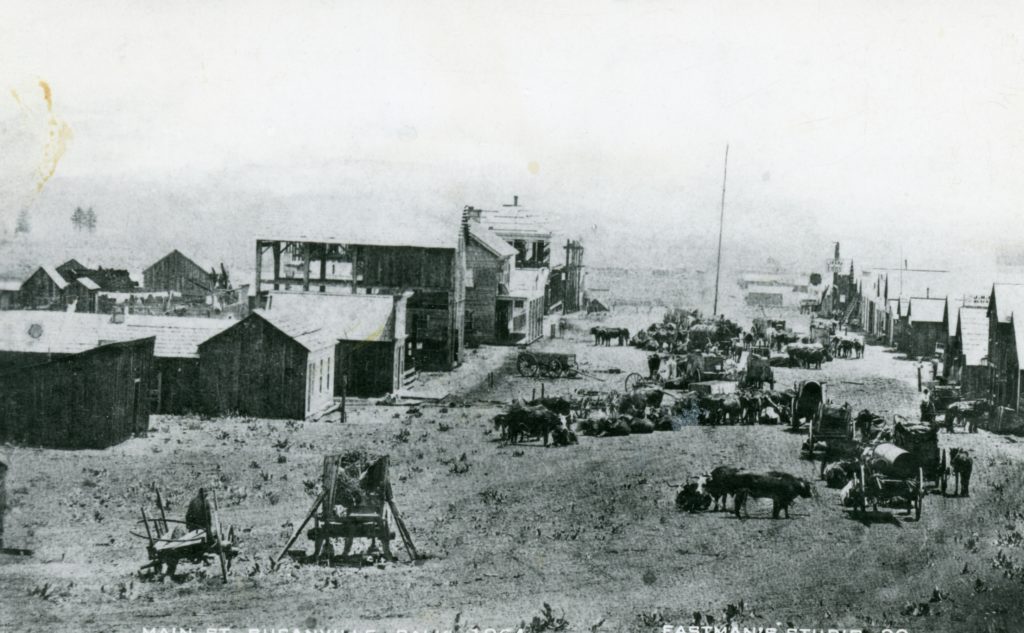
This is one of those instances, while researching something, I stumble along a gem. In 1914-15, work had begun to fill in the low land of Susanville’s Main Street between Weatherlow and Grand Avenue. One issue to be addressed was Piute Creek, which a bridge was in place. While not in the city’s jurisdiction at the time, Lassen County consulted with the city father’s as to a replacement for the crossing. It was mutually agreed in the fall of 1916, to replace the bridge with a metal culvert. This, of course, became a major problem for decades to come, as the culvert was too small to begin with and was prone to being blocked by debris that caused wide spread flooding.

This is what the L.M. McKinney Lassen County directory had to say about Susanville in 1885:
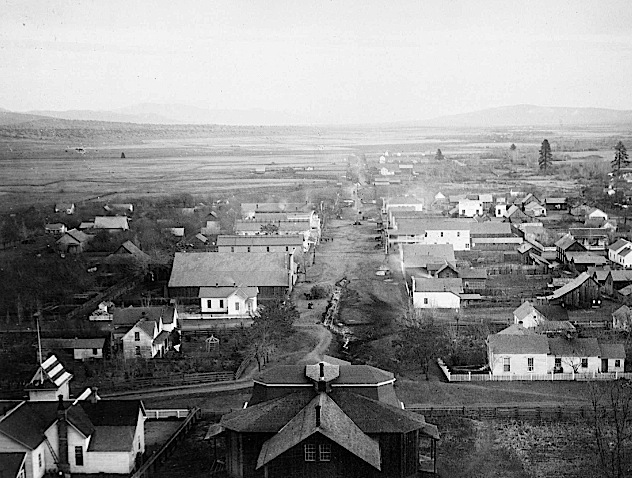
The county seat of Lassen county, is situated about one hundred and fifty miles northeast from Sacramento, and ninety- five miles northwest from Reno, Nevada. The location itself is a peculiarly attractive one, lying as it does just at the base of the Sierra Nevadas, where the mountains give way abruptly to a comparatively level plateau and an unobstructed view over thirty miles is obtained, including almost the entire expanse of the Susan River Valley. The river itself rises in the mountains west of the town, flows past on the south side, thence in a southeasterly direction to its mouth, some twenty-five miles distant where it empties into Honey Lake. For about half of this distance (that part adjacent to Susanville) the land is thickly settled; small farms, well built and attractive residences, and large and commodious barns and outbuildings being the rule. The remaining portion of the valley will, with irrigation, unquestionably develop as well. The United States Land Office, located at this place, shows a record of 1694 cash, 1279 final homestead and 73 final desert entries, and there still remains within the limits of this district much valuable timber lands open to claimants, as well as so rated desert land which only needs irrigation to bring it up to a standard in fertility which will compare favorably with any land of the State. Susanville has one newspaper, The Lassen Advocate, weekly, which is the official county paper. It is ably conducted by Messrs, McKinsey & Hayden, proprietors. The school facilities of the town are fully up to the times; the Methodists and Congregationalists have fine and commodious church buildings, and the organizations are well sustained. Its hotel accommodations are amply provided for in two hotels, the Johnston House, a well conducted establishment, kept by Messrs, Dowling & Myers, being worthy of special mention, and among its business interests may be specially noted the Lassen Mills, with a capacity of forty-five barrels of flour per day, which is kept constantly running. Outside communications are had by daily stage line to Reno, twenty miles of this route on the end next to Reno being by rail. Two other lines are run during seven months of the year, one to a connection with the California and Northern Railroad to Oroville, and the other to Chico, connecting at that point with rail to all parts of the State. It has a money order post office, and Wells, Fargo & Co’s Express.

Wright Patrick Hall is known for many things, especially that as a long serving Lassen County Clerk, and also that as the Lassen County Treasurer/Tax Collector. He first came to Susanville in 1860, and then moved to Nevada for a brief stay before returning. On May 22, 1877, he purchased 480 acres one half mile east of Susanville from Heiro K. Cornell for $700. In 1885, Hall began selling lots with Main Street frontage. In 1895, Hall hired surveyor William D. Minckler to plot 160 acres known as Halls Addition, but everyone called it Halltown. The bottom land of Piute Creek separated Halltown from Susanville. It was not until the 1920s that the two communities slowly grew together.

A subscriber wanted to know more about Fruit Growers Spring, also known as Bagwell Springs. These springs are located north of present day Susanville Ranch Park.
The springs were named for James Washington Bagwell, who located on 160-acres that included the springs. In 1893, he sold out to George W. Long for $300. In 1901, William Black Long claimed rights to this spring that he designated as Bagwell. In 1919, the Fruit Growers Supply Company purchased the property for its water rights. For a number of years the spring was known as Fruit Growers Spring. It appears with that designation in the decree of Fleming v Bennett—the adjudication of the Susan River watershed. In 1935, Fruit Growers sold the spring to the Republic Electric Power Company, who purchased it as an additional water source for Susanville. Thereafter, the spring was once again referred to as Bagwell. The springs are now owned by the City of Susanville, which are used in conjunction with the city’s water system.