Tag Archives: Susanville

Paul Bunyan Logging Road

Lunch time at Dow Butte, August 21, 1953. Courtesy of Hank Martinez

In April 1938 the Piute Railroad logging line sustained major damage from Desmond Meadows to Susanville. The Red River Lumber Company decided to abandon the line.

In 1945 a portion of the abandoned railroad line was resurrected as a log truck road. Red River was going through a dissolution process and Ken Walker took over the company’s Susanville mill, he renamed the Paul Bunyan Lumber Company. Days of railroad logging were on the wane. The abandoned Piute line provided the foundation for a truck logging road. One of the major benefits of a private road, one could bypass the weight limits imposed on county roads and state highways. On September 20, 1945 the first logging trucks made the inaugural voyage.

It should be noted this delighted Susanville’s Main Street merchants since they no longer had to contend with logging trucks interfering with their commerce.
Never miss a story, click here to subscribe.

Halloween, 1898

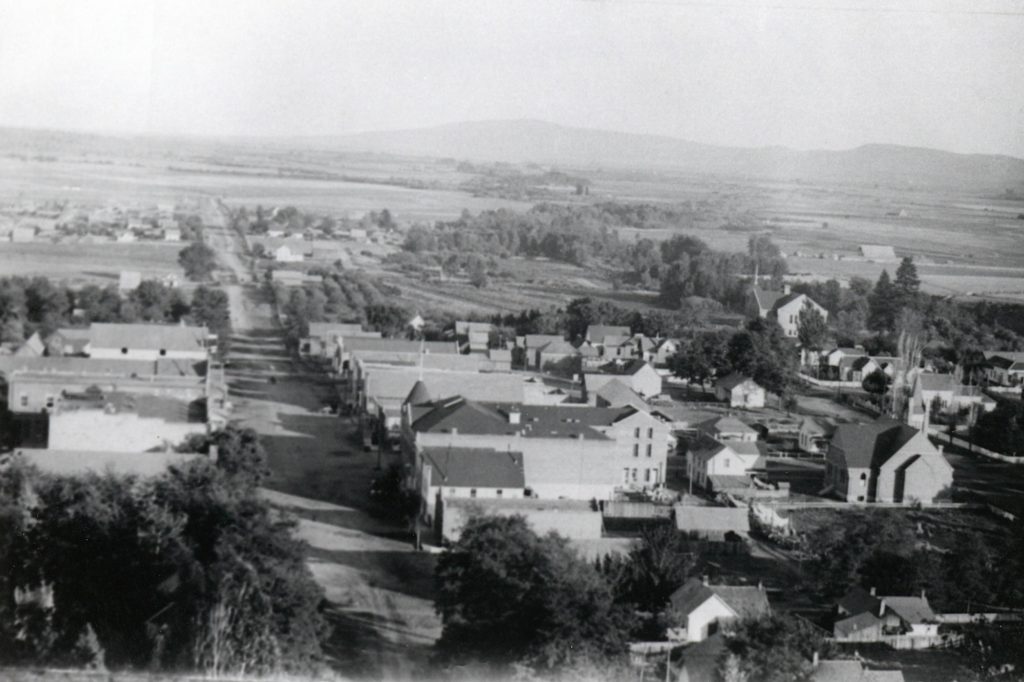
Susanville, 1905. Courtesy of Dick & Helen Harrison

In days of yore, there was no such thing as trick or treat that we know today. However, it was an opportunity for pranksters to have some fun. In 1898, Susanville’s Lassen Advocate reported: “Halloween hilarity was on a moderate scale than usual. There were some gates unhinged, a few wagons drawn into unfrequented places, a few ‘tictacs’ arranged to plague the rest of the peaceful folks—nothing very devilish—nothing very malicious.”

Support

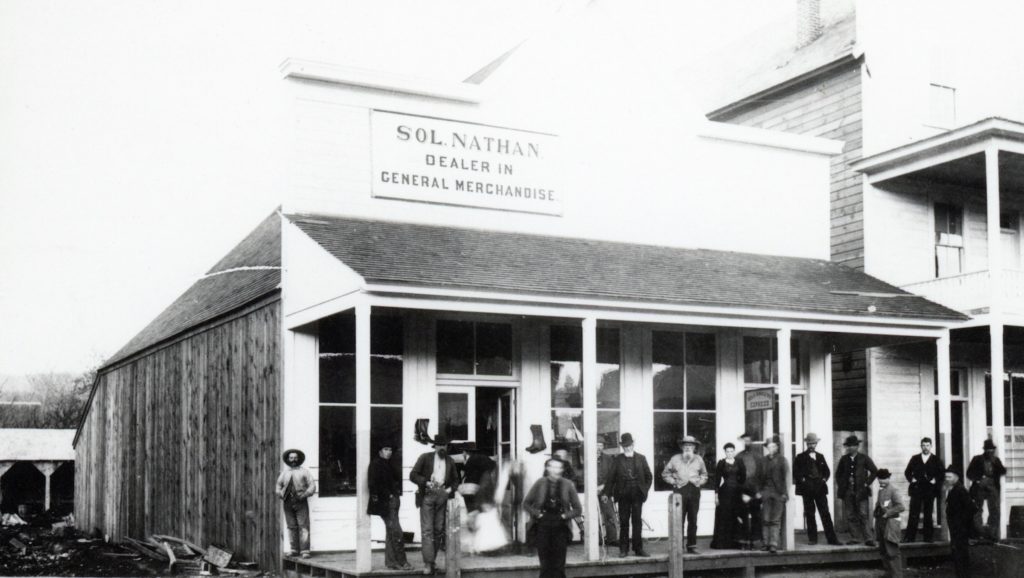
Nathan’s Closes its doors

The Sol. Nathan General Merchandise Store

In late November 1918, the Nathan Store Company located at 700 Main Street, Susanville announced they were going out of business. What remaining stock was left would be auctioned off on December 2, 1918 by Buckwalter & Younie.

The store was founded in 1877 by Marcus Nathan. For a time there were two separate Nathan general merchandise stores. One operated by Sol Nathan and the other by Marcus. The two stores were on opposite sides of Main Street facing each other. The closing of Nathan Store coincided with the exodus of the town’s Jewish merchants. At one time they were a dominate force besides Nathan there was Alexander, Asher, Cohn, Greehn, Knoch and Schmidt. With Nathan’s closure the only remaining Jewish merchant left was Robert Jacobs.

Never miss a story, click here to subscribe.

A City Limit/Fire Tale

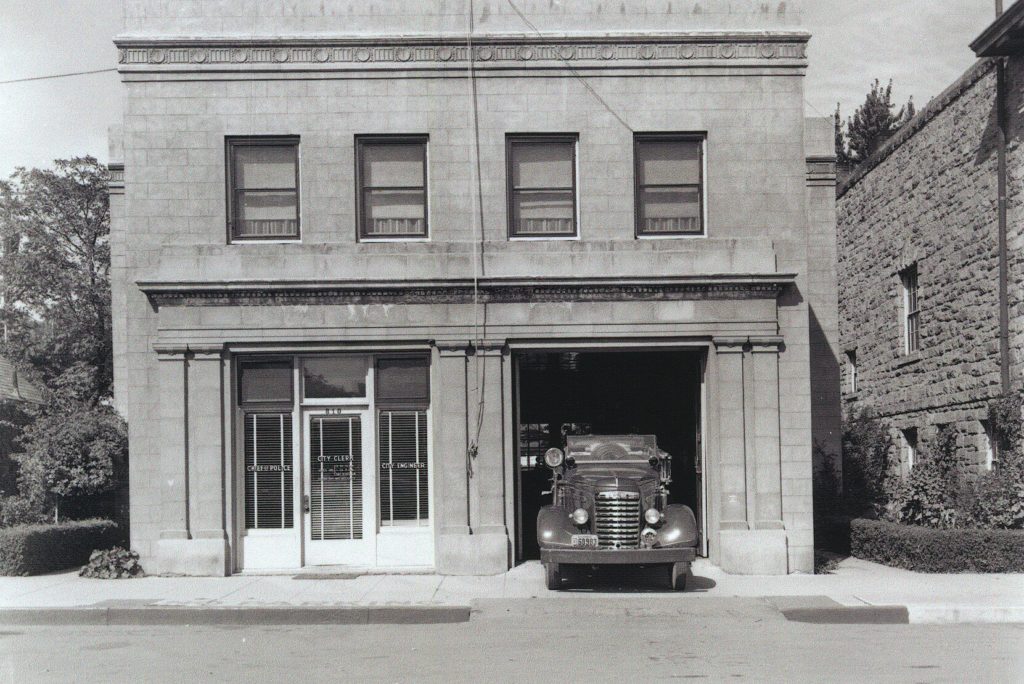
Susanville city/fire hall.

Some may recall that in the past I mentioned that the Susanville Fire Department was prohibited from leaving the city limits. The policy was adhered to, no matter what the circumstances. In case you are pondering why, it had to do with insurance rates.

On the evening of March 11, 1935 the Susanville City Council held a special meeting concerning the abandonment of a portion of Cornell Street. This was at the urging of Lassen High School, as part of their program to expand its athletic field between the school buildings and the Susan River. The meeting was interrupted when the fire alarm went off. It should be noted City Hall and its fire department were located in the same building. A brief recess ensued as Harry Riddell, served as City Clerk and Fire Chief. Before the firemen departed, Mayor E.P. Honsberger exclaimed, “Remember boys, the fire truck stays inside the city limits.” The fire was at the north end of Weatherlow Street, outside the city limits and the fire truck did not venture there. It was a house fire, and the building destroyed. The story does not end there. The house was owned by Mayor Honsberger who had it as a rental. When the news was relayed to Honsberger, he exclaimed, “What a life!”

 Subscribe

Fair Time in October!

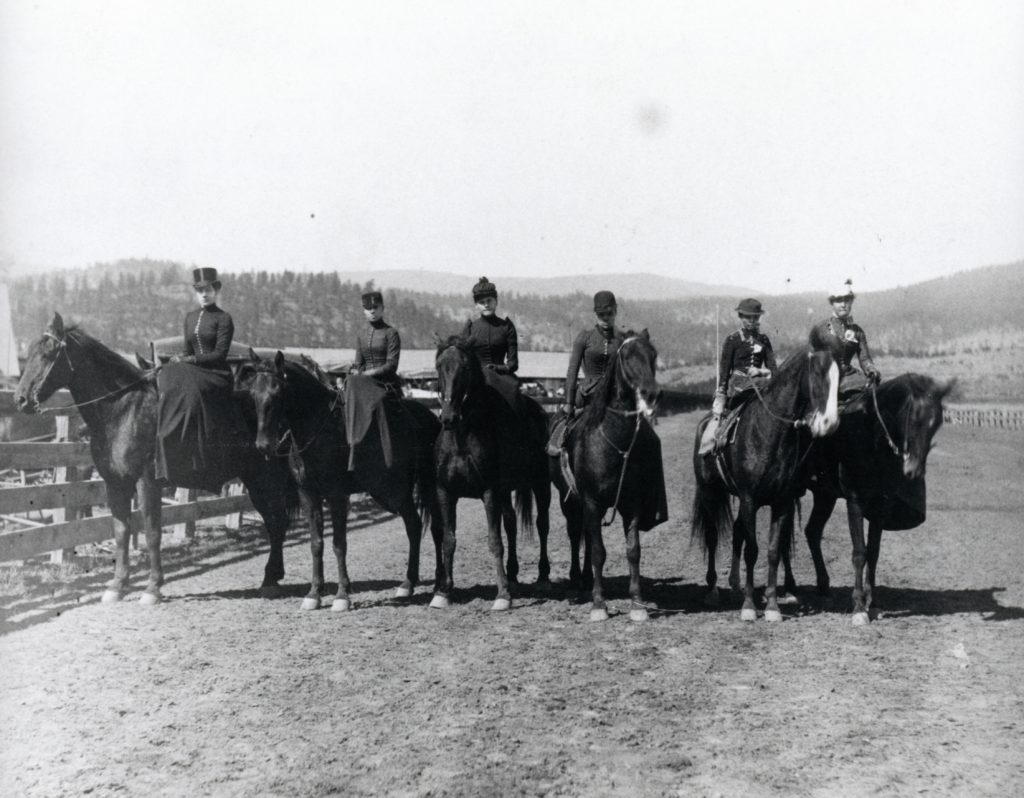
Lassen County Fair, 1891. Courtesy of Carl Illig

Believe it or not the first Lassen County Fair was held in the third week of October in 1878. It was sponsored by the Lassen County Agricultural Society as a venue to promote a fair to showcase livestock and farm commodities. It was an impressive five-day exposition. It was considered a success, with $2,750 in premiums paid out and receipts that totaled $3,728. The first fairgrounds was located in the vicinity of Grand Avenue and First Streets.

Never miss a story, click here to subscribe.

Time Capsules

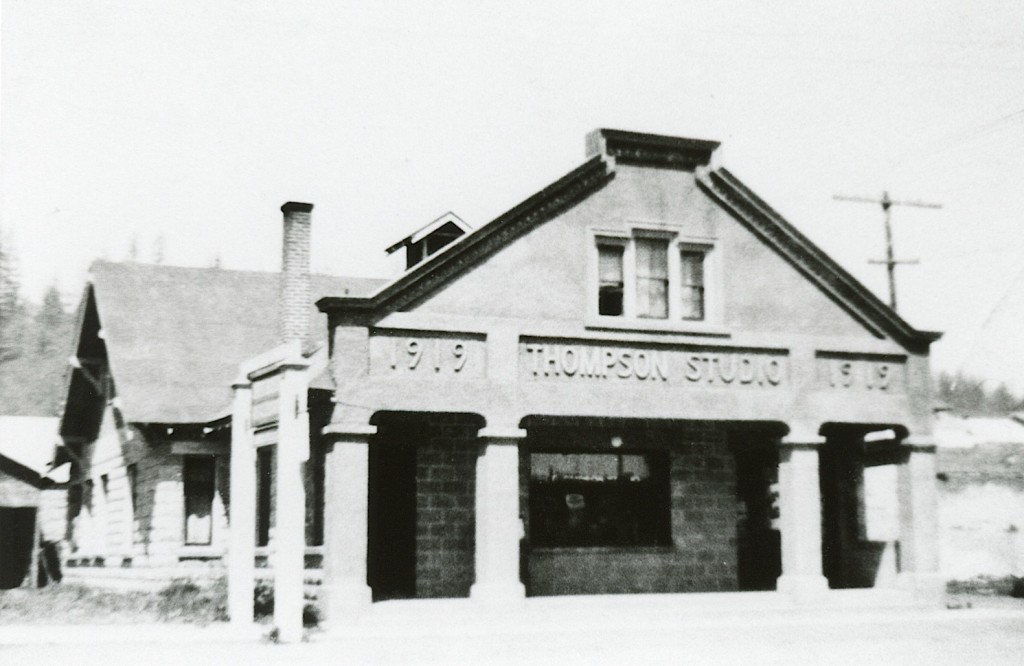
Thompson Studio. Courtesy of Frances Wier

On this date, 100 years ago, a discreet cornerstone ceremony was held to commemorate the Thompson Studio building, located at 60 South Lassen Street, Susanville. P.J. Thompson, a photographer was a creative person and his dream come true building was not to be ignored. To mark the special occasion, a time capsule was placed in the cornerstone. It had been twenty plus years since the last time a time capsule was placed with the OddFellows Building, known today as the offices of Susanville Real Estate at the corner of Main and North Lassen Streets. One of the more unusual ones, was the installation of a time capsule in 1939, in the Cone residence in the Fruit Growers District. The last time capsule that I am aware of, was installed in 1973 as part of the cornerstone laying ceremony at Lassen College. To date, as far as I am aware, none have ever been opened.

Support

The Apple Crop of 1891

View of Richmond Road January 1916 from Winchester Hill. Susanville looking towards McClellands.

Many may not realize that at one time there was a large commercial apple crop being produced in the Honey Lake Valley. Locally, the apple growers benefited when the Nevada-California-Oregon Railroad extended its line into the Honey Lake Valley, thus providing a better access to markets. One of those growers was W.M. McClelland. He estimated that during the 1891 season that 20,000 boxes of Honey Lake apples had been shipped to markets in Los Angeles, Sacramento and San Francisco. McClelland noted that the price received was one dollar for a fifty-pound box. In his opinion, the grower received one-half of that amount. That made for a nice tidy sum back then.

On a final note, in 1882 McClelland purchased sixty-five acres on the south side of the Susan River that was dissected by Richmond Road, the majority of which he planted an apple orchard.

Never miss a story, click here to subscribe.

Inspiration Point, 1892

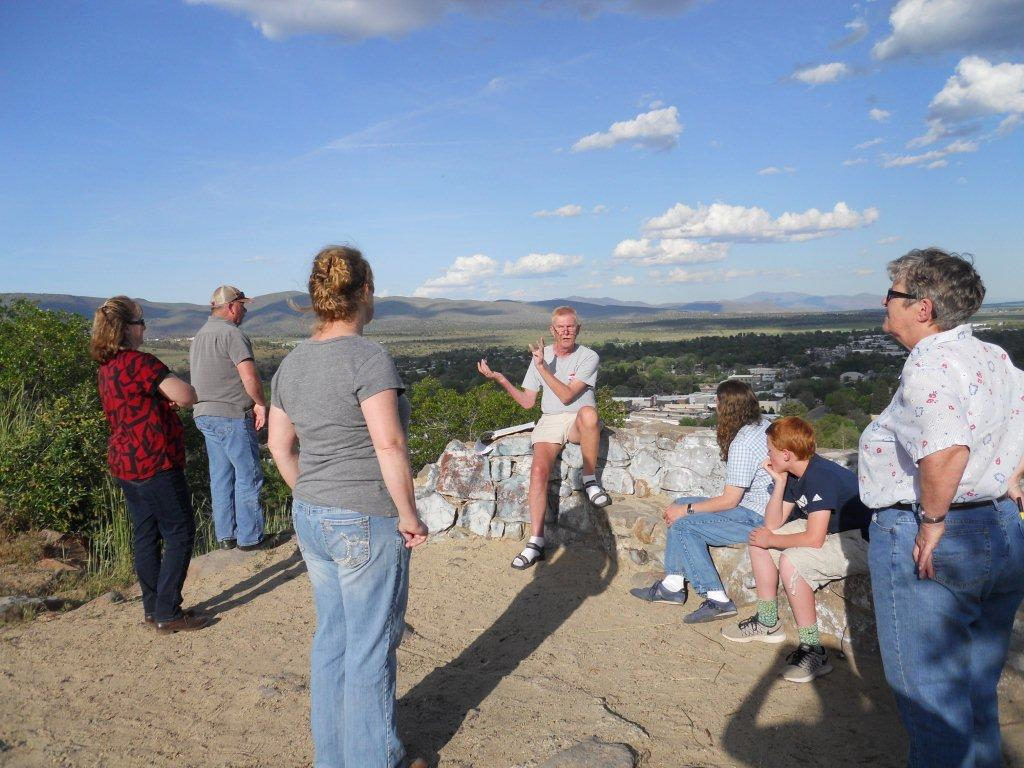
May 18, 2016 tour. Courtesy of Martin Balding

Susanville’s Inspiration Point is one of my favorite local spots. It also a place I like to take first time visitors to, so to get a better idea of the layout of the region, as there is so much to see. It has been awhile since I did an Inspiration Point tour, so may be this fall.

The following description is from the Lassen Advocate of March 31, 1892, that I thought some might enjoy:

“A Beautiful View. Any clear, bright day, when the atmospheric conditions are favorable, a lovely view may be obtained of the upper end of the Honey Lake Valley, from the bluff at the back of Susanville. With the unaided eye one my see steam arising from the Hot Springs on the shores of Honey Lake, fifteen or twenty miles distant and plainly distinguish familiar objects and residences more than half that distance. Amedee might be seen but for an intervening spur of the mountains to the east. The view from the bluff is well worth seeing. In no other way may one obtain such a comprehensive idea of the extent of the western or upper end of Honey Lake Valley while the beauty of the scene will more than repay climbing of the hill.”

Subscribe

Susanville’s Population Problem

A 1937 promotional feature of the Lassen Mail newspaper.

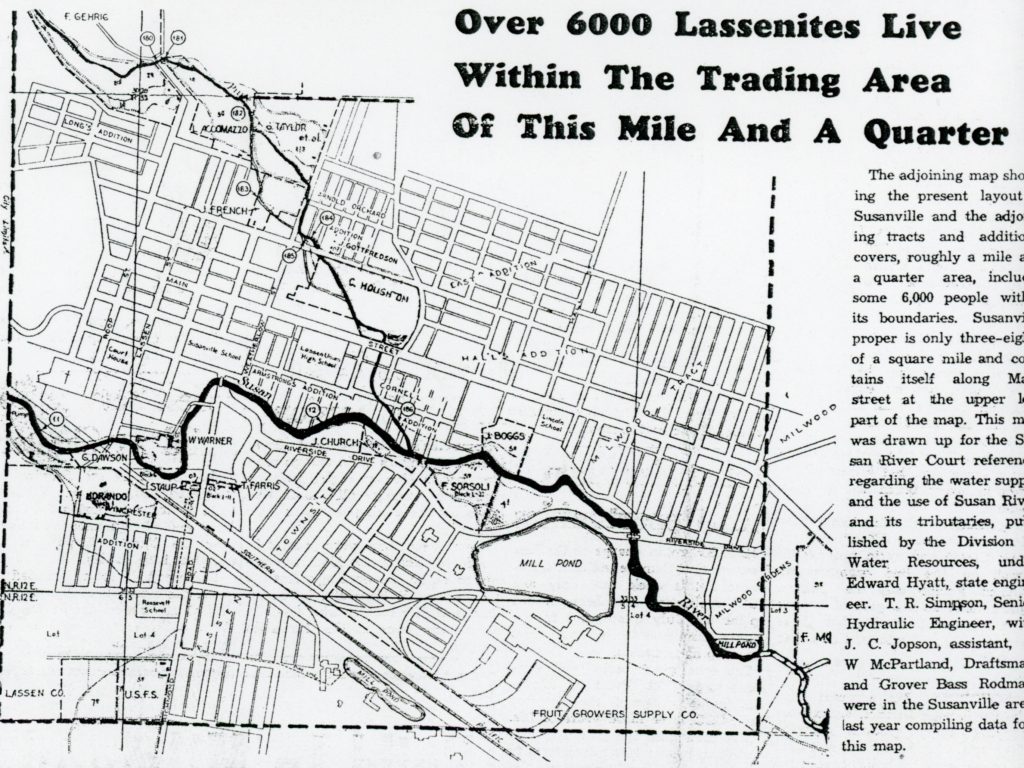
Nearly since time immemorial Susanville boosters grappled with the town’s population figures. This became quite problematic when the town incorporated in 1900, due to its small boundaries. At that time the western boundary was Inspiration Point, Piute Creek to the north, Susan River to the south and Weatherlow Street was the town’s eastern boundary. 

One of the issues the City of Susanville grappled since it was incorporated was its population.  To lure business and families, the larger number of inhabitants was an enticing inducement, and still is to this day. After the lumber mills arrived by the early 1920s, there were numerous subdivisions to the east of the City. The City tried its darndest to annex, but large property owners like the Red River Lumber Company which owned the Milwood Tract was a force to be reckoned with and defeated many annexation measures. All the Susanville boosters could do, is at least advertise a Greater Susanville. It should be duly it would take nearly a half of a century before City was able to annex adjoining properties.


However, this concept was not limited to any certain era. For instance in the 1990s, when the City annexed the State Prisons, those incarcerated became city residents. Those 8,000 inmates were reflected on the City Limit signs noting it now had a population of 17,000. As one city official informed me at the time to include the inmate population in the sign, was for marketing purposes hoping to influence more businesses and perspective residents to take a second a look. 

Subscribe

Johnston House Hotel

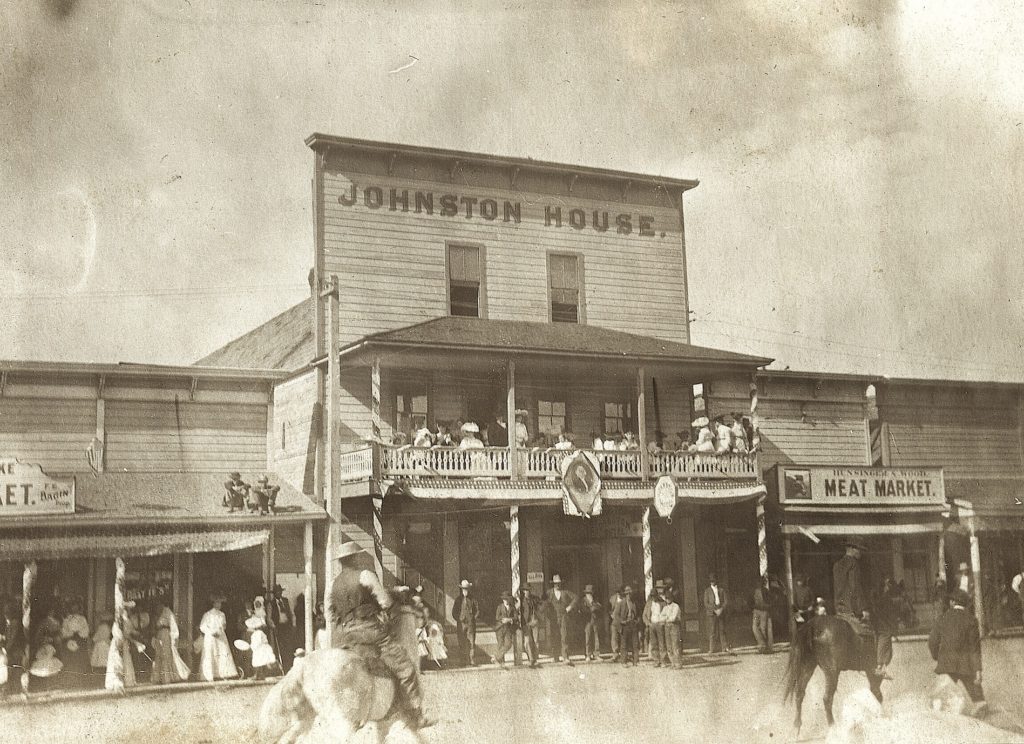
The Johnston House, circa 1909. Courtesy of Betty Barry Deal

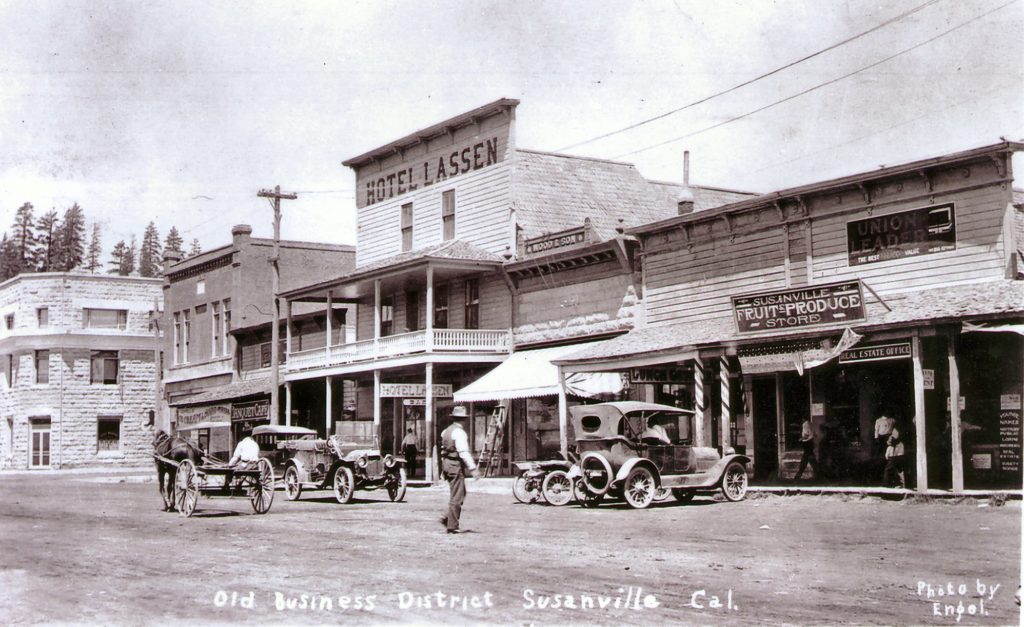
The Johnston House was built in 1893 after a devastating fire that destroyed the north side of Susanville’s Main Street business district. It was so named for its original owner/proprietor Robert Johnston. Until the Emerson Hotel opened in 1901, it was the town’s major hotel. There was the smaller Cottage Street Hotel, which was more like a boarding house. In 1897 Johnston sold the hotel and it changed owners on a frequent basis. In 1916, Henry C. Dobyns purchased and renamed it the Hotel Lassen. It was destroyed by fire in 1919.

Main Street, Susanville, 1918.

Support