There is a bitter irony with ripping up this railroad line. The 124 mile railroad was built in a span of two years. To dismantle it took decades. In the fall of 2006, without any fanfare the segment of the railroad between Susanville and Wendel was ripped up.
Rails piled up at the defunct Leavitt Station, November 24, 2006
In January 1908, the Rev. N.M. Parsons of the Methodist Church spearheaded a prohibition movement in Susanville in an effort to clean up the community. The issue had been informally discussed since the early 1880s, when there was a local chapter of the Women’s Christian Temperance Union. Parsons began his campaign by focusing on the social ills caused by alcohol. He circulated petitions to have the issue placed on the next municipal election ballot, scheduled for April 13. The Town Trustees accepted Parsons’ petitions and would place the matter before the voters. There was one stipulation: it would bean advisory measure as to whether saloons should be banned.
It was a widely debated topic. The city’s 1908 budget was $3,498. There were two main revenue sources. One was property tax assessment and it generated $1,815. The other was the liquor licenses which provided $1,424 to the town’s treasury.
Once those figures were revealed, Parsons; ballot measure was doomed. After all, if the City lost the money generated from liquor licenses, the only alternartive to make up for the loss would be to increase property taxes. That appeared to be the voter’s consensus. The issue generated the highest voter turnout to date with 157 votes cast. The results: 110 votes to remain “wet” and 47 “dry.”
Susanville’s Methodist Church, circa 1896. Courtesy of Philip S. Hall
The primary reason for the church bell was to call the faithful to worship. The quality of the bell was superb and when wrung could be heard two miles away. Susanville in the late 1800s was a mere village of some 300 souls. It should be noted, that in this era, the town was plagued by fires, and in no time the bell was used as a fire alarm system. In rare instances the bell was used if something of major importance needed to be relayed and thus prompting individuals to congregate at the church to be informed of the impending news.
In 1895, the Lassen County Board of Supervisors approved Ordinance No. 33 pertaining to curfew in village of Susanville (the town was still unincorporated). From September 1, to April 1, anyone under the age 18 after 7 p.m. had to be accompanied by a parent or legal guardian. During the summer months, it was extended to 8 p.m. The fine for said violation was one dollar. It was the town’s night watchman who had duty at the appointed hour to ring the Methodist Church bell to signal it was curfew time.
Yesterday, it was mentioned that the local American Legion dedicated a flag pole on Inspiration Point on November 11, 1935. This was not the only improvements being made there, for Susanville’s first park. During the early 1930s, the Monticola Club adopted a beautification project for the entire bluff. One year they scattered hollyhock and poppy seeds. They also bought trees for the reforestation of the bluff. In its first year, the forestry students of Lassen College adopted Inspiration Point as a project. It was their intent to provide picnic tables, benches and fireplaces. They even discussed the possibility of a amphitheater there. While there intentions were good, they never completed the project. However, three years later the college students developed Willard Ski Hill.
Just as Memorial Day was once referred to as Decoration Day Veterans Day was once known as Armistice Day. In Susanville, in 1935 this particular day, was a two-day event.
The night before was billed a “Night in Paris” held at the Memorial Building. A variety of entertainment was on hand for the attendees, so as to what one promotional of the event announced for the veteran’s to make “whoopee.” The basement of the building was transformed into a Monte Carlo casino.
At ten o’clock the next morning a parade of the veterans marched from the Memorial Building to the head of Main Street (Elks Lodge). Located there was a bronze plaque with the name of Lassen County soldiers who lost their lives in World War I. This was followed by a flag raising ceremony at Inspiration Point. The Thomas Tucker Post of the American Legion had installed a flag pole there, and this was a formal dedication as a gift to Susanville. The day concluded with a dinner banquet at the Memorial Building.
Lunch time at Dow Butte, August 21, 1953. Courtesy of Hank Martinez
In April 1938 the Piute Railroad logging line sustained major damage from Desmond Meadows to Susanville. The Red River Lumber Company decided to abandon the line.
In 1945 a portion of the abandoned railroad line was resurrected as a log truck road. Red River was going through a dissolution process and Ken Walker took over the company’s Susanville mill, he renamed the Paul Bunyan Lumber Company. Days of railroad logging were on the wane. The abandoned Piute line provided the foundation for a truck logging road. One of the major benefits of a private road, one could bypass the weight limits imposed on county roads and state highways. On September 20, 1945 the first logging trucks made the inaugural voyage.
It should be noted this delighted Susanville’s Main Street merchants since they no longer had to contend with logging trucks interfering with their commerce.
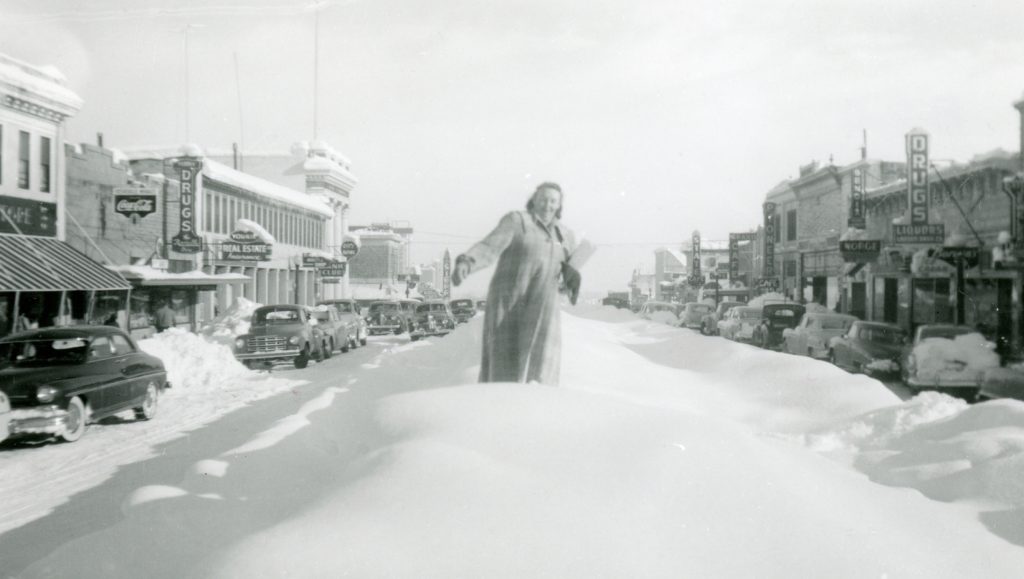
Susanville, 1905. Courtesy of Dick & Helen Harrison
In days of yore, there was no such thing as trick or treat that we know today. However, it was an opportunity for pranksters to have some fun. In 1898, Susanville’s Lassen Advocate reported: “Halloween hilarity was on a moderate scale than usual. There were some gates unhinged, a few wagons drawn into unfrequented places, a few ‘tictacs’ arranged to plague the rest of the peaceful folks—nothing very devilish—nothing very malicious.”
In late November 1918, the Nathan Store Company located at 700 Main Street, Susanville announced they were going out of business. What remaining stock was left would be auctioned off on December 2, 1918 by Buckwalter & Younie.
The store was founded in 1877 by Marcus Nathan. For a time there were two separate Nathan general merchandise stores. One operated by Sol Nathan and the other by Marcus. The two stores were on opposite sides of Main Street facing each other. The closing of Nathan Store coincided with the exodus of the town’s Jewish merchants. At one time they were a dominate force besides Nathan there was Alexander, Asher, Cohn, Greehn, Knoch and Schmidt. With Nathan’s closure the only remaining Jewish merchant left was Robert Jacobs.
Some may recall that in the past I mentioned that the Susanville Fire Department was prohibited from leaving the city limits. The policy was adhered to, no matter what the circumstances. In case you are pondering why, it had to do with insurance rates.
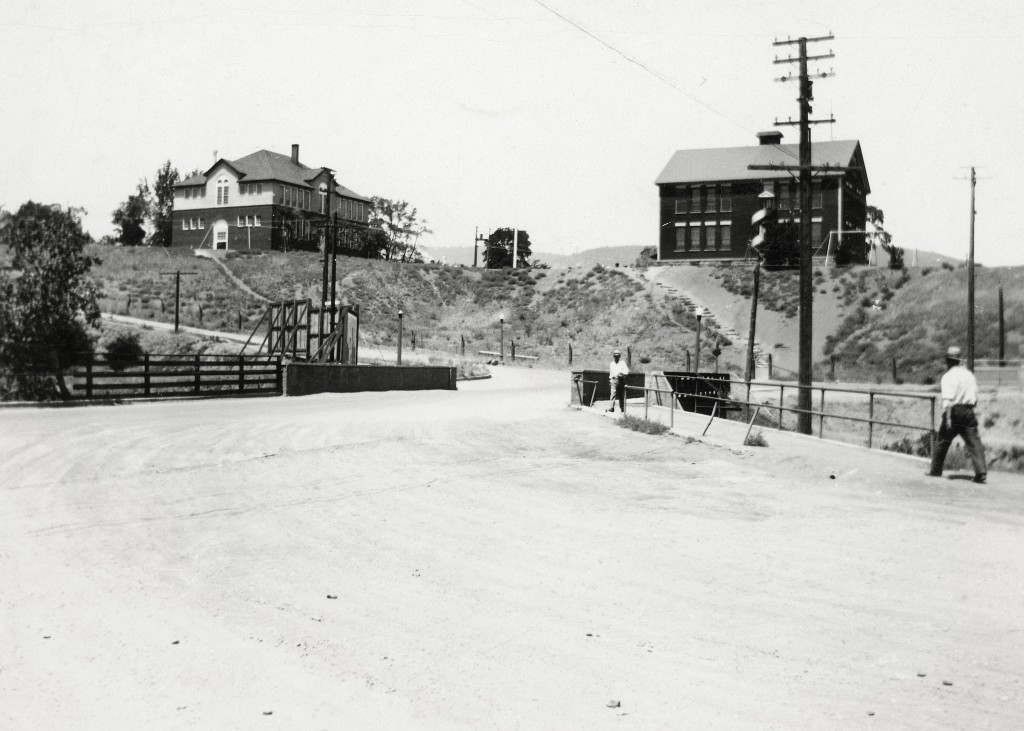
On the evening of March 11, 1935 the Susanville City Council held a special meeting concerning the abandonment of a portion of Cornell Street. This was at the urging of Lassen High School, as part of their program to expand its athletic field between the school buildings and the Susan River. The meeting was interrupted when the fire alarm went off. It should be noted City Hall and its fire department were located in the same building. A brief recess ensued as Harry Riddell, served as City Clerk and Fire Chief. Before the firemen departed, Mayor E.P. Honsberger exclaimed, “Remember boys, the fire truck stays inside the city limits.” The fire was at the north end of Weatherlow Street, outside the city limits and the fire truck did not venture there. It was a house fire, and the building destroyed. The story does not end there. The house was owned by Mayor Honsberger who had it as a rental. When the news was relayed to Honsberger, he exclaimed, “What a life!”
Believe it or not the first Lassen County Fair was held in the third week of October in 1878. It was sponsored by the Lassen County Agricultural Society as a venue to promote a fair to showcase livestock and farm commodities. It was an impressive five-day exposition. It was considered a success, with $2,750 in premiums paid out and receipts that totaled $3,728. The first fairgrounds was located in the vicinity of Grand Avenue and First Streets.