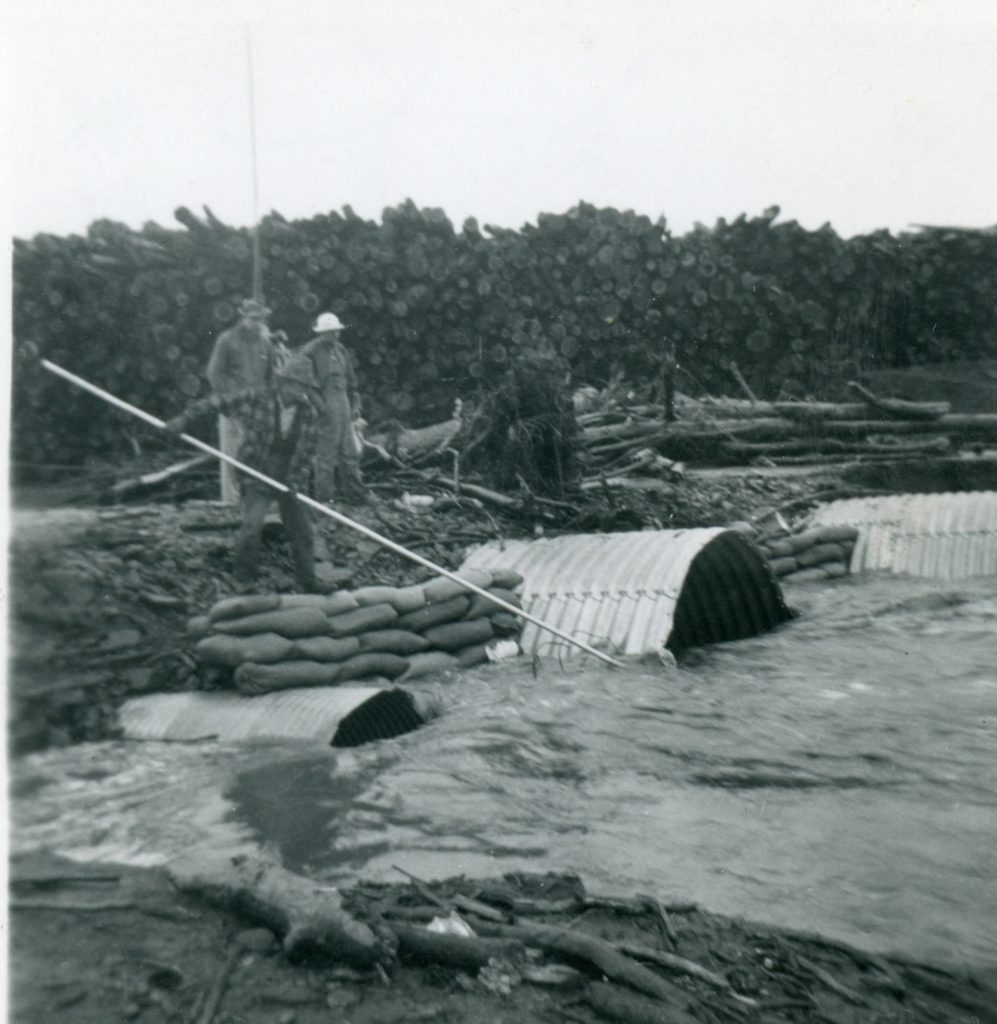
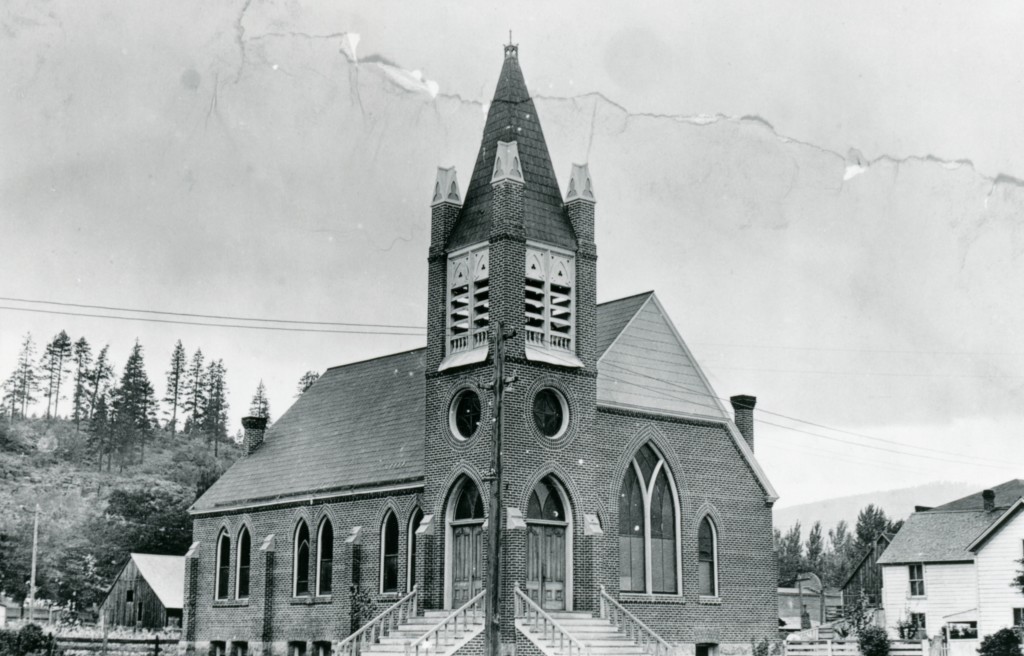
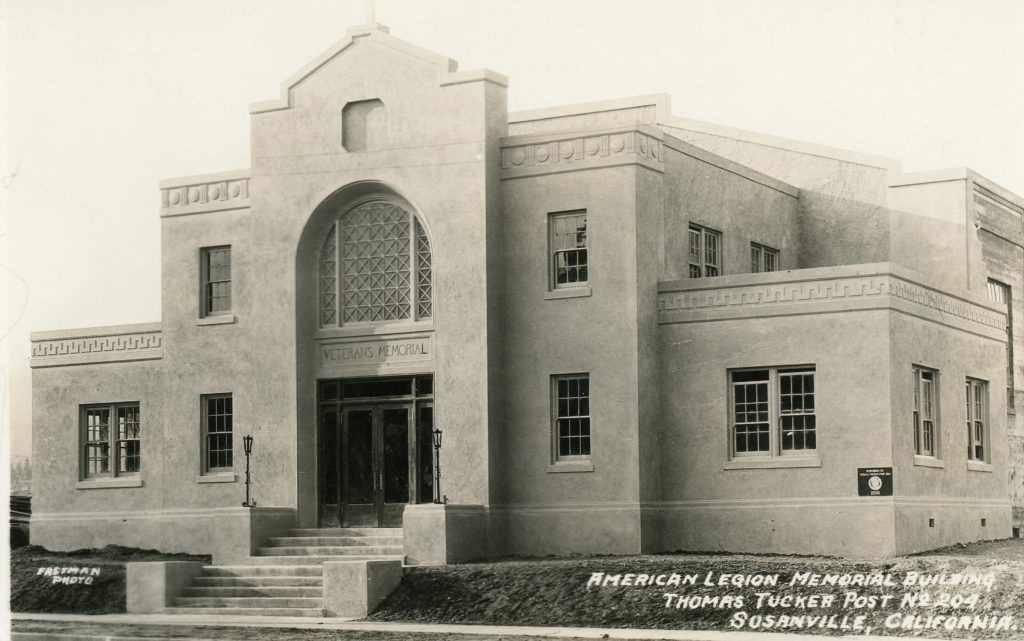
The City of Susanville, even before it became a municipality, always sought ways to alert the residents of a disaster. In the late 1800s, the most effective means was the ringing of the bell at the Methodist Church. Fast forward to January 19, 1938 at a special meeting of the City Council to devise a new plan when disaster strikes, as what had recently happened with a surprise flood. It was members of the Thomas Tucker Post of the American Legion who sought to address the issue. After some debate, it was decided that four long blasts from the city’s fire siren would be used to alert the citizens of a disaster.
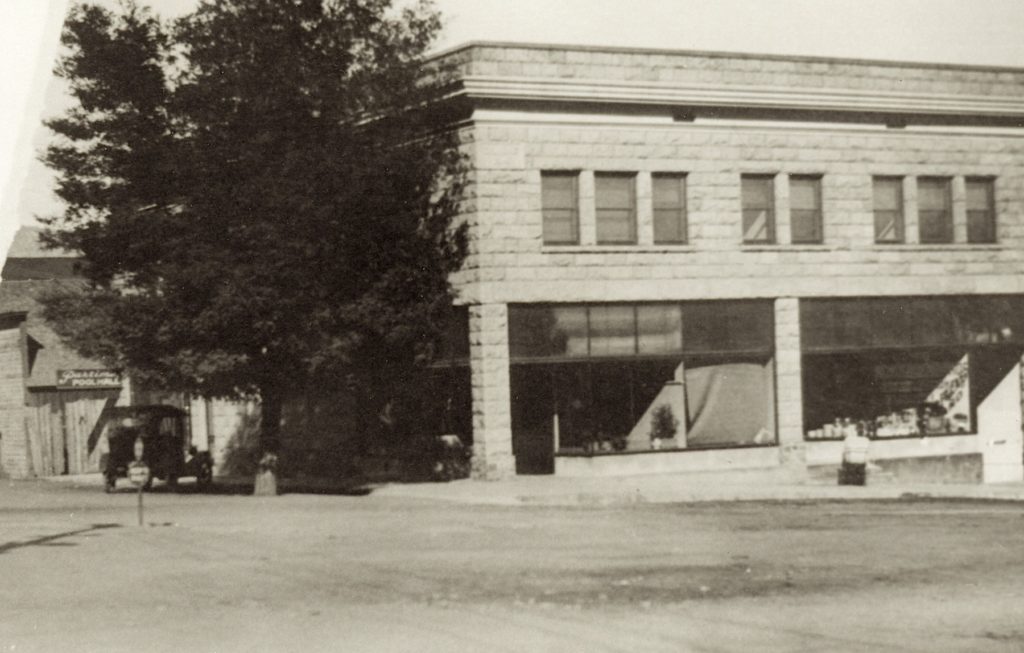
T.H. Long Building aka The Telephone Building. Courtesy of Phil Long
In the 1920s, Susanville’s retail community was undergoing many changes, due to a number of factors. Slowly creeping in where chain stores, many who thought they were a menace to the community. One of the many concerns with chain stores, that there would be a loss of individuality. Whatever the case may be, there was nothing any one could do to prevent the chain stores encroaching in the community.
It was on December 15, 1928, that Safeway opened a grocery store in Susanville. They found a place readily available in the Telephone Building, located on the northeast corner of Main and Gay Streets. It had recently been vacated by Stones Cash & Carry, another chain grocery store. To manage the store, S.F. Christensen of Carson City took over the reins and T.R. Mitchell from Sacramento was in charge of the meat department. The company made sure that it was duly noted that Skaggs’ Safeway boasted that it had 1500 stores in 15 western states, so they could stock more items than any store in town.
That was good news In 1935, but the city officials of 2019 are dealing with their day of reckoning with a financial meltdown.
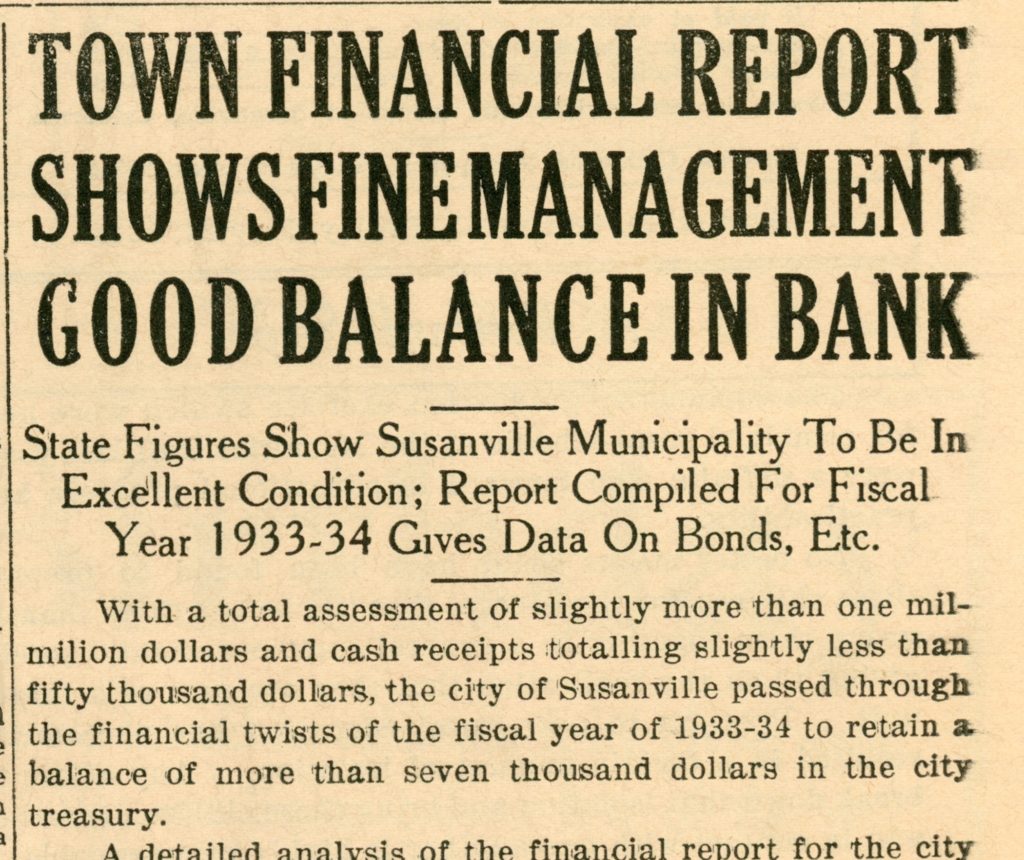
During an audit of the city’s finances in 1935, it found that city officials showed fiscal restraint. The city in fiscal year 1933-34 had an income of $47,640.36. At the end of the fiscal year, the city’s total expenditures were $40,359.17. Thus, the city had in reserves a balance of $7,281.19! They city had only three full time employees: W.O. “Lannie” Long, Chief of Police with a monthly salary of $200 per month; Perle Long, Nightwatchman at $150 per month and H.S.Riddell who wore multiple hats as City Clerk, Engineer, Fire Chief and so forth at $150 per month.
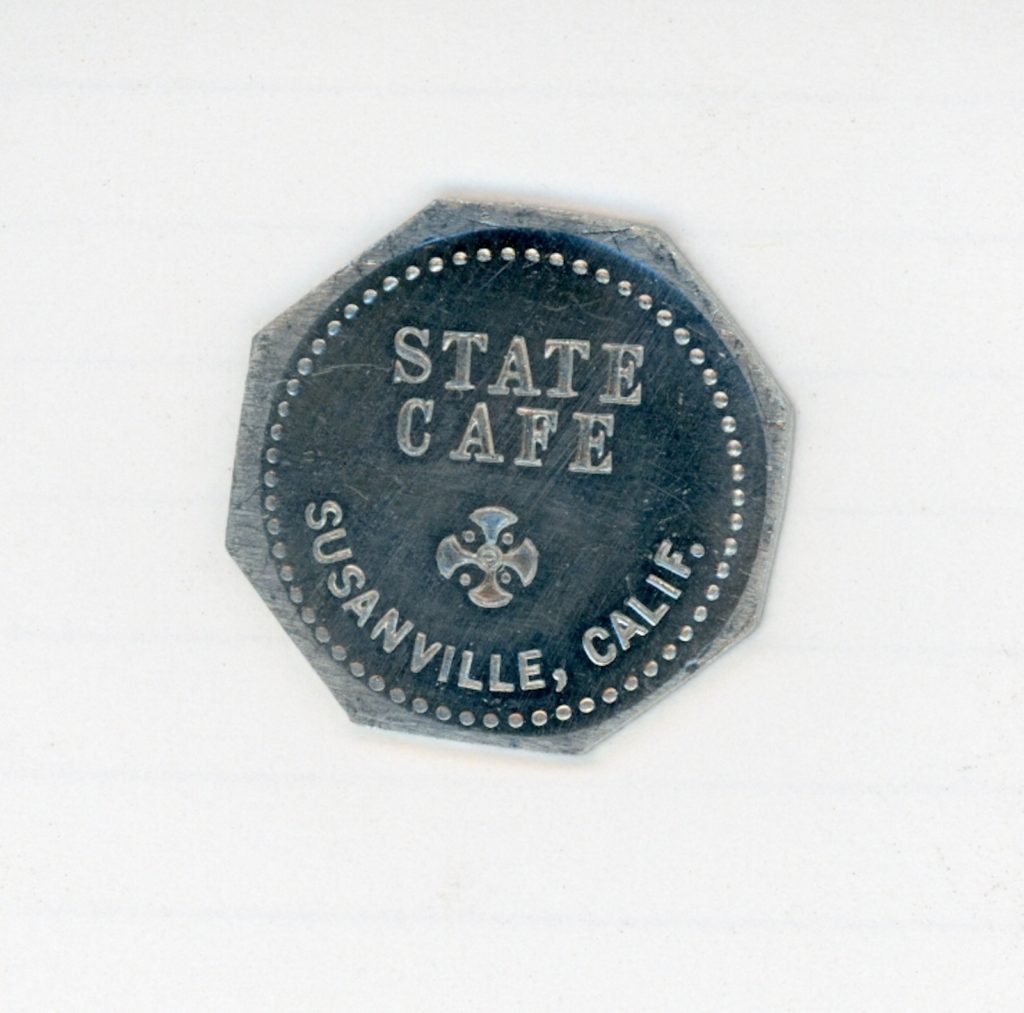
The State Cafe was located on South Gay Street, Susanville.
Seasoned residents of the region may recall this restaurant on South Gay Street. What many may not realize when it opened its doors on July 3, 1936 it was on the corner of Main and Gay. Its first proprietors consisted of E.L. Elskamp, Paul Dedick and Jack Tilton, best known for their bootleg joints during prohibition. In the course of time, the restaurant moved from its prime Main Street location to the rear of the building to be replaced with the State Bar. In the center of the building between the two establishments was a laundromat—all interconnected. One could easily eat, drink and do laundry all at the same time, never leaving the premises.
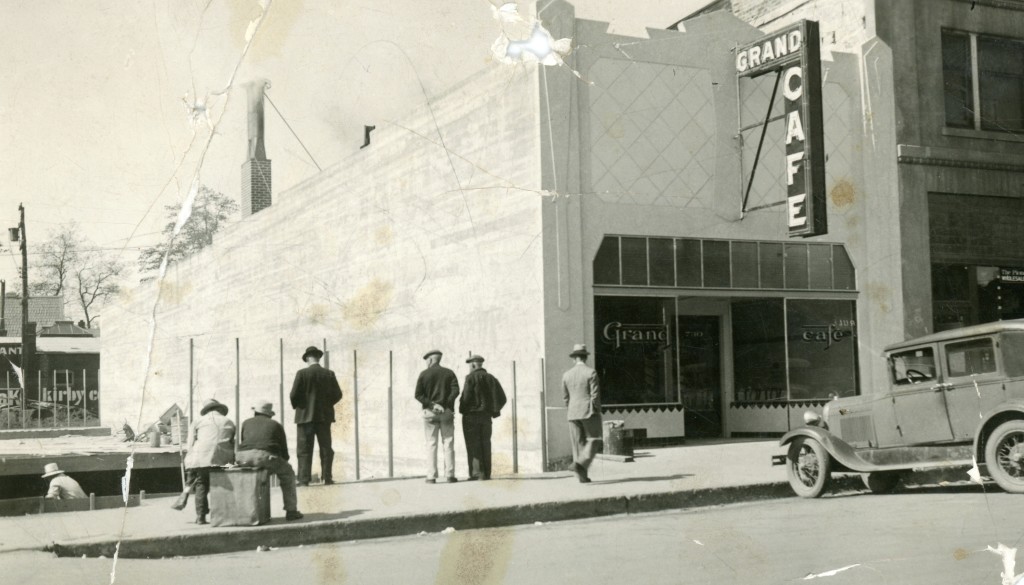
Excavation of the State Building, next to the Grand Cafe., May 1935. Courtesy of Helen Sargent
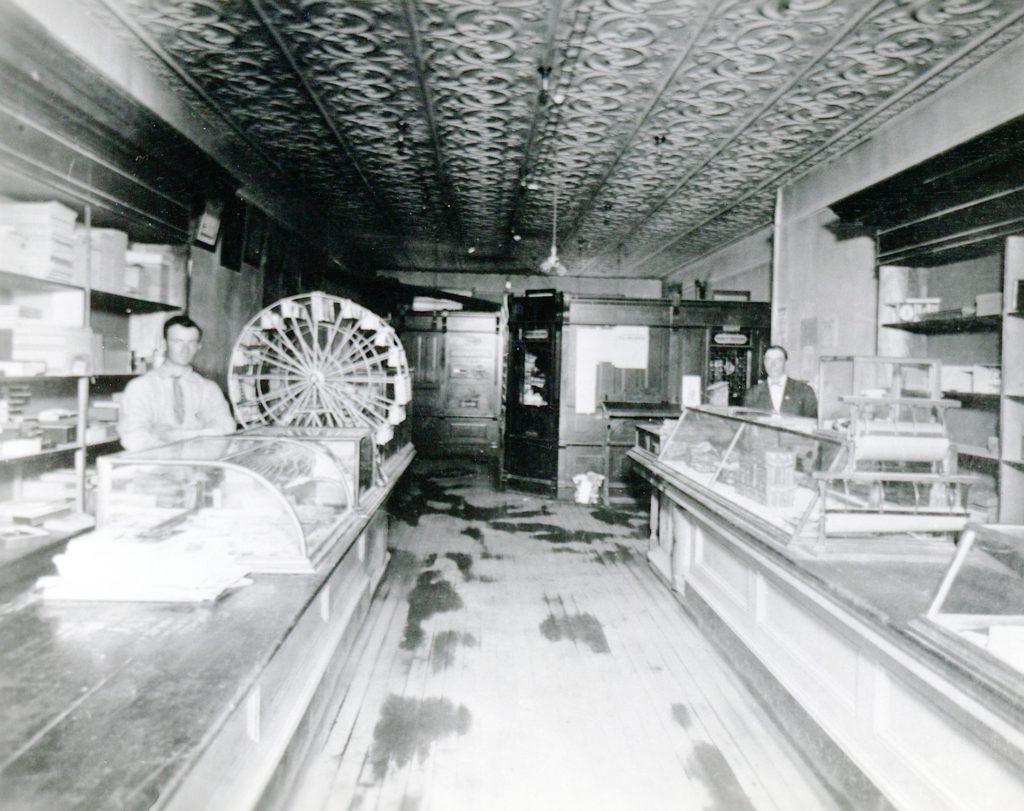
Interior of Spalding Drug, circa 1910. Courtesy of George McDow Jr.
Seasoned residents of the area will have fond memories of a one time inconic local instutition, Spalding Drug. It was established in 1865, by Zetus N. Spalding. In the 1890s, his son, John B. Splading took over the business. To give it a more cosmopolitan flair, he renamed it the City Pharmacy. The basic operation remained the same. Members of the Spalding were avid sportsmen and it was reflected in the merchandise they stocked. Not only was there a wide selection of fishing tackle, but guns and ammunition as well. By the time, City Pharmacy moved into its new stone building on the 700 block of Main Street, the name reverted back to Spalding Drug.
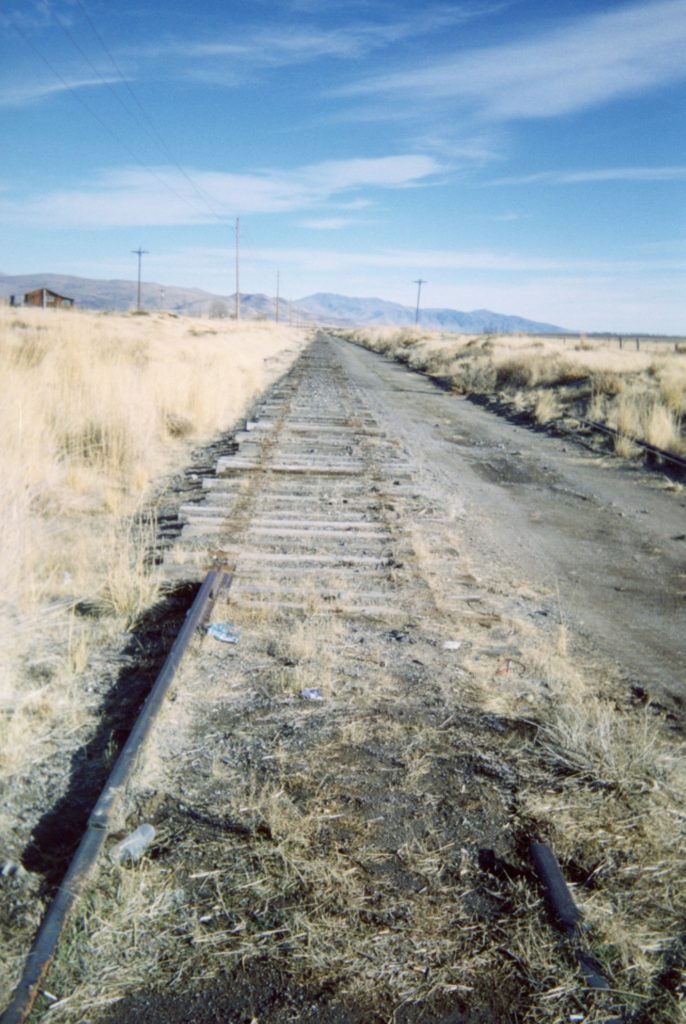
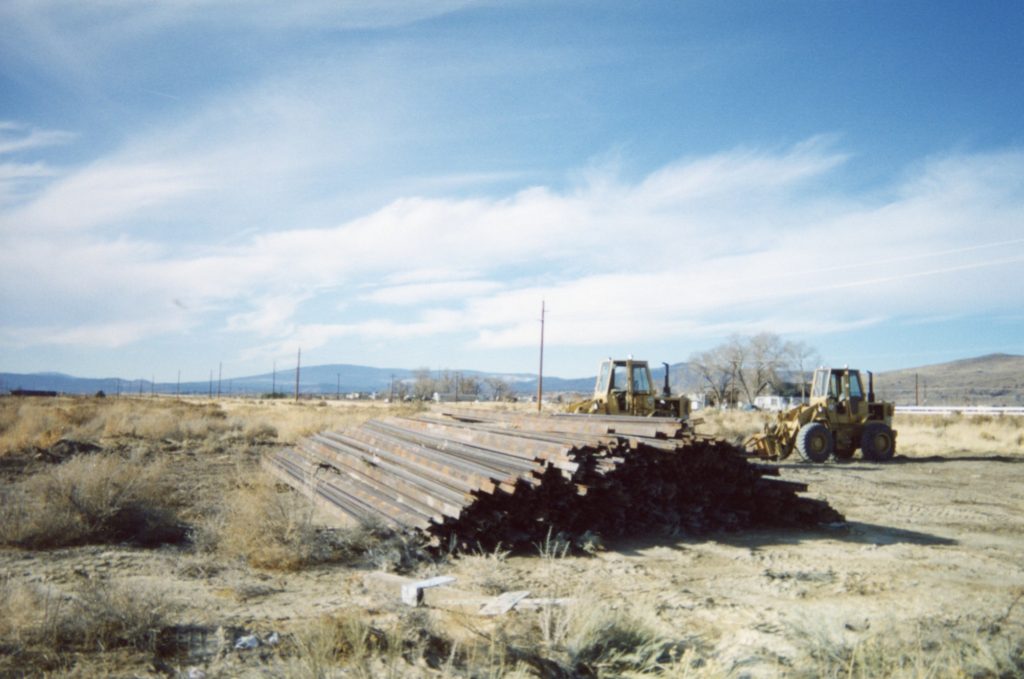
There is a bitter irony with ripping up this railroad line. The 124 mile railroad was built in a span of two years. To dismantle it took decades. In the fall of 2006, without any fanfare the segment of the railroad between Susanville and Wendel was ripped up.
Rails piled up at the defunct Leavitt Station, November 24, 2006
In January 1908, the Rev. N.M. Parsons of the Methodist Church spearheaded a prohibition movement in Susanville in an effort to clean up the community. The issue had been informally discussed since the early 1880s, when there was a local chapter of the Women’s Christian Temperance Union. Parsons began his campaign by focusing on the social ills caused by alcohol. He circulated petitions to have the issue placed on the next municipal election ballot, scheduled for April 13. The Town Trustees accepted Parsons’ petitions and would place the matter before the voters. There was one stipulation: it would bean advisory measure as to whether saloons should be banned.
It was a widely debated topic. The city’s 1908 budget was $3,498. There were two main revenue sources. One was property tax assessment and it generated $1,815. The other was the liquor licenses which provided $1,424 to the town’s treasury.
Once those figures were revealed, Parsons; ballot measure was doomed. After all, if the City lost the money generated from liquor licenses, the only alternartive to make up for the loss would be to increase property taxes. That appeared to be the voter’s consensus. The issue generated the highest voter turnout to date with 157 votes cast. The results: 110 votes to remain “wet” and 47 “dry.”
Susanville’s Methodist Church, circa 1896. Courtesy of Philip S. Hall
The primary reason for the church bell was to call the faithful to worship. The quality of the bell was superb and when wrung could be heard two miles away. Susanville in the late 1800s was a mere village of some 300 souls. It should be noted, that in this era, the town was plagued by fires, and in no time the bell was used as a fire alarm system. In rare instances the bell was used if something of major importance needed to be relayed and thus prompting individuals to congregate at the church to be informed of the impending news.
In 1895, the Lassen County Board of Supervisors approved Ordinance No. 33 pertaining to curfew in village of Susanville (the town was still unincorporated). From September 1, to April 1, anyone under the age 18 after 7 p.m. had to be accompanied by a parent or legal guardian. During the summer months, it was extended to 8 p.m. The fine for said violation was one dollar. It was the town’s night watchman who had duty at the appointed hour to ring the Methodist Church bell to signal it was curfew time.
Yesterday, it was mentioned that the local American Legion dedicated a flag pole on Inspiration Point on November 11, 1935. This was not the only improvements being made there, for Susanville’s first park. During the early 1930s, the Monticola Club adopted a beautification project for the entire bluff. One year they scattered hollyhock and poppy seeds. They also bought trees for the reforestation of the bluff. In its first year, the forestry students of Lassen College adopted Inspiration Point as a project. It was their intent to provide picnic tables, benches and fireplaces. They even discussed the possibility of a amphitheater there. While there intentions were good, they never completed the project. However, three years later the college students developed Willard Ski Hill.
Just as Memorial Day was once referred to as Decoration Day Veterans Day was once known as Armistice Day. In Susanville, in 1935 this particular day, was a two-day event.
The night before was billed a “Night in Paris” held at the Memorial Building. A variety of entertainment was on hand for the attendees, so as to what one promotional of the event announced for the veteran’s to make “whoopee.” The basement of the building was transformed into a Monte Carlo casino.
At ten o’clock the next morning a parade of the veterans marched from the Memorial Building to the head of Main Street (Elks Lodge). Located there was a bronze plaque with the name of Lassen County soldiers who lost their lives in World War I. This was followed by a flag raising ceremony at Inspiration Point. The Thomas Tucker Post of the American Legion had installed a flag pole there, and this was a formal dedication as a gift to Susanville. The day concluded with a dinner banquet at the Memorial Building.