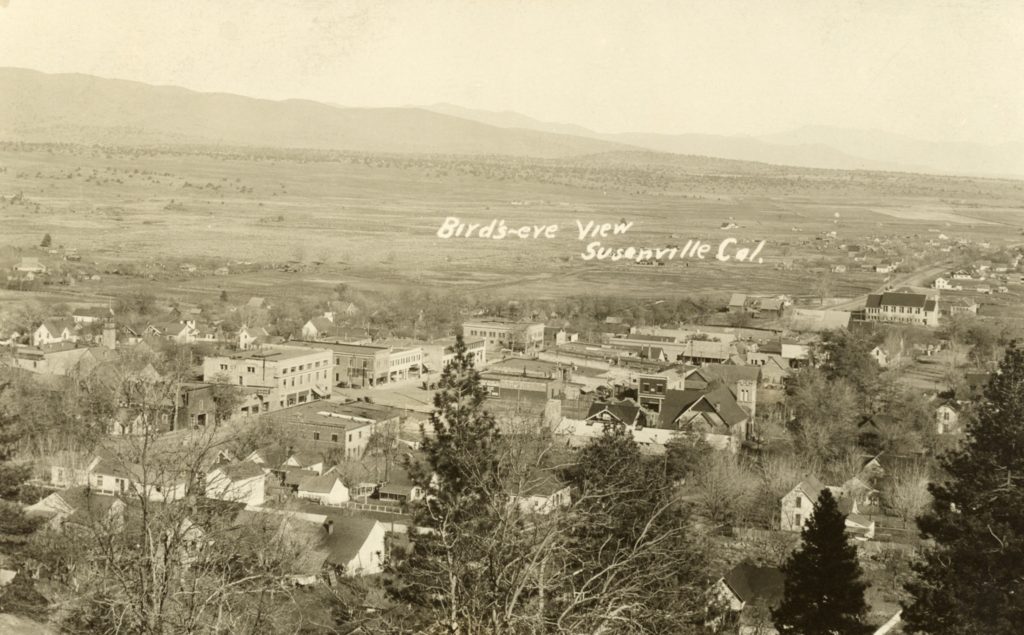
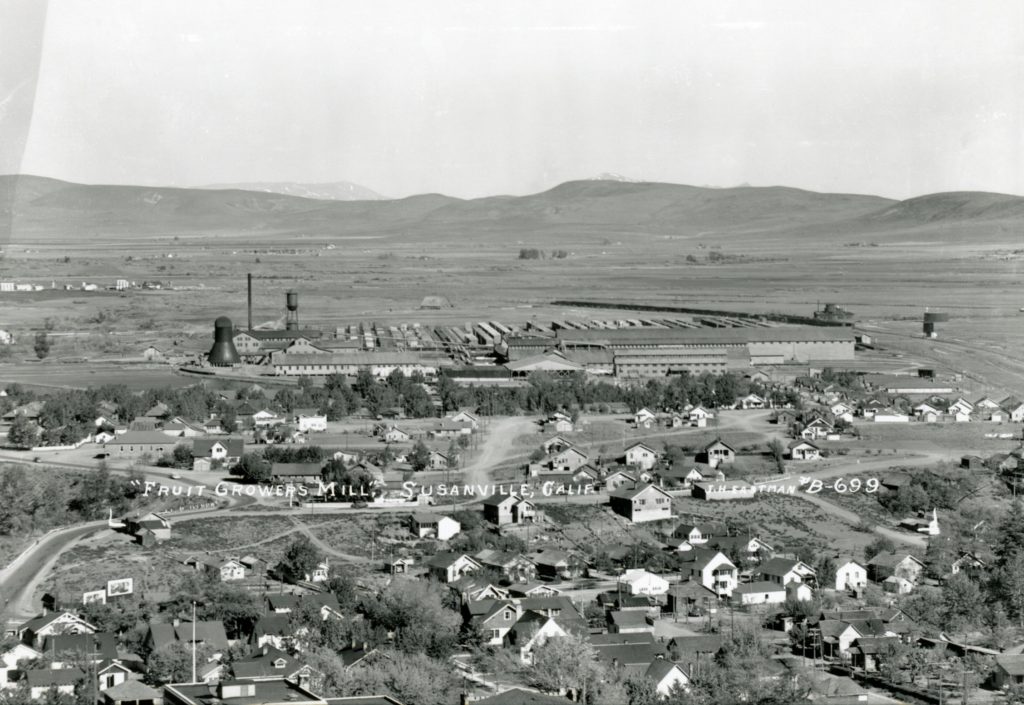
One of the items that caught my attention about this particular photograph was the clarity of the skies. Notice that both lumber mills—-Fruit Growers and Lassen Lumber—were idle and not belching large copious s amounts of black smoke. In addition, look at the background behind the mills, as that area remained untouched from development.
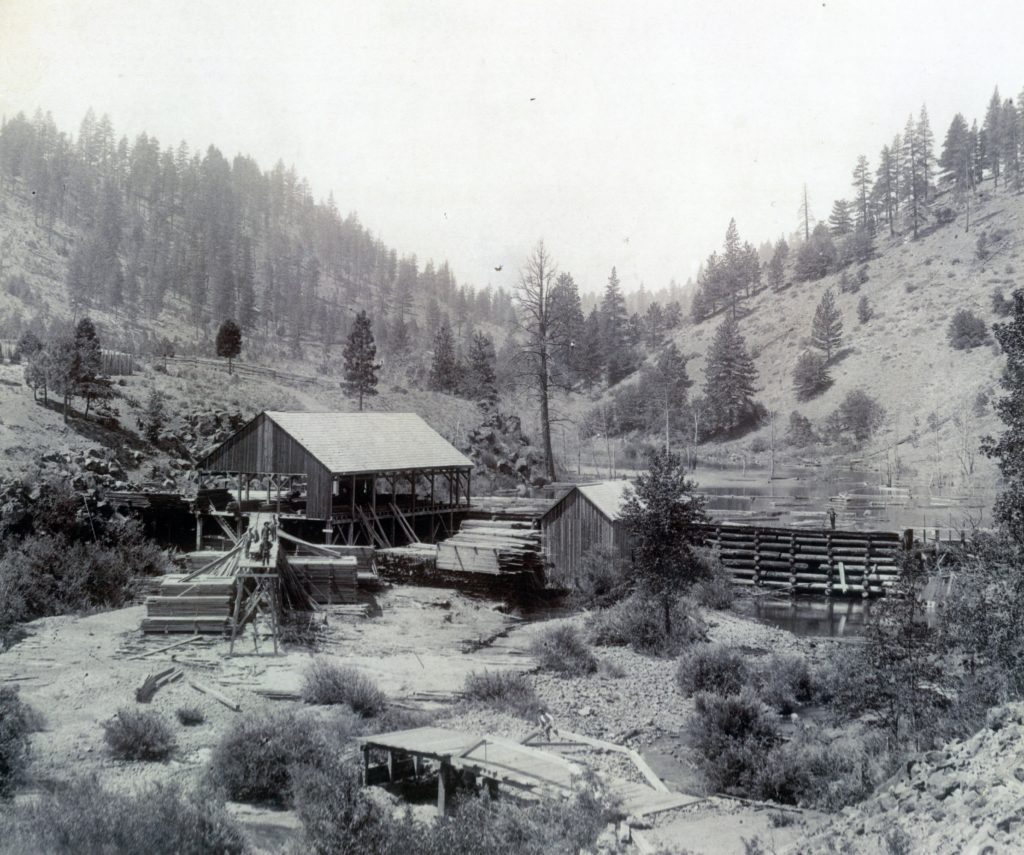
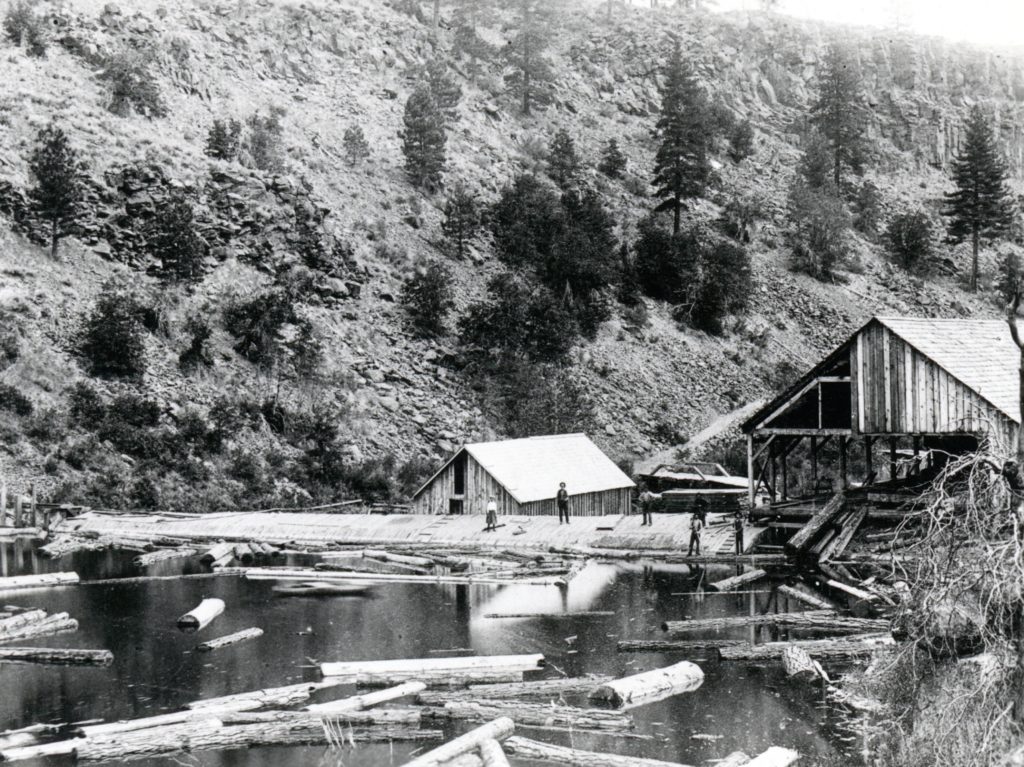
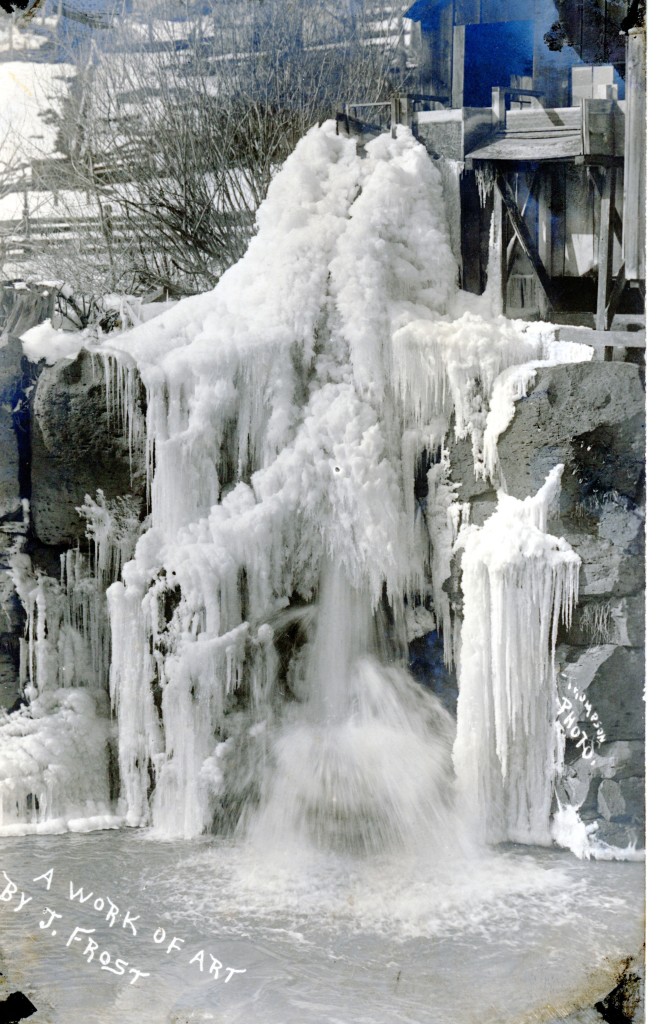
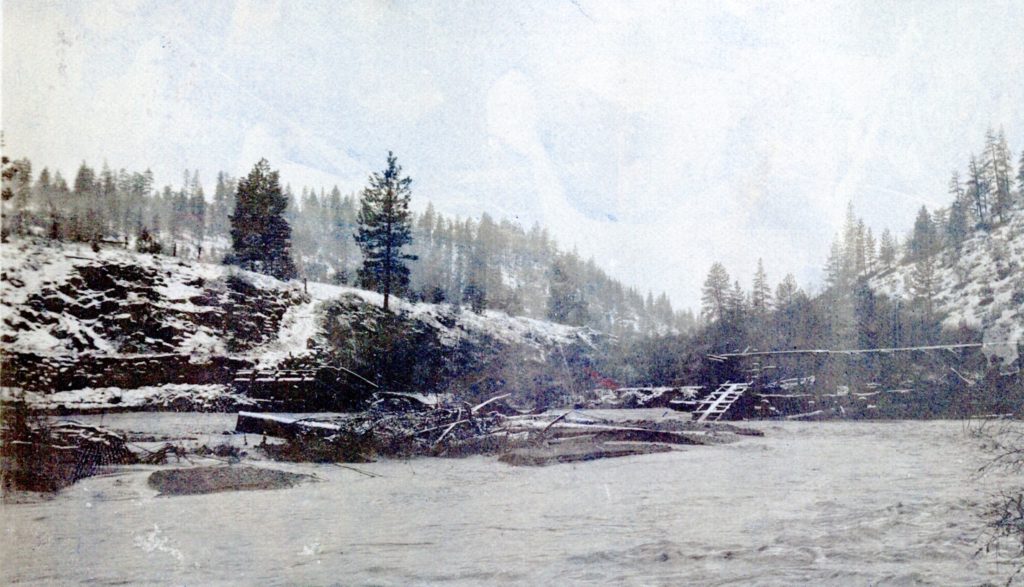
Some time during the night of March 27, 1906 an unknown individual(s) attempted to blow up the old Bremner Dam on Susan River with dynamite. The dam was built in 1886 in conjunction with the Bremner sawmill, about a mile west of Susanville. The damage was slight and it was reported that whoever did the deed was not familiar with explosives. The dam had fallen disrepair over the years, since the destruction the sawmill there in 1894. Some were of the opinion, that the dam was a hazard, especially to those downstream and it should be removed.
Bremner Dam Remnants, Susan River, 1977
That never happened and the dam quickly deteriorated and by 1914, most of it had washed away. However, during the drought of 1977, water level in the Susan River dropped to such an extent to expose the remnants of the dam’s foundation.
One of the most impressive sawmills constructed on the Susan River was the Bremner Mill. In 1886, Lawrence, Leavitt & Company was formed to construct and operate it. The site selected on the Susan River was approximately a mile west of Susanville. The firm built an imposing dam 250 feet long and 25 feet high. The dam created a reservoir that backed up water for a mile. That was beneficial for the company, since it would float logs down the river to the mill.
In December 1887, Charles Bremner, a lumberman from Maine, purchased the mill. His two sons, James and William, arrived from Maine to assist. On December 8, 1888 Bremner sold a half interest. in the mill to Alex McCrimmon. The partnership short-lived. McCrimmon was not pleased with Bremner’s management of the company funds, and sold his interest to Leavitt & Woodsum for $1,800. Bremner was plagued with financial problems. In 1892. with Bremner unable to pay his debts, William Greehn foreclosed on the property and became the new owner. Greehn, however, retained Bremner to operate the mill.
Bremner sawmill, Susan River Canyon, 1891. Courtesy of Betty Barry Deal
In 1891, to take advantage of the water power from the dam, James Anthony installed a power plant, to generate the first electric power for Susanville. The generator had a capacity of 30 horsepower, enough to provide power for40 arc lamps.
On Tuesday night, August 14, 1894, fire broke out at the mill. It went unnoticed by the several people who were at the mill. Once it was discovered the building was in flames and it was too late to suppress it. The mill machinery and Anthony’s electric plant were a total loss. The origin of the fire was never determined. The mill was not rebuilt, and Anthony built a new electric plant half a mile down from the dam.
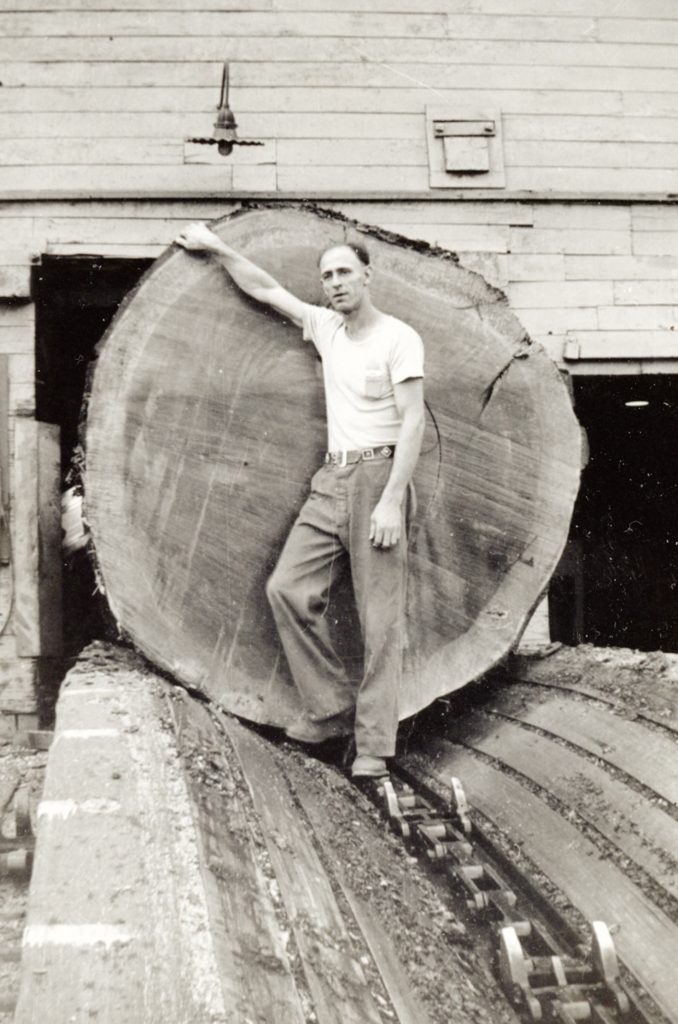
This six foot diameter ponderosa pine log entering the Fruit Growers’ Susanville mill, 1943—FGS Co.
Whenever an exceptional logging and/or mill scene Fruit Growers made sure the event was captured on film. In turn, in many instances it would appear in the company’s annual report. In a sense it was part promotional and educational tool at the same time. Fruit Growers’ audience was the citrus growers who owned the co-operative and invested in the mills and timberland to provide them an adequate supply of wooden boxes at a reasonable to price to ship their fruit. The majority of the owners had little knowledge of the sawmill industry that they were heavily invested in.
Lunch time at Dow Butte, August 21, 1953. Courtesy of Hank Martinez
What Fruit Growers did was not unique. Many lumber companies did the same to provide illustration to their investors where their money was being spent.
Recently, I came across two snippets of local citizens who experienced the Spanish Flu first hand. The first is from Mary Eloise Sifford Thomas who was born near Susanville in 1892. She stated that the flu was very bad and that several people in Susanville had died from it. She, as well as her four sisters contracted it and that old fashioned vegetable soup seemed to help. Her father, Tom Sifford, never did come down with the flu. She wrote, “I think chewing tobacco and taking a little whiskey made him immune.”
George McDow, Jr., who was born in Susanville in 1910 wrote, “Our town was not spared from the devastating effects of the nation-wide influenza epidemic. One of the prominent people to succumb to the illness was Lassen County Surveyor, Thad McKay, a good friend of my father. As a precautionary measure the Town Trustees had closed the theater and all the saloons and barred any public gatherings, but only for a short while.”
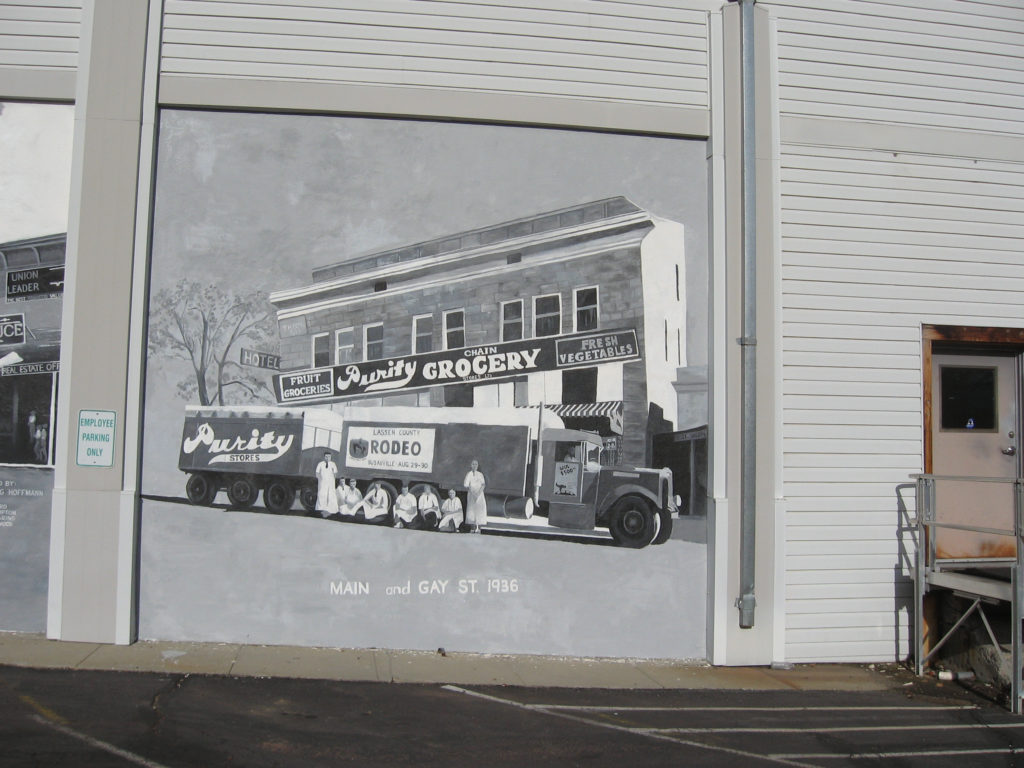
One of the panels on the LMUD building, part of a forthcoming mural tour. The building depicted was the home of the Telephone Company . December 26, 2016
Note: This was originally scheduled for last August, then moved to September, and now bumped to January. That just the kind of year 2020 was. Anyhow, before you know it, winter will be in the rear view mirror. I thought this would be a good opportunity to solicit as what might work best for everyone, other kinds of tours, etc.
It is my goal, if everything goes accordingly to provide some guided walking tours. While in past posts I have the gave information of the historic “mobile homes” of Susanville, it is not the same as in person, where there is interaction. In addition, I will be able to point out other features of interest. Another one would be a mural tour, which would also highlight information about the buildings they were painted on.
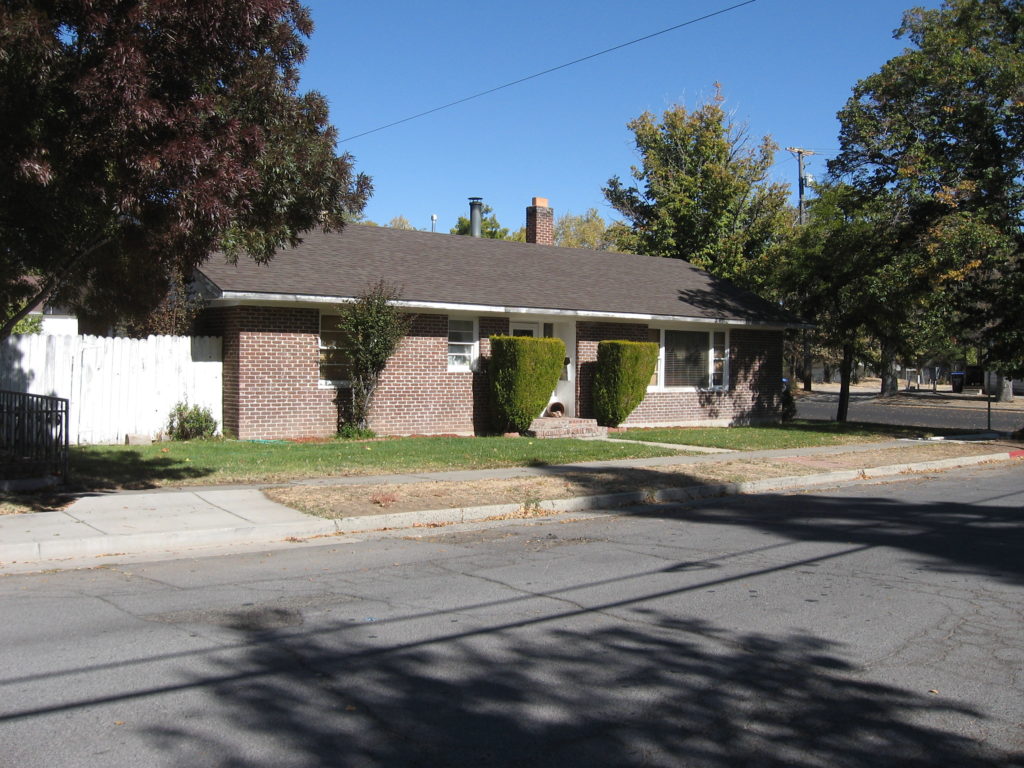
709 Mill Street, October 12, 2017
The brick building above, while it was not mobile, there is an interesting story where the bricks came from.
If any one has preferences such as a weekday evening or a Saturday morning, please let me know.
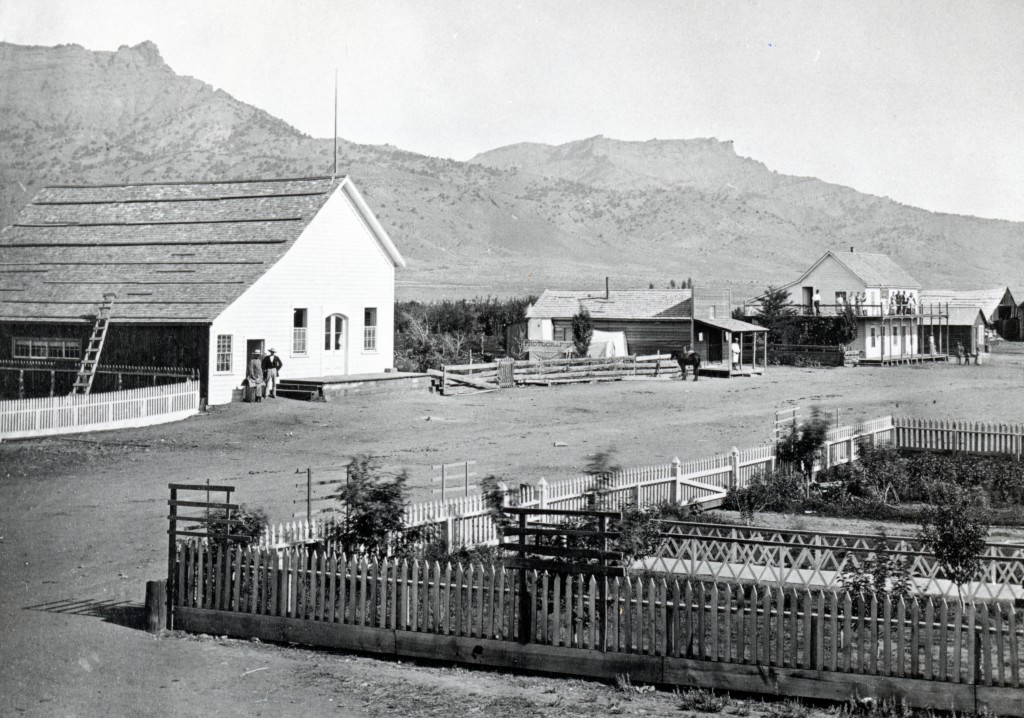
Herman Brince was a photographer in Lassen, Modoc and Plumas counties during 1878-79. I have always been impressed with his photographs, though only dozen or so are known to be existence. Whatever, became of his negatives is unknown, but we do know that he died in New Zealand in 1882.
Cedarville, 1879
Fortunately, the Nevada Historical Society in their collections had these two Brince photographs of Adin and Cedarville. There are newspaper references of photographs that Brince took. In 1878, Brince did a portfolio of 25 scenes of what would become Lassen Volcanic National Park. One of these was Malgin’s Sheep Camp, known today as Drakesbad. However, known of these photographs have been found.
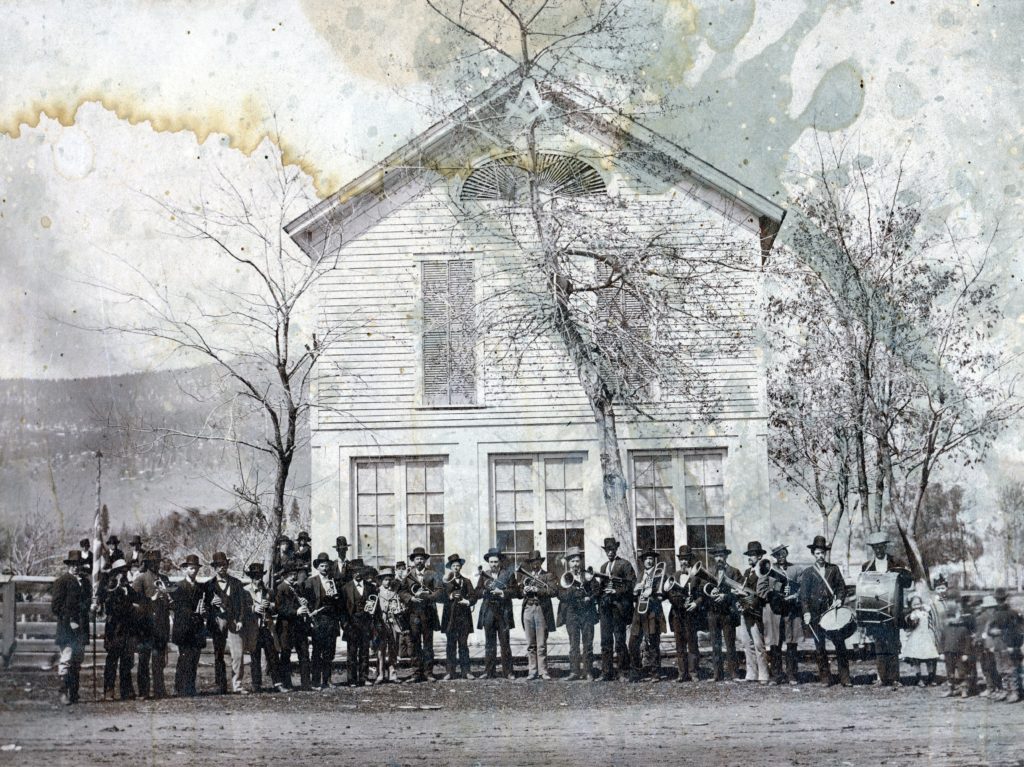
Lassen Lodge #149 F.&A.M.
This 1879 photograph of the Susanville Masonic Hall is another Brince photograph. This I found on Ebay and which I purchased for a tidy sum. I inquired with the seller how he acquired the photograph, which he informed at a yard sale in San Francisco. One never knows, where something might surface. On a final note, the above photograph is the only known one in existence of Susanville’s original Masonic Lodge.
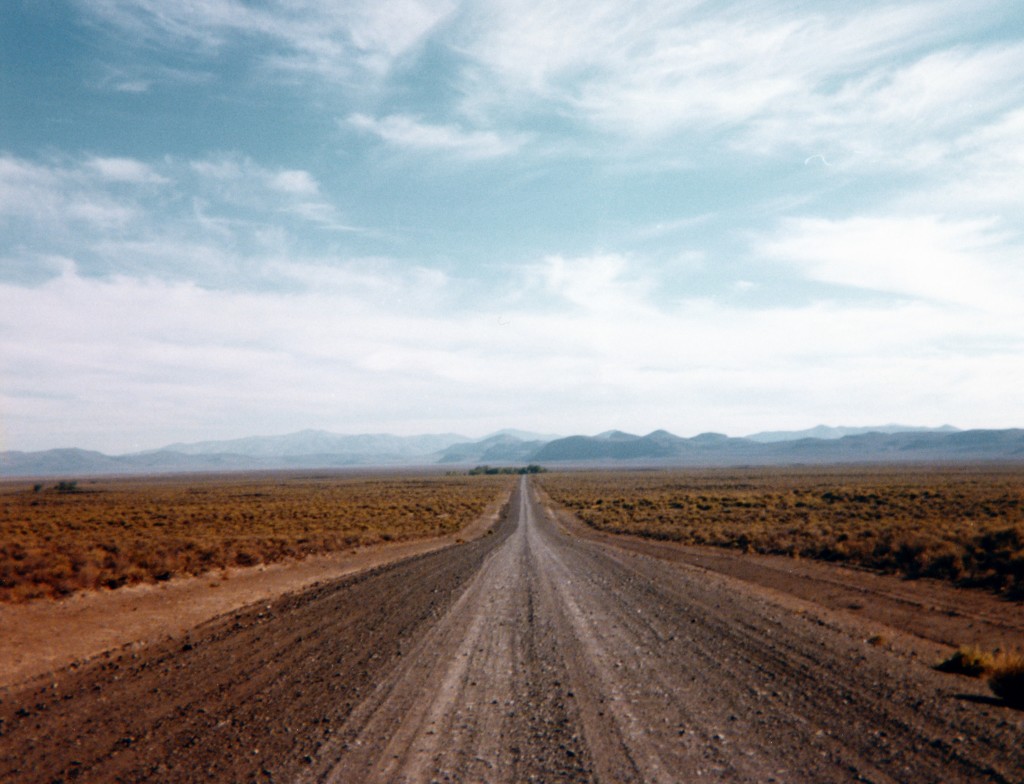
Smoke Creek Desert looking towards Sheepshead, fall, 1977
In the spring of 1952, another Nevada annexation movement sprung to life. In this particular instant it involved annexing Lassen, Modoc and Plumas counties to the Battle Born state.
An intrepid reporter of Susanville’s Lassen Advocate did an informal survey of talking to people one day to get a feeling. Interesting the responses were divided. Here is a sampling of a few:
Opal Proffitt, “I don’t I’d like be in Nevada. I don’t like the idea of gambling. Mrs. James Hodges stated that it feels like we are a part of Nevada and had no objections. George Lovell “I’d like to belong to Nevada myself. They have no debt and think we’d all be benefitted.”. Norman Vornado “I would be against it. I am a teacher and the pay in that field is far below California’s rate.” William Blackmer “I think we’re a part of California and we’d better stay there. Finally, J.F. McGrath “We need to protect Lassen’s virtue, with annexation there would be wide open gambling.”
So it goes, just another failed annexation movement.
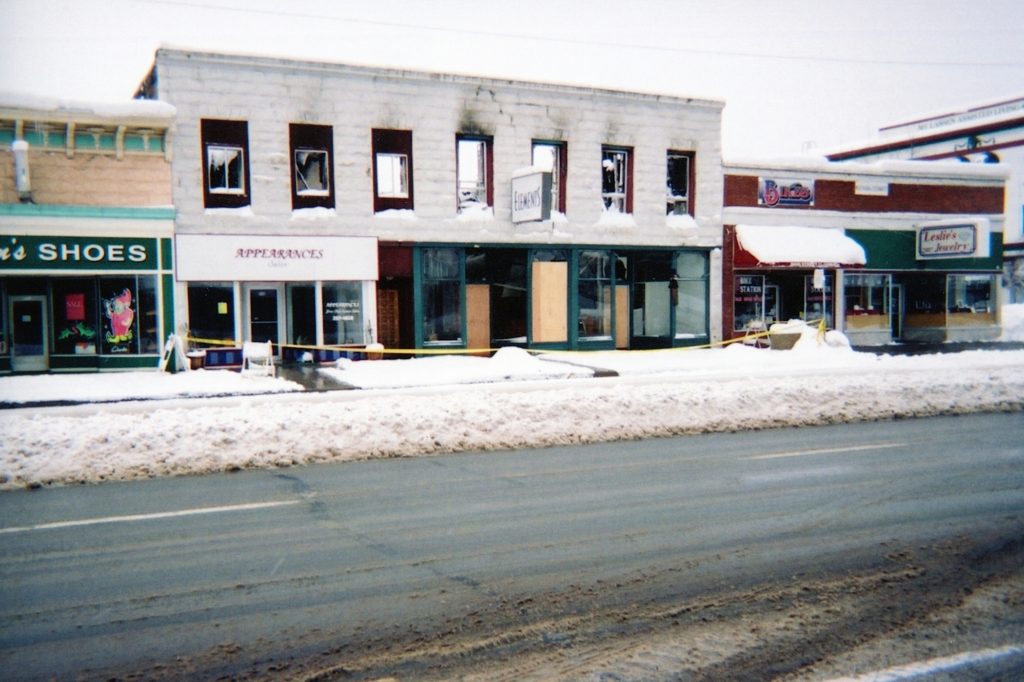
710, 712 Main Street, Susanville, January 7, 2005.
For a short time I resided on the second floor of 712 Main Street. Real seasoned residents will remember the building as Spalding Drug Store. In later years it was occupied by the Bootery and the Smart Shop. It was a transitory time for yours truly. Fortunately, I moved out in the summer of 2004, and the building was destroyed by fire on January 5, 2005.
Arnold Planing Mill, Richmond Road, Susanville, 1913.
This was a special day for employees for the Susanville Post Office. For the first time, they got the day off and there would be no mail delivery. However, the postmaster was not so fortunate as the post office remained open on Christmas Day for those who needed to pick up mail and/or mail packages.
 Bremner Dam, 1906—George McDow Jr.