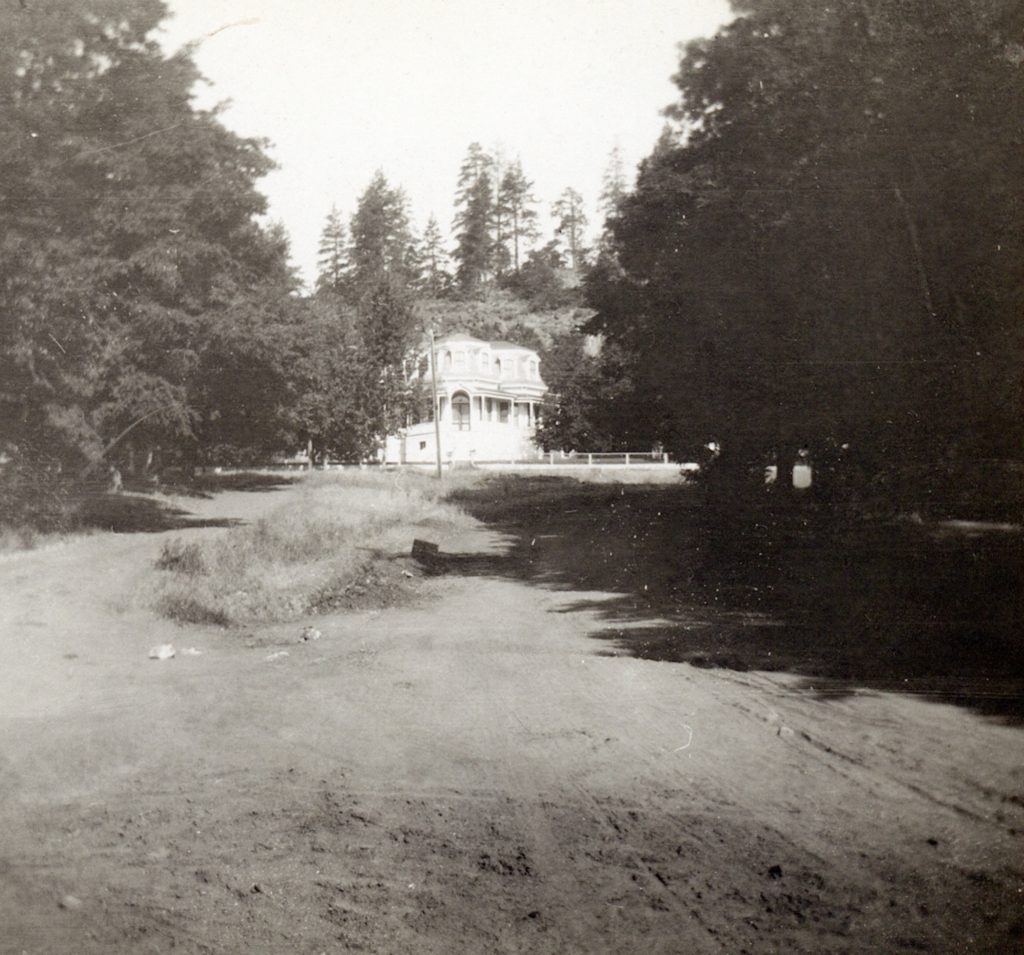
In March 1926 work began on the construction of a American Legion Memorial Building in Susanville, located across from Lassen Union High School. On Sunday April 18, 1926 a cornerstone ceremony was held. The stone made of native granite was carved with the American Legion emblem and bore the inscription sponsored by the Thomas Tucker Post No. 204. It was a simple ceremony. A time capsule was placed that included copies of both local newspapers, names of the Lassen County Board of Supervisors, and of course, a list of members of the local Legion and. Auxiliary posts.
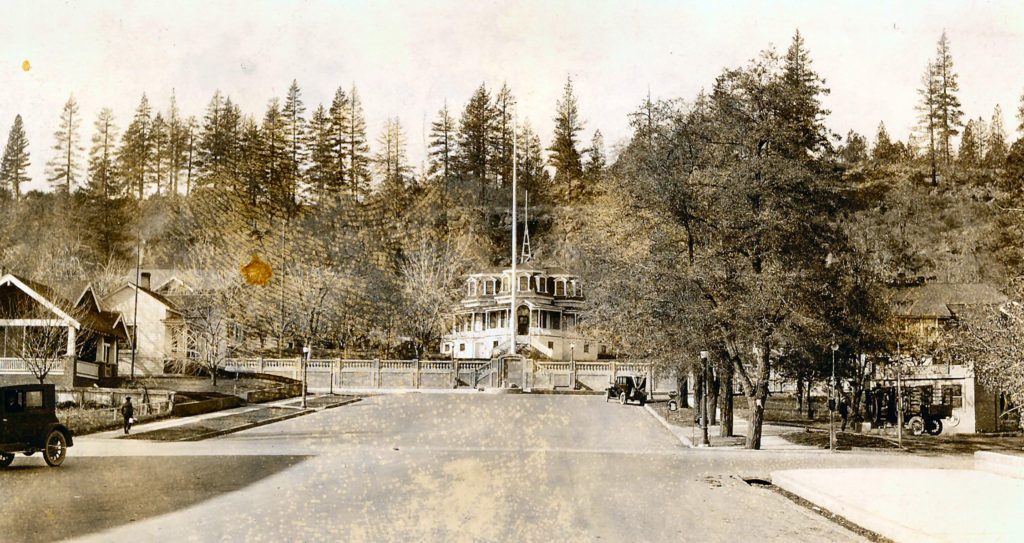
500 Block, Main Street, Susanville, 1911—C.R. Caudle Collection
Prior to the construction of Highway 36 which changed the west entrance into Susanville, civic leaders complained about the street appearance first entering the town and/or leaving. The problem spot was the 500 block between Pine and Roop Streets. There was an unsightly berm in the middle of the street. In 1922, the west entrance was changed to South Pine Street, and with the paving of Main Street, the problem fixed.
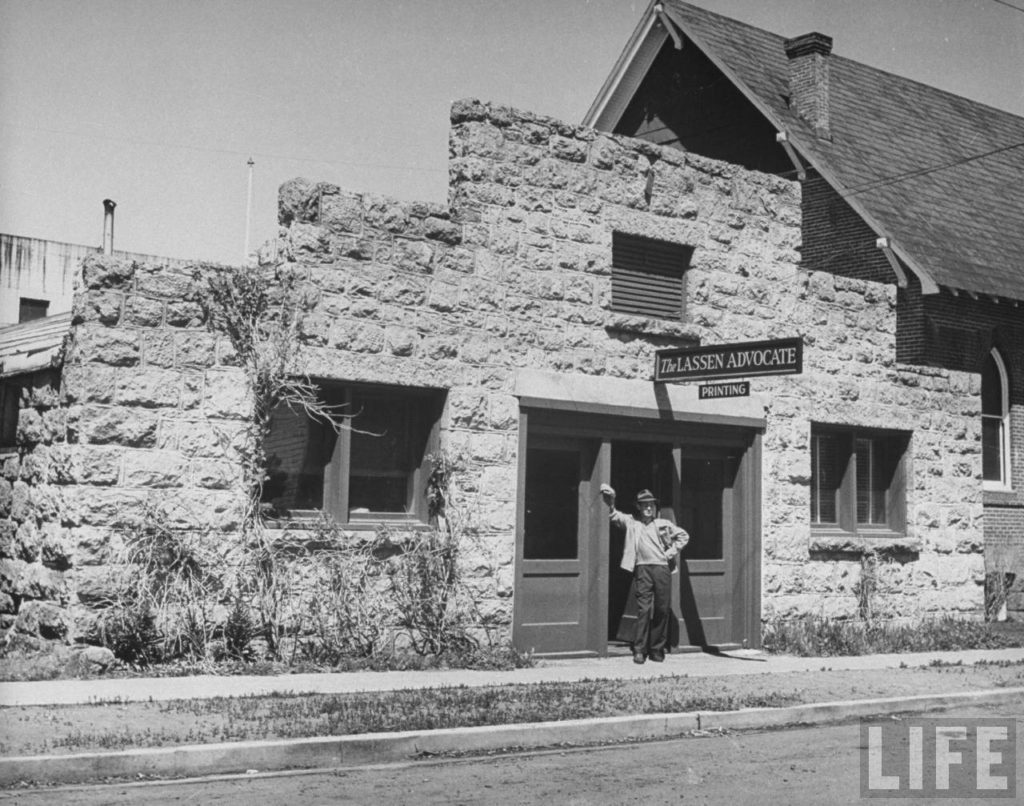
Ted Friend, publisher of the Lassen Advocate, 609 Cottage Street, Susanville, June 1944–Life Magazine
There have only been three structures on this site. Considering that it is one block off Main Street, in the original historic core of the town. In 1914, the first building on the site was moved from up the street. It was the old abandoned Congregational Church. C.E. Emerson who had a three-story hotel, along with his mercantile store was just across the alley, the current site of the Hotel Mt. Lassen. Emerson used this building as a warehouse. In August 1915, it caught fire that destroyed the entire east end of the block including the Emerson Hotel, the Hyer Hotel and the Methodist Church.
Emerson’s loss was only partially insured and was never ever to rebuild the hotel. He did construct a smaller native stone building fronting Main Street, that many people recall the home of Millar Hardware. Across the alley, and next to the Methodist Church a native stone building was built as Emerson’s warehouse. In March 1934, the Emerson Estate sold the warehouse building to the Lassen Advocate newspaper. In January 1963, the Lassen Advocate relocated to 2119 Main Street.
In the early 1960s, the Susanville Methodist Church needed additional space. A 1960 financial bequest by Elizabeth Lytle to the church’s building fund was a major boost. It was decided to purchase the Advocate building and build a second church building to house a Sunday School among other things. It progressed faster than anticipated and the native stone building was demolished in the fall of 1963. The church’s Fellowship Hall was built in 1967 containing a social hall, kitchen and classrooms. A dedication ceremony and the burning of the mortgage took place on May 12, 1978.
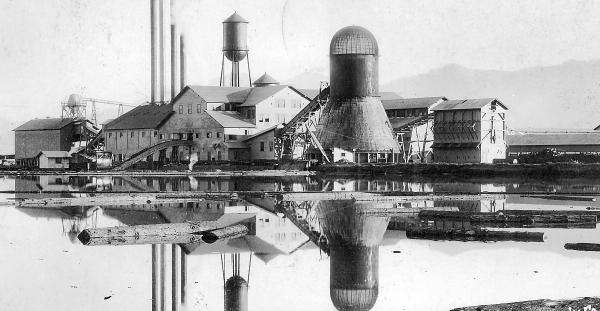
During the Great Depression of the 1930s Fruit Growers like so many sawmill operators on the West Coast had the debate whether to close their mills at Hilt and Susanville. This after all, with the realization that Fruit Growers could buy wooden boxes cheaper than they could manufacture. One other alternative was not just close the Susanville, but sell it.
The final decision was to keep the mills open. It would be costly, but Fruit Growers understood the long-term implications. If they closed the mills, they would lose many valuable employees and would be forced to start over once the economy rebounded. Logging operations at both Hilt and Susanville were suspended that year. At Hilt 1932 witnessed the end of railroad logging there. In addition in 1932, the Susanville mill operations were scaled back to a five-day week, rather than six to avoid layoffs. The decision paid off in the long run and were still able to meet the needs of the grower members.
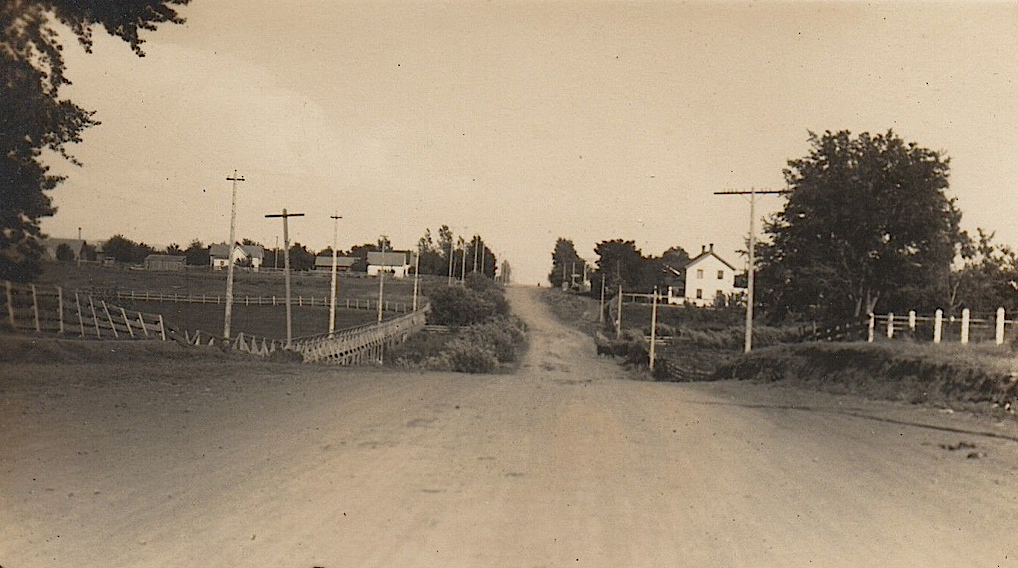
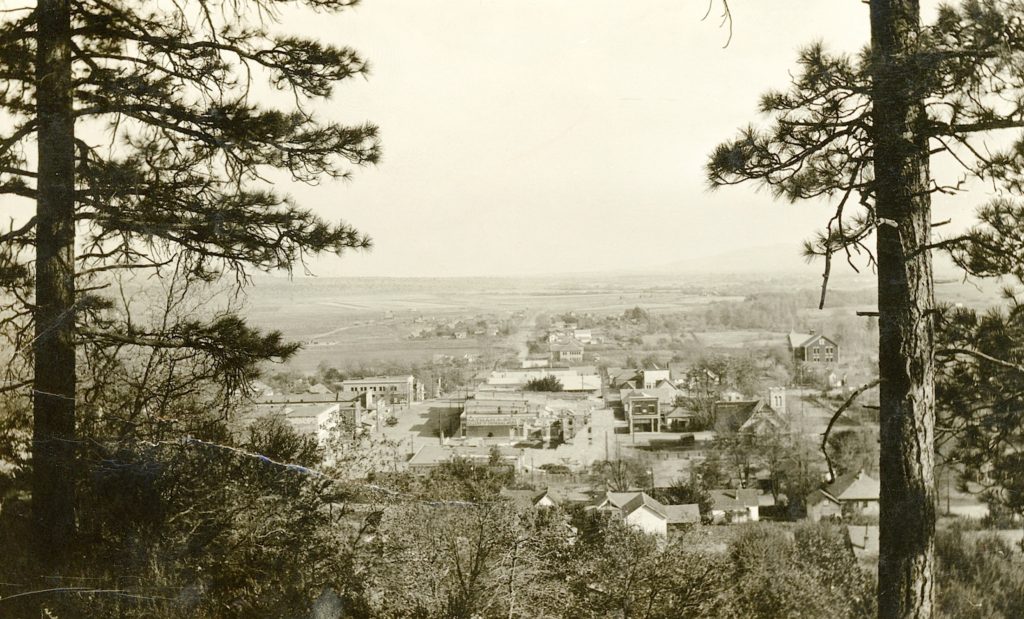
Looking east on Main Street, from Lassen High School, 1908.
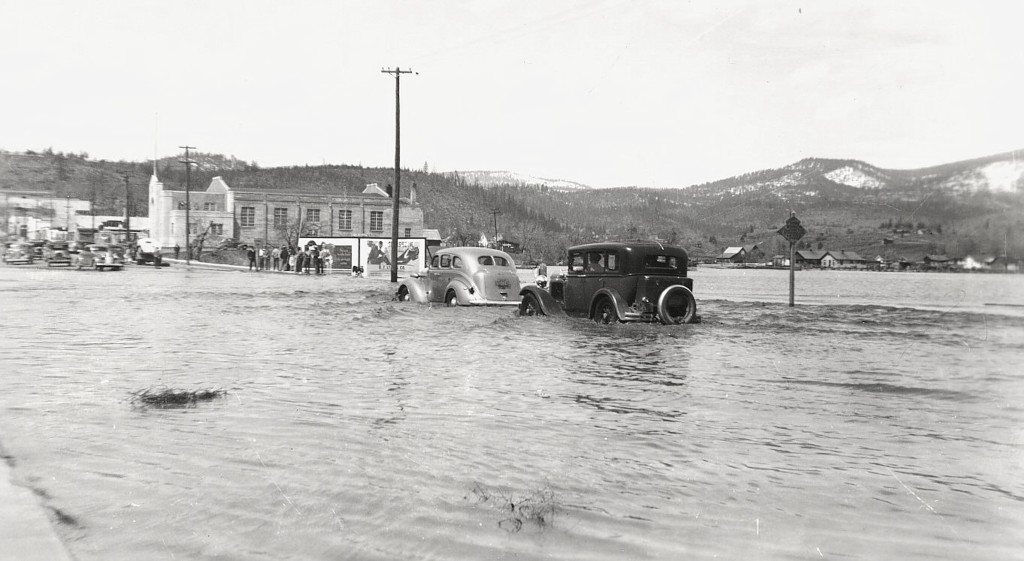
Since time immemorial the lower end of Piute Creek naturally flooded. Where today’s Memorial Park is located there were two channels of the creek. In 1920s, this area was purposely flooded in the winter to allow for ice-skating. With the construction of Lassen High School, fill was brought in to start filling the low lying bottom areas near the creek. As more development continued in that area, saw more fill, thus obstructing the natural flow of the creek. When Memorial Park was created in 1947, it eliminated one of the natural channels of the creek.
Piute Creek flood of April 9, 1938. Courtesy of Margaret A. Purdy
In 1916 the bridge across Piute Creek on Main Creek was replaced with a culvert. During the winter and spring time. when the water was high debris would find its way down the creek and block the culvert, thus flooding the area of Memorial Park and vicinity. It was not until 1998 that the culvert issue modified and no more flooding.
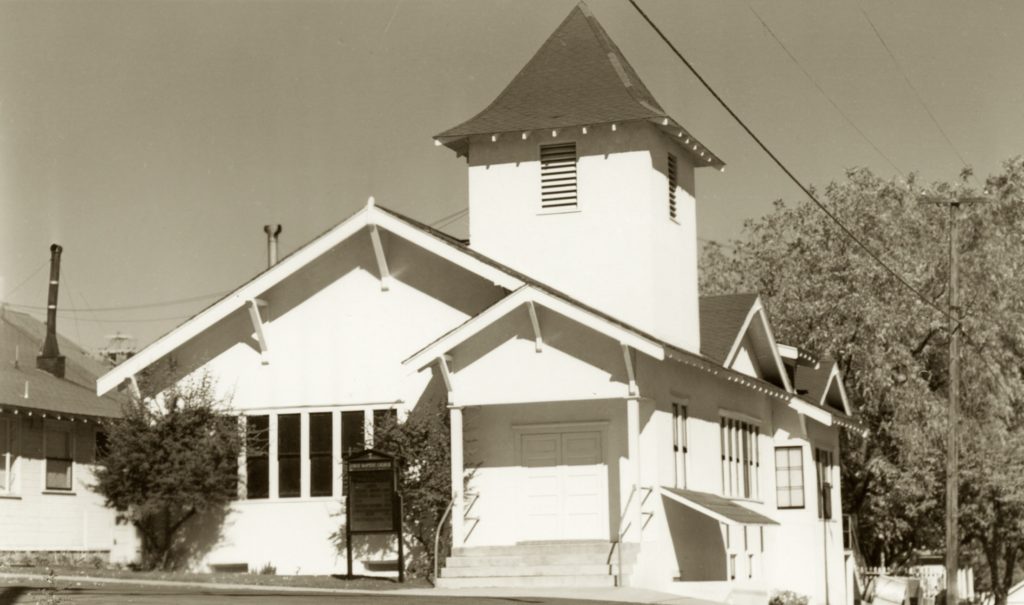
First Baptist Church, Nevada & Gay Streets, Susanville
On October 14, 1905 the Baptists held their first service at the home of the Reverend J.C. Long. The Baptists had been holding services in the Honey Lake Valley since 1873, and built a church in Johnstonville in 1889. Initially the Susanville services were held in someone’s home. As the congregation grew in 1913 they purchased a lot on the northwest corner of Nevada and Gay Streets. Shortly thereafter work began on the construction of a church and on February 20, 1914 a open public house was held.
In 1984 the congregation voted to leave the American Baptist denomination and joined the Evangelical Free Churches of America. At that time it was renamed the Community Evangelical Church of Susanville.
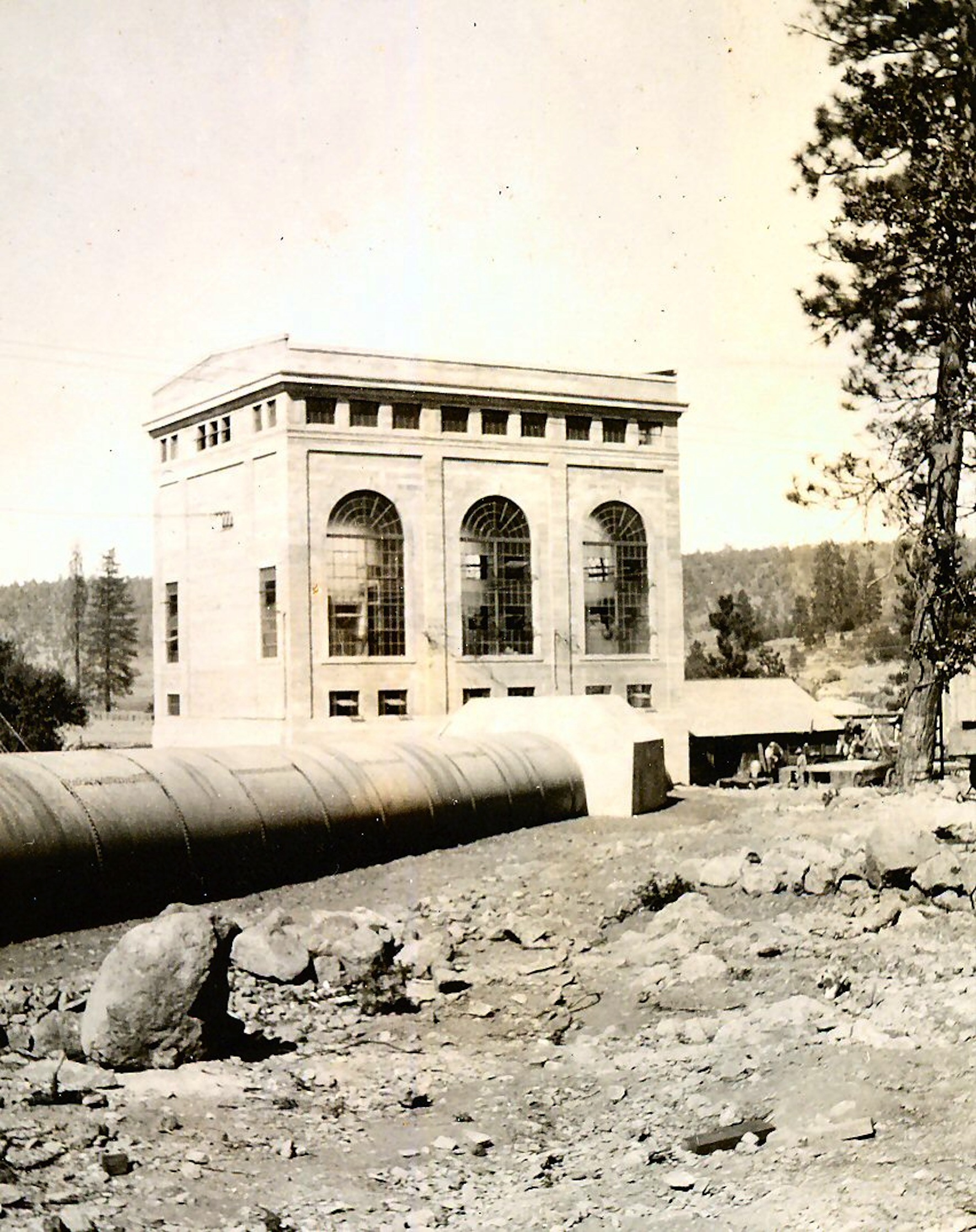
Hat Creek Powerhouse No. 1, 1921. Courtesy of Lola L. Tanner
The Red River Lumber Company operated many enterprises and it still as an influence concerning electricity to many residents of the region. From time to time when the Susanville area has a power outage, many times there will be a reference to the Hat Creek line. So you may ponder how did Hat Creek come to be? Continue reading Hat Creek Power→
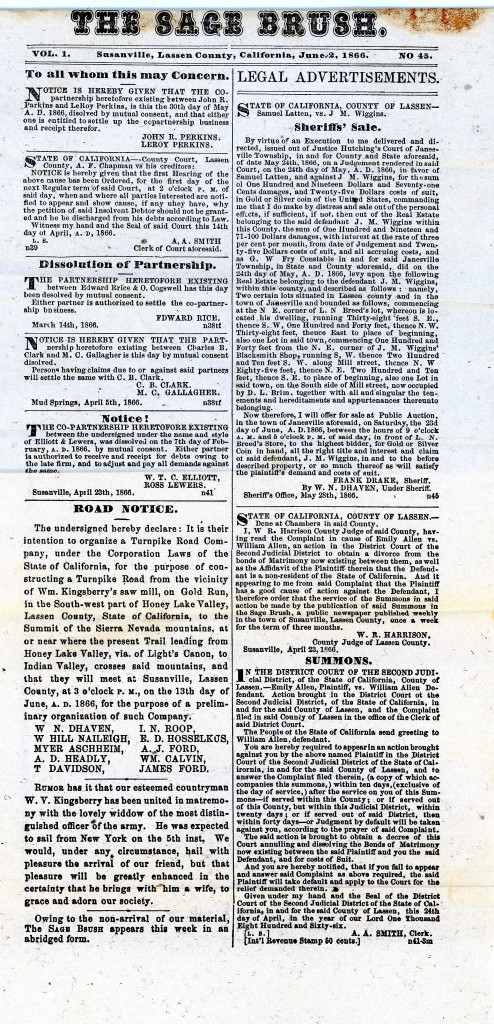
The June 2, 1866 issue of The Sage Brush measured only 6 inches by 12 inches and was printed only on one side.
In my opinion, which does not seem hold much weight, I was rather impressed by the fact that in 1892 four newspapers were published in Lassen County. Lassen County only had a population of 4,400, so there were more jack rabbits than people. Those four newspapers were: Amedee Geyser at Amedee, Mountain Tribune in Bieber and the Lassen Advocate and Lassen Weekly Mail both published in Susanville. However, it was short-lived as the Amedee Geyser went bankrupt in 1893.
This would occur a second time after the establishment of Westwood. The four newspapers co-existed until 1939, when the Lassen Advocate purchased the Lassen Mail. The general populace was well informed then. Sadly, today there are no newspapers.
A century ago, sending a postcard was a quick, convenient way to send someone a note, whether to let know relatives they made it to their destination safely, etc. Something akin to today’s email. What made a lot of postcards of the past were the image could be quite unique. When one had their film developed, they could have their images printed on postcard size stock, ready to send. The above photograph is a perfect example. It was not a professional postcard, just a picture someone took to send to their friend.
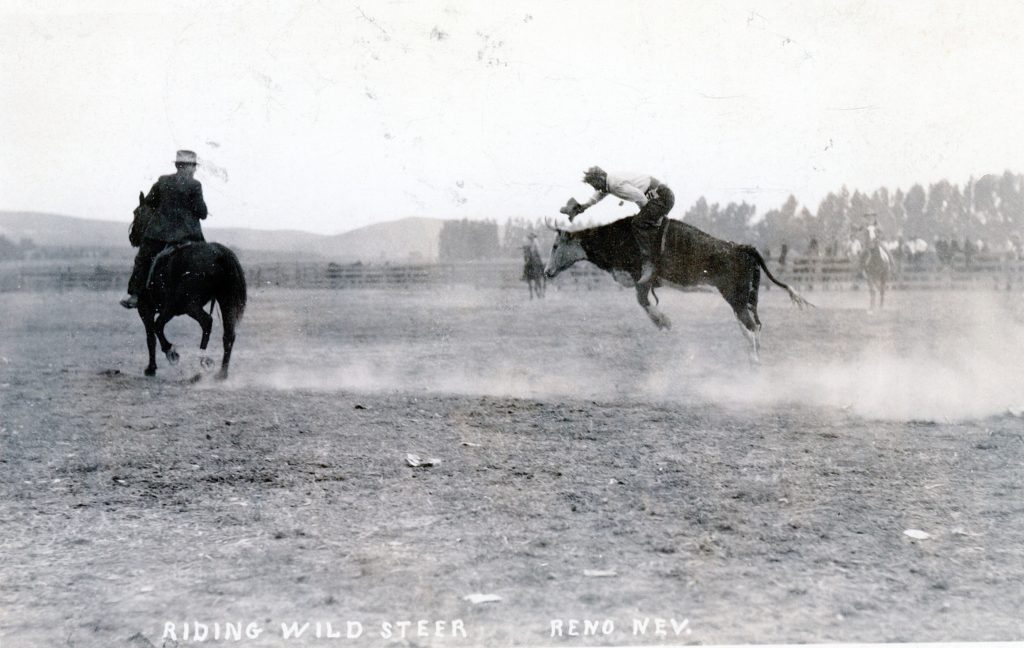
Reno Rodeo, 1926
The above professional postcard of the Reno Rodeo, is a family treasure of sorts. It was sent in April 1926 by my grandfather, Ira Purdy, to his wife, Margaret in Sacramento. Ira wrote, “leaving Reno for Susanville to look for work.” When Ira arrived in Susanville, he found employment as a mechanic for Doyle-Hunsinger Ford dealership and where they spent the rest of their lives. It was one of the few paper trails they left.
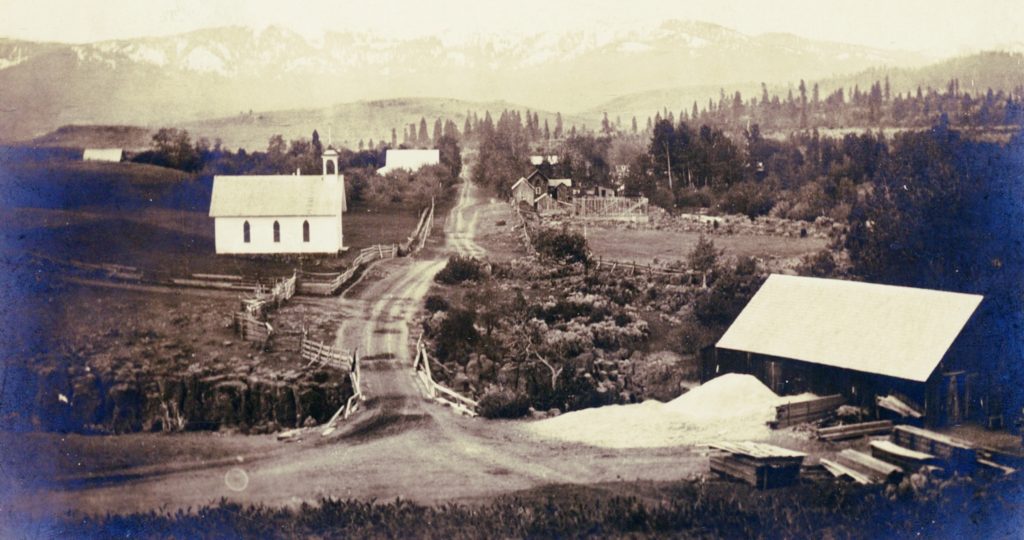
This particular photograph for some reason I have a fondness for. The right foreground is the Arnold Planing Mill that was destroyed by fire in 1914. Further down the road to the left is Sacred Heart Church, built in 1892. The church was moved in 1909 to the corner of Nevada and Union Streets. When the church was built there was some local criticism about the location, especially, though not seen in this picture, but to the far right was Chinatown. It is interesting to note, when the church was moved, it was located in Susanville’s original town of the 1870s.