Centennials are important milestones. It was on Saturday May 21, 1924 that the Susanville Lodge #1487 of BPOE, better known as the Elks, received its charter. It was, by the way, a big day in Susanville.
It was a full day of merriment beginning at sunrise and lasting until the wee hours of Sunday morning. One hundred thirty eight members were initiated that evening. At 12:30 p.m. a special passenger train arrived bringing Elk delegates from the San Francisco Bay Area. Upon. arrival a excited procession picked them at the depot and proceeded to the lodge at the west end of Main Street.
Lassen Industrial Bank built this Susanville landmark in 1922. Some fifty years later Bank of America tore it down.
The most unusual event was that of Professor Stillman Taylor who was to do a high dive off the top of the Lassen Industrial Bank building, into a three foot deep bathtub of water. It was reported that after Taylor said his prayers a dummy was substituted for the dive.
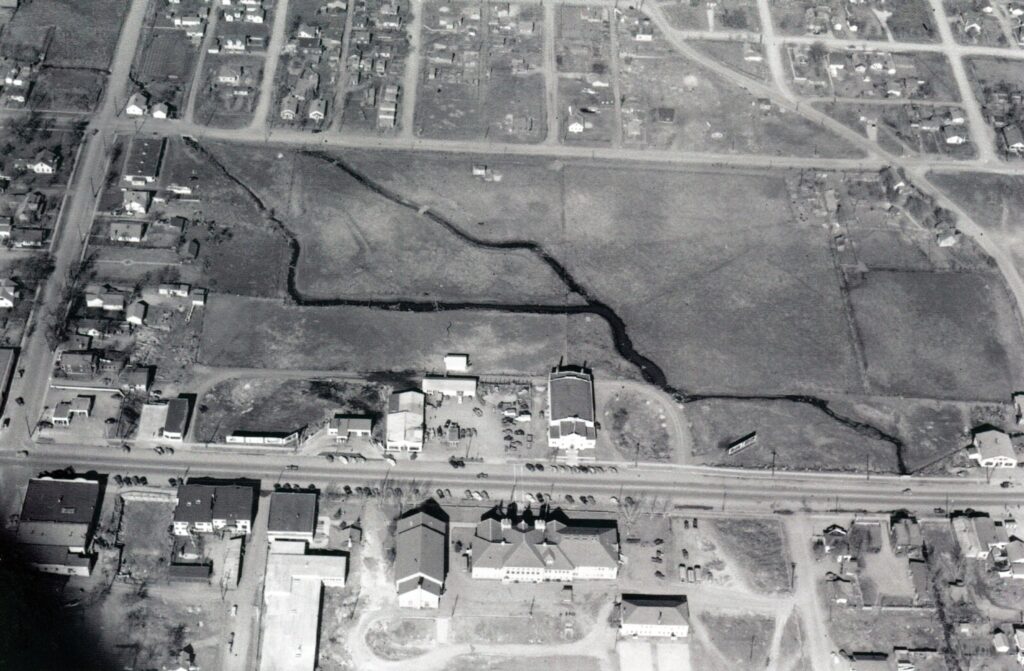
Folsom/Houghton property, 1946–Special Collections, U.C. Davis
By the 1880s, the village of Susanville desired a public park. Then a township, its governing body was the Lassen County Board of Supervisors. That board balked at the idea.
In 1900, the City of Susanville became its own separate entity, but a city park was low priority. In the spring of 1928, the Rotary Club got on the park bandwagon. It set its sights on the Folsom property behind the American Legion Hall on North Street. M.O. Folsom offered the property at $6,000, with $750 down and $750 per year at six percent interest. The Rotary Club enlisted the aid of J.W. Gregg, a landscape architect with the University of California and paid for his expenses to visit Susanville. Gregg volunteered his time to design plans for a park on the Folsom property. The plans and his offer were then presented to the City. The City, while impressed, took the matter under consideration.
The Rotary Club continued with its efforts. In 1929, it put together a 10-year strategy plan for a park, and sought support from other civic organizations. At a park meeting on September 23, 1929, Frank Cady offered to donate $4,500 to purchase the Folsom property for a park. Folsom reduced his askig price to $3,500 as long as it was used as a park.Another $1,000 was needed to purchase an adjacent parcel from Med Arnold.
The wheels were set in motion. The Rotary Club approached the City Council which was agreeable to accepting the donation of the property should Cady purchase it for theCity. The Council agreed to move forward to implement Gregg’s plans. There was one slight problem—the property was located outside the city limits. The Council stated it would be necessary to form a park district. That would allow an venue for assessment fees for construction and maintenance.
The park district issue was presented to the Lassen County Board of Supervisors, as the proposed district fell under their jurisdiction and the Board agreed. The procedure called for a public hearing and setting of an election date. On December 2, the public hearing was held. The adjacent property owners were against it. The Board decided against the district. It was the Board’s opinion that Susanville residents would receive more benefits from the park, but the county would have the greatest burden of costs. The County vetoed the park district, and city decided to place the matter on hold.
P.S. – In the1920s, Folsom allowed this property to be flooded for ice skating.
In September 1933, the City of Susanville had transferred the right-of-way of Main Street to the State of California. This was in accordance with State legislation for integration of city streets that were part of the state highway system. In the beginning all worked well.
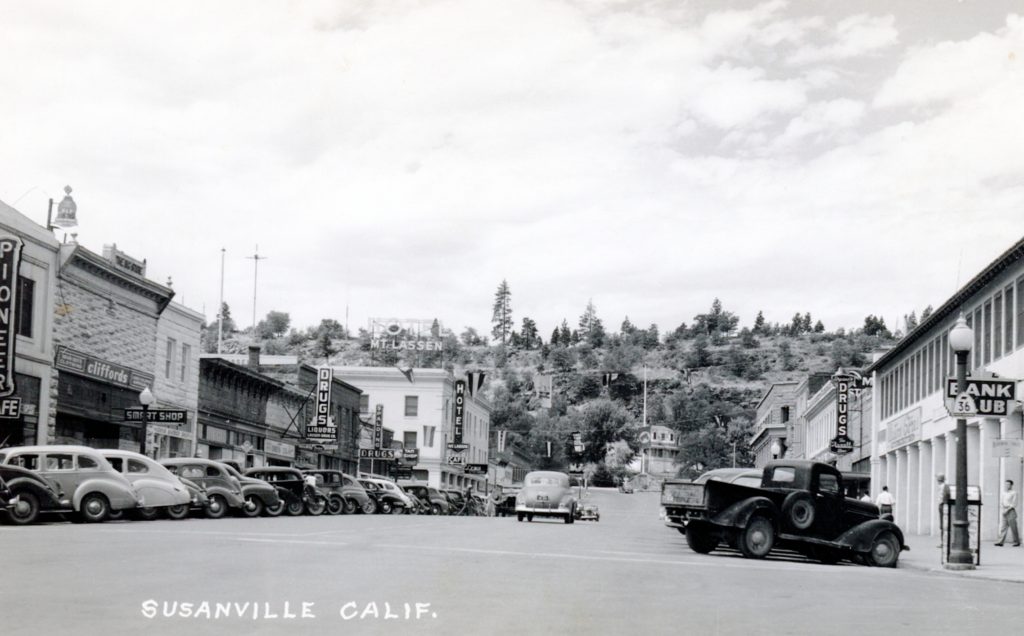
After World War II when life returned to somewhat normalcy, the City learned a few lessons of what they could and could not do—the hard way. In 1947, to alleviate congestion on Main Street, the City proposed to install stoplights at the intersections of Main with Lassen and Weatherlow. When the State Highway Division learned of this, it objected. The State said Main Street did not meet the requirement of 100 cars per hour passing through the intersections. Their solution to relive the congestion, introduce parallel parking on Main Street, then striping to make four lanes—two in each direction. That went over like the proverbial lead balloon with the merchants.
Over the next couple of years it was a highly debated topic. The resistance group was no match for the State.. In 1949, State Highway Engineer R.N. Putnam informed the City that it must discontinue angle parking on Main Street.
On July 10, 1950, the City Council moved forward to adopt parallel parking for Main Street. The Council no doubt was concerned that if it was not in compliance with State law, the State conceivably could withhold the City’s apportionment of gasoline tax money. The parallel parking ordinance went into effect on August 10.
There was, of course, public uproar. It was not until the summer of 1952, the issue had simmered down, and slowly everyone adjusted to the fact that parallel parking was here to stay.
One of the many wrecks at the retaining wall entering Susanville.
Susanville’s main thoroughfare has been an interesting political foot ball since the town incorporated in 1900. Initially, the major debate was fire issues. As the town progressed, some wanted civic improvements, others did not. Of course, those opposed, while they wanted nice items such as sidewalks, gutters, and paved streets, they did not want to pay for them.
The town’s Main Street would be and still is a contentious issue. The bickering between California Highway officials and the City began in 1920. The issue then, was the during construction of Highway 36 and its approach into Susanville.
The first battle was the approach. The City refused to give the State Highway Department the right-of-way to the town’s Main Street. The state would only build the highway to the city limits. To connect the highway to Main Street resulted in a nasty “S” curve. This was an internal problem with the city and problems with property owners not willing to grant right-of-ways to correct the situation. The retaining wall entering Susanville was the scene of numerous wrecks. But changes were on the horizon when the cash strapped city made a major concession that has ever since affected its main thoroughfare. More about that tomorrow.
When Lassen Union High School was torn down in 1968, there were a myriad of reasons that it needed to be replaced, which is a story in itself. Whatever the case may be, many in the community were not happy.
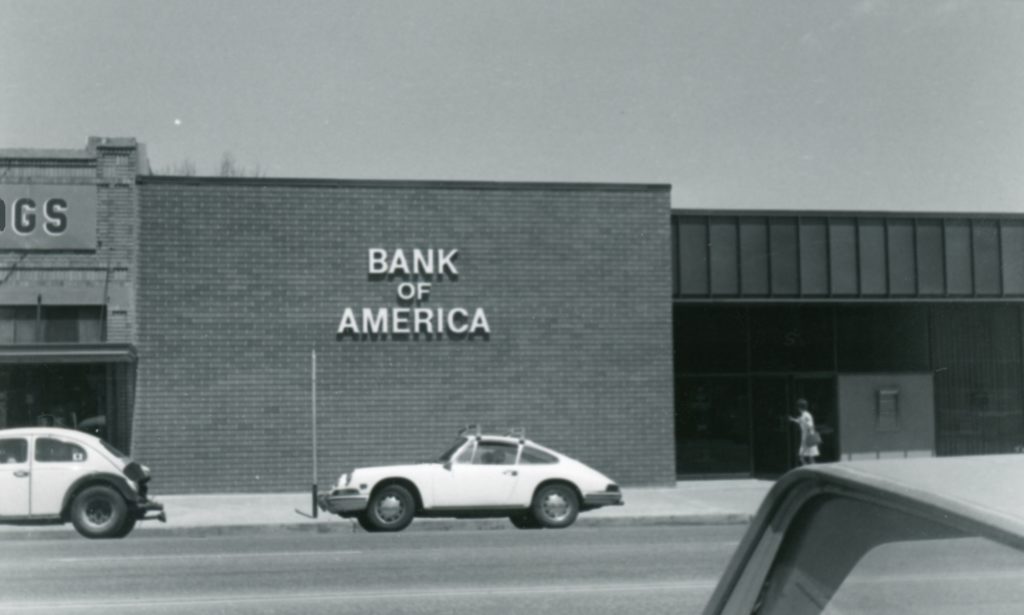
Bank of America, 1972.
The next iconic structure in Susanville to be demolished came a few years later that of the Bank of America building on the corner of Main and North Gay Streets—now a parking lot. Awhile back, some one asked me why it was torn down. To be quite honest I do not know, and structure was barely fifty years old. It was stated at the time, and it was nationwide, for a modern look. If any one knows the particulars, please share.
The second short-lived bank building.
Its replacement, a bland building, was short-lived and demolished in 1978. It was just not functional, and a drive thru window caused problems with cars being backed up on Main Street, among other issues.
Lately, in the news is the Susanville Symphony’s proposal before the City about the acquisition of Sierra Theater for a Performing Arts Center. While it is an ambitious undertaking, there are a few caveats—can it sustain itself? After all, anyone who has been involved community organizations, they experience peaks and valleys, and in some instances fold, for many reasons. A common thread is that it is usually a handful of dedicated people that keeps an organization alive.
Anyhow, while the Susanville Symphony has been around for awhile, it was not the first of its kind locally. In the 1930s it was the Susanville Symphonietta Orchestra. During the 1960s and 1970s it was the Susanville Community Concert series.
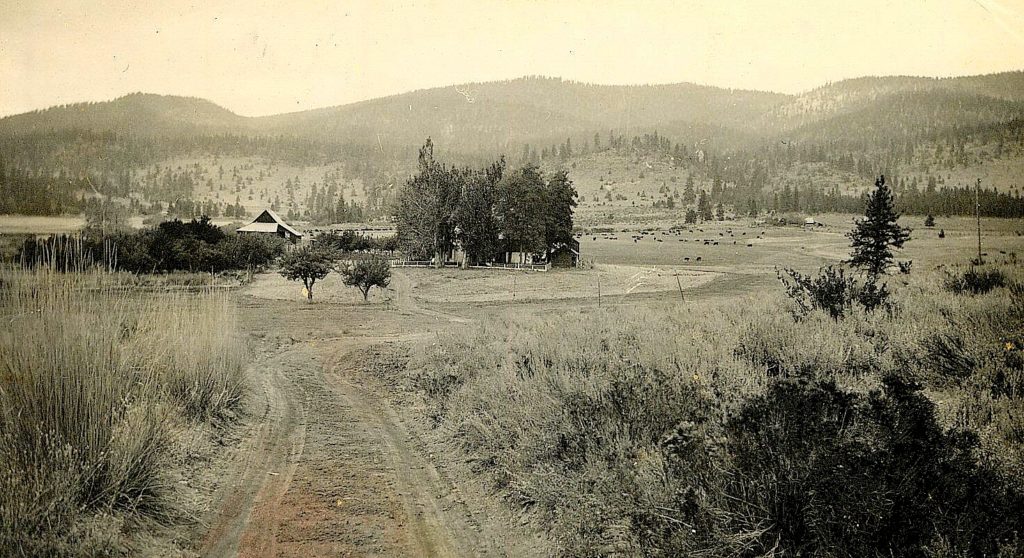
Known today as the Susanville Ranch Park, for many years it was the John T. Long Ranch.
Yesterday, we explored possible developments at Susanville Ranch Park. Today, we explore its agricultural history.
In November 1855, Moses Mason claimed this property and became the second person to file a land claim in the Honey Lake Valley. It is interesting to note that Peter Lassen & Company had located in the valley in June 1855, Lassen never filed a claim to his property. Who Mason was we may never know.
On September 12, 1856, William Weatherlow located on Mason’s abandoned claim and lived there until his death in 1864. William B. Long purchased the property from Weatherlow’s Estate. Long would soon have neighbors. In the mid-1870s, Abner and Margaret Van Buren settled to the west of Long, where he planted a small apple orchard. In the early 1880s, James Bagwell located at the north of Long where a spring bears his name By 1898, William B. Long’s son, John T., had not only purchased Van Buren’s and Bagwells’ properties, but that of his father. He consolidated these lands into one ranch. On June 2, 1913, Long, heavily in debt with his extensive ranch properties and a slaughterhouse in San Francisco, deeded this property to Alexander & Knoch, whom he owed $13,362.11. Alexander & Knoch, in turn, sold it to the McKissick Cattle Company, who then sold it to Fruit Growers Supply Company.
A historic view near present site of Susanville Ranch Park parking lot/trail head.. Courtesy of Hank Martinez
Susanville is fortunate to have the Bizz Johnson Trail on the south side of town and Susanville Ranch Park with multiple trails on the north side of town. Each has their own unique story how they evolved. Today, we focus on Susanville Ranch Park.
The first person to examine the property for non-agricultural purposes was T.B.Walker, founder of the Red River Lumber Company. In 1912, the Walker family had a heated debate. as to their permanent mill, though a site had been selected at Mountain Meadows. T.B. Walker had given considerable thought to this particular site. However, as we known Mountain Meadows would win over, and the town of Westwood became a reality,
The ranch as it appeared in 1922, when Fruit Growers owned it.
In 1919, enter Fruit Growers Supply Company when they were scouting around for a mill site. That company went one step further and purchased the property for while undecided one the site, they wanted the water rights to Bagwell Springs. While Fruit Growers chose a different Susanville location, they retained the property. After all it would be beneficial for pasture for horses, a then an important component in logging. Fruit Growers then established a dairy there. It was brief, and it was a leased to the Okelly family who operated Lassen Dairy there for several decades.
In 1934, Fruit Growers offered to sell the ranch to the City of Susanville. Fruit Growers cited it would make an ideal golf course, that the money received from the golf course could be used to develop the remainder of the property into a park. The City liked the idea, but said no. In 1935, Fruit Growers sold the ranch to the Republic Electric Power Company who wanted to acquire Bagwell Springs as an additional water supply for Susanville. Over the years, that Company went through numerous reorganizations and became CP National. In 1984, CP National donated the ranch to Lassen County, and it is now a county park.
An interesting footnote to the story is that Lassen Community College examined the property for a future campus back in the 1960s, but the asking price was too expensive at $3,500.
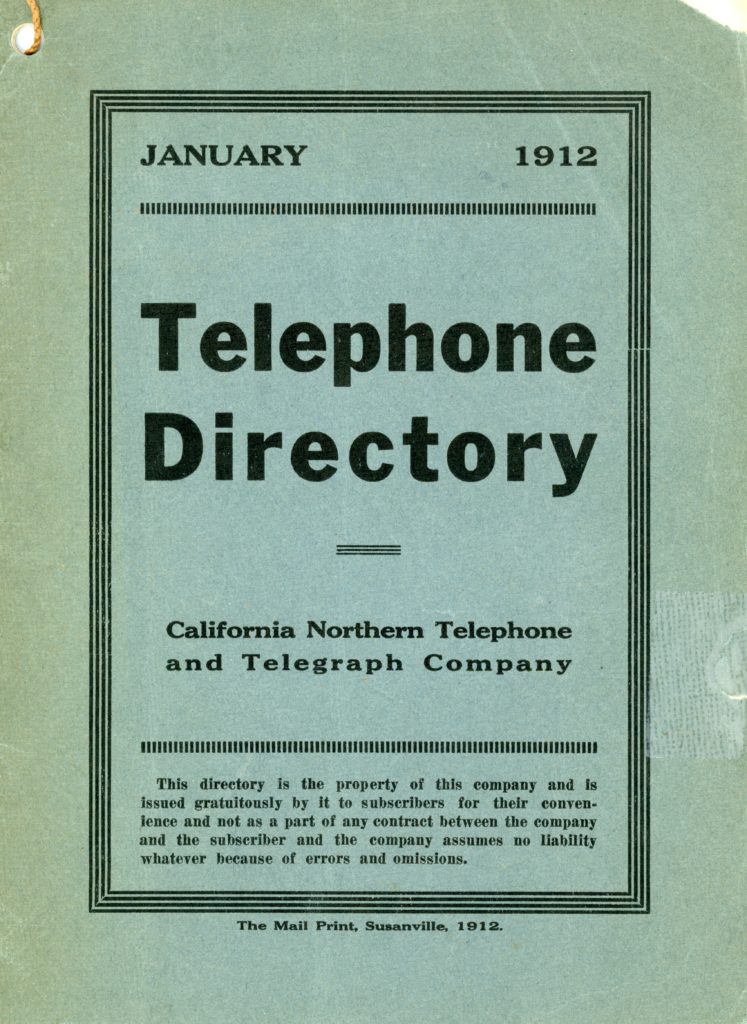
Cover of Susanville’s first telephone directory.—Mathews family
In the spring of 1910, a new telephone company for the region was established—the California Northern Telephone & Telegraph Company. The principal figures behind the company were W.E. Hills, Scott Hendricks and A.J. Mathews. Their mission was to provide for long distance telephone service for northeastern California. On October 4, 1910 the City of Susanville granted the company a fifty-year franchise. In return the City received free phone service for the fire hall, marshal’s office and two-percent of the gross annual receipts.
In the summer and fall of 1910, company invested $30,000 to construct a telephone line from Susanville to Big Meadows (today Lake Almanor) and onward to Quincy. On September 12, 1911, the entire sysrem was completed, with hookups throughout the Honey Lake Valley. On that date, Susanville residents could call long distance anywhere in California! At the Susanville office, three operators were hired. Such operators were generally known as “hello girls.” Those initial operators were Nina Turnbaugh, Lucille Pearce and Eva Lanigar. The first two worked the day shift and the latter the night shift. Telephone operators would be referred to as “hello girls” until the advent of World War II. In 1951, the operator’s job became easier with direct dialing, when rotary dial telephones were introduced in Susanville.
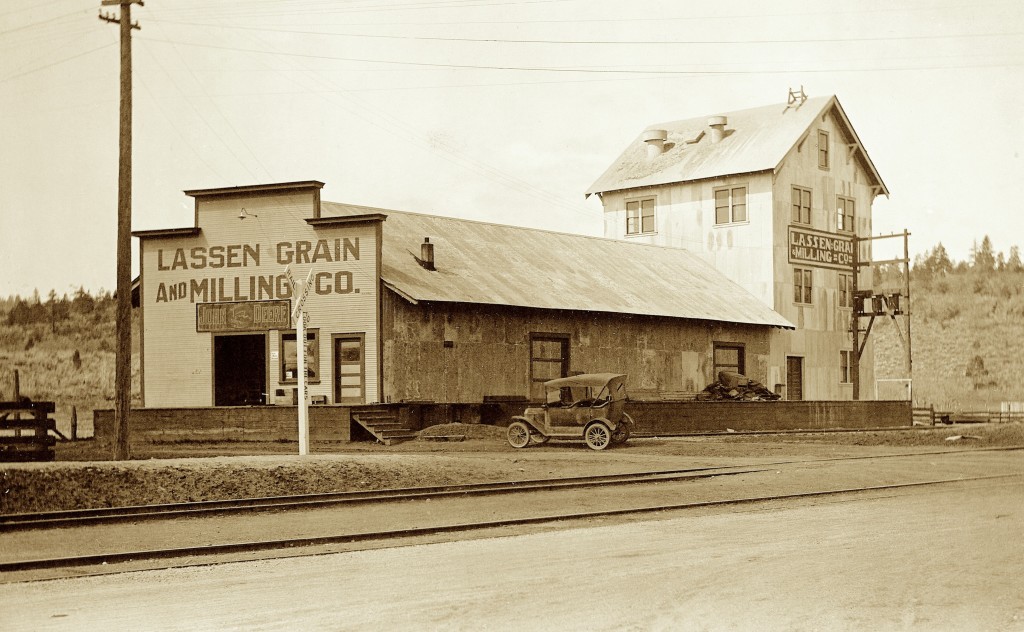
Lassen Grain & Milling Company, circa 1918. Courtesy of Dick & Helen Harrison
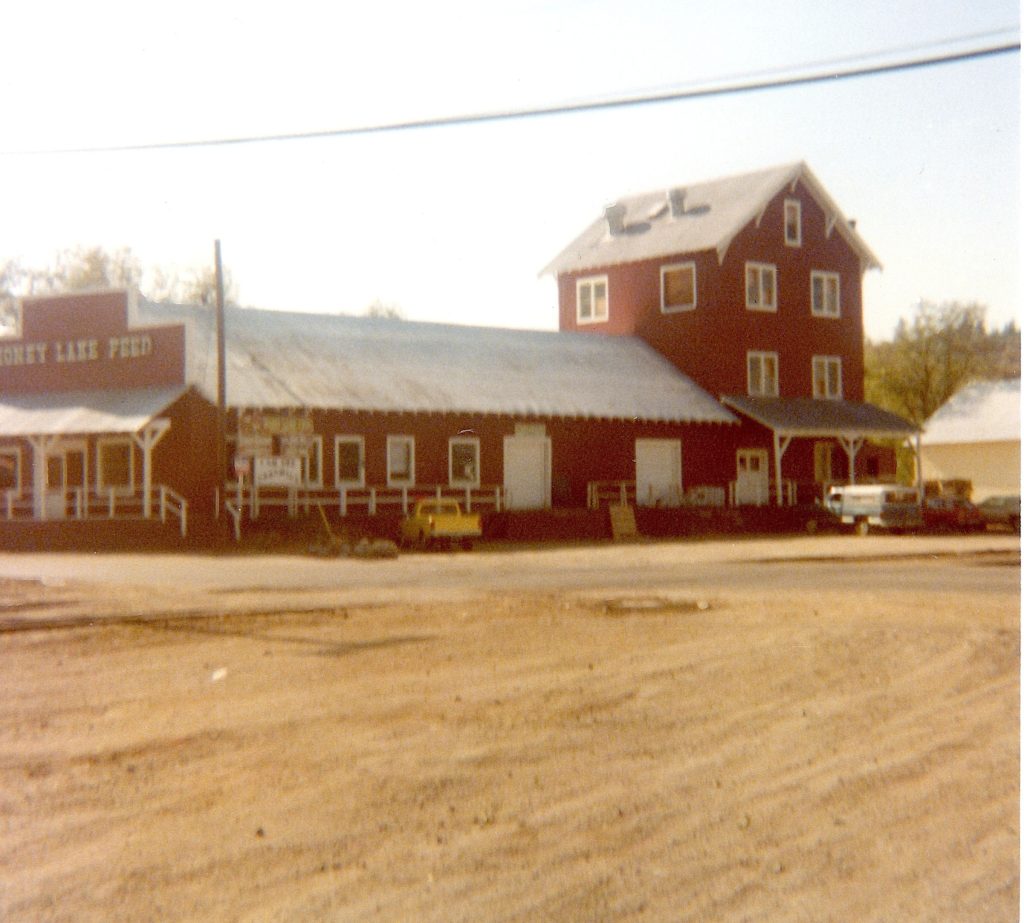
One of the inquiries received from the Ask Tim segment was for photographs of the old Honey Lake Feed Store on Richmond Road that was located across the Susanville Southern Pacific Depot.
Honey Lake Feed, 21 October 1978
It was built in 1917. At that time there was only one flour mill in operation, that was located at Janesville. It should be duly noted it was only in operation during harvest time. When Lassen Grain & Milling opened the Janesville Flour mill closed down permanently.
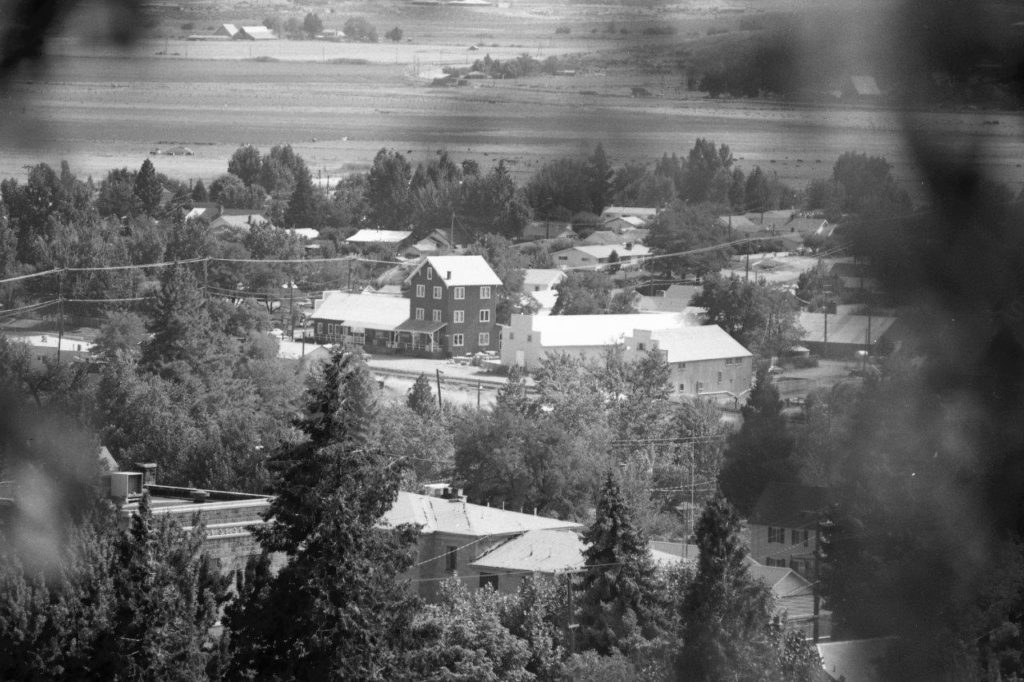
Honey Lake Feed building as seen from Inspiration Point, circa 1980–David Bricker
I do not have my notes handy, but if, and that is a big if, if memory serves me correctly Lassen Grain was acquired by Bronson &Doyle in 1929. In the 1940s, the flour mill portion ceased operation. The building was destroyed by fire in the early 1980s.