Tag Archives: Red River Lumber Company

Westwood Forest Fire Films

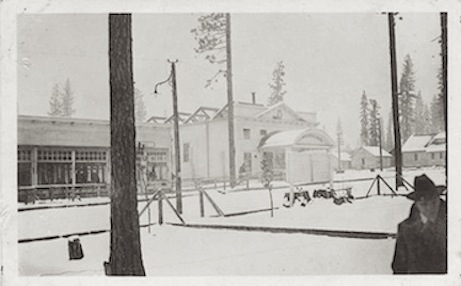
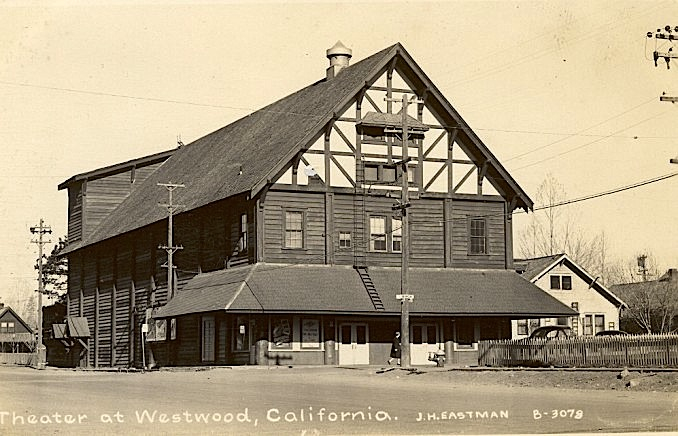
Westwood Theater. Courtesy of David Zoller

Some readers may recall awhile back when I wrote about the 1913 Suppression/Control Burns at Clear Creek. Forest officials who attended documented that event, whether those records exist is not known,  discussion about that a little bit later.

The other day, while reviewing the Lassen Mail, one of two Susanville newspapers, in the Westwood section contained a very short piece concerning news reels doing an educational piece about forest fires, one in particular filmed at Westwood. For those of a younger generation or two, newsreels, which were short educational/documentary pieces previewed in movie theaters and schools. They would eventually go by the wayside with the advent of television.  

Anyhow, the Lassen Mail reported on April 30, 1926 12;3 – Fire Pictures for News Reels—One of the news reel companies have a company in Westwood this week making pictures of methods of fire fighting used in the timber industry. A fire was set in order on Wednesday and the fire train rushed to the scene, pictures of various operations being secured.

Westwood’s Fire Train courtesy of Doug Luff

Do the films exist, is an interesting question. I am aware of numerous movies filmed in the region during the 1920s and 30s, but each of those film’s existence has been problematic to locate. Then again, I am aware those who filmed the Westwood Strikes of the 1930s, and offered to share them, but that never panned out. Another instance, Leslie “Les” Mastolier, for seasoned residents founder of Susanville’s Leslie’s Jewelry, was an avid photographer, but also cinematographer. Les filmed everything from skiing down Diamond Mountain in the 1930s, to numerous wildlife studies and interesting community events for decades. His son, Gary, a Alaska resident, contacted me that he had his father’s collection of films and offered the films. That never materialized, so who knows the fate of those films. The bottom line is you just never when and where some interesting archives will surface.
Support

A Town Called What?

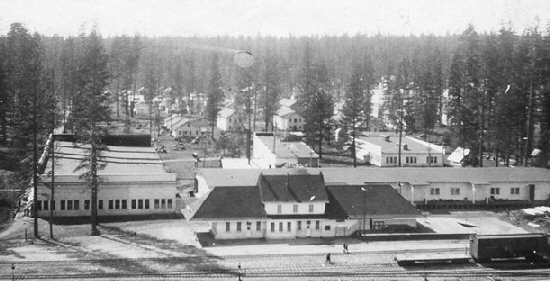
Westwood, 1915. Courtesy of Leona F. Byars

In 1912, witnessed the Red River Lumber Company’s westward expansion from Minnesota to California. The founder, T.B. Walker, turned the enterprise over to his four sons. The site selected at Mountain Meadows, Lassen County initially had no name. Rather peculiar in my thinking that a company is going to spend $3 million to build a mill and company town, and it does not even have name.

Fletcher Walker was in charge of the new town and would be its resident manager. On October 3, 1912 he wrote to the Red River board, i.e., his brother’s soliciting a name.  In his letter he wrote:

“I have thought over the name TRRLCO, first letter each word and the abbreviation of company, and talked it over with Clinton and Della [Walker]. They are not very enthusiastic over the name but said it seems like a good business name and sounded pretty good. I have written you on several occasions mentioning the name, but up to present time have not had a very enthusiastic adopting of the name. It seems that unless someone else can come through with a better name that we should officially adopt it.”

There was a sense of urgency as they needed a name to submit an application to the postal authorities. Several names were bounced around including Fletcher’s favorite, “City of Trees.” That, too, was rejected, and the name of Westwood was decided, though it is not known who coined it.

Support

A Controversial Light (Control) Burn

Clear Creek, circa 1906. Courtesy of Mark Reed

In the past we have explored the topic of control burns by the Red River Lumber Company. With the fire situation at hand, this is going to be discussed widely across the West.

First a bit of background. Clinton Walker, a member of the family owned Minnesota based Red River Lumber Company came to California in 1899 to examine timberland as part of a westward expansion. By 1908, the Company had acquired nearly 800,000 acres of timberland primarily in Lassen, Plumas, Shasta and Siskiyou Counties. Long before the Company cut down a single tree, it had been conducting light/control burns throughout its holdings.

In the spring of 1912, Clinton Walker had planned to do a control burn at Clear Creek, Lassen County. He invited both state and federal foresters to observe. Coert DuBois of the U.S. Forest Service led the call to inform Walker to cease and desist and not do it. Walker ignored their pleas and it went ahead as schedule. He did invite those foresters to attend and they reluctantly showed up. They documented the event by taking notes and photographs (would that be a treasure to locate). Dubois who had been critical of the Walkers and their methods, routinely wrote opinion pieces in the west coast newspapers. He did a 360 degree, and complimented Walker on his systematic light burning approach.

Things changed quickly. The following year, Clinton Walker left Red River over a dispute with the family about its operations. Thus, the light and control burns were suspended. Twenty years later, Clinton would return. At that he time lamented about the neglect of their forests and wrote: “I have never been able to understand why, when we had successfully proven the feasibility of the work of control burns and its advantages, that we discontinued it. In this regard I think we committed a grevious error that has already caused us staggering losses and now have our forest in a very precarious condition.”

Support

Peeler Logs

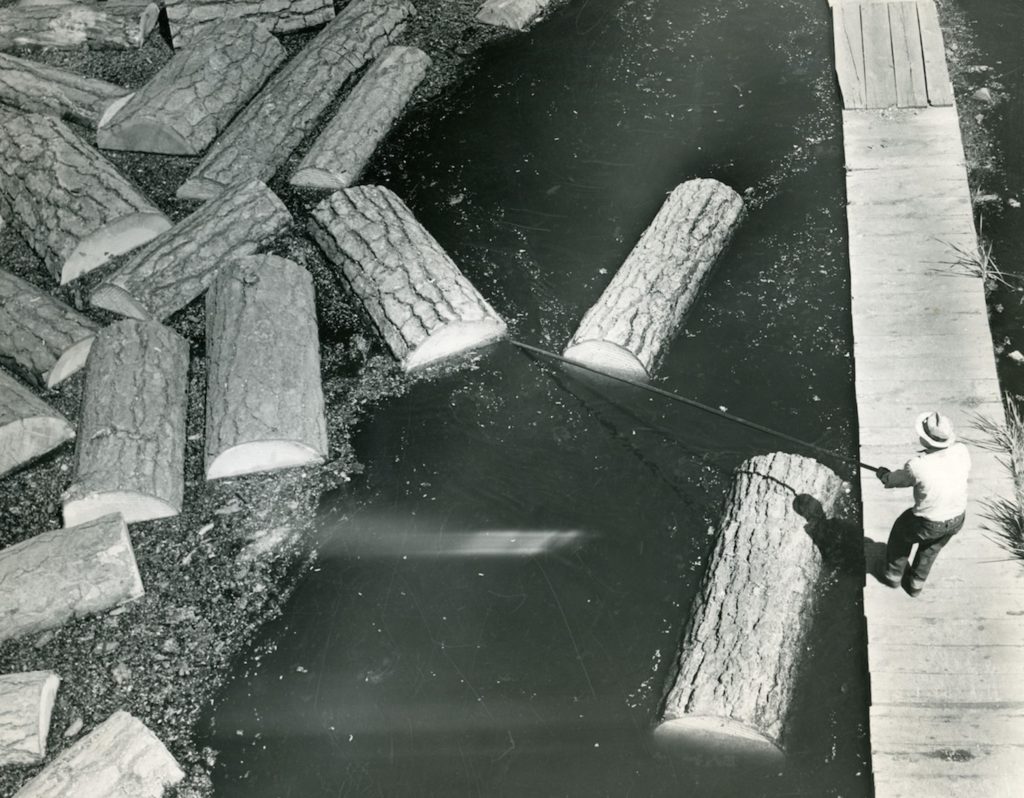
Peeler logs at the Westwood millpond

Some times I find it strange to write about the lumber industry that is non-existent in area, with the exception of Collins Pine at Chester. The above photograph are real premium peeler logs. These logs were literally peeled into sheets of plywood. Unlike regular logs that went through the sawmill, these logs were cut into eight foot lengths, unlike the standard thirty-two foot log. In 1924, Red River Lumber Company invested a half-million dollars to add a veneer plant at its Westwood facility. Red River used the trademark Paul Bunyan’s Pine Plywood for its final product. Red River, like so many other lumber companies, did not allow anything to go to waste. The peeler cores were made into railroad ties.

Westwood’s Veneer Plant

Subscribe

Walker Lake Question

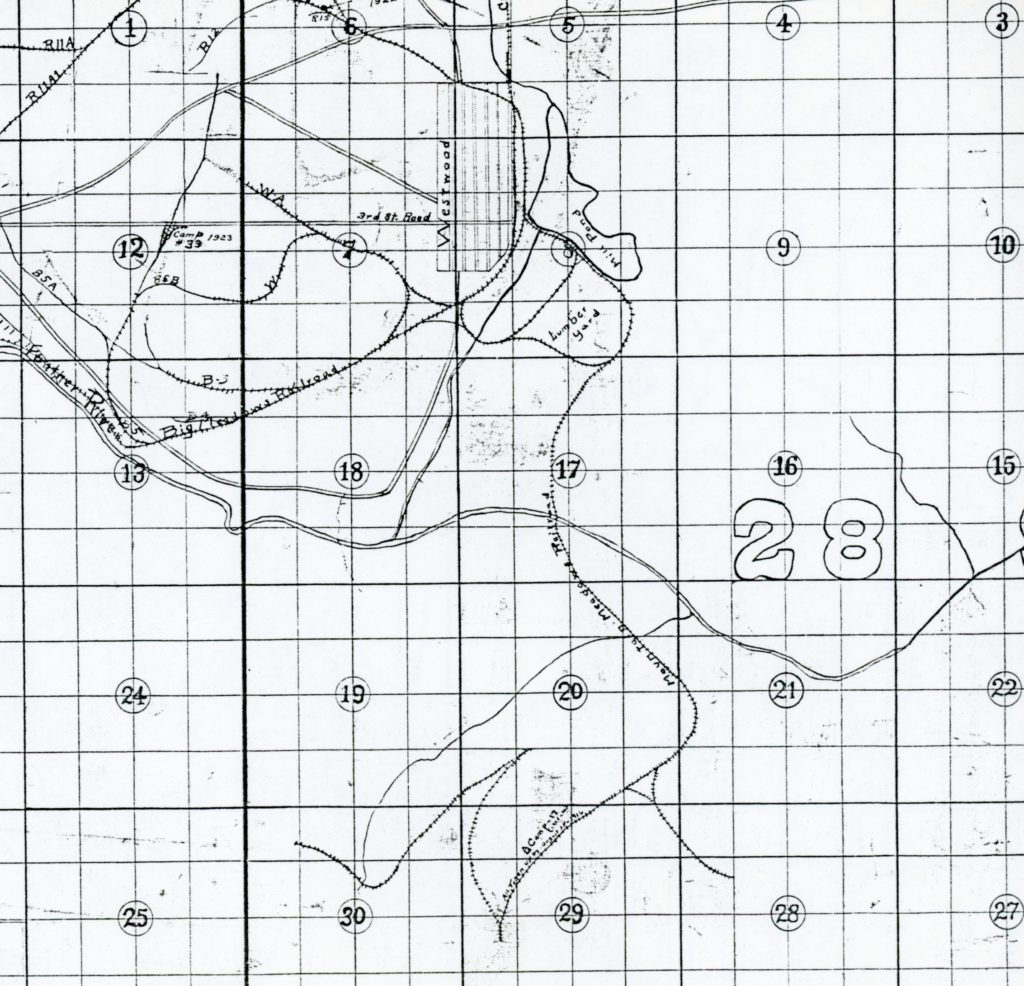
Red River map—Moss VanBlaircom

There was a question posed about a dike/levee across Walker Lake also known at Mountain Meadows Reservoir south of  Westwood. The above map shows a railroad logging line of the Red River Lumber Company, which the raised railroad bed, would appear as a dike/levee. Note, this map is prior to 1922 and the creation of the lake. So it appears, that at times when the lake is low, the railroad bed appears. Whether this still occurs, is not known, but one would think a century later, it would have finally eroded away.

Walker Lake aka Mountain Meadows Reservoir—David Zoller

Tim

Logging the Peninsula

Red River logging map—Moss VanBlaircom

In 1916, after the Red River Lumber Company met its initial contractual obligation with Great Western Power Company to harvest timber for the Lake Almanor reservoir site, they began logging their lands to the west of Westwood.* Red River focused harvesting all the timber between Westwood and Chester, which included the Lake Almanor peninsula. In 1920/21 Red River had logging spurs going in north/south direction—the northerly one along Bailey Creek, the other south to the Peninsula. The latter, Red River established a sole logging camp No. 29.  The peninsula was unique, especially towards the lower end was forested with fir—not pine. The fir at that time was considered to have no value whatsoever, even to use as fuel for the locomotives. By 1922, Red River’s mission accomplished for that area met, and their main line rails made it to its intended destination on the south side of Chester.

*Red River received a reprieve from Great Western, since that company scaled back the initial flooding of the reservoir site by half.

Support

Red River Control Burns

Camp 38
Camp 38, Red River Lumber Company, 1922. It was located on the east shore of Lake Almanor. Courtesy of R.S. Pershing

While I have touched upon this topic before, I came across an interesting letter and how Red River was managing its forest. There are a number of institutions that search this site for all kinds of information, natural history being one. As public service, I bring this bit of information to the surface for future researchers.

On August 10, 1935, Clinton Walker wrote to his brother Archie, who resided in Minneapolis. Archie was stable figure in the Red River Lumber Company’s management, since the company had vast holdings there as well.

Clinton was involved in the initial timber acquisitions in California. In 1913, he resigned over a family dispute on the future operations. He came back into the fold during Red River’s financial crisis of the 1930s. Enough background and onwards to Clinton’s commentary.

”It is regrettable that the house of Walker has no forest man. Kenneth [Walker] covers the nearest, but he seems to be absorbed in the performance of log contracts; our annual fire and insect losses are staggering. A systematic annual light burning at the right season of the year would reduce an ultimately eliminate these sources of loss and the cost would be insignificant as compared to the loss and yearly fire hazard conditions in the forests. Burning by means of power burners on or dragged behind tractors could be done very cheaply and the prospective danger of injuring hollow hulled trees could be eliminated by following the burning with a few shovelers. For the entire period of the Walker family timber operation we have centered our attention exclusively to lumber operation. We are doing nothing but slash down that wonderful forest and letting the fire and beetles burn and eat us down year by year without raising a hand to afford protection from these annual staggering losses.”

Support

Dairy History Tidbit

A view looking at the former Ridenour property with the Sella dairy in the foreground, which was located at the lower end of Gold Run, 1950s. Courtesy of Wendell V. Loughead

Of course, this was one of those scenarios where a week later after I posted about the dairy history, I came across an example of the material that can be found. It just takes a lot of sleuthing.

In a February 1926 Lassen Farm Bureau news report had this: “R.S. Raven of the cow testing association reports that the FGSCo had one cow this month that produced over 60 pounds of butterfat, another produced 50 pounds, five over 40 pounds and eight over 30 pounds for the month. Mr. O”Kelley states that these cows have been fed on silage and grain.”

In March 1926 Lassen Farm Bureau new report had this: “The Red River Lumber Company had 58 cows that produced over 30 pounds of butterfat this month. Fifteen of these produced over 40 pounds of fat, 5 produced over 50 and one cow 78 pounds. E.G. Scammon states the company is milking 175 cows at present.

Donate

Westwood’s Opera House

Westwood’s Opera House under construction—David Zoller

One of the daunting task when Red River Lumber Company built its company town of Westwood, during 1912-14, was they would need to provide recreational outlets for their employees.  One of Red River’s first entertainment venues for its employees was dubbed the Opera House. It was a multi-purpose facility, though it never showcased an opera. The Opera House had a seating capacity of 600 and was the initial hub of social gatherings. It was regularly used as a movie theater and the scene of special events such as boxing matches. It was also the home for church services for several years until the People’s Church was built. In time, the Opera House was just too small as the town’s population continued to increase. In 1925, a new theater was constructed with a seating capacity of 1,100. The Opera House was converted into a store and made part of the adjoining facility known as the Westwood Club.

Donate

Hat Creek Power

Hat Creek No. 1
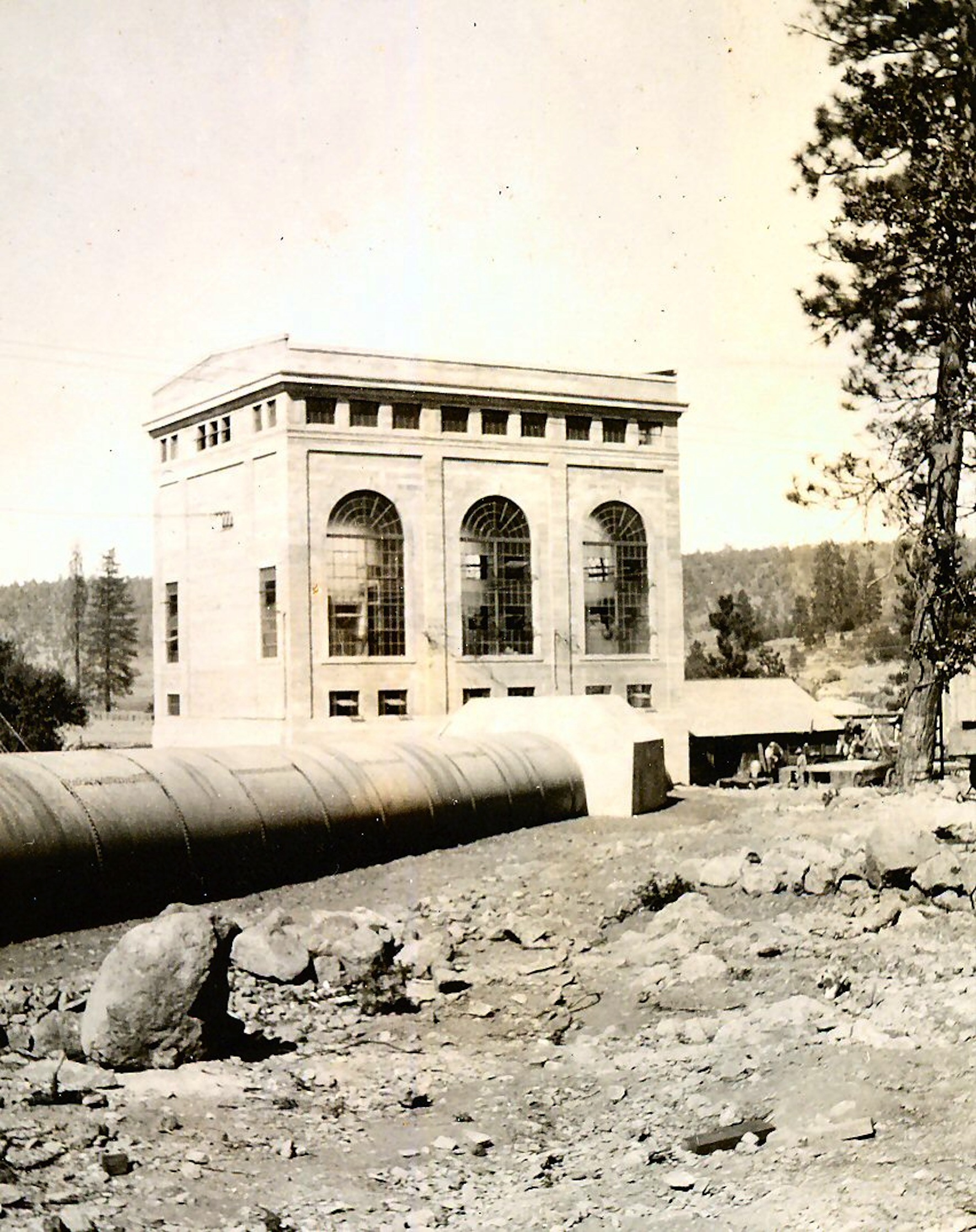
Hat Creek Powerhouse No. 1, 1921. Courtesy of Lola L. Tanner

The Red River Lumber Company operated many enterprises and it still as an influence concerning electricity to many residents of the region. From time to time when the Susanville area has a power outage, many times there will be a reference to the Hat Creek line. So you may ponder how did Hat Creek come to be? Continue reading Hat Creek Power