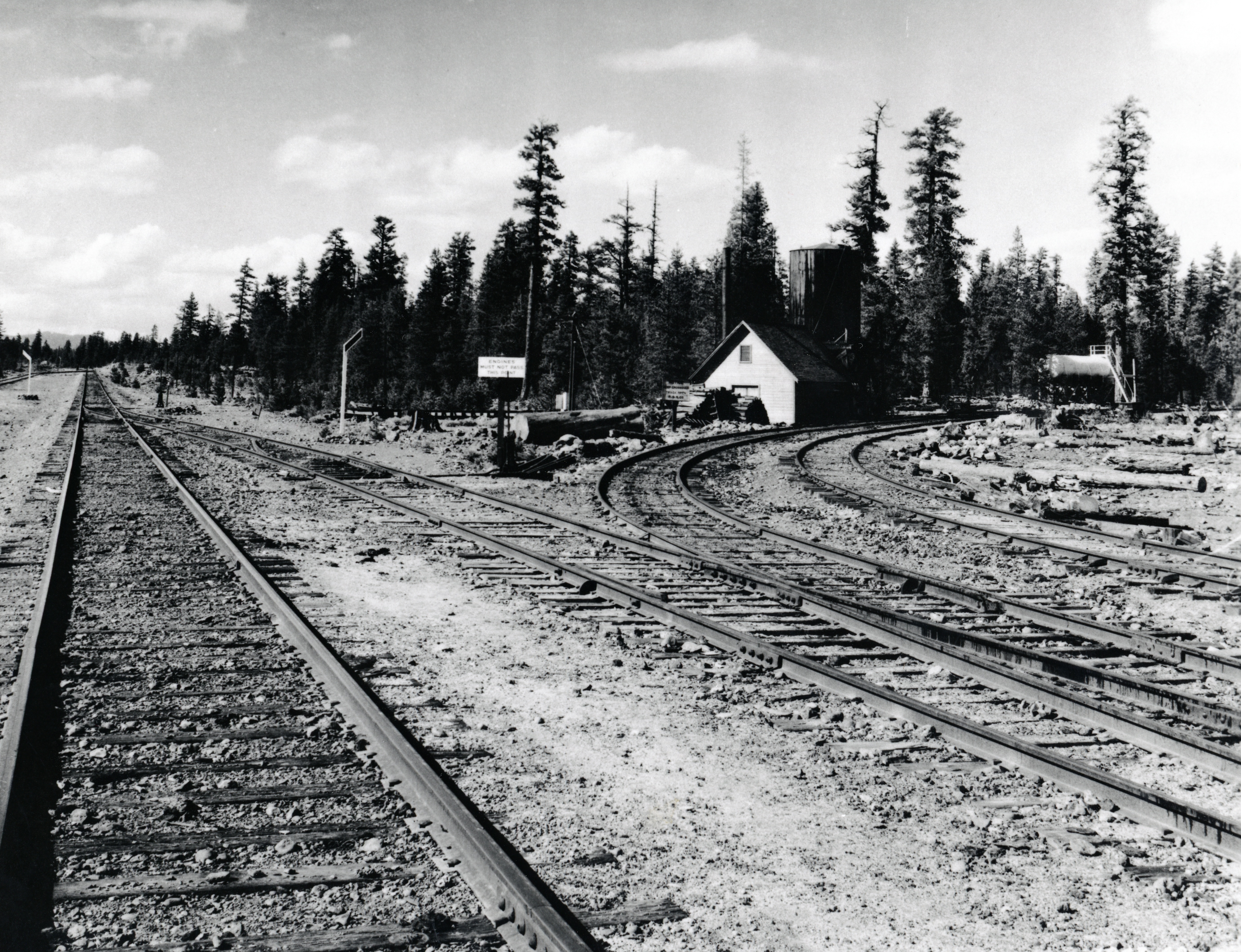
As its name implies it was a real junction. The railroad constructed a spur to the south to Westwood. The Southern Pacific’s real goal was to extend the line north to Klamath Falls, Oregon. It was after all, the Red River Lumber Company’s intent to build several mills, the next one scheduled for near Lookout. By 1917, the Southern Pacific was anxious to extend the line north, but Red River was not ready. The mammoth mill at Westwood was more than it could handle. In the meantime, the Southern Pacific was nervous that its competitor the Western Pacific might extend a branch to Westwood and siphon off traffic, since Southern Pacific’s five-year all inclusive freight deal with Red River was about to expire.
Then came along World War I and that changed everyone’s plan. When the war ended, the nation went into a severe recession, so expansion was off the table for many. Red River kept adding more divisions to its lumber manufacturing plant. In the meantime, the Southern Pacific focused on the troubled Nevada-California-Oregon Railroad, as an alternative route north of Oregon, which it eventually did.
The site, it should be noted, also served as a junction for the railroad logging operations of the Fruit Growers Supply Company and the Lassen Lumber & Box Company.
It is never too late, subscribe today and enjoy tomorrow with daily notifications. You can also surprise someone with a gift subscription
World War II ushered in a new architectural style, that after the War was adopted by the civilian population.
The two most notables one was the old Naef Electric building in the 1800 block of Main Street. After it closed its doors circa 1977, it has been home to numerous enterprises. In the fall of 1978, it is where the Lassen County Times made its debut.
The other is Poulsen Welding Shop located on Richmond Road and Riverside Drive, and carries with it, an important historic significance.
In the 1930s, Bigelow and Poulsen operated a blacksmith shop at this location, in which Poulsen would take over the business and branching out into welding. On July 11, 1946 a fire destroyed Poulsen’s shop and provided the catalyst for city annexation. The City was unable to respond to the fire as the city limits stopped on the north side of the Susan River, while Poulsen’s was on the south side, and outside the City. Efforts over the years to annex areas to the east of Weatherlow and south of Susan River had failed. The Red River Lumber Company which owned the Milwood subdivision fought efforts for fear of property tax hikes. Residents of the outlying areas wanted services such as fire protection.
Thus, the movement for “unification” was born. On April 8, 1947 a special annexation was approved by the voters. Susanville’s Main Street now extended from Weatherlow to Fairfield Avenue. The City’s land mass quadrupled in size.
It is never too late, subscribe today and enjoy tomorrow with daily notifications. You can also surprise someone with a gift subscription
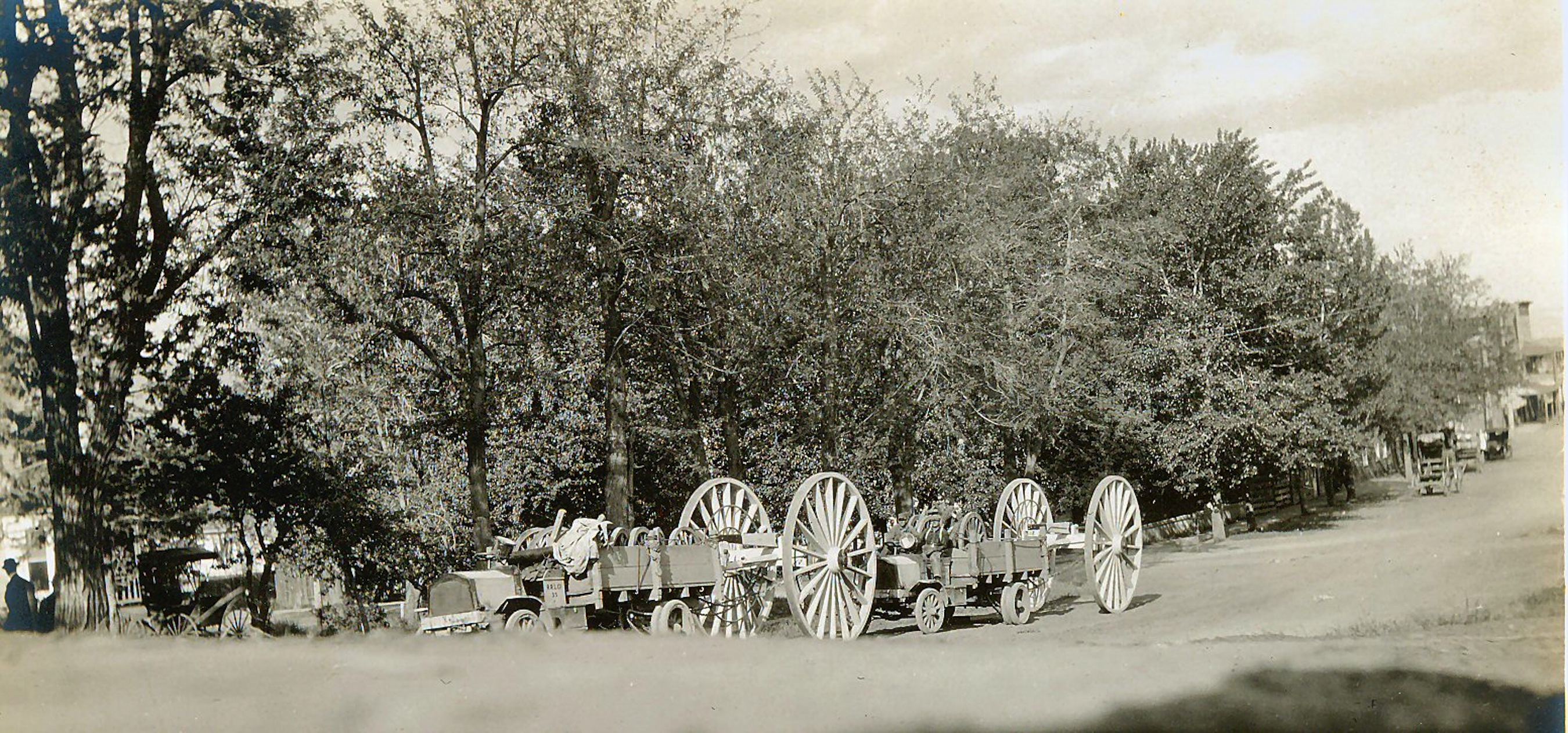
One of the nice features using this forum, instead of traditional print, some photographs will not print well. The above is a perfect example, yet it is an interesting photograph. This is at 501 Main Street, now Uptown Cinemas. This caravan of equipment is headed to Westwood while the first sawmill was under construction. Courtesy of Marcella Mathews Searles.
When the Red River Lumber Company finally decided, or actually more to the point Fletcher Walker demanded the Mountain Meadows location or otherwise he was going to quit, there were numerous hurdles to overcome.
During the initial construction phase of 1912-13, everything would have to be freighted in, while the railroad was under construction, and it would not be completed to Westwood until February 1914.
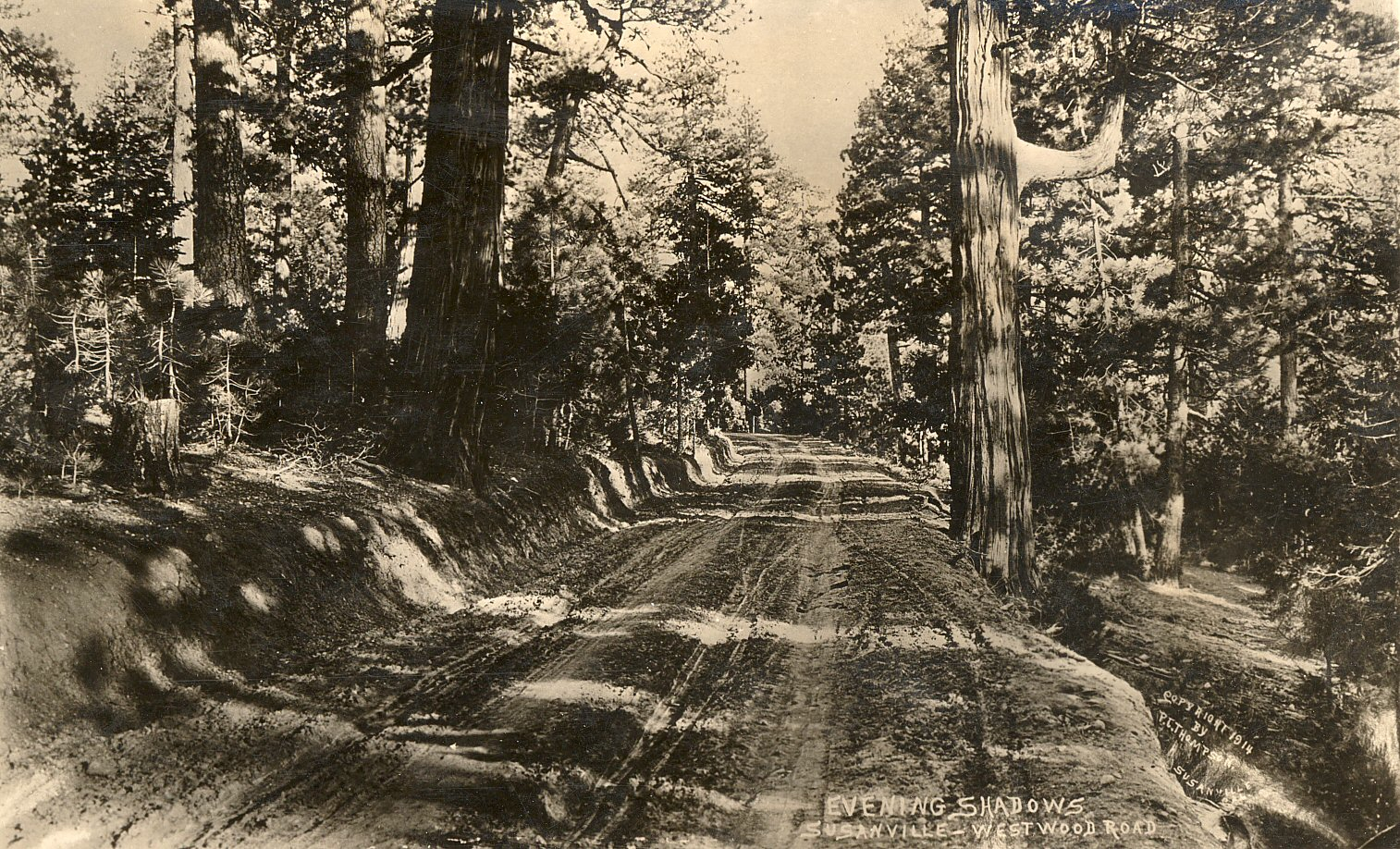
The road over Fredonyer as it appeared in 1914.
The bulk of the machinery was shipped by rail on the Western Pacific to Doyle. Smaller shipments also went by the Western Pacific to Keddie. In either instance, that is still a long haul for all the machinery to build one of the largest electric sawmills. In addition, all the auxiliary items needed to build a company town. This is before paved highways no less, and the truck traffic certainly made its imprint on the roads, though not in a favorable way.
Hopefully, bringing you this information, it might give you a tiny incentive to part with five dollars a month to keep things running.
Rodman’s grave was part of my Westwood Cemetery Tour
Rodman was part of the large influx in Westwood’s population during World War I. He came there from Akeley where he worked in bank, but there being no financial institution he went to work in the mill. That would change when Red River decided to go into the banking business in 1920 when it formed the Westwood National Bank. The bank was a very contentious issue among the Walker family, but it was one of many of the heated exchanges the family engaged in. Anyhow, the bank was conveniently located in the office building across the street from the Big Store and the mill entrance. In 1921, Rodman accepted the position of head cashier at the bank, a position he held until 1936, when Red River got out of the banking business when it sold it to the Bank of America. He died in 1943 and is buried in the Westwood Cemetery. On a final note, a remnant of the bank still remains, the concrete vault across the visitor’s center.
Subscribe and support this site for as little as $5.00 a month, or a mere 16 cents day.
Westwood’s aviation history is an obscure topic. A crude landing field was established in the late 1910s on Mountain Meadows, about a mile south of the Goodrich Ranch. Initially, its use was nominal, due to its poor condition. In one instance, Joe Hunter received a call from a pilot in Red Bluff about the current condition who replied that it is a mud bog and unfit for landing.
In the 1920s, Fletcher Walker’s two sons—Fletcher Jr., better known as “Cub” and Kenneth—developed a strong interest in airplanes and became pilots. This interest in flying gained momentum in the area, so that in June 1928 the Westwood Auto Club spent $100 to clear the landing field of brush and fill in holes to make two 2,200 foot runways, thus the formal Westwood Airport was created—a first in Lassen County.
This caught the attention of Ted Campbell of San Francisco manager of Beacon Airway to examine the aviation field. He made an inspection to examine the possibility of establishing regular air service to Reno and other points on the Transcontinental Airway route. Yet, the prospect that Westwood residents would have nearby access to regular air service never materialized.
Yet, the Walker boys, as they were commonly referred to, were an adventurous lot. In 1928, They accompanied Dr. Thomas A Arbuthnot of the Pittsburg Medical College on a 10,000 mile African expedition from Cairo to Tanganyika, which they filmed their experiences. It was made into a film, The Wild Heart of Africa which made its debut in May 1929 in New York City. After that expedition they returned to their other passion, flying. In December 1928 they purchased a Travelair Bi-Plane, equipped with a 225 horsepower Wright Whirlwind motor. Cub spent a lot of time and energy in helping many Northern California communities in establishing airports.
The wrecked Walker plane.
On August 23, 1929, the worst aviation disaster occurred at the Westwood Airport’s brief history. Cub and Kenneth routinely flew over Red River lands to photograph them. In this particular instance they were returning from such an expedition. At approximately 6:00 p.m. they were approaching the landing field when suddenly the plane malfunction and plunged crashing on impact. Frank Stevenson and Mike Pappas witnessed the crash from afar as they were placing duck blinds on the far shore of Walker Lake. The two men rushed to Westwood to inform the family and gather a party to go out to crash site. Cub was instantly killed from a broken neck and the rescue party on their arrival found Kenneth regaining conscious and attempting to get out of the cockpit and later fully recovered.
The airport continued to see use in the early 1930s, but by the end of that decade, it had become a footnote in Westwood’s history.
Some may remember when I posed a question earlier, who was the most influential person in Lassen County. Well, it is T.B. Walker, founder of the Red River Lumber Company. His impacts are far and wide, and still lingers today. The historic Lassen County Courthouse came to be with Walker’s influence at the ballot box to pass the bond measure. Off tangent for a bit, there are some who think Isaac Roop is the most revered figure Lassen County has ever experienced. If you look at the record, Roop made a killing so to speak as a realtor, selling land that he did not own. Benevolent and generous, I do not think so, he sold—not donated—the courthouse block, and put in a covenant that if no longer used by the county it reverts back to his heirs. Enough said. Continue reading T.B. Walker→
It was not until the 1920s that the Red River Lumber Company experienced problems with forest fires. Some time back I wrote about that company’s fire train. On July 27, 1926, a fire started at Butt Valley where Red River was logging. This was one instant that while the fire train was dispatched it was no match for the inferno. Continue reading Prattville Burn→
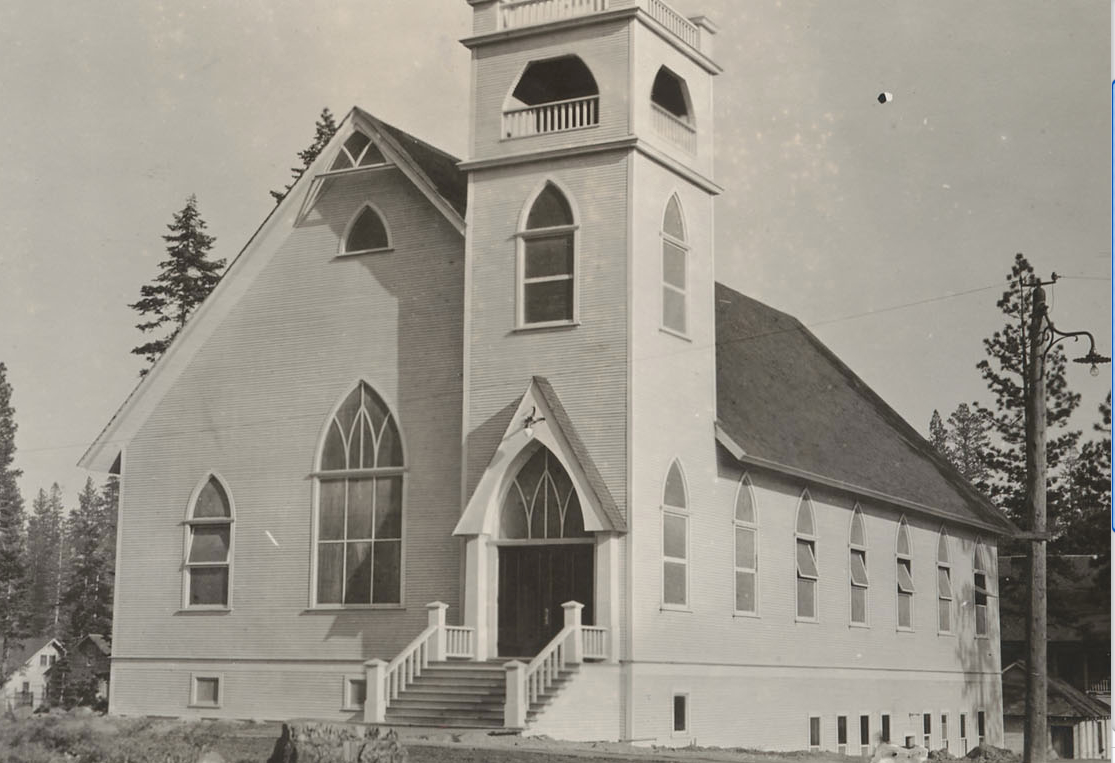
In the spring of 1917, Fletcher Walker brought up the topic that Westwood was in need of a house of worship with his father, T.B. and wrote: “We have come to a time when it seems inadvisable to put off further the building of a working church. The Sunday school had 255 last Sunday and the condition of the school in one of the old cook houses is such that the congestion prevents efficient work.”Continue reading Westwood’s People’s Church→
Bunnell’s Resort, Big Meadows. Courtesy of Philip S. Hall
While my Red River series covers a tremendous amount of material on the Red River Lumber Company, there were some topics were not addressed. In 1938, the topic of controlled burns was being discussed, as the company had done it in its earliest years until Clinton Walker’s departure in 1913. Below is an excerpt of a 1938 memo Clinton wrote to the Board and the experience of a control burn at Lake Almanor. Continue reading Control Burns→
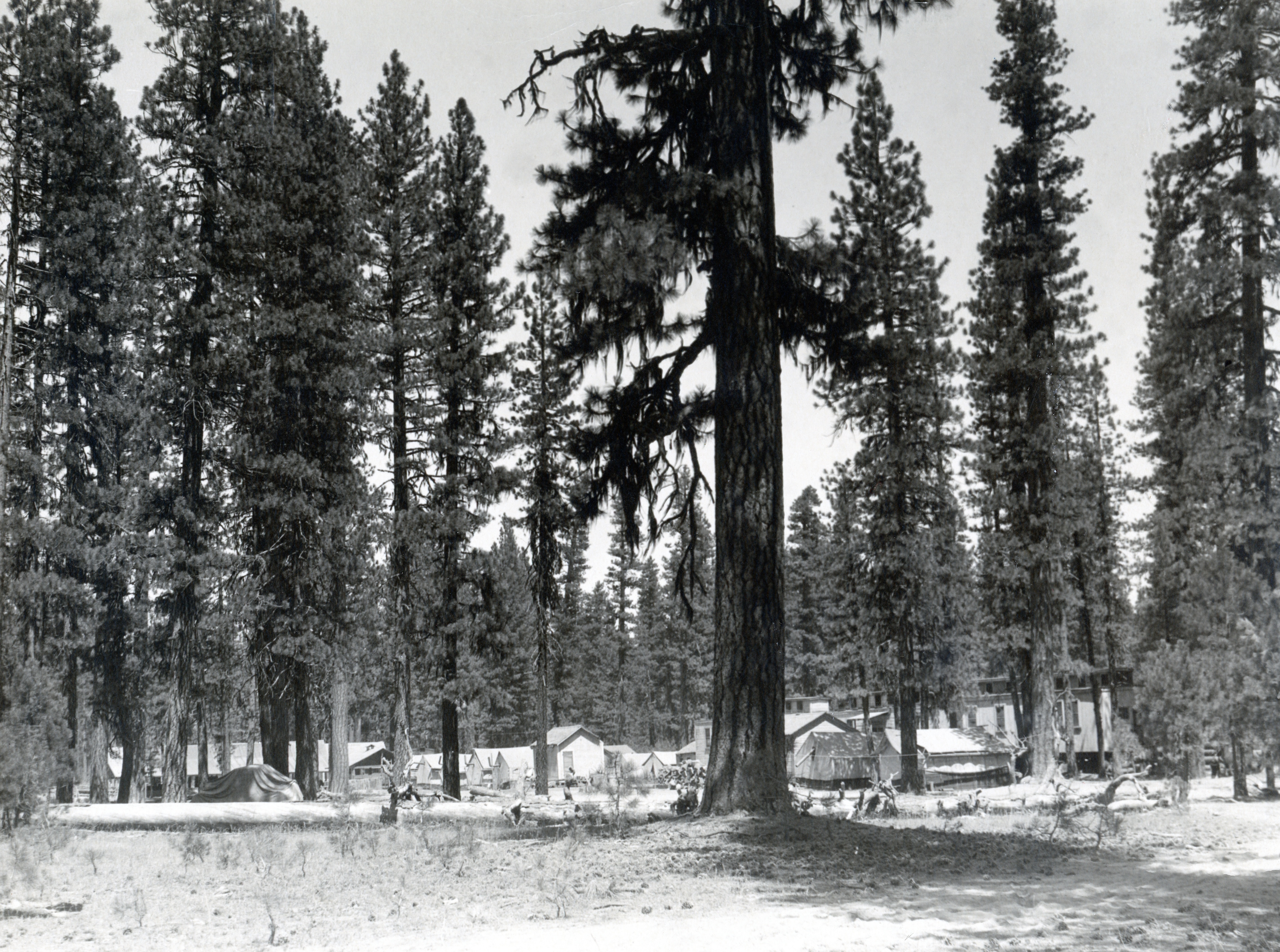
Camp 38, Red River Lumber Company, 1922. Courtesy of R.S. Pershing
Due to a variety of issues, such as the Dodge fire, the proposed listing for August has undergone numerous changes. First and foremost, the paid subscribers requests receive priority. As soon as I finish those topics such as Susanville’s Bordellos, the R.J. Scott affair, Susanville Coca Cola Bottling Works and the Secret Valley Paiutes, I will take care of the other requests, such as McClelland Ranch which has been moved from August 21 to September 29. In the meantime, enjoy the surprises.
Subscribe and support this site for $5.00 a month, what a bargain. How many spend that much at Starbucks on any given day, or other indulgences?