Tag Archives: Red River Lumber Company

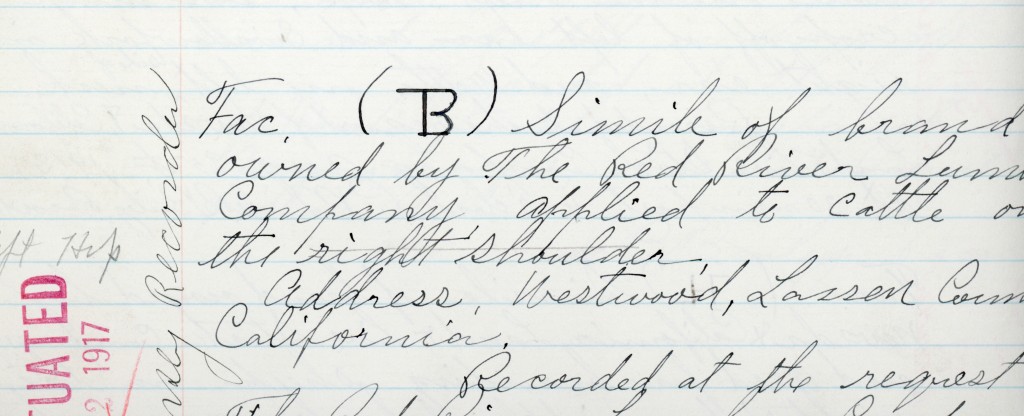
Red River’s Livestock Brand

RRLC Brand417

In today’s marketing world one of the most used terms is “brand.” However, the agricultural community, brands are more than a marketing gimmick.

One would not think a lumber company would have a brand for livestock. When Red River first set up shop in Mountain Meadows, Fletcher Walker’s goal that the entire operation would be self sufficient, as possible with certain limitations. It was an admirable goal.

Initially, Red River needed horses for logging, which they did not completely phase out until the late 1920s. Red River had its own dairy herd to provide for milk, etc which all was produced in its own dairy. Since Red River owned a sizeable portion of Mountain Meadows, they initially raised their own cattle. Due to the winter weather conditions there, the cattle had to be moved elsewhere. My grandfather, John Tanner, routinely during the 1920s would pasture a portion of Red River’s herd for the winter in the Honey Lake Valley.

It was only fitting that Red River’s used the initials of TB for its brand. For those not familiar with the company, the initials are of its founder, Thomas Barlow Walker, who routinely used his initials, “TB.”
Never miss a story, click here.

A Westwood Reader Laments

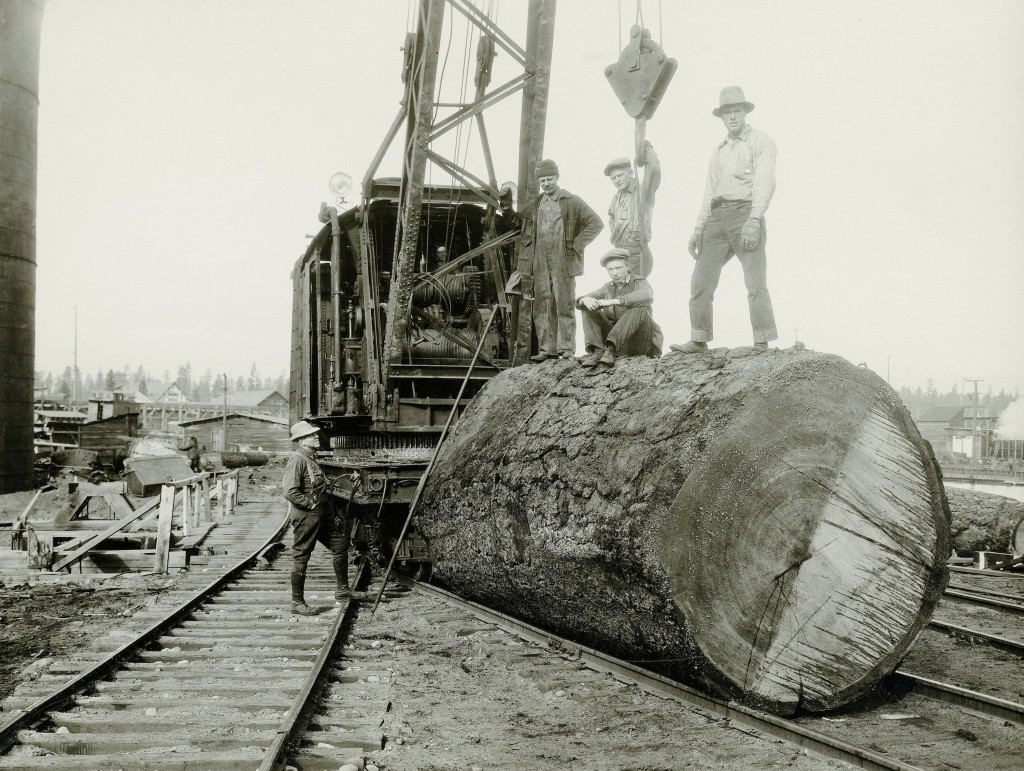
A sinker log pulled from the Westwood log pond. Courtesy of Doug Luff

A reader wrote : “Hi. Tim! I know there are much more positive aspects about the history of Westwood that people would find interesting. It seems to me that using “Westwood Rumor Mill” and “Westwood’s Deportation of Immigrants”  as the titles puts negative thoughts about our town in the reader’s mind right from the get go.  Have you posted any other articles about Westwood that can show me that I have jumped to the wrong conclusion here? I sincerely hope so, as I truly enjoy your other work. You are an amazing historian! Hoping to hear from you.”
Continue reading A Westwood Reader Laments

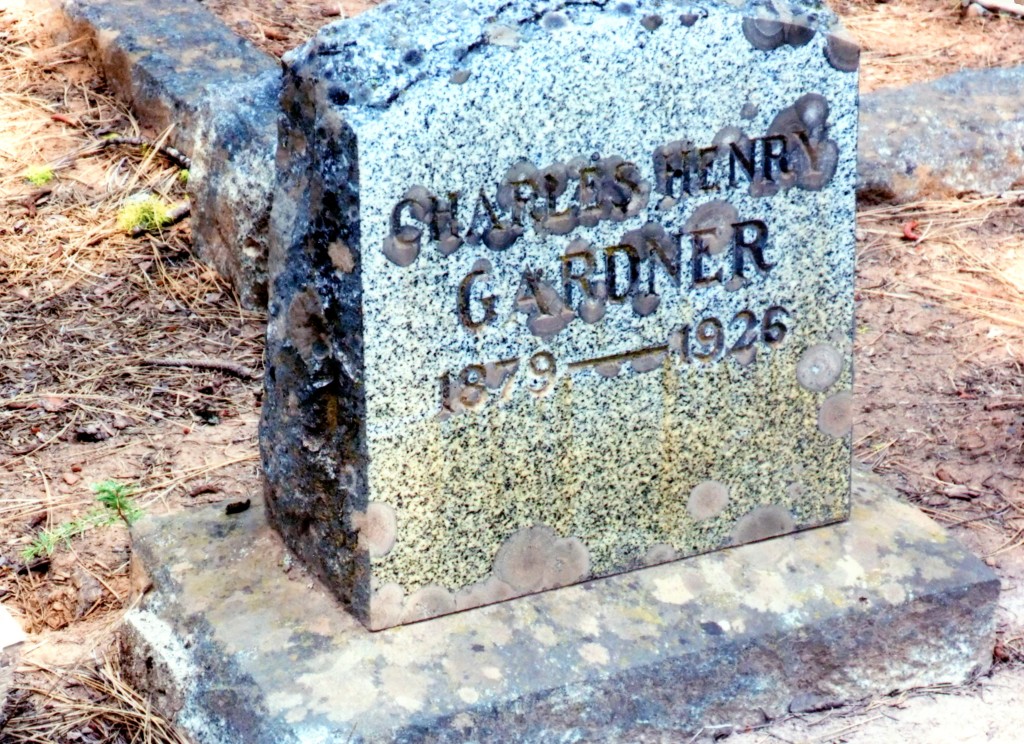
Charles Gardner, Timber Cruiser

The grave of Charles Gardner, Westwood Cemetery, 2013.

In August 2013, I conducted a Westwood Cemetery Tour. Since Westwood began as a company town of the Red River Lumber everyone worked together in a common goal.

With that in mind,  in every operation, everyone plays an important role, as one cannot exist without the other. But before you can build a mill, you first need timber. That is where Charles Gardner, along with brother Irvine, better known as “Ippy.” The Gardner brothers, along with E.G. Scammon were part of the early California timber cruisers working under T.B. and Clinton Walker to not only examine timberlands, but also had the tedious jobs of going to a variety of county courthouses to examine land titles, so see who owned what parcel, values, taxes, etc. In a relatively short time frame of just over a decade Red River owned nearly 800,000 acres timberland in California making it the third largest landowner in California, only behind the railroads, who received their land for free from the government. Even after the Red River assembled its timberland, there was still plenty of work for the timber cruisers to do. Chief among them, was to plot out every year which sections of land that would be logged. As it was in the past, timber is still part of Red River’s heritage, now operating under Red River Forests, which is managed by Beaty & Associates.

Never miss a story, click here.

Westwood’s Rumor Mill

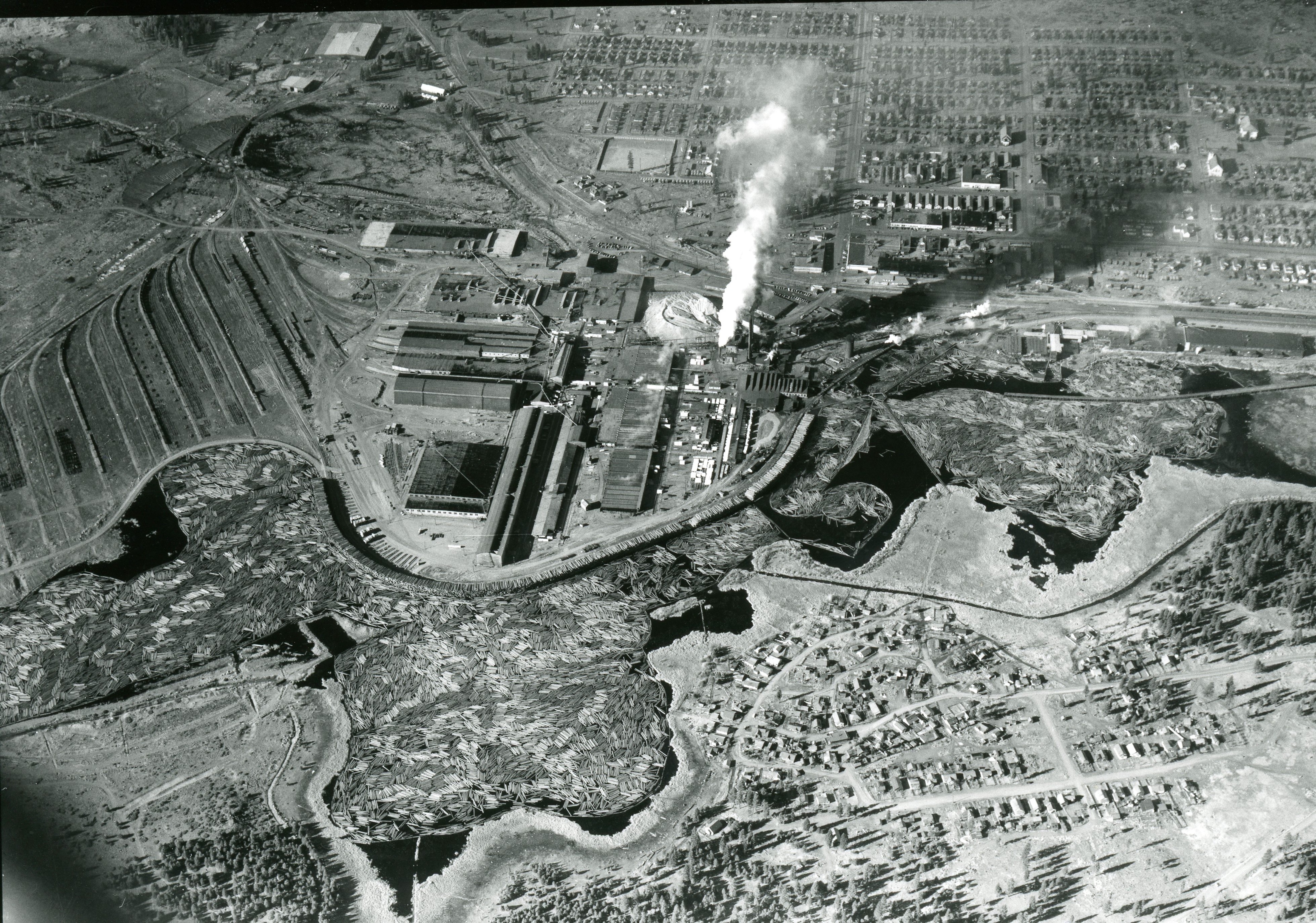
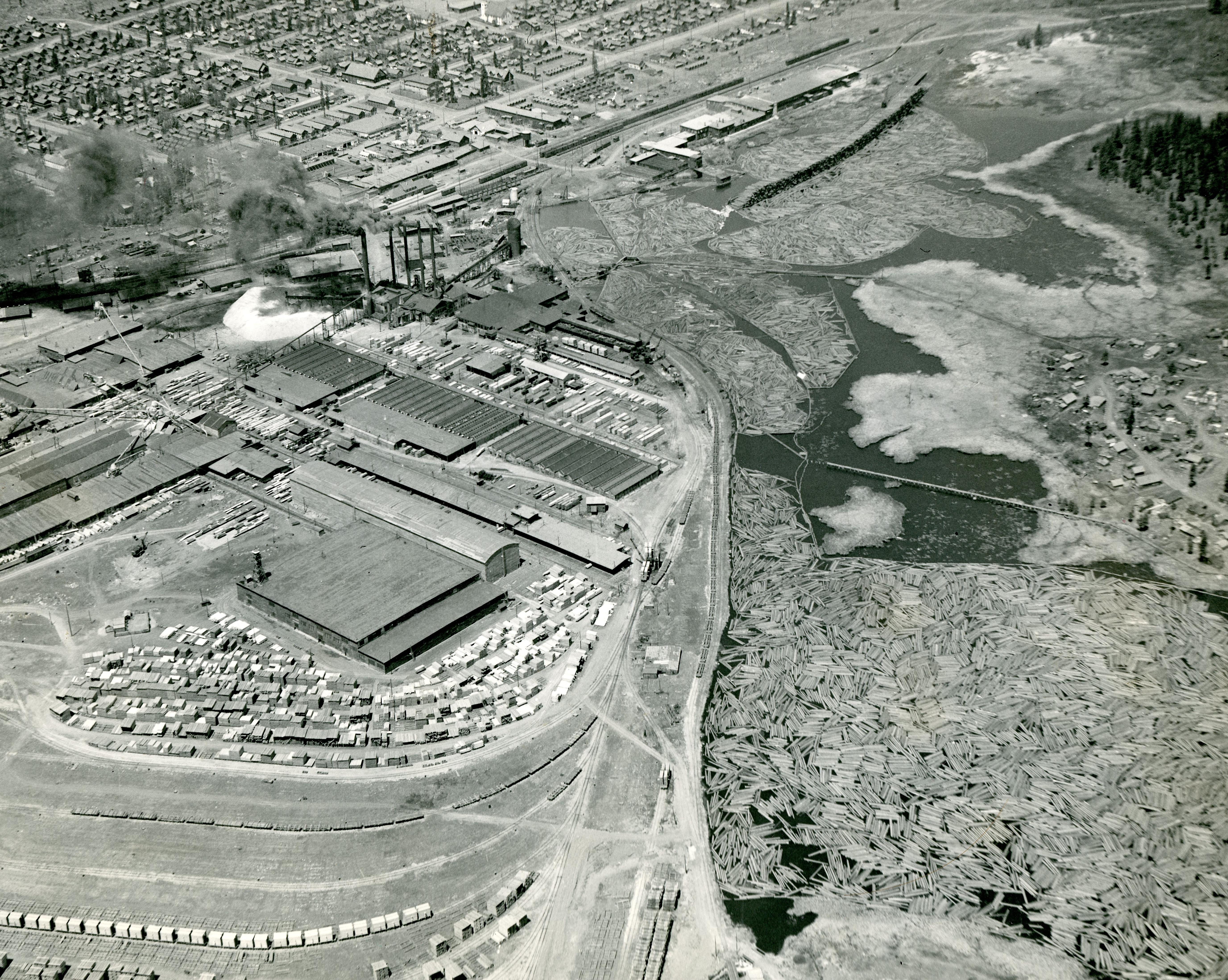
Westwood Mill, 1946. Courtesy of Hank Martinez
Westwood, 1946. Courtesy of Hank Martinez

Yesterday’s photograph featured the dynamiting of the Westwood millpond and the freeze of 1949. There was a side affect of that freeze. The freeze reduced California’s citrus crop, and in turn reduced the need of wooden boxes and Fruit Growers box factories in Susanville and Westwood were temporarily closed. In May when the Westwood box factory re-opened, it was only with one shift. Continue reading Westwood’s Rumor Mill

Westwood’s Frozen Millpond

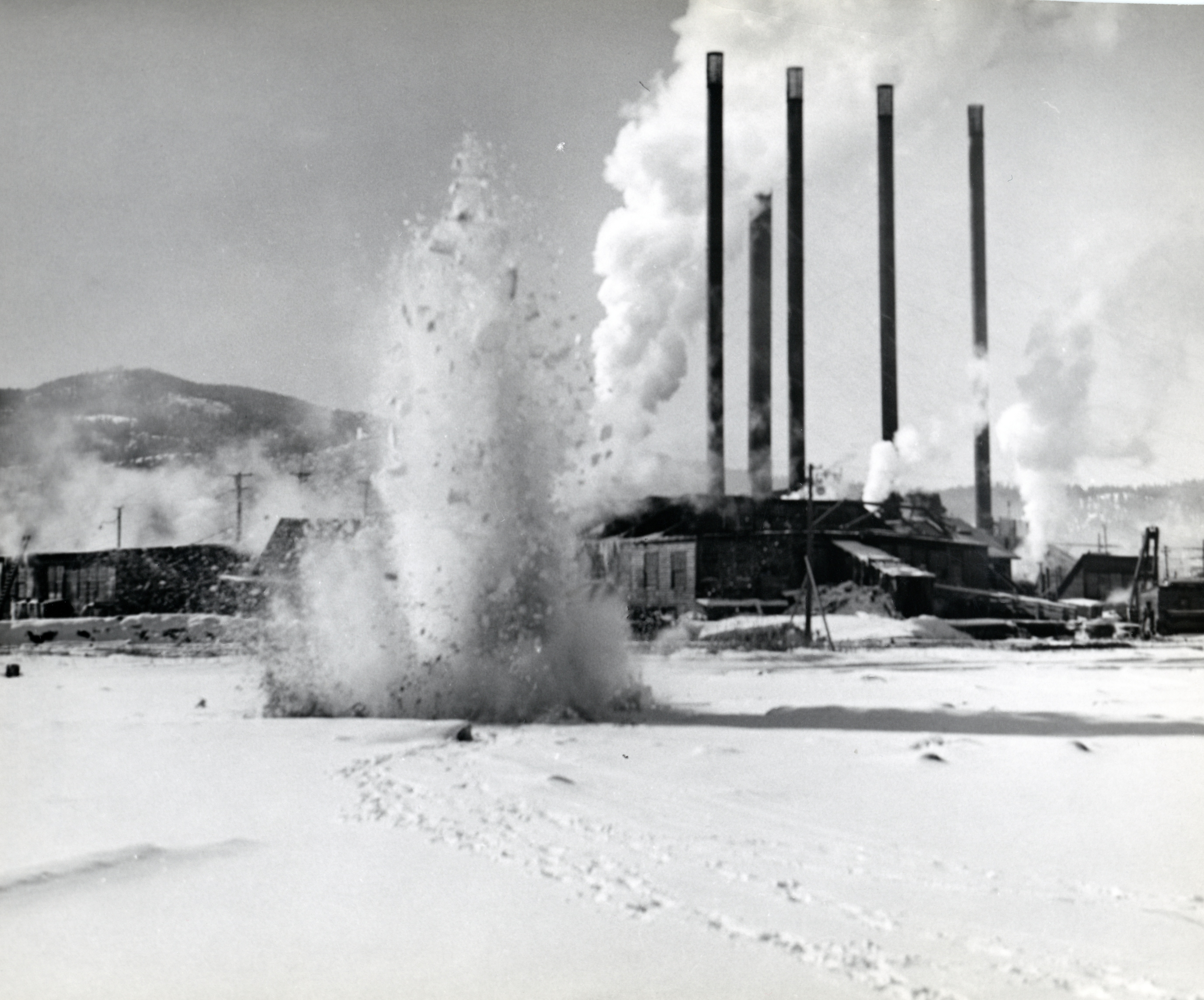
Dynamiting the Westwood millpond, January 27, 1949. Courtesy of Fruit Growers Supply Company

In January 1949, the temperatures plummeted to nearly thirty degrees below zero. The millpond froze. When Red River designed the facility, they placed piping from the powerhouse that forced steam air directly into the millpond near the sawmill. This system was no match for Mother Nature. To keep the mill operating it was necessary to use dynamite to blast loose the logs in the millpond. Continue reading Westwood’s Frozen Millpond

Winter Log Decks

Red River's winter log deck near Camp 16
Red River’s winter log deck near Camp 16

First of all, coming from a family logging heritage, its still hard to fathom, that lumber mills no longer exist in Lassen County.

The two largest mills, Fruit Growers and Red River maintained two type of winter log decks. Usually, normal logging operations ceased in November. Yet, to keep the mills operating throughout the winter, required to have a substantial amount of harvested timber. There was the log deck at millpond, and then a second one out in the woods.  The latter was not brought into the mill until spring, since the winter supply was nearly exhausted. The log decks in the woods provide enough ample supply during the transition, since it would take some time when the logging camps opened in the spring, to provide a steady supply to the mill.

Never miss a story, click here.

Westwood’s Deportation – Continued

Westwood,, 1931
Westwood,, 1931

The county wanted to oblige, but it had no funds. They deferred to take any action and turned the matter over to the federal immigration officials. J.C. Borden of the Immigration Bureau was brought in to investigate the situation. What he found on his arrival was that of the forty-five applicants only a handful were eligible to receive aid to pay for their return to Mexico. Yet, the issue was also moot, as Borden noted, because all the Mexicans had gone back to work. He informed the Board, should the issue arise again, that under a federal ruling any alien who had been in the United States for three years and becomes indigent can be returned to his native land with the cost borne by the federal government. Continue reading Westwood’s Deportation – Continued

Westwood’s Deportation of Immigrants

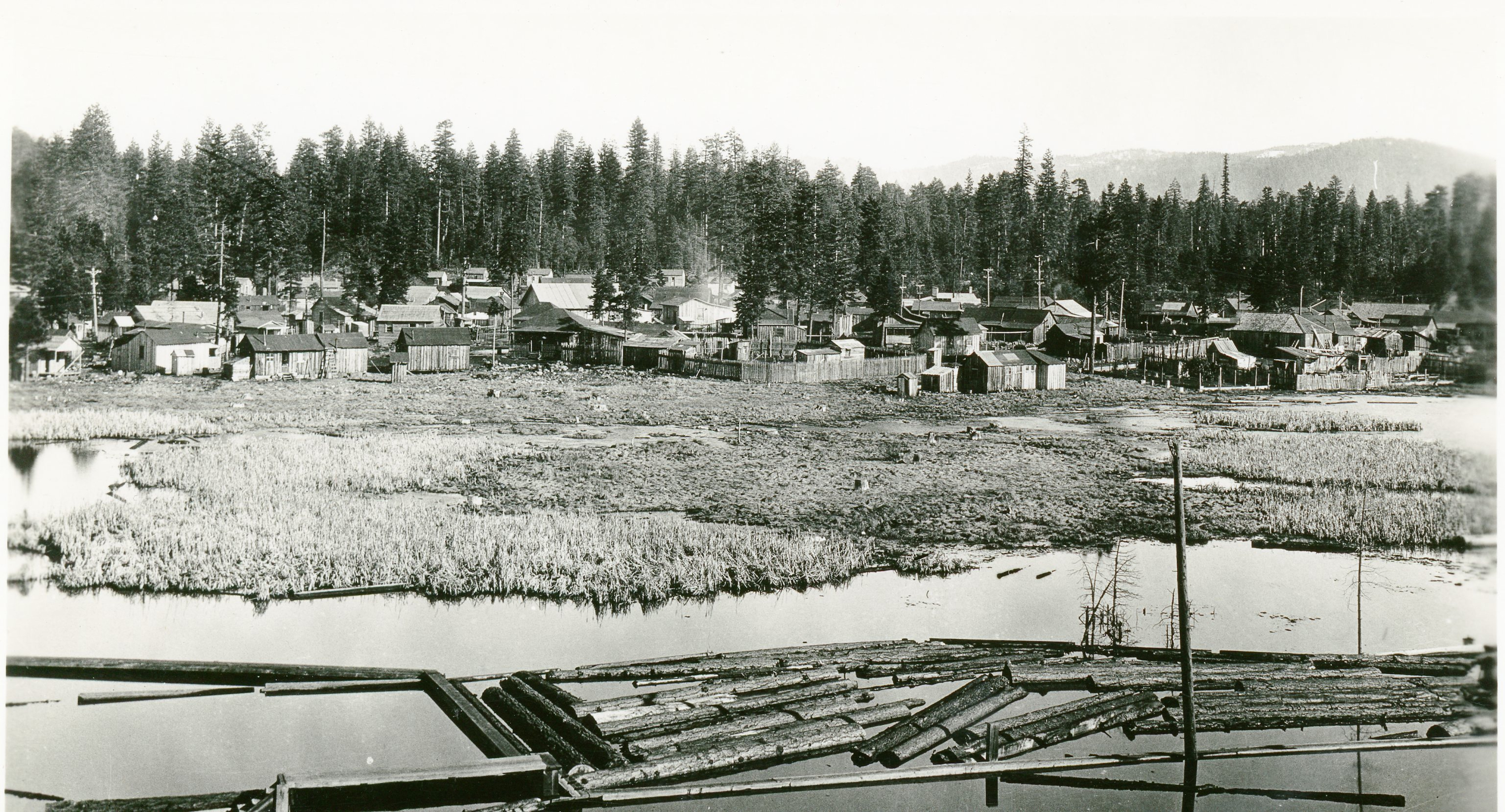
Westwood's Old Town, home of many of its immigrant workforce. Courtesy of Hank Martinez
Westwood’s Old Town, home of many of its immigrant workforce. Courtesy of Hank Martinez

One of the more unusual annals in Red River’s history was deportation. Red River hired a large percentage of foreigners whether it be Scandinavians, Italians or Mexicans. With the downturn in the lumber market, the company was forced to layoff some of its workers. If they thought that the layoff was temporary, they allowed the affected worker to remain. By 1930, however, Red River sought alternatives, as they could no longer bear the financial burden. Continue reading Westwood’s Deportation of Immigrants

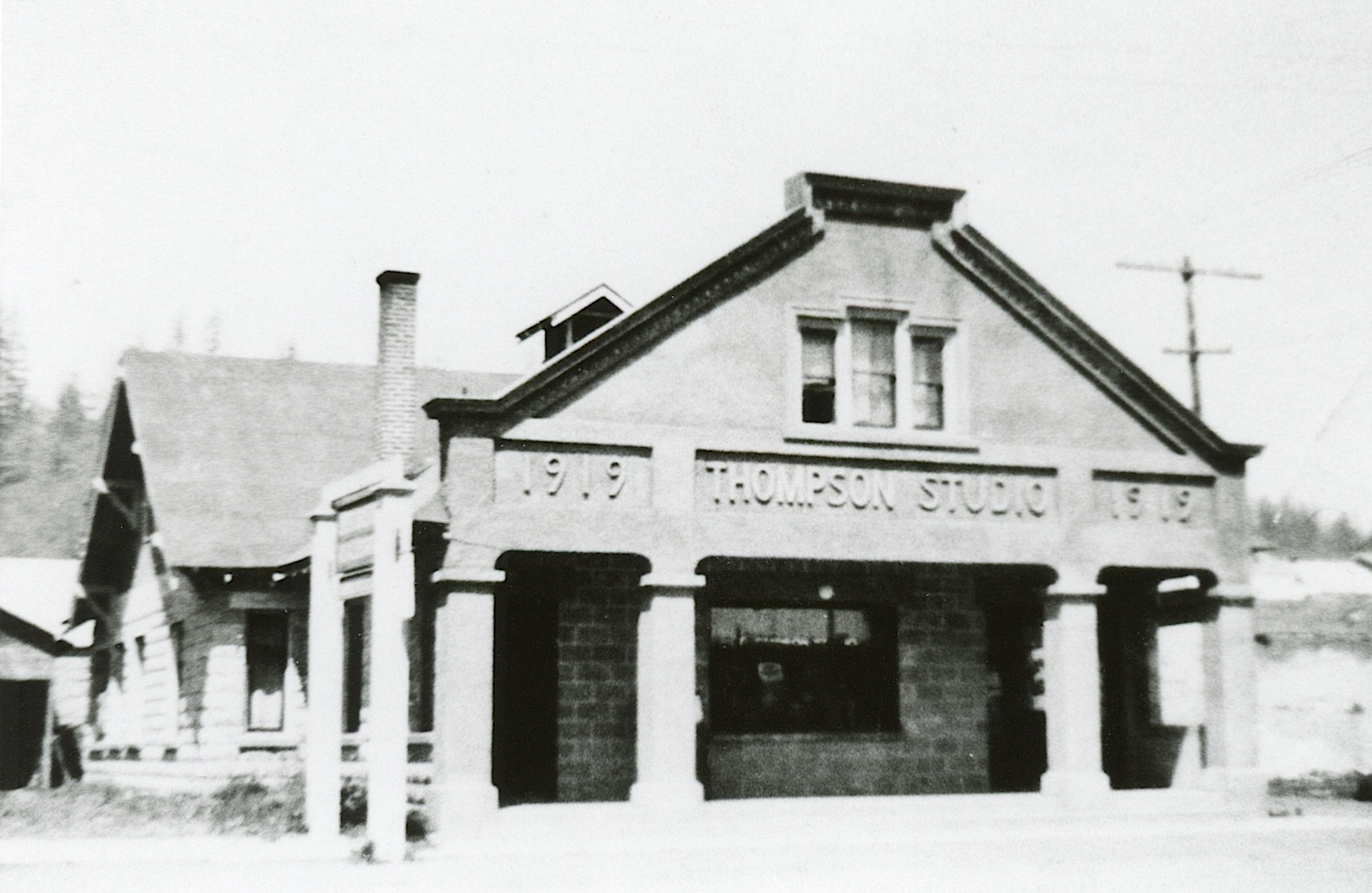
Susanville’s Thompson’s Photography Studio

Courtesy of Frances Wier
Thompson Studio, 1921. Courtesy of Frances Wier

It has been awhile since I wrote about the professional photographers of the area who left a valuable historical record behind.

In September 1912, Peter Julian “Jack” Thompson announced he was going to relocate his photography studio from Loyalton, which had been in operation there for ten years, to Susanville. However, due to some delays he did not open for business here until February 1913. Continue reading Susanville’s Thompson’s Photography Studio

Sergi-Sacco Wedding

Sergi Cake
The Sergi-Sacco wedding cake. Courtesy of C. Derek Anderson

One just never knows how pieces of history make it to the surface. The above photograph is just one example. When the  bar from Marion’s on Weatherlow Street was being moved to a new home in Chester, some interesting material somehow managed to get lodged behind the bar. There was an assortment of about a dozen Red River Lumber Company photographs and this wedding cake picture.

On 10:00 a.m. Sunday, November 15, 1936 at Sacred Heart Church, Rose Agnes Sergi and James Sacco were married. The bridesmaids were Louise Saffores, Concha Larrea and Camilla Alosi. The best man was Marion Larrea. After the ceremony a wedding breakfast was held at the Veteran’s Memorial Hall, with 500 guests. The centerpiece at the bride’s table was a magnificent five-foot tall wedding cake, weighing 250 pounds.

Subscribe and support this site at $5.00 a month, that is a bargain costing 16 cents a day.