Tag Archives: Red River Lumber Company

Cardenas v. Red River Lumber Co.

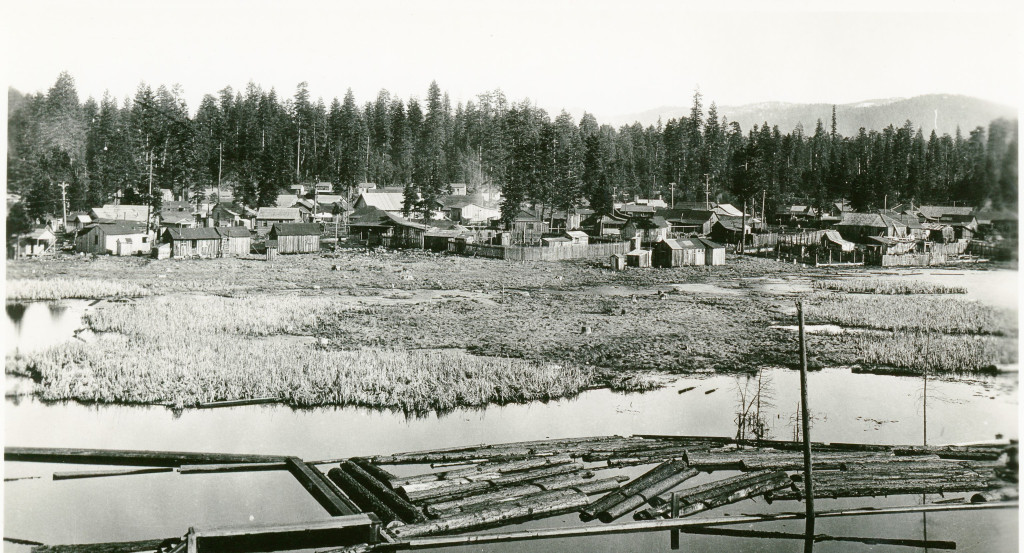
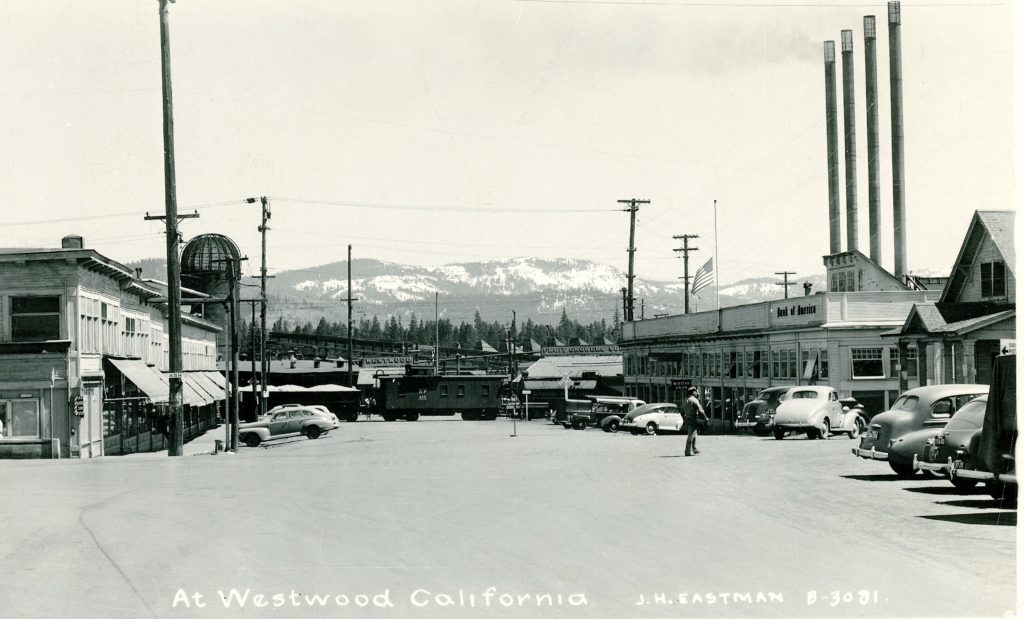
Westwood, circa 1940.

In many respects the case of Manuel Cardenas versus the Red River Lumber Company appeared to be like so many others before seeking damages from injuries sustained. In 1936, Cardenas sued Red River for $50,000 from loss of his right eye due to an attack by him by Deputy Constable David Bohannon, a Red River employee. Thomas C. Ryan, a San Francisco attorney who represented Cardenas stated at the opening of the trial “Red River owns and controls Westwood.” Many folks thought that way, but feared publicly to say it. The Susanville business community had a code name for Red River—the Red octopus. It was a reference Red River’s tenactles were everywhere in Lassen County. Anyhow, Red River’s attorney, Hardin “Finn” Barry of Susanville retorted, “Every commercial business is operated by private business.” This was a recent event, as part of a reorganization of the company. Had this event occurred ten years ago, Ryan’s words would ring true. In the end, Cardenas was awarded $3,000.
Subscribe

Milwood Tract-Susanville

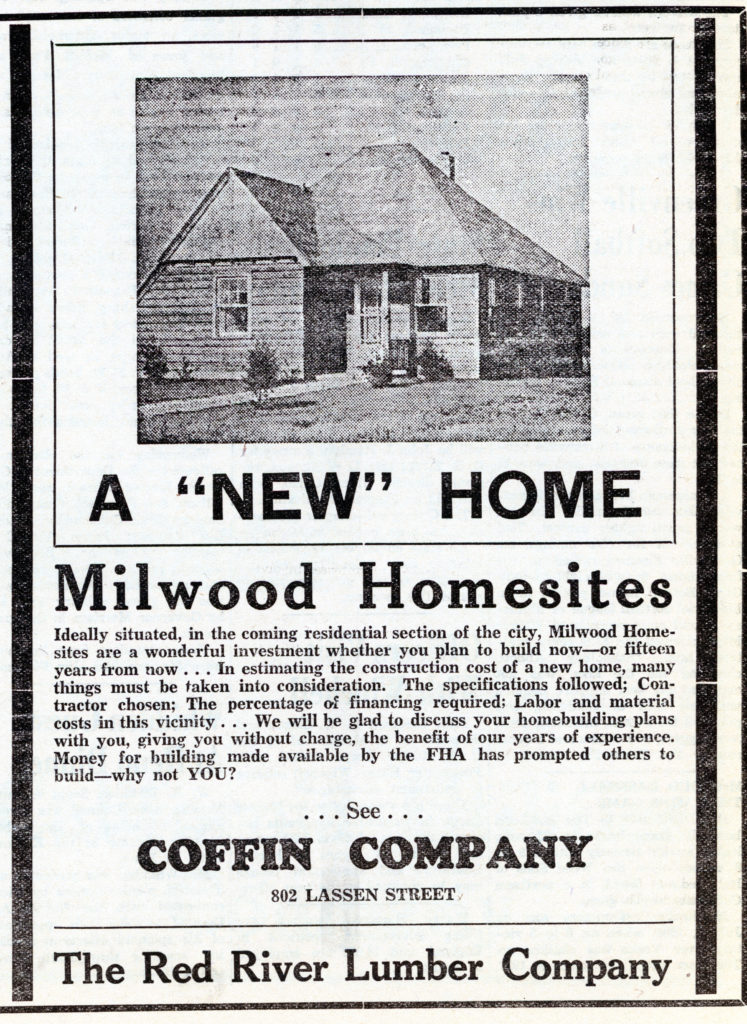
1938 Advertisement from the Lassen Mail

During the 1910s, real estate developers went through a crazy period putting together subdivisions adjacent to Susanville with the anticipation of a major “boom” once the railroad arrived. For a brief time it subsided, but went crazy again when it was announced the Fruit Growers Supply Company was to build a substantial lumber manufacturing adjacent to Susanville.

Enter George McDow, owner of the local title company, Lassen Abstract, and his best friend, Russell Brownell, the latter known for his salesman skills. Having inside knowledge they acquired property on the north side of the Susan River of the proposed Fruit Growers millsite. They created the Milwood Tract subdivision, that adjoined Halltown. This subdivision extended Second, Third and Fourth Streets. It also created the streets of River, Sacramento, Spring, Fairfield, Mesa and Gilman. The developers designated the east end as Milwood Farms. They were made 34 two-acre lots for those who desired extra room to raise chickens, plant gardens and the like. Two streets were created, but never named until later. One became known as Russell Avenue, after Russell Brownell, who died unexpectedly in 1923. The other became Fair Drive, since it would be the main thoroughfare to the fairgrounds that were built in 1922, adjacent to Milwood Farms.

Things did not go according as plan. In September 1922, they sold 260 acres of the tract to the Red River Lumber Company, who bought as speculative property as a future millsite. That transaction had a major impact on the history of Susanville, which we will explore tomorrow.

Never miss a story, click here to subscribe.

Where are we—Camp Harvey

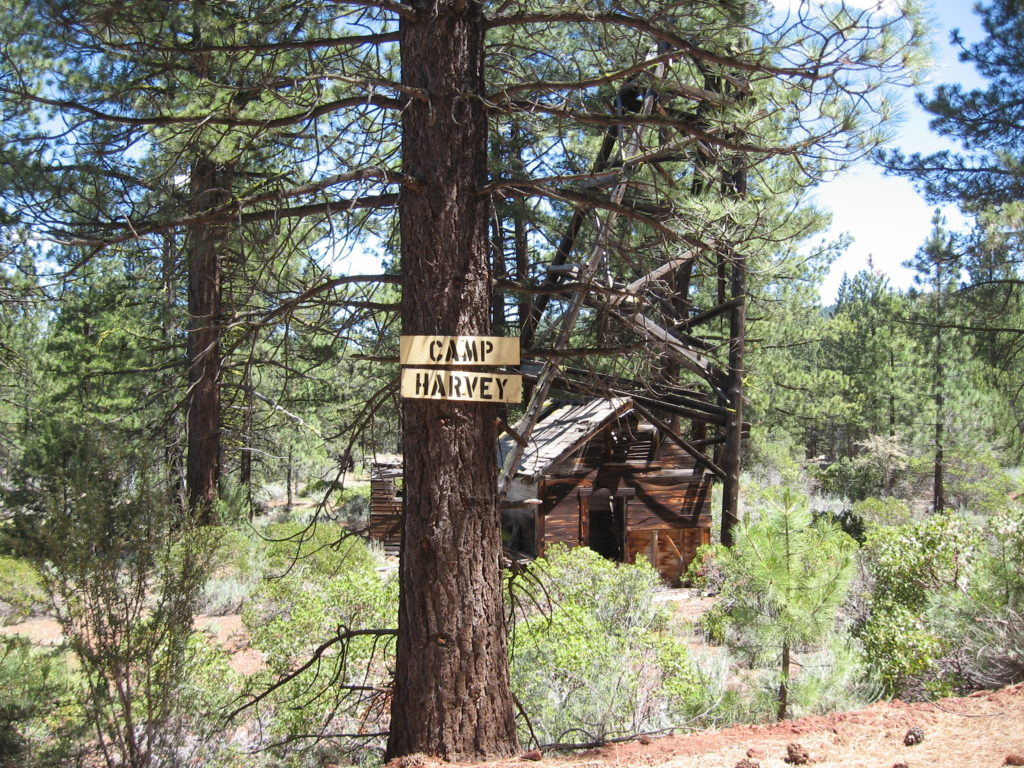
Camp Harvey, July 11, 2019

In 1943, the Red River Lumber Company established this logging camp, nineteen miles east of Camp Bunyan on the north slope of Harvey Mountain. In 1944, the Red River sold it to the Fruit Growers Supply Company.  

The cookhouse operations at logging camps operated at a substantial loss for the company.  However, the food served in the logging camps played a pivotal role.  Poorly fed loggers would move to a different logging company, and thereby impact the former company’s production.  In 1948, Fruit Growers experimented at Camp Harvey by raising the price of a meal to one dollar.  Complaints were loud and long.  But now, instead of losing thirty-six cents per meal, they now lost only eight cents.  The result was substantial and at the end of the year, Fruit Growers’ operating losses for the cookhouses at Camps Harvey and Stanford was $63,500.

On May 2, 1949, Camps Harvey and Stanford opened for another season.  In an effort to further reduce the cookhouse expenses, Fruit Growers leased them along with the commissaries, to H.S. Anderson Company for one dollar.  Fruit Growers thought perhaps an outside company could handle the meals more efficiently.  They would never find out the answer.

 Just three weeks into the logging season all operations on the Harvey line shut down.  The cookhouse crews, represented by Local 768 of the Bartenders and Culinary Workers Union, walked off the job in a wage and hour dispute with H.S. Anderson Company.  As the weeks passed with no end of the strike in sight, Fruit Growers closed down Camp Harvey and Stanford permanently, as well as its Harvey railroad logging line.

Harvey Cookhouse
Camp Harvey Cookhouse, 1947

Support

Big Wheels Demonstration

Lassen Lumber & Box Company’s entry.

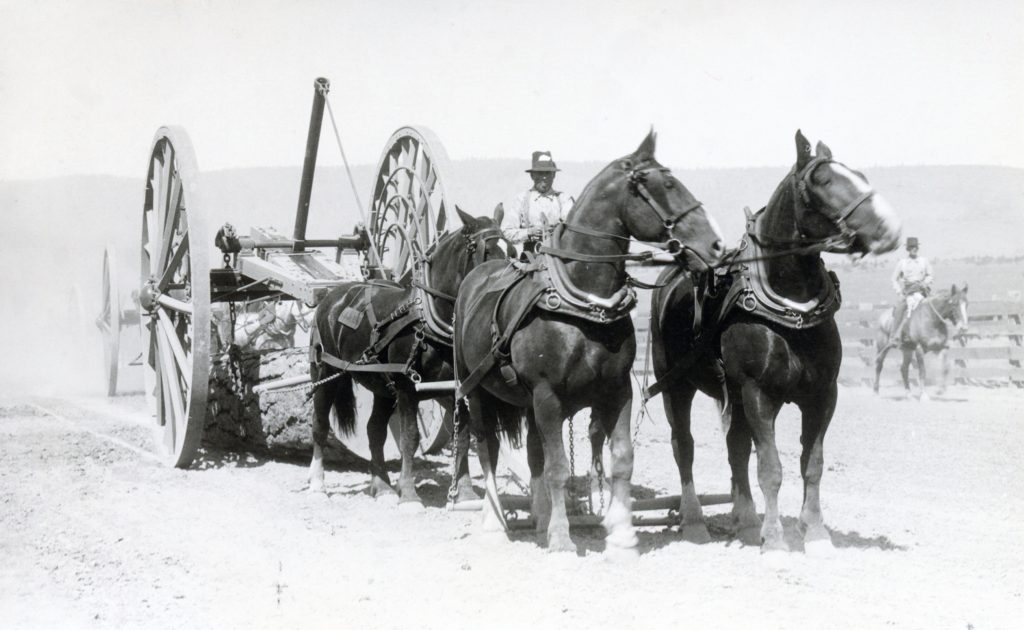
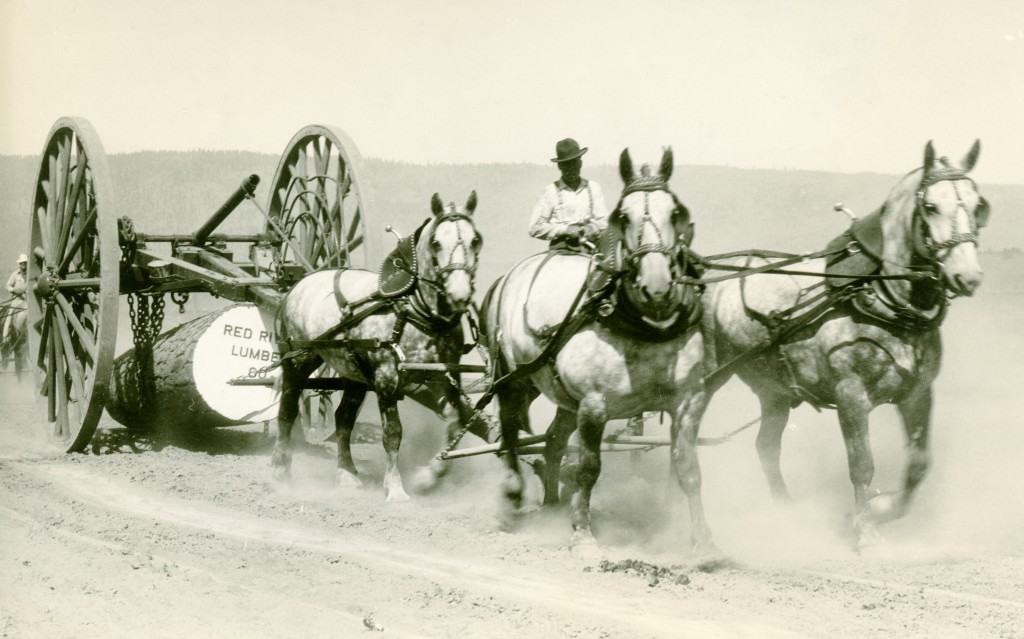
When the Lassen County Fair was revived, in 1922, it would go through an evolving process. One of the dramatic changes was the establishment of three large sawmill operations—Fruit Growers Supply Company, Lassen Lumber & Box Company and the Red River Lumber Company.

The following year, the first logging exhibition at the Lassen County Fair was held. It was certainly a noteworthy event. For many attendees it was the first time they were able to witness the current logging methods of the “big wheels.”  A competition was held between the big three companies. The Fruit Growers Supply Company won top honors in this category. It should be noted by 1927, the lumber companies began phasing out the “big wheels” for the motorized Caterpillar traction engines.


Red River’s team.

Never miss a story, click here to subscribe.

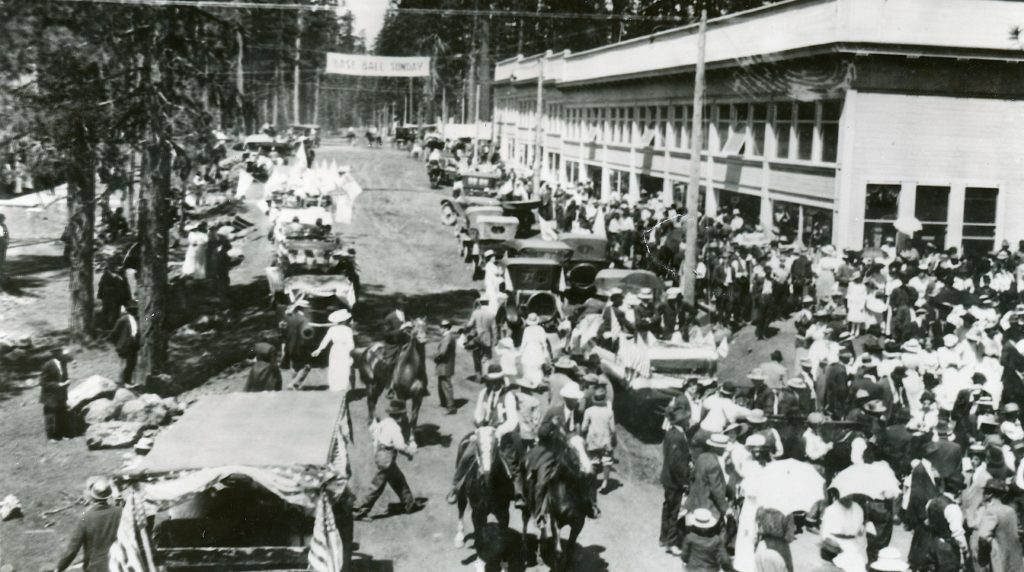
Westwood’s 4th of July 1915

4th of July 1915 celebration at Westwood. Courtesy of the Nevada Historical Society.

This was unlike other patriotic events taken place across the nation that particular year. In 1914, after the completion of the Fernley & Lassen Railroad to Westwood, the Red River Lumber Company was eager to host an event to its neighbors to showcase their new town. However, it always turned out as a logistical nightmare, as other events prevailed. Instead of attempting to do something hasty in the short term, the company focused its attention on July 4, 1915. It was a grand success. A special train came from Susanville to Westwood for the day and those who traveled by car, allowed for thousands to attend not only traditional activities associated with the Fourth, but to sight-see and explore the new town.

Never miss a story, click here to subscribe.

Camp Bunyan & Halls Flat

Camp Bunyan
Camp Bunyan, courtesy of Bill Welder

In a very belated follow up on the history of Halls Flat. For a refresher for those new to the area, Halls Flat is located in western Lassen County, north of Poison Lake, which some times is a lake that Highway 44 skirts around the south shore.

Anyhow, Halls Flat came to life in a big way starting in August 1941 when the Red River Lumber Company established Camp Bunyan. This was a new experience for company. Its timber was no longer tributary to its Westwood mill—as a fact the camp alone was thirty-five miles to the north. The bottom line, this is where the timber was. Camp Bunyan was unique from other Red River logging camps. Not only did this camp have a name and not a number, it was their largest camp that consisted of both temporary and permanent buildings. At its peak time, it was the home to some 350 loggers, making it one of the largest seasonal communities in Lassen County. However, it got off to a rough start when not long after the loggers went on strike over wages and poor living conditions. Once those issues were resolved everything went smoothly. From Camp Bunyan a railroad logging line was constructed to the east in the company’s Blacks and Harvey Mountains tracts. In 1943, a second logging camp named Camp Harvey was established. At the end of the following of year, a major change happened when Red River sold to the Fruit Growers Supply Company. At the end of the 1946 logging season Camp Bunyan had served its intended purpose and was shut down. Its location remained a hub of activity since the log trains from Camp Harvey went to the Camp Bunyan site to connect with the Western Pacific Railroad that relayed the loaded log cars to the Westwood mill.

In the spring of 1948, though the hustle and bustle of the connections of the Harvey railroad line connecting with the Western Pacific at Halls Flat came to a sudden halt. In essence, it was similar to the opening of Camp Bunyan. This time, however, it was the cookhouse employees at Camps Harvey and Stanford that went on strike over wages. With no end in sight Fruit Growers permanently closed down those logging camps and the railroad logging line.

Subscribe

Westwood’s Deportation Continued

Westwood,, 1931. Courtesy of C. Derek Anderson

The county wanted to oblige, but it had no funds. They deferred to take any action and turned the matter over to the federal immigration officials. J.C. Borden of the Immigration Bureau was brought in to investigate the situation. What he found on his arrival was that of the forty-five applicants only a handful were eligible to receive aid to pay for their return to Mexico. Yet, the issue was also moot, as Borden noted, because all the Mexicans had gone back to work. He informed the Board, should the issue arise again, that under a federal ruling any alien who had been in the United States for three years and becomes indigent can be returned to his native land with the cost borne by the federal government.
Yet, Red River’s actions caused a lot of anxiety and speculation among its Mexican workforce. In January 1931 rumors circulated that it was going to eliminate all Mexican labor. Red River issued a statement to ease fears among its Mexican employees: “The policy is to employ this [Mexican] labor on certain classes of work as they are very satisfactory in certain moderately well paid positions, do not move around looking for other positions which cuts down the cost of labor turnover. They are considered essential and desirable as part of the plant personnel. It is not the policy to employ outside Mexicans while work is scarce, but it is the policy to take care of those who have been here for some time and have proven to be good workmen and citizens.”

The deportation issue did arise again, as unemployment was persistent with the stagnant economy. In the fall of 1931, Lassen County transported more than one hundred Mexicans to San Francisco, who were then handled over to federal authorities to deport them to Mexico. The county deemed it was cheaper to pay the transportation costs than to provide aid. Many of the Mexicans were willing to leave, and those who had the means left on their accord. The issue was not isolated to Lassen County for 50,000 Mexicans throughout California had been deported that year.

Support

Westwood’s Deportation of Immigrants

Westwood’s Old Town, home of many of its immigrant workforce. Courtesy of Hank Martinez

Note: This was one of my early posts, that a few people expressed an interest. It should be duly noted that mills of Fruit Growers and Lassen Lumber & Box also hired large contigencies of immigrants.

One of the more unusual annals in Red River’s history was deportation. Red River hired a large percentage of foreigners whether it be Scandinavians, Italians or Mexicans. With the downturn in the lumber market, the company was forced to layoff some of its workers. If they thought that the layoff was temporary, they allowed the affected worker to remain. By 1930, however, Red River sought alternatives, as they could no longer bear the financial burden.

In December 1930 Red River notified the Lassen County Board of Supervisors of the lay offs and sought aid to provide for the unemployed Mexicans in Westwood, with the emphasis to pay the costs for their deportation. This had not been the first case where aid for the indigent and/or deportation had been raised by Red River. In the fall of 1929, the first deportation occurred at Westwood. Six members of the Phil Trudeau family, who were in the country on a visitor’s permit, were returned to Canada and eight Mexicans were deported to their native land.

On January 5-6, 1931, the Board of Supervisors held a two-day hearing concerning the deportation of Mexicans at Westwood. There were forty-five indigent Mexicans at Westwood who had been laid off and Red River took care of their needs. Again, Red River felt that it was either the county or the federal government’s obligation to provide them with food and other basic necessities and not the company. The Mexicans did meet the requirements to receive government aid. Even though they were not citizens, they were legally here and had been previously employed.

Never miss a story, click here.

Poison Lake Logging Operations

A Fruit Growers Supply Company logging train near Halls Flat, 1947

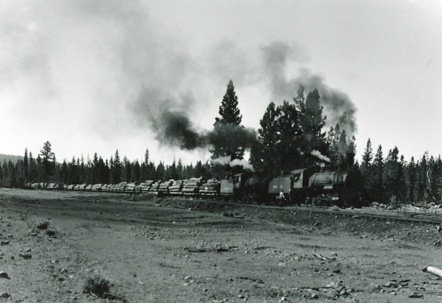
Poison Lake in western Lassen County was in essence the last frontier for railroad logging in the region. By 1940, the Red River Lumber Company had nearly exhausted its tributary timber around Westwood. It was also a critical time for Red River, not only dealing with a dwindling timber supply, but a younger generation of the Walkers having more influence in the operations.
With the nation already gearing up for the effort, demand for lumber increase, which in turn commanded higher prices.

While Red River was in crossroads about the future of Westwood, they were able to agree on item. With demand for lumber at an all time, and profits, too, it was best to carry on, with the hopes of finding a likely buyer during the good times.

The next destination to log was Red River’s Black/Harvey Mountains tracts some thirty miles north of Westwood. As an extra enticement, Lassen National Forest nine million board feet at Poison Lake. In 1941, Red River established Camp Bunyan at Halls Flat and started logging east towards Blacks Mountain. In 1944, they built railroad logging spurs around Poison Lake. While traveling along Highway 44 west of Poison Lake and looking on the south side of the highway these old railroad grades are still visible.

Subscribe

Reforestation

Diamond Mountain, circa 1940. Courtesy of Margaret A. Purdy

It is interesting to note that before the Red River Lumber Company and the Fruit Growers Supply Company harvested a single tree, the two companies stated with their sustained harvesting practices they would operated into perpetuity. While both companies no longer operate sawmills, they own large swaths of timberland, which is routinely harvested. However, large swaths of territory the companies would log contained a great deal of volcanic rock, not the best soils for second growth trees. In addition, when they did a tremendous amount of logging in these areas, it coincided during a twenty year drought cycle from 1917-37, that until this time the region had never experienced since the Anglo settlement of the 1850s.
On the other hand, they had a positive outlook. Take for instance during the dedication ceremony of Fruit Growers sawmill in Susanville in 1921. Charles Emerson, a well known merchant and rancher was one of many dignitaries to speak. Emerson told the crowd of his own reforestation locally. Emerson recalled that as a child [he was born in Susanville in 1868], forty years ago, he helped plant a tract of pine trees on the family ranch just south of Susanville on Diamond Mountain. Those seedlings, he said, had become a fine stand of pine timber, many of which were 22 to 24 inches in diameter.

Subscribe