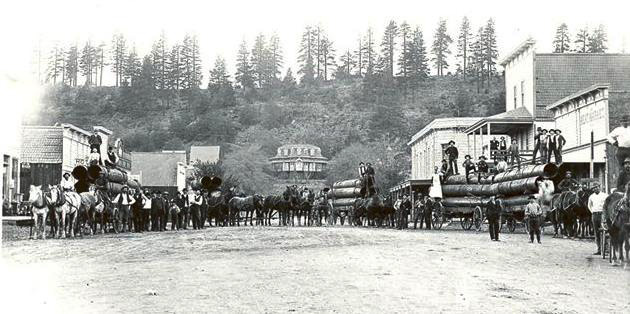
Notice the tall pines that once adorned the Inspiration Point Bluff. On the tour you will learn what happened to them. Susanville’s Main Street, 1894. Courtesy of Ivor Langiar.
Since I am in early stages of recovery, it is too difficult to plan anything, since I have no idea when I will be home.
In the good news department, in between physical therapy I have drafted out the talk. Topics include, but not limited to Lake Lahontan and the difficulties of mining on Diamond Mountain. They are all inter-related.
Help me with my recovery, and subscribe for as a little as $5.00 a month.
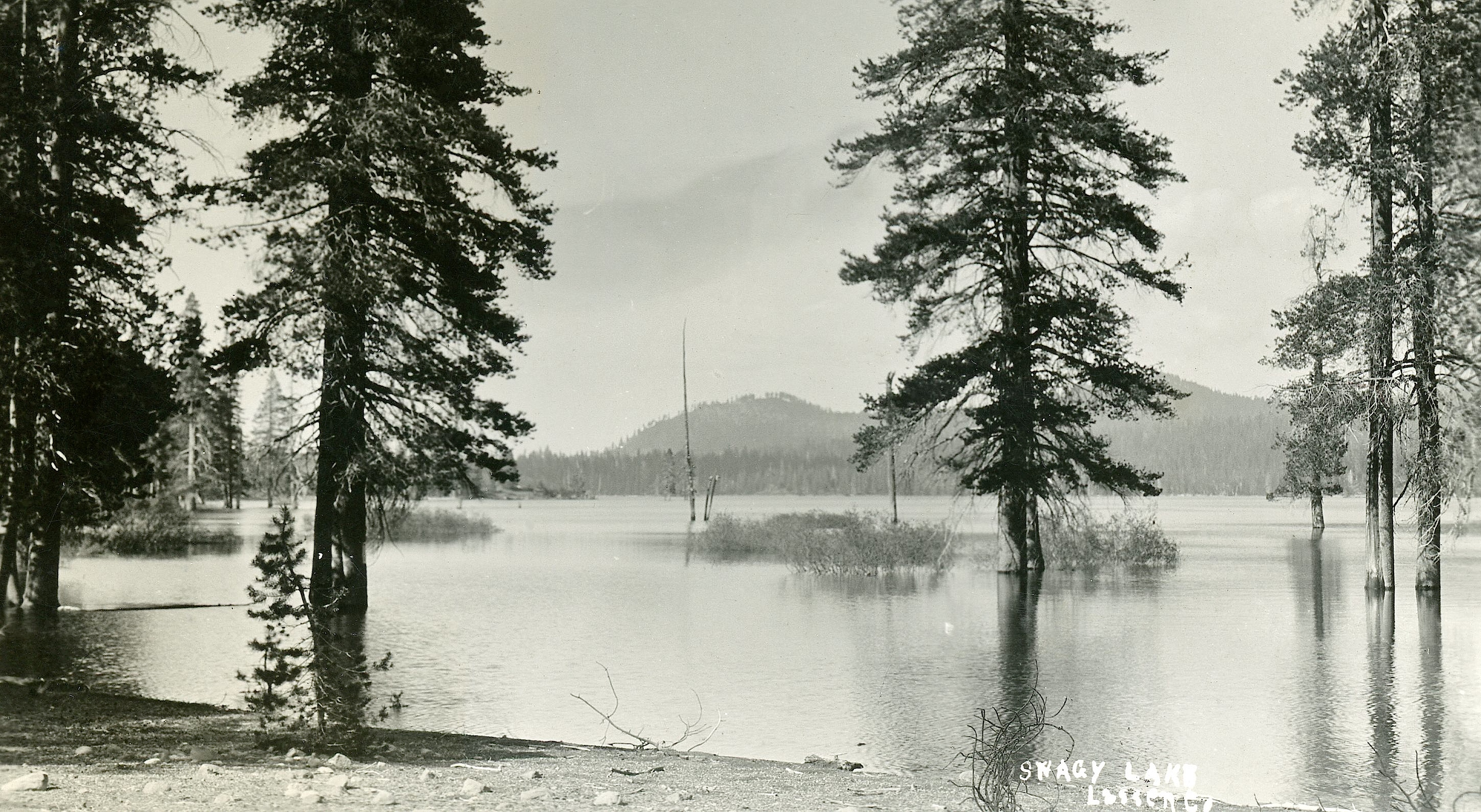
Snag Lake located in the eastern portion of Lassen Volcanic National Park, was originally called Snaggy Lake, and over the years its named shortened to Snag. The lake was formed 200 years ago from the lava flows that created the Fantastic Lava Beds. Trapped in the lake, after it was created, were a number of pine trees that died and are commonly referred to as “snags.”
The lake is only accessed by hiking or horseback. However, those who make the trek agree its worth it. I made the trek in the early 1980s, traversing most of the eastern half of the park.
Help me with my recovery, and subscribe for as a little as $5.00 a month.
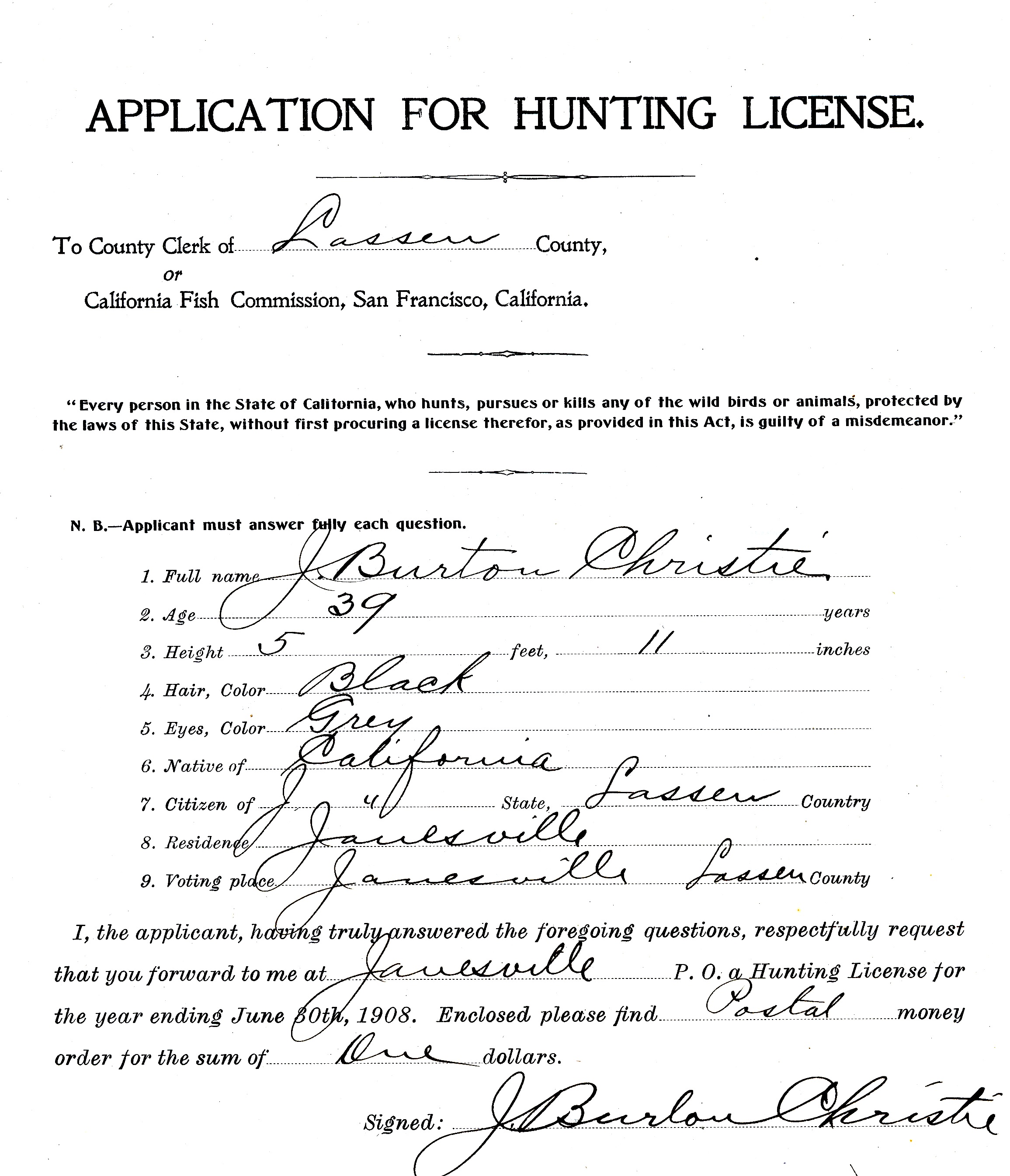
Did you feel that little nip in the air the other morning? Hunters in the Honey Lake Valley area know what it means—dove season. Doves are not fond of cold weather, and start their southward migration. If I could fly south for the winter with them I would.* Continue reading Hunting Licenses→
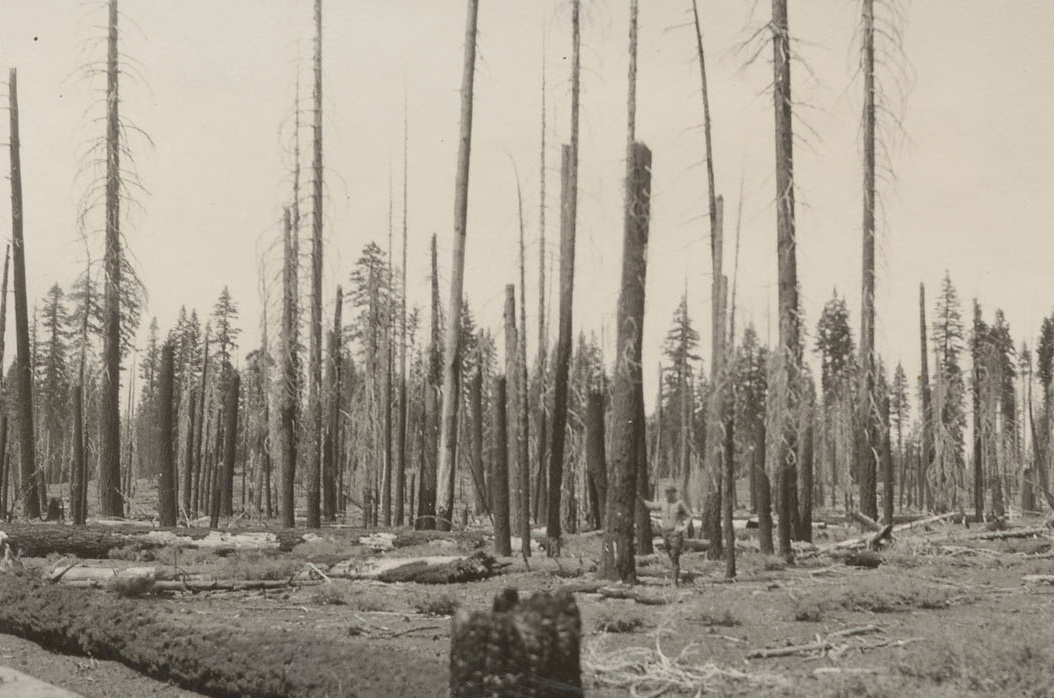
It was not until the 1920s that the Red River Lumber Company experienced problems with forest fires. Some time back I wrote about that company’s fire train. On July 27, 1926, a fire started at Butt Valley where Red River was logging. This was one instant that while the fire train was dispatched it was no match for the inferno. Continue reading Prattville Burn→
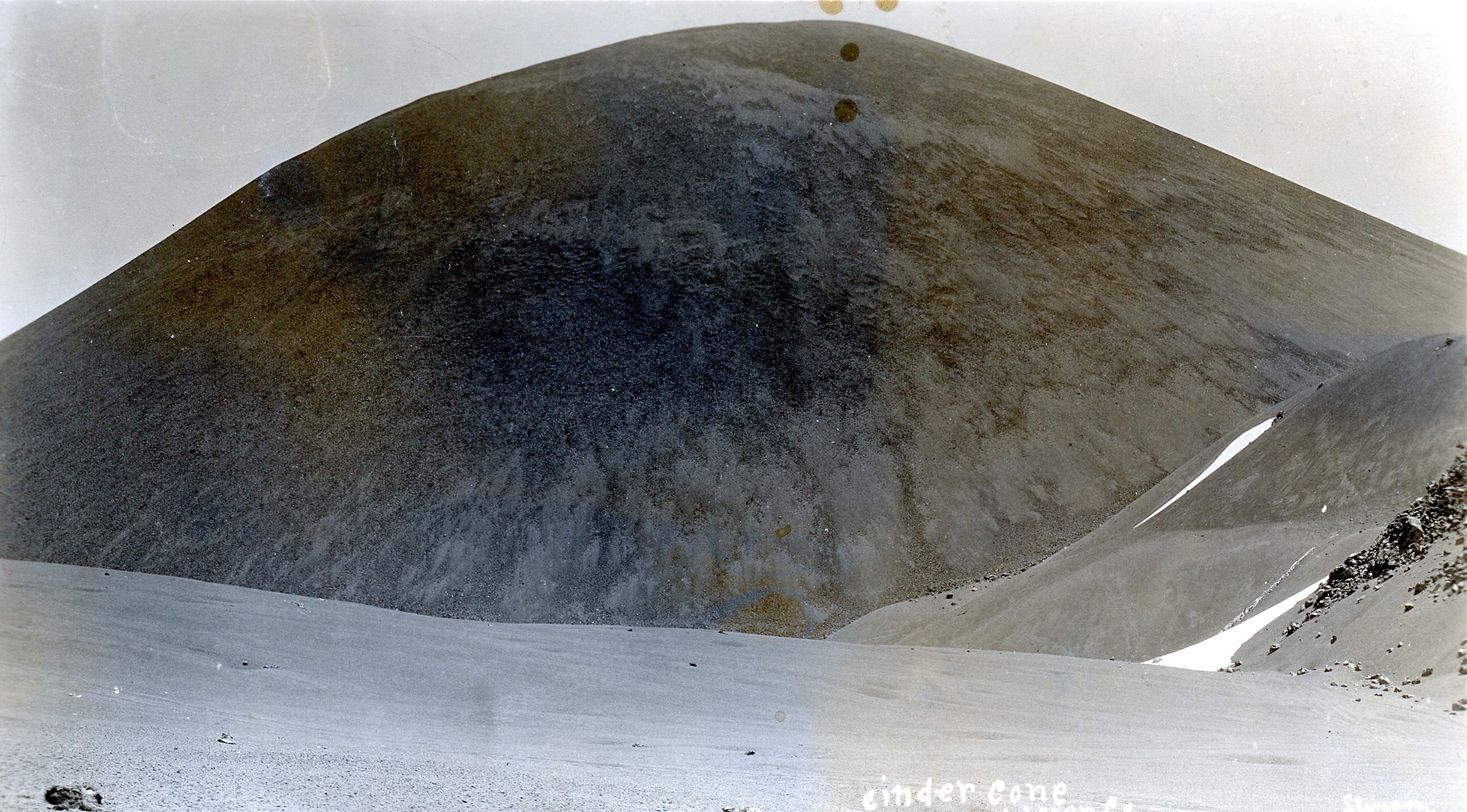
Long before the Lassen Peak eruptions of 1914-15 there were reports of other volcanic activity in the region. It was said that Cinder Cone, ten miles east of Mount Lassen, had erupted during the winter of 1850-51. Continue reading Cinder Cone→
Honey Lake, February 1984. To the right is the Hartson Sand Ridge. Photograph courtesy of Bob Sorvaag
Its been a long time since Honey Lake was full. If the weather gurus are correct we are to have a strong El Nino this winter. Just maybe the playa will convert back into a lake. Continue reading Honey Lake Baptisms→
Bunnell’s Resort, Big Meadows. Courtesy of Philip S. Hall
While my Red River series covers a tremendous amount of material on the Red River Lumber Company, there were some topics were not addressed. In 1938, the topic of controlled burns was being discussed, as the company had done it in its earliest years until Clinton Walker’s departure in 1913. Below is an excerpt of a 1938 memo Clinton wrote to the Board and the experience of a control burn at Lake Almanor. Continue reading Control Burns→
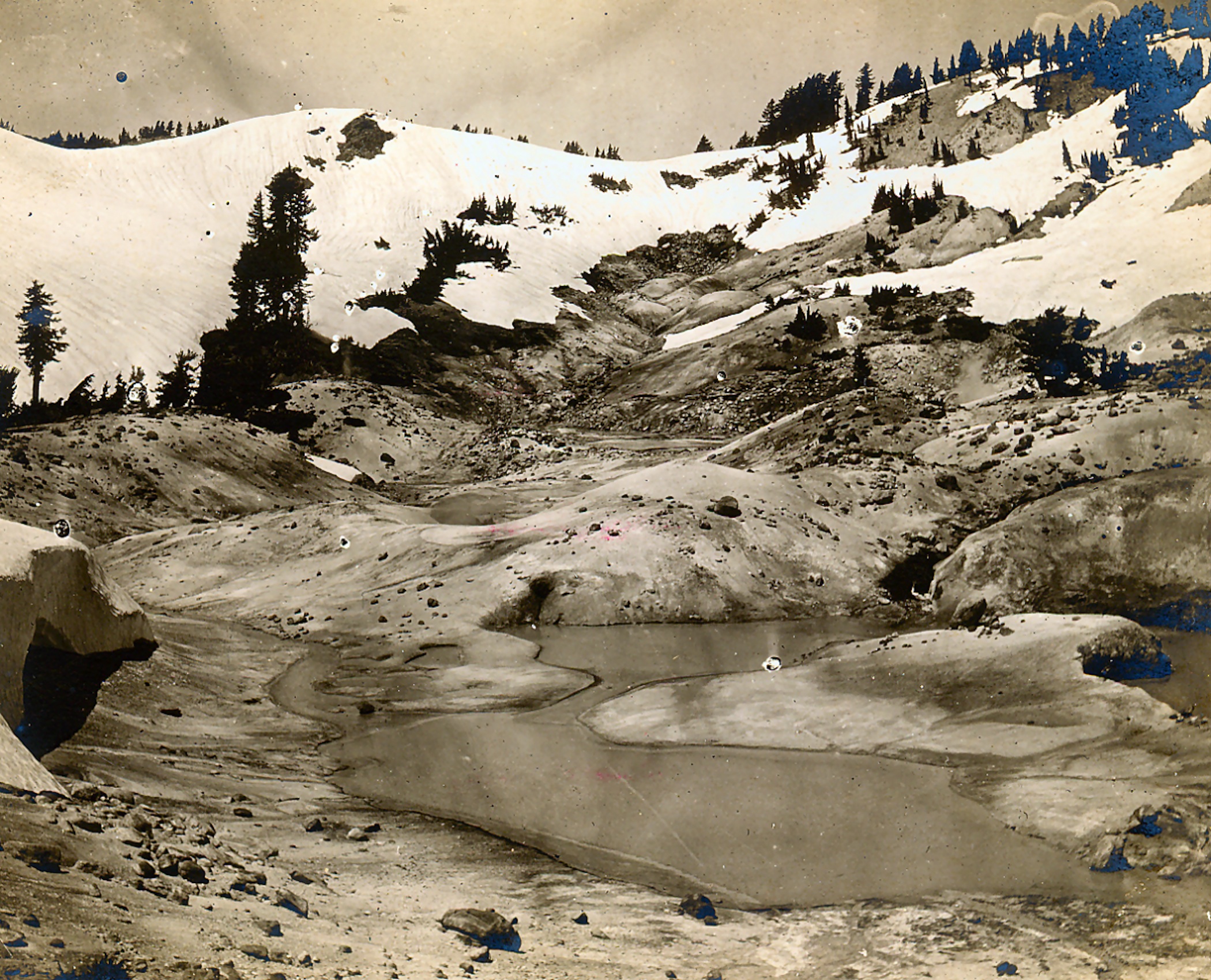
Bumpass Hell, 1908, Courtesy of the Sifford Collection
It is only fitting that today marks the 99th anniversary of the establishment of Lassen Volcanic National Park, that we explore the history of one its famed hydrothermal features–Bumpass Hell. Continue reading Bumpass Hell→
Smoke Creek Desert looking towards Sheepshead, fall, 1977
Just across the border lies this most interesting desert. It is a favorite of mine, so rich in history. It received its name back in 1844 when John C. Fremont explored the region. His party noted the dust storms created on the playa there cast a smokey hue.
Fremont was not the only explorer to the desert, as he was followed by William H. Nobles who created a new emigrant road that traversed Smoke Creek—it was a direct route to the Northern California mines. In 1865, the military established Fort Bidwell in Surprise Valley. The military plotted an unusual supply route that went along the west side of the Smoke Creek Desert and then followed Smoke Creek in a haphazard manner to Surprise Valley. This route was far from ideal, which was replaced by route through Buffalo Meadows. Traffic would diminish significantly when in 1890 Fort Bidwell was closed.
In forthcoming posts we will explore some of its agricultural and mining history.
Subscribe today and support this site for as little as $4.17 a month.
Between 1879 to 1956 there were officially twelve different exotic (non-native) species of fish planted in Eagle Lake. Yet, that figure could be higher since local anglers were known to have experimented with their own plantings.
Of all the varieties of species planted in the lake, only one truly flourished—the largemouth (black) bass. In 1901 the Lassen County Fish and Game Protective Association planted 147 bass in the lake that it had received from the California Fish & Game Commission. The following year additional bass were planted in the lake. To allow the bass to prosper the State Game Commission prohibited fishing of the bass for a period of four years. Continue reading Eagle Lake Bass→