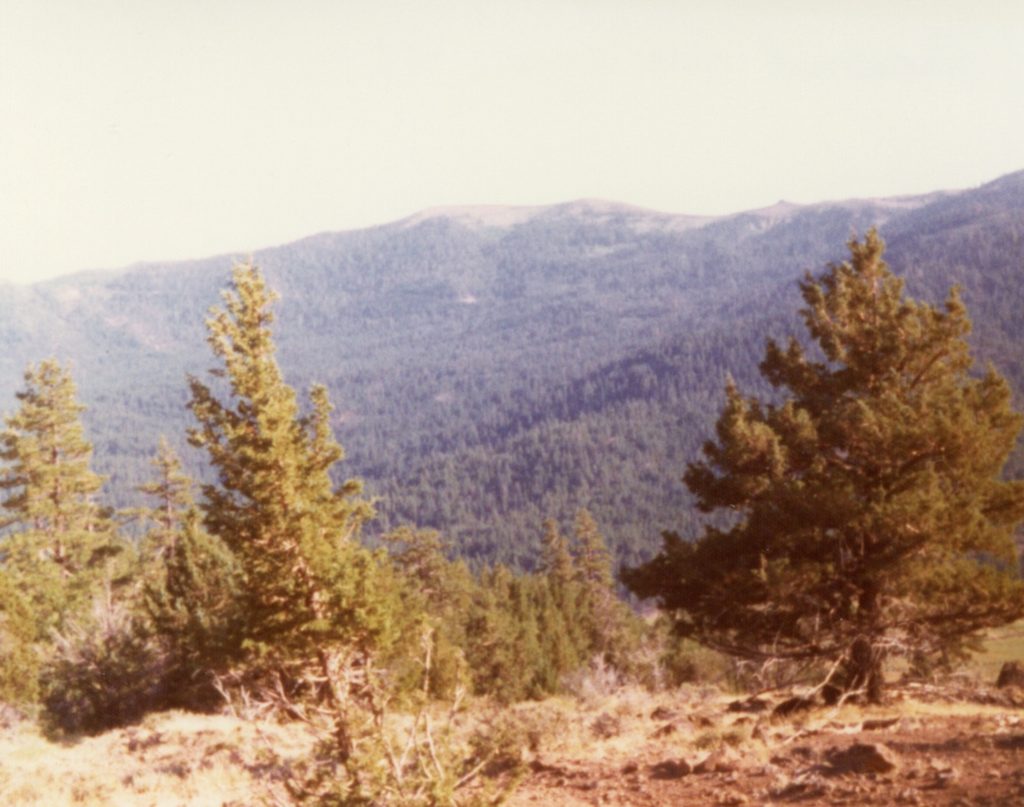
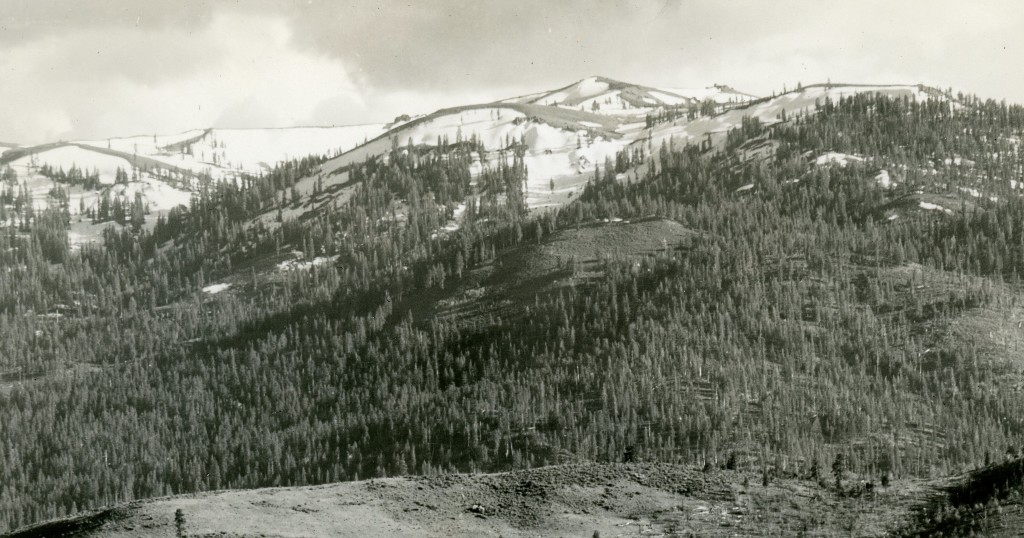
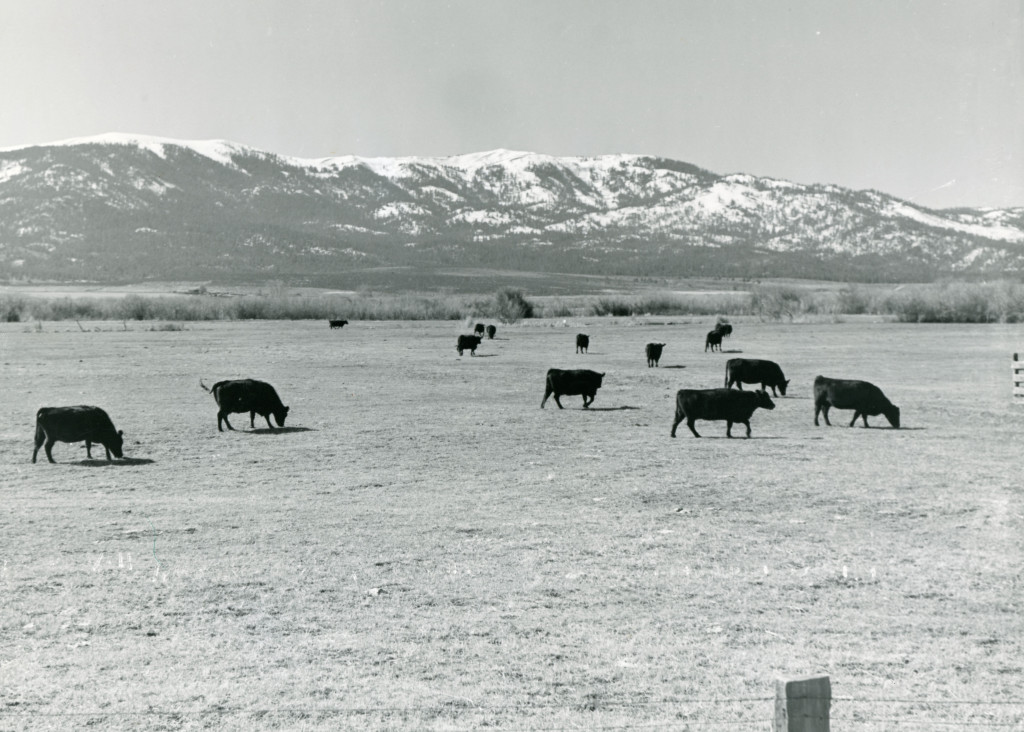
It was a year ago when the North Complex fire erupted— that had the most impact here was the Sheep Fire that ravaged. Diamond Mountain which burned 29,571 acres. So today, is a gallery of various photographs of the mountain before the fire.
Diamond Mountain, circa 1940. Courtesy of Margaret A. PurdyDiamond Mountain, 1950s.A view of Diamond Mountain, from Lassen High School’s agriculture fields, 1916. Courtesy of D.M. Durst CollectionView of Richmond Road January 1916 from Winchester Hill. Susanville received four feet of snow in January, followed by below zero temperatures. After that it was the beginning of a twenty-year drought, with Honey Lake going dry in 1919, and not filling up until the spring of 1938.
Tim
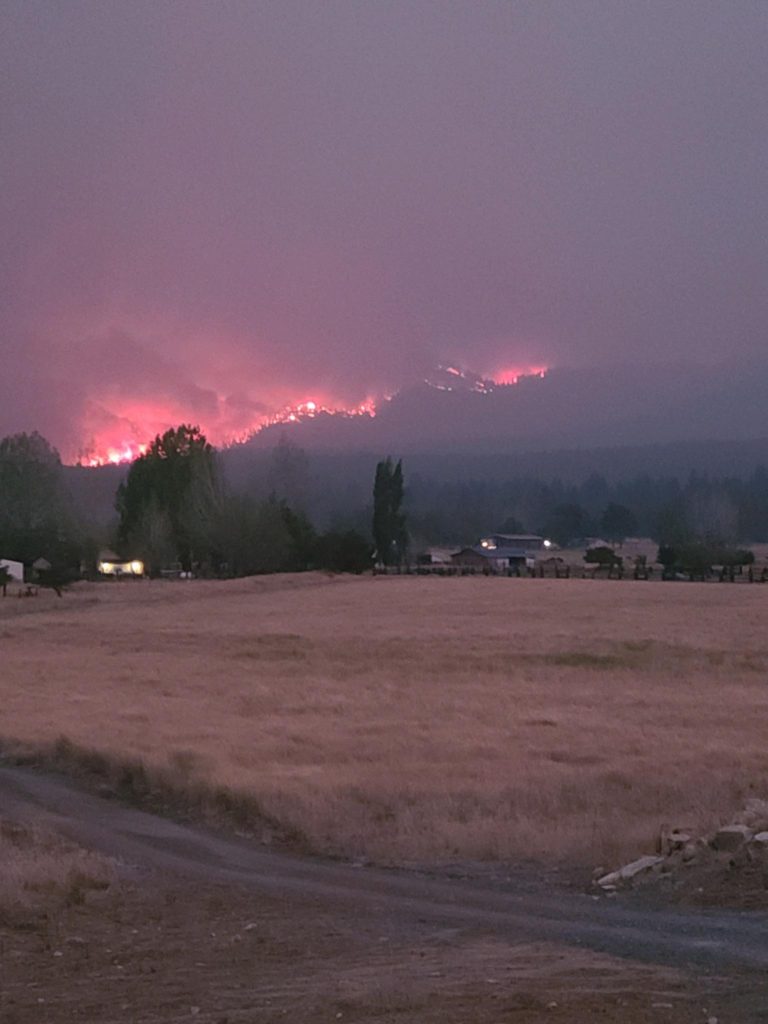
P.S. – The Dixie Fire is causing havoc here. I am currently in an evacuation warning zone. So any inquiries have not been answered, that is why. I have more than sixty posts scheduled so there will not be any interruption, but reminder as a rule Tuesday, is my day off from posting. Thank you for your understanding.
The fire came over Janesville grade on the evening of August 16, 2021
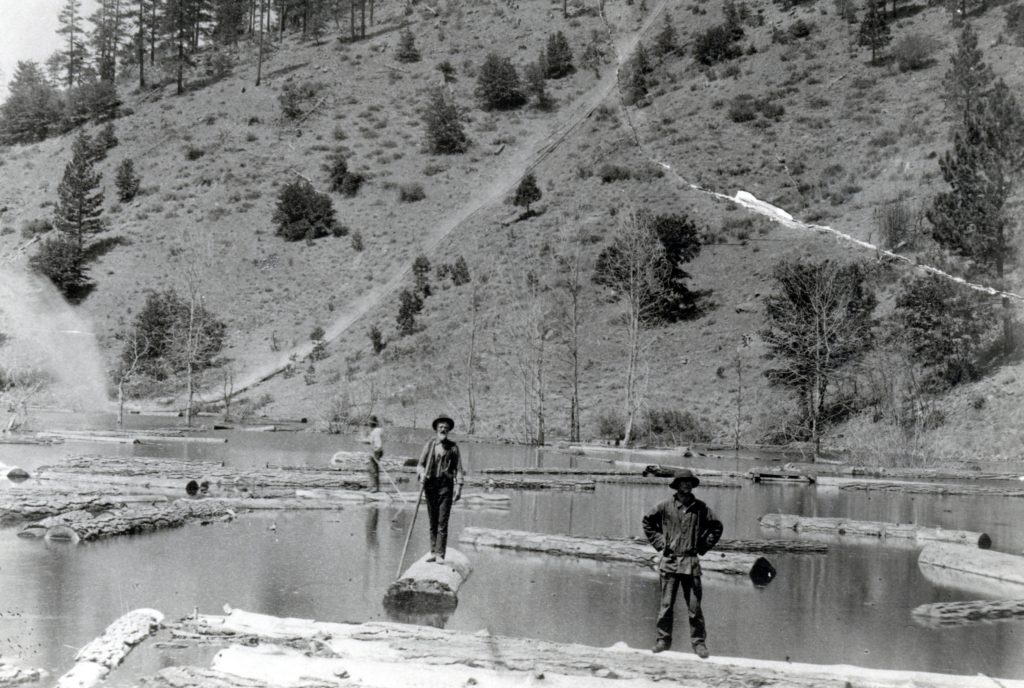
Bremner mill pond with the log slide in the background, (Susan River), 1891–Betty B. Deal
In 1888 when the Bremner dam and sawmill was constructed on the Susan River (two miles west of Susanville) it created a sizeable reservoir backing up water for over a mile. This was really beneficial in the spring months with high water flows, logs were cut and floated down the river to the mill.
On the north side rim of the canyon there was a heavy stand of pine timber. The dilemma how to log it? In the summer of 1891, some one came up with a solution. Because of the steep incline an impromptu dirt log slide was developed, and it worked!
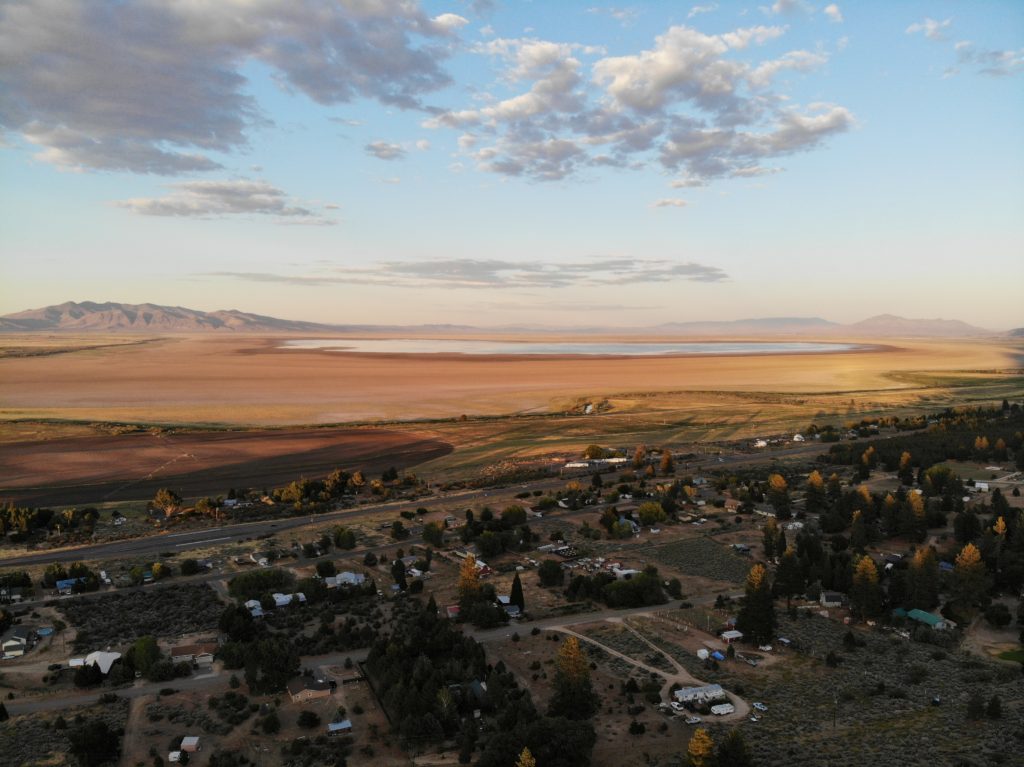
With Honey Lake now being transformed into a dry lake bed, its hard to imagine the lake as a fishery. In April 1875, Thomas J. Mulroney noted that remarkable numbers of white fish and suckers were coming up Baxter Creek from Honey Lake. In 1908, the California Board of the Fish and Game Commission stocked Honey Lake with blue gill, crappie and yellow perch. In 1912, it was reported the fish were thriving. In 1909, there was even an attempt to transfer black bass from Eagle Lake to Honey Lake.
On other hand, when the lake first went dry in 1859 it was reported “Immense quantities of fish have been destroyed and are now decaying on the deserted bed. In 1887, a similar incident was reported when the lake dried up. A number of residents in the Buntingville area were taken ill from the “intolerable stench” of decaying fish. The Lassen Advocate reported on August 25, 1887; “Honey Lake is fast drying up and the stench from dead fish contaminates the air for miles around.”
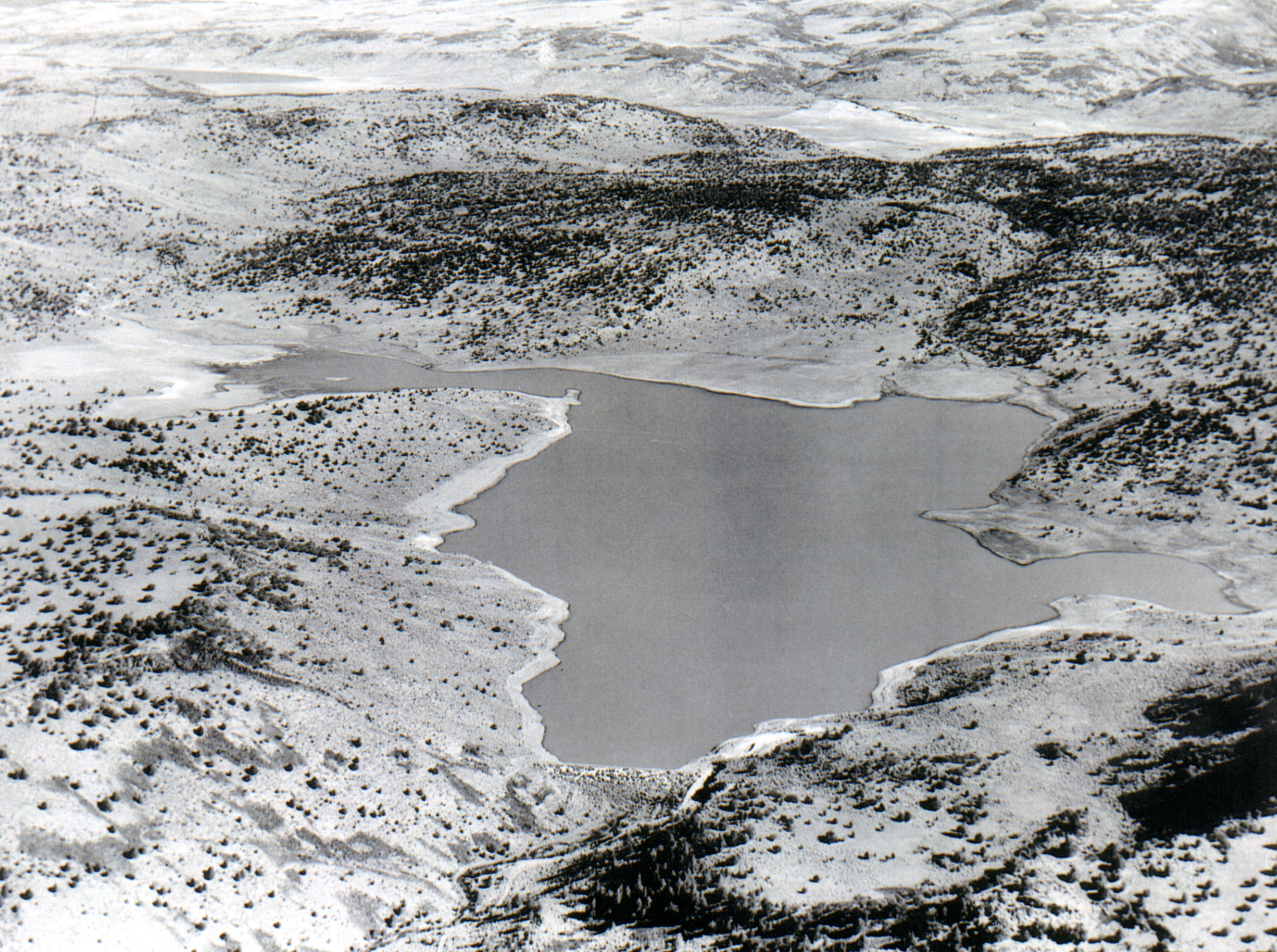
Dodge Reservoir located in the northeastern part of Lassen County and has an interesting tale in its development. It would take twenty years from its inception to its completion. It began in 1889, when Albert L. Shinn* formed the Union Land & Stock Company. Shinn proposed that the water from Red Rock Creek could provide irrigation for the entire eastern Madeline Plains. The reservoir was originally named Lake Lockett, for the Company’s Civil Engineer, H.M. Lockett. In the early 1890s, the Union Land & Stock Company started the irrigation project but eventually construction ceased because of lack of funds and other problems. On December 9, 1907, Henry C. Dodge acquired an option to buy the Union Land & Stock Company’s failed Red Rock irrigation system. In 1909, Dodge formed the Madeline Valley Land & Irrigation Company to undertake this enterprise. In the fall of 1909, the Company contracted with August and Alfred Anderson to build the system. In December 1909, Dodge Reservoir was completed. In 1912, Henry C. Dodge died during an altercation in Reno, Nevada. Dodge’s two sons, Carl and Dana, continued with the family enterprise on the eastern Madeline Plains. On January 14, 1949, Bernys M. Dodge, the agent for the Dodge Brothers, sold the Dodge Ranch and Reservoir to George and Jean Smith.
When the fishing is good there, its really good and worth the trek.
*Shinn was part of the Shinn Ranch family, became a well known attorney in the region and later Sacramento.
The ice caves was featured on the cover of Susanville’s weekly TV guide, August, 1965
Exploring lava beds, which there is plenty around Northeastern California, there is no telling what a person might find. The Brockman Flat Lava Beds on the west side of Eagle Lake is no exception.
In the early 1950s the Chico State Biological field study set up operations at Spaulding Tract, Eagle Lake. It was in the summer of 1951, that several students explored the lava beds to the south of Spauldings and made their initial discovery of a ice/lava cave. Continue reading Eagle Lake Ice Caves→
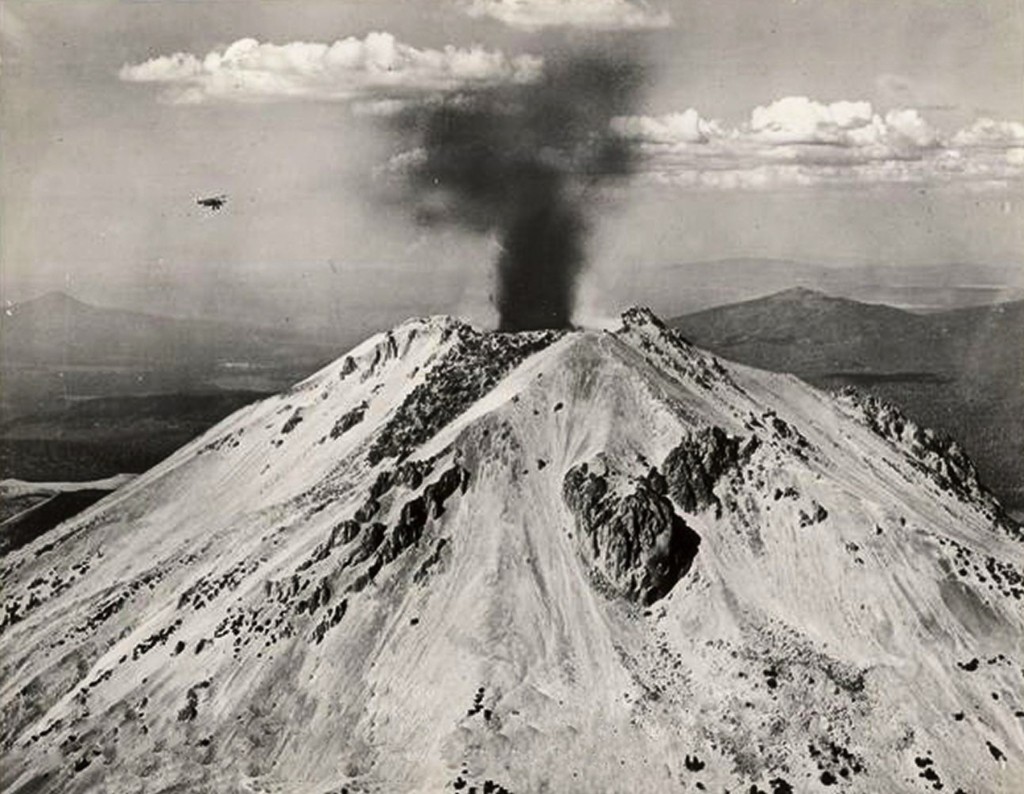
The 1931 Fake Eruption of Lassen Peak. Courtesy of the Plumas County Museum
Lassen Volcanic National Park was established in 1916, without much fanfare. Congress appropriated a bare bones budget and initially Yosemite National Park oversaw Lassen. In 1922, L.W. Collins became Lassen Park’s first superintendent. By the late 1920s, numerous improvements were made at Lassen, one of the biggest was the park highway completed in 1931.
To celebrate that event and others Collins decided to hold a park dedication extravaganza. On July 25, 1931 Lassen Volcanic National Park held its dedication. Park Superintendent L.W. Collins had big plans, which were widely criticized. To highlight the dedication Collins wanted to create a fake eruption to resemble the volcanic eruptions of 1914-15 that made national headlines and led to the creation of the park. Continue reading Lassen Peak’s Fake Eruption→
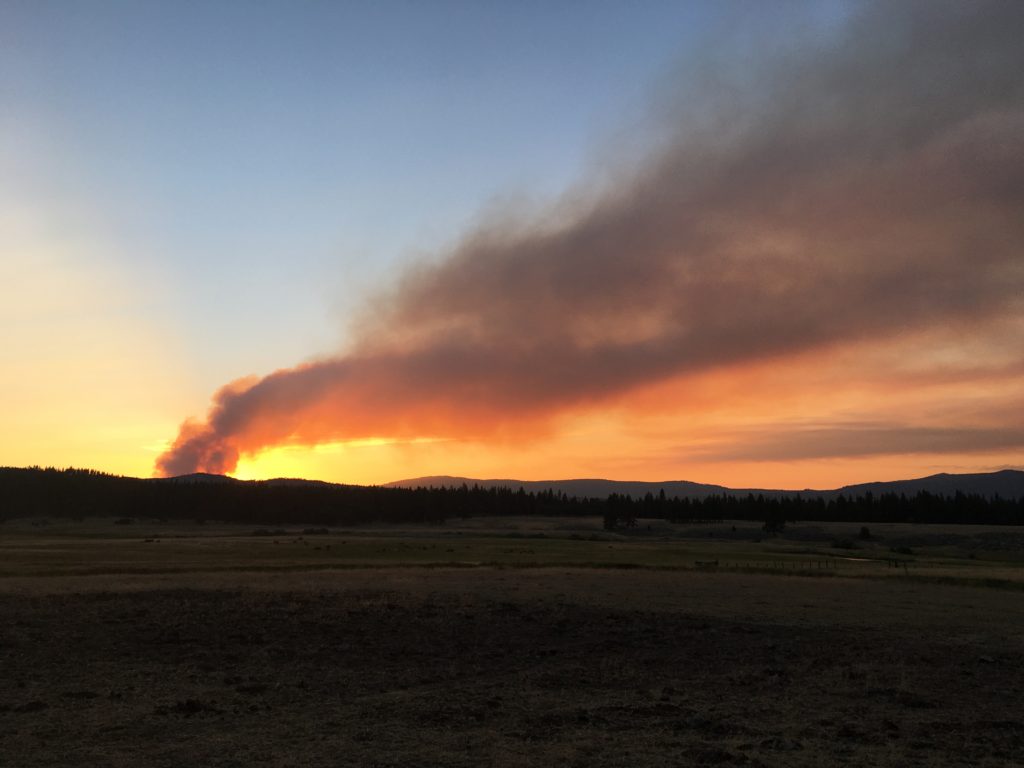
Hog Fire on the evening of July 18, 2020 as seen from the Hulsman Ranch—-Courtesy of Hulsman Ranch
It was a year ago, on Saturday afternoon July 18, 2020 a fire was reported in the vicinity of Hog Flat Reservoir. By Sunday the fire quickly spread over 5,000 acres. For the next few days the smoke was horrendous. The fire damaged a fire optic line and that it turn many lost cellphone and internet service. Once repaired, two days later the Hat Creek Transmission line was damaged, and the area went without power.
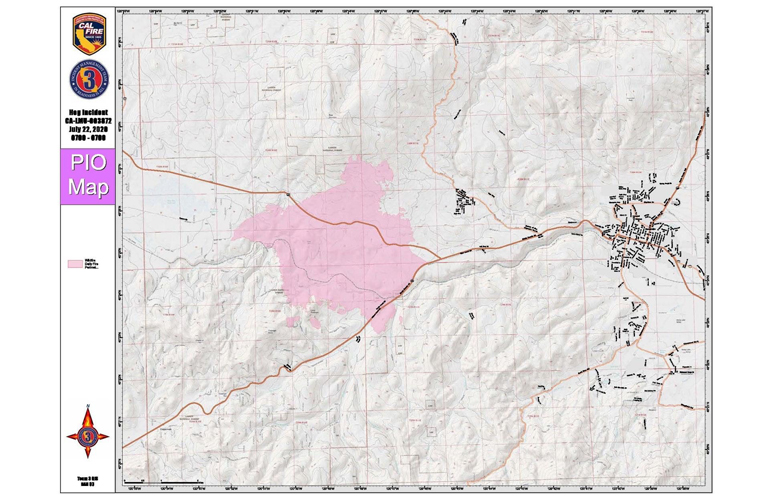
Initially, it appeared the fire was heading east towards the Lake Forest Estates subdivision, which mandatory evacuation was imposed. Conditions changed, the fire then headed south towards Devils Corral, causing more mandatory evacuations along the Highway 36 corridor. The fire ultimately jumped Highway 36, and prompting initial fears that it would head up Cheney Creek, but that did not happen.
Map of the Hog Fire.
By the end of the month, the fire was contained to 9,564 acres. Cause of the fire, never determined.
Spread the word, and encourage a friend to subscribe
Camp 38, Red River Lumber Company, 1922. It was located on the east shore of Lake Almanor. Courtesy of R.S. Pershing
While I have touched upon this topic before, I came across an interesting letter and how Red River was managing its forest. There are a number of institutions that search this site for all kinds of information, natural history being one. As public service, I bring this bit of information to the surface for future researchers.
On August 10, 1935, Clinton Walker wrote to his brother Archie, who resided in Minneapolis. Archie was stable figure in the Red River Lumber Company’s management, since the company had vast holdings there as well.
Clinton was involved in the initial timber acquisitions in California. In 1913, he resigned over a family dispute on the future operations. He came back into the fold during Red River’s financial crisis of the 1930s. Enough background and onwards to Clinton’s commentary.
”It is regrettable that the house of Walker has no forest man. Kenneth [Walker] covers the nearest, but he seems to be absorbed in the performance of log contracts; our annual fire and insect losses are staggering. A systematic annual light burning at the right season of the year would reduce an ultimately eliminate these sources of loss and the cost would be insignificant as compared to the loss and yearly fire hazard conditions in the forests. Burning by means of power burners on or dragged behind tractors could be done very cheaply and the prospective danger of injuring hollow hulled trees could be eliminated by following the burning with a few shovelers. For the entire period of the Walker family timber operation we have centered our attention exclusively to lumber operation. We are doing nothing but slash down that wonderful forest and letting the fire and beetles burn and eat us down year by year without raising a hand to afford protection from these annual staggering losses.”
On Thursday, June 24, 1926 the City of Susanville ordered a ban on fireworks due to the high fire danger. The city, as a precautionary measure, asked the Lassen County Board of Supervisors to burn the vegetation bordering the city limits.
The next morning around eleven a.m. all hell broke loose when a forest fire broke out about four miles south of Susanville. By noon the Roy Ramsey ranch house (known today as Les Allen) was in the fire’s path. Fortunately, the nearby Ramsey irrigation ditch was able to fend off the fire. Next in harms way was the Lassen County Hospital which narrowly escaped the fire’s fury.
In effort to keep the fire from reaching town, a back fire was set. It was not good. It did the opposite, starting a branch fire just below Hobo Camp, and in the worst case scenario, jumped the Susan River and headed towards Inspiration Point. A fire crew was stationed on Quarry Street, at the base of the bluff as attempt to keep the fire under control, though a flare up nearly threatened the Elks Lodge. On the other hand the timber on Inspiration Point bluff was not spared. By Monday the fire was finally suppressed. Amazingly, not a single structure was lost, though the Red River Lumber Company did loose considerable timber.
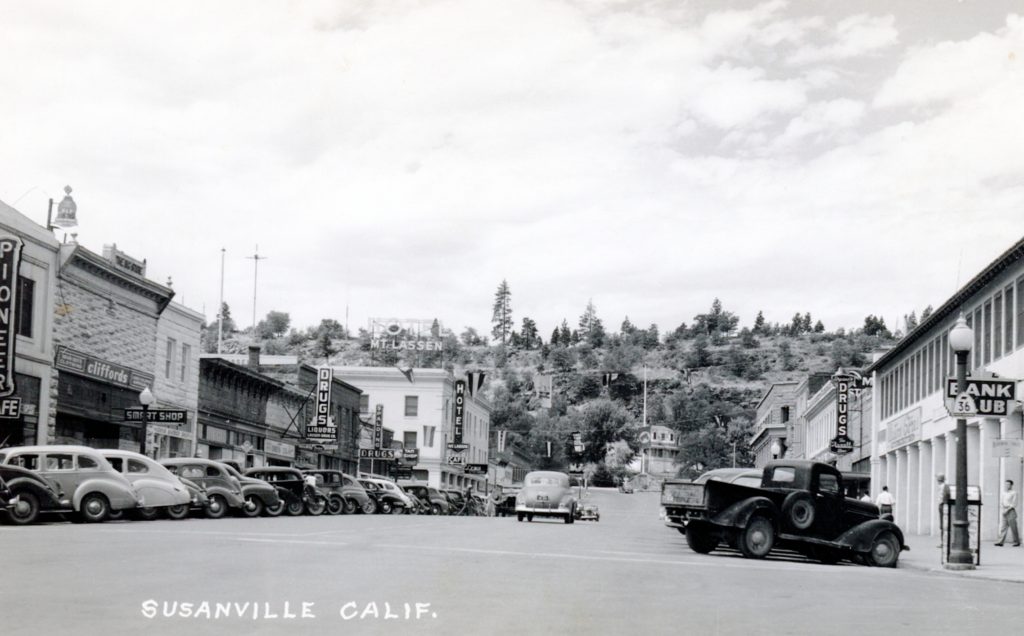
Main Street, Susanville, 1945.
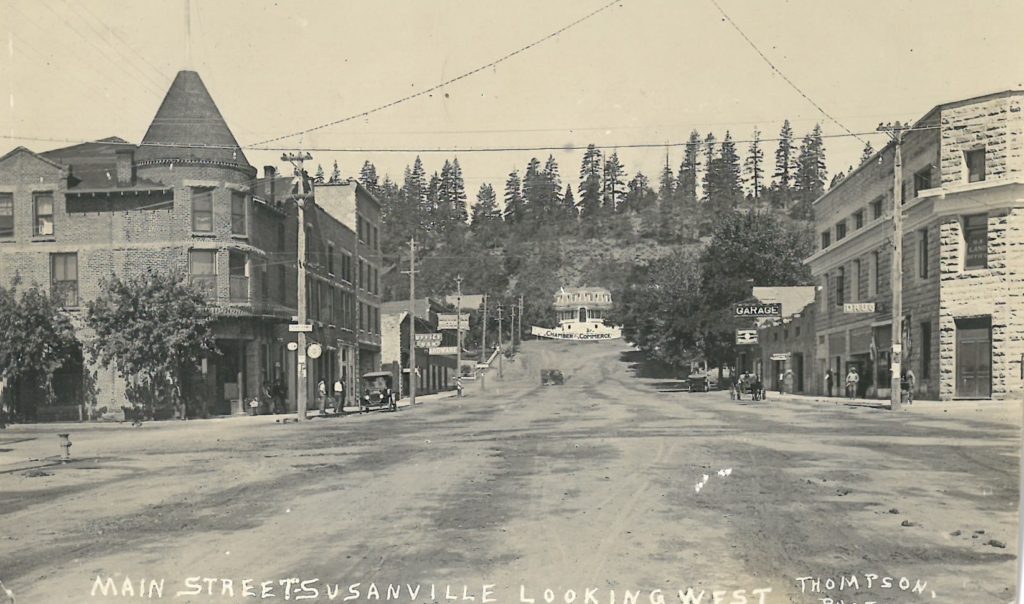
One may ponder why I used these two photographs for illustration. If you examine them, the 1915 shows the bluff forested, the latter thirty years later, with pine trees missing due to the aftermath of the fire.
For those not familiar with Drakesbad it is a “historic guest ranch” located in the upper end of Warner Valley in Lassen Volcanic National Park. More about this in the months to come.
Drakesbad contains a number of hydro-thermal features such as Boiling Springs Lake and Devils Kitchen. It was the hot springs at Drakesbad proper that garnered a lot of attention. The first person to locate there was Thomas Malgin, a sheepman. In 1875 Malgin constructed a primitive bath house utilizing the hot springs. When time permitted he would be a tour guide for visitors to take them to points of interest, including Cinder Cone.
In 1880, Malgin moved on and abandoned the place. In 1885, E.R. Drake moved in. Drake had been in the region since the 1850s. He was a jack-of-trades—miner, guide, fur trapper, saloon keeper, etc.
Drake was originally a squatter. In 1887, Quincy resident, F.B. Whiting purchased Malgin’s 80 acres at a Plumas County delinquent tax sale for $8.11. In 1888, Drake paid Whiting $50 for the property. In time, Drake would file for 320 acres of government land patents surrounding his property, eventually owning 400 acres.
In 1890, the industrious Drake transformed his modest log cabin into a small lodge, that would be enjoyed by numerous visitors decades to come. In time, his place simply became known as Drakes Springs.
There were two drawbacks that hampered the resort’s potential, though it was not an issue for Drake. These were poor road conditions and a short season. For instance the trip from Susanville to Drakes Springs was a two-day journey. The other is that the location experiences heavy snowfall. Thus, the operation was basically what we would refer to today as one from Memorial Day to Labor Day.