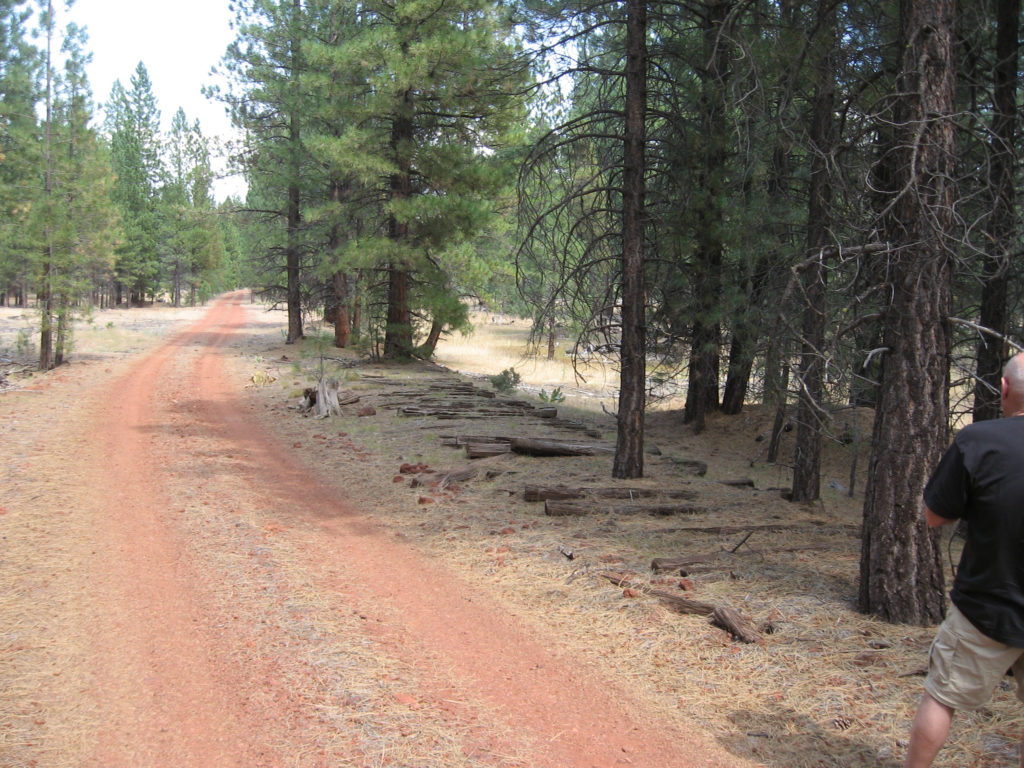
It was one of those days, that I had a lapse of better judgment should have, but did not take a picture of Shay’s Hole. However, about a mile down the road, we stopped to take pictures of these old railroad ties still in place. August 18, 2016.
Back in August on one of several excursions, it was the intent to check out Camp Harvey east of Poison Lake. Well, we did not quite make it there and found ourselves first traveling through Pine Creek Valley and onwards to Champs Flat. At Champs it was decided to follow a particular road, to see whether it would take us north towards Camp Harvey.
Anyhow, following an old railroad grade of the Fruit Growers Supply Company we came upon Shay’s Hole that was used to supply water for the Shay locomotives, that were an integral part of railroad logging.
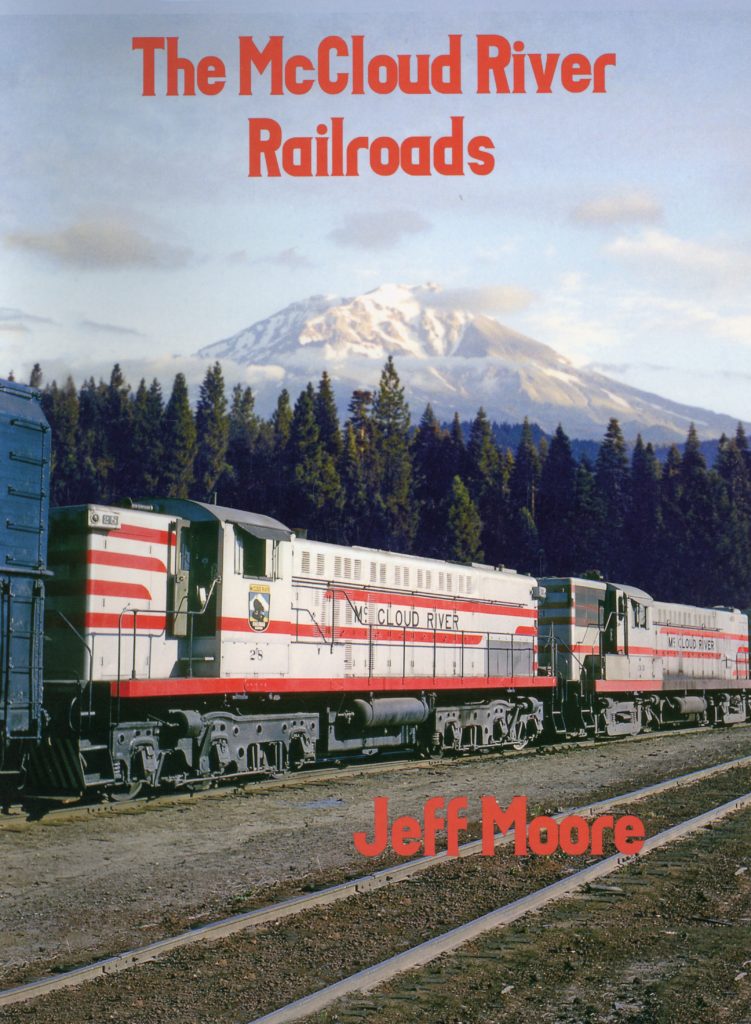
Signature Press has recently released Jeff Moore’s book McCloud River Railroads. All, I can say is, “Wow.” It is an impressive work about logging and railroads, including the little known Pit River Railroad. Of course, the Red River Lumber Company and the Fruit Growers Supply Company influenced operations at McCloud.
The deluxe 368 page hardcover book is available through your favorite local bookstore. Now, excuse me, since I am spending a portion of the Thanksgiving weekend happily reading Moore’s work which he spent a decade to produce. Thank you Jeff for your hard work in preserving a portion of Northern California’s heritage.
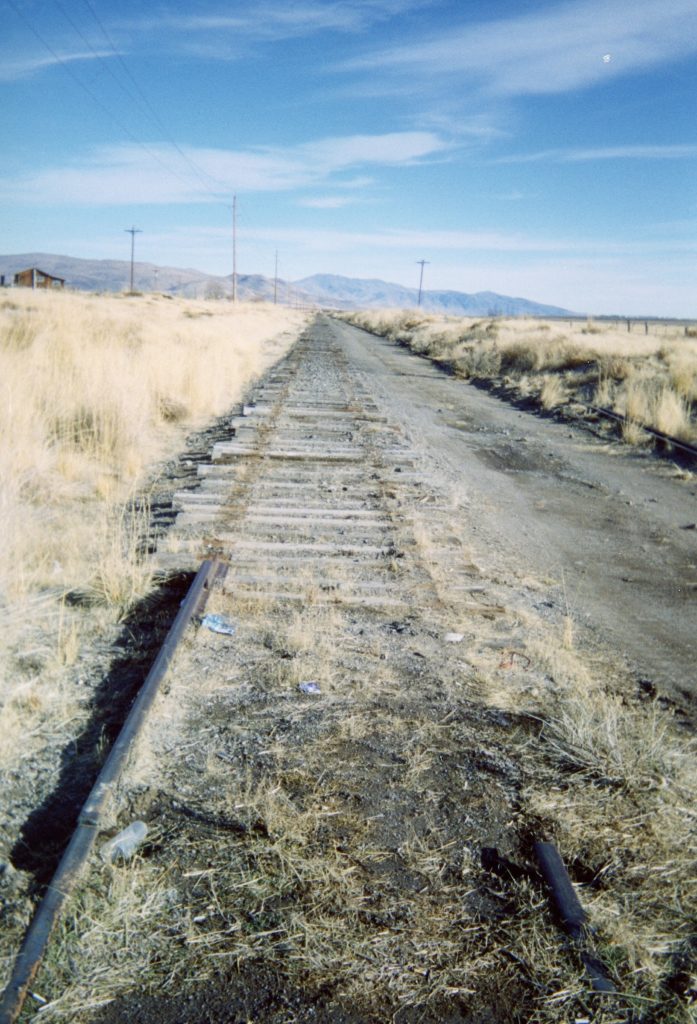
Looking east near the Leavitt Station, November 19, 2006
This month marks ten years since the last segment rails of the Fernley & Lassen Railroad, between Susanville and Wendel, were removed. The historic event went largely unnoticed. Yet, it was the railroad that had one of the most significant impacts on Lassen County. It was this particular line that created the communities of Litchfield and Westwood. Of course, it brought about the development of the timber industry. Two years prior to this event, the last lumber mill, Sierra Pacific Industries at Susanville shut down for good.
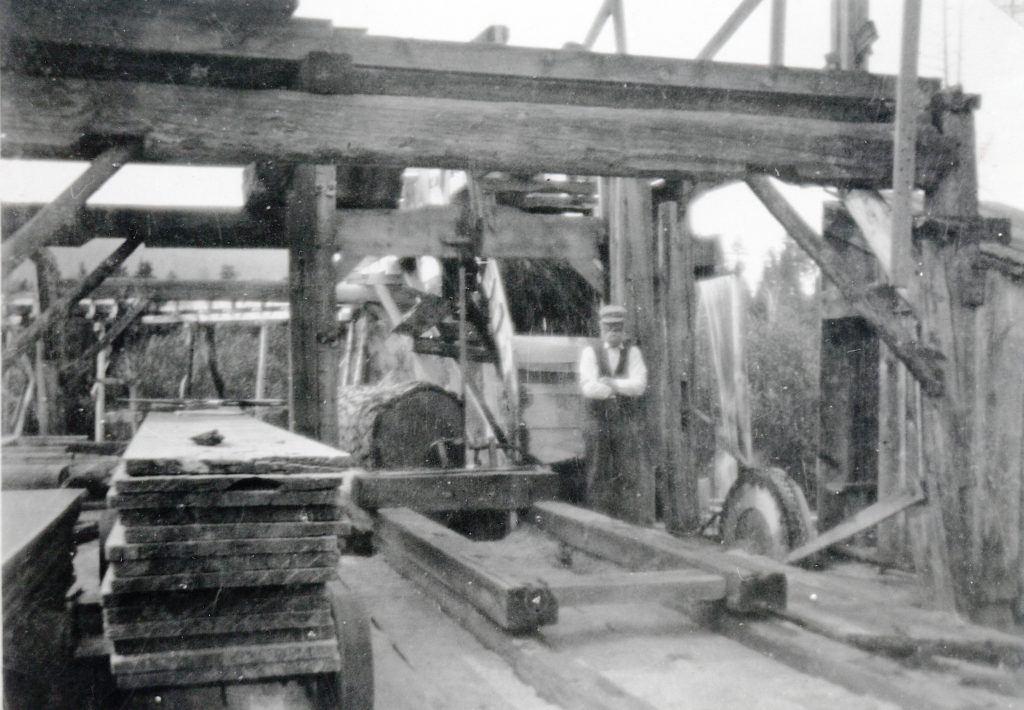
In 1872, Adam Jakobs saw the potential for the lumber market and built a sawmill along Willow Creek, two miles upstream from the Neuhaus Ranch. In 1878, Jakobs sold the mill to P.D. Hurlbut and Jakobs returned to his ranching activities in Willow Creek. Continue reading Hurlbut Sawmill→
Ox teams at Amedee, 1907. Courtesy of Lola L. Tanner
Oxen, it should be duly noted, played a major role in the westward expansion of the United States. Many may have heard or read accounts of people crossing the plains and using ox teams. While oxen are not known for their speed, they can haul heavy loads of freight in difficult terrain. Locally, during the late 1800s oxen were primarily used in logging.
The last major use of ox teams in the Honey Lake Valley occurred in 1907, when the Lassen Mill & Lumber Company had major contracts for lumber for Nevada mines. Ox teams were used to haul the lumber from the sawmills near Janesville to the boat dock on Honey Lake near Buntingville. They were also used at Amedee from the boat dock to the NCO railroad station and shipped to Nevada. Thede French, Bill Wilson and Charles Randrup handled the ox teams. The oxen were needed because the ground near the boat docks was too soft for horses.
A week ago, I challenged reader’s minds with the latest Where are we? Only one person, Jim Chapman came up with the correct answer. However, it should be noted Jim’s first answer was a toss up between Hog or McCoy Flat.
This small man-made lake is located approximately two miles east of the Eagle Lake Summit. In the late 1940s, the Paul Bunyan Lumber Company began logging operations in the region including Gallatin Peak and Round Valley. One of the company’s employees, Jim Coleman constructed a small dam on Piute Creek, near its headwaters. The small lake supplied the water used to wet down the logging roads, controlling the dust. It should be noted some maps have it spelled as Colman Lake.
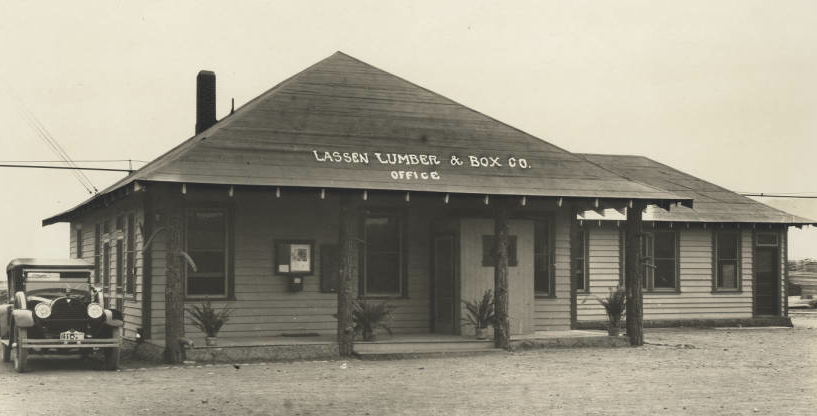
The Lassen Lumber & Box Company’s office on Alexander Avenue, Susanville, 1923. Courtesy of Ivajean Wheeler
The Lassen Lumber & Box Company (Lassen Lumber) was the smallest of the big three lumber companies, the other two being Fruit Growers Supply Company and Red River Lumber Company. It was also different than the other two, as their source of supply for timber was the Lassen National Forest.
This time the citizens of Susanville were eager to court this new company, having lost out to the Red River Lumber Company and the smaller Western Timber Treating Company. As an incentive they offered the company 40 acres, with water rights and $8,000 cash. They accepted. Construction began on the sawmill and box factory in the spring of 1918 and on July 27, 1918 the first logs arrived at the mill.
For Susanville the payoff was big, during the summer season Lassen Lumber employed upwards to 450 men with a monthly payroll of $65,000. The mill would operate until 1953 when it was closed. More about the history of the company will appear in future posts.
Western Pacific’s Mohallo Siding, south of Lake Almanor, July 18, 1931. Courtesy of Plumas County Museum
Lassen County was rather fortunate that it was not hit as hard as other places throughout the nation during the great depression of the 1930s. Yes, times were tough, but then again there were no Hoovervilles either. While the majority of the lumber mills on the West Coast closed, Lassen’s three mills-Fruit Growers Supply Company, Lassen Lumber & Box Company and the Red River Lumber Company remained open, though operations were curtailed. Those company executives understood the value of their employees. Sooner or later the economy would rebound, and they did the best they could under the circumstances to retain their skilled employees, rather than having to start all over again to re-train new ones at a critical time.
In Big Valley it was boom times. They were at the center of one of the last major railroad construction projects in the country. This was the Northern California Extension wherein the the Western Pacific extended its line north from Keddie to Bieber, to meet with the Great Northern who built their line south from Klamath Falls, Oregon. This opened a whole new rail corridor completed in 1931. In the future, I will do a piece on the Golden Spike Ceremony at Bieber.
This is one of the few times during the year in which I ask for you to consider supporting this site either by donation or subscription. I am very grateful for those who do, but the reality is they makes up less than .005% of the readership. I am flattered that readership continues to grow, now with an average of 10,000 a month. So taking a popular saying of the 1930s, “Buddy can you spare a dime?” For as a little as five dollars a month, you can subscribe and support this endeavor to not only assist to preserve the region’s history, but equally important to make it available. It is so easy, click here for the details. Don’t want to do an internet transaction, information is provided do so by mail, etc. Thank you.
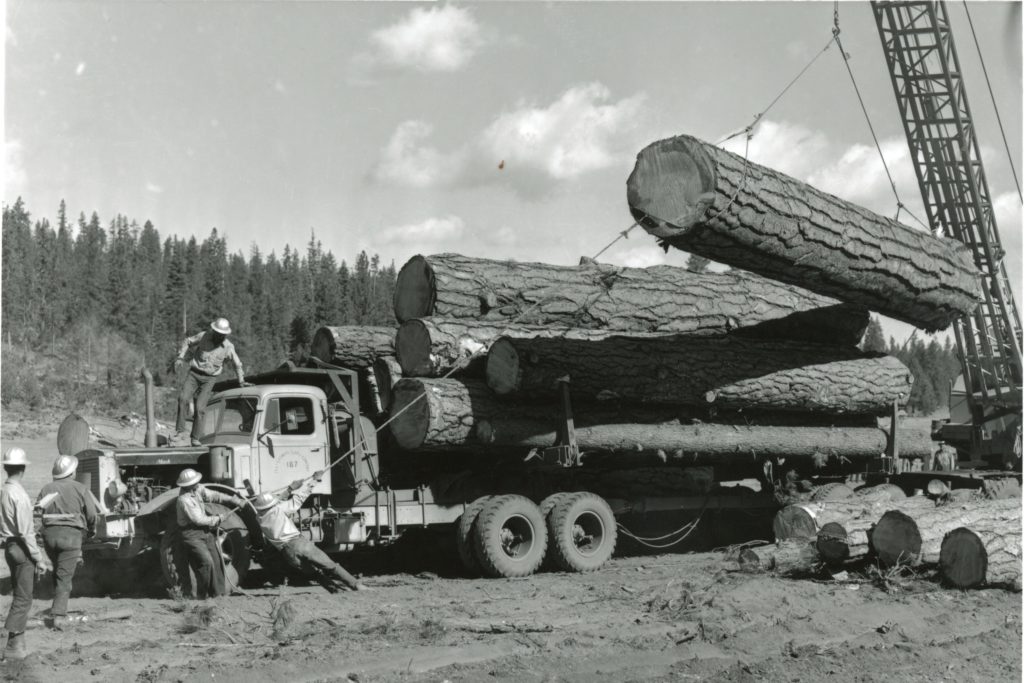
Log landing at Coyote Hole, August 21, 1953. Courtesy of Hank Martinez
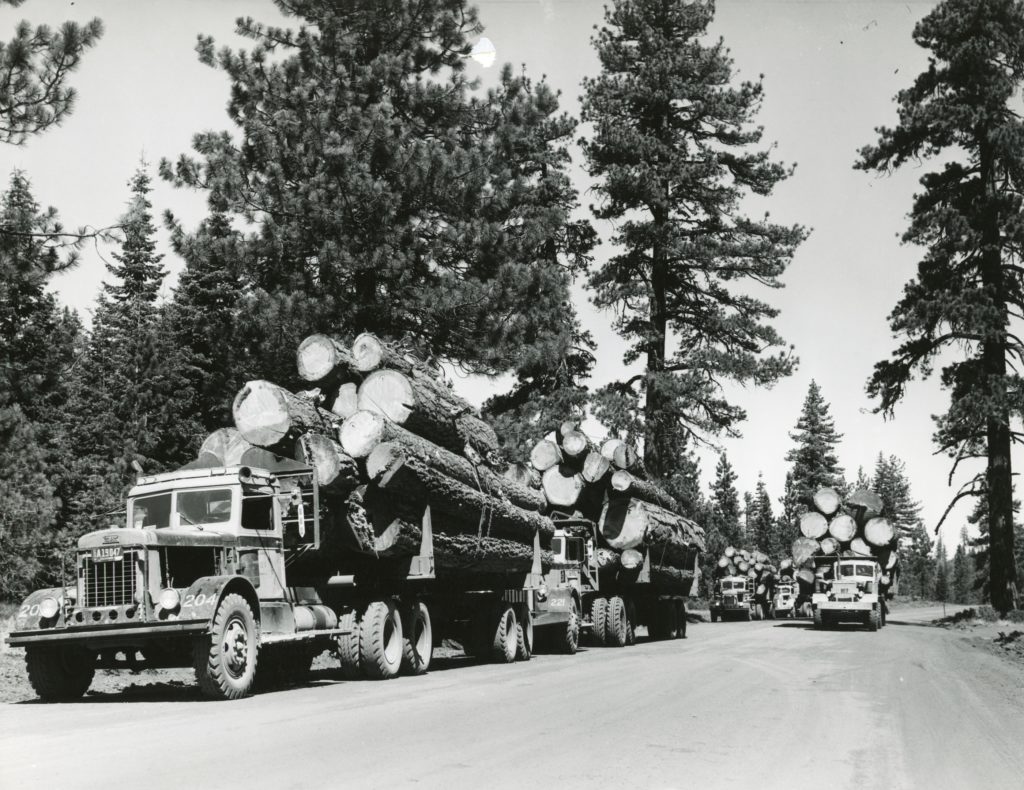
In 1940, Fruit Growers purchased its first fleet of logging trucks for the Lassen Operation (Susanville). Initially, the trucks hauled logs where it was impractical to construct a railroad logging spur. With improvements with trucks and a system of private logging roads, it was just a matter of time, when the logging trucks would make railroad logging obsolete. In 1952, the event happened, and saw the last year of railroad logging of Fruit Growers and Lassen County.
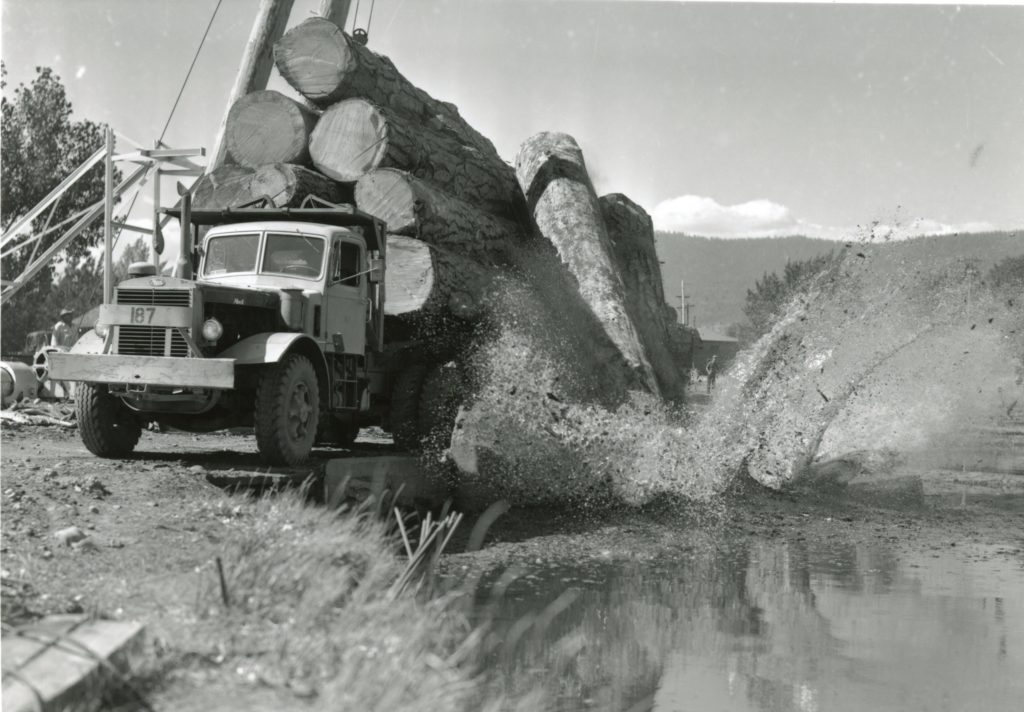
Lunch time at Dow Butte, August 21, 1953. Courtesy of Hank MartinezThe record load of 26,860 board feet being unloaded at the Fruit Growers millpond, Susanville, August 21, 1953. Courtesy of Hank Martinez