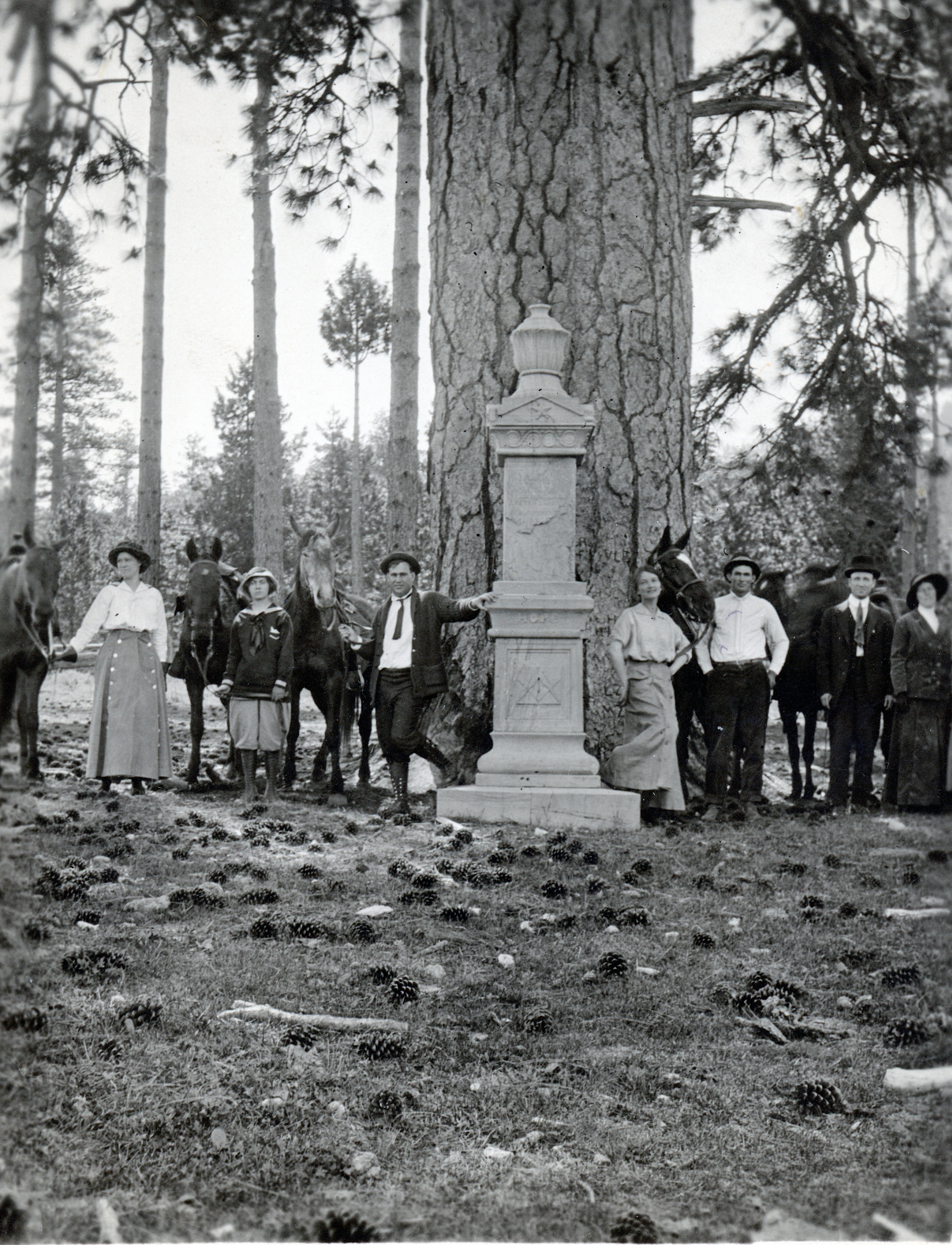
Bunnell’s Resort, Big Meadows. Courtesy of Philip S. Hall
While my Red River series covers a tremendous amount of material on the Red River Lumber Company, there were some topics were not addressed. In 1938, the topic of controlled burns was being discussed, as the company had done it in its earliest years until Clinton Walker’s departure in 1913. Below is an excerpt of a 1938 memo Clinton wrote to the Board and the experience of a control burn at Lake Almanor. Continue reading Control Burns→
In 1878, Edward Weed took over as editor and publisher of the Lassen Advocate. He brought a lot of life to the newspaper. From time to time he would make excursions and write about those experiences. This is one of them. The reader will note the sawmill on Diamond Mountain. At any given time there were two to as many four mills along the mountain range between Gold Run and Janesville. Continue reading Richmond, 1878→
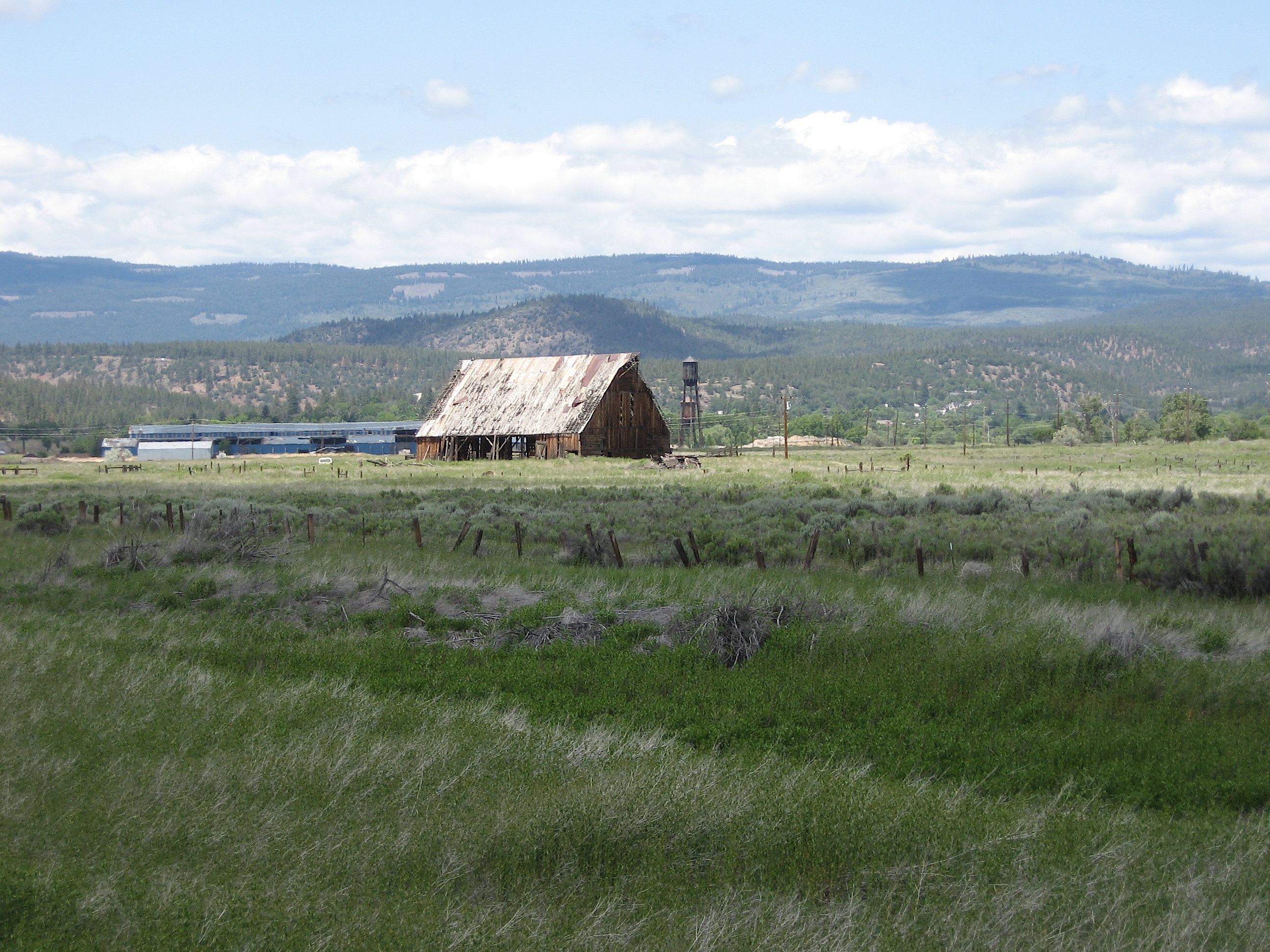
The barn was destroyed by fire the night of June 16, 2015. A transient caused the fire from a cigarette, thought to be extinguished, but that was not the case.
Routinely, when I am out and about someone will ask me a question about this or that. In many instances, I am able to provide an answer. Every now and then I get stumped with a doozey. In this particular instant, it was the old barn at the east end of Susanville, just past McDonald’s.
The barn sits like a lone sentinal these days. There used to be a small white painted caretaker’s house there, occupied for a number of years by Grant and Lena Trumbull. One of the oddities about the barn is it is far removed from any ranch. After extensive sleuthing it was built in 1920/21 for the Fruit Growers Supply Company, who were in the midst of constructing their new sawmill/box factory nearby. Continue reading That Old Barn Update→
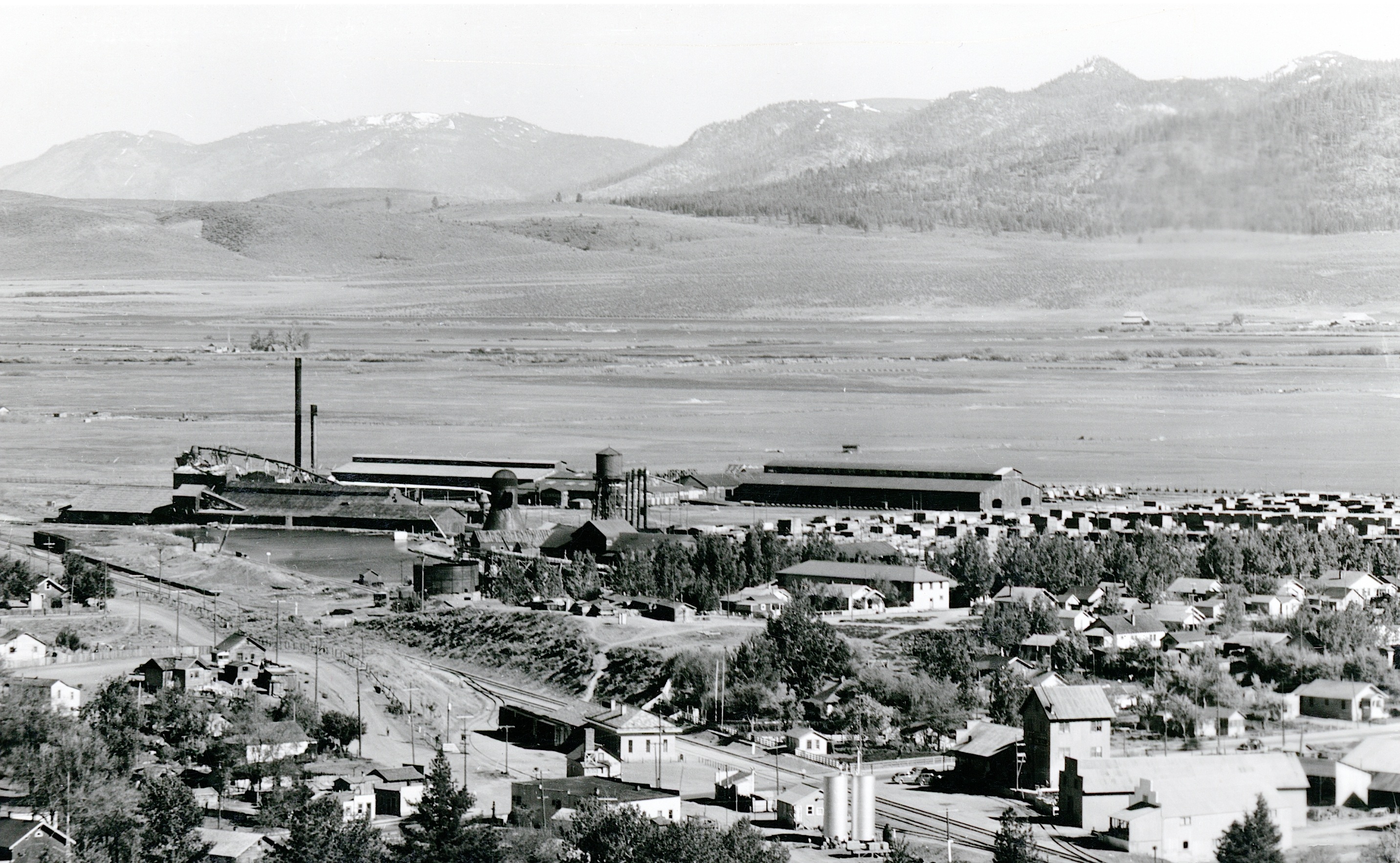
While I have wrote about Fruit Growers Supply Company and Red River Lumber Company and their operations, its time to include another major lumber mill, Lassen Lumber & Box Company Continue reading Lassen Lumber & Box Company→
It many aspects it is one of Red River Lumber Company’s most unusual and significant logging camps. For the most part, Red River camps were given numbers and not names. It was by far the largest and many of its building were a permanent nature versus the portable. Continue reading Camp Bunyan→
The Fernley & Lassen Railroad under construction, February 1914.
On January 29, 1912 a contract was signed in San Francisco that would forever change Lassen County. On that historic date, T.B. Walker signed an agreement with the Southern Pacific for the construction of the Fernley & Lassen Railroad.
T.B. Walker with his need for a railroad transformed Lassen County in countless ways. It brought an era prosperity that has seen before or since. The huge influx of population provided a huge market for the local farmers and ranchers. Take for instance, there was not a single dairy, by 1920 there fifteen.
Of course, if opened the door to the timber industry, and transformed Susanville in a major lumber manufacturing center. What was thought with sustained yield and other forestry practices it was believed that it would remain the dominant industry for well over a hundred years if not more. Within fifty years, the writing was on the wall, and Lassen County’s citizens sought a new industry—prisons.
In future posts we will explore those exciting times, as well as T.B. Walker.
The winter of 1923-24, was one of the driest on record in California. That summer another record would be broken–forest fires. It was June, 1924, when the Red River Lumber Company having been in operation for over a decade experienced its first major forest fire. The fire broke out at Chester Flats between Camps 34 and 38 and burned a narrow strip of land, eight miles in length. Red River’s loss was minimal as the fire burned recently logged over land and the only significant damage was 500 cords of wood burned along 1,000 feet of railroad track. Red River considered its biggest loss was to the men fighting the fire which cost the company a $1,000 a day in wages, and it took a week to contain the fire. Continue reading Westwood’s Fire Train→
In 1865, John C. Wright located on the abandoned homestead of Thomas Pearson, who had perished in a snowstorm on New Years Day 1865. Wright as known locally was Coyote Jack, and hence the name of Jacks Valley. In 1869, he left for parts unknown. By 1880, this had become a crossroads for travelers as five different roads converged in the valley. Frank Fluery took advantage of the opportunity provided by this unique junction and established a saloon. In 1884, as one of Fluery’s patrons noted: “. . . for ten cents he will give you enough to make you happy to cause you to forget all your trials, troubles and tribulations for a time.” In 1889, Fluery sold to A. J. Conklin who operated the saloon for a number of years. In 1907, Conklin ventured into the lumber business and built a sawmill that had a daily capacity of 15,000 board feet. In 1920, Conklin sold the sawmill to William Johnson. Johnson operated the mill for three years and then sold to the Red River Lumber Company who immediately closed it. In August 1926, a forest fire ravaged the region that encompassed some 20,000 acres. The following year, the Red River Lumber Company established logging Camp 70 to salvage the burnt timber. This was one of that Company’s earliest truck logging camps. While those enterprises have long since faded into oblivion, a cement water trough remains and is still a recognized feature to travelers. In 1913, Thomas Hill and the County of Lassen constructed the water trough. For early motorists, it was a wonderful blessing, a source of water for overheated automobiles making the trip up Antelope Grade. For the next 80 years it was popular stop to drink the water and take a break, though it appears the water line has been disconnected. The trough is located ten miles north of Susanville on Highway 139. To learn more about other places throughout Lassen County see the Lassen County Almanac.
In the spring of 1857, Ephraim Roop, Isaac Roop, and William McNaull constructed the first sawmill in Lassen County, along the Susan River at a place that would later become known as Hobo Camp. In November 1860, Perry Craig fell out of a boat at the millpond and drowned. Craig was buried on top of the hillside near the river, and from that episode the Susanville Cemetery was created. On August 18, 1862, Roop & Company sold the mill to Luther Spencer for $200. Spencer operated the mill until it was destroyed by fire in the spring of 1868.
Red River operated numerous logging camps from 1913 through 1944 when it sold to Fruit Growers. The camps were assigned numbers, though in no particular order. The majority of the camps were short lived and only had a span of one to maybe three years. One of the more interesting camps was Camp 33, but referred to as Town Camp, as it was located less than a mile west of Westwood. What made it unique was that Red River’s company town of Westwood would experience from time to time a housing shortage for its employees. On occasion, this camp was used to house mill workers instead of loggers.