Tag Archives: Logging

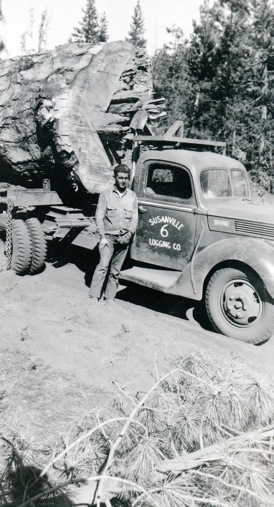
And So It Goes–Susanville Logging Company

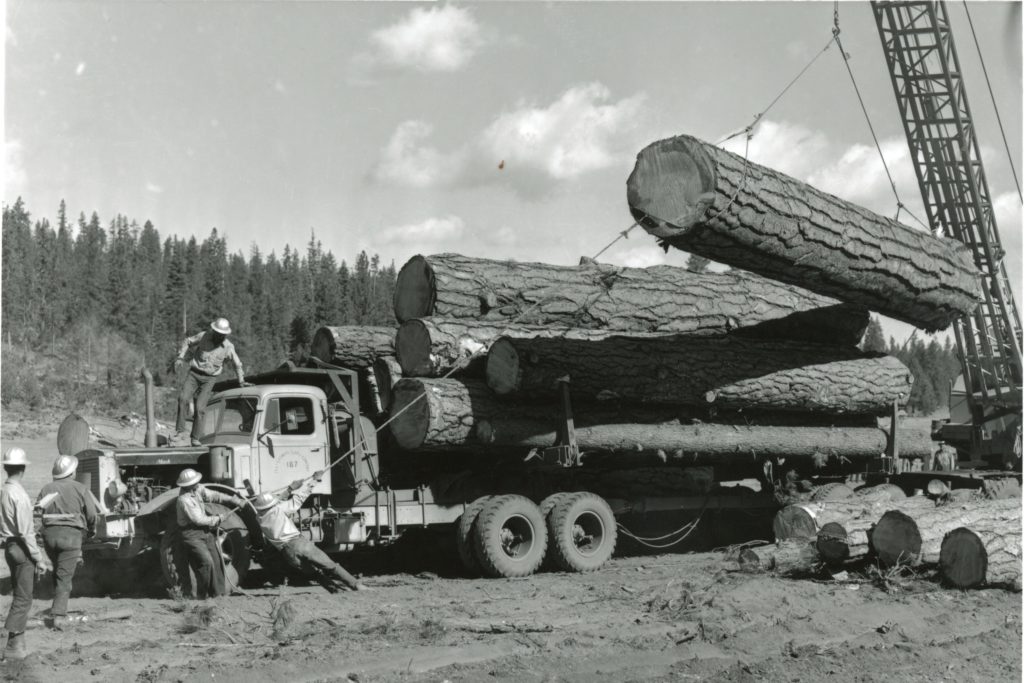
Joe “Tunney” Zunino posing with his one log load- Margaret Purdy

Several people contacted me in November about the above photograph.  I had an initially published on March 28, 2019. Lo and behold it was recently posted on social media. It should be noted, that I do not have a Facebook account, etc. There are a lot people who help themselves somewhat generously I might add, and repost them either in newsletters, social media and who knows wherever else.

In this instance, I was a little peeved. The person who did the “lifting” of said picture and reposted it, identified the man in the picture as my father!  Far from it. My Dad was connected with the Susanville Logging Company. Before Susanville, it was Purdy Bros LoggingIn 1958, Susanville Logging re-organized and the new owners consisted of Dale Soule, Paul Langslet, James Purdy and Leroy Purdy.  The company operated a sawmill on Johnstonville Road and in 1993 when Jeld-Wen Corporation owned it, it was closed down. End of story.

Tim
 

World I & II Changed Logging

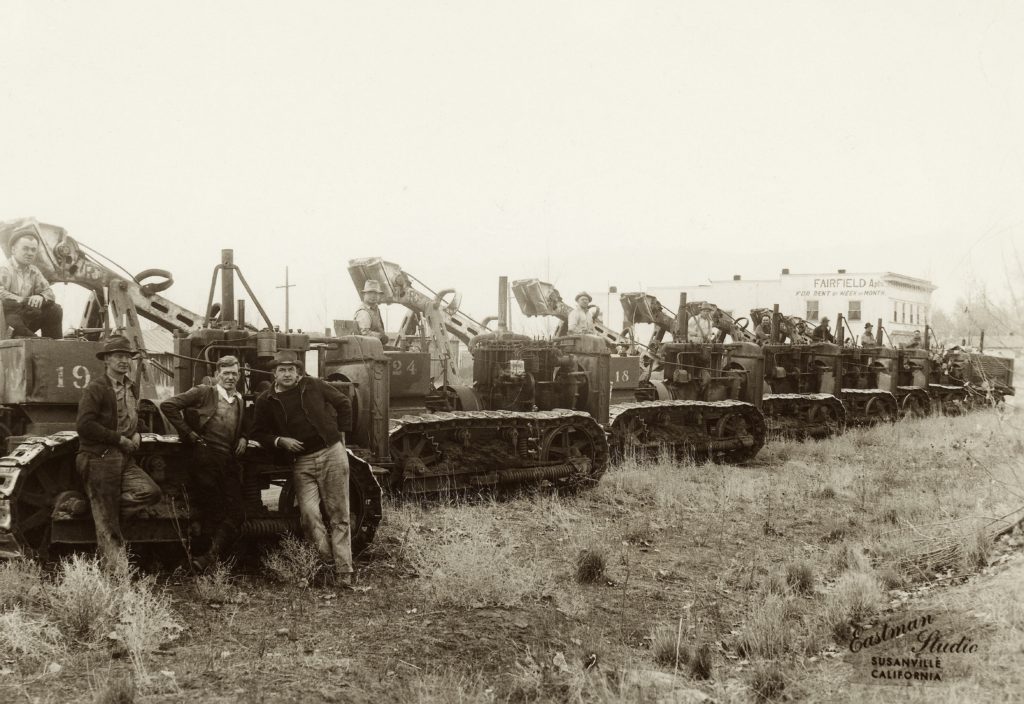
Fruit Growers Supply Company show casing their latest Caterpillar tractors, with the Fairfield Apartments in the backround.

Each of these wars had major impacts, not just isolated to the timber industry.

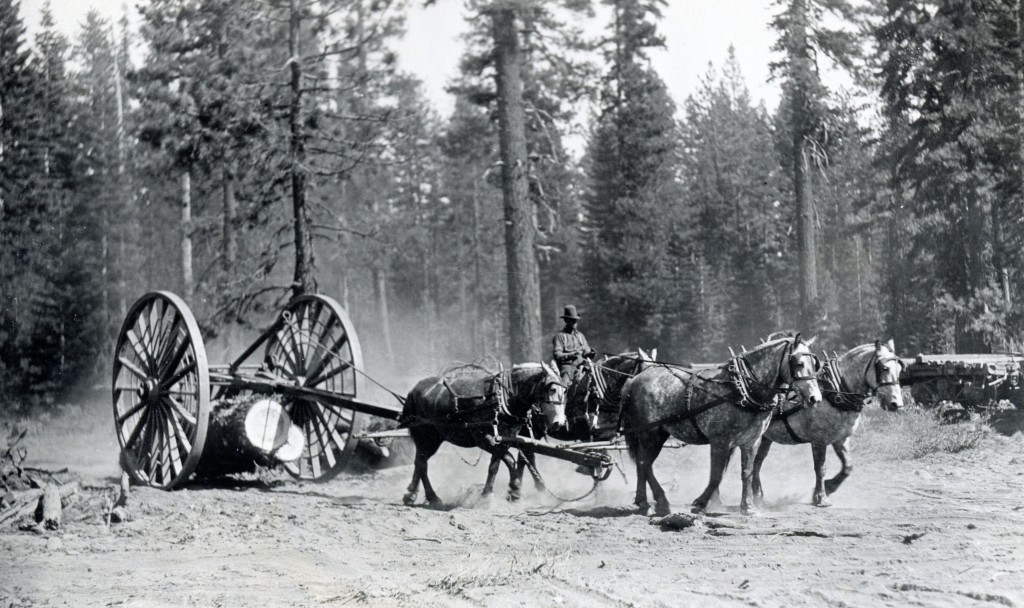
The development of tractors in World War I was significant. The modifications of the Holt Best Tractors made way for Caterpillar to incorporate these innovations. Within a decade after World War I, tractors basically had replaced horses using Big Wheels.

horse logging
Horse logging with big wheels, at Fruit Growers Camp B, north of McCoy Flat Reservoir.

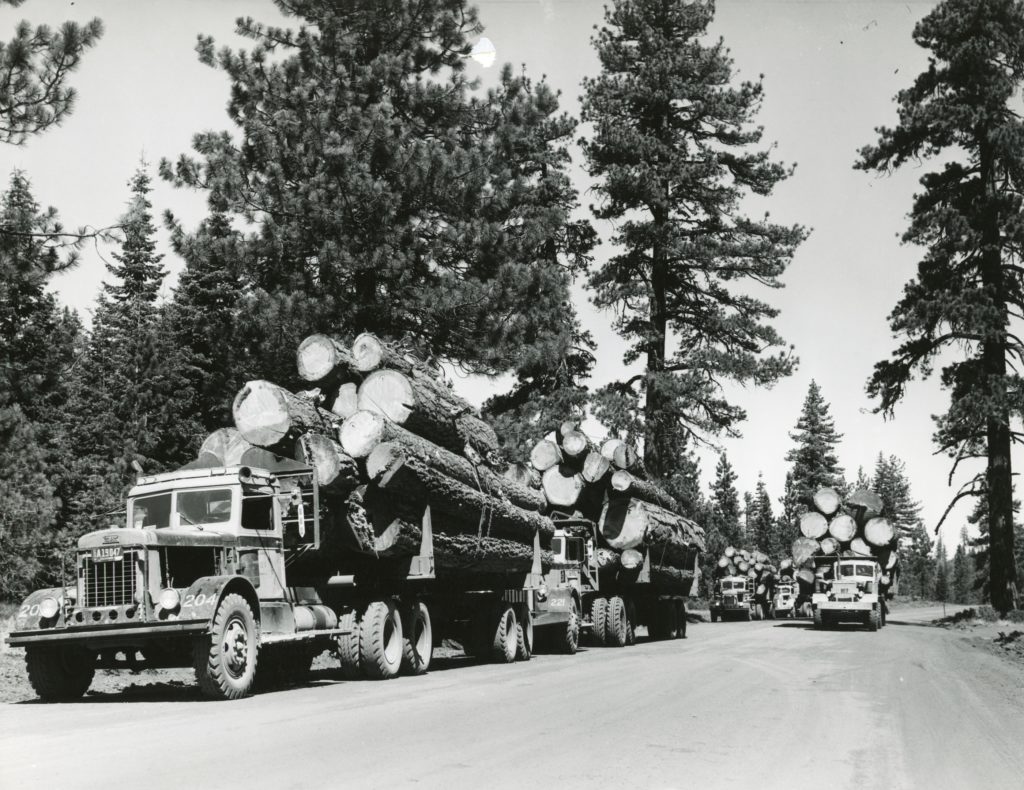
In the 1930s witnessed the introduction of truck logging, albeit on a small scale. This was mainly done by small independent contractors, knowns as gyppos. The technology that made improvements for tractors, was now being done in World War II with large trucks to transport to move goods and logs was one of those commodities. .

Lunch time at Dow Butte, August 21, 1953. Courtesy of Hank Martinez

In the end, eventually, truck logging became more efficient than a railroad logging train. It was a slow integration with reload stations. More about that tomorrow, from a blast from the past column.

Subscribe


Lassen County Fair Logging Competitions of the Past

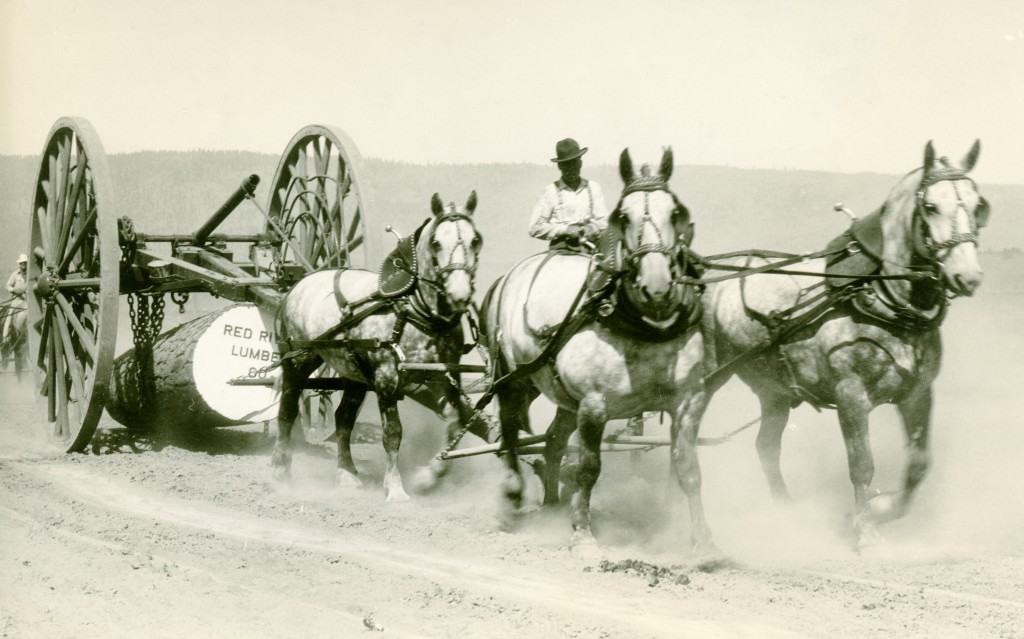
Red River Lumber Company’s entry

When the Lassen County Fair was revived, in 1922, it would go through  and still does evolves. Take for instance, logging competitions for decades it was a main stay attraction, but not any more.

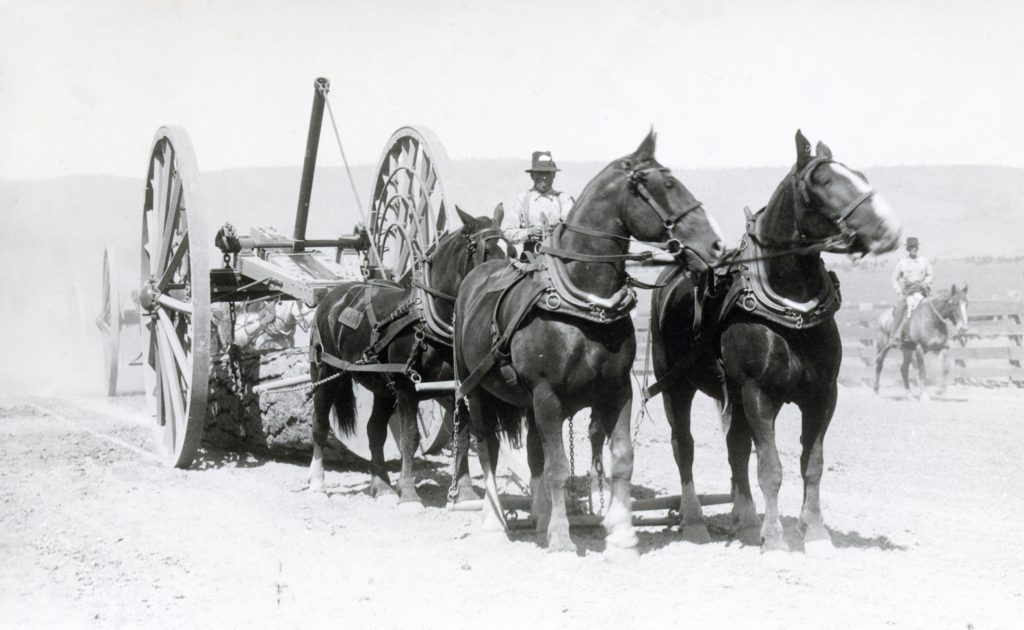
In 1923, the first logging exhibition at the Lassen County Fair was held. After all there were three large sawmill operations—Fruit Growers Supply Company, Lassen Lumber & Box Company and Red River Lumber Company. It was certainly a noteworthy event. For many attendees it was the first time they were able to witness the current logging methods of the “big wheels.”  A competition was held between the big three companies. The Fruit Growers Supply Company won top honors in this category. It should be noted by 1927, the lumber companies began phasing out the “big wheels” for the motorized Caterpillar traction engines.

Lassen Lumber & Box Company’s entry.

Tim

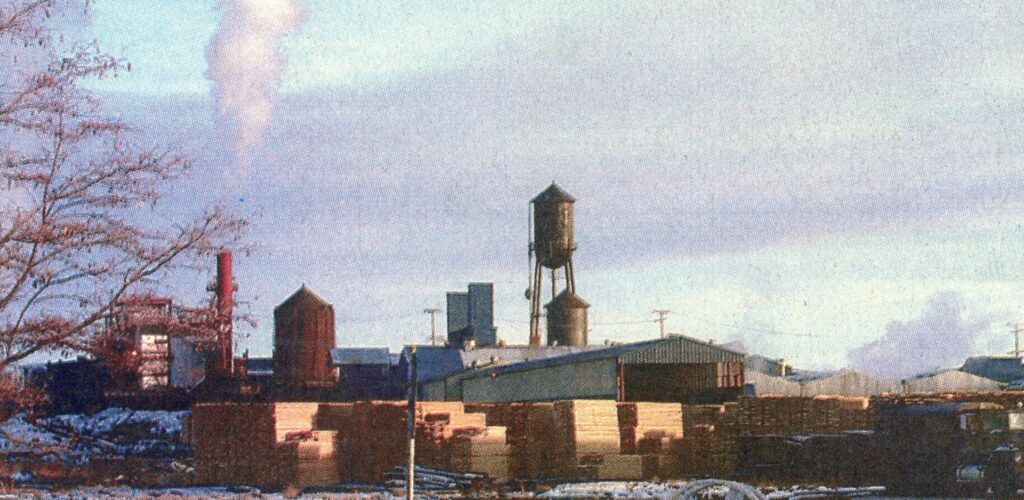
Twenty Years Ago—The Last Mill Closure

Sierra Pacific Mill—Lassen County Times, December 18, 2003.

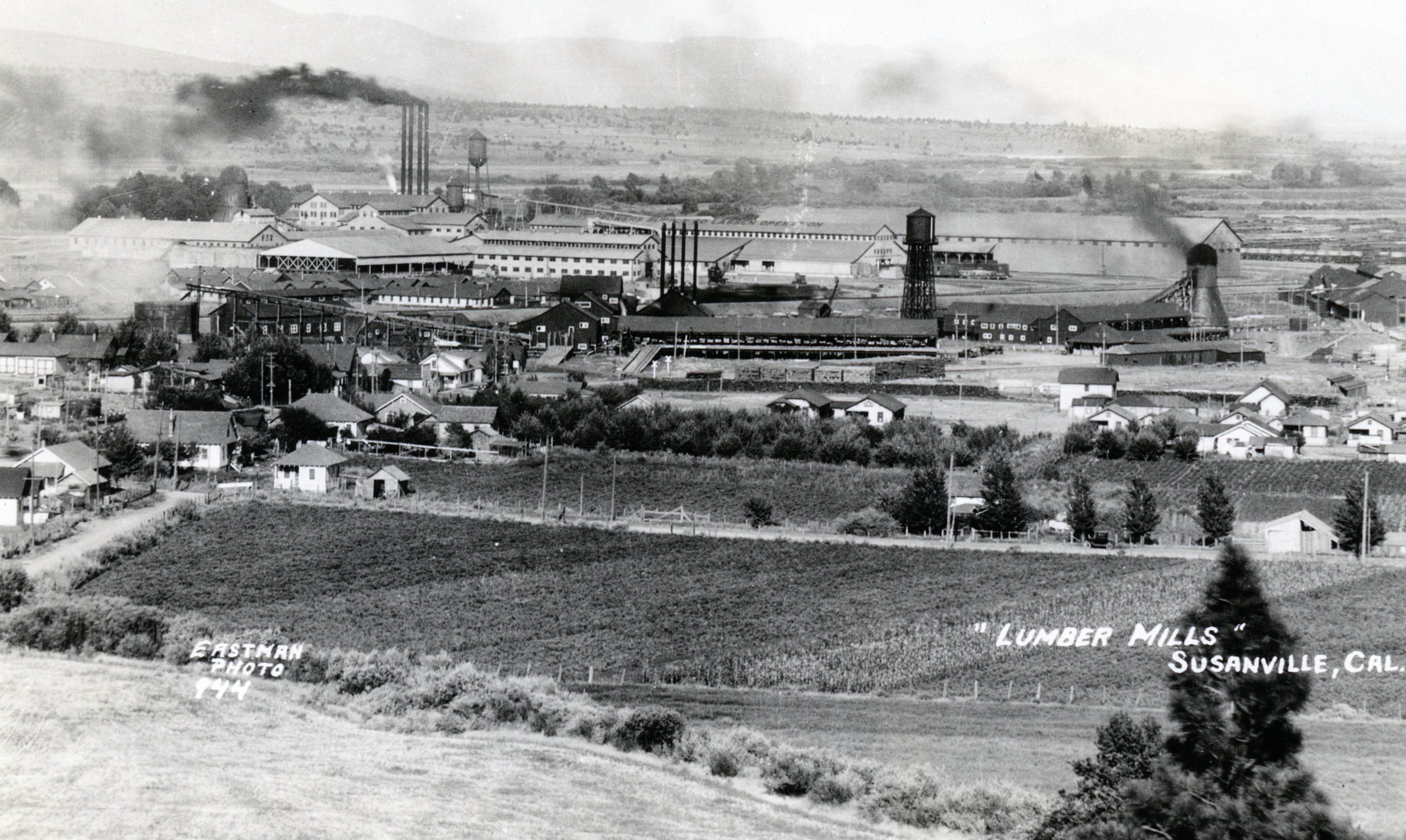
On December 11, 2003, Ed Bond, spokesman for the Sierra Pacific Industries announced the Susanville mill would close some time in early 2004. Bond stated a number of issues that led to the closure. One, of course, was a lack of available timber. It was noted that in 1990 the Lassen National Forest sold 108 million board feet of timber and by 2002 that number had dropped to 17.9 million board feet. Those who have an affiliation in this industry, were not surprised by the closure. Actually, many and my self included were amazed that it had not happened years earlier.

The community reaction was all doom and gloom. Fast forward nearly twenty years later, with the closure of the California Correctional Center and the commentary is the same. Guess what, the town has not shriveled up and blown away.

Tim

Note for the record: The mill closed down on May 3, 2004  and portions of the mill dismantled. One of the features that still remain is the water tower, which found a new life as a cell tower.

Tuesday Tidbit—Those Premium Log Photographs

log train Camp B
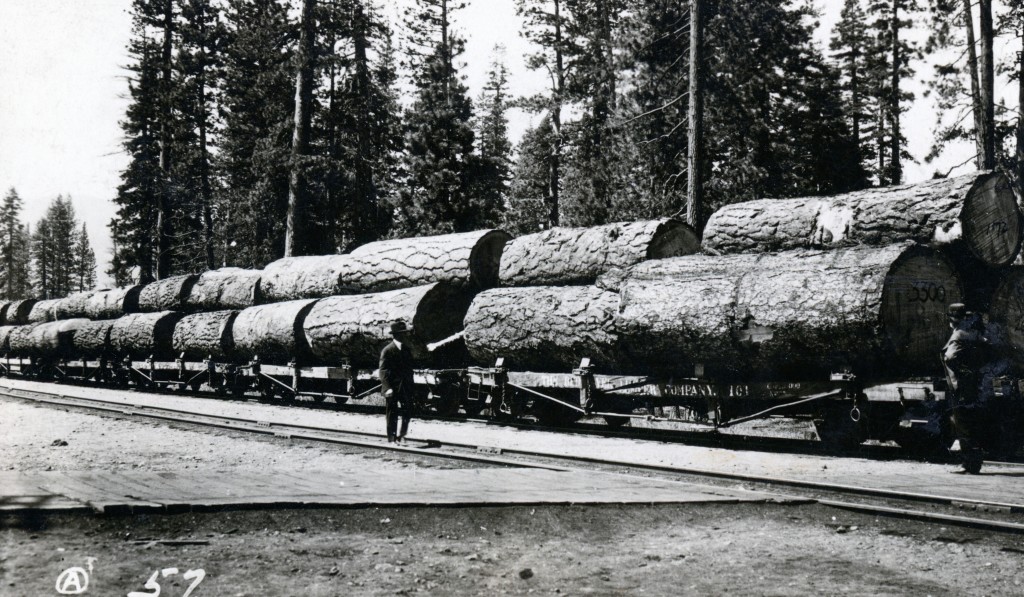
Train load of logs leaving Camp B, FGS Company,1923—Dick & Helen Harrison

For lumber companies back in the day, taking photographic scenes to show case premium logs and/of forest scenes served an unusual purpose that the casual observer would not be aware of. The photographs were used in portfolios to show bondholders, investors and other stakeholders what they were getting for their money.

This particular photograph is very revealing. These are Fruit Growers logs on Red River flat cars. When both Fruit Growers and Red River established their mills, they made agreement with the Southern Pacific Railroad to provide them with rail cars to transport the logs to the mill, saving the companies an expense. Red River found out the hard way that Southern Pacific was not always reliable and eventually purchased their own cars to care of those situation. In this particular instance, Red River was being a good neighbor to Fruit Growers and came to their aid to lend them some cars.

Tim

Michigan Big Wheels

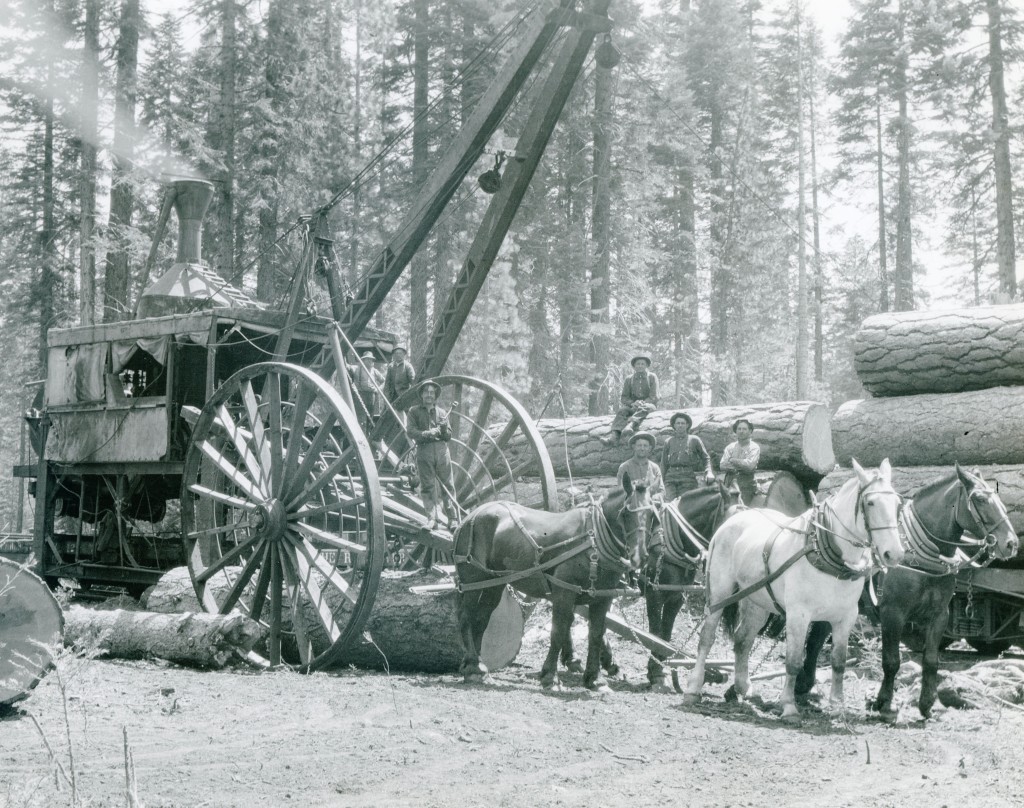
Red River Lumber Company, with Big Wheels and a McGiffert loader in the background. Courtesy of Hank Martinez

Logging operations of the early 1900s was extremely labor intensive. Motorized equipment was still in the experimental stages. One of the best advancements was the development of the Michigan Big Wheels, which everyone just called them big wheels. The wheels were a simple but efficient way to transport fallen logs to a landing, wherein they were then loaded onto railroad cars. The big wheels in time would become a key component in revolutionizing logging methods.

Horses provided the power to operate the big wheels. The name big wheels stems from their size ten to twelve feet in diameter. It was necessary for that size, in order to straddle a log and navigate moderate terrain. The logs were attached to a twelve foot tongue and with a lever, the driver could not only elevate a portion of a log in the front thereby making it easier to drag, but could loosen or tighten the cable, for braking purposes. One big drawback of big wheels was that it required a great deal of labor. Most big wheel logging camps employed as many as of 150 men. Two thirds of them worked as “swampers.” It was their job to remove brush, tree saplings, rocks and other debris that could injure a horse’s leg.

By the late 1920s, both Fruit Growers Supply Company and the Red River Lumber Company had replaced the big wheels with motorized “cats”.

Never miss a story, click here.


The 1907 Timber Bonanza

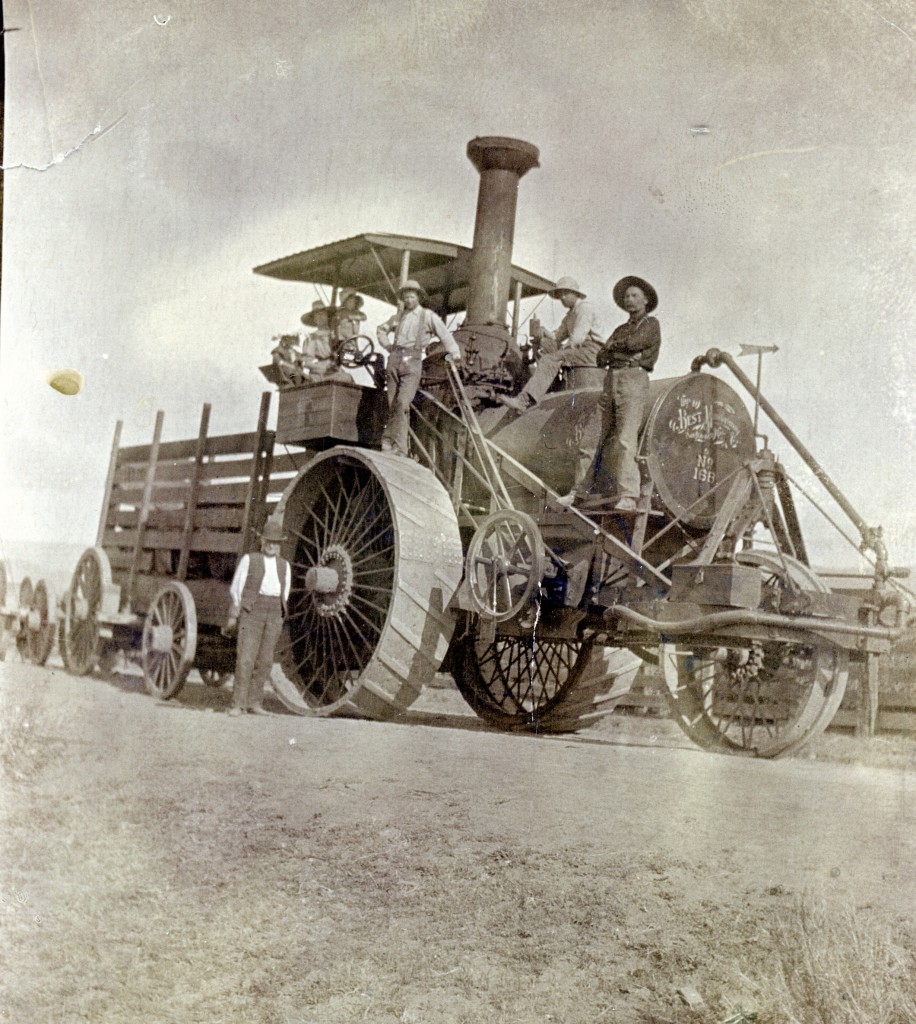
Harrison’s “mighty beast.” Courtesy of Lola L. Tanner

1907 was a most interesting year.  in certain circles. There was a national financial crisis, but California and Nevada were experiencing a building boom. For the Golden State it was still in the midst of rebuilding the San Francisco Bay region from the previous year’s earthquake. For the Silver State, a mining bonanza it had not experienced since the discovery of the Comstock.  These two episodes created a lumber shortage. Lassen County’s timber resources had basically remained untapped due to the lack of a railroad infrastructure to develop it. Continue reading The 1907 Timber Bonanza

Hoot Owl Conditions

Log landing at Coyote Flat, August 21, 1953. Courtesy of Hank Martinez

It was not long ago when this was a common term issued by the forest service when in the summer months fire risk was high. What it entailed was the suspension of any activities that could spark a fire. First foremost, it applied to logging operations and equally important firewood cutters. On days declared hoot owl went into effect at 1:00 p.m. all such activity was curtailed. If you were a wood cutter while you were no longer able to use your chain saw, you could still have plenty time to load up the wood one had cut. Ditto, for log landings, if there were trucks present, they could be loaded, but all other operations were suspended.

Tim

Mill Closures

Fruit Growers and Lassen Lumber in their glory days.

Recently, someone wanted to know when the various large lumber mills closed. The first casualty occurred in 1953, when the last of the decked logs were milled at Lassen Lumber & Box Company. The sawmill was dismantled. However, Fruit Growers who bought Lassen Lumber in 1952, sold thirty acres including the box factory to the T&M Sash & Door Factory, operated by A.I. Lucero and Walter Wirth. The building was destroyed by a fire on April. 3, 1966.

Next on the chopping block was Fruit Growers plant in Westwood, which shut down during 1955/56. Fruit Growers had purchased it from the Red River Lumber Company in 1944. Next, in what was kind of an off shoot of Red River was the Paul Bunyan Lumber Company. The Susanville mill closed in 1967, though the company operated another facility in Anderson, Shasta County. One of the shorter lived operations was the Susanville Lumber Company that was established in 1941. In changed ownership several times and then was reincarnated at Coin Lumber. In 1979, it became Susanville Forest Products, a division of Jeld-Wen Corporation. They closed the mill in 1993.

Lastly, was Sierra Pacific Industries. They acquired the mill in 1963 from Fruit Growers Supply Company. Sierra Pacific closed its Susanville mill on May 3, 2004, thus marking an end of era, of a once predominant industry in Lassen County.

Support

The Mighty McGiffert Loader

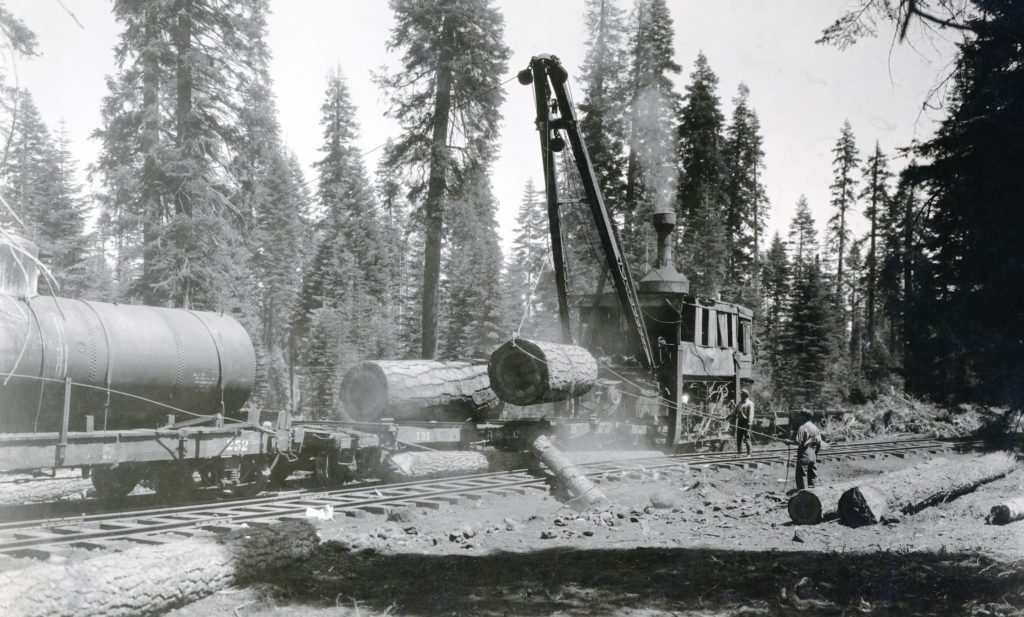
McGiffert loader, Camp 28, Red River Lumber Company, 1924—R.S. Pershing

With the advent of railroad logging required the development of supporting equipment. In this particular case, today, a machine to load logs onto flat bed rail cars. Some consider the McGiffert Loader the “Cadallic ” of loaders, which many in the woods just referred to the machine as a “Jammer.”  The McGiffert was invented by John R. McGiffert in the early 1900s , and were manufactured by the Clyde Iron Works of Duluth, Minnesota.

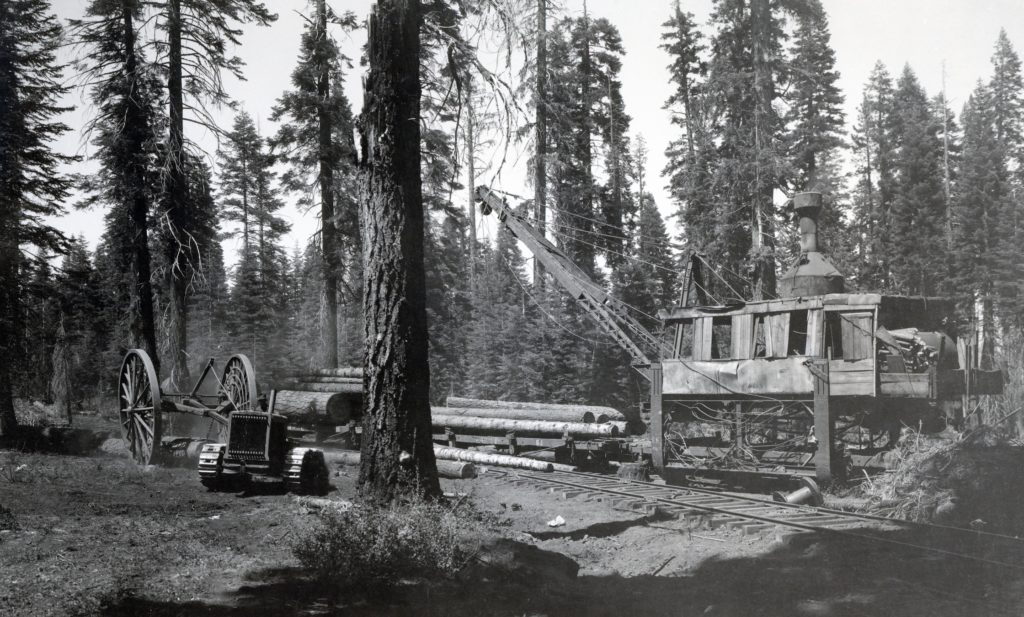
The McGiffert while efficient in getting the job done, did not look like much.  It had an elevated platform for the boiler and spools. What is interesting it was self propelled wherein its chain-driven axles moved it  along the rails. As the McGiffert straddled the tracks, a large, somewhat awkward looking machine. The boiler and spools were mounted on a platform that was elevated over the tracks. The entire machine sat on legs that rested on the ground on either side of the tracks. The McGiffert was self-propelled, as it had a chain-driven drive axles that moved the machine along the rails. The empty log cars were shoved underneath the loader. The log cars would then be rolled through the loader, with logs loaded onto the cars by a boom off of one side of the loader.

McGiffert loader at Camp 28, Red River Lumber Company, 1924–R.S. Pershing

Fruit Growers Supply Company was still using McGifferts into the 1940s on the Susanville Operation, and may have until 1952 when it discontinued railroad logging.

Support