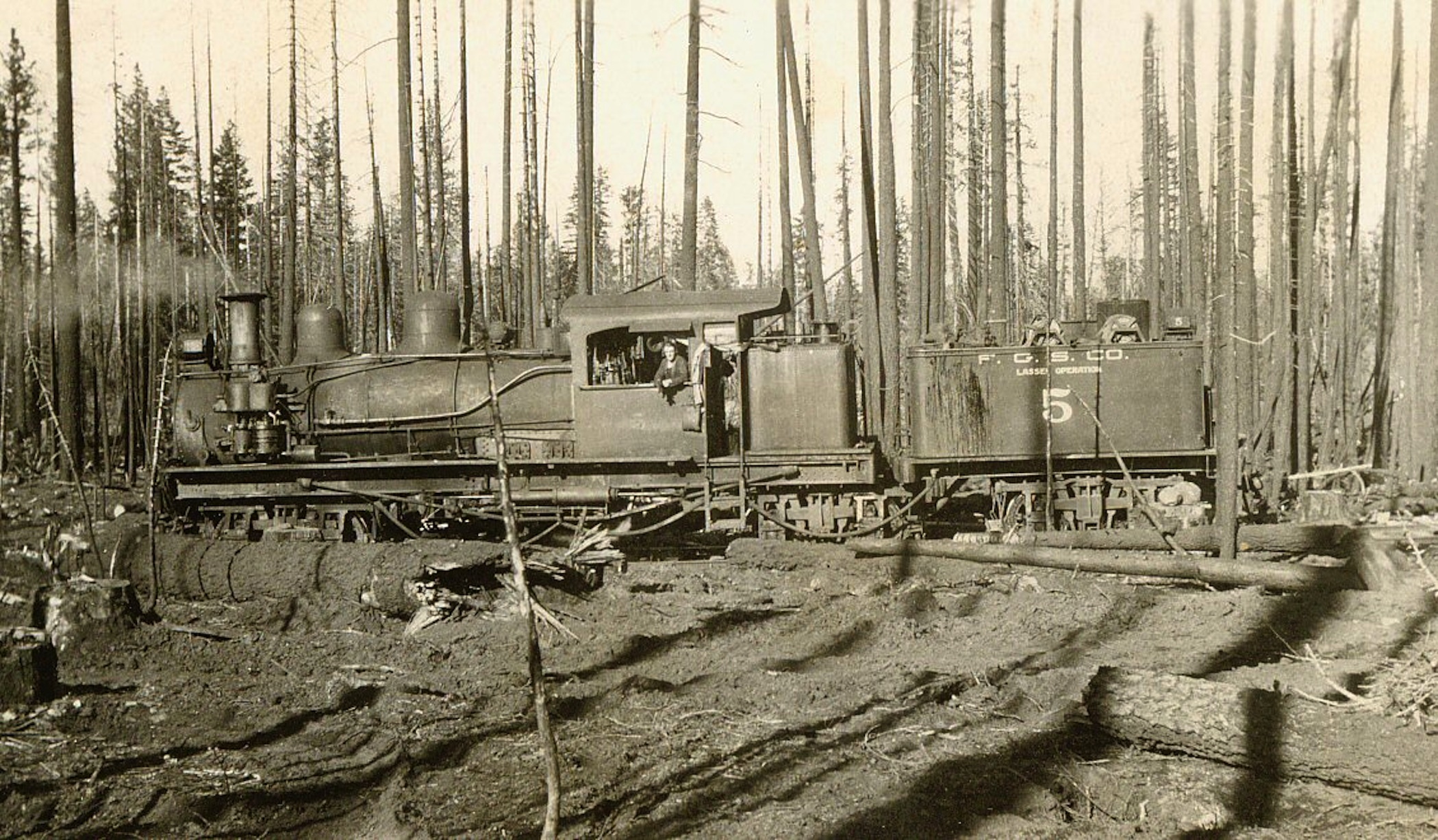
The.aftermath of the fire at Camp D, 1924 —-FGS Co.
In 1924, Fruit Growers Supply Company’s logging operations was on the west side of Antelope Mountain near Eagle Lake. On July 28, a fire broke out there caused by a steam donkey operating between Camps D and F. It would in the end consume some 7,000 acres.
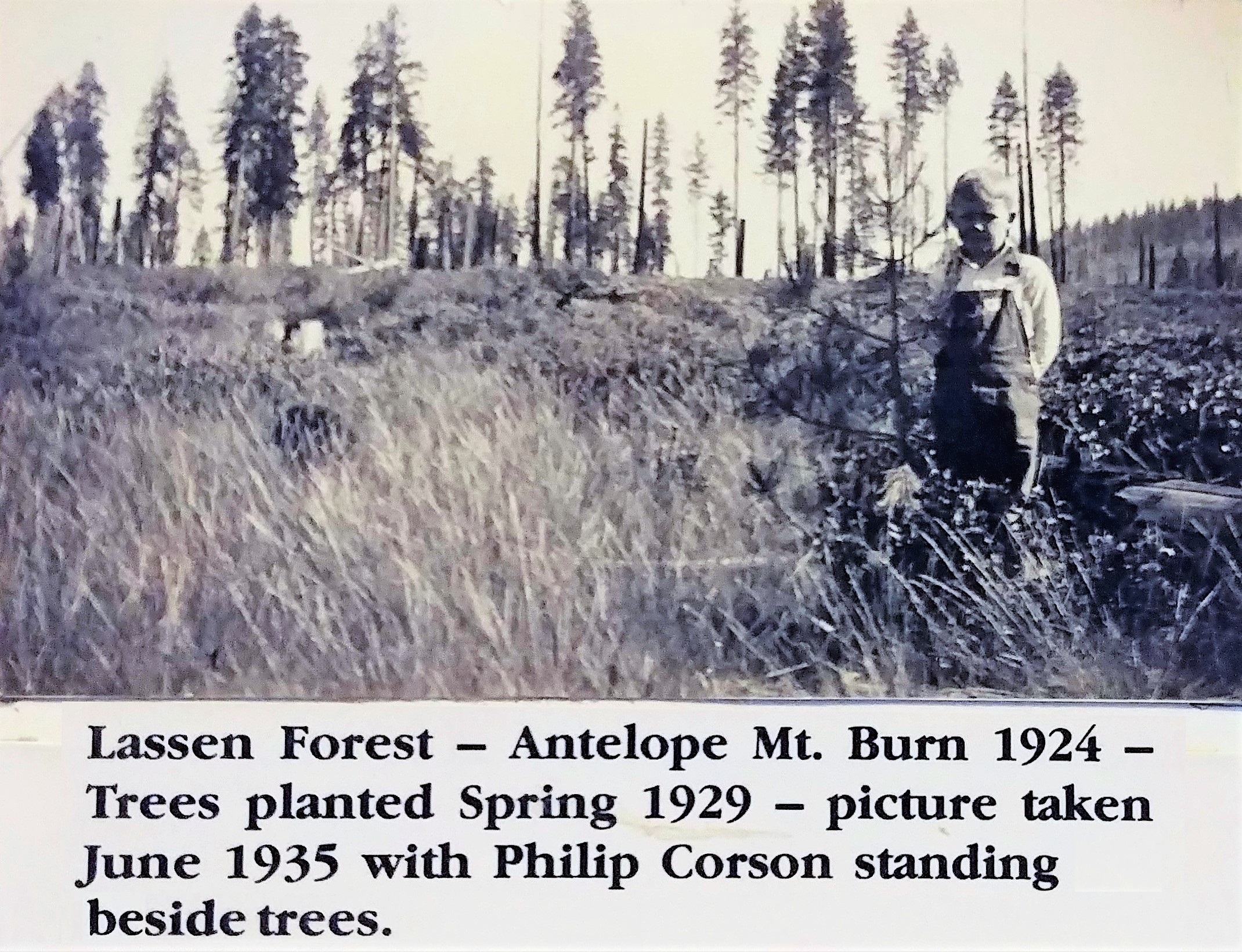
Three years later, the Lassen National Forest sent Fruit Growers a bill $156,000 in damages for 2,000 acres of forest service land that had burned in the fire. During ensuing negotiations it appeared the Forest Service wanted really was not the money, but reforestation.
Courtesy of Kevin Corson
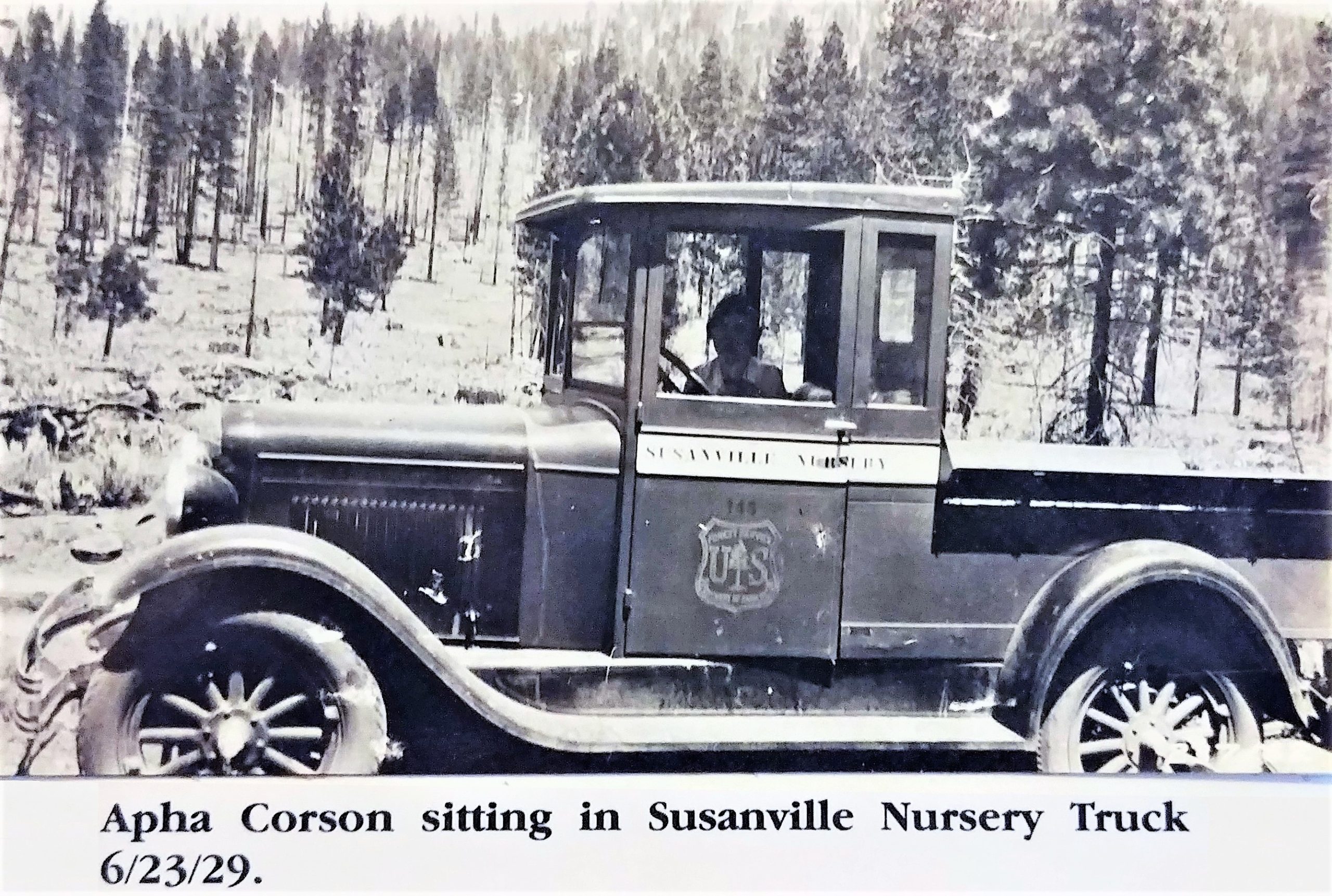
A settlement was reached. Fruit Growers agreed to replant the burned over Forest Service land, plus an additional 20,000 acres and to contribute $1,500 over the next ten years for reforestation. Fruit Growers even established a small tree nursery at their Susanville mill.
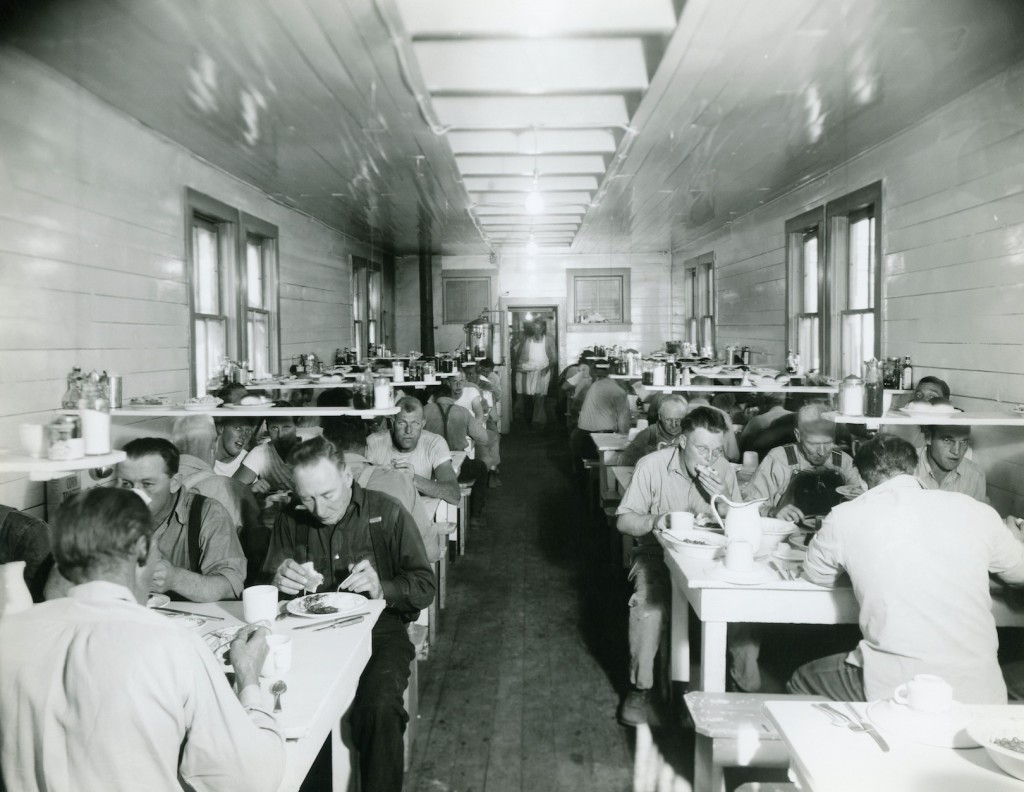
The cookhouse operations at logging camps were an expensive undertaking resulting in substantial losses for the lumber company. However, the food served in the logging camps played a pivotal role. Poorly fed loggers would move to a different logging company, and thereby impact the former company’s production.
In 1948, Fruit Growers Supply Company experimented at its Camp Harvey location (some twenty miles east of Poison Lake) by raising the price of a meal to one dollar. Complaints were loud and long. But now, instead of losing thirty-six cents per meal, they now lost only eight cents. The result was substantial and at the end of the year, Fruit Growers’ operating losses for the cookhouses at Camps Harvey and the newly opened Camp Stanford was $63,500.
Camp Harvey Dining Car
On May 2, 1949, Camps Harvey and Stanford opened for another season. In an effort to further reduce the cookhouse expenses, Fruit Growers leased them along with the commissaries, to H.S. Anderson Company for one dollar. Fruit Growers thought perhaps an outside company could handle the meals more efficiently. They would never find out the answer.
Just three weeks into the logging season all operations on the Harvey line shut down. The cookhouse crews, represented by Local 768 of the Bartenders and Culinary Workers Union, walked off the job in a wage and hour dispute with H.S. Anderson Company. As the weeks passed with no end of the strike in sight, Fruit Growers closed down Camp Harvey and Stanford permanently, as well as its Harvey railroad logging line.
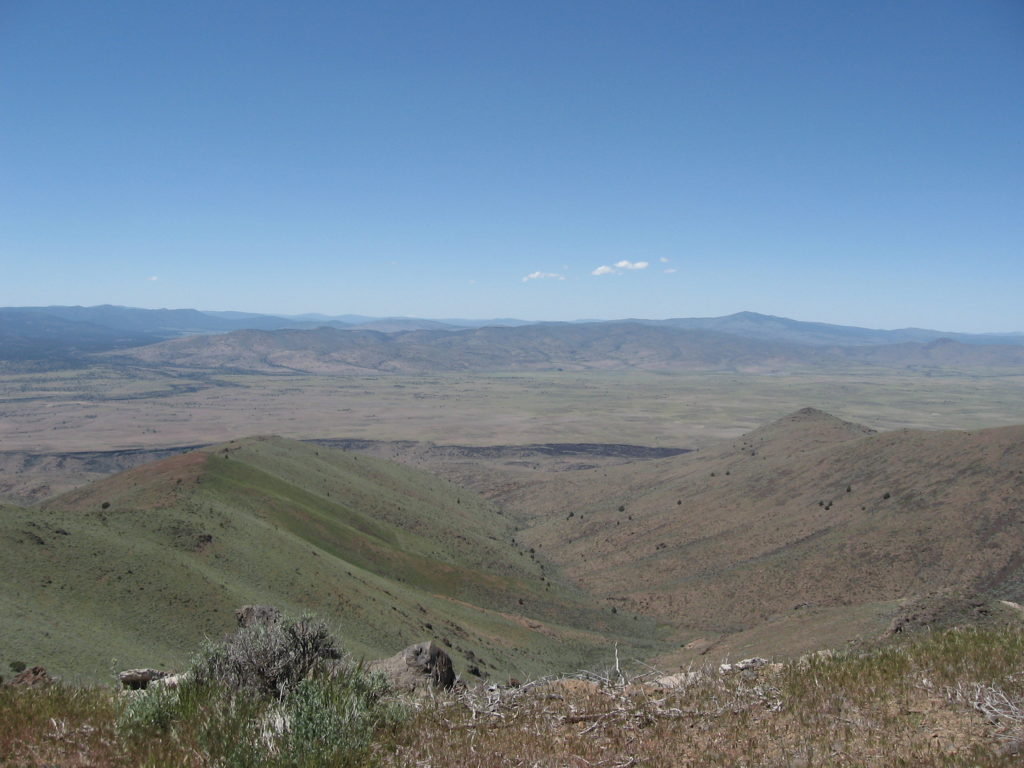
A view of the Tablelands in the distance from Shaffer Peak.June 13, 2018
Susanville and the Nevada-California-Oregon Railroad (NCO) had an awkward relationship since the railroad’s inception. At first it was idyllic as the initial railroad survey would enter Susanville. Then things deteriorated when in 1887, the NCO decided to bypass the west side of the Honey Lake Valley, to the remote east side of the valley.
The strained relationship never improved. In 1899, when NCO extended its line north to Hot Springs Station (Wendel) Susanville residents reached out to the NCO with a proposal. They tried to persuade NCO officials to build a feeder to line Susanville. They cited the potential to tap the vast timber resources to the west. The answer was no. However, if the residents wanted to finance it at a cost of $100,000 the railroad would be agreeable. That was not going to happen, since the community could not even raise $500 to build a town hall.
Fast forward twenty-one years later. The NCO was in financial shambles. In 1917, it sold the southern segment of its line from Hackstaff (Herlong) to Reno. In 1921 the NCO petitioned the Interstate Railroad Commission to abandon its line, due to substantial operating losses. After several public hearings the commission denied the request. It said the railroad could reduce its costs by operating a tri-weekly service instead of daily, eliminate the president’s $10,000 a year salary and close its New York office.
Ironically, Susanville once again courted the Morans, owners of the NCO. This time it was Russell Brownell of the Lassen County Chamber of Commerce who spearheaded the movement. He wanted the NCO to reroute its line from Snowstorm across the Tablelands to Belfast thence to Susanville as the terminus. This would provide Susanville with an alternate railroad to serve the northern sectors. The plan received wide spread support, and the Fruit Growers Supply Company donated its services and surveyed the proposed route. However, the NCO’s president, Charles Moran balked at the idea. Brownell informed Moran that if Susanville was the terminus it could double that line’s tonnage, and save the financially troubled railroad. Brownell died suddenly in January 1923, and with his death the proposal also died. In February 1923, Moran changed his mind and said he would like Susanville to be terminus, but the railroad could not finance it. It was a costly delay on Moran’s part, since the old offer was no longer valid.
In 1925, the NCO entered into an agreement to sell the beleaguered line to the Southern Pacific. In 1926, Lassen County officials approached Southern Pacific with Brownell’s proposal, though it went nowhere.
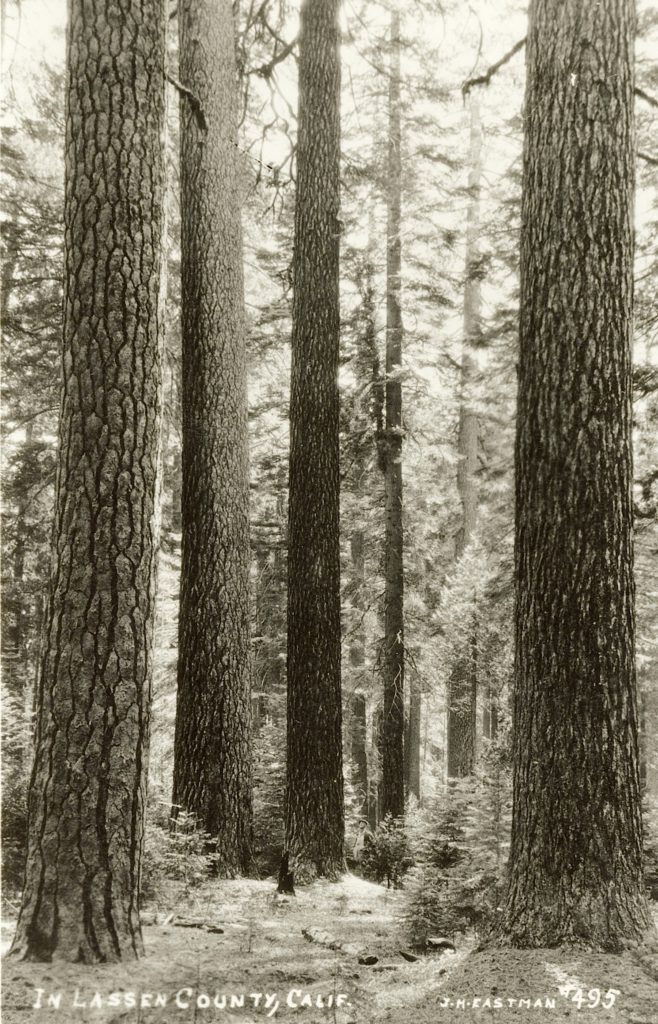
In early 1922, the Lassen National Forest Service advertised it was accepting bids for the Pine Creek Unit timber sale just west of Eagle Lake. This was no ordinary timber sale—it consisted of nearly one billion board feet of merchantable timber! Of course, there were terms and conditions that applied.
The buyer would have twenty to thirty years to harvest the timber. To protect the lands for the future, harvesting was restricted to a maximum of 37 million board feet a year, and only 70 percent of the original timber volume per acre was to be cut. On April 2, 1922, the bids were opened. The following day, Fruit Growers Supply Company bid of $3,314,000 was accepted. The money spent in increments on a pay-as-you-cut basis.
Fruit Growers did have a competitive edge. Their Collins Tract and the Pine Creek Unit were intermingled. Since it was stipulated that only a limited amount of timber could be harvested was not particularly attractive to many lumber companies. Finally, Fruit Growers had already adopted a sustained yield forest management policy, another requirement of the forest service.
As the Lassen National Forest would monitor the sale, it was determined to move its headquarters from Red Bluff to Susanville.
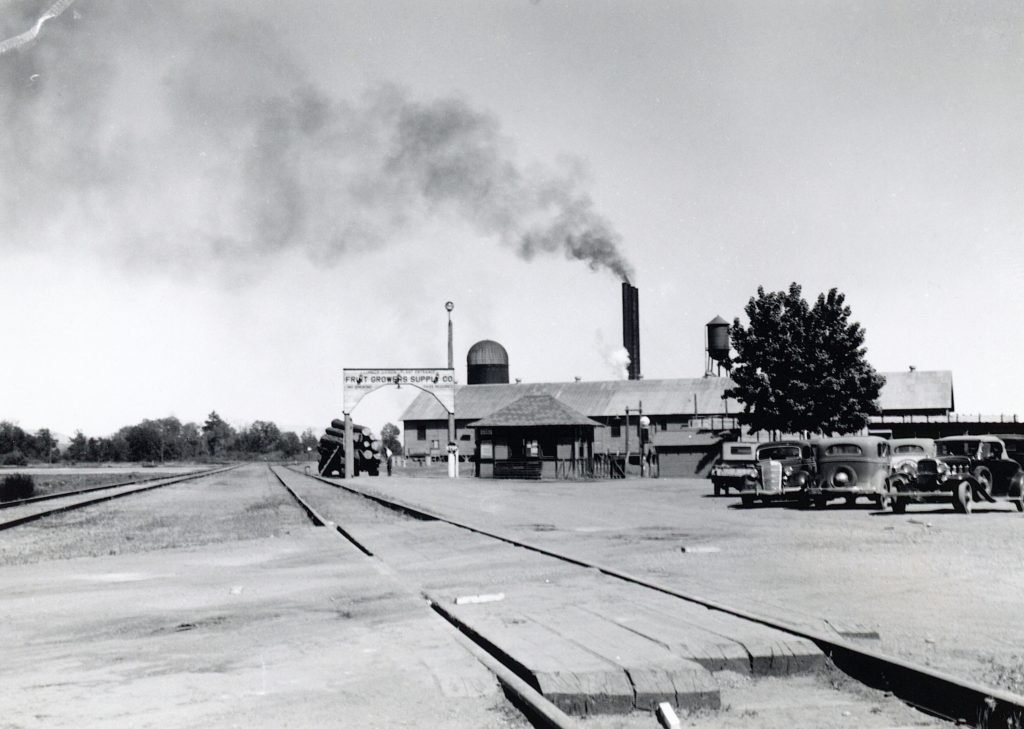
In 1955, Fruit Growers Supply Company announced its closing of the Westwood mill. Over the hill in Susanville, many pondered when Fruit Growers might do the same there. The Susanville mill would receive a brief reprieve.
In 1957 six paper companies were interested in Fruit Growers cutover lands in Lassen County. While California ranked second in the nation for lumber production, there was only one paper/pulp plant in the state. Fruit Growers had debated at one time to convert the Susanville mill into such a facility, but it was just not going to happen.
On November 7, 1962 the beginning of the end was announced with the closure of the Susanville mill. The woods employees were permanently laid off. The mill would remain in operation until the logs on hand were processed. On May 13, 1963 the last log was sawn. Shortly afterwards the remaining employees terminated and the mill closed. There being no buyers it appeared the mill was destined to be dismantled. It did receive a last minute reprieve with negotiations of Crook & Emmerson, but that is another story. On April 30, 1964, Homer Vincent closed Fruit Growers” Susanville office.
After World War I lumber companies began implementing modernization of logging methods. The adaptation of caterpillar tractors proved to be efficient and cost effective. As advances were made on different fronts, one area was lacking—the falling of timber.
An electric saw powered by a D-2 cat. Courtesy of Fruit Growers Supply Company
World War II created all kinds of shortages and labor was one of many. Fruit Growers Supply Company’s 1946 Annual Report provides an interesting glimpse in regards to timber fallers and labor.
”One place in the lumber industry where the use of mechanical equipment has not improved costs is in the falling and limbing of trees in the woods. Until the power saws came along, all of this work was done with hand tools on a contract basis where increased production meant increased earnings to the worker. With the advent of power falling saws, this work changed from a piecework basis to a straight-time basis and as a result costs actually increased. There is no valid reason why power falling saws should not result in lower costs than hand falling and also result in higher earnings to the man on the job. One factor in this change is that skilled help was drawn away from the woods by high wages offered elsewhere and by the military services. Hand fallers are highly skilled, but the substitutes for hand fallers who operated power falling equipment did not require much skill for the job and most of them have not attempted to acquire speed with the power equipment. There has grown up considerable resistance to piecework methods in recent years. Efforts are being made by the industry to get back to a contract basis for this type of work.”
Bucking a log—FGS Co.
For a little bit of clarification about the contract work. Timber fallers for years were paid by the scale of the board feet felled. These men made very good money, considering the size of the trees then. As late as the 1970s, timber fallers were still being paid by the scale.
A Fruit Growers Craveneer box, which resembles the standard wooden box—-FGSCo.
When one asks, I try to do the best to answer. A person thought Fruit Growers Supply Company was an odd name for a timber company. Fruit Growers is not a timber company per se, just a facet of its many duties. Fruit Growers only got into that line by accident.
First, some very brief background. In 1893, the Southern California citrus growers formed a marketing co-operative later to be known as the California Fruit Growers Exchange. The growers co-op proved to be a success. In 1906, discussions were held of forming a second co-operative—this one to purchase agriculture supplies such as fertilizers, sprays, tissue wraps, etc. Another component was the need for wooden boxes for the shipment of citrus. It should be duly the nation’s fruit and vegetables were shipped in wooden boxes and the conversion to cardboard did not occur until after World War II. At first, it was discussed to have two co-ops, one to handle supplies and the other for boxes. It was finally agreed that one co-op could do it all. In 1907, the growers organized the Fruit Growers Supply
Company.
In the same year, due to multiple circumstances, the price for wooden boxes nearly doubled to 23 cents a box. To make long story short Fruit Growers found some sawmills in far Northern California that could provide them with boxes for a reasonable price. These mills needed financial aid and Fruit Growers lent them money. One of these mills was the Northern California Lumber Company located at Hilt, Siskiyou County near the Oregon border. In 1910, the company defaulted on their loan and Fruit Growers took over the mill and thus its entrance into the timber industry. It is interesting to note the growers self financed the operation by a special assessment of three cents a box for a period of five years. The growers needed six million boxes annually, so that assessment raised a lot of money.
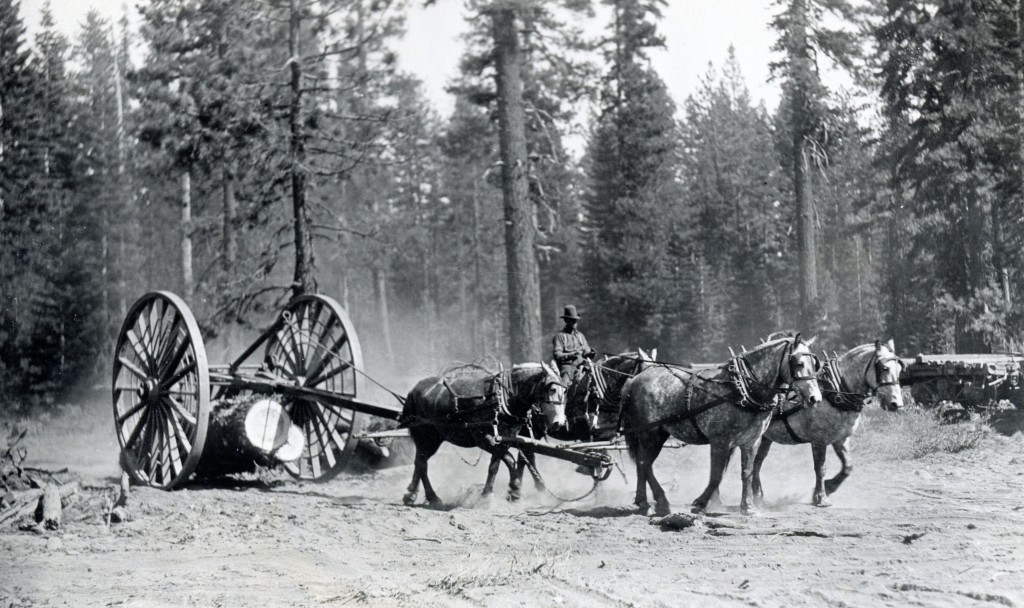
Horse logging with big wheels, at Fruit Growers Camp B, north of McCoy Flat Reservoir.
There were many enjoyable aspects when I researched the logging/sawmill operations of the Fruit Growers Supply Company aka Fruit Growers. For starters they kept well detailed records. Their annual reports are a compelling read, and one just never knows what you can find in them.
Fruit Growers 1947 annual reported highlighted many interesting facts, it being the company’s 40th anniversary. Take for instant, the following:
”The Susanville mill was completed and began cutting timber late in 1921. When cutting started, logging in that area was done with horses. Fifty-two horses were bought locally, 60 in St. Paul and 22 in Iowa. The total of 134 horses had an average cost of $276.67 and the harness for them totaled $13,247.07.
“Four horses would skid with wheels about 2200 feet per load. Modern Diesel D8 tractors bring in about 5,000 feet.”
Since 1907, Fruit Growers Supply Company has had a presence in Northern California. It first began at Hilt in Siskiyou County. In 1919, it expanded to Susanville. In 1944, another expansion of the purchase of Westwood and equally important the Burney Tract in Shasta County. After the closure of Hilt in 1972, Fruit Growers was no longer operating any sawmills, the company owned some 400,000 acres of timberland in Northern California. In 2019, Fruit Growers began to liquidate, the first to go was the Burney Tract which was sold to Sierra Pacific Industries.
The water carnival at the Sunkist Lodge, Eagle Lake, 1921. Courtesy of Ed Standard
The next to go was the Lassen Tract. In 2020, it was also sold Sierra Pacific Industries.
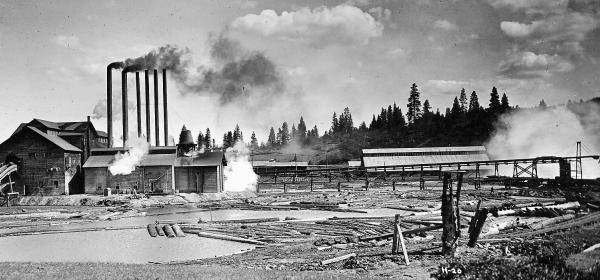
Fruit Growers Mill at Hilt, 1919
Hilt, was of course, Fruit Growers first acquisition and it would be the last sold, which occurred in 2021. It was purchased by a firm known as New Forest based out of Sydney, Australia. Fruit Growers has focused on purchasing timberland in Oregon and Washington.
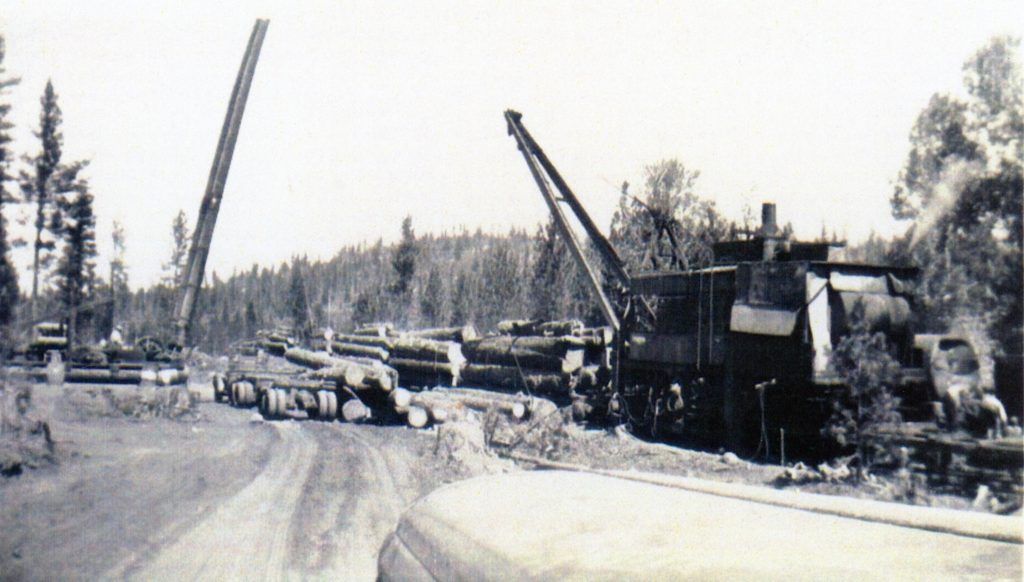
A McGiffert Loader at Camp Poison Lake—Gordon Thelander
This was a short-lived railroad logging camp, located near Poison Lake. It was established in 1944 by the Red River Lumber Company and then taken over by the Fruit Growers Supply Company. There is a scant information about it. Since this was World War II, and the timber industry deemed “essential” coverage by news outlets were censored. In July 1946, the camp at Poison Lake was closed, as well as Camp Bunyan to the north at Halls Flat. The rails from the Poison Lake line were removed to build a twelve-mile extension of the Harvey line that started at Halls Flat and went eastward.