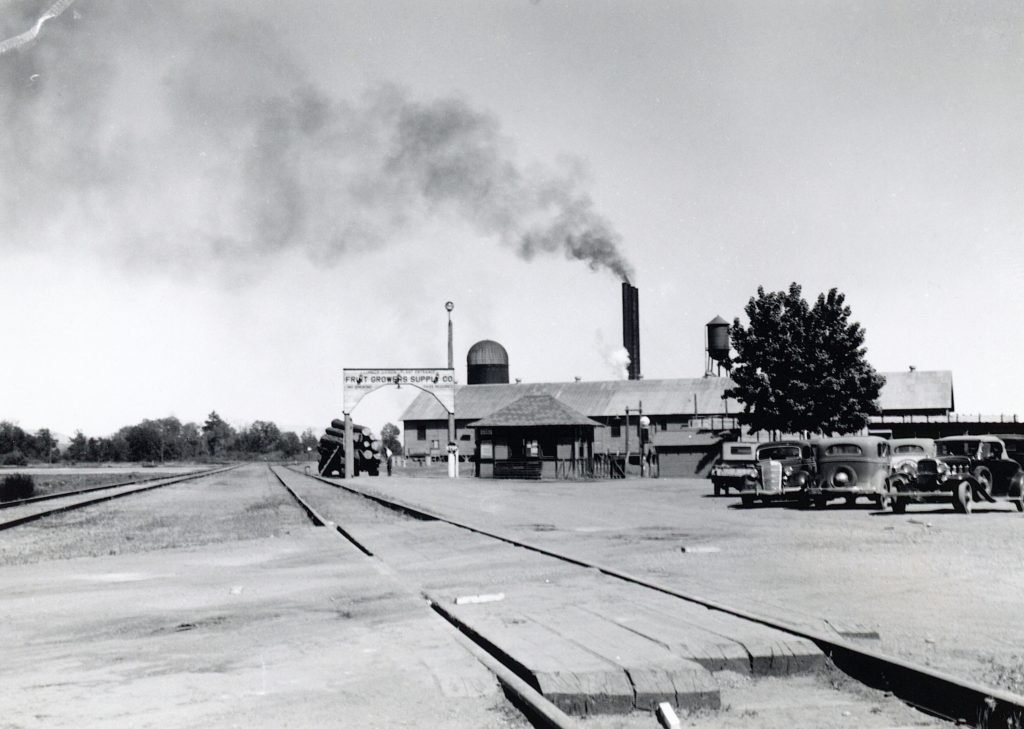
After Fruit Growers Supply Company closed their Susanville mill,it initially appeared that it would be sold to a liquidation firm. Fruit Growers had been in negotiations with Crook & Emmerson to sale them the mill, but negotiations stalled. Finally on June 12, 1963 they reached an agreement and the mill and adjoining residential section was sold to Crook & Emmerson for $875,000.
June 13, 1965 —Hank Martinez
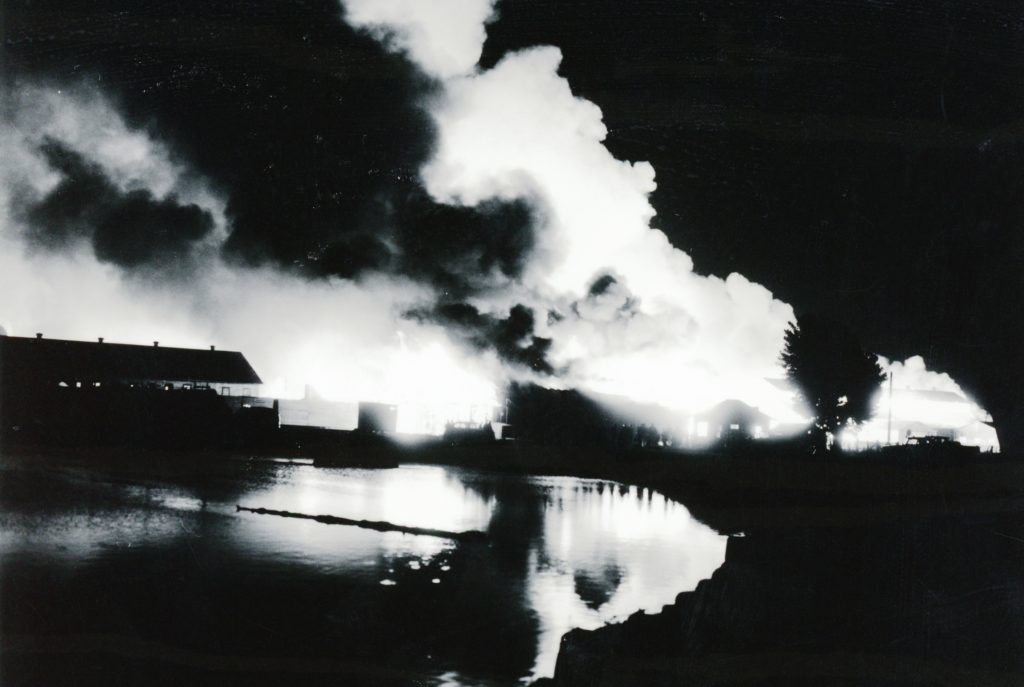
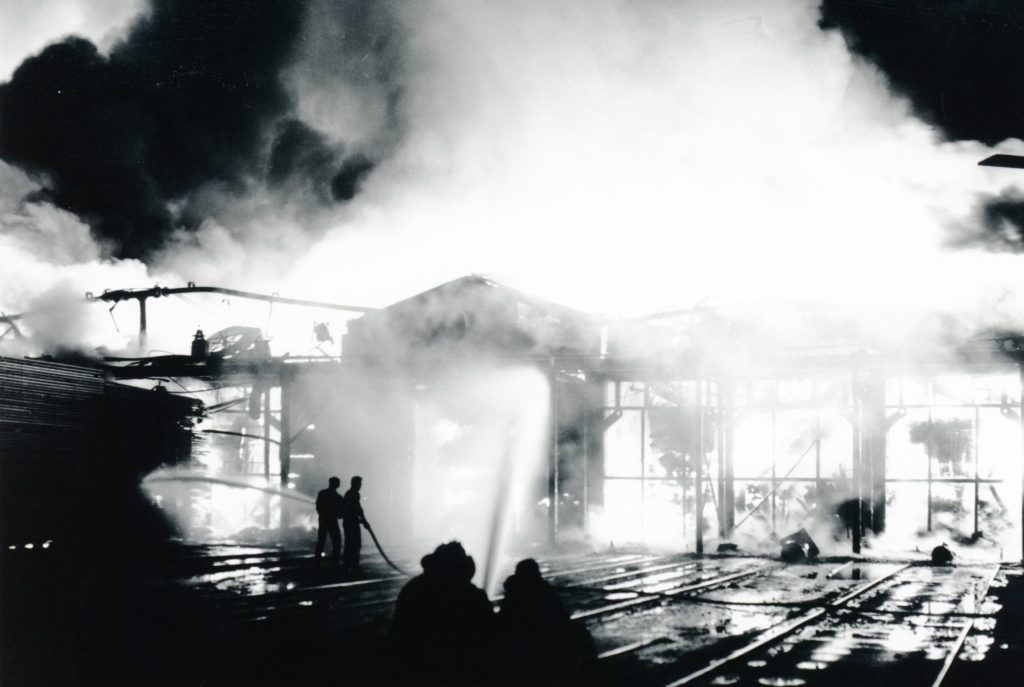
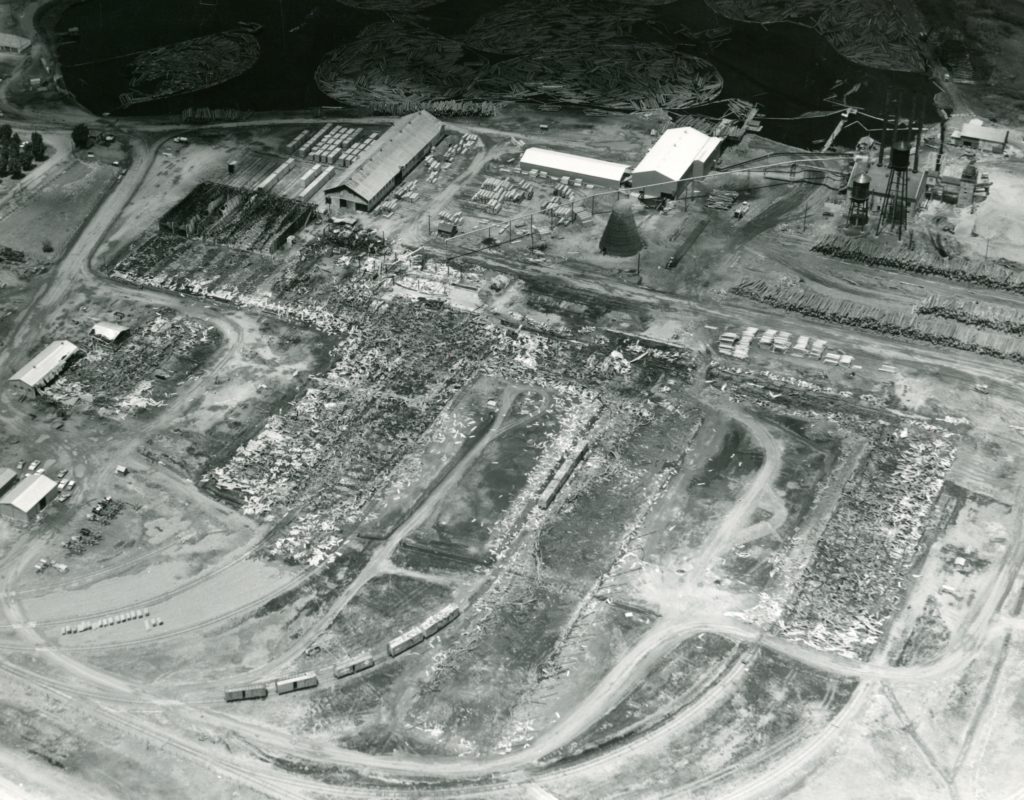
Crook & Emmerson’s new enterprise was known as the Eagle Lake Lumber Company. All went well until the early morning hours of June 13, 1965 when a fire broke out in the planing mill. The sprinkler system there was inoperable as the structure was being renovated. By the time the fire department arrived, it was too late, as a large portion of the plant was engulfed in flames. After three hours, the fire destroyed the planing mill, the dry kilns, the abandoned box factory and an estimated five to six million board feet of finished lumber. The estimated loss was between $5 to $6 million.
The aftermath—FGSCo.
It should be noted that Eagle Lake Lumber Company evolved into Sierra Pacific Industries.
Once upon a time, during deer hunting season the population of Lassen County more than doubled. This was especially true during the 1940s and 1950s.
In September 1946, the Lassen National Forest expected over 20,000 deer hunters. Deer season opened on September 21, 1946 and by September 30, some 14,994 deer hunters had checked in at various points throughout Lassen County.
With that many people, problems occurred. There were four fatalities—two by gun shot and two by heart attack. The gun shot victims were Orin Gerig of Bieber and Columbo Fortino of Oakland, who was shot in the leg at Mill Creek, taken to the Westwood Hospital where he succumbed of his injuries. James Maloney of San Francisco died of heart attack while hunting near Termo, and the same fate happened to Clel Tally of Sacramento near Pine Creek Valley.
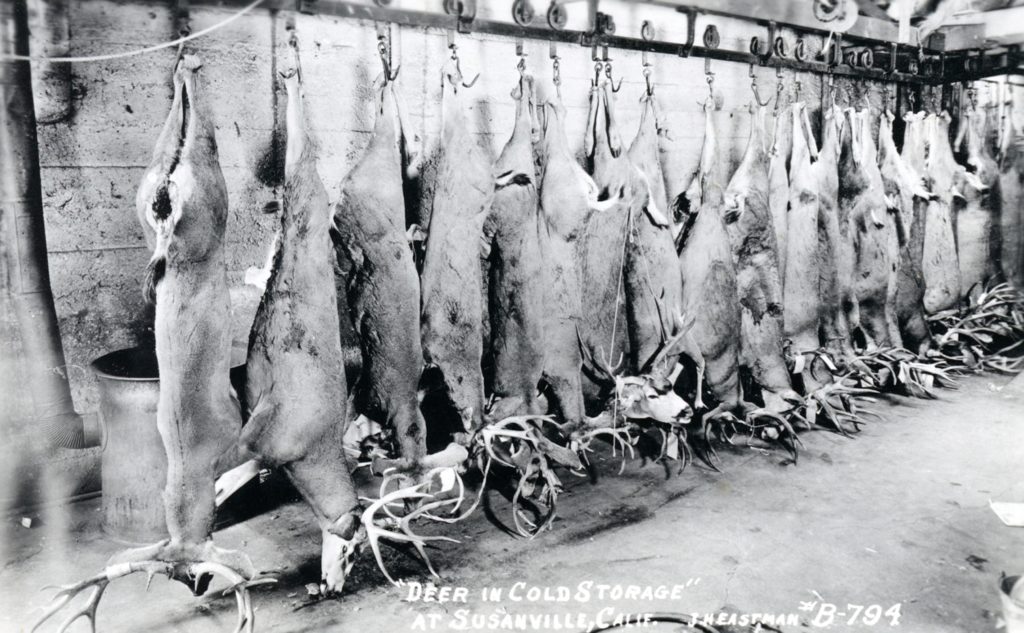
Officials were concerned about the fire danger. There were seventeen fires caused by careless deer hunters. Fortunately, none of these fires caused any major damage. No information was released as to how many deer were killed, but all the cold storage meat lockers in Susanville and Westwood were at capacity.
In conclusion, the deer season was even included in Fruit Growers Supply Company’s 1946 Annual Report:
“Much of the country in which Company timber is located is considered to have good deer hunting, and the deer season opens at a time when the woods are in the driest conditions and when the fire hazard is the greatest. The handling of the large influx of people into the general Northern California area during the deer hunting season constitutes a very serious problems to all owners and agencies interested in timberlands. In 1946, hunters and their parties were registered as they entered Lassen County area, and during one week’s time, close to 5,000 automobiles and 13,000 individuals registered as potential deer hunters. Thus more hunters were checked into Lassen County than its normal population. Despite this, the Company was fortunate in its 1946 experience with forest fires.”
Subscribe and support this site for little as $5.00 a month.
The old English proverb necessity is the mother invention was widely adopted locally. For years Fruit Growers searched for an effective way to reduce grass around its millsite for fire protection. During the 1920s, Fruit Growers planted potatoes. In 1937, someone came up with the brilliant idea to bring in a band sheep to graze the mill property. Problem solved and they called the new addition to their workforce “Lassen Lawnmowers.”
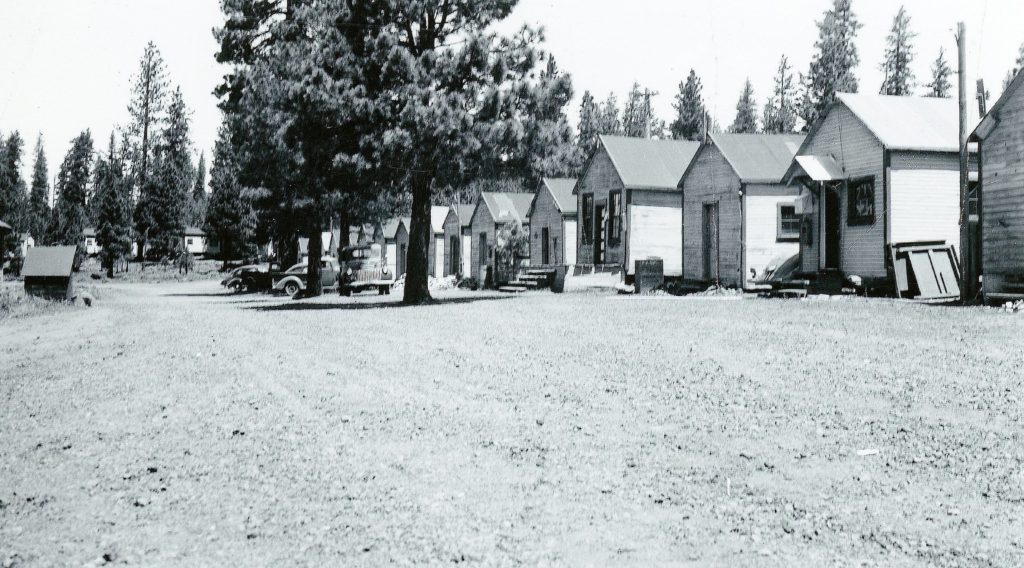
Camp 10, 1950. The family cabins can be barely seen in the background.
Not all logging camps were created equal. Each lumber company had its own policy—some allowed families to stay in logging camps. Both Fruit Growers Supply Company and Lassen Lumber & Box Company allowed families in their respective logging camps.
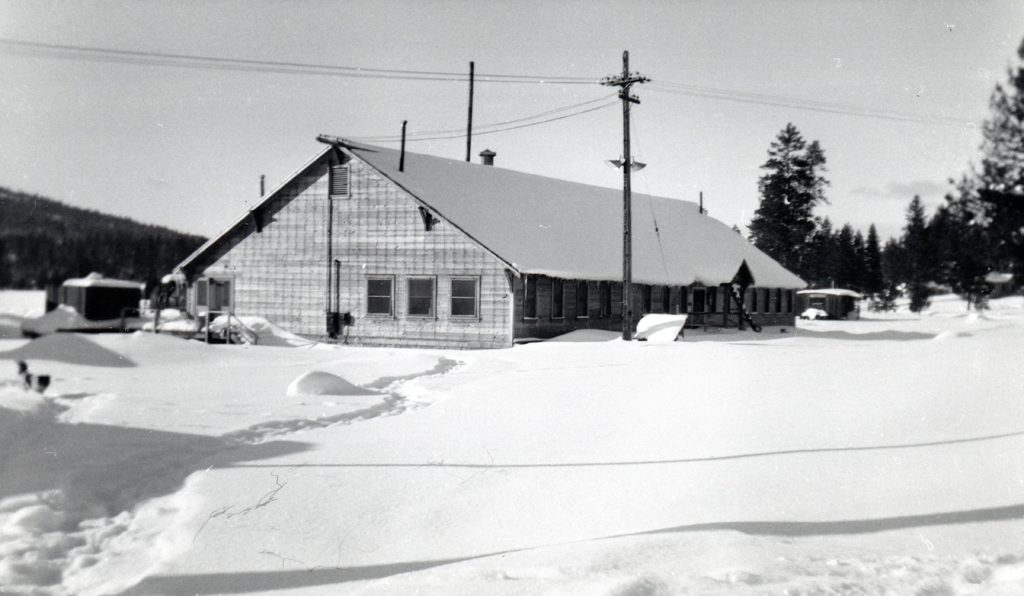
What was referred to as “family row” at Camp 10 consisted of about ten cabins. As Leonard Uhl who, with his wife Irene and son Richard, lived there in 1943 recalled: “The family cabins were quite a bit larger than the single men’s cabins, and had two rooms. They were equipped with a wood cook stove, a kitchen table, chairs, double bed and a screen and gunny sack evaporation cooler.” The cooler served as a primitive refrigerator. The families cooked their own meals. Except for rare occasions, only employees were allowed to eat in the cookhouse. Employees with families had the choice of eating at home or at the cookhouse.
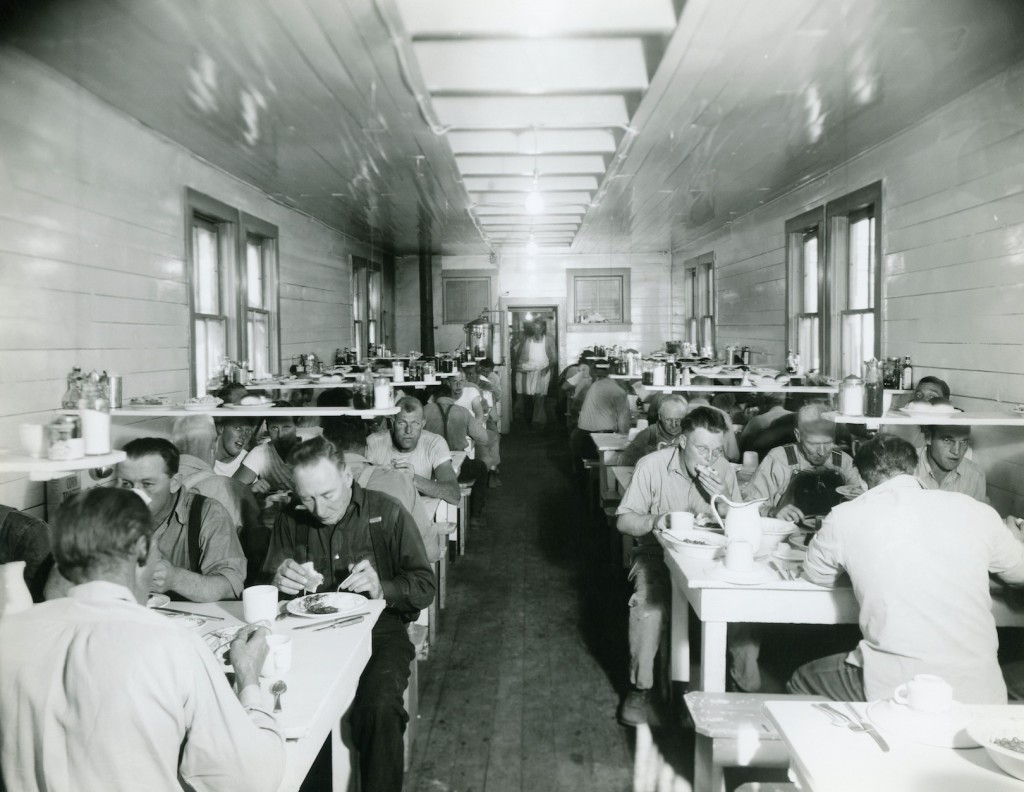
Camp 10, Cookhouse, December 15, 1950.
Since the families were not allowed to eat the in cookhouse, Fruit Growers made accommodations for them to obtain groceries and such. As Marilyn Denton Holmes recalls from her childhood at Camp 10 during the 1930s; “There was no store at Camp, but a commissary where we could get our mail and supplies that a daily Company owned bus, would bring back to Camp. My Mother would send a list with the driver and he would do the shopping and bring the order back to Camp.”
The.aftermath of the fire at Camp D, 1924 —-FGS Co.
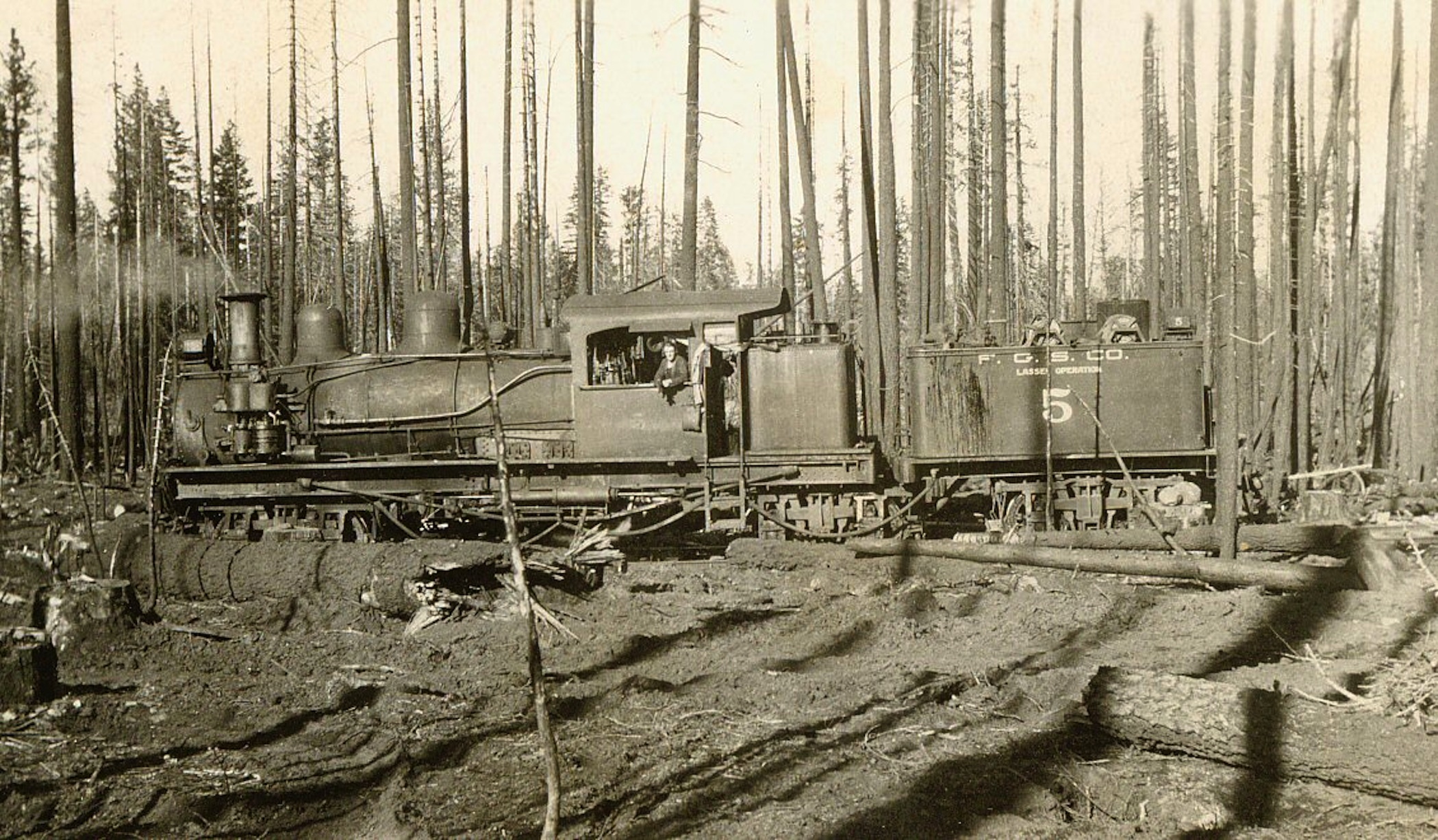
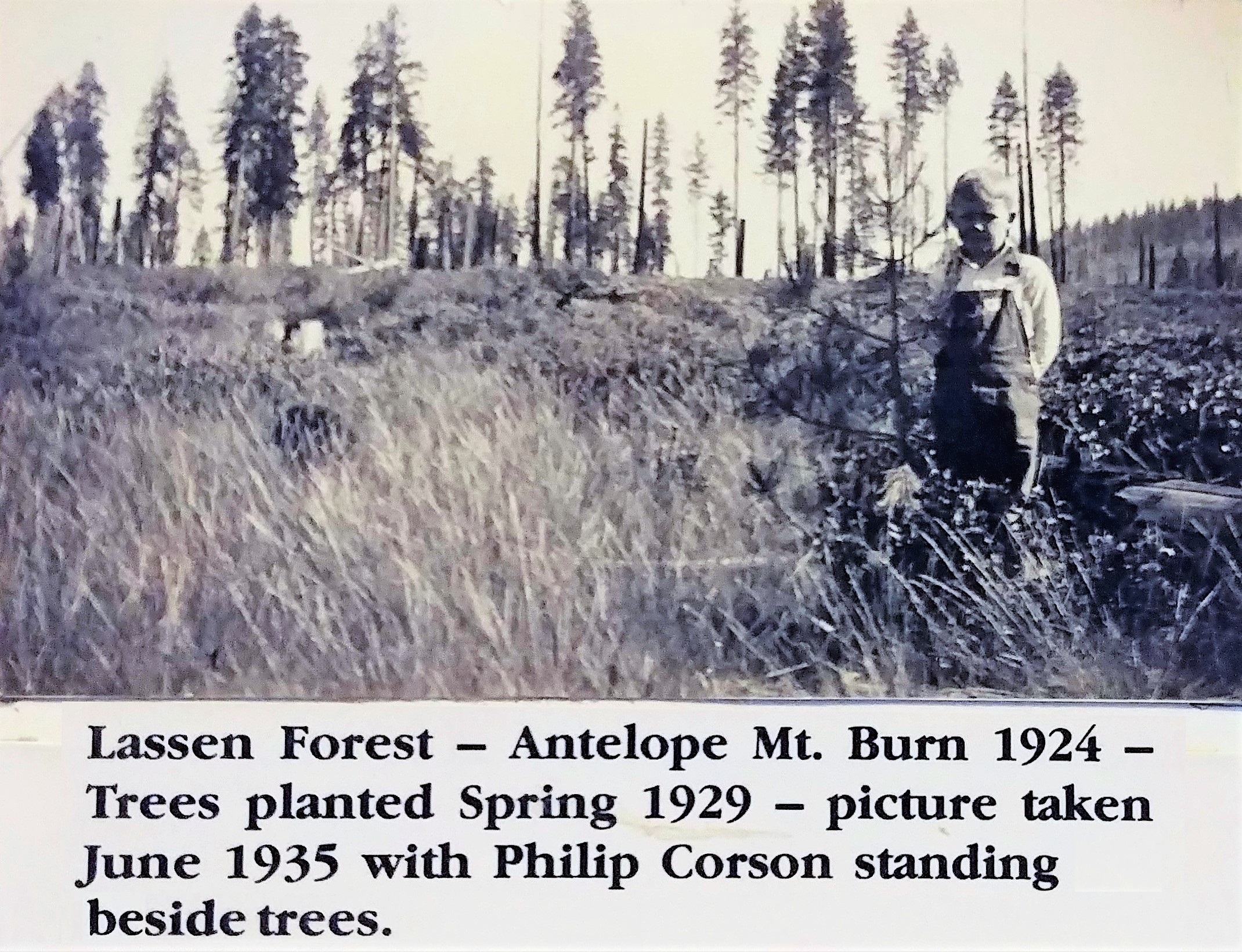
In 1924, Fruit Growers Supply Company’s logging operations was on the west side of Antelope Mountain near Eagle Lake. On July 28, a fire broke out there caused by a steam donkey operating between Camps D and F. It would in the end consume some 7,000 acres.
Three years later, the Lassen National Forest sent Fruit Growers a bill $156,000 in damages for 2,000 acres of forest service land that had burned in the fire. During ensuing negotiations it appeared the Forest Service wanted really was not the money, but reforestation.
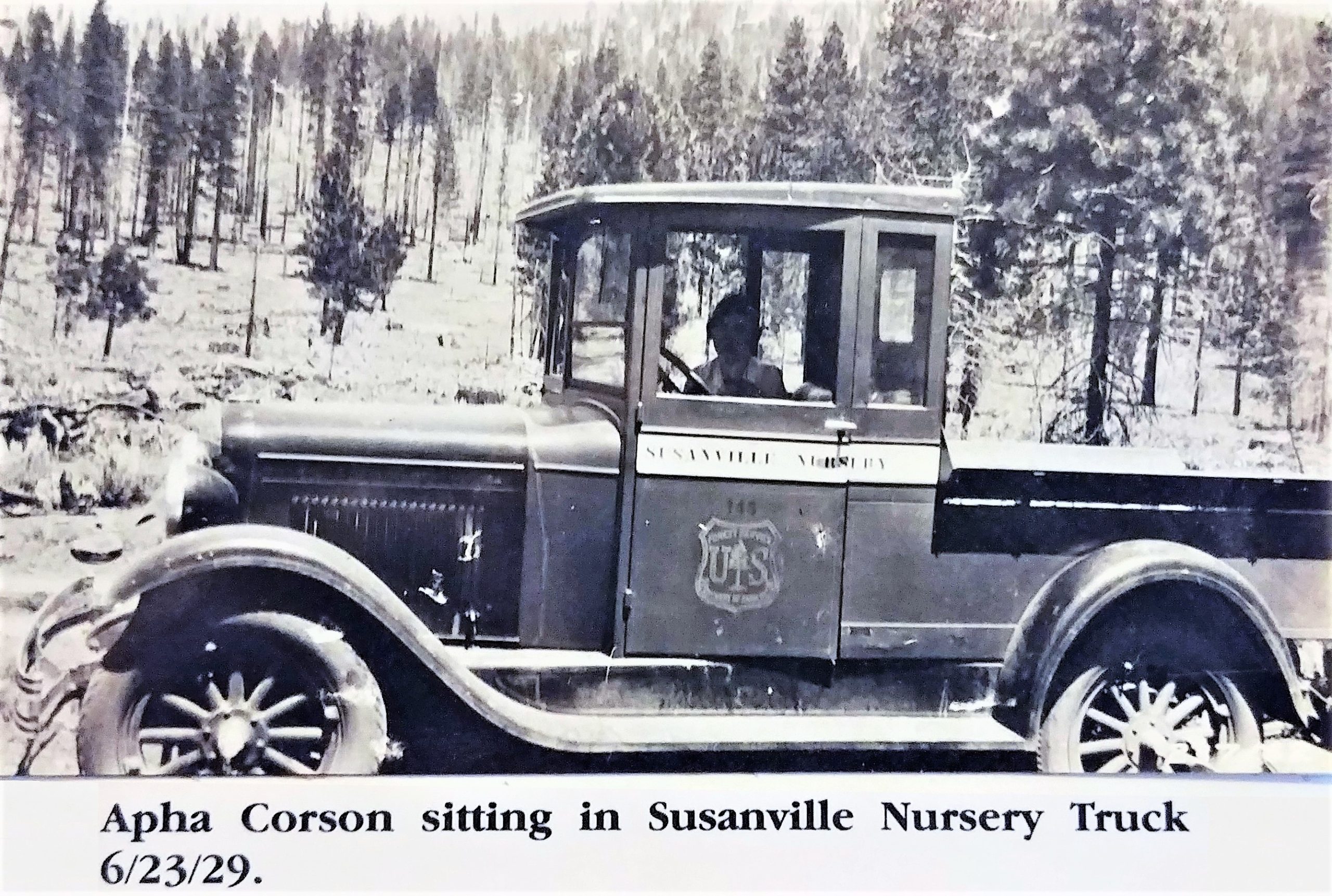
Courtesy of Kevin Corson
A settlement was reached. Fruit Growers agreed to replant the burned over Forest Service land, plus an additional 20,000 acres and to contribute $1,500 over the next ten years for reforestation. Fruit Growers even established a small tree nursery at their Susanville mill.
The cookhouse operations at logging camps were an expensive undertaking resulting in substantial losses for the lumber company. However, the food served in the logging camps played a pivotal role. Poorly fed loggers would move to a different logging company, and thereby impact the former company’s production.
In 1948, Fruit Growers Supply Company experimented at its Camp Harvey location (some twenty miles east of Poison Lake) by raising the price of a meal to one dollar. Complaints were loud and long. But now, instead of losing thirty-six cents per meal, they now lost only eight cents. The result was substantial and at the end of the year, Fruit Growers’ operating losses for the cookhouses at Camps Harvey and the newly opened Camp Stanford was $63,500.
Camp Harvey Dining Car
On May 2, 1949, Camps Harvey and Stanford opened for another season. In an effort to further reduce the cookhouse expenses, Fruit Growers leased them along with the commissaries, to H.S. Anderson Company for one dollar. Fruit Growers thought perhaps an outside company could handle the meals more efficiently. They would never find out the answer.
Just three weeks into the logging season all operations on the Harvey line shut down. The cookhouse crews, represented by Local 768 of the Bartenders and Culinary Workers Union, walked off the job in a wage and hour dispute with H.S. Anderson Company. As the weeks passed with no end of the strike in sight, Fruit Growers closed down Camp Harvey and Stanford permanently, as well as its Harvey railroad logging line.
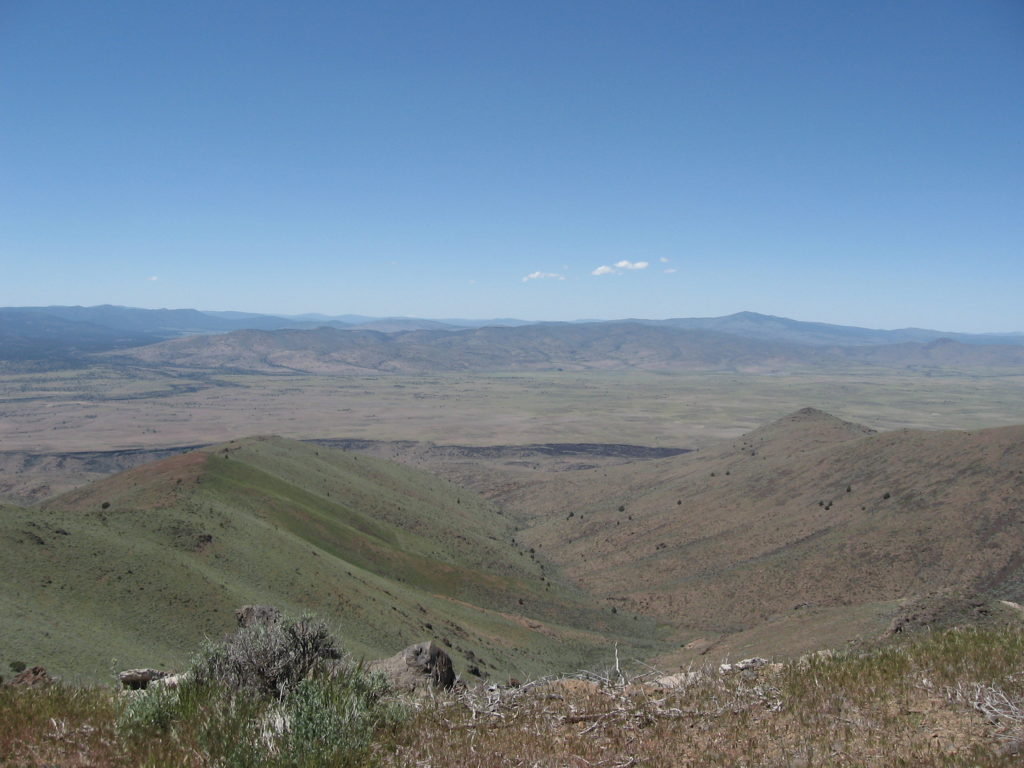
A view of the Tablelands in the distance from Shaffer Peak.June 13, 2018
Susanville and the Nevada-California-Oregon Railroad (NCO) had an awkward relationship since the railroad’s inception. At first it was idyllic as the initial railroad survey would enter Susanville. Then things deteriorated when in 1887, the NCO decided to bypass the west side of the Honey Lake Valley, to the remote east side of the valley.
The strained relationship never improved. In 1899, when NCO extended its line north to Hot Springs Station (Wendel) Susanville residents reached out to the NCO with a proposal. They tried to persuade NCO officials to build a feeder to line Susanville. They cited the potential to tap the vast timber resources to the west. The answer was no. However, if the residents wanted to finance it at a cost of $100,000 the railroad would be agreeable. That was not going to happen, since the community could not even raise $500 to build a town hall.
Fast forward twenty-one years later. The NCO was in financial shambles. In 1917, it sold the southern segment of its line from Hackstaff (Herlong) to Reno. In 1921 the NCO petitioned the Interstate Railroad Commission to abandon its line, due to substantial operating losses. After several public hearings the commission denied the request. It said the railroad could reduce its costs by operating a tri-weekly service instead of daily, eliminate the president’s $10,000 a year salary and close its New York office.
Ironically, Susanville once again courted the Morans, owners of the NCO. This time it was Russell Brownell of the Lassen County Chamber of Commerce who spearheaded the movement. He wanted the NCO to reroute its line from Snowstorm across the Tablelands to Belfast thence to Susanville as the terminus. This would provide Susanville with an alternate railroad to serve the northern sectors. The plan received wide spread support, and the Fruit Growers Supply Company donated its services and surveyed the proposed route. However, the NCO’s president, Charles Moran balked at the idea. Brownell informed Moran that if Susanville was the terminus it could double that line’s tonnage, and save the financially troubled railroad. Brownell died suddenly in January 1923, and with his death the proposal also died. In February 1923, Moran changed his mind and said he would like Susanville to be terminus, but the railroad could not finance it. It was a costly delay on Moran’s part, since the old offer was no longer valid.
In 1925, the NCO entered into an agreement to sell the beleaguered line to the Southern Pacific. In 1926, Lassen County officials approached Southern Pacific with Brownell’s proposal, though it went nowhere.
In early 1922, the Lassen National Forest Service advertised it was accepting bids for the Pine Creek Unit timber sale just west of Eagle Lake. This was no ordinary timber sale—it consisted of nearly one billion board feet of merchantable timber! Of course, there were terms and conditions that applied.
The buyer would have twenty to thirty years to harvest the timber. To protect the lands for the future, harvesting was restricted to a maximum of 37 million board feet a year, and only 70 percent of the original timber volume per acre was to be cut. On April 2, 1922, the bids were opened. The following day, Fruit Growers Supply Company bid of $3,314,000 was accepted. The money spent in increments on a pay-as-you-cut basis.
Fruit Growers did have a competitive edge. Their Collins Tract and the Pine Creek Unit were intermingled. Since it was stipulated that only a limited amount of timber could be harvested was not particularly attractive to many lumber companies. Finally, Fruit Growers had already adopted a sustained yield forest management policy, another requirement of the forest service.
As the Lassen National Forest would monitor the sale, it was determined to move its headquarters from Red Bluff to Susanville.
In 1955, Fruit Growers Supply Company announced its closing of the Westwood mill. Over the hill in Susanville, many pondered when Fruit Growers might do the same there. The Susanville mill would receive a brief reprieve.
In 1957 six paper companies were interested in Fruit Growers cutover lands in Lassen County. While California ranked second in the nation for lumber production, there was only one paper/pulp plant in the state. Fruit Growers had debated at one time to convert the Susanville mill into such a facility, but it was just not going to happen.
On November 7, 1962 the beginning of the end was announced with the closure of the Susanville mill. The woods employees were permanently laid off. The mill would remain in operation until the logs on hand were processed. On May 13, 1963 the last log was sawn. Shortly afterwards the remaining employees terminated and the mill closed. There being no buyers it appeared the mill was destined to be dismantled. It did receive a last minute reprieve with negotiations of Crook & Emmerson, but that is another story. On April 30, 1964, Homer Vincent closed Fruit Growers” Susanville office.
After World War I lumber companies began implementing modernization of logging methods. The adaptation of caterpillar tractors proved to be efficient and cost effective. As advances were made on different fronts, one area was lacking—the falling of timber.
An electric saw powered by a D-2 cat. Courtesy of Fruit Growers Supply Company
World War II created all kinds of shortages and labor was one of many. Fruit Growers Supply Company’s 1946 Annual Report provides an interesting glimpse in regards to timber fallers and labor.
”One place in the lumber industry where the use of mechanical equipment has not improved costs is in the falling and limbing of trees in the woods. Until the power saws came along, all of this work was done with hand tools on a contract basis where increased production meant increased earnings to the worker. With the advent of power falling saws, this work changed from a piecework basis to a straight-time basis and as a result costs actually increased. There is no valid reason why power falling saws should not result in lower costs than hand falling and also result in higher earnings to the man on the job. One factor in this change is that skilled help was drawn away from the woods by high wages offered elsewhere and by the military services. Hand fallers are highly skilled, but the substitutes for hand fallers who operated power falling equipment did not require much skill for the job and most of them have not attempted to acquire speed with the power equipment. There has grown up considerable resistance to piecework methods in recent years. Efforts are being made by the industry to get back to a contract basis for this type of work.”
Bucking a log—FGS Co.
For a little bit of clarification about the contract work. Timber fallers for years were paid by the scale of the board feet felled. These men made very good money, considering the size of the trees then. As late as the 1970s, timber fallers were still being paid by the scale.