Tag Archives: Fruit Growers Supply Company

Susanville Ranch Park, Part II

The ranch as it appeared in 1922, when Fruit Growers owned it.

On October 30,1919, the Fruit Growers Supply Company purchased it from McKissick Cattle Company, for approximately $29,000. Fruit Growers anticipated using Bagwell Springs for a water supply and they would use the ranch land to provide winter pasture for the horses they used in logging. Fruit Growers constructed a water pipeline from the ranch to the mill, but it was never used due to litigation filed by other water right users. Fruit Growers briefly operated their own dairy there and, in 1923, leased it to the O’Kelly family who operated Lassen Dairy through the 1950s. In 1934, Fruit Growers offered to sell the ranch to the City of Susanville. Fruit Growers cited it would make an ideal golf course, that the money received from the golf course could be used to develop the remainder of the property into a park. The City liked the idea, but said no. In 1935, Fruit Growers sold the ranch to the Republic Electric Power Company who wanted to acquire Bagwell Springs as an additional water supply for Susanville. Over the years, that Company went through numerous reorganizations and became CP National. In 1984, CP National donated the ranch to Lassen County, and it is now a county park.

An interesting footnote to the story is that Lassen Community College examined the property for a future campus back in the 1960s, but the asking price was too expensive.
It is never too late, subscribe today and enjoy tomorrow with daily notifications. You can also surprise someone with a gift subscription.

Westwood Junction

Westwood Junction
Westwood Junction

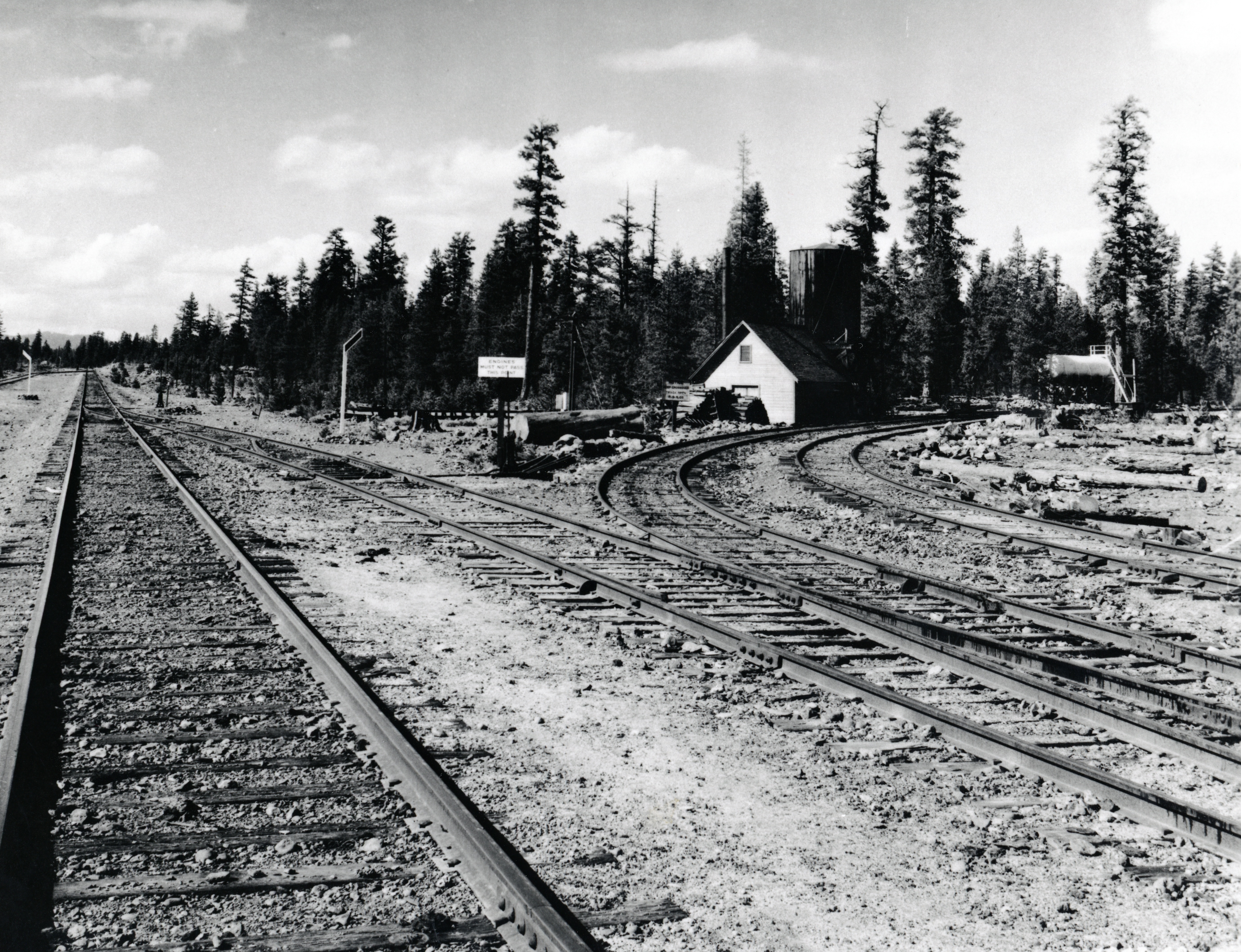
As its name implies it was a real junction. The railroad constructed a spur to the south to Westwood. The Southern Pacific’s real goal was to extend the line north to Klamath Falls, Oregon. It was after all, the Red River Lumber Company’s intent to build several mills, the next one scheduled for near Lookout. By 1917, the Southern Pacific was anxious to extend the line north, but Red River was not ready. The mammoth mill at Westwood was more than it could handle. In the meantime, the Southern Pacific was nervous that its competitor the Western Pacific might extend a branch to Westwood and siphon off traffic, since Southern Pacific’s five-year all inclusive freight deal with Red River was about to expire.

Then came along World War I and that changed everyone’s plan. When the war ended, the nation went into a severe recession, so expansion was off the table for many.  Red River kept adding more divisions to its lumber manufacturing plant. In the meantime, the Southern Pacific focused on the troubled Nevada-California-Oregon Railroad, as an alternative route north of Oregon, which it eventually did.

The site, it should be noted,  also served as a junction for the railroad logging operations of the Fruit Growers Supply Company and the Lassen Lumber & Box Company.

It is never too late, subscribe today and enjoy tomorrow with daily notifications. You can also surprise someone with a gift subscription

Lassen County Deer Hunting

Deer Hunt
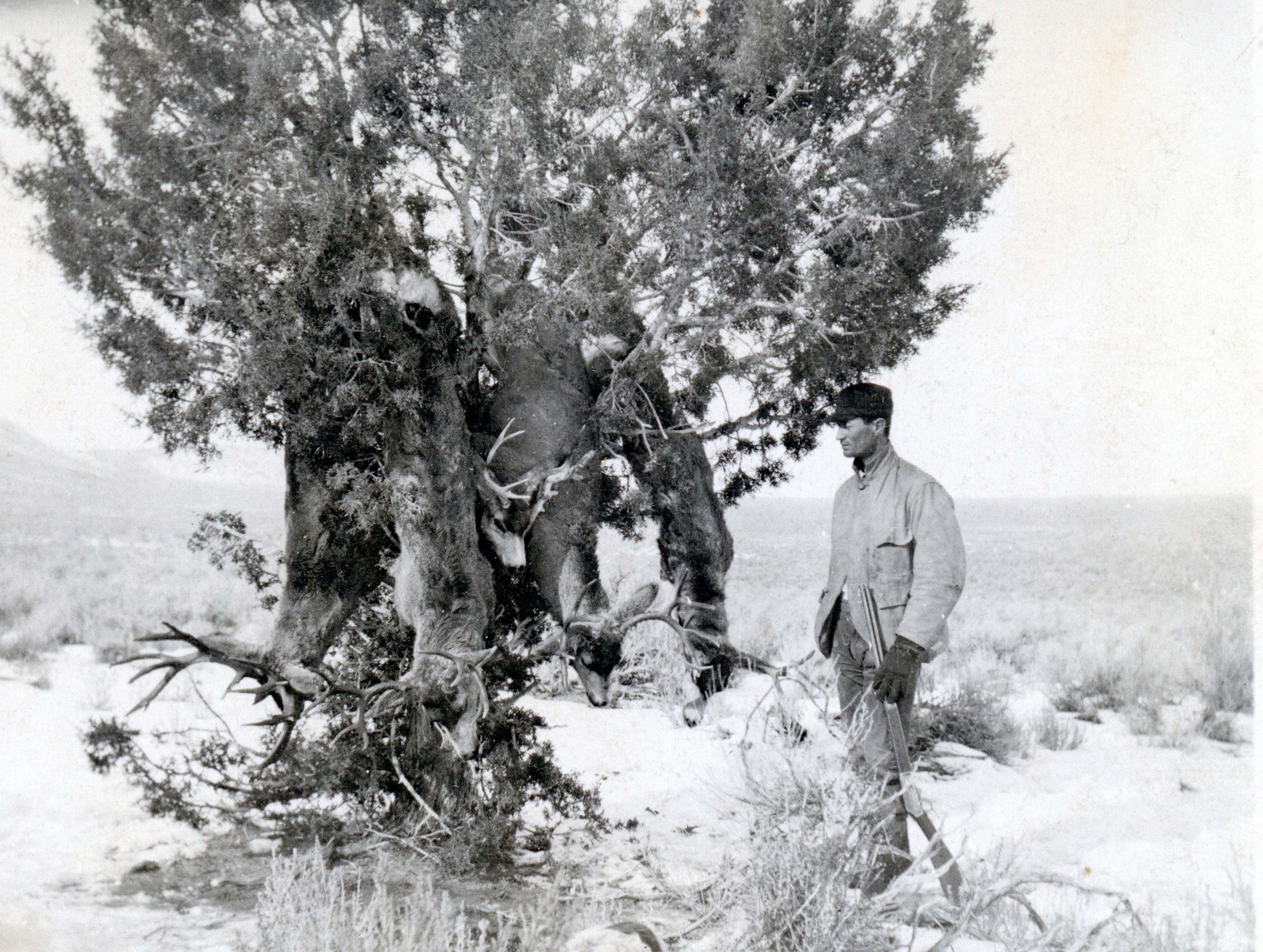
A successful hunt near Skedaddle, 1906. Courtesy of Marge C. Foster

Once upon a time, a person was not confined to deer hunting in a particular zone. By the 1940s with significant improvements to highways and automobiles opened a lot of territory to hunters, once the domain of locals.

The Fruit Growers Supply Company operated lumber mills in Hilt, Susanville and Westwood. While researching its history, I always came across some interesting material. Fruit Growers’ Annual Reports are a wealth of information. Before you think I am losing my sanity writing first about deer hunting and then lumber mills, there is a common thread.

The following is a most interesting excerpt from Fruit Growers’ 1946 Annual Report:

“Much of the country in which Company timber is located is considered to have good deer hunting, and the deer season opens at a time when the woods are in the driest conditions and when the fire hazard is the greatest. The handling of the large influx of people into the general Northern California area during the deer hunting season constitutes a very serious problems to all owners and agencies interested in timberlands. In 1946, hunters and their parties were registered as they entered Lassen County area, and during one week’s time, close to 5,000 automobiles and 13,000 individuals registered as potential deer hunters. Thus more hunters were checked into Lassen County than its normal population. Despite this, the Company was fortunate in its 1946 experience with forest fires.”

Subscribe and support this site for little as $4.17 a month.

Lunch Time

Lunch time
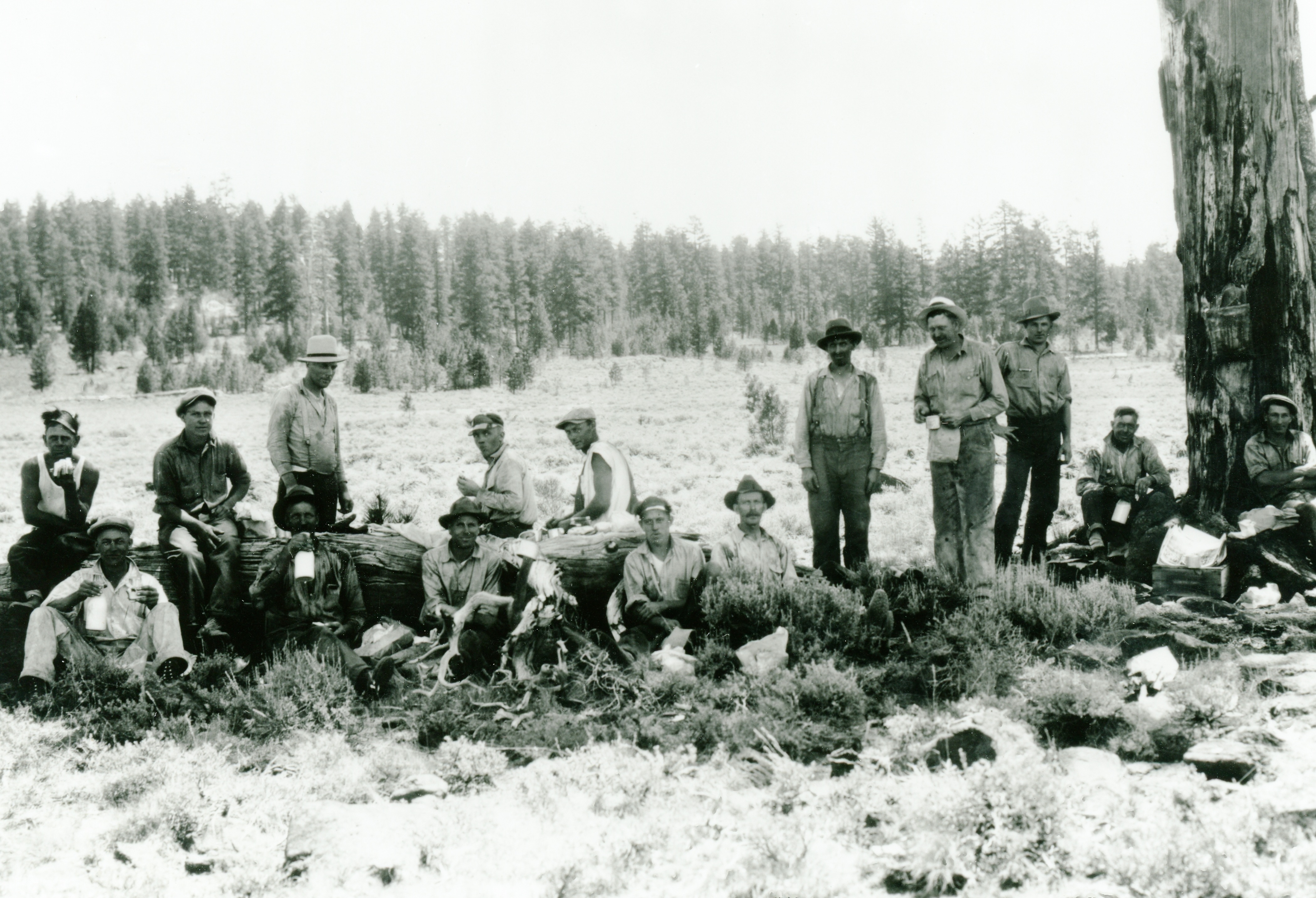
Loggers having lunch. Courtesy of the Fruit Growers Supply Company

I know hardly anything about this photograph, however, for reasons unknown I just like it. It is a woods crew of Fruit Growers Supply Company working from Camp Ten in 1932. Notice the two men on the far left with quart bottles of milk. Does anyone know how the milk was kept somewhat cool?

Subscribe and support this site for as little as $5.00 a month

Pine Creek Valley

Pine Creek Valley
Pine Creek Valley, June 18, 2015

Traveling across Highway 44, the Pine Creek Valley appears to be a desolate wind swept sagebrush flat, surrounded by pine trees. While in a sense that maybe true today, with a great deal of human activity concentrated at the Bogard Rest Station. By the way the area is named for John Jasper Bogard, a Tehama County stockman, who in the mid-1870s started using the area for summer grazing of sheep. Actually, the region was home to many sheep outfits, such as Champs, McCoy and Stanford, the latter as in Stanford University. These sheep outfits had a huge impact on western Lassen County, and so many of the natural features were named for them. My Lassen County Almanac: An Historical Encyclopedia contains all the details and more. Continue reading Pine Creek Valley

That Old Barn Update

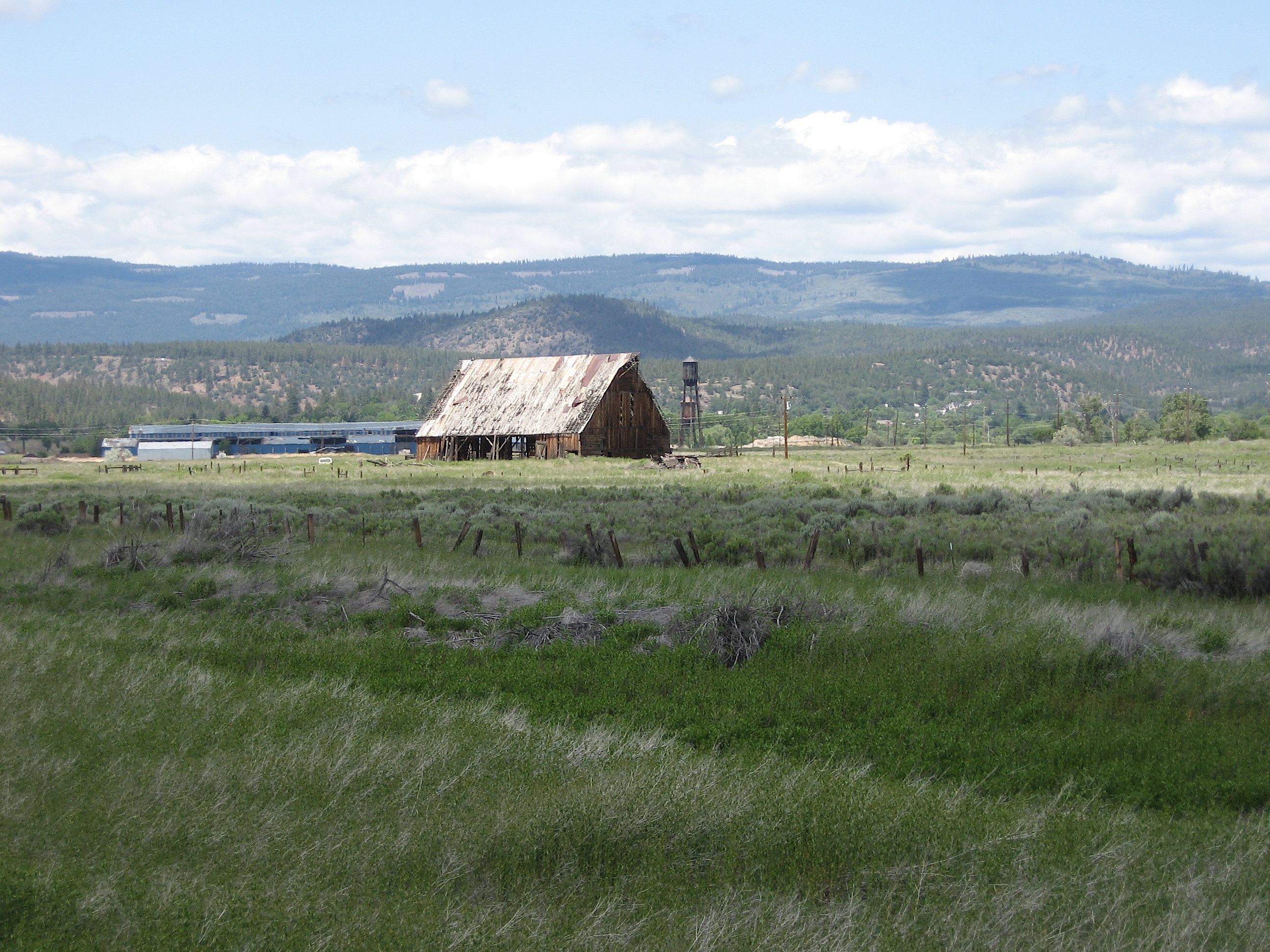
FGS barn
The old Fruit Growers barn, June 2, 2015

The barn was destroyed by fire the night of June 16, 2015.  A transient caused the fire from a cigarette, thought to be extinguished, but that was not the case.

Routinely, when I am out and about someone will ask me a question about this or that. In many instances, I am able to provide an answer. Every now and then I get stumped with a doozey. In this particular instant, it was the old barn at the east end of Susanville, just past McDonald’s.

The barn sits like a lone sentinal these days. There used to be a small white painted caretaker’s house there, occupied for a number of years by Grant and Lena Trumbull. One of the oddities about the barn is it is far removed from any ranch. After extensive sleuthing it was built in 1920/21 for the Fruit Growers Supply Company, who were in the midst of constructing their new sawmill/box factory nearby. Continue reading That Old Barn Update

The Wooden Box

Box Shook
Box Shook at Westwood

What a difference a hundred years make. One of the biggest components in the lumber manufacturing business was box shook. These wooden slats were shipped from the lumber mill, where they would be assembled at a packinghouse in the fruit and vegetable industry. This was prior to cardboard and the majority of produce was shipped in wooden boxes. To understand its impact, take a look at the Depression of the 1930s. Nearly half of all lumber manufactured then went into making box shook.

Cardboard was experimented with during World War I, but it did not prove satisfactory to the growers. Major improvements were made to the cardboard box during World War II, and slowly the grocers accepted the new container. Sunkist was one of the last holdouts in the conversion, and in 1955 discontinued the wooden box for the cardboard box. Continue reading The Wooden Box

Camp A – Fruit Growers

In the summer of 1920, Fruit Growers started their logging operations near McCoy Flat Reservoir, while their Susanville mill was still under construction. Since logging then, was seasonal in nature, they wanted to make sure they would have a steady supply of logs ready when the new mill would be placed into operation in the spring of 1921.

Camp A
Camp A, Fruit Growers Supply Company, 1921

Camp A was the first of ten railroad logging camps of Fruit Growers Lassen Operation. It opened on July 1, 1920. The operation was comparatively small, only logging 720 acres that season. On April 29, 1921 the first woods crews were dispatched by rail, where they encountered three foot of snow on the ground. The first item of business was to remove the snow from the railroad spurs, so that the timber fallers could start work. Within in a weeks’ time, logs were already being shipped to Susanville. In addition, a second camp, known as Camp B, opened three miles to the north of Camp A. Between the two camps, they housed over 600 men.

Tomorrow: The Chester Causeway