The old English proverb necessity is the mother invention was widely adopted locally. For years Fruit Growers searched for an effective way to reduce grass around its millsite for fire protection. In 1937, someone came up with the brilliant idea to bring in a band sheep to graze the mill property. Problem solved and they called the new addition to their workforce “Lassen Lawnmowers.”
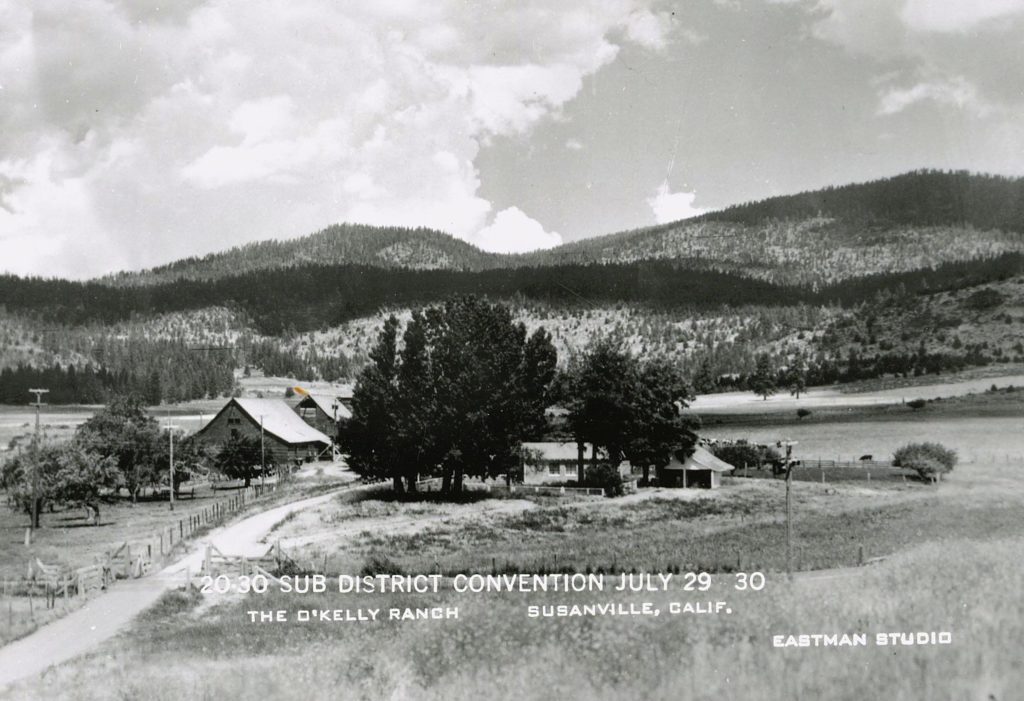
Well, can you believe it, it has been two years on Thursday that the old barn at the east entrance to Susanville was destroyed by a fire. It was built in 1920/21 for the Fruit Growers Supply Company, who were in the midst of constructing their new sawmill/box factory nearby. Continue reading A two year anniversary→
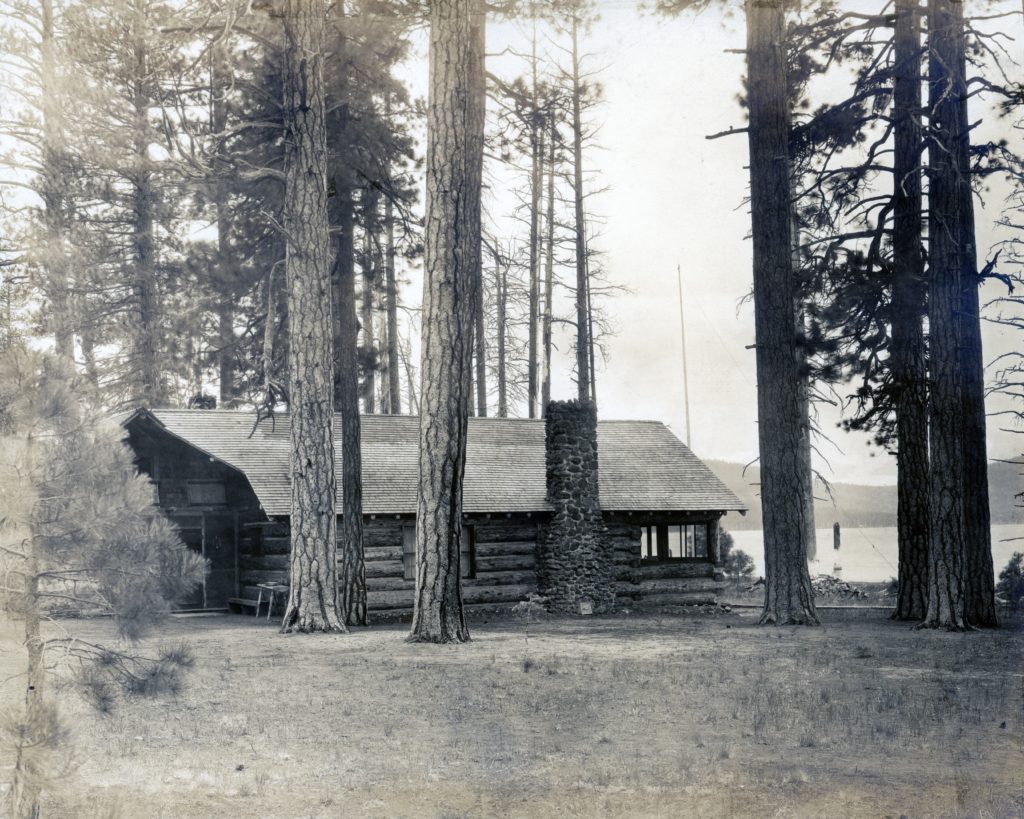
R.F. Pray’s Eagle Lake cabin. Courtesy of Wyn Wachhorst
While I have focused a lot on the Gallatins, there were a few other cabins built at the south shore of Eagle Lake, on the handful parcels the Gallatins did not own. For the record, it should be duly noted that the Gallatins at one time gave consideration of providing cabin sites on a lease basis, but that never transpired. Continue reading Eagle Lake Cabins→
The machine shops of the three lumber companies Fruit Growers Supply, Lassen Lumber & Box and Red River Lumber were amazing operations. When these mills were established it was in a time of transition where within fifteen years logging operations would go from horses to traction engines. The sawmills themselves were caught in this phase as well.
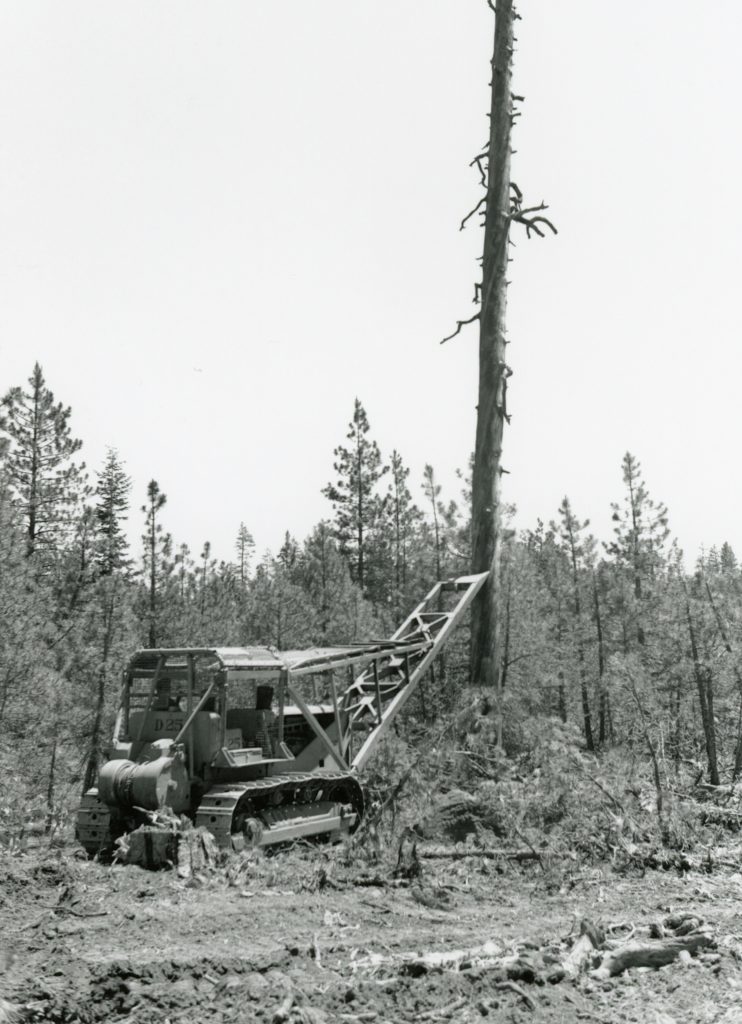
Whether it was a mill foreman or a logger when a person had an idea, they went to the machinist who in their innovate ways came up with a new tool or machinery component. In the 1950s, Fruit Growers Westwood Operation developed a snag pusher to knock down dead trees deemed a hazard for use on the Lassen Operation (Susanville).
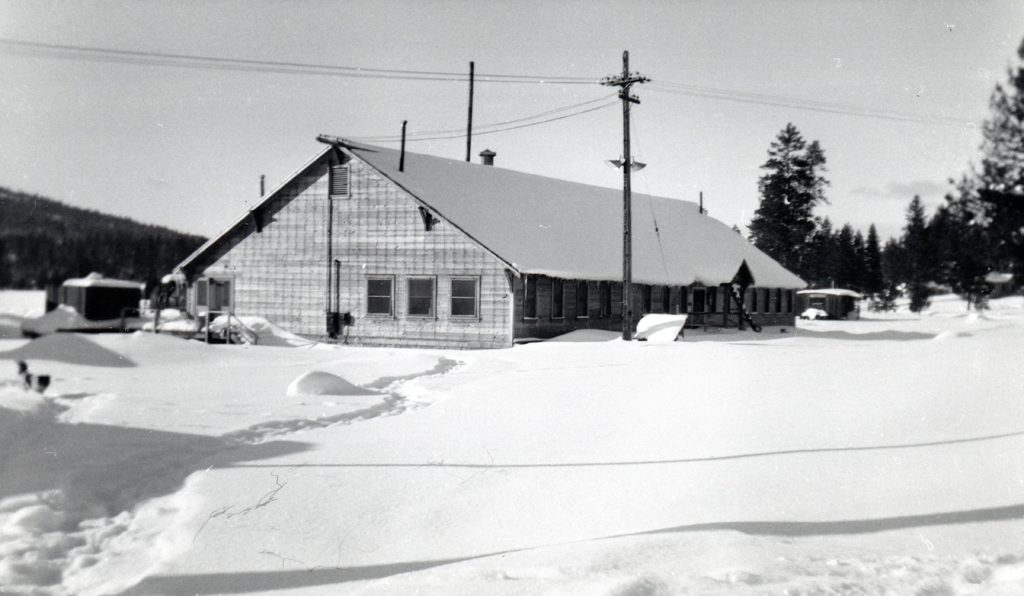
Recently, I sent a email to subscribers with the attachment of a photograph of the Fruit Growers Supply Company’s cookhouse at Camp 10, which is depicted above. Several people indicated they wanted to know more, so without further adieu . . .
Fruit Growers operated ten railroad logging camps in the region west of Eagle Lake. In 1928, Camp 10 was established at the northern end of Pine Creek Valley and was not only its largest camp, but also in length, for it remained in operation until the end of the logging season of 1952. In the summer, its population could swell to 200, and by winter reduced to one lone caretaker.
On August 29, 1950 at around 2:00 a.m. the camp was awakened by a fire–the cookhouse engulfed in flames. In addition, it spread to the commissary, warehouse, office and oil shed. Fortunately, there were no winds where the fire could spread further. When all was said and done, Camp 10 timekeeper, George Farris commented, “It was the most spectacular fire I had ever seen.”
The springs are located on the mountain side behind the ranch house compound. Courtesy of Hank Martinez
A subscriber wanted to know more about Fruit Growers Spring, also known as Bagwell Springs. These springs are located north of present day Susanville Ranch Park.
The springs were named for James Washington Bagwell, who located on 160-acres that included the springs. In 1893, he sold out to George W. Long for $300. In 1901, William Black Long claimed rights to this spring that he designated as Bagwell. In 1919, the Fruit Growers Supply Company purchased the property for its water rights. For a number of years the spring was known as Fruit Growers Spring. It appears with that designation in the decree of Fleming v Bennett—the adjudication of the Susan River watershed. In 1935, Fruit Growers sold the spring to the Republic Electric Power Company, who purchased it as an additional water source for Susanville. Thereafter, the spring was once again referred to as Bagwell. The springs are now owned by the City of Susanville, which are used in conjunction with the city’s water system.
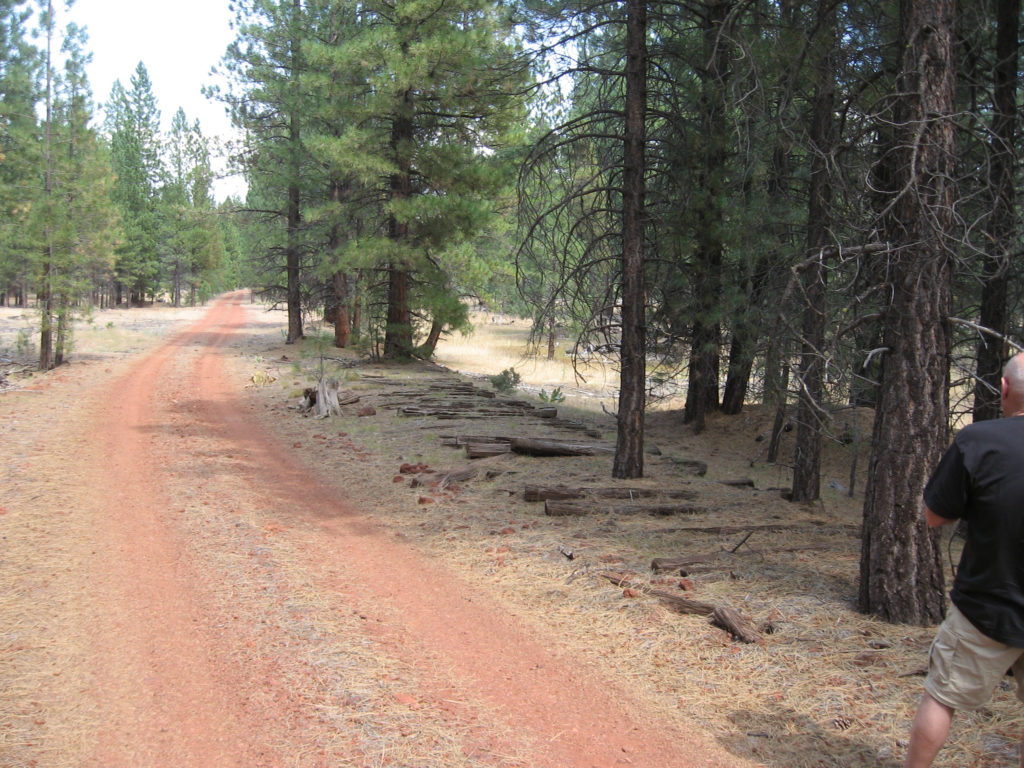
It was one of those days, that I had a lapse of better judgment should have, but did not take a picture of Shay’s Hole. However, about a mile down the road, we stopped to take pictures of these old railroad ties still in place. August 18, 2016.
Back in August on one of several excursions, it was the intent to check out Camp Harvey east of Poison Lake. Well, we did not quite make it there and found ourselves first traveling through Pine Creek Valley and onwards to Champs Flat. At Champs it was decided to follow a particular road, to see whether it would take us north towards Camp Harvey.
Anyhow, following an old railroad grade of the Fruit Growers Supply Company we came upon Shay’s Hole that was used to supply water for the Shay locomotives, that were an integral part of railroad logging.
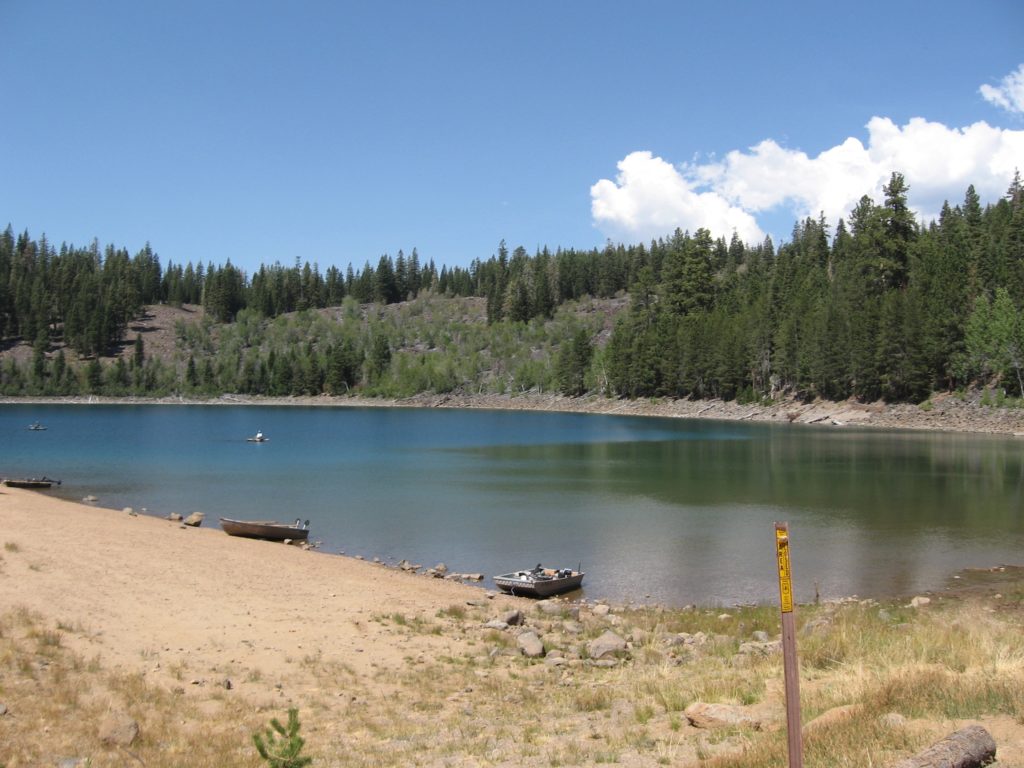
Crater Lake is located seven miles east of the Bogard Rest Area on Highway 44. In 1907, Lassen National Forest Supervisor, Louis A. Barrett, included this lake in his inventory of proposed National Monuments, the other two being Lassen Peak and Cinder Cone. The lake remained inaccessible for years, except for hardy hikers who climbed the mountain. In 1952, the Fruit Growers Supply Company constructed a logging road to the 35-acre lake that is situated in a volcanic crater, on lands owned by the Lassen National Forest. The Forest Service originally proposed to offer summer home sites, but established a campground instead.
The Red River Lumber Company was unusual in that it did not routinely have commercial films made of its operations, as their competitors did. It was deemed a good business practice to show prospective retail buyers, as well as investors, of one’s operation. In the 1930s, Red River officials debated the issue, particularly as it might be beneficial if forced to sell Westwood. On the other hand Red River’s neighbor the Fruit Growers Supply Company routinely had films made. For them it was important for the citrus growers to see what was involved with their investment.
In the summer of 1928 Caterpillar tractors sent a camera man to Westwood to film Red River Lumber Company’s entire operation–from the falling of trees to finished board. Caterpillar was interested in Red River’s operations. Red River’s skilled machinists were constantly making improvements to Caterpillar tractors. Among old time Red River employees there was the folklore that Red River had more patents on Caterpillar tractors than Caterpillar. Whatever the case may be, in November 1928 the film made its debut at the Westwood Theater.
It would be interesting to know if the film exist in Caterpillar archives. After all, Fruit Growers had a 1925 film of their Lassen Operation in their archives.
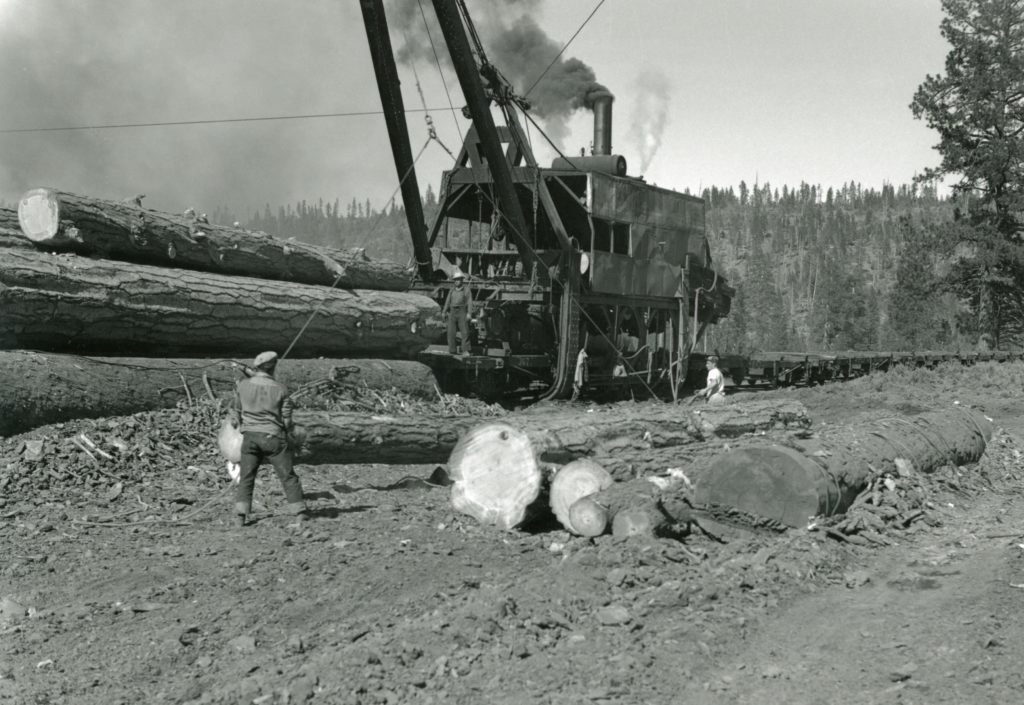
Loading logs with a McGiffert, at McCoy Flat, 1952.
While many are familiar with McCoy Flat Reservoir along Highway 44, there is another McCoy Flat in Lassen County, This too, was named for another Tehama rancher, Leo Lewis McCoy (1850-1936) who used this area for summer pasture from 1874 to 1913. When he retired in 1913, he sold his ranch of 27,000 acres to Alden Anderson for $150,000.
For the record, this McCoy Flat is located along Pine Creek, just east of Eagle Lake. In 1952, it was the scene of the last of the railroad logging operations of the Fruit Growers Supply Company.