Tag Archives: Fruit Growers Supply Company

Bagwell aka Fruit Growers Spring

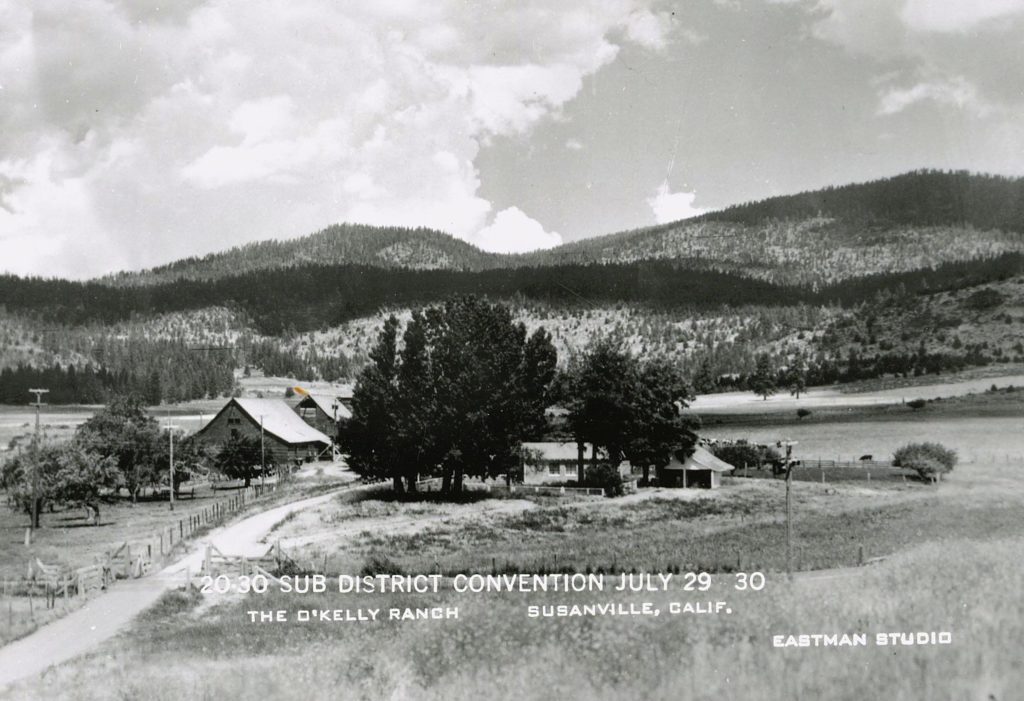
The springs are located on the mountain side behind the ranch house compound. Courtesy of Hank Martinez

A subscriber wanted to know more about Fruit Growers Spring, also known as Bagwell Springs. These springs are located north of present day Susanville Ranch Park.

The springs were named for James Washington Bagwell, who located on 160-acres that included the springs. In 1893, he sold out to George W. Long for $300.  In 1901, William Black Long claimed rights to this spring that he designated as Bagwell. In 1919, the Fruit Growers Supply Company purchased the property for its water rights. For a number of years the spring was known as Fruit Growers Spring. It appears with that designation in the decree of Fleming v Bennett—the adjudication of the Susan River watershed. In 1935, Fruit Growers sold the spring to the Republic Electric Power Company, who purchased it as an additional water source for Susanville. Thereafter, the spring was once again referred to as Bagwell. The springs are now owned by the City of Susanville, which are used in conjunction with the city’s water system.
Subscribe!

Shay’s Hole – Lassen County

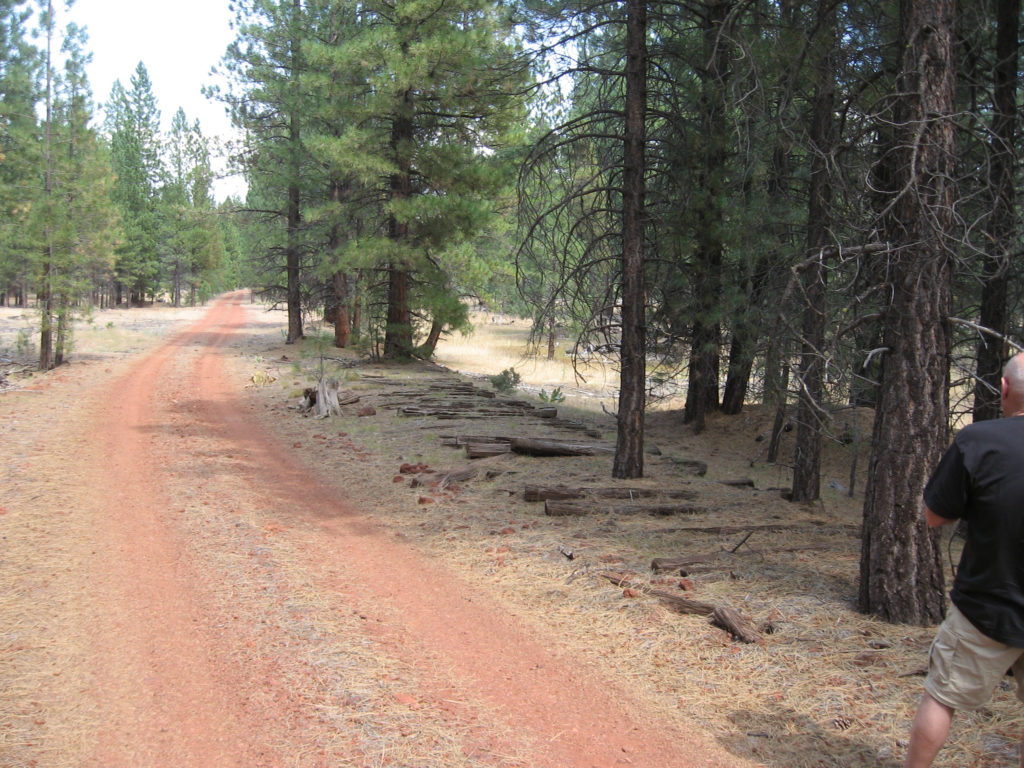
It was one of those days, that I had a lapse of better judgment should have, but did not take a picture of Shay's Hole. However, about a mile down the road, we stopped to take pictures of these old railroad ties still in place.
It was one of those days, that I had a lapse of better judgment should have, but did not take a picture of Shay’s Hole. However, about a mile down the road, we stopped to take pictures of these old railroad ties still in place. August 18, 2016.

Back in August on one of several excursions, it was the intent to check out Camp Harvey east of Poison Lake. Well, we did not quite make it there and found ourselves first traveling through Pine Creek Valley and onwards to Champs Flat.  At Champs it was decided to follow a particular road, to see whether it would take us north towards Camp Harvey.

Anyhow, following an old railroad grade of  the Fruit Growers Supply Company we came upon Shay’s Hole that was used to supply water for the Shay locomotives, that were an integral part of railroad logging.

Support by subscribing

Lassen County’s Crater Lake

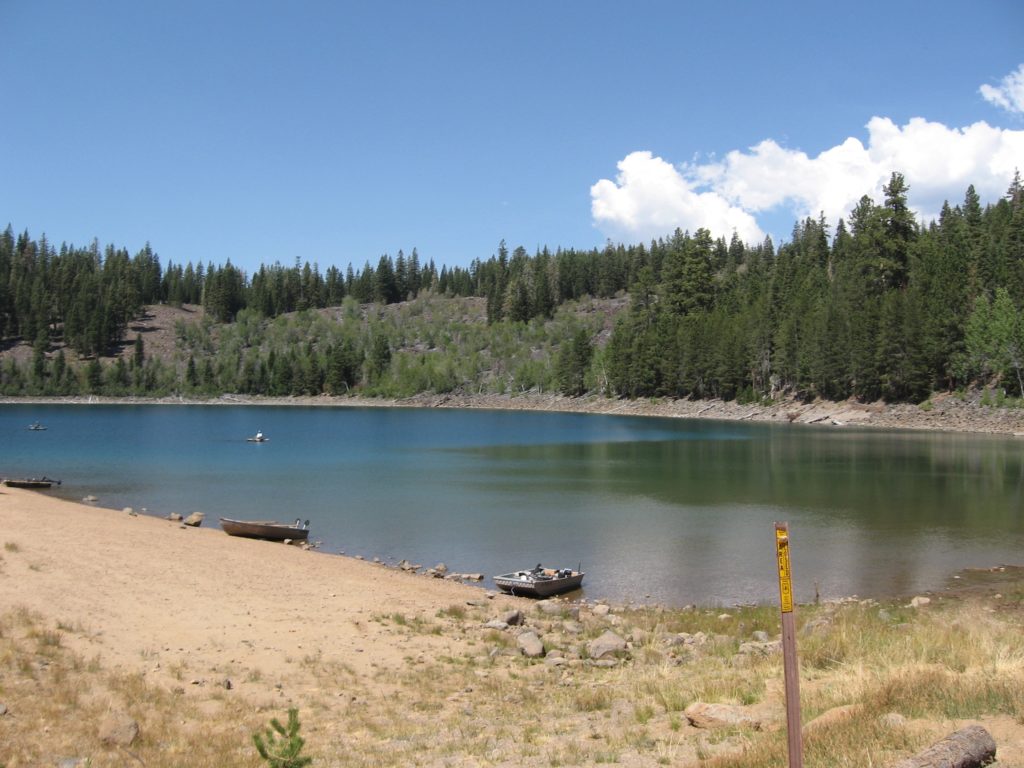
Crater Lake, August 18, 2016

Crater Lake is located seven miles east of the Bogard Rest Area on Highway 44. In 1907, Lassen National Forest Supervisor, Louis A. Barrett, included this lake in his inventory of proposed National Monuments, the other two being Lassen Peak and Cinder Cone.  The lake remained inaccessible for years, except for hardy hikers who climbed the mountain. In 1952, the Fruit Growers Supply Company constructed a logging road to the 35-acre lake that is situated in a volcanic crater, on lands owned by the Lassen National Forest. The Forest Service originally proposed to offer summer home sites, but established a campground instead.

Spread the word, encourage a friend to subscribe.

Westwood in the movies

Westwood Theater. Courtesy of David Zoller

The Red River Lumber Company was unusual in that it did not routinely have commercial films made of its operations, as their competitors did. It was deemed a good business practice to show prospective retail buyers, as well as investors, of one’s operation. In the 1930s, Red River officials debated the issue, particularly as it might be beneficial if forced to sell Westwood. On the other hand Red River’s neighbor the Fruit Growers Supply Company routinely had films made. For them it was important for the citrus growers to see what was involved with their investment.

In the summer of 1928 Caterpillar tractors sent a camera man to Westwood to film Red River Lumber Company’s entire operation–from the falling of trees to finished board. Caterpillar was interested in Red River’s operations. Red River’s skilled machinists were constantly making improvements to Caterpillar tractors. Among old time Red River employees there was the folklore that Red River had more patents on Caterpillar tractors than Caterpillar.  Whatever the case may be, in November 1928 the film made its debut at the Westwood Theater.

It would be interesting to know if the film exist in Caterpillar archives. After all, Fruit Growers had a 1925 film of their Lassen Operation in their archives.

Spread the word, encourage a friend to subscribe.

Lassen County – The other McCoy Flat

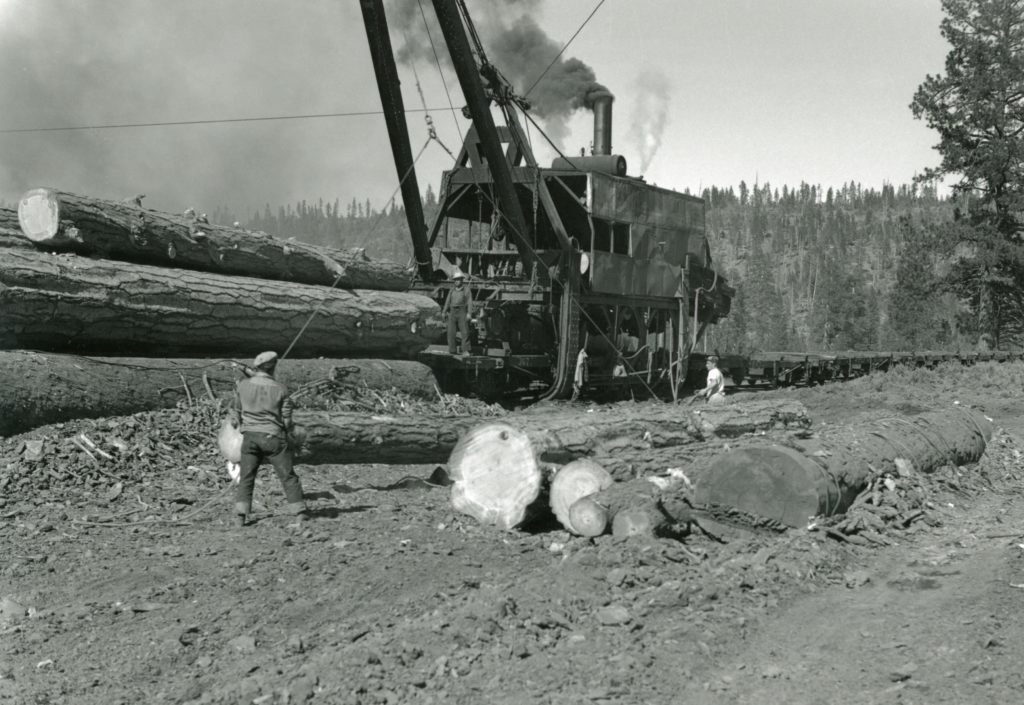
Loading logs with a McGiffert, at McCoy Flat, 1952.

While many are familiar with McCoy Flat Reservoir along Highway 44, there is another McCoy Flat in Lassen County, This too, was named for another Tehama rancher,  Leo Lewis McCoy (1850-1936) who used this area for summer pasture from 1874 to 1913. When he retired in 1913, he sold his ranch of 27,000 acres to Alden Anderson for $150,000.

For the record, this McCoy Flat is located along Pine Creek, just east of Eagle Lake.  In 1952, it was the scene of the last of the railroad logging operations of the Fruit Growers Supply Company.

Never miss a story, click here to subscribe.

Fruit Growers – Camp 11

Camp 10, Cookhouse
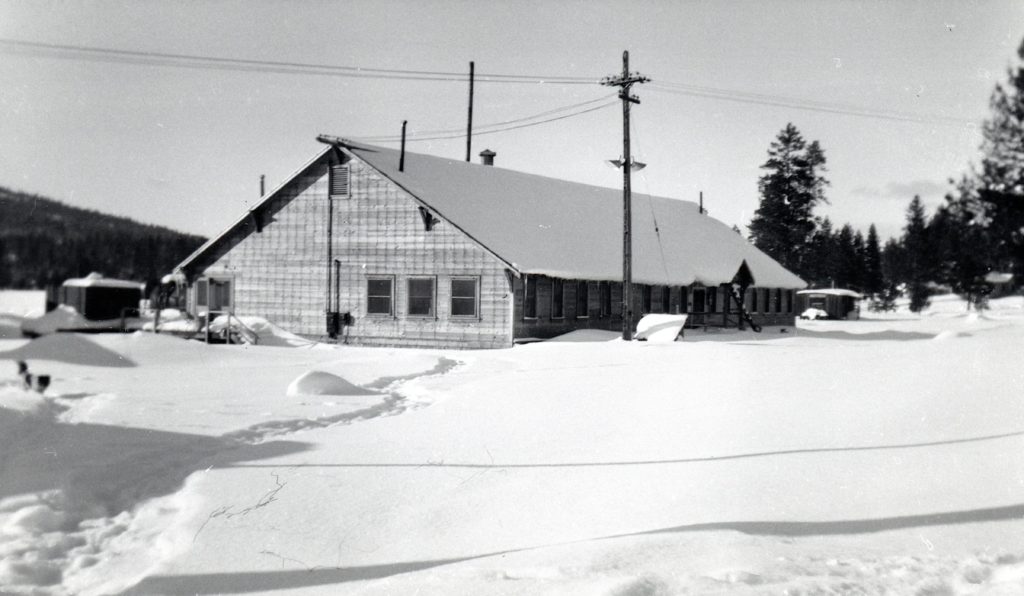
Camp 10, Cookhouse, December 15, 1951. Courtesy of the Fruit Growers Supply Company.

In 1929, Fruit Growers Supply Company consolidated all of its logging camps into one larger camp, known as Camp 10. It was located thirty-eight miles northwest of Susanville near the banks of Pine Creek. Ten years later, Fruit Growers considered leaving Camp 10 to establish Camp 11 on the east end of Champs Flat, about ten miles northeast. In the spring of 1940 that plan was put on hold.

In the early 1940s, Fruit Growers was awaiting a very important government decision on the Wage and Hour Law–whether or not an employee would be paid for travel time to the actual work site. Travel time between Camp 10 and the logging site was 1 to 1 1/2 hours each day. If the government mandated paid travel time, Camp 11 would be established, but not necessarily at Champs Flat. It would not be until 1948 when the government ruled that employees were not entitled to paid travel time, and the need for a new logging camp disappeared.

Never miss a story, click here to subscribe.

Fruit Growers – Story Club

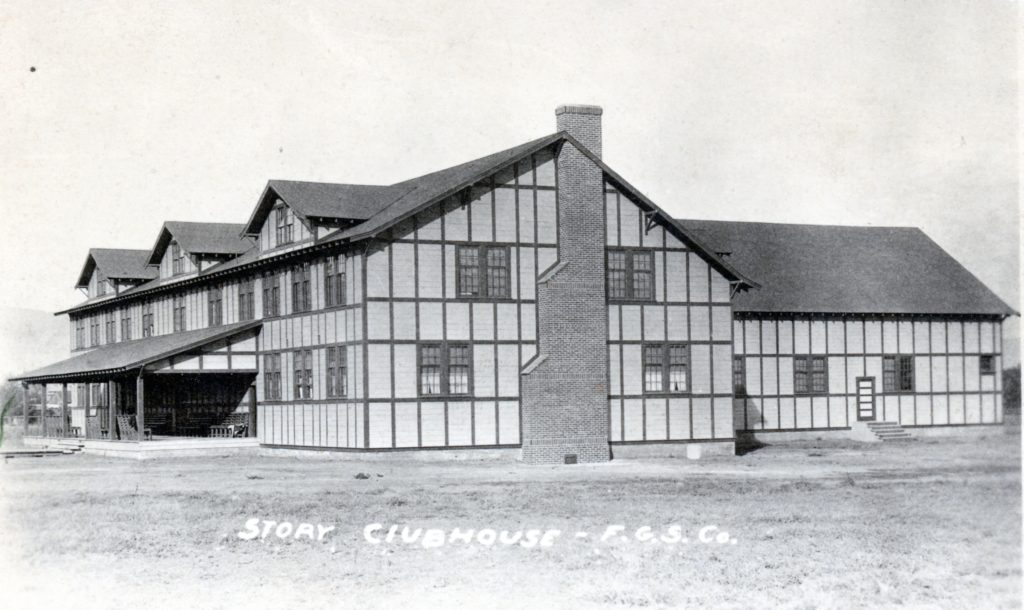
Story Club, 1924. Courtesy of Lola L. Tanner

The Fruit Growers Supply Company operated a lumber mill in Susanville from 1921 to 1963. When it was sold it became the foundation for Sierra Pacific Industries.

In 1910, Fruit Growers found itself as a mill operated at Hilt. It should be noted Fruit Growers is a purchasing agent co-operative for citrus growers known today as Sunkist. This was an era when produce was shipped in wooden boxes, hence the need for lumber. Continue reading Fruit Growers – Story Club

Eagle Lake’s Water Carnival

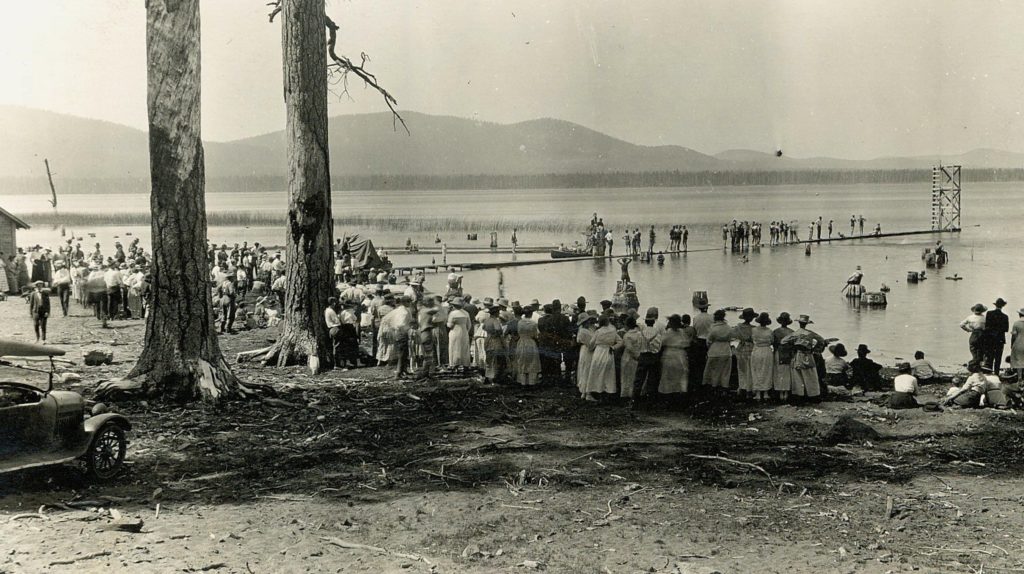
The water carnival at the Sunkist Lodge, 1921. Courtesy of Ed Standard

For two years, 1921 and 1922, the big three lumber companies, Fruit Growers Supply Company, Lassen Lumber & Box Company, and the Red River Lumber Company held a competitive swimming meet between their respective employees. Continue reading Eagle Lake’s Water Carnival

Fruit Growers – Truck Logging

Dow506
Log landing at Coyote Hole, August 21, 1953. Courtesy of Hank Martinez

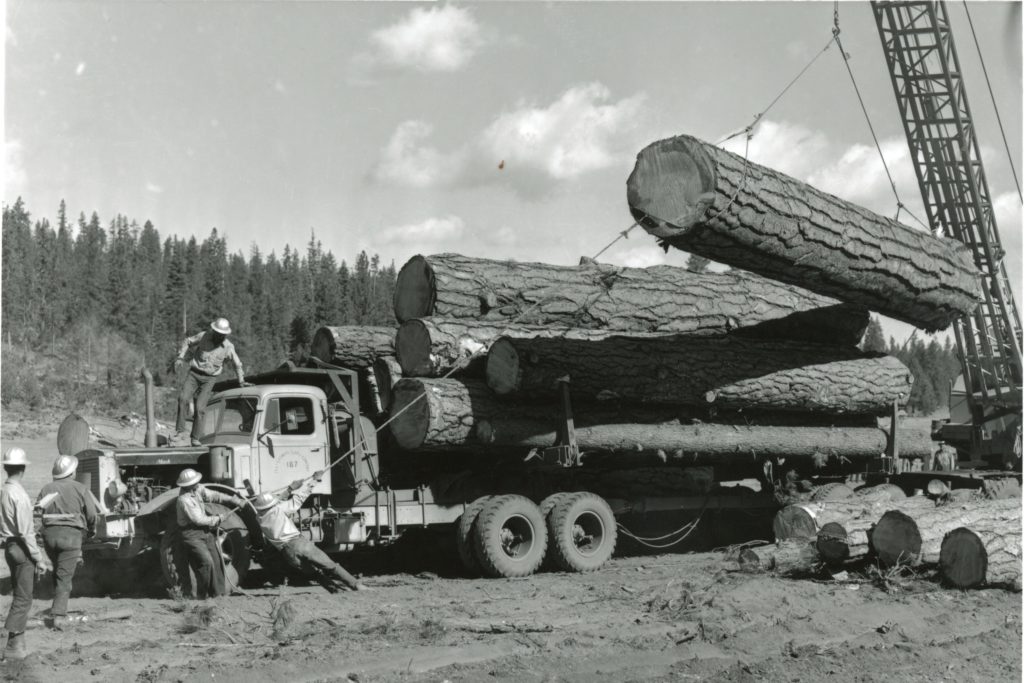
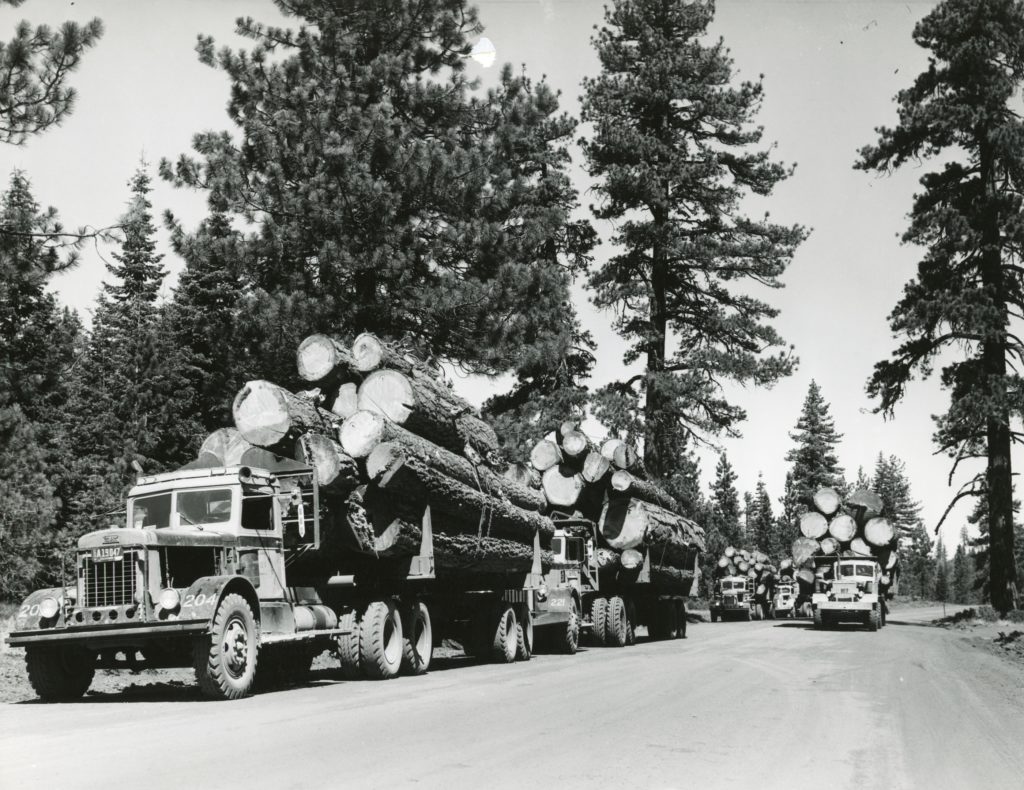
In 1940, Fruit Growers purchased its first fleet of logging trucks for the Lassen Operation (Susanville).  Initially, the trucks hauled logs where it was impractical to construct a railroad logging spur.  With improvements with trucks and a system of private logging roads, it was just a matter of time, when the logging trucks would make railroad logging obsolete. In 1952, the event happened, and saw the last year of railroad logging of Fruit Growers and Lassen County.

Lunch time at Dow Butte, August 21, 1953. Courtesy of Hank Martinez
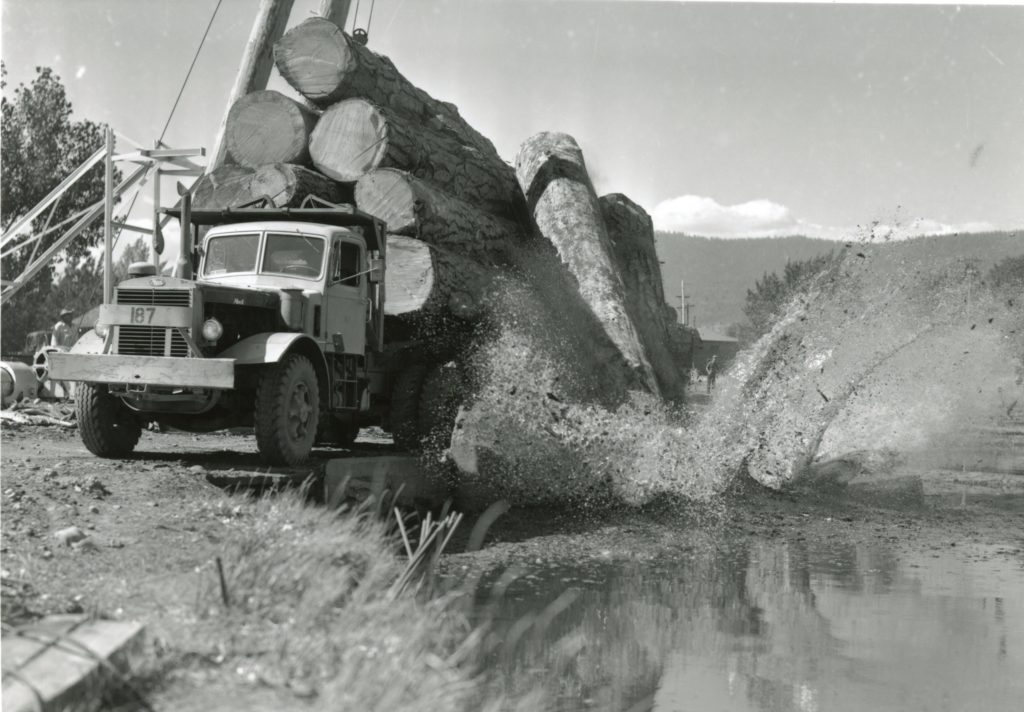
The record load of 26,860 board feet being unloaded at the Fruit Growers millpond, Susanville, August 21, 1953. Courtesy of Hank Martinez

Never miss a story, click here to subscribe.

Fruit Growers Supply Company

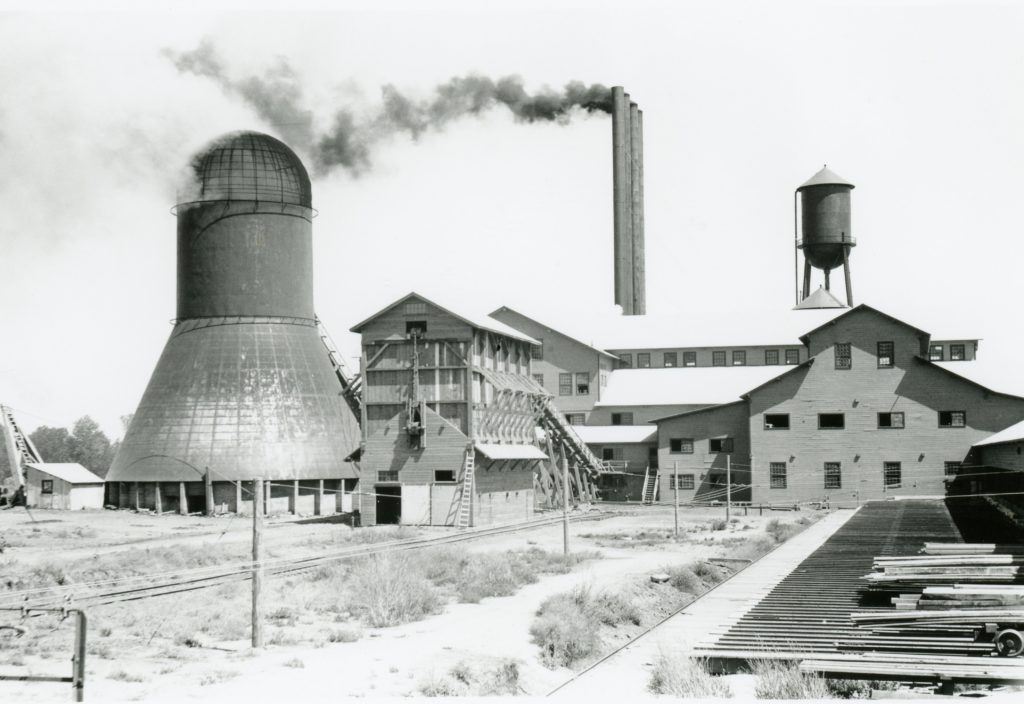
The Susanville plant, 1921. Courtesy of Ed Standard

In February, I inaugurated  a book-of-the-month, that featured Sagebrush Reflections. After all proceeds from book sales not only help support operations, but help finance future publications, in this case the stories behind the brands of the Pioneer.

It was not that long ago when one of the main components of the lumber industry was the manufacturing of wooden boxes to ship the nation’s vegetables and fruits. The Fruit Growers Supply Company was not your ordinary lumber company. Established in 1907, it is the co-operative purchasing arm of Sunkist. To protect the citrus grower’s interest in securing a supply of woodden boxes at a reasonable price, they went into the lumber business by accident at Hilt, Siskiyou County.  With increased citrus production, in 1920 the company expanded and built a mill at Susanville. The demand continued and in 1944 Fruit Growers purchased Red River Lumber Company’s mill at Westwood along with the Burney Tract. Ten years later, the wooden box went by the wayside and the grower’s converted to cardboard.

To learn more about this book and to order simply click here.