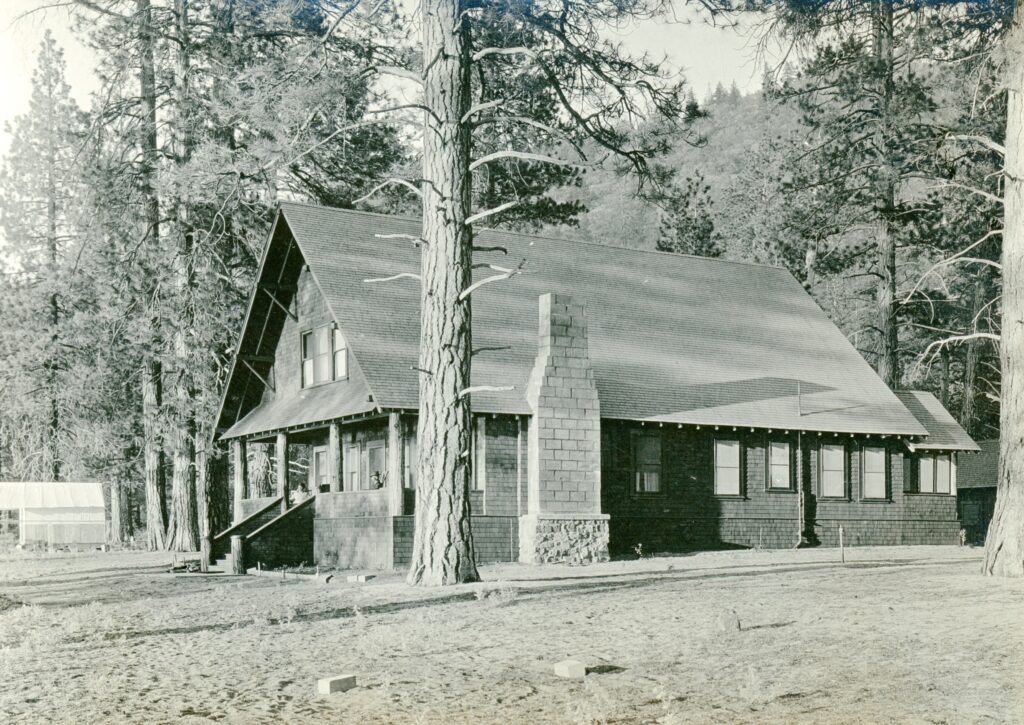
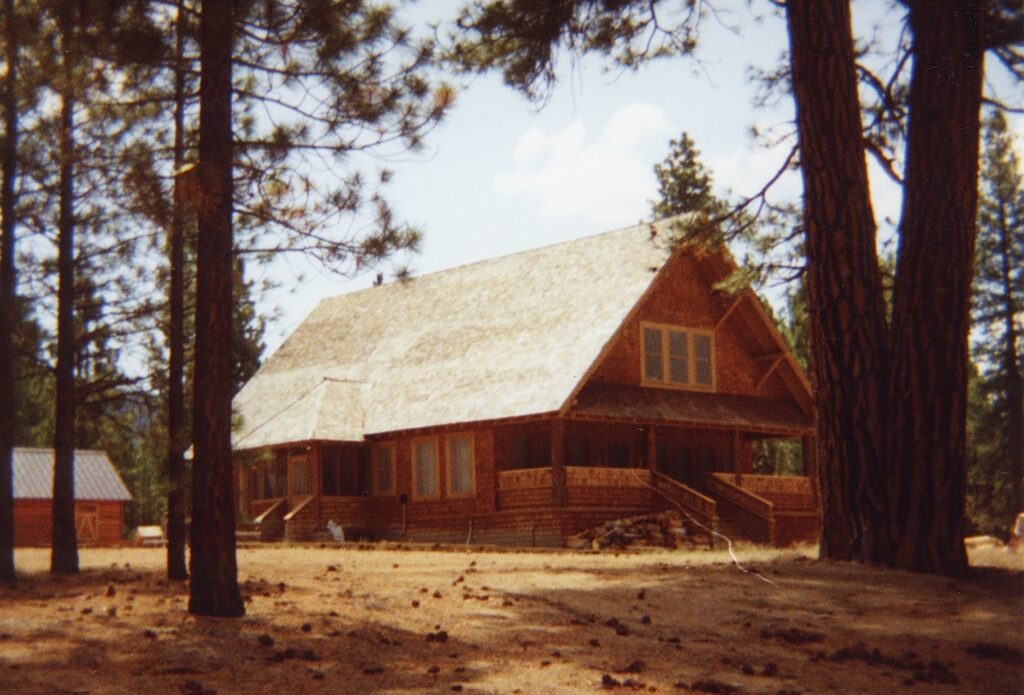
Jules Hurlbut’s homestead cabin., that eventually became Spalding Tract. Courtesy of Orville Watkins
In 1914, John Spalding announced his intention to subdivide “his” ranch on the west side of Eagle Lake. However, truth be known it was not actually his. The property in question belonged to his brother-in-law, Jules Hurlbut. At the age of 8, Jules came to Lassen County with his parents, Timothy Judd and Caroline, along with his sister, Mira Eleanor. The family first located in Willow Creek Valley, where other family members resided, but would soon locate to Eagle Lake. In 1881, John Spalding married Mira E. Hurlbut.
Pine Creek, circa 1914. It sholuld be noted that John Spalding’s original homestead was on the north side of Pine Creek. Courtesy of Wyn Wachhorst
In time, Jules homesteaded the property that is now Spalding Tract. During the 1880s, Albert Gallatin went on a buying spree acquiring the majority of private properties around the lake, including that of John Spalding. Jules Hurlbut held firm, and would not sell to Gallatin. A confirmed bachelor, Jules spent most of his life at Eagle Lake. In 1937, he retired to Susanville and died there in 1941. He is buried in the Susanville Cemetery, there is no marker for his grave.
While examining the 1972 summer issue of High Sierra magazine it had a short feature entitled “Sails on Eagle Lake.” Tom Boyer, Vice Commodore of the Sierra Yacht Club of Reno had visited Eagle Lake in 1971 and was impressed what he saw. The Sierra Yacht Club at that time had sixty members and they would normally race on Washoe Lake south of Reno. On June 24, 1972 six sail boats from the Sierra Yacht Club graced the waters of Eagle Lake. According to the High Sierra it was the first time an organized sailing unit was held at Eagle Lake. It certainly would not be last. A few years later, local residents formed the Eagle Lake Sailing Association also known as ELSA. For a time it was a very active group. In addition, for awhile Lassen Community College even sponsored summer sailing classes.
Some people might find this of interest. Chico State has transferred its interest in the Eagle Lake Biological Field Station on the east shore of the lake to the Susanville Indian Rancheria. Not sure what the Rancheria’s intent is. In the past, according to Bureau of Land Management policy it must be used for educational purposes, whether this applies to the Rancheria, I do not know.. When I was on the Lassen College board, I had brought up that the college should look into it, but that went nowhere.
In June 1986, I received a letter from Thomas Mawer of the Eagle Lake Ranger District of the Lasen National Forest.. The topic Gallatin House, and included with the letter a report. It confirmed what many had known, the forest service wanted to demolish the building, After all, some speculated that during the 1984 Aspen fire, the forest service had opportunity to let it go up in flames. No matter what, for me a battle was born.
First, I would need assistance to tackle this. My initial contact was with Valerie “Val” Campbell who was a. historical archaeologist for Caltrans. I had met her a year earlier when she was evaluating Highway 139. We plotted out a course of action and began a letter campaign. She recruited colleagues and pointed out that Gallatin House met the criteria to be included on the National Register of Historic Places. I recruited the Friends of Eagle Lake. This group had organized several years earlier when Lassen County was putting together its Eagle Lake Area Plan. Some of the key figures of “Friends” were located in Santa Cruz. This group was very well organized and a major letter campaign had begun, the old fashioned way before email, etc.
Time was of the essence in my opinion. When I had a discussion with Richard Henry, Lassen National Forest Supervisor, he was adamant about the building’s demolition. What may have been decision day of the fate of the building came at the September 1986 meeting of the Eagle Lake Interagency Board meeting. The topic was addressed. There was plenty of public supporters there to address their concern, but the board had the letters of support. While the board had no authority, it gave the preservationists approval in the court of public opinion. The forest service remained silent, for a long time and gave no indication what their next move might be.
Gallatin House, 1992
In 1988, the forest service announced that they had approved a special use permit for thirty-five acres on the southeast side of Eagle Lake to the McDonald’s Corporation—the well known fast food chain. The property was transformed into a Camp Ronald McDonald for disabled and disadvantaged children. The Gallatin House is part of the complex. It houses some of the staff and administrative office space. However, it should be noted that front portion of the Gallatin House is still in its original state. An interesting piece of trivia, the last time I was able to inspect the house, with Gallatin descendants in tow, there was an oak table the Gallatin family left behind in 1944, and it is still there.
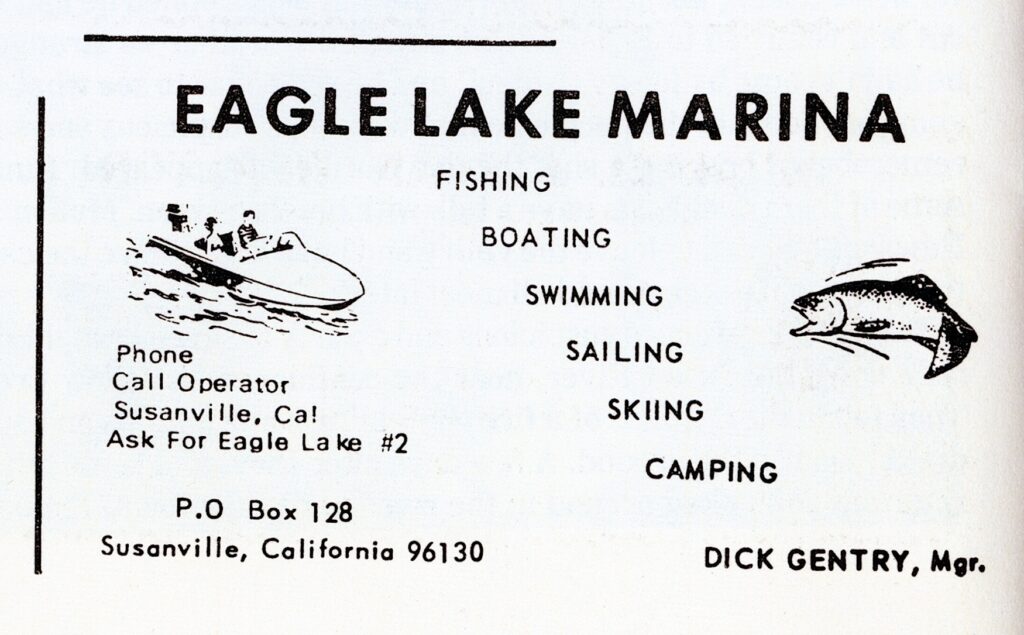
Gentry’s business card advertisement, High Sierra, 1972
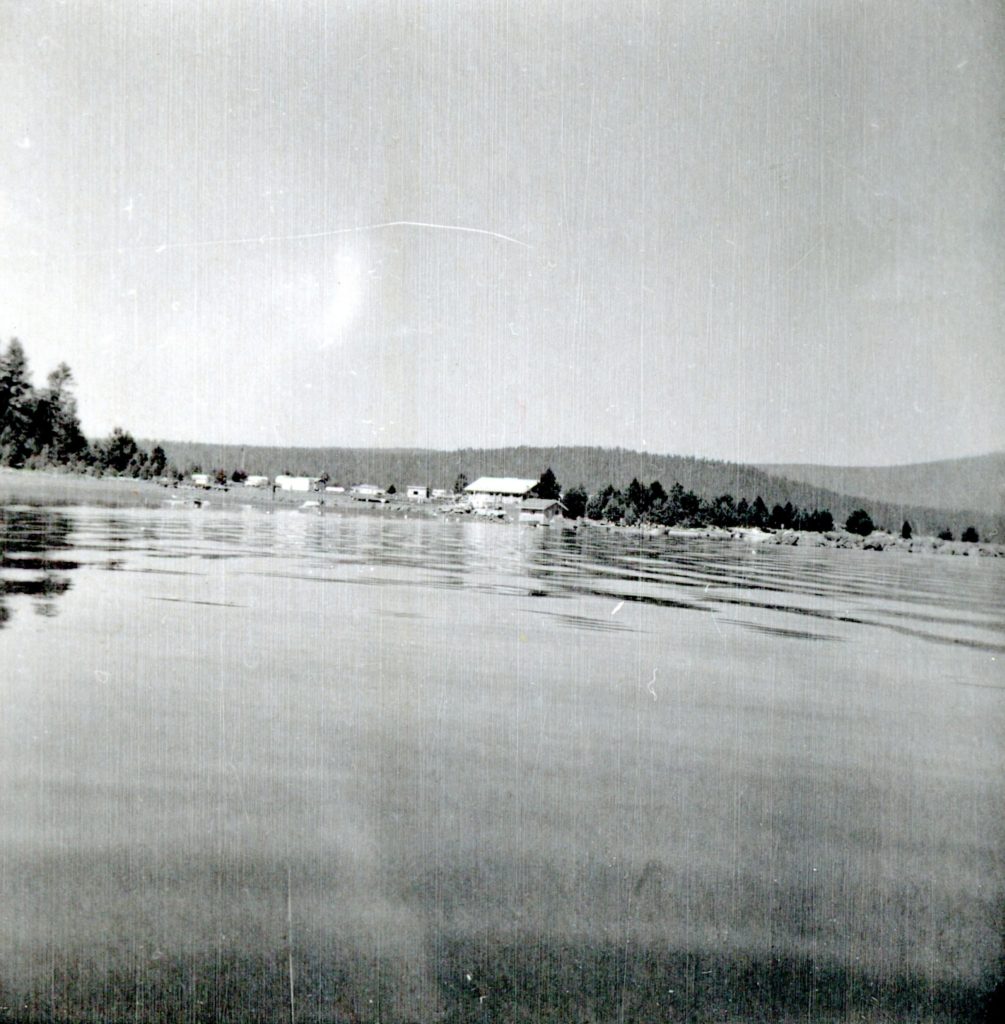
In the late 1950s, Lassen County officials working with the Lassen National Forest began implementation of development of campgrounds and a marina at the south shore of Eagle Lake. The county leased the property from the forest service for a marina and in was completed in 1961. The following year, the county sub-leased the marina operation to Richard “Dick” Gentry. In 1970, due to the rising level of the lake, the boat harbor was revamped. Upon completion it was named the William W. White boat harbor, for former Lassen County Planning Director who was an ardent supporter of the project. In an 1971 article in the Sacramento Bee, Gentry complained about the rising water levels of the lake and went on to the state that there was too much water in the lake.
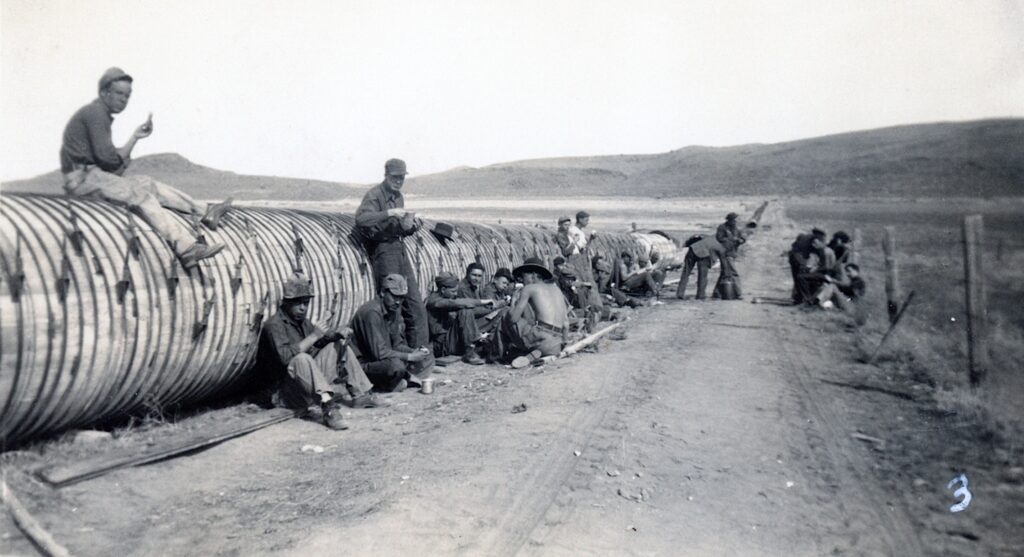
Secret Valley CCC’s doing repair work on the Baxter Creek siphon, 1936—C.H. Bennett Collection
Last year, I briefly wrote about the Baxter Creek Siphon. Since then I do have some additional information. First a little background. The siphon was portion of the Baxter Creek & Tule Irrigation district’s distribution of water from the Bly Tunnel at Eagle Lake. A siphon was needed to convey water over the Susan River, then to a canal along Bald Mountain to Baxter Creek.
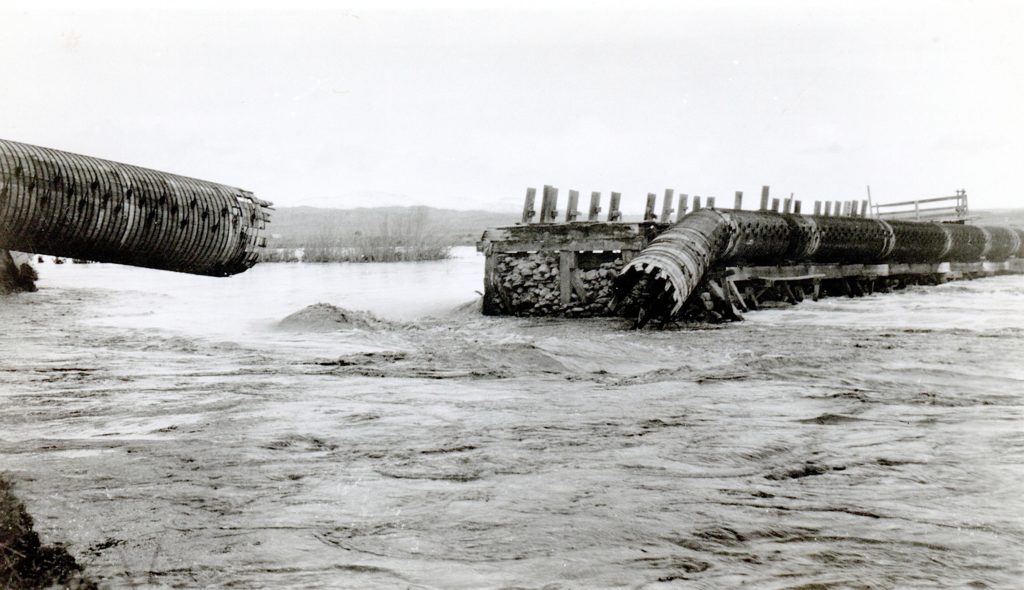
The siphon made of redwood and a diameter of 52 inches. The main siphon was three miles in length. In 1935, a flood damaged a portion of siphon where it crossed Susan River.
Susan River, 1935 — Lola L. Tanner
What is puzzling about the first photograph is why CCC’s were working on repairs to the siphon, as Bly Tunnel had been abandoned due to low water levels in 1935. May be some one was optimistic that water would flow again from Eagle Lake.
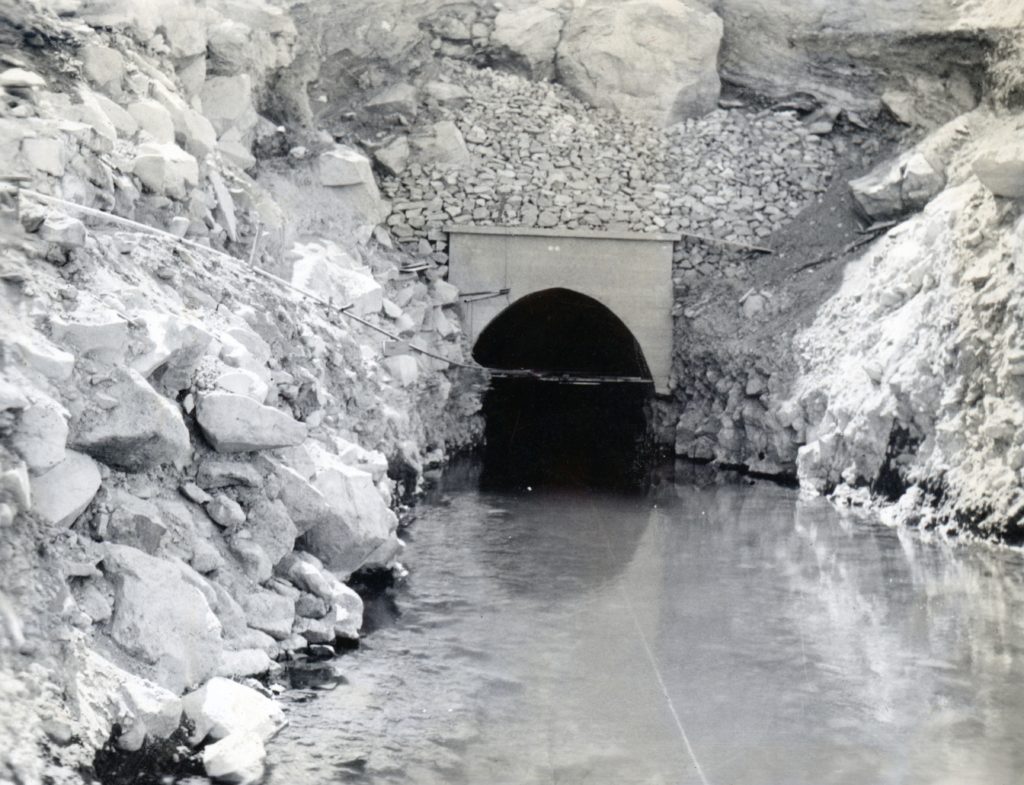
Bly tunnel inlet, July 1924. Courtesy of Wyn Wachhorst
It was 100 years ago today, with no fan fare, that 50 cubic feet per second of water was released through the Bly Tunnel at Eagle Lake. The $1.25 million project conclusion was bittersweet. Earlier, in May, some 5,000 people gathered at Litchfield for a grand barbecue to celebrate the completion of the tunnel. What the public was not aware was Grant Smith Company, the contractor to build the tunnel, only built three foot below the lake level at the inlet, versus the eight feet agreed upon with the irrigation districts. The company refused to allow water through the tunnel,, until an agreement was reached. The legal wrangling went on all summer until a settlement was made. In the short and long term the Baxter Creek and Tule Irrigation District were big losers. First, they lost the 1923 irrigation season. They would spend a decade trying to correct the inlet problem, and finally gave up.
In 1937, twenty years after Eagle Lake reached its historic high of 5125 feet it witnessed its historic low of 5091. That low water level happened again in 1950. Then, many may not realize but in December 2015 the lake reached a new historic low of 5090.54 and was repeated again in December 2022. What is interesting in each of these instances they were followed extremely wet winters.
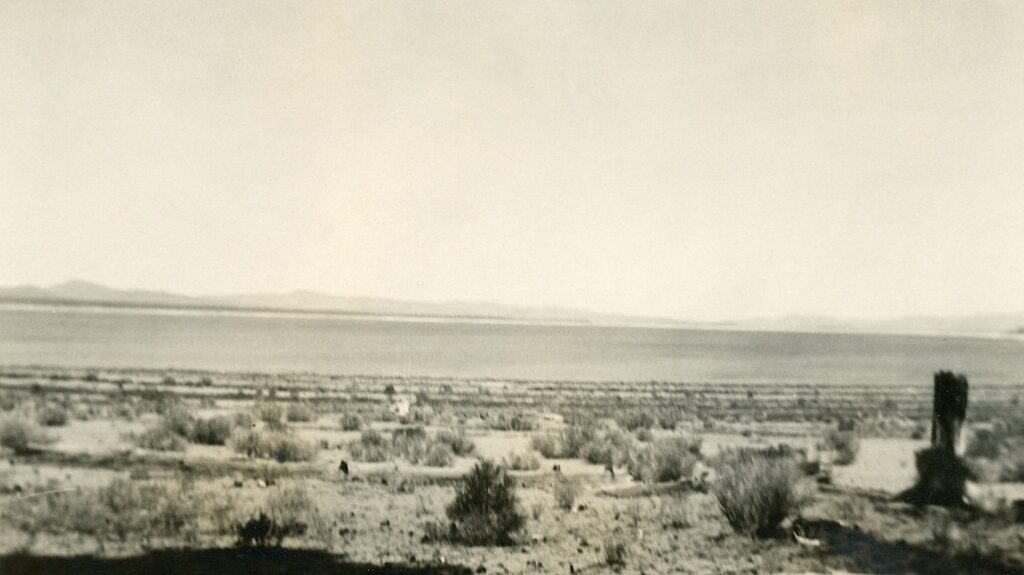
South shore Eagle Lake, August 7, 1936—C.H. Bennett Collection
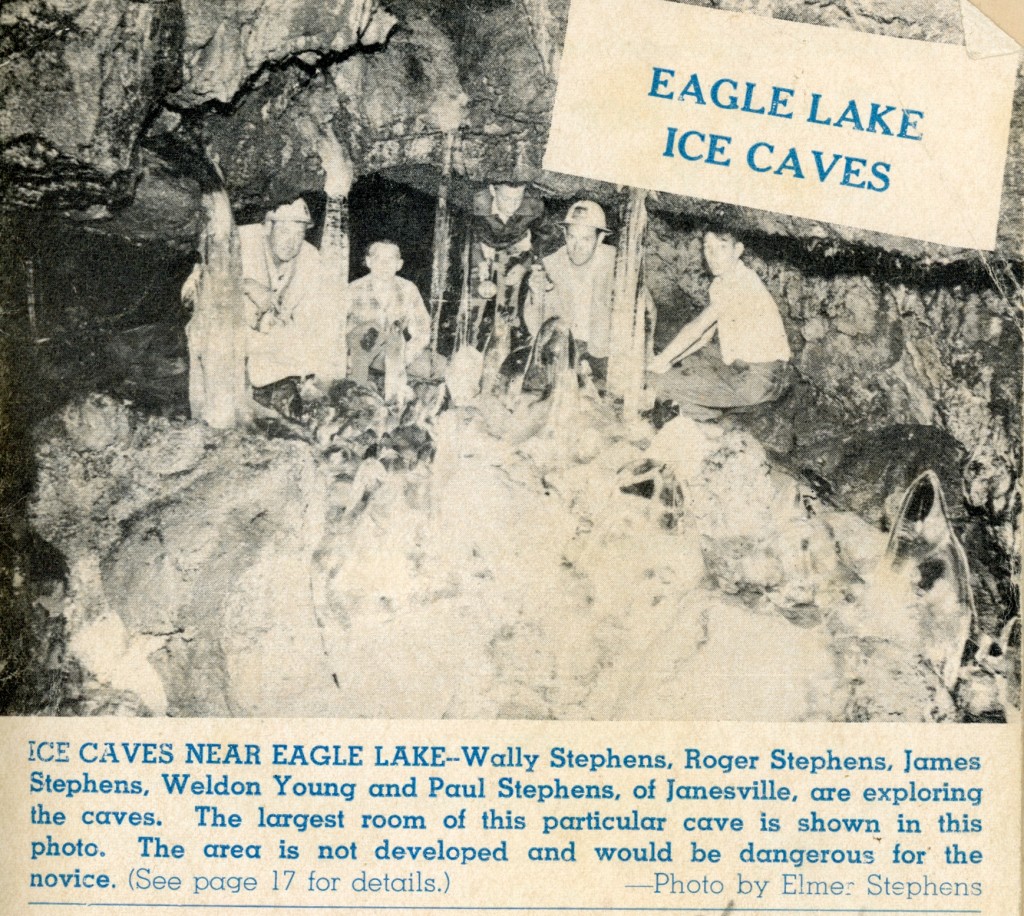
The ice caves was featured on the cover of Susanville’s weekly TV guide, August, 1965
Well, it is the middle of summer, and there have been a lot of searches about the ice caves at Eagle Lake. Without further ado, here is a prior post on that topic for your Tuesday Tidbit.
Exploring lava beds, which there is plenty around Northeastern California, there is no telling what a person might find. The Brockman Flat Lava Beds on the west side of Eagle Lake is no exception.
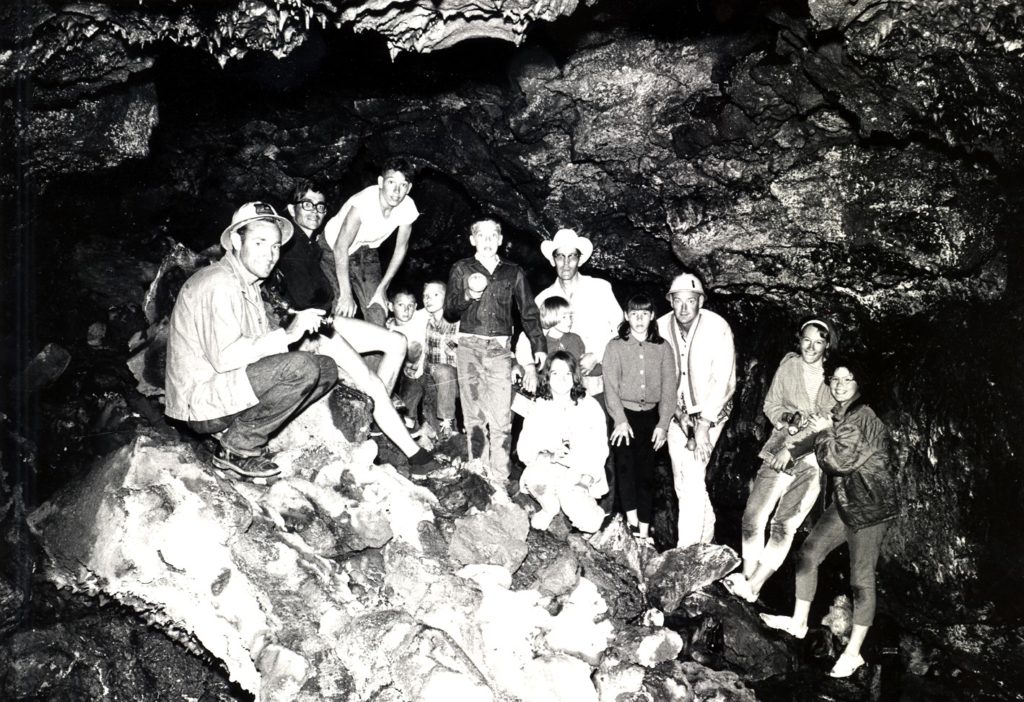
In the early 1950s the Chico State Biological field study set up operations at Spaulding Tract, Eagle Lake. It was in the summer of 1951, that several students explored the lava beds to the south of Spauldings and made their initial discovery of a ice/lava cave.
In 1954, John Wesley Noble penned an article in Collier’s Magazine, The Lake That Time Forgot. The article featured many peculiarities found at Eagle Lake. Noble wrote: A group of Chico graduate students were exploring a huge shore side cavern where Indian tribes hid from avenging white men. Suddenly the biologists’ flashlights flickered on a buff colored insect crawling over the icy black rocks. They captured it, but neither their biology professor nor local 0ld-timers could tell what it is.
Interior view of an Eagle Lake ice cave, 1966.
“Weeks of research finally identified the insect a member of gryllobottoda, a rare ice age cricket-cockroach which lived in America when Pleistocene ice sheets covered more than half the continent. No one seems to know what the insects eat in the icy dark caverns. They should have been sensible and departed when the glaciers receded 20,000 years ago. But here they are, living their refrigerated lives in the caves near the lake.”
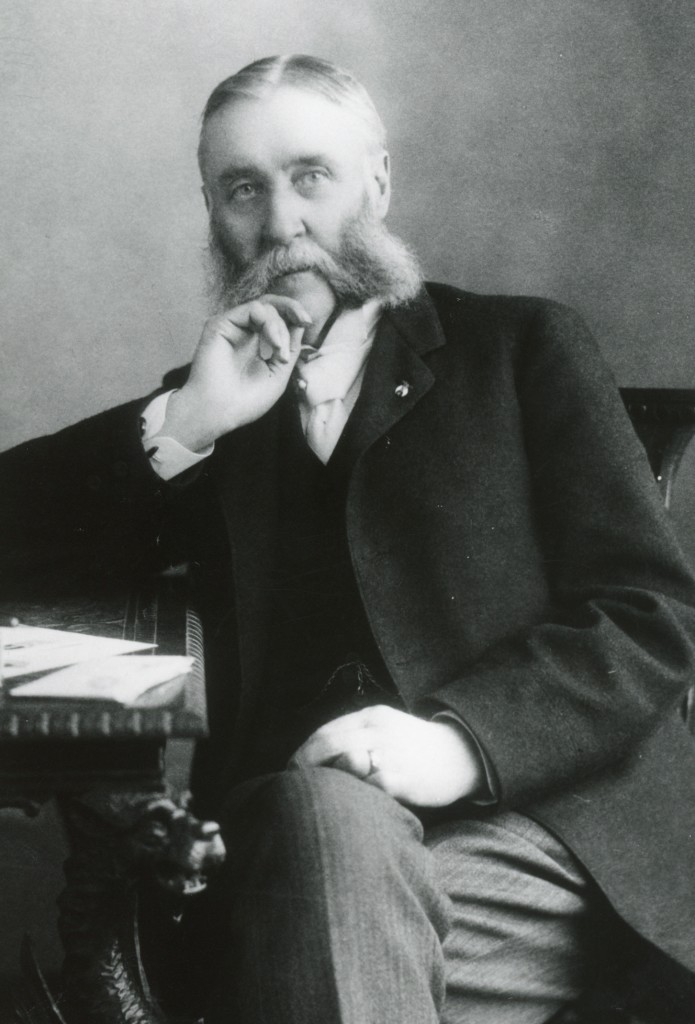
Albert Gallatin is one of the many intriguing figures in California history. This native New Yorker arrived in California in 1860, and the following year located at Sacramento. It was fortunate timing on his part to land a job in hardware store owned by Huntington and Hopkins. At the same time, Huntington and Hopkins would join forces with Crocker and Stanford, to become the “Big Four” and establish the Central Pacific Railroad. Gallatin, as a junior partner in the hardware business, became quite lucrative providing materials for the railroad. In 1877, he built the Gallatin House and in 1903 it became the California Governor’s Mansion.
The prosperous Gallatin began branching out into numerous endeavors including the sheep business. Gallatin needed summer range for the sheep, and discovered Eagle Lake. In a two year period in the late 1880s he purchased nearly 5,000 acres of Eagle Lake properties for $9,000. The bulk of the purchases were timberlands, with the exception of Hall’s Papoose Meadows and William Dow’s ranch near present day Spaulding Tract.
With the exception of Gallatin being Eagle Lake’s largest property owner, his influence otherwise was minor. In 1905, he passed away and his second wife, Malvena, had the lasting impact on Eagle Lake. After all she introduced Leon Bly to Eagle Lake.