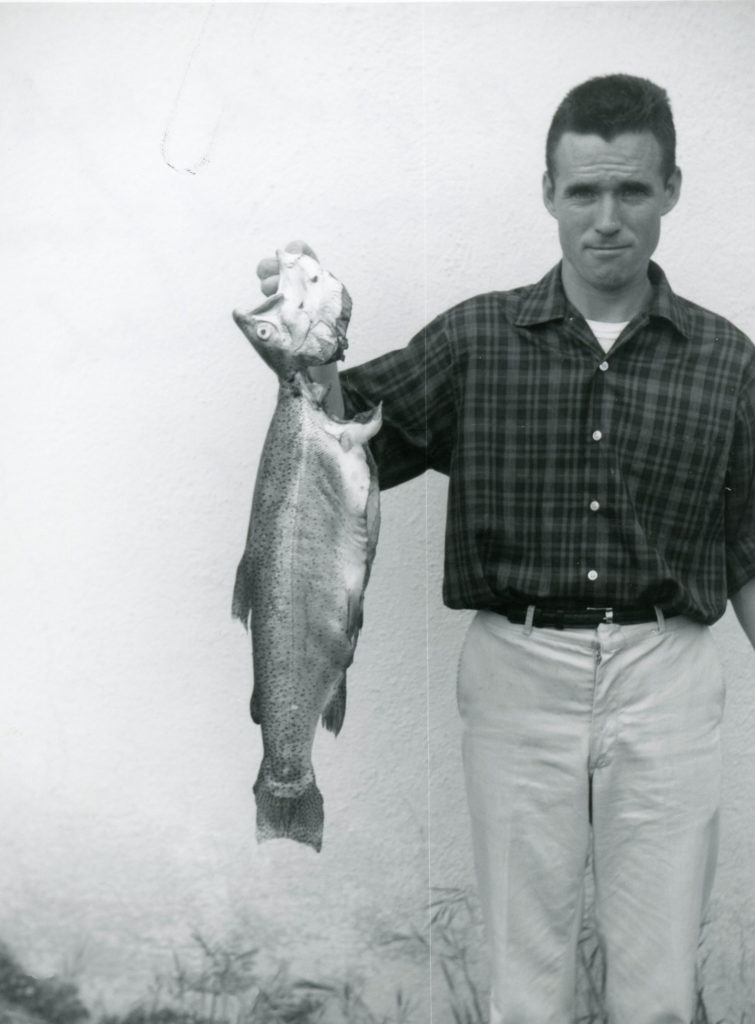
James Stokes holding “Old Lady of the Lake, a 8 pound Eagle Lake Trout caught in 1961.
Since this is opening weekend of fishing at Eagle Lake, it is only fitting that I pass along an article from the Lassen Advocate of September 23, 1927, in regards to a big fish caught there.
“Wright Spalding and Tom Wilson brought one of the nicest fish that has been caught in this section of the county for the season to town yesterday, after having pulled it out of Eagle Lake.
“The fish is thought to be one of the old original Eagle Lake trout, commonly called land-locked salmon and weighs nine and fourth pounds. It is about twenty-six inches in length and is a splendid fish.”
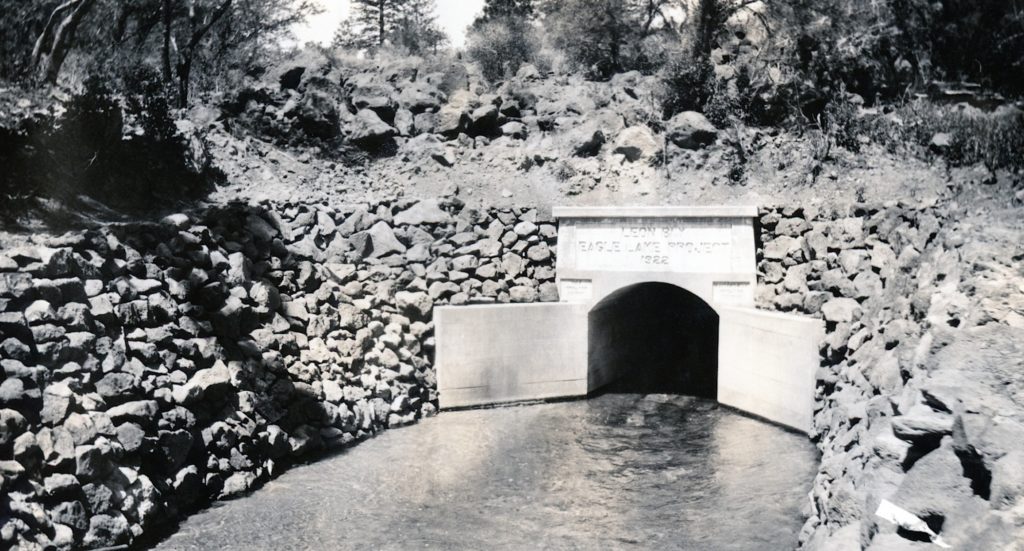
Outlet of the Bly Tunnel, 1924. Courtesy of Lola L. Tanner
Bly was confident of the project, and Gallatin gave him her blessing, in addition she provided him with the necessary funds to launch the enterprise. Bly’s approach was different from the previous attempts. It was a two-prong approach. One was the technical aspect to design the system, obtain permits, etc. The other had to deal with financing. Bly went directly to those who would benefit the most, farmers and ranchers of the Honey Lake Valley. He persuaded one group to form the Tule Irrigation District. Adjoining Tule was a pre-existing district Baxter Creek that was at a standstill as it did not have a sufficient water supply. In a co-operative effort Bly convinced the two districts to pass a 1.25 million dollar bond measure to finance the project. His top selling point was, once the bonds were redeemed, they would own the system.
As soon as Bly had everything assembled and approved, no time was wasted to begin the actual implementation. In 1921, Bly contracted with the Grant Smith Company of Seattle to construct the entire system for $950,000. That fall work began on the 7,300 foot long tunnel. In the spring of 1923, the tunnel was completed, a few months behind schedule. It was a daunting task, to say the least, as 180,000 cubic feet of soil and rock was excavated to construct the tunnel.
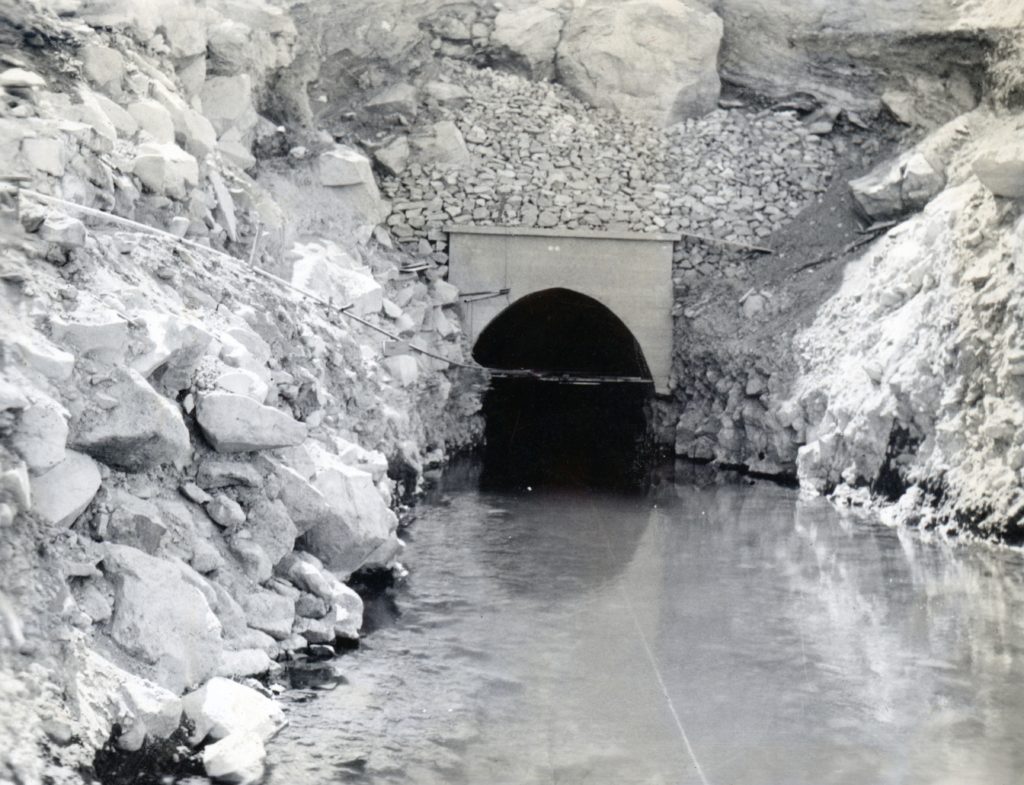
On May 19, 1923, a grand celebration was held. The joyful times of Bly Tunnel were short lived. In a nutshell, there were two factors that caused the Bly Tunnel project to implode. Grant Smith Company’s contract stipulated the inlet would be eight feet below the lake’s surface, but they only did three feet due to volcanic rock encountered. Litigation ensued. To compound matters, a drought that began in 1917 and one that would last for twenty years, drastically lowered the level of the lake.
In 1935, after a decade to deepen the intake channel, the tunnel was abandoned. Many farmers in the irrigation districts went bankrupt, unable to make their bond payments. In 1961, the State revoked Bly’s original water right permit, thus a final blow. The tunnel has since been sealed and no water flows through it. The odd thing, many still cast the blame on the lake’s fluctuating levels on a sealed tunnel.
Bly tunnel inlet, July 1924. Courtesy of Wyn Wachhorst
This falls under the category, “Well, it seemed like a good idea at the time.” This was the consensus many had about the issue to tap Eagle Lake by means of a tunnel to irrigate the arid sagebrush lands of the Honey Lake Valley. After all, there was a mile distance between the lake and the headwaters of Willow Creek and that creek would provide a natural channel to convey the water to the Honey Lake Valley. After all, it should be noted that Eagle Lake is California’s second largest natural lake, and back in the 1870s, the reservoirs that we have today were non-existent.
The scheme had its humble origins with Augustine W. Blair. In the summer of 1872, Blair secured three investors to finance a mile and a half long tunnel to tap the lake. He estimated the cost at one million dollars. The project went no where. However, word of this enterprise spread and the following year, Captain C.A. Merrill paid the region a visit to inspect the scheme. Merrill was so consumed with the Eagle Lake project that he would spend the rest of his life in pursuing his quest, until his death in 1901.
Merrill was not the only one who saw the lake’s potential. Nine other entities were created over the next four decades with the same intent that originated with Blair, all without success. In 1914, enter Leon Bly, a civil engineer, who was recruited by Eagle Lake property owner, Malvena Gallatin, as to whether the tapping of the lake was feasible. Gallatin’s concern had nothing to do with irrigation. The constant rising level of the lake wreaked havoc to her shoreline property. Bly agreed and was methodical in his approach. It should be noted that prior to Bly, his predecessors were under the impression that the lake had an abundant supply of water, some who went so far to proclaim the lake’s depth at 1,000 feet! In 1915, the first thing Bly did was a sounding of the depth of the lake. His revelation surprised many, when the deepest point in the lake was 105 feet.
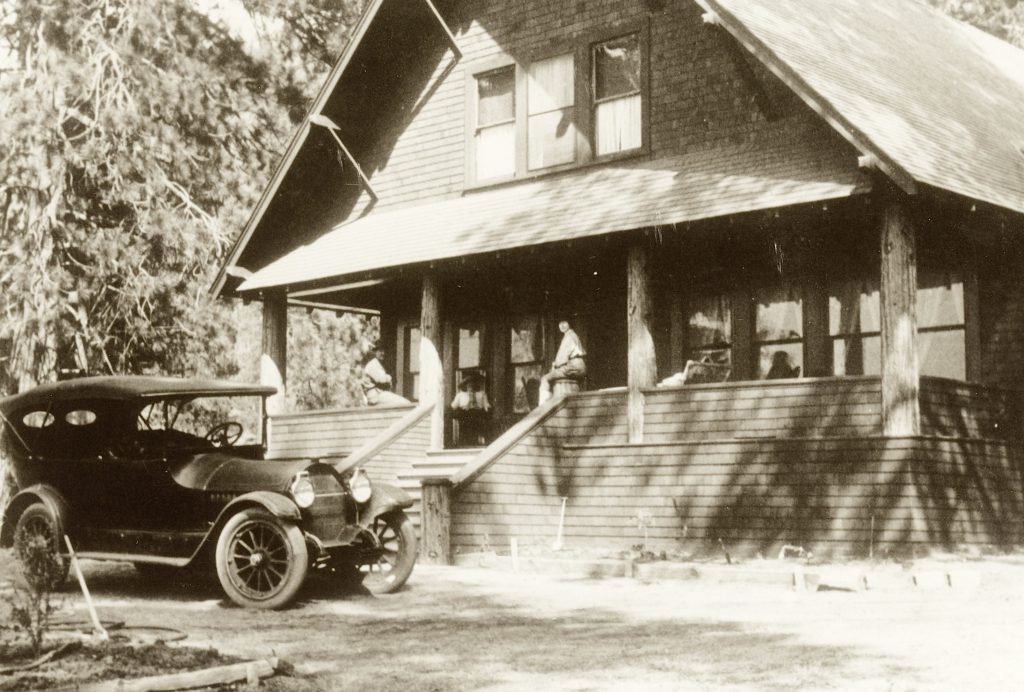
In the 1980s, the forest service considered Gallatin House at Eagle Lake surplus property and wanted to demolish it. More about this later. Anyhow, the property is now part of of Camp Ronald McDonald at Eagle Lake. This Saturday and Sunday they will be holding their 26th Annual Memorial Day Pancake Breakfast from 7 a.m. to 11 a.m. It only cost five dollars for all you can eat breakfast. Proceeds benefit Lassen County Kids Camper Scholarship Fund.
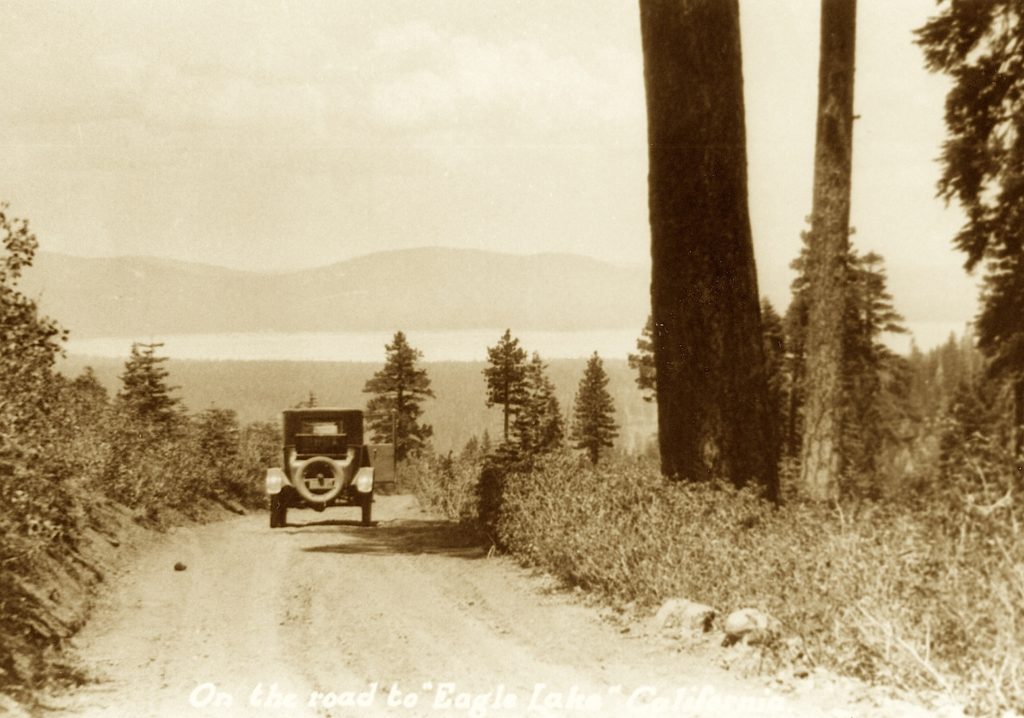
Eagle Lake Summit, 1923. Courtesy of Dick & Helen Harrison
The citizens of Susanville in August 1926, while hosting the California American Legion Convention, did everything they could to make it a memorable event. One of the many events they hosted was a barbecue at Eagle Lake. This was no small feat. It was a logistical nightmare to transport some 2,700 people to the south shore of lake. In addition, to bring all the food and related items to go with it had to been a daunting task. To feed a crowd of that size was more than they were prepared for. Long lines were endured for a serving of steak and beans. Most of the attendees took it in stride. “Happy” Wintz from the El Segundo delegation composed a little ditty he sang the next day at the parade in Susanville, a variation of the local legion’s slogan, “Eagle Lake, Eagle Lake, on the rocks and rills, of California hills. Eagle Lake, Eagle Lake, that’s where we got the belly ache.”
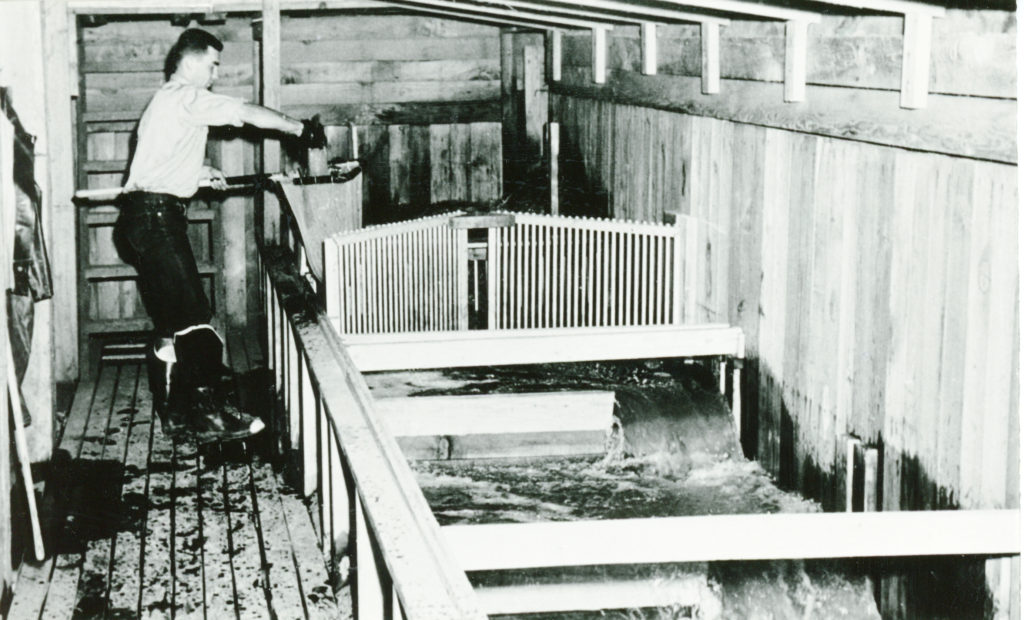
Inside the Pine Creek Fish Trapping Facility, April 6, 1961. Courtesy of Department of Fish & Game
The Eagle Lake trout nearly faced extinction, but fortunately now it is a success story. Between the drought and the Bly tunnel, not only did the lake drop to record low levels, but the Pine Creek estuary became so silted the trout could not go up that stream to spawn. By saving grace, the winter of 1937-38 witnessed tremendous precipitation, that allowed for substantial spring run-off that cleared the Pine Creek channel.
In 1948, the California Fish & Game came forward to save the trout. In 1950, Harry Chandler, a biologist was successful in setting up a trap to catch spawners. One adult spawner happened to yield 2,000 eggs. Those eggs were taken to the Crystal Lake Hatchery were they hatched and reared. While that was a good start more needed to be done. In 1958, the Wildlife Conservation Board allocated $38,810 to construct a fishing trap/egg collection station at the mouth of Pine Creek, and also the Crystal Lake Hatchery with an additional four more rearing pounds. It was money well spent as the following year sixteen adult spawners were caught. Thus, a very successful start and we know the rest.
This is an excellent time to visit the facility, especially for those who have never been there.
In May 1978, the Honey Lake Paiute Ethnography was published by the Nevada State Museum. It was the work of Francis A. “Fritz” Riddell (1921-2002). Riddell was a well known archeologist and was first professional archeologist to work for the State of California.
Riddell’s father, Harry, came to Lassen County in the late 1920s to assist with the troubled plague Bly Tunnel at Eagle Lake. In the early 1930s, Francis attended the Missouri Bend School near Janesville. There he found arrowheads on the school grounds, that he was so intrigued by that led to his future career. By the late 1930s, the family had relocated to Sacramento. His older brother, Jim remained in Susanville and spent a career as a mail carrier in Susanville. Francis returned to the area on a regular basis to visit his brother, but he a special fondness for the local Native American community. Francis was involved in excavation of Tommy Tucker cave near Wendel, from 1949-1951. He also did extensive field work at Secret Valley.
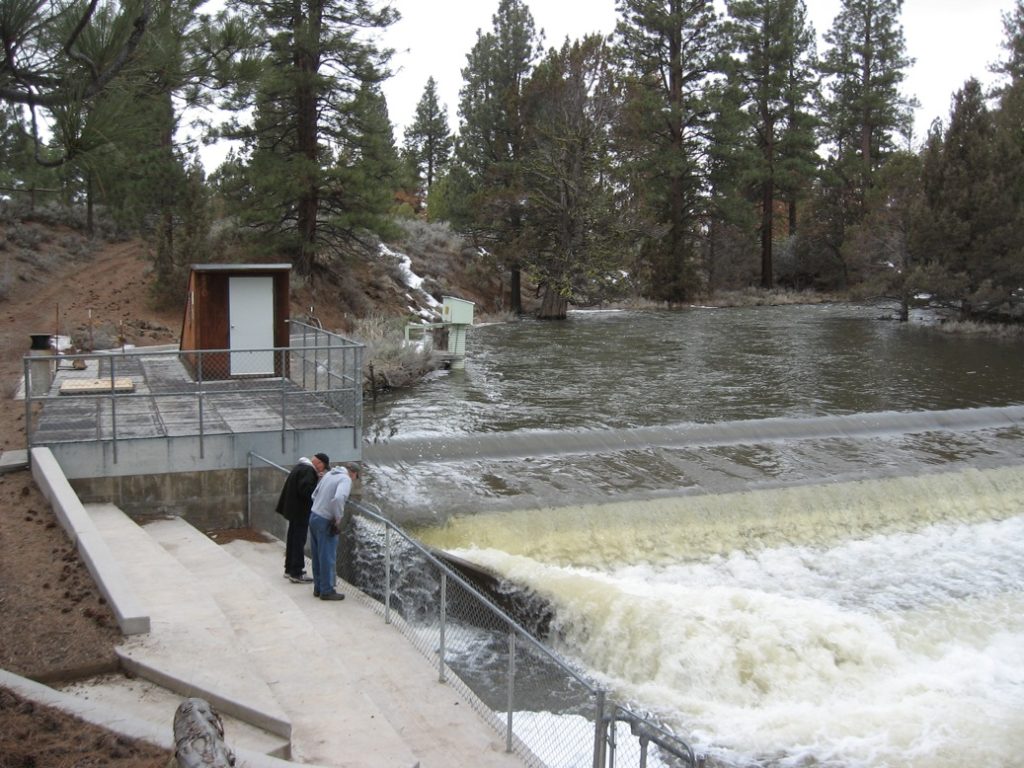
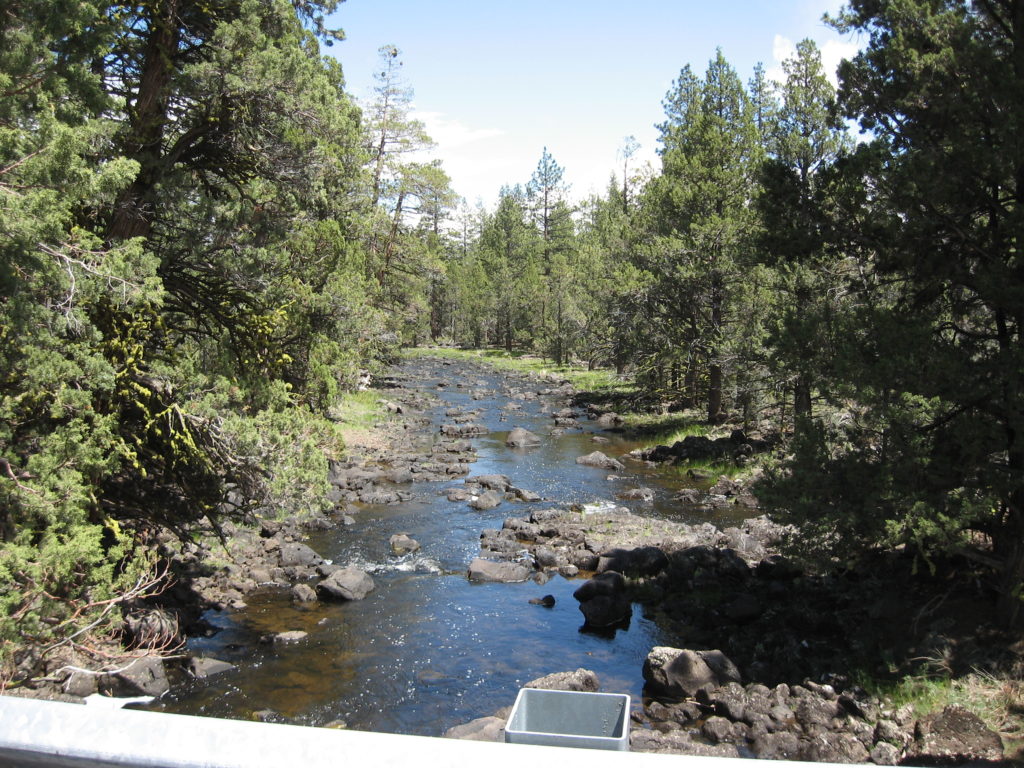
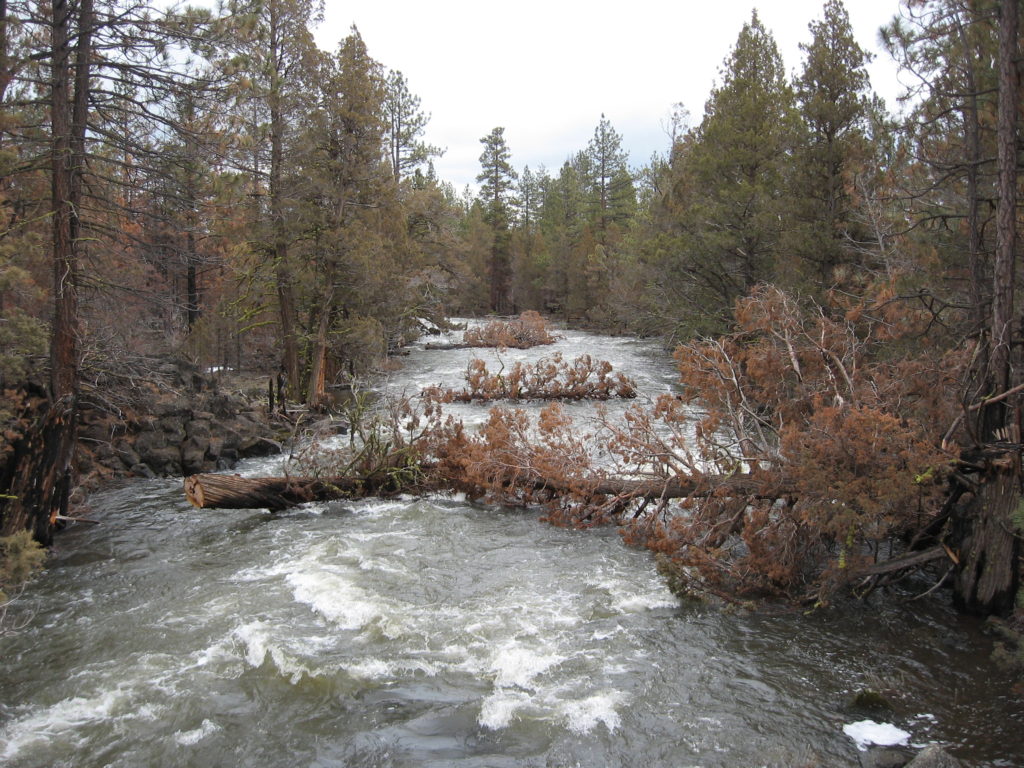
Some times, certain places just always seems to stay the same. Others can go through dramatic transformations. Having a severe case of either cabin fever or the lack of warm spring weather, necessitated an outing, even if it was cold. A journey to Eagle Lake and check out the Pine Creek fish trap/egg collection facility. Turns out the spawners are moving slow, the water temperature even a bit chilly for them. The pelicans on the other hand are abundant. Since we were in the neighborhood, a trip to the south shore to check out the marina, etc. On the return, stop at the Pine Creek bridge, thus the changes taking place.
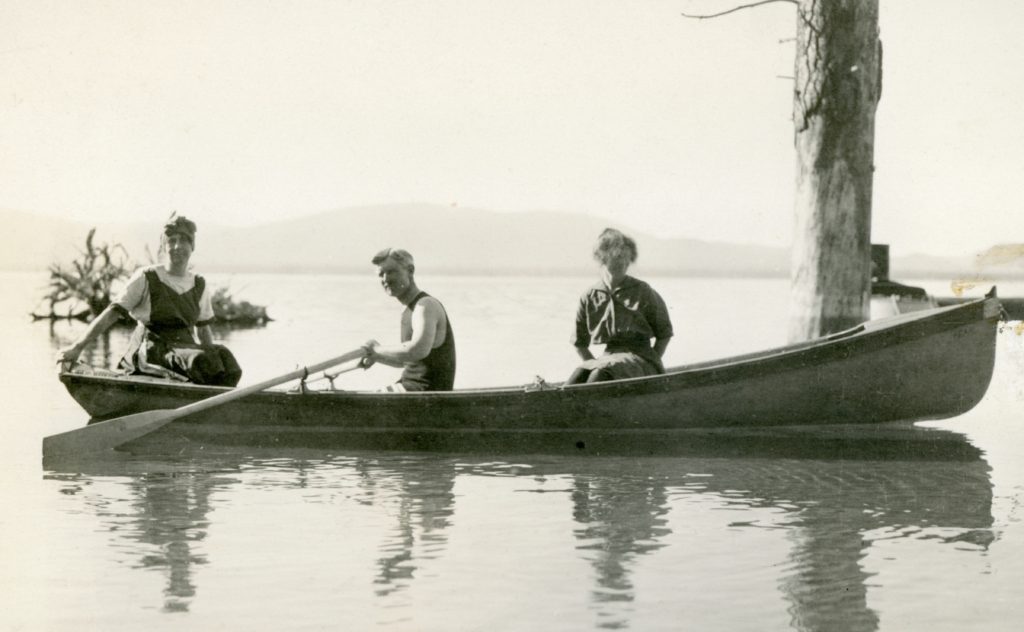
A 1919 Gallatin family boating outing on Eagle Lake. Courtesy of Wyn Wachhorst
In 1876, when Capt. Charles A. Merrill formed his Lassen County Land & Flume Company to tap Eagle Lake for irrigation to reclaim the sagebrush lands of the Honey Lake Valley, in certain ways he suffered from illusions of grandeur. Of his many schemes was to log the south and west sides of Eagle Lake. The logs would be rafted across the lake to the east side of his proposed tunnel, and each log, one by one through the tunnel. From there a flume would transport the logs to his proposed city of 25,000 souls at Belfast in the Honey Lake Valley where they would be milled and shipped out by rail. This pipe dream never happened.
Pine Creek Estuary, July, 1973
In 1919, when the Fruit Growers Supply Company made the commitment to establish a sawmill operation in Lassen County, they sought advice from the Lassen National Forest Service where to locate. The forest service suggested a mill site along the Pine Creek estuary, that they could use as a millpond. The forest service stated Fruit Growers, if needed could use Eagle Lake as a millpond, but with Leon Bly’s pending project there might be legal problems.