Tag Archives: Eagle Lake

Lassen County Desert Land Act

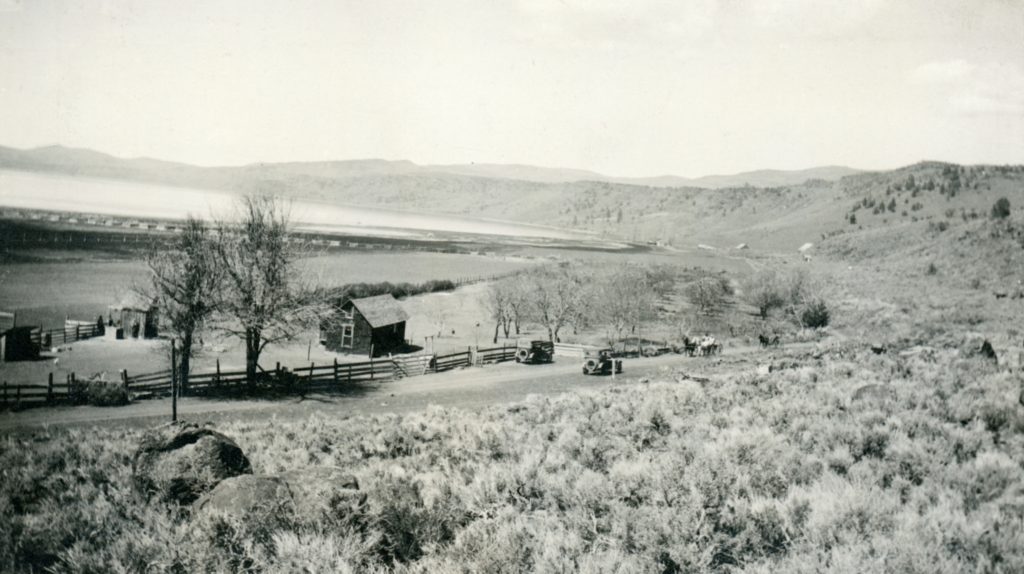
The Belfast District, 1898. It was to be the center piece of Merrill’s reclamation project.

The federal land patent process often referred as homesteads worked fine until the westward expansion. After crossing the Mississippi River there were dramatic changes in geography and climate. It was President Abraham Lincoln who corrected the situation. In 1862 Lincoln was able to pass three important pieces of legislation since his opposition failed to show up in Congress. These were the creation of the Department of Agricultural, the Pacific Railroad Act and the 1862 Homestead Act. While the Homestead Act did improve matters in the west, it was not a one-size cure all fix.             The arid intermountain west presented its own challenges. A unique chain of events occurred when Captain Charles A. Merrill announced in 1873 of his reclamation plan for the Honey Lake Valley by tapping Eagle Lake as its water supply. It should be noted that Merrill was not a novice to land issues. He came to California, in 1864, from his native state of Maine. In 1870, Merrill was involved in a title dispute of a Mexican land grant near Santa Barbara. As a result of that involvement he worked ardently as a land agent for individuals who had capital to invest.             

For Merrill to move forward on his Eagle Lake project he would need federal legislation for an easier method to homestead arid lands. Merrill recruited California Congressman J.K. Lutrell to craft such legislation. On March 3, 1875 Congress approved Lutrell’s bill, the Lassen County Desert Land Act. In essence, an individual could claim up to 640 acres of government land, versus the standard 160-acre limit. A person then had two years time to reclaim the land by irrigation and they could purchase the land from the government at $1.25 per acre. The last provision was unique in that one did not have to reside on the land as a requirement. The Lassen County Desert Land Act gave birth to the much more famous Desert Land Act of 1877. The two Acts were nearly identical; expect of course the latter applied to all arid regions of the American west. There was one other major change in the fee structure. Under the Desert Land Act, “the settlers pay twenty-five cents per acre at the time of application, to have three years (versus two) for the purpose of irrigation and to pay one dollar per acre upon making the final proof, i.e. being issued a land patent to the property. The Desert Land Act was immensely popular and large swaths of land in the West were obtained under this Act.             

 It should be noted there was a dark side to it. This was from the Lassen County Desert Land Act’s non-residence provision that was included in the Desert Land Act. In the first decade there was a significant amount of fraud. It enabled land speculation companies to acquire thousands of acres of land by hiring dummy entry men to file on said land. Locally, this was particularly the case in eastern Honey Lake Valley and the Madeline Plains. Later amendments to the Act reduced the fraudulent activity. 

More tomorrow . . .

Never miss a story, click here to subscribe.

Eagle Lake Trout as a commodity

Eagle Lake trout, April 6, 1961. Courtesy of California Department of Fish & Game

During World War I food rationing was on a voluntary basis. The Lassen folks were a very patriotic bunch and a look back at the records one would thought it was mandatory. Since meat and wheat were two items to conserve some looked for alternatives.

Take for instance our neighbors in Washoe County. Arrangements were made to allow fish from the Truckee River and Pyramid Lake be harvested for market. This caught the attention of Susanville resident L.W. Boggs. He proposed that the same thing could be done with Eagle Lake bass and trout. Not only would this conserve beef and pork, but the fish would be good for the local diet. However, state law prohibited commercial fishing in lakes and streams. Boggs proposal never gained traction.

It should be noted that in the late 1800s wagon loads of Eagle Lake trout were caught and sold in Susanville at twenty-five cents a pound.

Never miss a story, click here to subscribe.

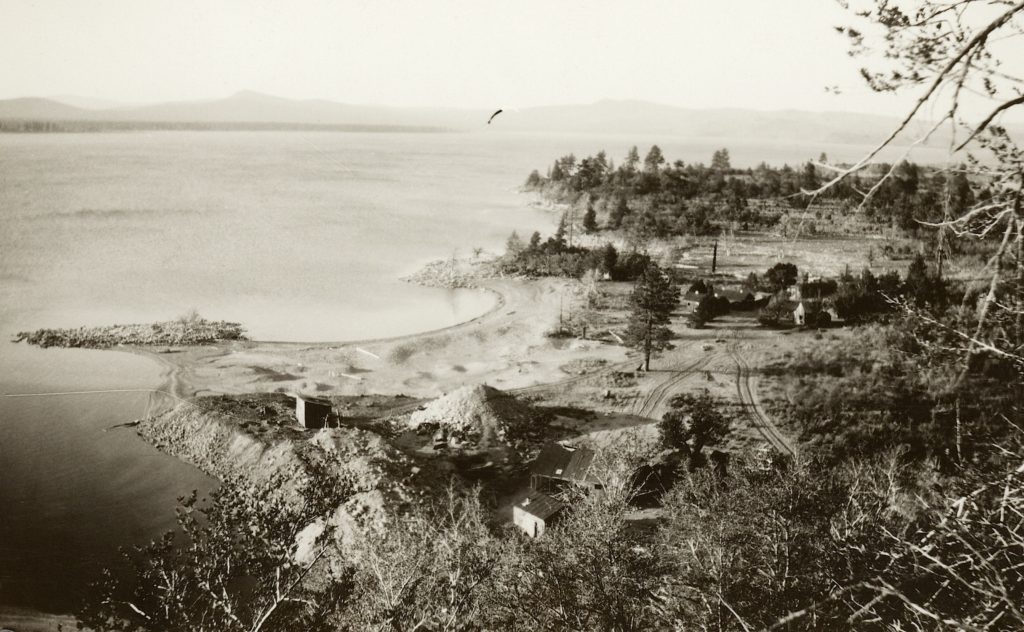
Pike’s Point, Eagle Lake

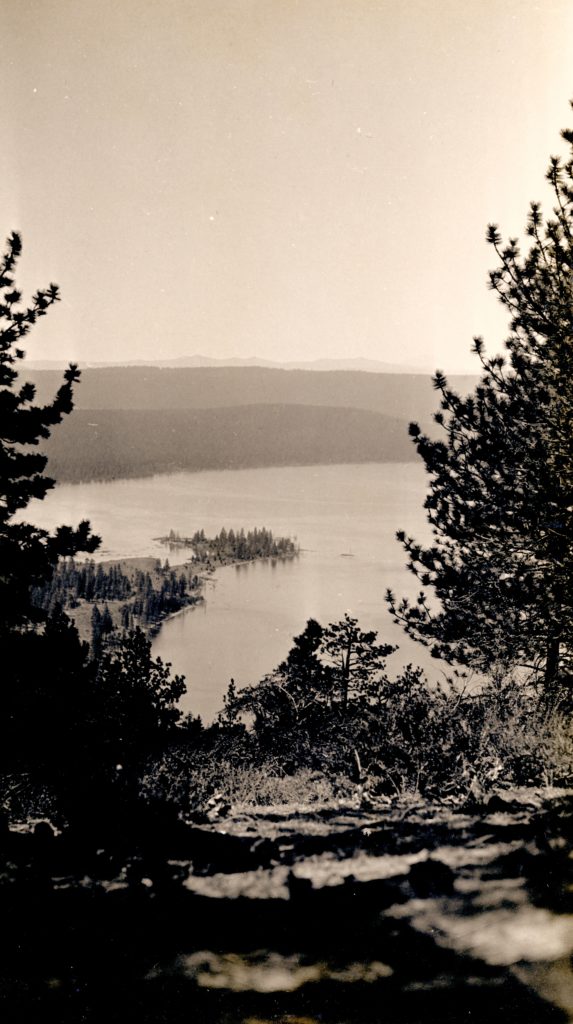
A view of Pike’s Point, Eagle Lake, circa 1917. Courtesy of Wyn Wachhorst

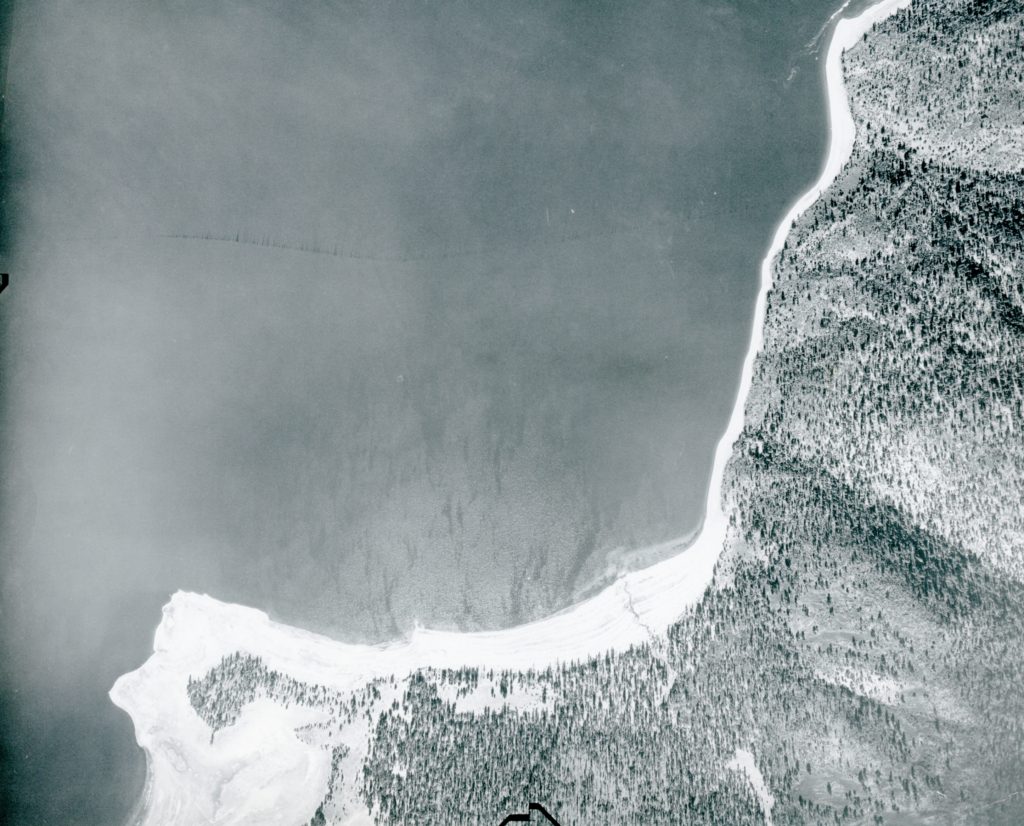
How and why it was so named, I do not know. The earliest reference to it being referred to as Pikes Point was in 1920. Anyhow, I thought some people would like to see the difference from Eagle Lake’s high and low water levels, though from two different angles. By they way, most people identify the site as the Eagle Lake Marina at the south shore of the lake.

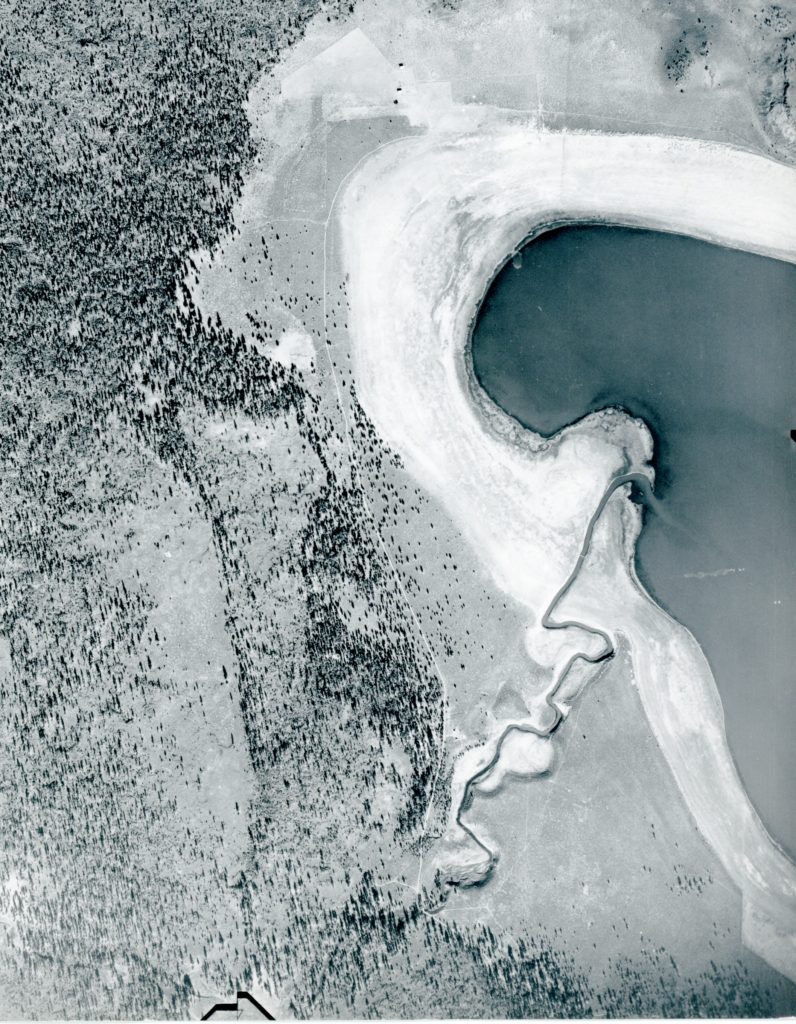
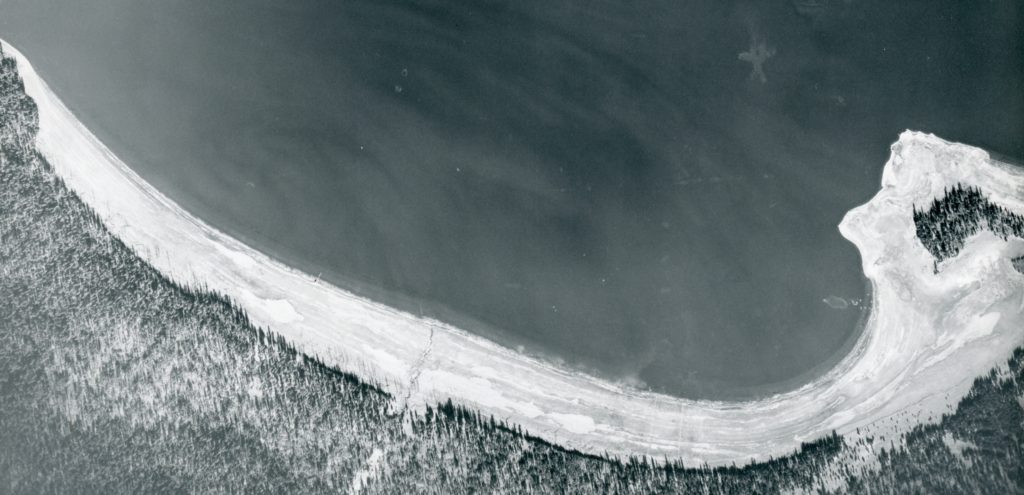
Piked Point and the south shore of Eagle Lake, November 9, 1941 – Courtesy of Hank Martinez

Never miss a story, click here to subscribe.

Merrill Flat Fire

Merrill Flat Fire, 1955

It was on Labor Day 1955 (Sept. 5) when a fire broke out near Merrill Flat, south of Eagle Lake. The cause, a lightning storm hit the area. Conditions were extremely dry, the worst since 1924. The fire spread rapidly towards Eagle Lake and it even reached the shoreline and destroyed a cabin and barn at the Eagle Lake Resort. Over 800 men were recruited to fight the fire. Just as Mother Nature was responsible for the fire, it helped extinguished it with a light rain fall on September 8. In all, 19,000 acres was consumed by the fire. 

Support

A Flooded Champs Flat

Champs Flat, 1984

Champs Flat, located due west of Spalding Tract was a lonely outpost for some during the summer months a century ago when summer livestock grazing was a major activity there. The winter of 1937-38 was an epoch one, and to navigate most any where in the spring of 1938 provided numerous challenges.

On May 12, 1938, Lassen National Forest Ranger, P.D. Hook and Forester, Philip Lord attempted to make the trip to Champs Flat. The roads west of Spalding Tract were either impassable due to water or washouts and never made it to Champs. They did note Eagle Lake’s level. “The lake level appeared to be higher than at any time during the past ten years. A well and windmill placed on the east side of the lake by Ranger Hook, and which by last fall was approximately one and one-quarter miles from the water’s edge, is now threatened by high water.”

Support

The Valley of Eagle Lake

The north shore of Eagle Lake, 1920, where Udell proposed to build a dam. Courtesy of Lola L. Tanner

In late April, 1899 L.S. Greenlaw, special correspodent to the Reno Gazette traveled north to Lassen and Modoc to search out the conditions. There was, after all, a lot of interest being generated with the NCO Railroad’s extending its line north from Amedee to the Madeline Plains.

The following is an excerpt of one of his observations. “Valley of Eagle Lake. One would scarcely expect to see fine farms and fine farm houses in such a place. On the eastern shore are large grain fields and grassy meadows. We pass nearly halfway around this beautiful body of water and when we were driving along its northern shore the road is so near the lake that when the wind blows as it did that day white spray is blown into the buggy. Some of the finest trout are caught from this lake.”

Subscribe

Whaleback Fire Revisited

Whaleback Fire courtesy of InciWeb

It was a year ago, on July 27, 2018 that in the early afternoon a fire was spotted on Whaleback Mountain, just west of Eagle Lake. During its peak Spaulding Tract, Aspen Grove, Christie and Merrill campgrounds, along with the marina and Camp Ronald McDonald were evacuated. A voluntary notice was provided to Buck’s Bay and the Stones-Bengard subdivision. On August 8, 2018, the fire that destroyed 18,703 acres was fully contained. The origin of the fire was never determined or if it has not fully disclosed to the public.

Subscribe

Stones Subdivision

A lakeview scene, circa 1963

On May 4, 1961, the Stone family sold their Eagle Lake ranch to the Five Dot Land & Cattle Company. They did retain ownership of their shoreline property on the northwest end of the lake. In October 1961 they began subdividing property into 244 lots.

A 1963 view of Stones subdivison.

Never miss a story, click here to subscribe.

The Gallatin/Fritter Agitators

Gallatin Beach
Gallatin Beach, Eagle Lake, 1940.

For a sixty-year period the Lassen County Superior Court routinely dealt with law suits involving Eagle Lake issues. Of course, the majority of these involved the various enterprises to tap the lake for irrigation. In the late 1920s, court filings were numerous as the local banks filed on foreclosures of the numerous ranchers of the Tule & Baxter Creek Irrigation Districts who defaulted on their loans on the failed Bly Tunnel.

It was in 1932 that witnessed an unusual lawsuit filed by Malvena Gallatin and James Fritter, both Eagle Lake property owners. Malvena was the leading figure and to give credence brought in Eagle Lake resident Fritter. In the complaint it alleged the districts were wasting Eagle Lake water, due to the leakage at the tunnel during the non-irrigation season. It was their contention that fifty percent of the winter run-off was lost through the tunnel, since the districts did not have properly installed head gates. Malvena stressed the recreational value of the lake would depreciate dramatically if the districts continued to waste the lake water.

Not divulged was Malvena had an ulterior motive. She had entered into agreement to sell her Eagle Lake property to a group who had plans to develop a million dollar resort at the lake, whereby Malvena would receive $500,000. A stipulation to the sale was that she had to guarantee that the districts would not lower the lake any further. She did not succeed. The litigation dragged on and the lake level dropped even more. When the judgement was entered on April 17, 1936, she had already lost her option to sell her property. In addition, she lost the case. The court cited that both Gallatin and Fritter had entered into agreements with Leon Bly that allowed the irrigation system to draw forty feet below the 1917 level of the lake, and when they commenced the action the lake level had only dropped twenty-four feet.

Fritter Ranch, Eagle Lake, 1921. Courtesy of Lola L. Tanner

Never miss a story, click here to subscribe.