In 1878, Edward Weed took over as editor and publisher of the Lassen Advocate. He brought a lot of life to the newspaper. From time to time he would make excursions and write about those experiences. This is one of them. The reader will note the sawmill on Diamond Mountain. At any given time there were two to as many four mills along the mountain range between Gold Run and Janesville. Continue reading Richmond, 1878→
With the Dodge Fire in the headlines, I moved this post for today, which was scheduled for later in the month. As the post concerning wild horses initially scheduled for today will appear tomorrow.
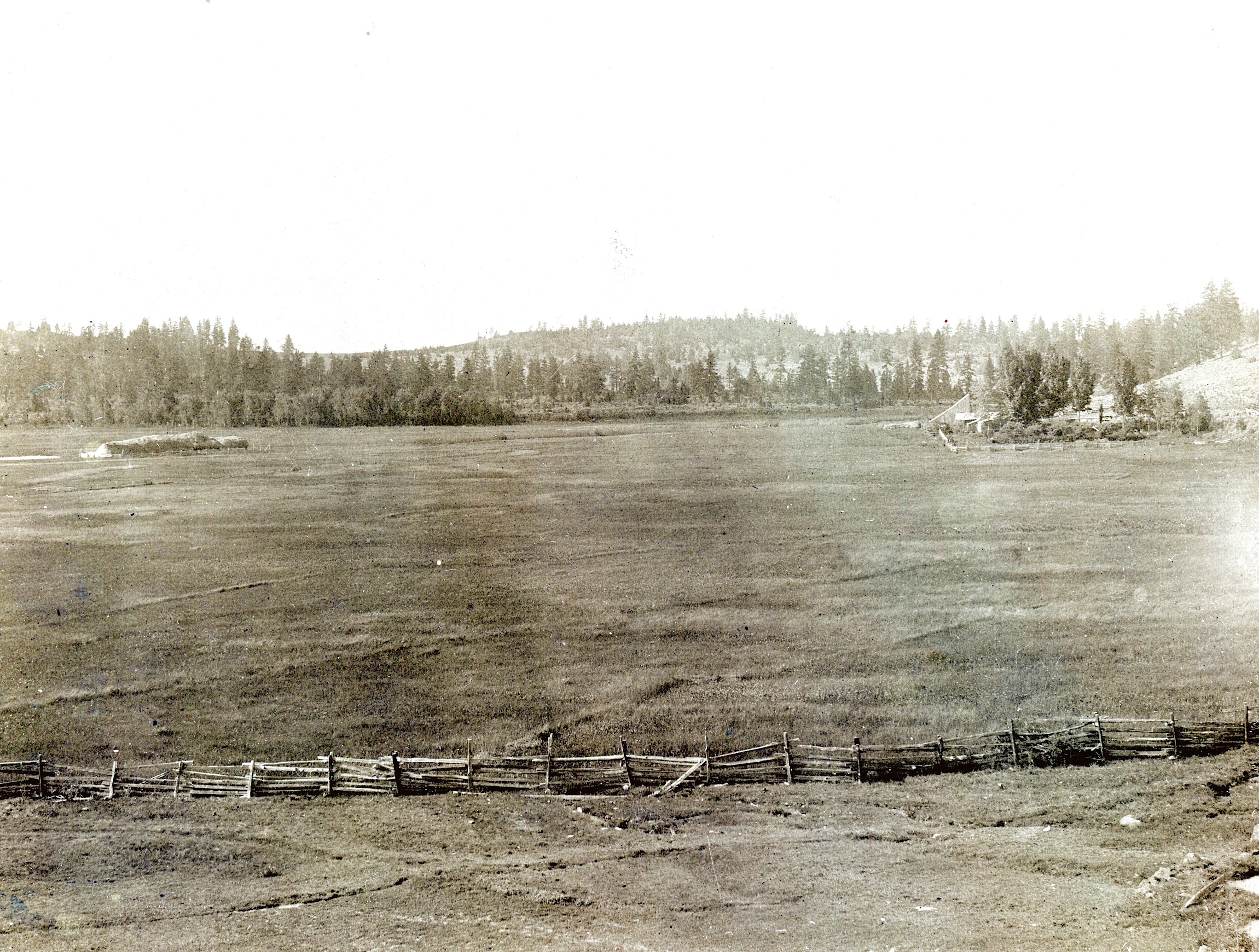
In 1889, Albert L. Shinn formed the Union Land & Stock Company. Shinn proposed that the water from Red Rock Creek could provide irrigation for the entire eastern Madeline Plains. The reservoir was originally named Lake Lockett, for the Company’s Civil Engineer, H.M. Lockett. In the early 1890s, the Union Land & Stock Company started the irrigation project but eventually construction ceased because of lack of funds and other problems. On December 9, 1907, Henry C. Dodge acquired an option to buy the Union Land & Stock Company’s failed Red Rock irrigation system. In 1909, Dodge formed the Madeline Valley Land & Irrigation Company to undertake this enterprise. In the fall of 1909, the Company contracted with August and Alfred Anderson to build the system. In December 1909, Dodge Reservoir was completed. In 1912, Henry C. Dodge died during an altercation in Reno, Nevada. Dodge’s two sons, Carl and Dana, continued with the family enterprise on the eastern Madeline Plains. On January 14, 1949, Bernys M. Dodge, the agent for the Dodge Brothers, sold the Dodge Ranch and Reservoir to George and Jean Smith.
Subscribe and support this site for $5.00 a month, what a bargain. How many spend that much at Starbucks on any given day, or other indulgences?
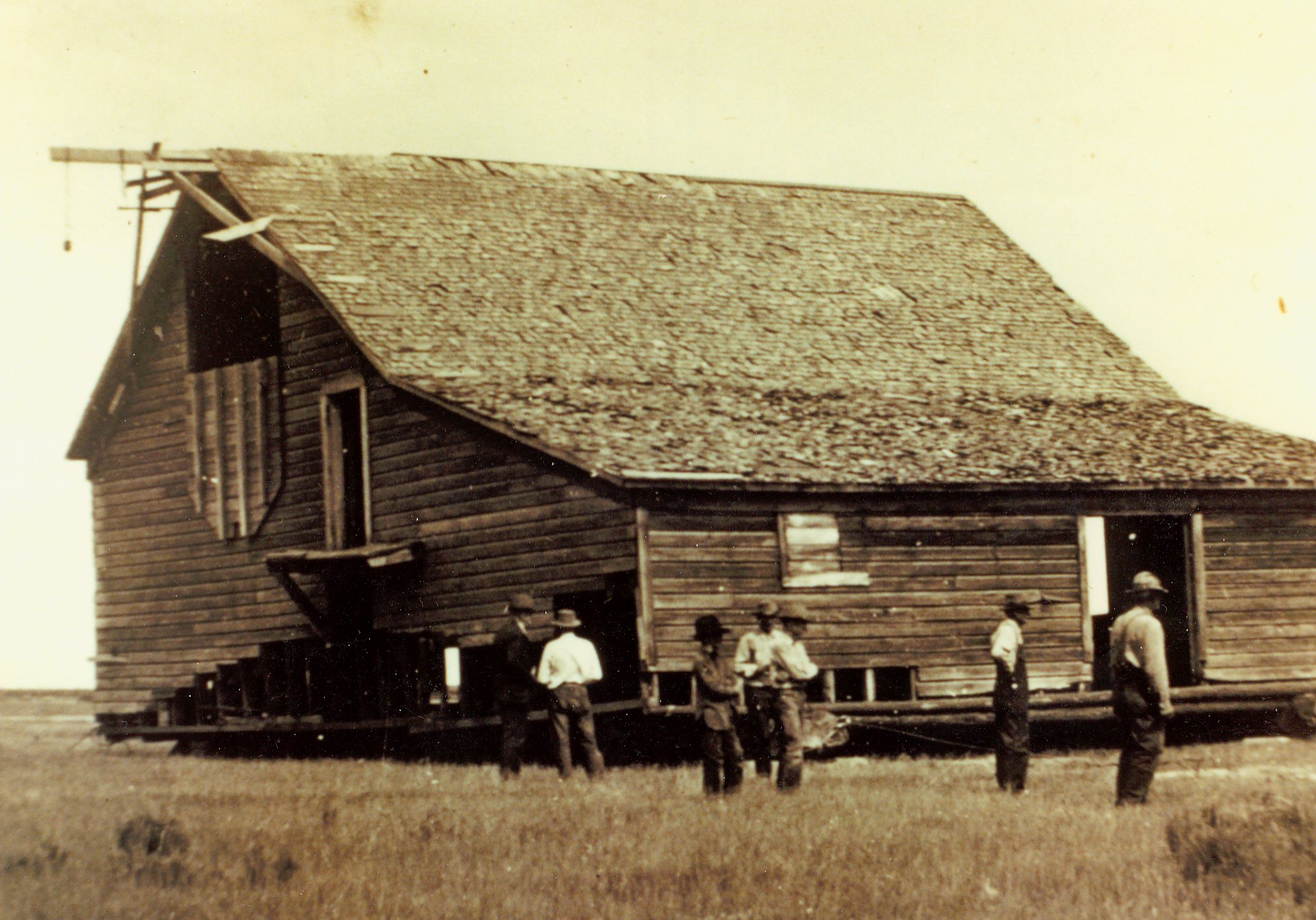
Moving the creamery building to the Mulroney Ranch.
In the 1890s, the creamery movement began in earnest in the Honey Lake Valley. One of the reasons for the slow development was there was no local skilled people to operate one.
One of the first creameries established was the Honey Lake Creamery located at Spoonville, east of Janesville and also known as Missouri Bend. The records are rather sketchy about the operation, though it appears it was placed into operation about 1895, by the Spoon Brothers. In addition, after a fire destroyed the plant in 1901, they brought James I. Christie as a partnership with the creamery and also that of a general merchandise store. The creamery was rebuilt with the equipment coming from the Diamond Mountain Creamery.
Changes were on the horizon. In 1904, Christie joined his brother, John B. in a store at Janesville. In 1905, The Spoons sold out to E.C. Brown. However, Brown was not interested in operating the creamery and it subsequently shut down. The abandoned building was used as storage. In the 1940s, it was moved a short distance to the Mulroney Ranch and converted into a barn.
A little note about the Christie Brothers. In 1919, James established Christie Furniture in Susanville. John took over the Eagle Lake Resort, hence the name of Christie Campground.
Subscribe and support this site for as little as $4.17 a month.
Jurgen Jensen family: Left to right: A.R. “Bert”, Delia, Effie and Jurgen, 1902. Courtesy of Abe Jensen
This being fair week, it is only fitting we salute the Jensen family. Two generations of Jensen’s had a major impact on the Lassen County Fair.
In the summer of 1922, A.R. “Bert” Jensen pushed the resurrection of a fair, the last one held was in 1902. Jensen recruited Russell Brownell, C.E. Lawson, L.E. DeForest and H.H. Ridells and formed the Lassen County Fair Association. Jensen offered the Association 20 acres of his ranch for a fairgrounds at a cost $2,750, though the group could pay him later—this is still the home of the Lassen County Fairgrounds. Continue reading Jurgen Jensen Family→
In the spring of 1882, Hiram Dakin and Hiram McCellan proprietors of the Milford Flour Mill began making plans to build a new mill. After all, the Milford one was constructed in 1861, and it had outlived its purpose.
The first order of business was where to build the new mill—Buntingville or Janesville. Buntingville was just beginning to flourish, it being a popular stop for travelers heading north to Modoc County. After careful consideration Janesville emerged as victor.
On June 8, 1882, construction of the three-story structure began on Main Street, a just a little north of the prominent large oak tree that still remains. When the mill was placed into operation in September, the residents knew it—at seven a.m. every morning the steam whistle blew. In 1886, J.K. Gehring purchased the enterprise known as Honey Lake Mills for $6,000. In 1918, Gehring closed the mill, he being 81 years old, and with the new Honey Lake mill in Susanville, no buyers were interested. In the early 1920s, the mill was dismantled and James H. McClelland purchased the lumber to use on his ranch.
In 1873, the Murrer family located at Round Valley, between Susanville and Willow Creek Valley. On September 24, 1898, Joseph Eddy sold the meadows to the Murrer Brothers–Jacob and edward–for $1,200. Jacob “Jake” resided at the meadows that the family referred to as the Upper Ranch. Jake is best known for an event that occurred there. On September 2, 1907, Jake literally blew up the five-room house he was living in. This feat was accomplished with twenty-five pounds of dynamite. The dynamite had been stored at the nearby Eagle Lake tunnel works of Merrill & Marker. When questioned about the explosion, Jake professed ignorance and stated he was lying on the sofa when the blast occurred. However, this could not be, as nothing remained but shattered pieces of the house with pieces of the fabric from the sofa hanging on the nearby cottonwood trees. Continue reading Murrer’s Upper Meadow→
After Heath departed from Spanish Springs his next stop was at the McKissick Ranch in Secret Valley, managed by C. L. Hudgins for J.L. Humphrey owner of the ranch. Hudgins wife gave the following warning to Heath for his next destination, Wendel:
On finding we were to cross considerable real desert, Mrs. Hudgins warned me, in crossing the desert there was a plain trail, never to leave that trail in trying to cut across. The Hudgins knew all about that whole country, I may say, for hundreds of miles around. She told me that in leaving the trail many people got lost and frequently perished. First they would find themselves lost, got confused and get to weaving back and forth or traveling in a circle, and frequently never would get out of alive. Continue reading Frank Heath, Part II→
Gallatin is one of the many intriguing figures in California history. This native New Yorker arrived in California in 1860, and the following year located at Sacramento. It was fortunate timing on his part to land a job in hardware store owned by Huntington & Hopkins. At the same time, Huntington and Hopkins would join forces with Crocker and Stanford, to become the “Big Four” and establish the Central Pacific Railroad. As a junior partner in the hardware business, became quite lucrative providing materials for the railroad. In 1877, he built the Gallatin House and in 1903 it became the California Governor’s Mansion.
The prosperous Gallatin began branching out into numerous endeavors including the sheep business. Gallatin needed summer range for the sheep, and discovered Eagle Lake. In a two year period in the late 1880s he purchased nearly 5,000 acres of Eagle Lake properties for $9,000. The bulk of the purchases were timberlands, with the exception of Hall’s Papoose Meadows and William Dow’s ranch near present day Spaulding Tract.
With the exception of Gallatin being Eagle Lake’s largest property owner, his influence otherwise was minor. In 1905, he passed away and his second wife, Malvena, had the lasting impact on Eagle Lake. After all she introduced Leon Bly to Eagle Lake.
The Fernley & Lassen Railroad under construction, February 1914.
On January 29, 1912 a contract was signed in San Francisco that would forever change Lassen County. On that historic date, T.B. Walker signed an agreement with the Southern Pacific for the construction of the Fernley & Lassen Railroad.
T.B. Walker with his need for a railroad transformed Lassen County in countless ways. It brought an era prosperity that has seen before or since. The huge influx of population provided a huge market for the local farmers and ranchers. Take for instance, there was not a single dairy, by 1920 there fifteen.
Of course, if opened the door to the timber industry, and transformed Susanville in a major lumber manufacturing center. What was thought with sustained yield and other forestry practices it was believed that it would remain the dominant industry for well over a hundred years if not more. Within fifty years, the writing was on the wall, and Lassen County’s citizens sought a new industry—prisons.
In future posts we will explore those exciting times, as well as T.B. Walker.
The Lassen Flouring Mill, 1901. Courtesy of the A.J. Mathews family.
Back in March 2015 I wrote about the first flour mill built in Lassen County at Milford. As promised, I would follow up with the other ones. The second mill was constructed in the spring of 1864 near Johnstonville, approximately where the defunct Gables is located. The machinery came from a mill located on Cow Creek, Shasta County, which belonged to John Briceland. The operation was leased to various individuals and it was not until the 1870s that stability of the ownership came to be. In 1875, William Hall and Henry Snyder became partners and remained until it closed.
In 1907, Snyder desired to retire and move to a milder climate. Hall purchased Snyder’s interest, but he too, decided to retire and by 1908, the mill shut down. The mill sat idle for over a decade, and in 1919, as part of the liquidation of Hall’s Estate the mill was sold to M.A. Taylor of Oakland. Taylor attempted to sale it, but there was no interest. He gutted the machinery and took it to the Bay area. Sam Alexander of Standish, salvaged some of the lumber from the building which he used to build a barn at his place.