Category Archives: History

Rumored Dam Failures

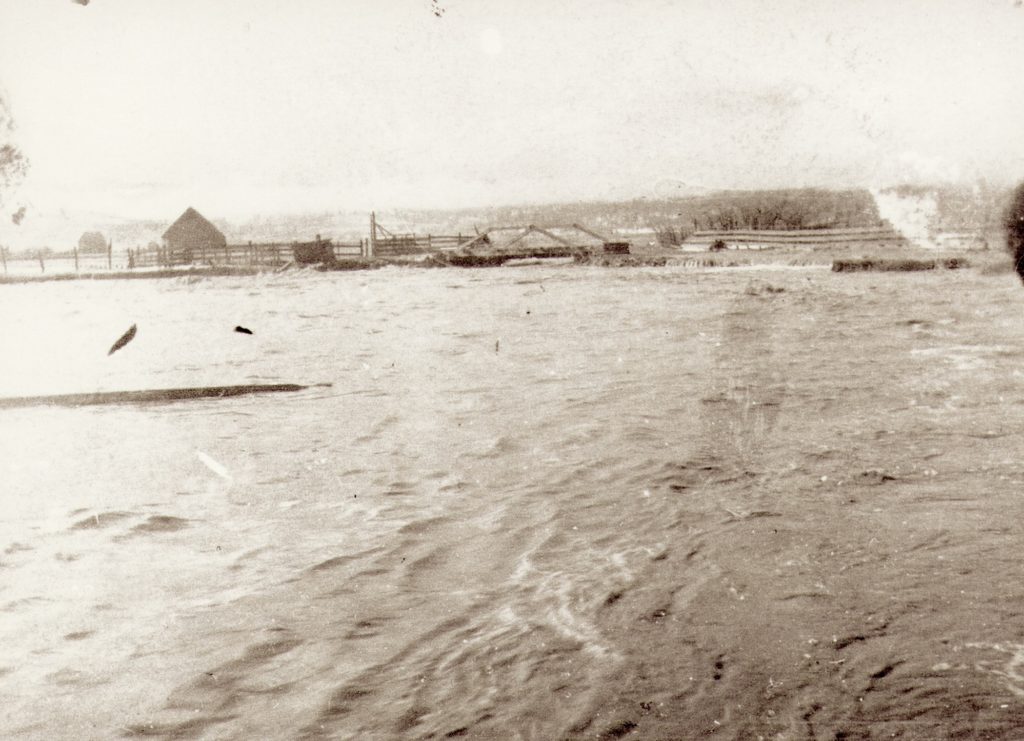
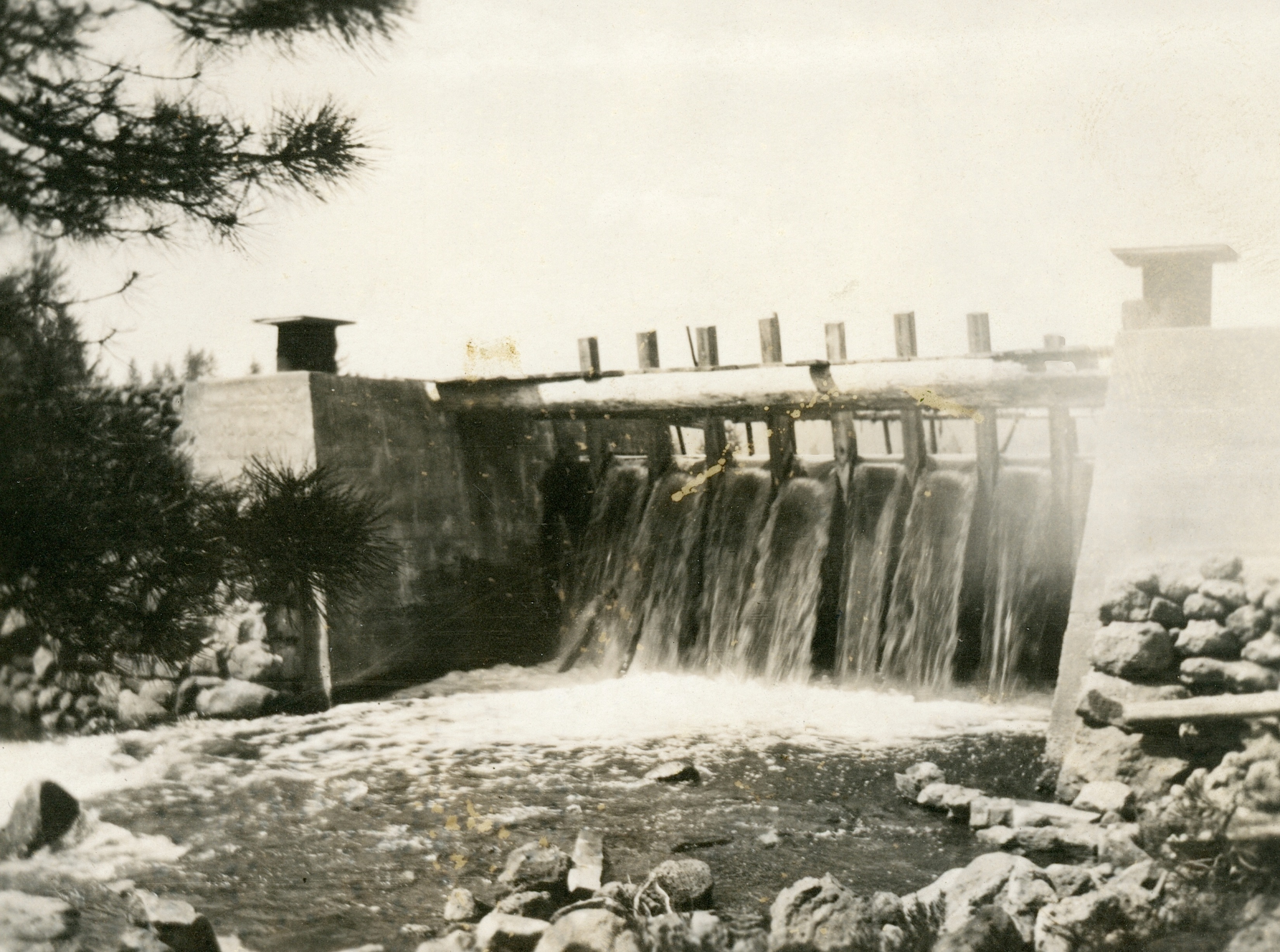
McCoy Flat Reservoir dam, 1915. Courtesy of Alphozene Terrill, granddaughter of Ben H. Leavitt

Note: This originally appeared on December 19, 2019. With all the flooding issues around California, I thought it would be worth while to visit the topic locally.

The winter of 1937-38 was one for the record books. There was a lot of wide spread flooding in the spring, including the breach of the Said Valley Reservoir. By mid-April 1938, Susanville attorney and a Director of the Lassen Irrigation District Hardin Barry released a statement that regarding the rumors circulating that McCoy Flat and Hogs Flat reservoirs were on the brink of collapse. As to Hogs Flat, Barry stated that it was so constructed that when full, surplus waters will flow through a natural depression in the direction of Worley Ranch. As to McCoy Flat it was pointed out that only nine feet of the thirteen feet of flash boards were installed and there was no imminent danger to the dam. Yet, to ease everyone’s fears the district hired a watchman at McCoy. It should be noted that Lassen Irrigation District owned the two reservoirs. Barry concluded that in 1932 that the State Water Resources Board had inspected the dams and deemed they were safe to use.
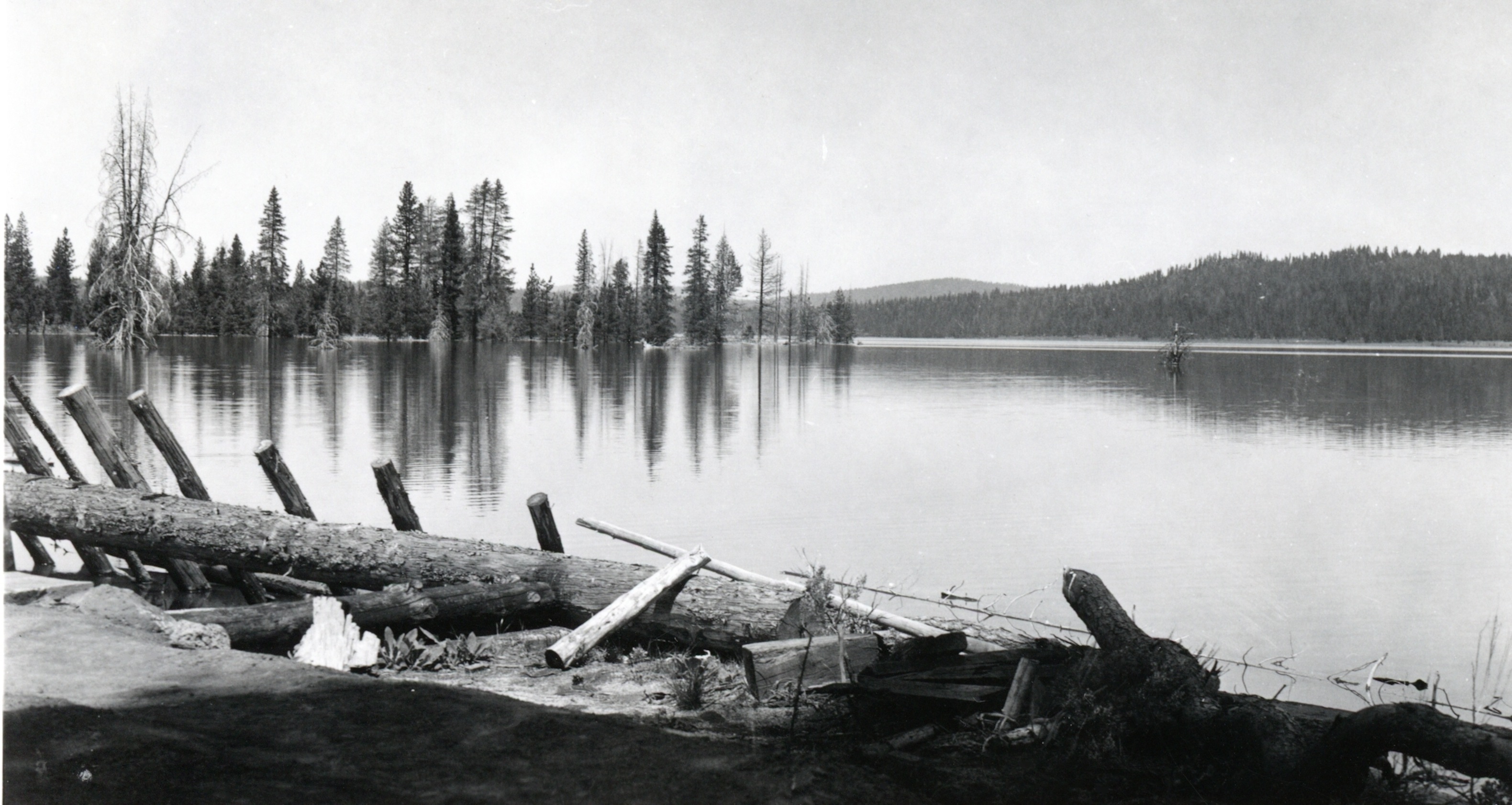
Hog Flat Reservoir, April 1940. Courtesy of Lola L. Tanner

Subscribe

Fredonyer City It Is!

Fredonyer’s Claim to what would become Susanville.

In the spring of 1857, there were only two cabins in what would be latter known as Susanville. By summer a nucleus of a hamlet had developed and some thought it should have name.  In August 1857, two names were proposed for the settlement around Roop’s trading post—Natauga and Fredonyer City. The Red Bluff Beacon reported: “The citizens of Honey Lake Valley are divided in opinion as to which names shall be given to their new town at the west end of the valley. Natauga in the Piutah tongue signifies woman and Fredonyer is the name of the gentleman who claims to be the first white man that ever beheld the beautiful valley. A gentleman who arrived here on Sunday last had in his possession an instrument in writing signed by fifty men declaring their preference for Natauga. An equal number are said to be as enthusiastic for Fredonyer. Simple and unimportant as this question is it said is to be creating quite a jealous feeling between the two rival names. They have no politics at Honey Lake and must have something to cavil about.”

Fredonyer City was the chosen name. However, it was more or less ignored and the place simply referred to as Roops. It should be noted that Fredonyer on April 11, 1857 filed a claim to property occupied by Roop with the Plumas County Recorder.

Support by subscribing.

Modoc County & E Clampus Vitus

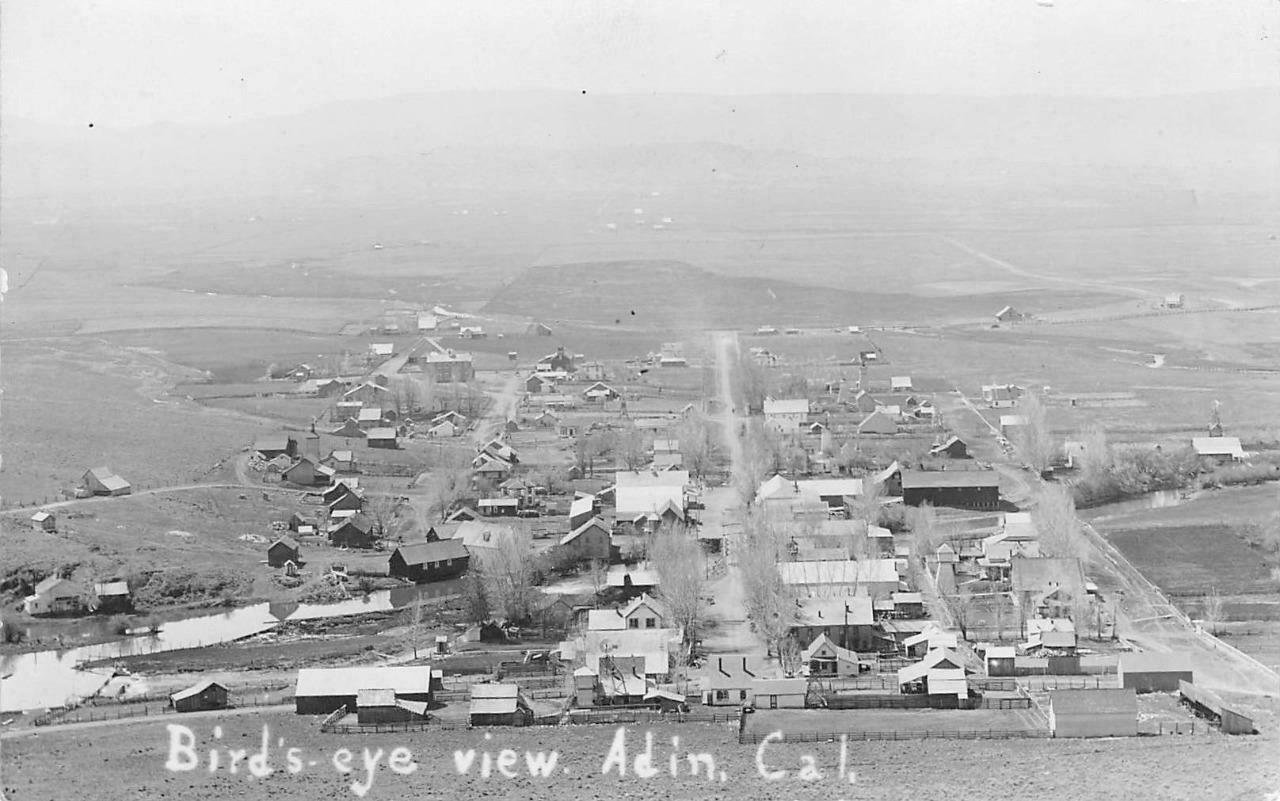
Adin, circa 1900

E Clampus Vitus, is not your ordinary run of the mill fraternal organization. Its origins began back in the gold rush days of California. It was in a sense a spoof of the more “high faltunin” fraternal organizations like the Masons. A somewhat rowdy and rambunctious  group the new members were fleeced to pay for food and drinks for all in attendance. Tee-totalers they were not.

A strange development happened along the way, E Clampus Vitus invasion into Modoc County, far from any. of California’s goldfields—especially Modoc’s mining history is somewhat meager. Whatever the case may be, by the late 1870s, E Clampus Vitus was one of the most popular lodges in Modoc, beating out the Masons and the Oddfellows. By 1880, there were E Clampus Vitus lodges in Adin, Alturas, Cedarville, Fort Bidwell and Lake City. In 1878 the Modoc Independent newspaper reported the E Clampus Vitus lodge “were holding trials and issuing occasional threats to tar and feather vile characters if they did not leave town by sun down.”

Members of the organization were and still are referred to as Clampers. As quickly they rose in Modoc, their demise was fast. Some blame it on a temperance organization known as the Young Ladies Independent Association. Whatever the case may be, the Modoc Clampers quickly disappeared. However, the entire E Clampus. Vitus organization was slowly going into  oblivion. and by 1900 no longer existed. Unlike other fraternal organizations, the Clampers were an independent group, with no core headquarters.

By 1930, there was a revival of the organization, which now has Chapters instead Lodges across the Western United States. On a final note during the 1930 revival in Alturas witnessed the formation of Captain Jack Chapter No. 7, E Clampus Vitus..

Satisfactory!

Refinancing Bly Tunnel

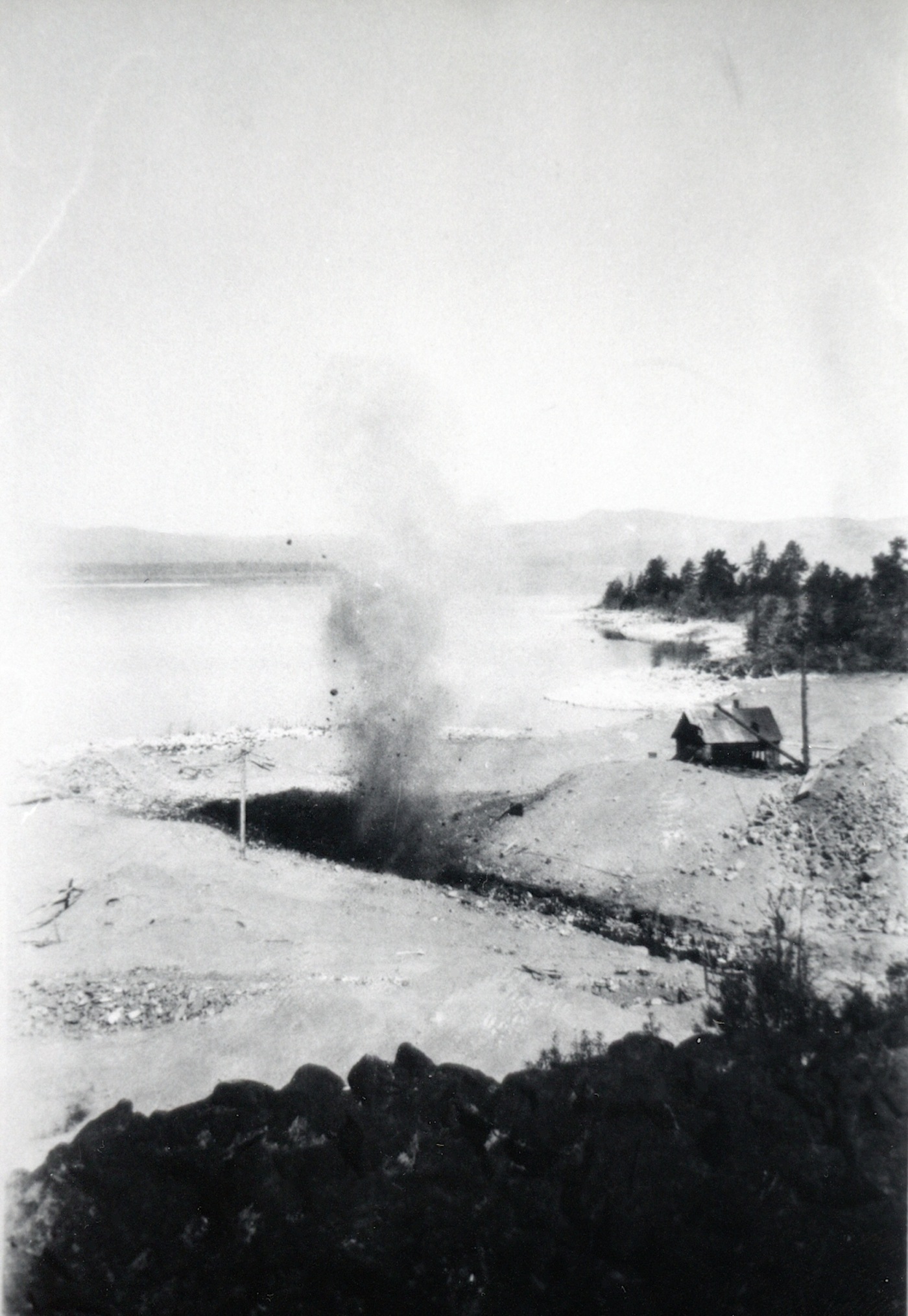
Blasting the inlet at Bly Tunnel, 1928–Francis Riddell

Last week on ongoing  Eagle Lake’s Bly Tunnel saga of 1928, the Tule and Baxter Creek Irrigation Districts needed to raise some $50,000 to correct the defective inlet as suggested by  the consultation with Engineer Wise. On August 12, 1928 a special meeting of the Lassen County Chamber of Commerce was held for the sole purpose to devise ways and means obtaining money urgently needed by the irrigation districts. It was important to have the work done as quickly possible to assure that water would be available for next year’s crops. Chamber President A.J. Mathews stressed without the water there would be a loss of some $60,000 in crops and some 3,000 acres would be fallow. Mathews continued it was a vital interest to every taxpayer in Lassen County. Without the water, these land would be abandoned, thus a loss on tax roll. The ripple effect the county would probably have raise taxes elsewhere to make up for the deficit.  It was decided to have a subscription drive to raise the funds, in the similar manner how the community did to attract the Fruit Growers Supply Company to locate its sawmill in Susanville.

After delays, work commenced on the Bly tunnel on October 15, 1928, when the assembled  supplies, equipment and work force were in place. Dynamite blasting was the first priority. Work progressed better than anticipated, especially with the weather cooperating. By Christmas the work was completed and under budget, too.

Next Week: The water quality issue.

Subscribe

Railroad Trackage—NCO & WP

Amedee, 1916
Amedee, January, 1916 courtesy of Marie Herring Gould

Recently, I received an inquiry concerning the railroad trackage of the NCO & Western Pacific Railroads as it especially relates to Long Valley. Even in the best of times, the NCO struggled financially, but for decades it did not have competition. That changed in 1909 with the completion of the Western Pacific Railroad through southern Lassen County that siphoned off business. In 1914, the Southern Pacific’s Fernley & Lassen Branch added more financial distress to the NCO.

Western Pacific had its own financial problems as well. It had hoped to build feeder lines to increase its freight tonnage. One market that WP had its sight on was Reno, Nevada. Yet, the WP did not want to build a duplicate line with that of the NCO.  Negotiations between the NCO & WP began and in certain ways it was the best of both worlds for the two railroads. The NCO needed a major cash infusiion to pay bond debt and the WP would get its Reno connection. On June 11, 1917 the NCO not only sold a 64 mile segment of its line from Rayl (now Herlong) to Reno, but also its Sierra Valley Railway to Clio, Plumas County. The transaction cost WP $700,000. Since the WP did not need the segment of NCO’s line from Plumas Junction to Rayl, it was pulled up and scrapped. Trivia, for some, the Hackstaff Road from Doyle to Herlong is the old NCO railroad bed.

Support by subscribing.

C.D.F.’s Eagle Lake Station

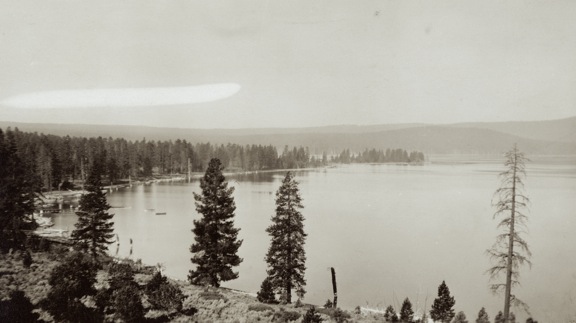
South shore of Eagle Lake, circa 1920—Wyn Wachhorst

This is, in essence, is more like a plea for information. For a time the California. Division of Forestry operated a fire station at the south shore of Eagle Lake. Unfortunately, the information CDF has and as well as my own is rather sketchy.

It was established sometime in the 1950s and what is unique the first station was located on Fruit Growers Supply Company land near their Sunkist cabin. Unfortunately, Fruit Growers is in such a disarray that avenue to locate an agreement is not going to happen.

In the mid 1950s the County of Lassen urged the Lassen National Forest to make recreational improvements at the south shore of Eagle Lake.  By 1958, the Eagle Campground was established and so too was the CDF station. At the end of the 1952 logging season Fruit Growers closed its last remaining logging camp—Camp 10—thus eliminating a resource for fire fighting.  Between the Gallatin Peak fire of 1951 and the Merrill Fire of 1955 might have been impetuous to establish the fire station. Later on the CDF relocated the station adjacent to County Road A1, near the intersection of the turn. off to the marina and Gallatin Beach.

If anyone can shed some enlightenment on this topic, it would certainly be appreciated.

Tim

St. Patrick’s Dinner—Yesteryears & Today

St. Patrick's Advertisement
1917 Advertisement of the first St. Patrick’s Dinner

Mark your calendar as next Saturday, March 18, will be Sacred Heart Church’s  annual St. Patrick’s Dinner at Monsignor Moran Hall. Did you know that it is Susanville’s oldest continuous annual event? If you were wondering what the second is, it is the Lassen County Fair established in 1922.

Of the details. Hours from 4 to 7. The cost $20 for adults; Kids 5 to 10 $10 and under 5 free. Continue reading St. Patrick’s Dinner—Yesteryears & Today

All Those Round Valleys

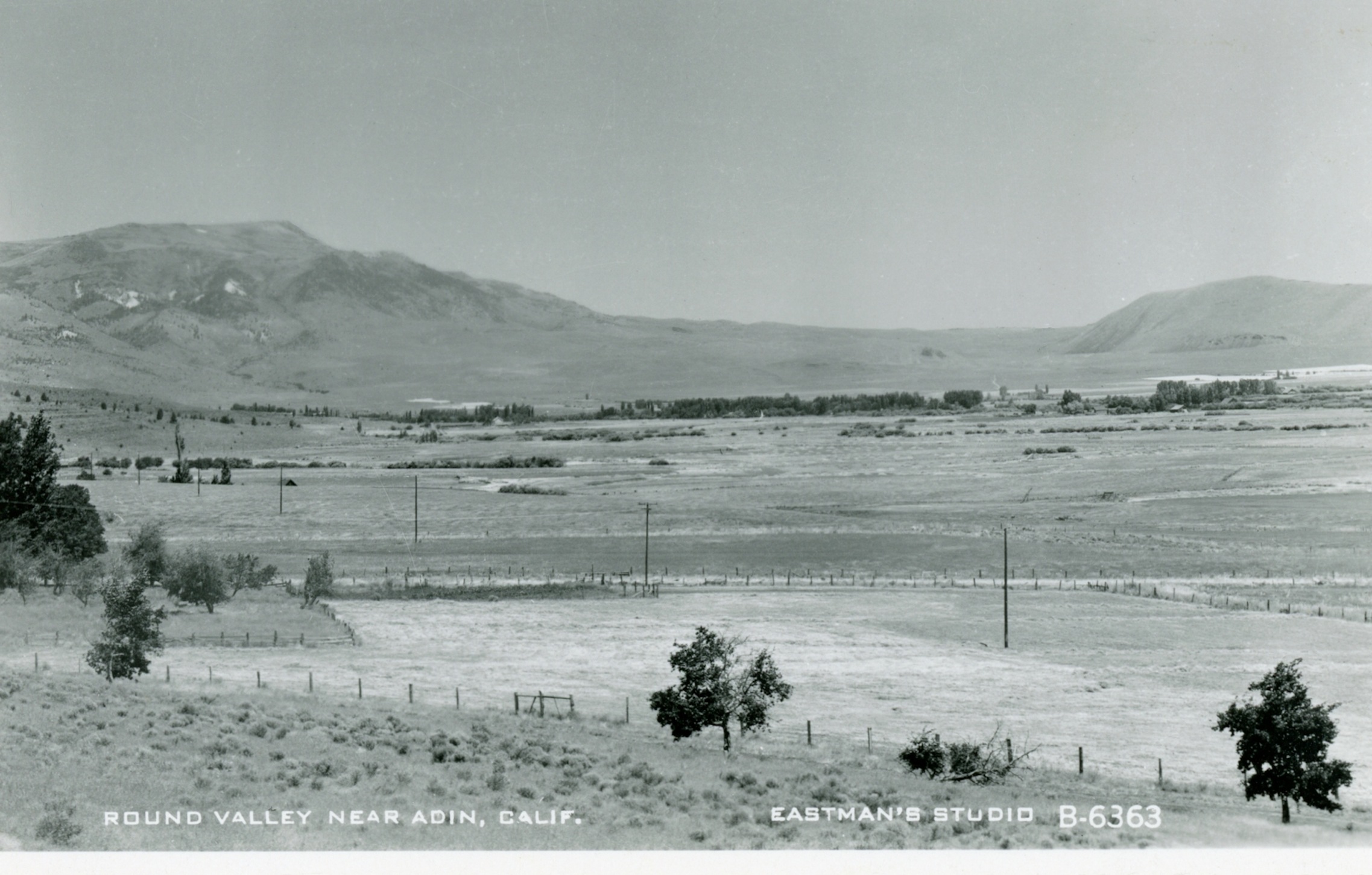
Round Valley, Modoc County, circa 1950

One of the most prevalent place names in California is Willow Creek. By some estimates there are over 1100 Willow Creeks in California. Another common place name is Round Valley: There is one near Greenville in Plumas County; in Lassen there is one north of Susanville and in Modoc County there is a Round Valley just north of Adin.

But, the original Round Valley in this part of California is not called such anymore. Big Valley which straddles Lassen and Modoc Counties was originally named Round Valley.

It was John C. Fremont who named it Round Valley on April 29, 1846. Fremont wrote: “Here we found a region very different from the valley of California. We had left behind the soft, delightful climate of the coast, from which we were cut off by the high snowy mountains, and had ascended into one resembling that of the Great Basin, and under the influence of the same elevation above the sea; but more fertile and having much forest land and well watered.”

It was Adin G.McDowell who settled on the east side of the valley in 1869, and for whom to the town of Adin is named for, and referred to the locale as Big Valley. Even so, by 1880 some cartographers continued to designate it as Big Valley.

Support by subscribing.

March Weather Madness, 1907

The Susan River near Johnstonville, just before the bridge floated away—G.L.Morrrill

Note: This originally appeared on March 17, 2021. I thought with the latest weather predictions, will we see some kind of repeat of March 1907.

March 1907 was no doubt one of the wettest on record.The storms were widespread across Northern California, practically turning the Sacramento Valley into one vast lake. After all there no reservoirs such as Oroville and Shasta to retain some of the flood waters.

On March 16, 1907 it began to rain in the Honey Lake Valley. It was one continuous downpour and after 96 hours eight inches of rain drenched the region. Tremendous flooding was to be found everywhere. The majority of the bridges were either washed out or so severely damaged they were unsafe to cross. However, a lot of property damage was minimal. F. Peissker of Susanville suffered one of the biggest casualties. He was located on Richmond Road near the Susan River and the flood waters swept away some 100 cords of firewood, which was how he made his living.

The respite from the wet weather was brief. Two days later it began to snow. By March 22, forty inches of heavy wet snow blanketed Susanville. Travel was brought to a complete standstill. It took a two-horse team seven hours to haul mail one-way from Janesville to Susanville.

In all, some 13 inches of precipitation was recorded that month.

Support

Changing Westwood’s Image

Westwood
Westwood. Courtesy of Hank Martinez

By the fall of 1940, the day of reckoning was at hand as to the future of Red River Lumber Company’s Westwood Operation. . A decision had to be made. The responsibility fell on Ted Walker, the General Manager, to provide options for everyone in the family to consider. Some of his suggestions would no doubt seem radical to his grandfather, T.B.Walker, Red River’s founder. Ted wanted to get away from the company town image, and heaven forbid actually spruce up the town by painting the houses. Ted suggested they even allow the opening of the cocktail lounges, so Westwood would look like any other American community.

Clinton Walker agreed to the house-painting program on one condition that there was an appropriate increase in the rents to
offset the cost. In summation, Ted wrote: “In general, I believe we
will be far better off to get away from the idea of a closed, one man
company town as much and as quickly as is practicable. There was, no doubt, merit to the closed town idea at the time operations were
started. It was then practicable, legally, geographically and politically to control mercantile, labor and moral conditions to a substantial degree. None of these things can safely be controlled today. Practically all the benefits of a closed town set-up have been
eliminated by changing times, and all that remains is the unfavorable
reaction and publicity connected with an archaic and obsolete policy
and philosophy. “

Actually, it should be noted, the transformation of the company began in the the mid-1930s in which operations such as the Big Store were leased to concessionaires.

Donate