1927 holiday greeting card from the Lassen County Sheriff’s Office. Left to Right, Sheriff Jim Leavitt, Deputy Tom Massey and Deputy A.C. “Cass” Hunsinger.—Betty B. Deal
Sifting through old scans, I came across the above holiday greeting postcard of the Lassen County. While this photograph was scanned and uploaded to the website back in October 2015, for reasons unknown I never bothered to publish the same, until now.
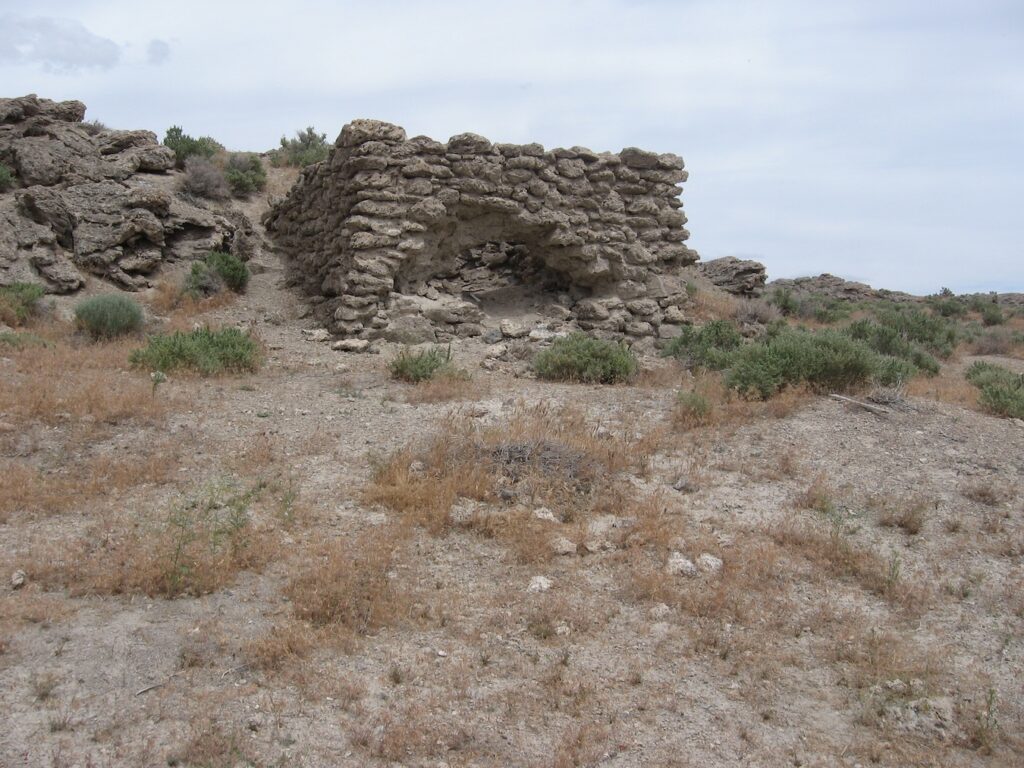
How much longer when the old jail remains standing is anyone’s guess. After all the the roof has collapsed on the back half of the building.
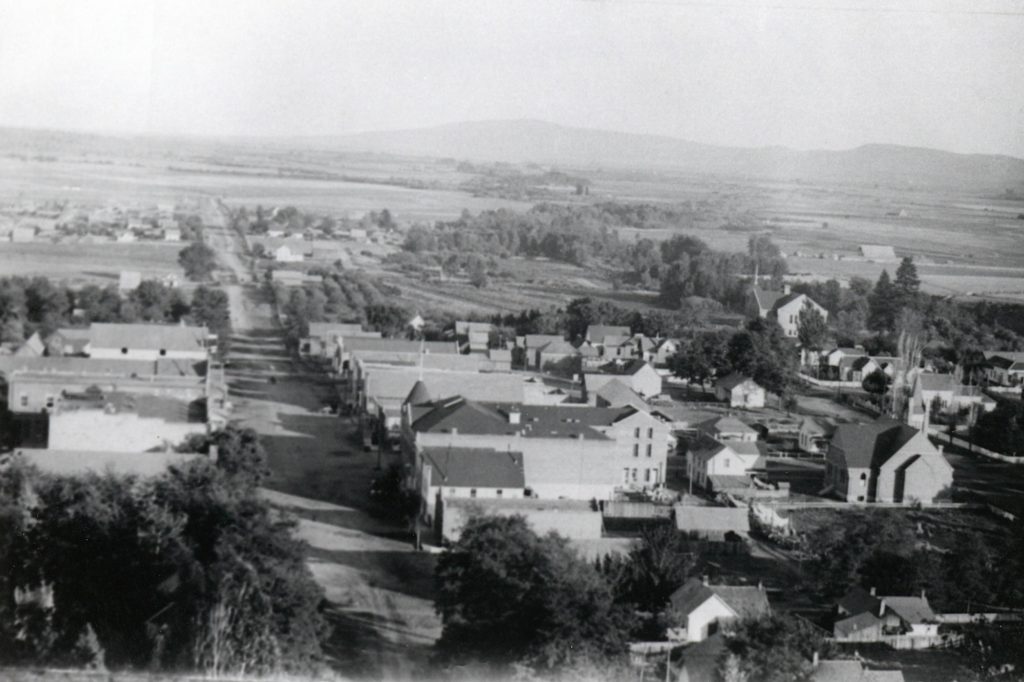
Susanville, 1905. Courtesy of Dick & Helen Harrison
In 1910, with no substantial proof that a railroad was coming to Susanville, some of the powers to be thought the town could use a makeover. In February, the Lassen County Chamber of Commerce thought the town had a image problem. In their opinion, the town’s name should be changed with something of a more cosmopolitan flair. This was, of course, a delicate maneuver, since the town’s matriarch and namesake, Susan Roop Arnold, was still a resident of the community and had been for forty-six years. The Chamber advised her that it did not mean to be disrespectful, but felt changing the City’s name would be in the best interest of the community. The Chamber believed the town was destined to become an important city and that with name of with suffix “ville” carried a stigma, as being associated with a hamlet or village.
The City Trustees listened to Chamber’s proposal. They decided to postpone it until the March meeting. The Trustee’s appointed a committee to provide a propose name change. The group were not very creative and the best they could come up was Lassen. They cited that if the Lassen name was adopted, very few changes would have to be made. Numerous businesses and organizations had already incorporated the name into their respective establishments. The City said no, end of story.
The abandoned Milford Flour Mill as it appeared in 1901. Courtesy of the A.J. Mathews family
Okay, may be because its December and on certain fronts things are winding down. There are lots of towns named Milford across the country, and the one in Lassen County is of no exception.
The Milford Post Office and Store, 1909. Courtesy of Betty Barry Deal
This community so named back in 1861 was the location of two mills—a flour and a sawmill. However, even a community with a singular mill and named for such, why is the second “l” eliminated?
Fruit Growers Supply Company is a non-profit purchasing agent co-operative of Sunkist. The latter is a marketing co-operative of citrus growers. There was a time when fruit and vegetables were shipped in wooden boxes, that is another story. Fruit Growers, as it is known entered the lumber business reluctantly to manufacture wooden boxes for their member owned citrus growers.
One of Fruit Growers earliest lessons learned was the value of employees. To retain a reliable/skilled workforce amenities were provided to prevent labor turnover. When Fruit Growers mill opened its Susanville mill in 1921, they were in hopes the town would provide such. Susanville had been so overwhelmed by its short term growth, that it was just too much.
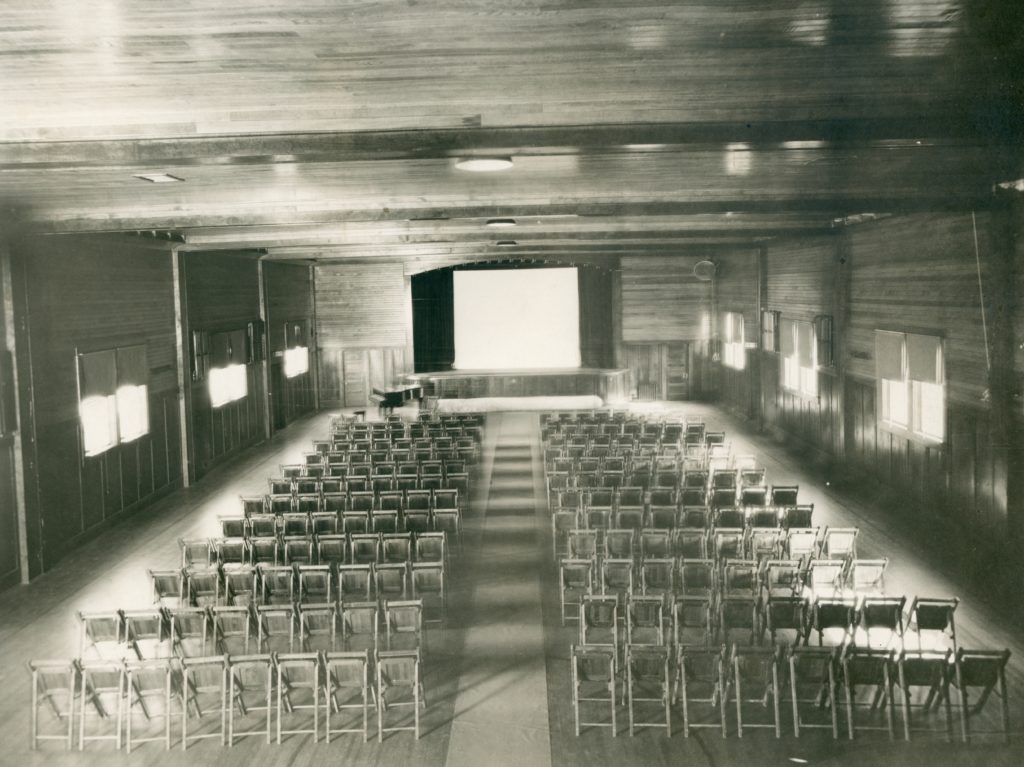
The movie theater in the Story Club, 1923. It was used by many religious denominations for services. Courtesy of Fruit Growers Supply Company.
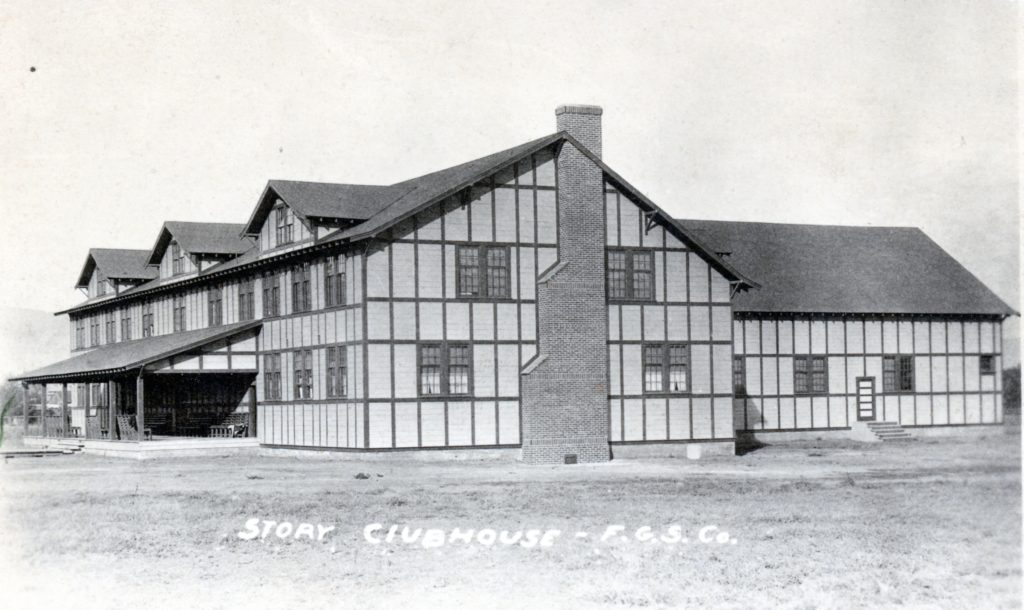
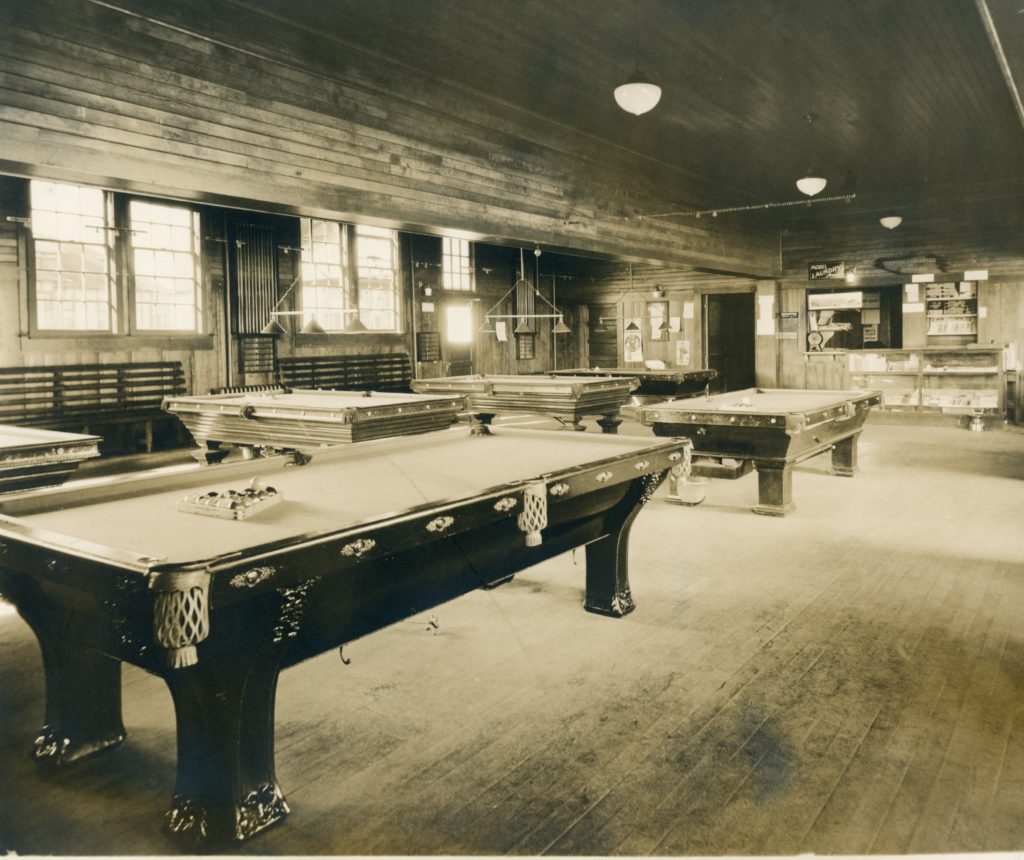
While Fruit Growers would provide housing and a hospital, that was not enough. In 1922, they had a three-story recreational building constructed on their premises. Susanville had never experienced a facility like this. Of the many attractions inside the building was a theater that could seat 450 people. It was a multi-purpose room that served as a ballroom and other forms of entertainment—including indoor baseball which I do not know how that operated. The place boasted a billiard room, a restaurant, soda fountain, and a library. The place was named the Story Club, after an influential member of Sunkist who donated the initial stock for the library.
The billiard room, Story Club, Susanville, 1923. Courtesy of the Fruit Growers Supply Company
On the north side of the building there was a children’s playground. The Story Club was destroyed by fire in 1944. Times had changed, and Fruit Growers converted the site into a park known as Riverside.
The one thing that irked Asa Fairfield, author Fairfield’s Pioneer History of Lassen County (1916), was so many so many landmarks, as well as institutions were named after Peter Lassen. Fairfield lamented Susanville’s founder, Isaac Roop deserved that kind of stature for all his worthy accomplishments in the early years during the settlement of the region.
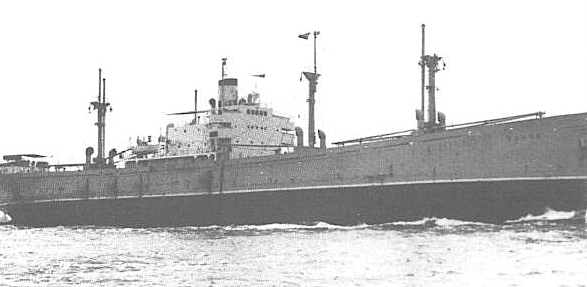
It was a good thing that Fairfield was not alive during World War II when a battleship was named after Lassen. During World War II, the United States constructed thousands of Liberty Ships. These vessels were named after individuals who had a role in the nation’s history. On April 7, 1944, the SS Peter Lassen was launched. In 1947, it was decommissioned and sold; and in 1968 scrapped.
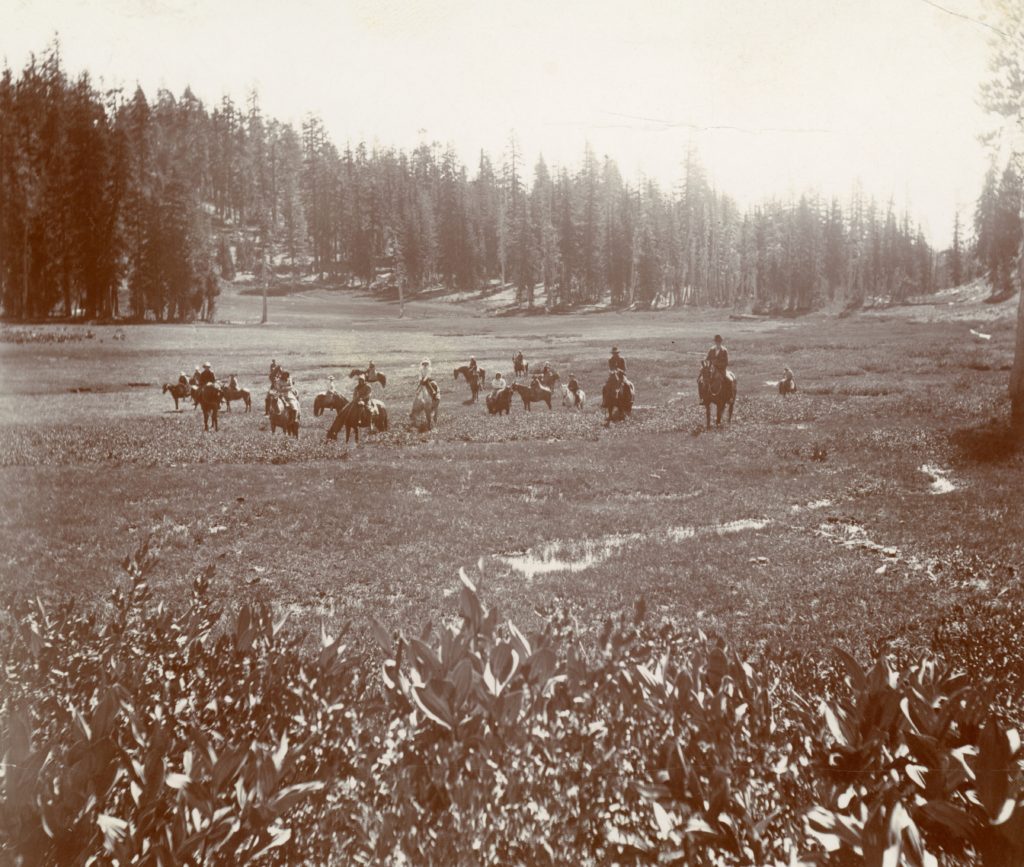
Desmond Meadows, 1906. Courtesy of Betty Barry Deal
On January 22, 1859, Malcolm S. Scott claimed the meadows along Piute Creek, west of Susanville, that he named Spring Valley. Scott later abandoned his claim and the claim was taken over by Emanuel Brannon during the following year. Interest in the meadows fell by the wayside until 1873, when Robert M. Bean took possession of the meadows. Somewhere along the banks of Piute Creek, between Desmond Meadows and Susanville, Bean established the first brick kiln yard in Lassen County. In the year 1878, Bean manufactured 130,000 bricks. Hard times quickly fell upon him. Because of his creditors and the death of his wife, Alice, Bean sold the meadows to Jonathon Lovell, a Susanville blacksmith. Ownership of the meadows changed hands numerous times during the early 1880s. In 1886, it was purchased by John and Hannah Desmond from M. C. Bishop for $1,500. Married life for the Desmonds was not pleasant. In 1890, the couple separated and Hannah remained at the meadows. For the next ten years, to support herself and her family, Hannah operated a firewood business. The County of Lassen was one of her major customers, purchasing eighty cords annually at a $1.50 per cord. On November 19, 1900, Desmond sold the meadows to Anton Bantly for $2,000.
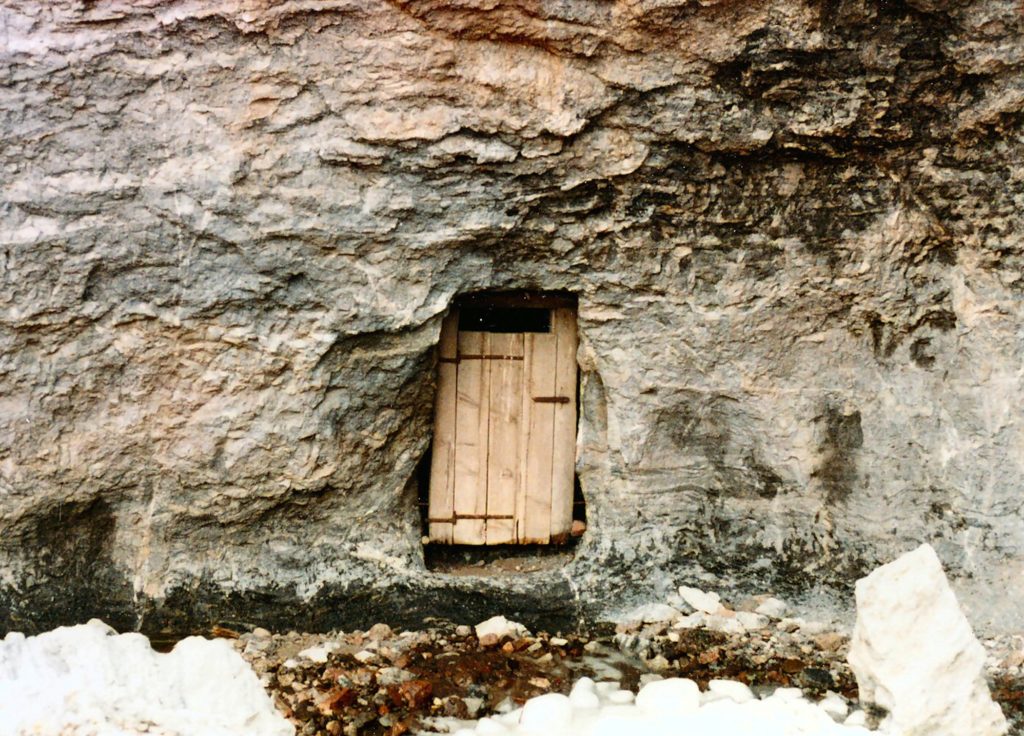
My Dad’s family were avid rock collectors. I was exposed to some interesting out of the way places. One of these adventures was to the Apache tears mine in the Smoke Creek Desert. According to the late Jack Bonham, the mine dates back to World War I. Smoke Creek resident Gordon Mott while exploring a small canyon came across a mica deposit. He developed a tunnel and a vertical shaft hoping that he would find gold. What he did find was small pieces of obsidian embedded in the soft mica, sometimes referred to as Apache tears or Black Diamonds.
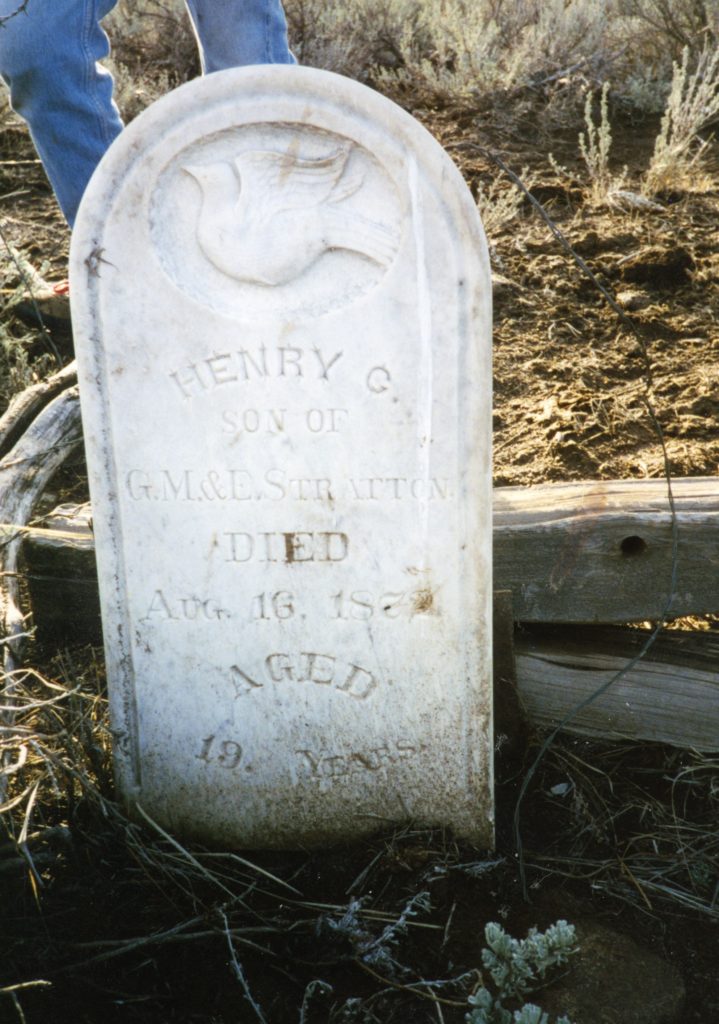
The grave of Henry Stratton. Courtesy of Martin Balding
These springs are located near Said Valley Reservoir, which is located at the northern end of Grasshopper Valley and west of Highway 139. They were so named for Gabriel McLean Stratton. In 1871, he moved his family from Butte County to Grasshopper Valley, Lassen County. On August 16, 1872, his nineteen year old son, Henry Stratton died there and was buried nearby at Slate Creek, where the family ranch was located, which was located much further south from the springs. Unfortunately, I have never been able to find any documentation what caused the young man’s demise. According to Pete Gerig there were two Stratton graves, but only one is marked. Gerig mentioned coming across “ancient graves” scattered throughout the region, which would be expected. On October 23, 1884, Stratton sold his ranch and stage stop to his son-in-law, Charles Franklin Loveland, for $2,500. Stratton moved to Adin., where he is buried.
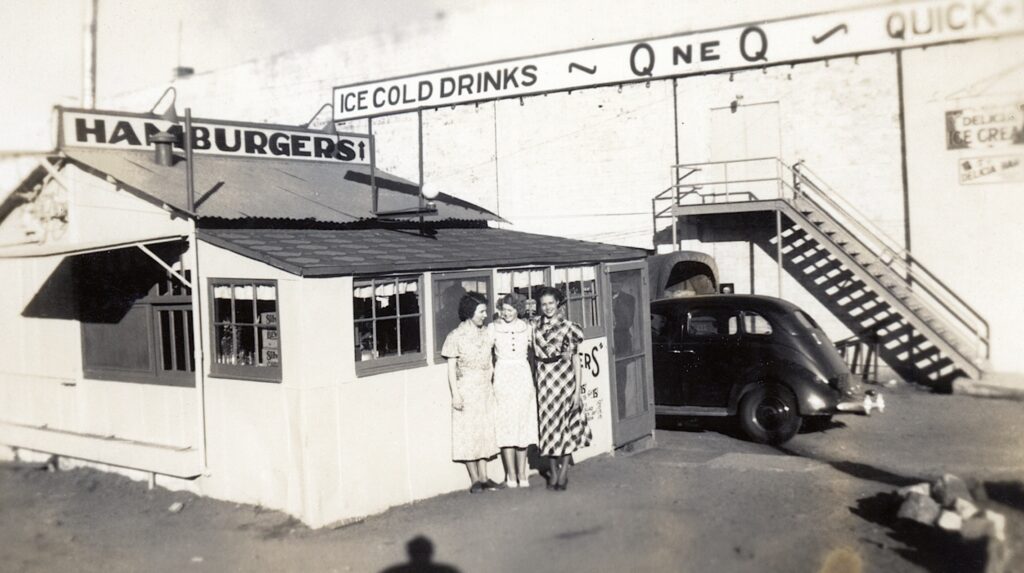
Thanks to Dave Bricker who figured out the Hamburger Shack location. It was on the west side of Sierra Theater, which can be seen in the above photograph.