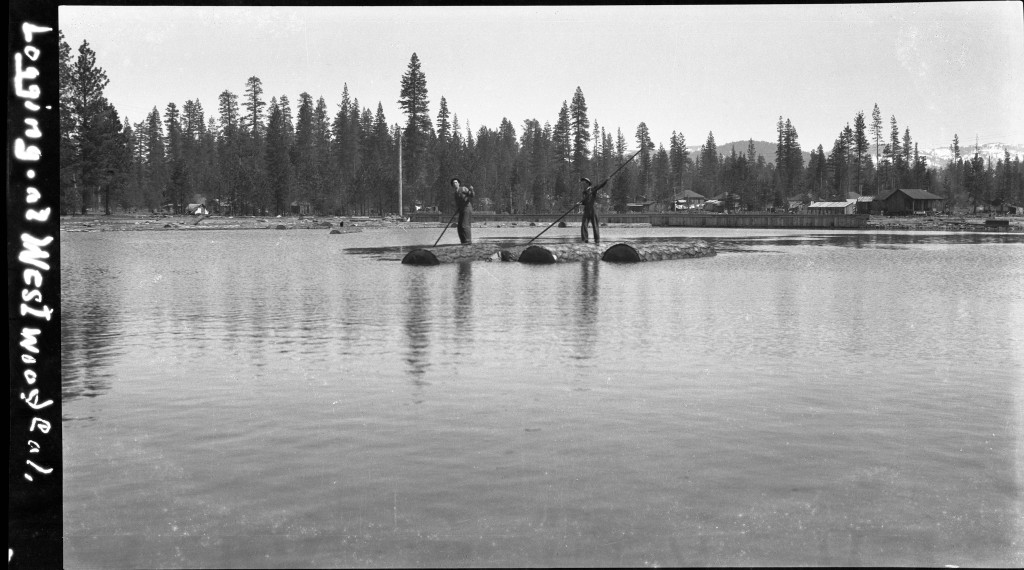
Millponds at lumber mills are a relic of the past. Those who have recollections, especially if living nearby can attest during the summer months of the odiferous stench from them. Continue reading Red River’s Massive Millpond
Millponds at lumber mills are a relic of the past. Those who have recollections, especially if living nearby can attest during the summer months of the odiferous stench from them. Continue reading Red River’s Massive Millpond
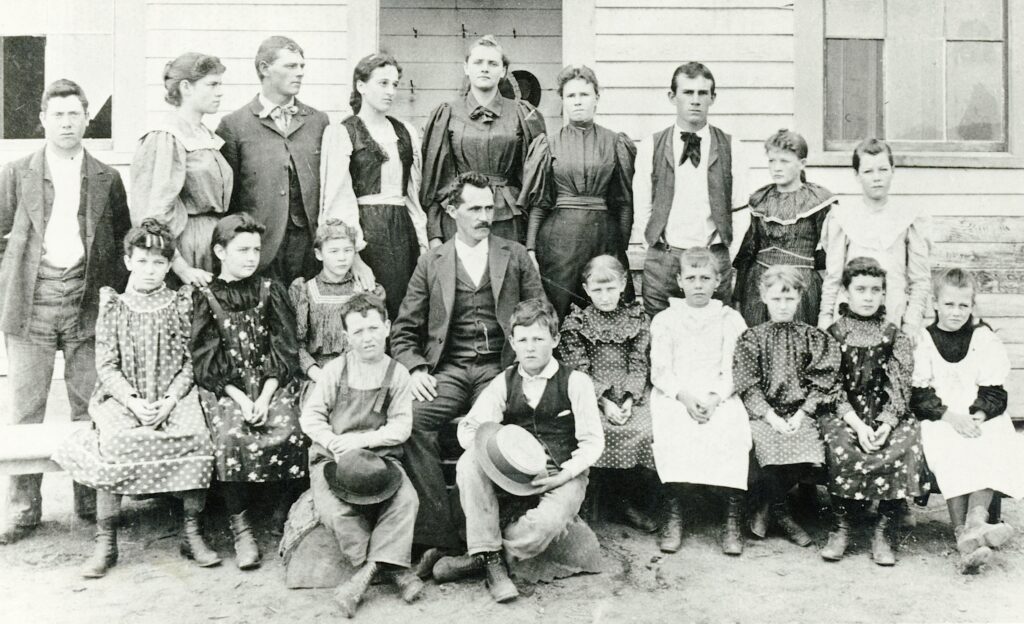
Today is a special day. It happens to be Arthur Cahlan Mathews 101st Birthday, who was born in Susanville on June 5, 1922. This explains today’s photograph of the students and teacher of Johnstonville School, 1895. Art’s mother Lena Cahlan, and his aunt, Neva attended Johnstonville School and are featured in this photograph, notice the matching dresses. They grew up on Cahlan ranch which was located about halfway between Susanville and Johnstonville. Lena, was a member of the first graduating class of Lassen County High School in 1907. Art’s grandmother, Charlotte Cahlan, by the way, was a moving force behind the establishment of the Lassen County Free Library in 1915.
Happy Birthday Art. I will have the traditional ”Susanville pour” in your honor.
Tim
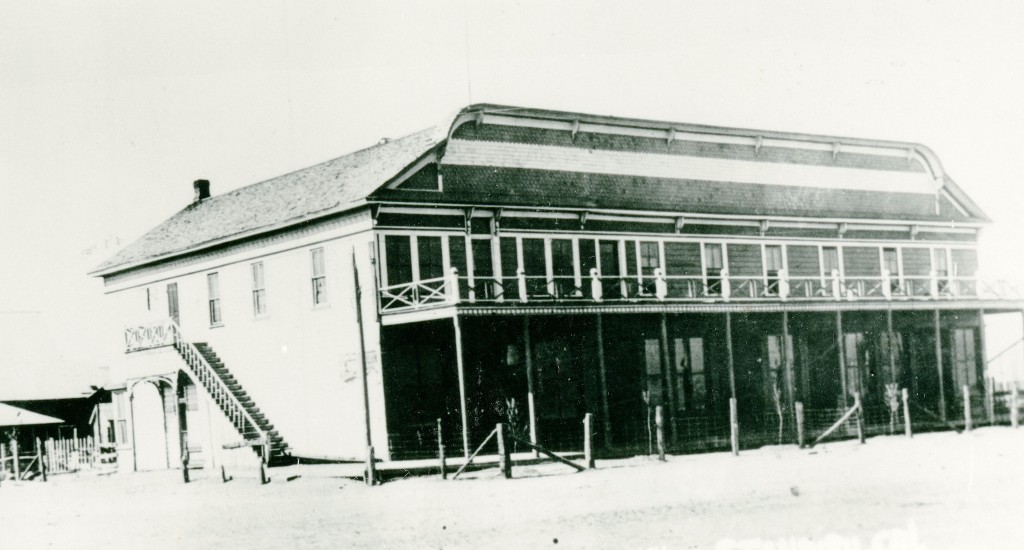
One of the first buildings constructed at Standish was known as Pringle Hall when it was built in 1898 by James Pringle. Upon the completion of the hall Pringle joked that it was his Opera House.
In 1905 Pringle began a complete renovation of the hall. He converted it into a hotel and enlarged the structure by quite a bit. The renovated building had a frontage of 86 feet and a depth of 60 feet versus the original dimensions of a 60 foot frontage and a depth of 30 feet. The first floor contained a store, restaurant and a branch office of the Bank of Lassen County. In 1908, Pringle sold the hotel to Frank Wrede for $2,772.05, the amount he owed on the mortgage. Wrede continued with the hotel for the remainder of his life, though by the 1930s, the hotel rooms received little use.
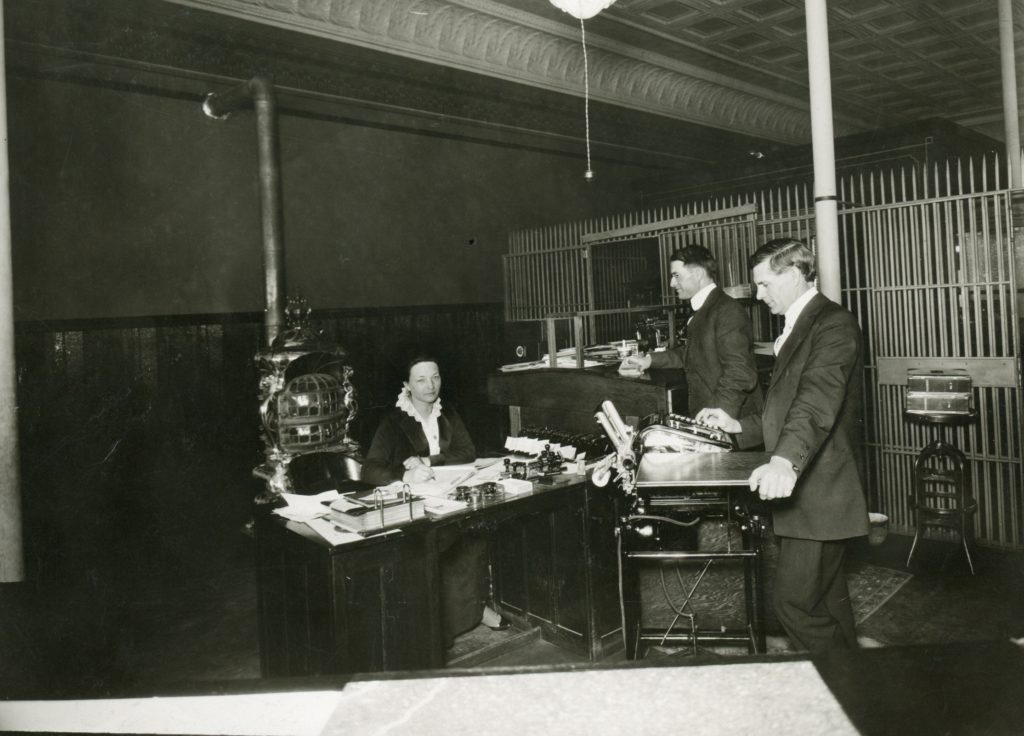
In the summer of 1937, Virgil McClure (Wrede’s son-in-law) announced his intentions to tear down the Wrede Hotel and replace it with a restaurant and bar. For whatever reason, he procrastinated and did not do the demolition until the fall of 1942. McClure, however, never carried out his original intention and it remained a vacant lot for many years.
Tim
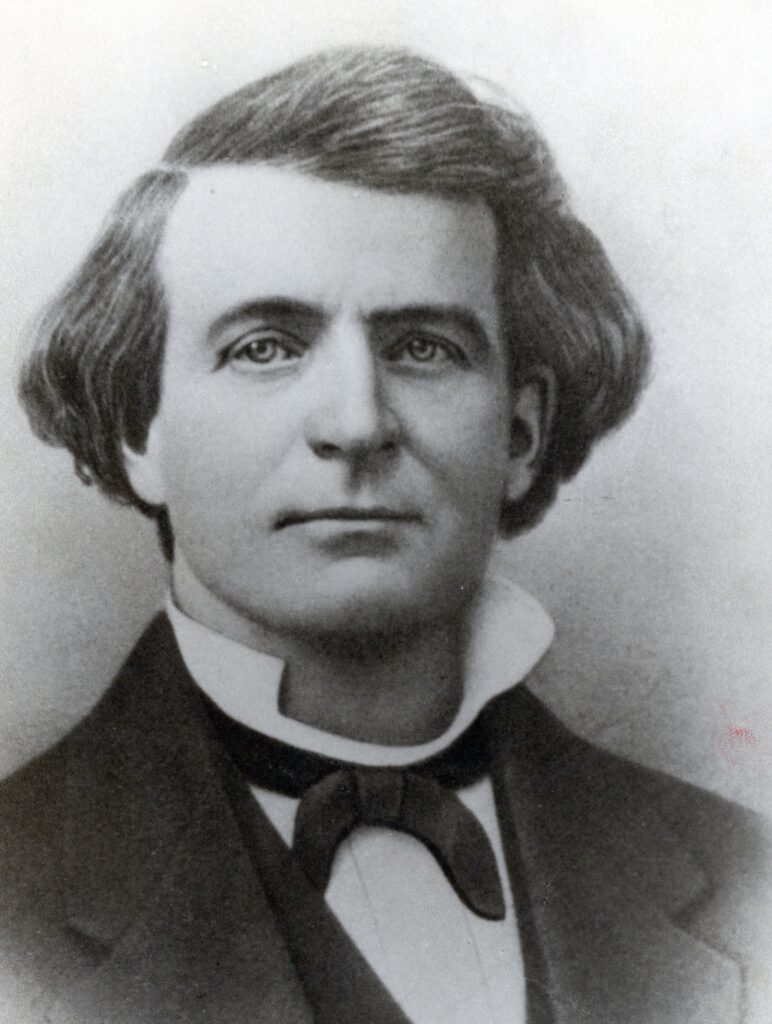
Some people experience more life changing events than others. This was the case of Susanville’s founder Isaac Roop. In 1850, Roop was widowed at the age of 28 with three small children. In that same year, his brother who operated a store in the mining community of Shasta, California urged Isaac to come to California to operate the store temporarily, so he could return East and bring back his family out West. Isaac obliged and left his children in care of his in-laws and arrived in Shasta in September 1850. Tragedy struck again, for durng Josiah’s journey back East he died along the way. Isaac remained in Shasta with the store responsibility but also to probate his brother’s estate.
On June 14, 1853, Shasta was destroyed by fire and Roop found himself destitute. He then set out on the Nobles Trail to seek a location for the establishment of a trading post and came upon the Honey Lake Valley. In September 1853, Roop claimed the land that eventually became Susanville and returned to Shasta for the winter. The following summer, Roop along with his brother Ephraim, built a log cabin and established his trading post. Eventually, it evolved into the town of Susanville where he lived the rest of his life, passing away from pneumonia on Valentine’s Day 1869.
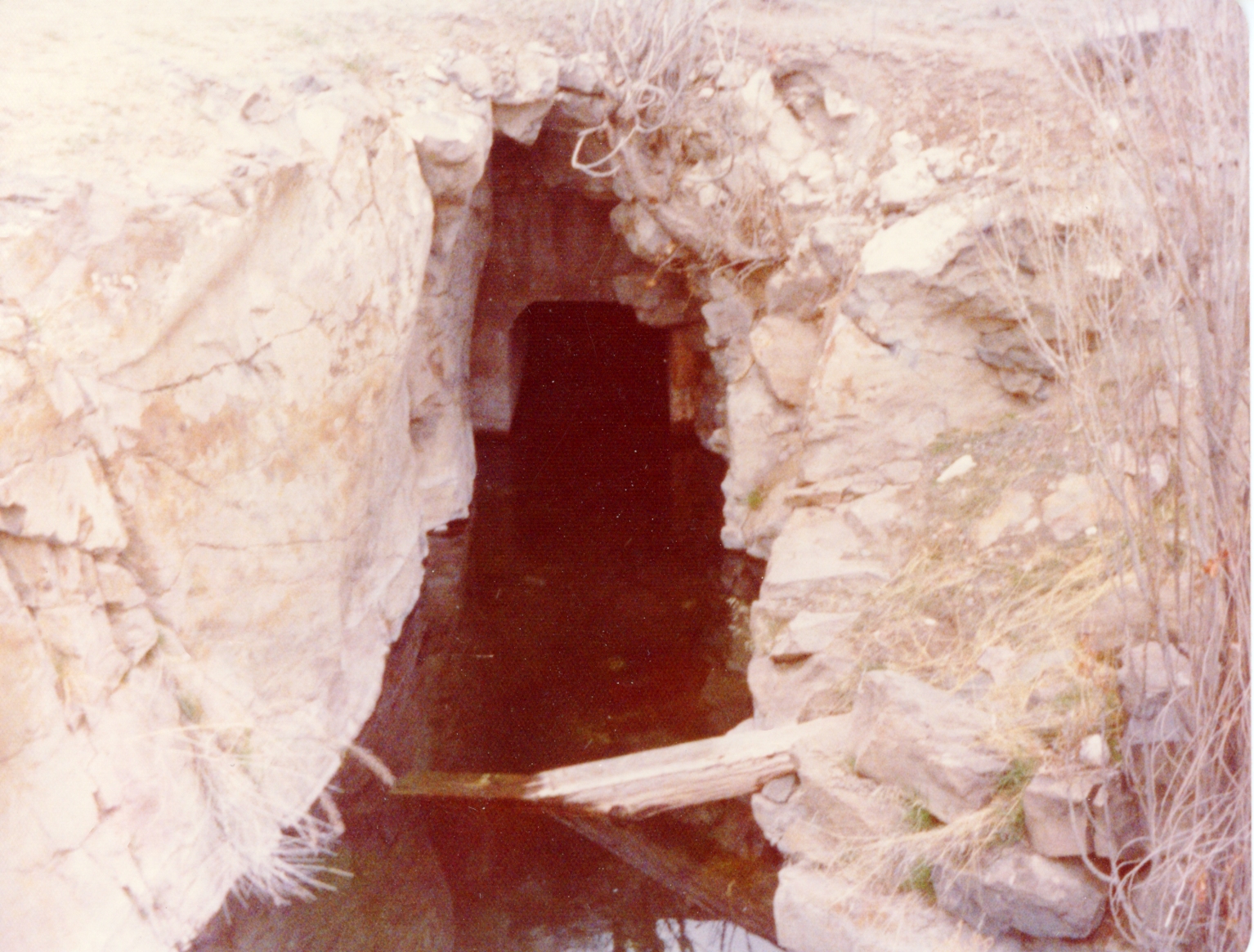
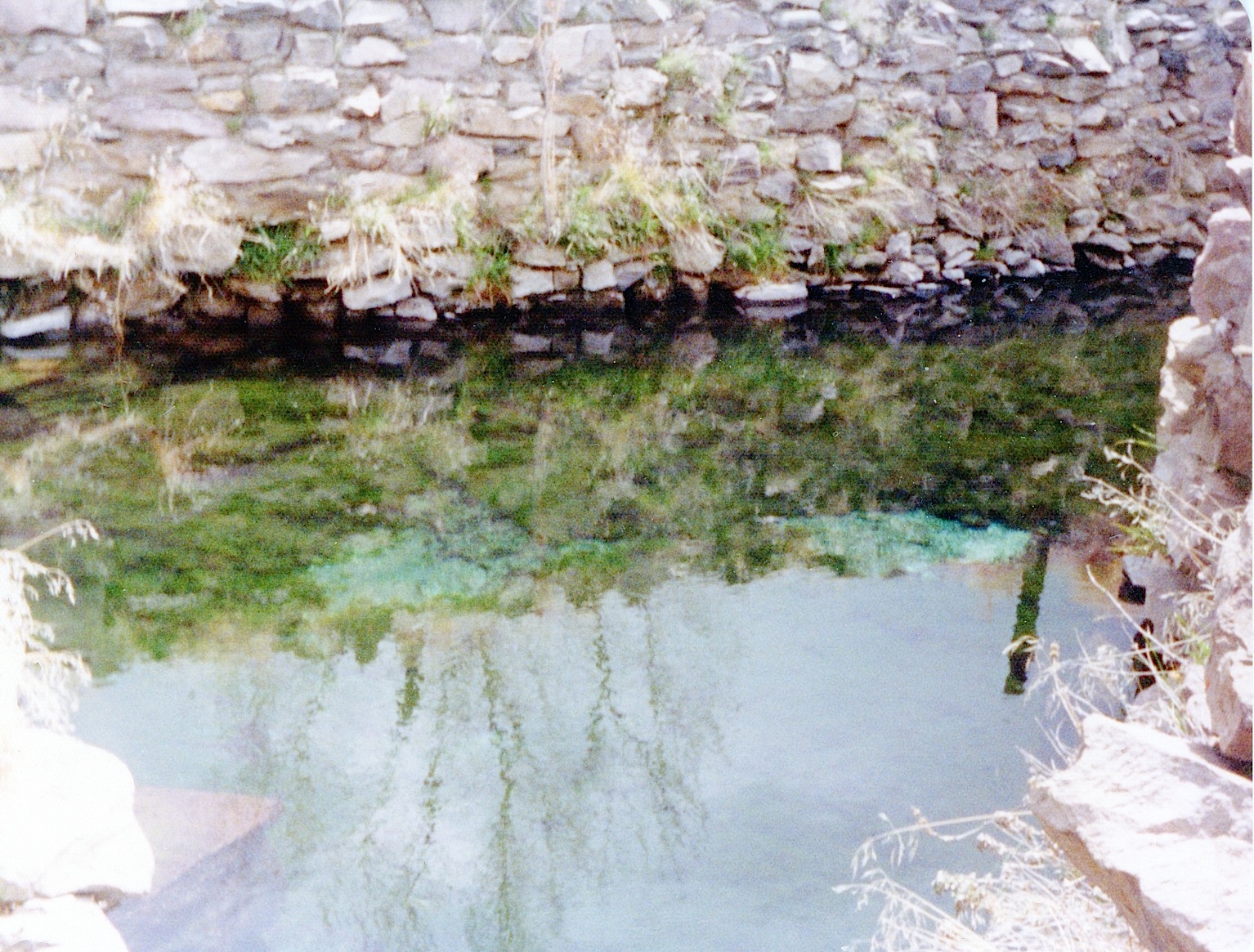
These springs in eastern Honey Lake Valley and near the Nevada border are quite unique. They are an ancient, dating back to the time when the area was covered by Lake Lahontan in the Pleistocene epoch.
The second reason is it is a warm water spring with a constant temperature of 86F. The springs supports two kinds of fish. First is the Lahontan tui chubs. This, of course, is rather remarkable that the fish have adapted over the years to thrive in constant warm water in a confined space. Water from the spring then goes underground and re-surfaces 100 yards distant, maintaining a constant cooler temperature at 76F. At this point, again, which is also unusual, is found the Lahontan speckle dace. However, it has been relayed to me the fish no longer exist, due to an introduction of an exotic fish species in the early 2000s that wiped the tui chub and dace.
It should be noted that in the 1920s, William Dicting was hired by the Rees Jenkins to develop the springs. He spent eight years to hand drill through the rock to develop the water tunnel to increase water flow.
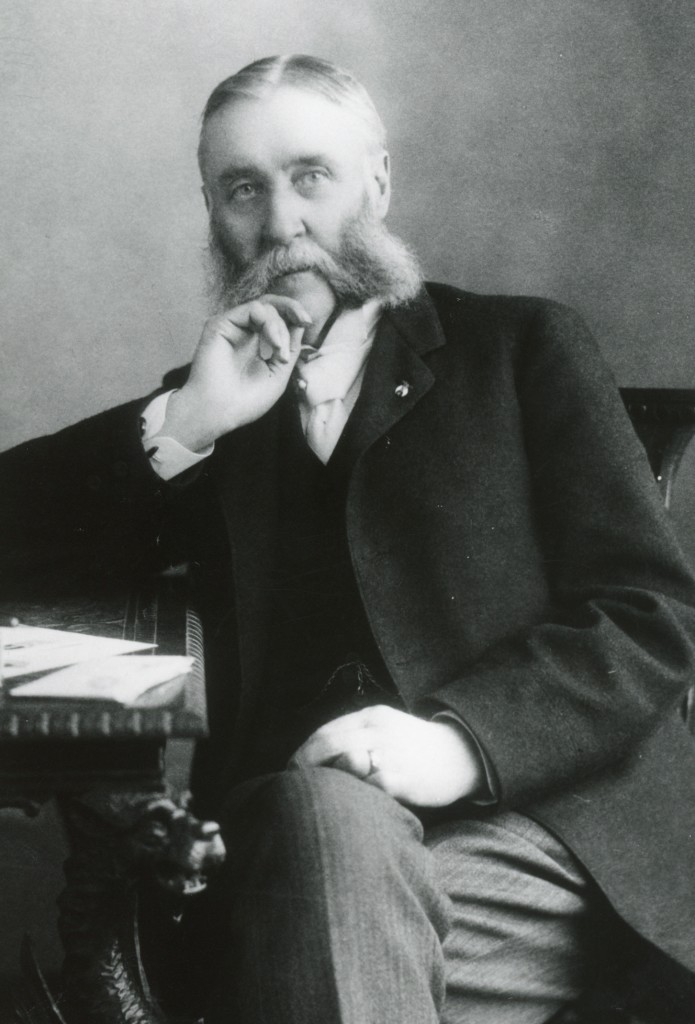
Albert Gallatin is one of the many intriguing figures in California history. This native New Yorker arrived in California in 1860, and the following year located at Sacramento. It was fortunate timing on his part to land a job in hardware store owned by Huntington and Hopkins. At the same time, Huntington and Hopkins would join forces with Crocker and Stanford, to become the “Big Four” and establish the Central Pacific Railroad. Gallatin, as a junior partner in the hardware business, became quite lucrative providing materials for the railroad. In 1877, he built the Gallatin House and in 1903 it became the California Governor’s Mansion.
The prosperous Gallatin began branching out into numerous endeavors including the sheep business. Gallatin needed summer range for the sheep, and discovered Eagle Lake. In a two year period in the late 1880s he purchased nearly 5,000 acres of Eagle Lake properties for $9,000. The bulk of the purchases were timberlands, with the exception of Hall’s Papoose Meadows and William Dow’s ranch near present day Spaulding Tract.
With the exception of Gallatin being Eagle Lake’s largest property owner, his influence otherwise was minor. In 1905, he passed away and his second wife, Malvena, had the lasting impact on Eagle Lake. After all she introduced Leon Bly to Eagle Lake.
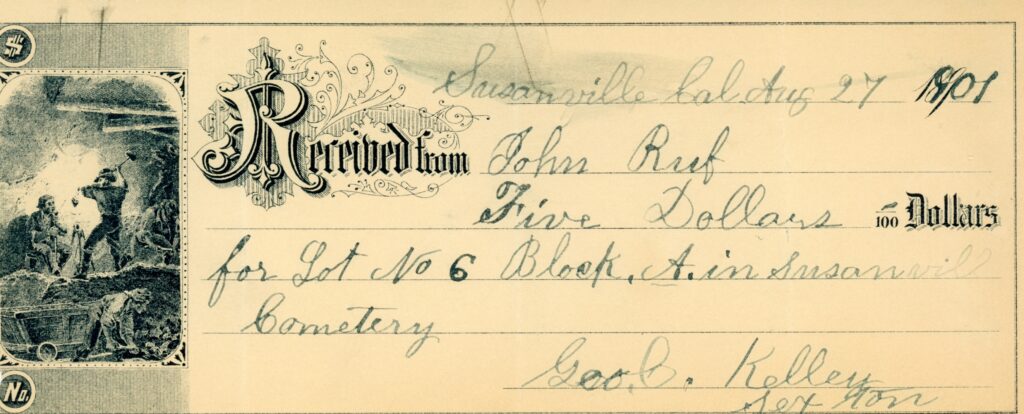
In 1899, the Lassen County Board of Supervisors addressed the cemetery issue. The problem at hand, all the cemeteries were on private property, even though the burials were public internments. In a housekeeping measure the county began making arrangements with the different property owners to secure title. The first to convey property was Thomas J. Durfee who on May 23, 1899 deeded over the Mountain View Cemetery near Bieber. The majority of the other cemeteries were done in 1901. Buelah Meylert conveyed Janesville; William H. Roney conveyed Hillside Cemetery; Alex and Susan Arnold Susanville; H.H. Dakin Janesville and the Doyle aka Long Valley was a convoluted mess with George Greeno, John Robinson, Charles Harwood and Robert Dooley all signing the deed. It was not until 1909, when the county deemed Ash Valley a public cemetery, that was located on land owned by the county.
Once cemeteries were deeded to the County, it was then the Lassen County Surveyor’s job to survey and lay plots in each one. Once that was done, the county began charging for cemetery lots.
Tim
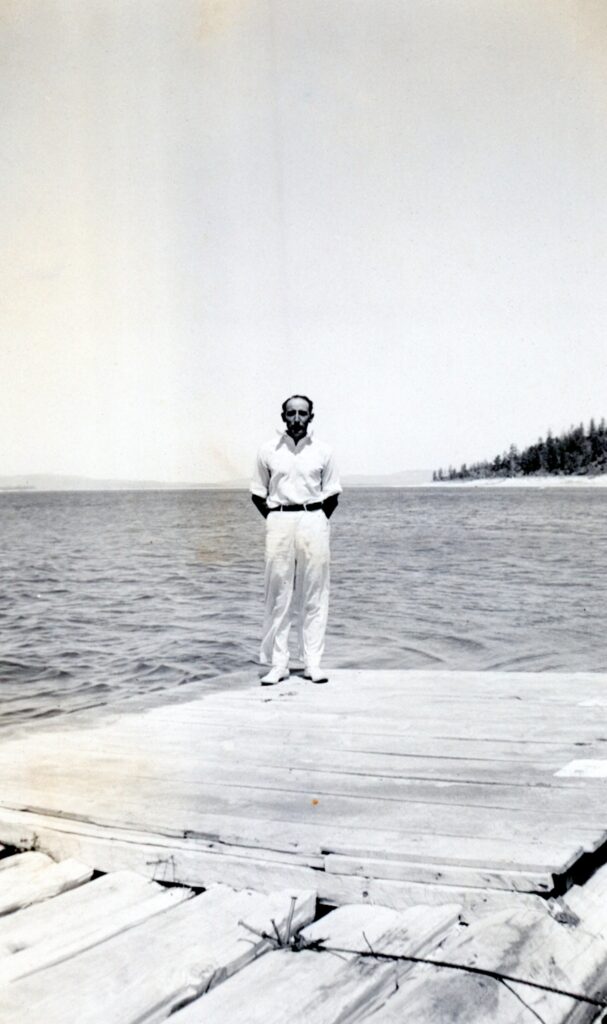
A Tuesday tidbit for today. Unknown parties, at least to me, built an informal wooden platform at the south shore of Eagle Lake. This was in the mid-1930s when lake was about to reach its initial historic low. The dock, if you could call it such, was ideal for small boats, i.e. canoes.
Tim
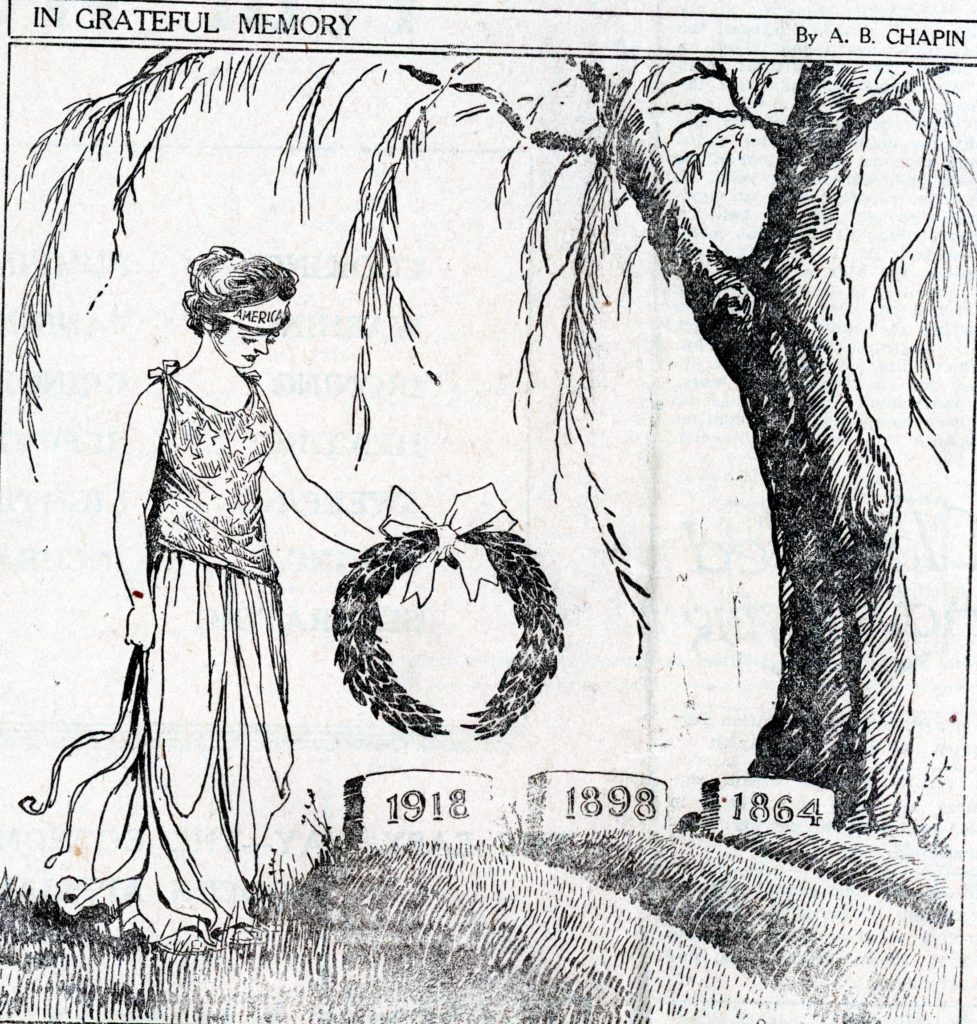
There was a significant change in the ceremonies held for Memorial Day in Susanville. In the past, people would assemble at Susanville’s Methodist Church. After a few speeches by local dignitaries, everyone would proceed to the nearby Susanville Cemetery. In 1926, the ceremony was held at Lassen Union High School. Afterwards a procession proceeded to the Lassen Cemetery on Chestnut Street.
Tim

Between the discovery of gold at Coloma, California in 1848 and the Comstock in 1859 in Nevada, mining prospectors scoured the west looking for the next “El Dorado.” According to Lassen Park naturalist Paul E. Schulz in 1849 Major Pierson B. Reading, the first person to settle in Shasta County, explored what would later become Lassen Volcanic National Park. He was one of many prospectors at Lassen and that is how this peak became known. Schulz noted: “A 2,000 peak of gentle and symmetrical contour. It is a rather good example of a Hawaiian-type volcano, and is composed of countless Prospect Peak Basaltic lava flows.”
Tim