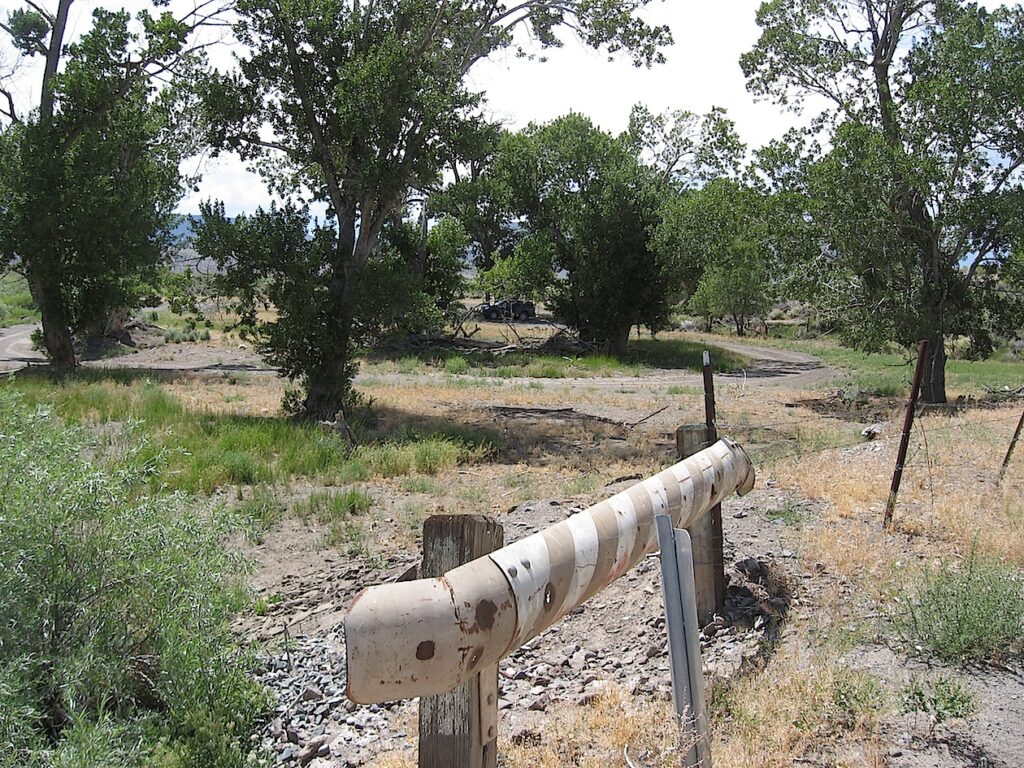
This is the site of a popular stage stop on the Reno-Surprise Valley Road of the late 1800s. Today, it is a popular camping spot.
Tim
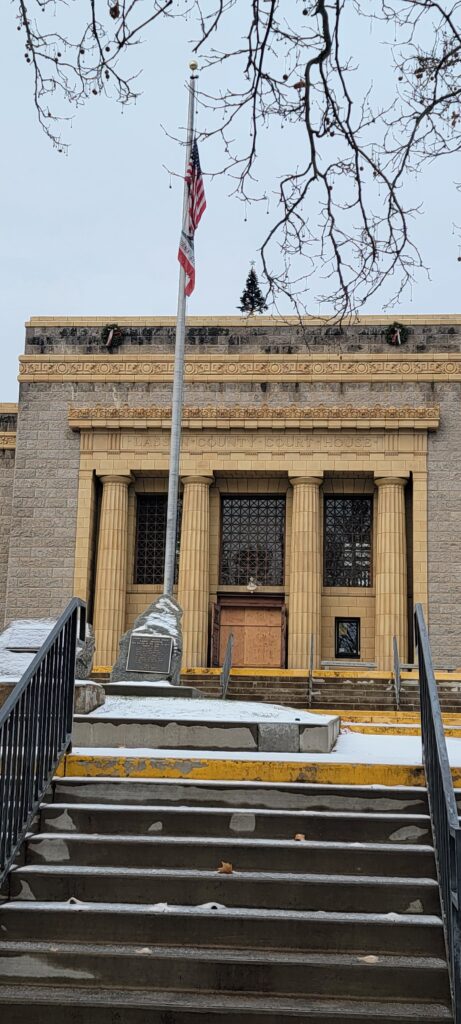
While we embark the end of the holiday season, this year witnessed a first for the Lassen Courthouse. The contractors on the renovation process adorned the top of the building with a Christmas tree. Personally, and one who spent decades there doing research, I found it very touching.
Tim
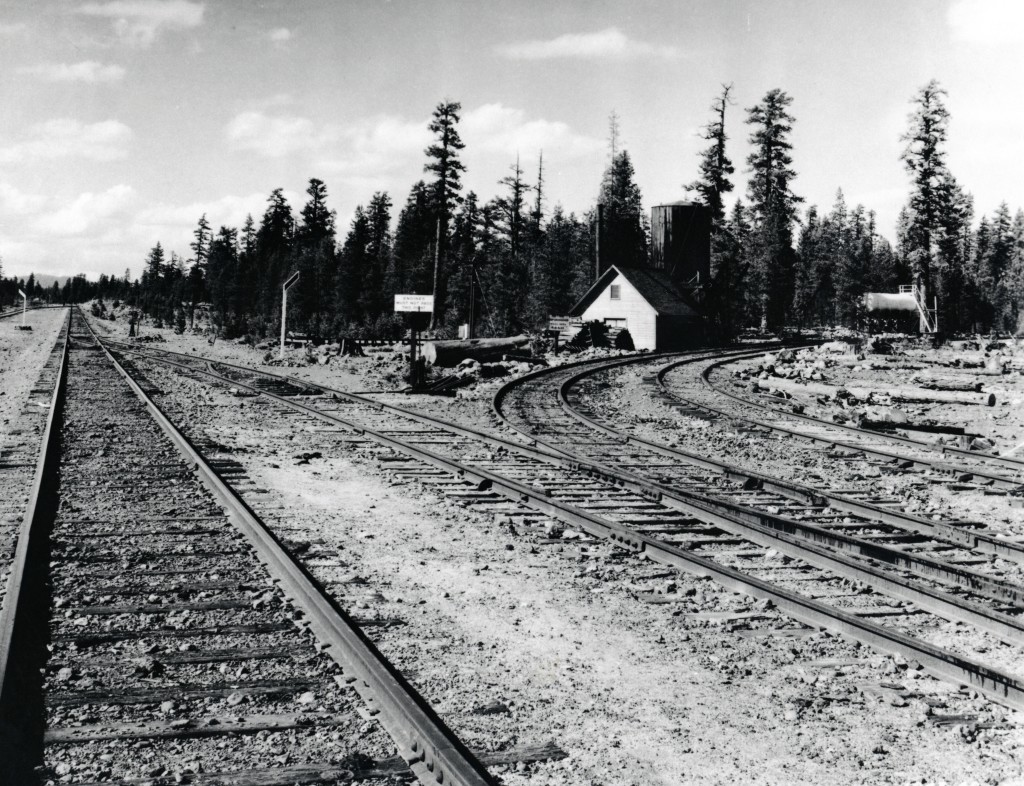
Westwood Junction was that of the Fernley & Lassen branch of the Southern Pacific, built by an agreement with the Red River Lumber Company. At this point the railroad constructed a spur line to the south of the newly created town of Westwood. The Southern Pacific’s goal was to extend the line north to Klamath Falls, Oregon. It was after all, the Red River Lumber Company’s intent to build several mills, the next one scheduled for near Lookout. By 1917, the Southern Pacific was anxious to extend the line north, but Red River was not ready. The mammoth mill at Westwood was more than it could handle. In the meantime, the Southern Pacific was nervous that its competitor the Western Pacific might extend a branch to Westwood and siphon off traffic, since Southern Pacific’s five-year agreement with Red River which the railroad had all inclusive freight deal was about to expire.
Then came along World War I and that changed everyone’s plan. When the war ended, the nation went into a severe recession, so expansion was off the table for many. . In the meantime, the Southern Pacific focused on the troubled Nevada-California-Oregon Railroad, as an alternative route north to Oregon, which it eventually did.
This site, it should be noted, also served as a junction for the railroad logging operations of the Fruit Growers Supply Company and the Lassen Lumber & Box Company.
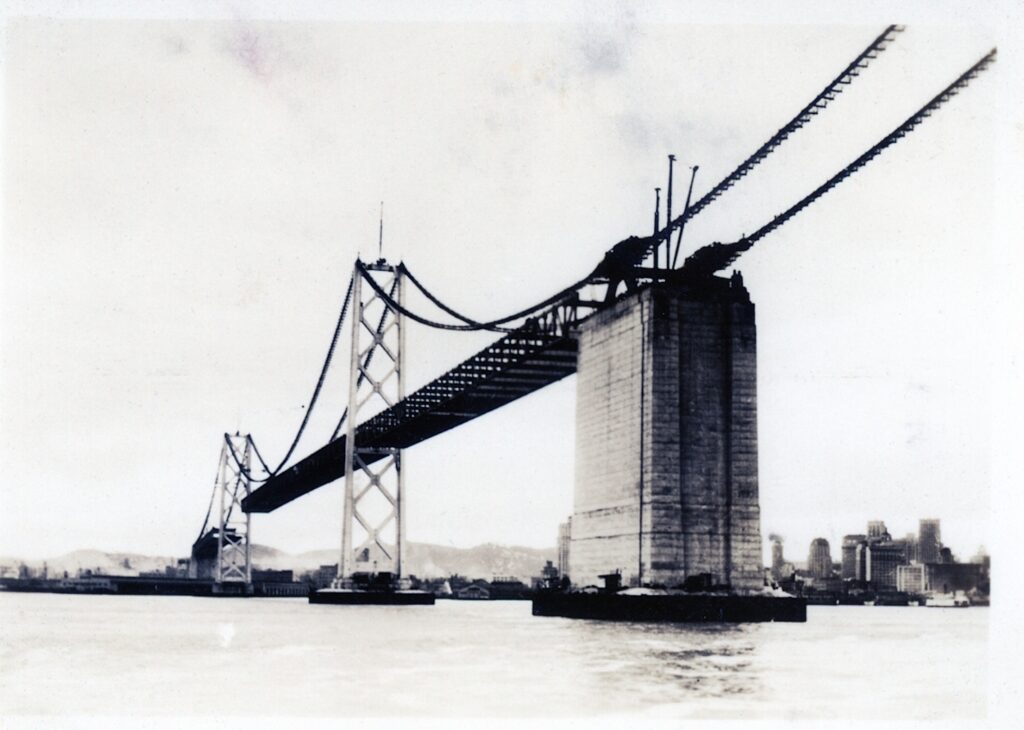
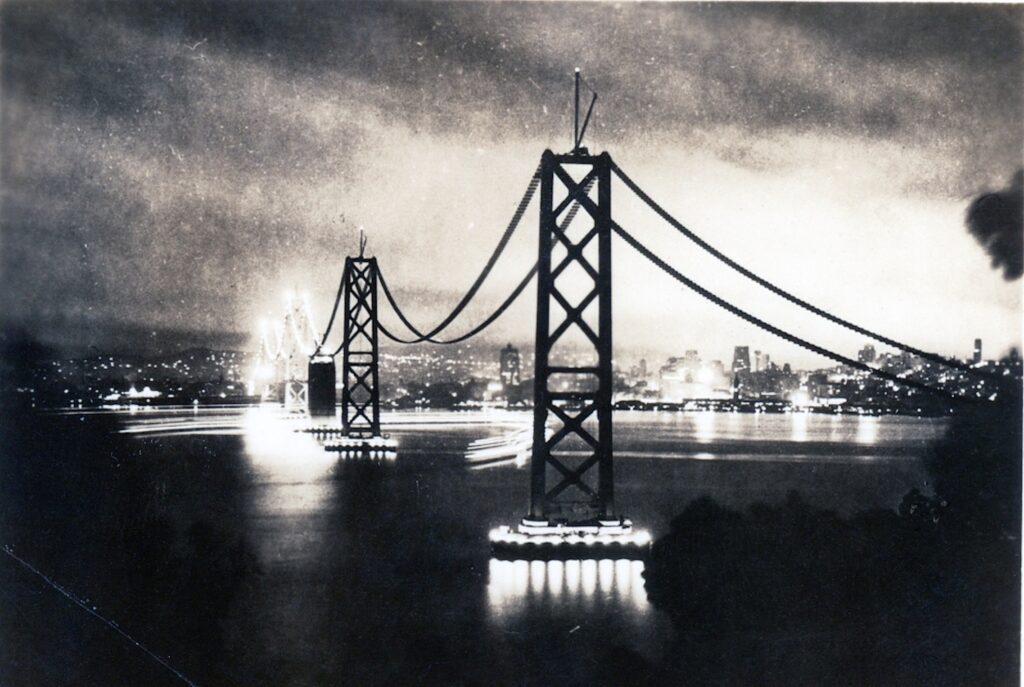
This post does seem out of character or should be out of the territory I write about. Readers may recall about the weekly posts about the Secret Valley CCC camp earlier this year. Those post originated when I received Company Clerk C.H. Bennett’s photograph albums during his tenure there. CCC enrollees did not entirely endure all work and no play. From time to time they were transported to other destinations for a break. The Secret Valley Camp enjoyed a trip to San Francisco for the 4th of July 1936.
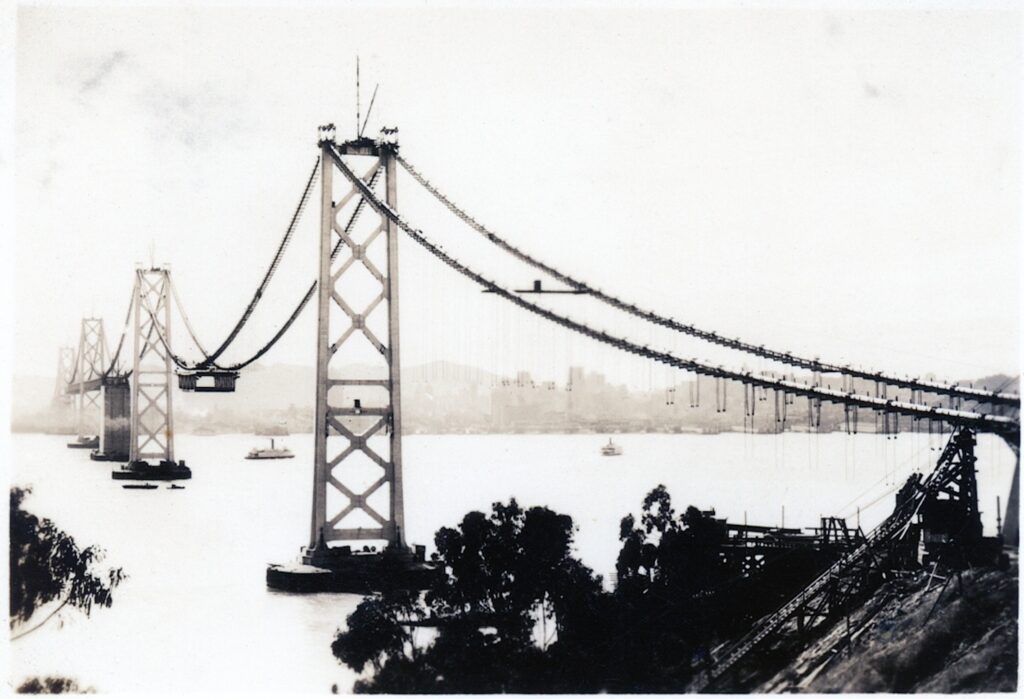
Hence are these views of the San Francisco Oakland Bay Bridge that Bennett took on that 1936 trip. In my on going learning experience I had no idea that the Golden Gate Bridge and the Bay Bridge were constructed at the same time.
Tim.

One of the side effects of a new railroad was real estate promotion and/or speculation some might say. When the Fernley & Lassen Railroad was being constructed during 1912-13, it witnessed some new towns along its railroad line in the Honey Lake Valley–Stacy, Litchfield and Leavitt. Of course, exisiting railroad communities such as Flanigan, Amedee and Wendel benefitted from the new railroad. In 1913, a town to be named Review was proposed along the Fernley & Lassen Railroad between Flanigan and Stacy, but it was never developed.
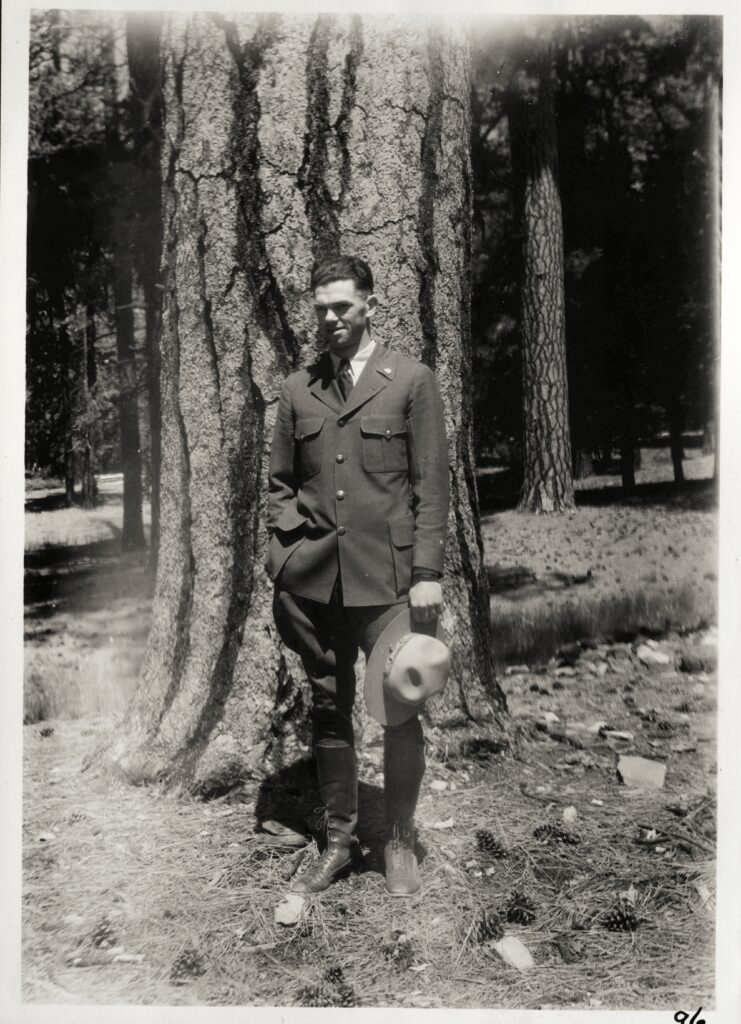
William K. Medlin’s book published in 1997 is an interesting tome about Lassen Volcanic National Park. It is a combination of the park’s history and his philosophical belief. In his Preface, Medlin writes, “The reader is invited to trace this thread, and weighing the evidence scattered across its pages, to decide whether the story is telling the truth.” However, when writing about the events leading to the creation of the park, Medlin writes: “Armed with this advantage, Raker finally gained top political support in Washington for his national park proposal. On August 9, 1916, President Woodrow Wilson signed the bill creating Lassen Volcanic National Park. Raker, who died that same year, had garnered strong support both in Washington and in Northern California for final effort.” It should be duly noted for the record that Congressman Raker died a decade later in 1926, and not 1916
When it comes to Lynne Walker Collins, Lassen’s first ranger and later its first park superintendent, Medlin writes disparaging about him. However, in Acknowledgements Medlin heaps praise on Collins hard work. There is no doubt that Collins was very dedicated and worked tirelessly for the park. Collins also had the difficult task dealing with the private land owners in park—Sifford, Snell, Supan. In 1935, in a srange turn of events, Collins was abruptly terminated, thus ending his career.
Tim

Lassen County wanted to oblige, but it had no funds. They deferred to take any action and turned the matter over to the federal immigration officials. J.C. Borden of the Immigration Bureau was brought in to investigate the situation. What he found on his arrival was that of the forty-five applicants only a handful were eligible to receive aid to pay for their return to Mexico. Yet, the issue was also moot, as Borden noted, because all the Mexicans had gone back to work. He informed the Board, should the issue arise again, that under a federal ruling any alien who had been in the United States for three years and becomes indigent can be returned to his native land with the cost borne by the federal government. Continue reading Westwood’s Deportation Continued
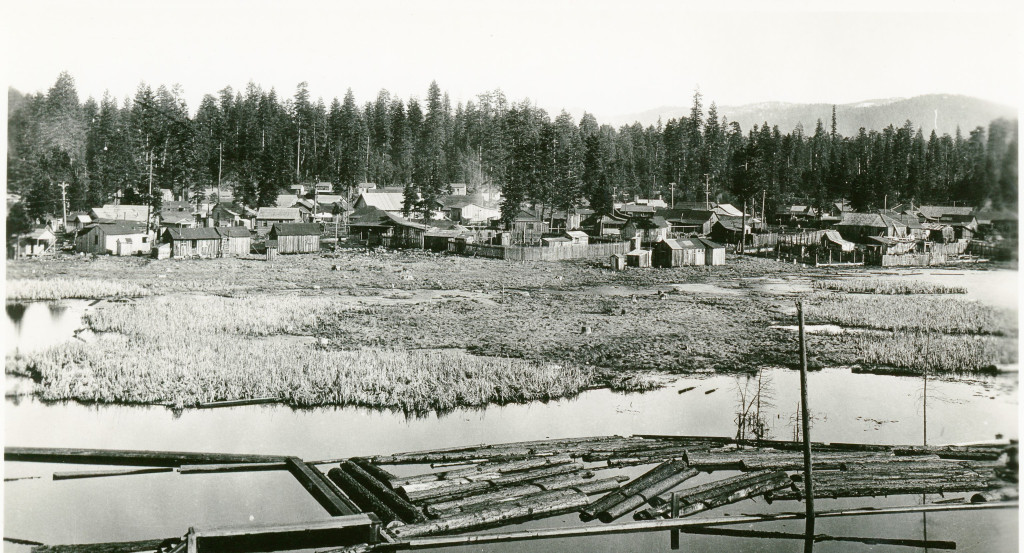
One of the more unusual annals in Red River’s history was deportation. Red River hired a large percentage of foreigners whether it be Scandinavians, Italians or Mexicans. By 1929, with the downturn in the lumber market, the company was forced to layoff some of its workers. If they thought that the layoff was temporary, they allowed the affected worker to remain. By 1930, however, Red River sought alternatives, as they could no longer bear the financial burden. Continue reading Westwood’s Deportation of Immmigrants

Fruit Growers operated a total of 11 logging camps, though Camp Y could hardly be classified a camp. The camps were designated with the first letters of the alphabet, i.e, Camp A. After Camp F closed, the next would be G, the seventh letter in the alphabet, but Fruit Growers switched to numbers when Camp 7 was opened at Bridge Creek.
Camp 8, had the unique distinction of being referred to as Summit Camp, it being on the Summit between Pine Creek Valley and Eagle Lake. Not a great deal is known about the activities at Camp 8. It was the first camp that a young Arthur Anderson went to work. What he remembered vividly was watching the death of his friend Daniel Dragovich, whose skull was crushed in a logging accident near the camp on July 2, 1928. For Anderson this served as a wake up for him, and he decided to change professions. He later became an attorney and in 1972 he was elected Lassen County Superior Court judge, serving one term.

1912 was an exciting time in Susanville with the anticipation of the arrival of the railroad. There was a housing building boom. There were more houses constructed in Susanville in 1912, than the previous eleven years combined! It also ushered in a new architectural style, the bungalow, and the days of the Queen Anne were over.
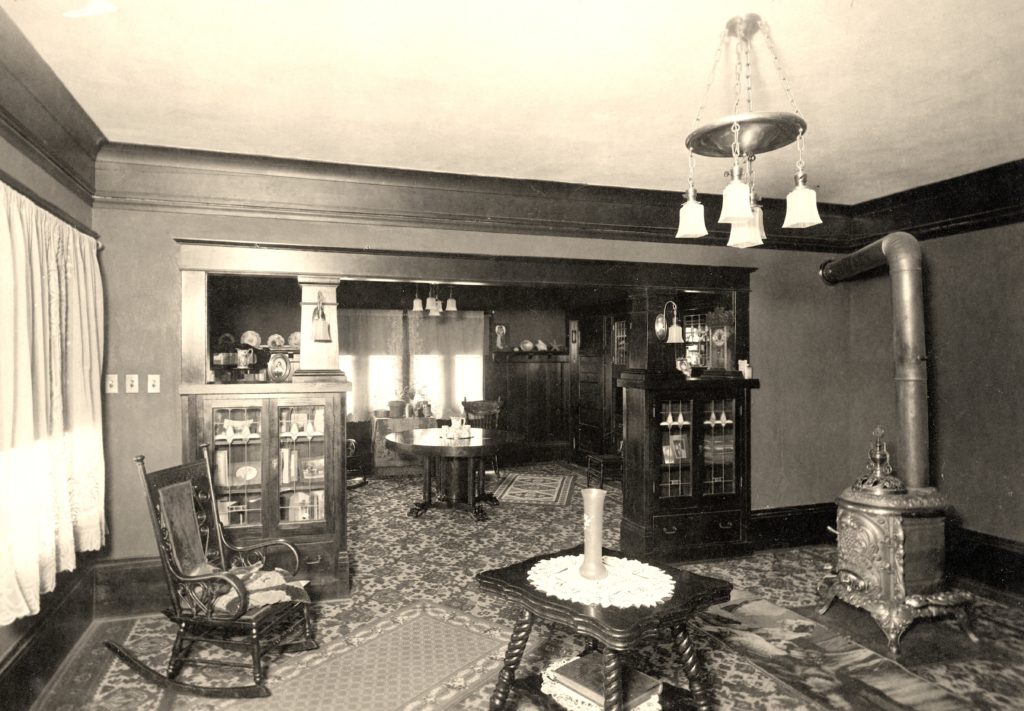
Another unique change was financing, as was with the case of the B.R.Zimmerman residence at 310 North Roop Street, Susanville. Built in 1913. Instead of using a traditional bank Zimmerman financed the residence through a local home building and savings loan company.