Category Archives: History

The Fate of the Westwood Hospital

Westwood Hospital, February 14, 1938–H. Frodsham photograph

The Westwood Hospital remained opened even after Fruit Growers closed the mill. The new owners Wershow & Weisz did not want to operate the aging facility. They offered to give it to Lassen County along with $5,300, the cost they estimated to make the improvements to the building required to meet fire regulations. Lassen County was not interested. The county stated if the Westwood residents could form a special tax district for the hospital.  On June 24, 1958 the few remaining patients were transferred to Chester and Susanville.

Missing in action during the final days of the hospital’s fate was long-time physician Dr. Herman Levin, who was away on vacation in Chicago. Levin,it should be noted, maintained an office in the hospital. M.H. Poster, resident representative of Wershow & Weisz, stated that if Dr. Levin wishes to continue with his office there, it is available to him. If not, Poster stated: “Otherwise the doors will be locked and it will be boarded up.” When Levin returned, he kept is office and it was business as usual in the hospital, except it could only handle emergency care patients until the person could be transferred by ambulance to a neighboring hospital. On April 9, 1972, the community held a retirement party for Dr. Levin.
Support

Believe it or not—when the Elks Lodge was street level

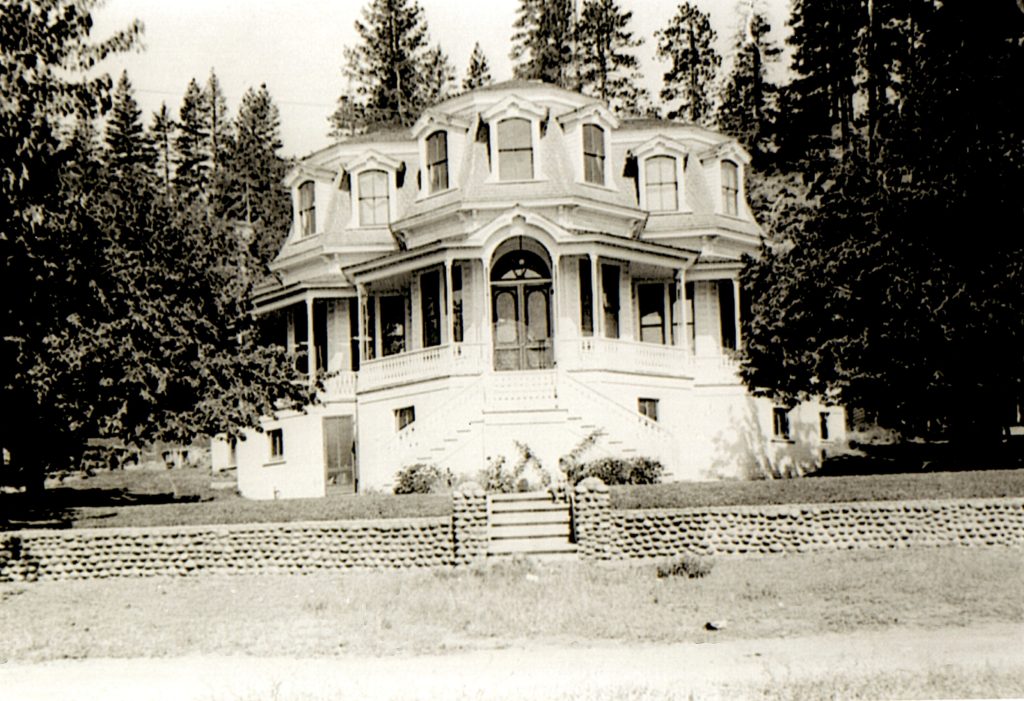
The Swain residence, before it became the Elks Lodge, 1913–Frances Swain

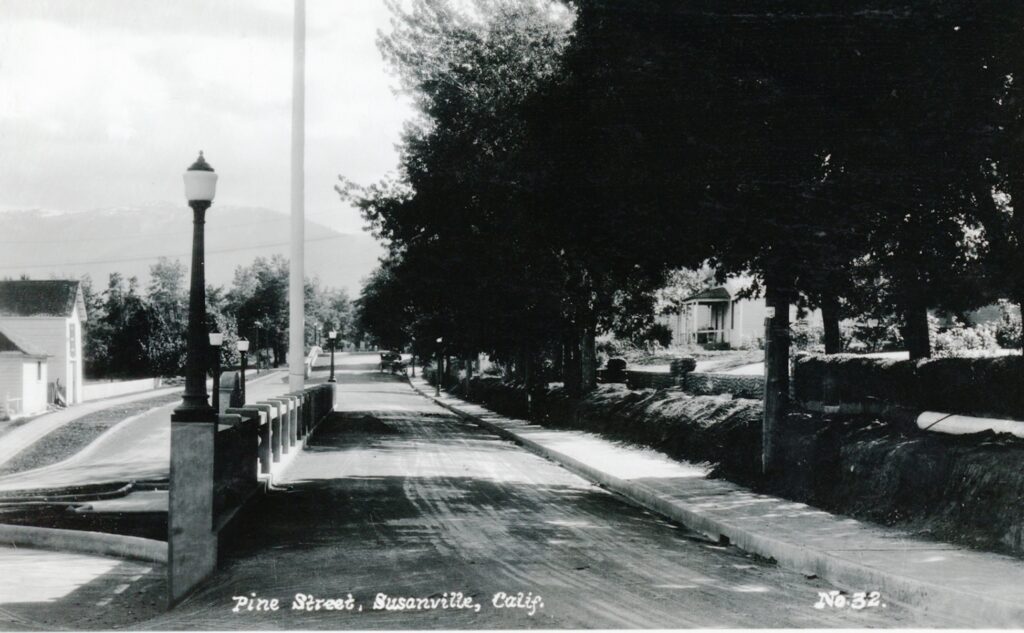
For nearly the first eighty years of the building’s existence it was street level. So what happened? A major change came in 1922 when Highway 36 was constructed it would enter Susanville on South Pine Street. Prior to this highway one left town via North Pine Street.

Pine Street, 1921

In 1965/66 the California Division of Highways  did a 8.3 mile highway realignment from Susanville to Willard Creek. The curve near the Elks Lodge saw a drastic change. The retaining wall was removed thus lowering that segment of Pine Street below the Elks Lodge. to what is today. One of the other dramatic change was a new bridge span over the Susan River at Devil’s Corral.

Pine Street, 1922–Hazel Moller

On a trivial note, when Lake Lahontan covered the Honey Lake Valley, the property of the Elks Lodge would have been lake front.

Tim

Oscar Rankin’s “The Pelican”

The Pelican shuttling passengers at the south shore, 1914.

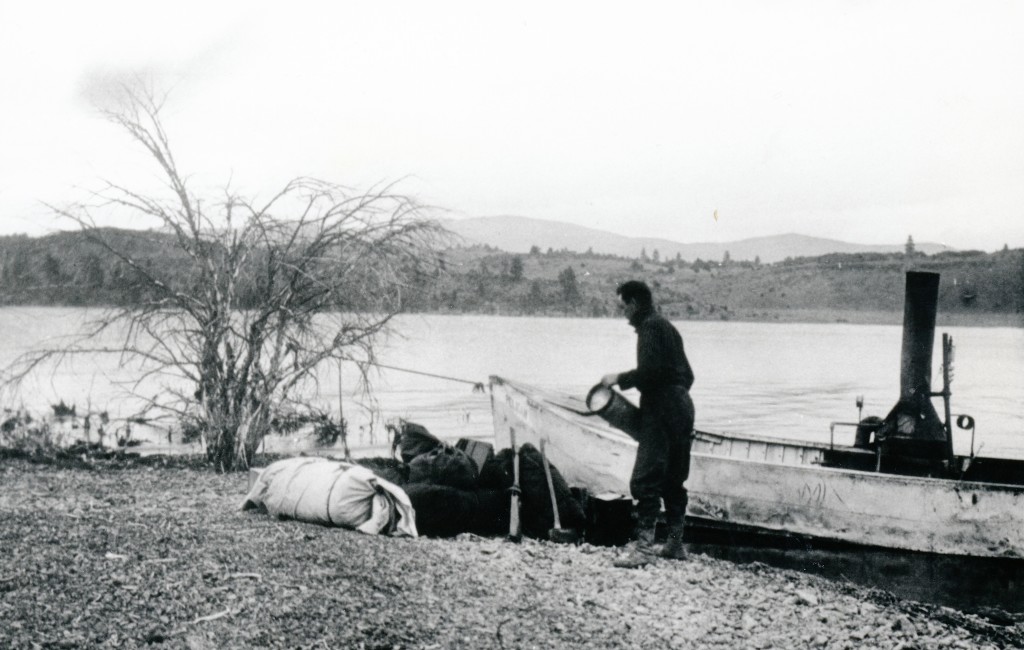
Oscar Rankin arrived at Eagle Lake in 1907, and became the first resort owner, laying foundations for the Eagle Lake Resort on the southwest shore. He constructed several boats for patrons to use on the lake. In 1914, he built The Pelican, a twenty-seven foot galvanized metal hull that was powered with a While boiler and Stanley Steamer engine. Leon Bly used the boat to do a sounding of the depths of Eagle Lake.

Leon Bly
Leon Bly sounding Eagle Lake. Courtesy of Wyn Wachhors

Eventually the Pelican ended up at Spalding Tract. Sometime around 1953 Glen Seeber found the old hull near Spalding’s and rescued it before deer hunters or someone else might use it for target practice. It was his intent to restore it. In the February 1996 issue of the Thru-Bolt the newsletter of the Eagle Lake Sailing Association, stated that The Pelican would be on display at the Bengard residence in Janesville at their next meeting. The Sailing Association launched an effort to help Glen and recruited the historical society and Lassen College to assist.  How much restoration work was ever completed or the boat’s whereabouts remain a mystery to me.

Subscribe!


A Deceptive Local Newspaper Editorial

Main Street, Susanville, October 1924—Boyd Benham/Connie Boomer

Of course, editorials have a hint of bias. This particular one that was published in the Lassen Advocate in 1924 caught my attention. While truthful, its also misleading. Newspapers then were great civic boosters and promoted their locale. Susanville was still in its boomtown heyday, but to some outside the region was still known of its Wild West atmosphere of saloons and bawdy antics. While the Advocate’s editorial provided the appearance, that it getting things  under control, and it looked good on paper, the reality was a different story.

There was Susanville proper as in the city limits, which was relatively small. The southern boundary was Susan River, eastern Weatherlow Street, northern Piute Creek and western Inspiration Point. The greater Susanville region as a much larger territory. While the editorial proclaims how Susanville is cleaning up after bootleggers proper those bootleg operations outside the city limits continued as usual. The three main areas was Rooster Hill (Indian Heights), Milwood and the area around the Susanville depot. This territory was under the jurisdiction of the county to enforce. Some times they did and some times not. Some county officials thought that prohibition since it was a federal offense, and it was up to federal officials to enforce it. Anyhow, here is the editorial.

Lassen Advocate, 20 February 1924 – Enforcement in Susanville. Not only the bootleggers of Susanville, but the consuming public at large is beginning to feel the pinch of an honest endeavor to stop illicit in traffic in Susanville.

Taylor Clement who has been on night duty relieving the regular nightwatchman has been giving the bootleggers a run for the money at night and they have been complaining. He makes his regular rounds every 15 to 20 minutes and has kept bartenders and proprietors busy by dumping their liquor. And he does not make his calls at any stated times. They never know when he is coming. A few nights ago, he through h is actions forced the proprietor of a Gay Street establishment to close. Later in the evening espying three men under the grammar school hill he threw his light on the same three men that had left the Gay Street resort. They broke a bottle that they had with them.

Between Marshall Lannie Long in the day time and Taylor Clement at night the bootleggers are between the devil and the deep. Even some of the heavy consumers are complaining that they can not buy a drink as often as they used to.

Subscribe

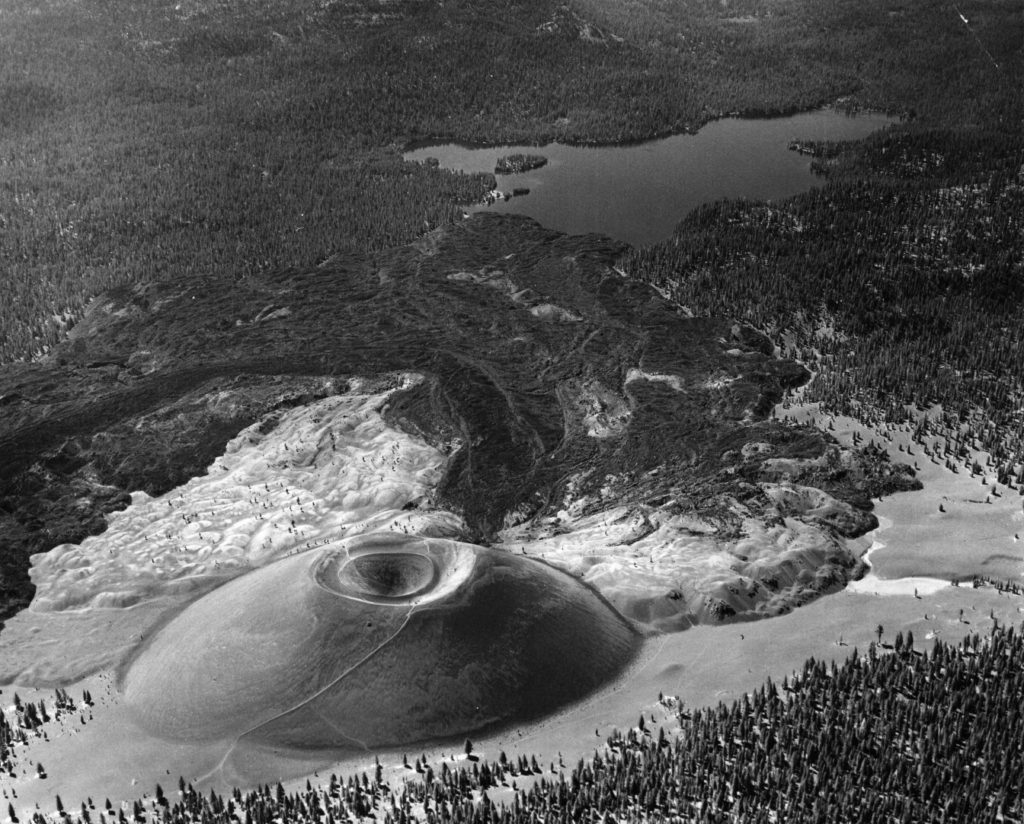
Lassen Park’s Cinder Cone

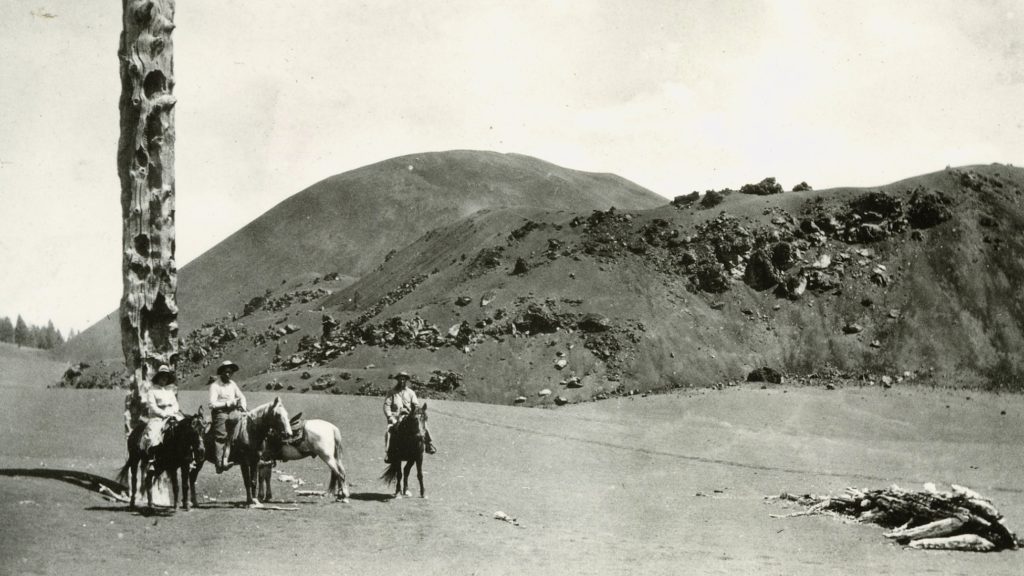
Cinder Cone, 1908—-Sifford Collection

Long before the Lassen Peak eruptions of 1914-15 there were reports of other volcanic activity in the region. It was said that Cinder Cone, ten miles east of Mount Lassen, had erupted during the winter of 1850-51.

These purported eruptions caught the attention of San Francisco physician Harvey W. Harkness, who had a keen interest in scientific matters. In the summer of 1874, he visited Plumas County. While there he heard the story of a recent volcanic eruption located in a far northern portion of the county known as Cinder Cone. Since he was already in the territory, he decided to examine Cinder Cone. In the fall Harkness addressed the California Academy of Sciences and told of his observations. He informed the Academy that the eruption there was indeed of recent origin. After his presentation, he came in contact with four men who had seen the eruptions from afar. One of these men was Oliver Wozencraft, who lived near Red Bluff during the winter of 1850-51. He informed Harkness that he saw a great fire east of Lassen that continued for many nights but never changed its position.

Cinder Cone, 1967–National Park Service

After Harkness’ findings were published, it served as a reminder to many that a volcanic eruption could be impending. It was not for decades that Harkness’ theory was challenged. The whole issue has been resolved only within the last decade by the United Stated Geologic Survey, which determined that Cinder Cone’s last eruption occurred sometime around 1666, not 1850.

Subscribe

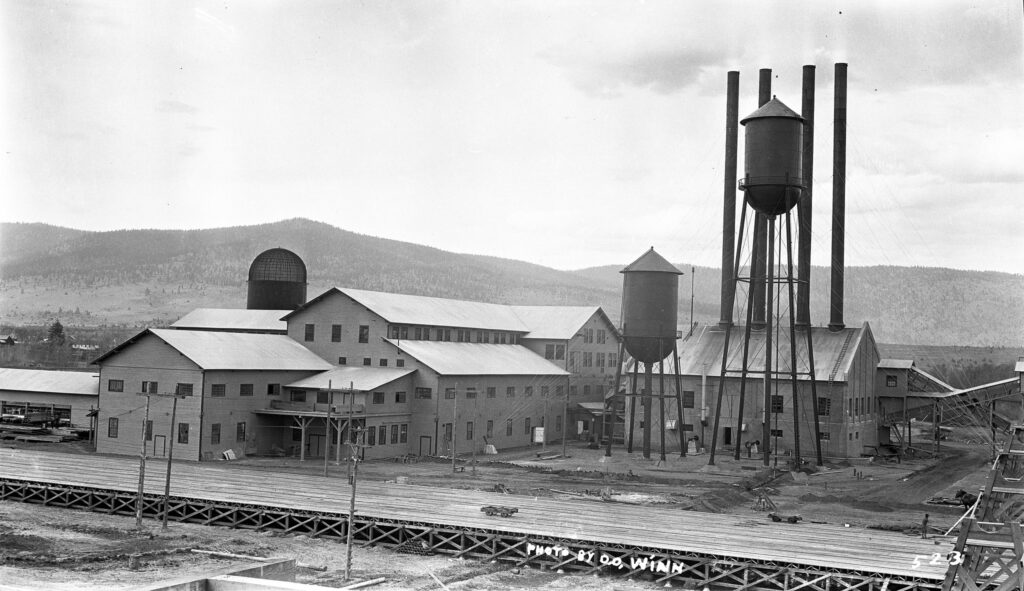
FGS Photographer—O.O. Winn

Fruit Growers Susanville mill under construction, 1921–Ed Standard

In 1920, Fruit Growers Supply Company hired photographer O.O. Winn for a two year period to capture on film the construction of its Susanville plant. Interesting, when I examined Fruit Growers’ archives in Studio City back in 1997, they only had a handful of these photographs. It should be noted, Frances Johnson, was meticulous with company’s paper files, but alas the photograph collection was in shambles.

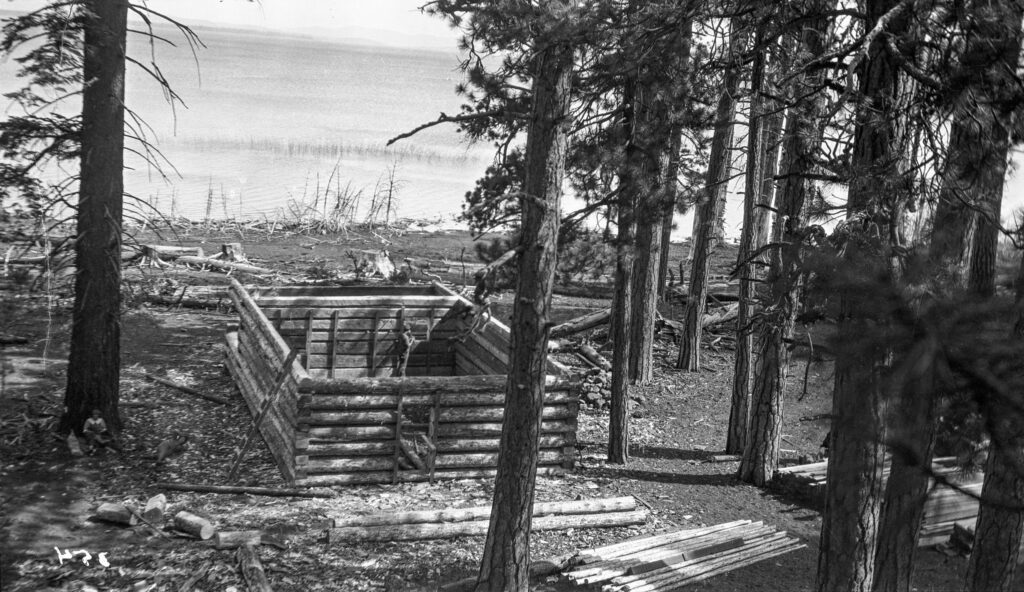
A Fruit Growers log cabin under construction at Eagle Lake, 1920—Ed Standard

A strange development occurred in 1998 when I was away to visit my grandfather John Tanner’s only living first cousin in Cornwall, England. When I returned home there was a small package containing some 700 negatives of Winn’s negatives. It turns out, that Ed Standard, who worked for Fruit Growers, was delegated of task of cleaning the Susanville office in 1963 prior to the sale.  He was instructed to take the negatives to the burner to be destroyed, but took them home instead. My dear friend, the late Hank Martinez, made prints of selective negatives that I chose, the collection was to overwhelming. Fast forward to 2024, a volunteer is scanning many of the negatives into positives. So over the next few months you know why an abundance of Fruit Growers photographs.

Tim


Everyone’s Water Woes—1924

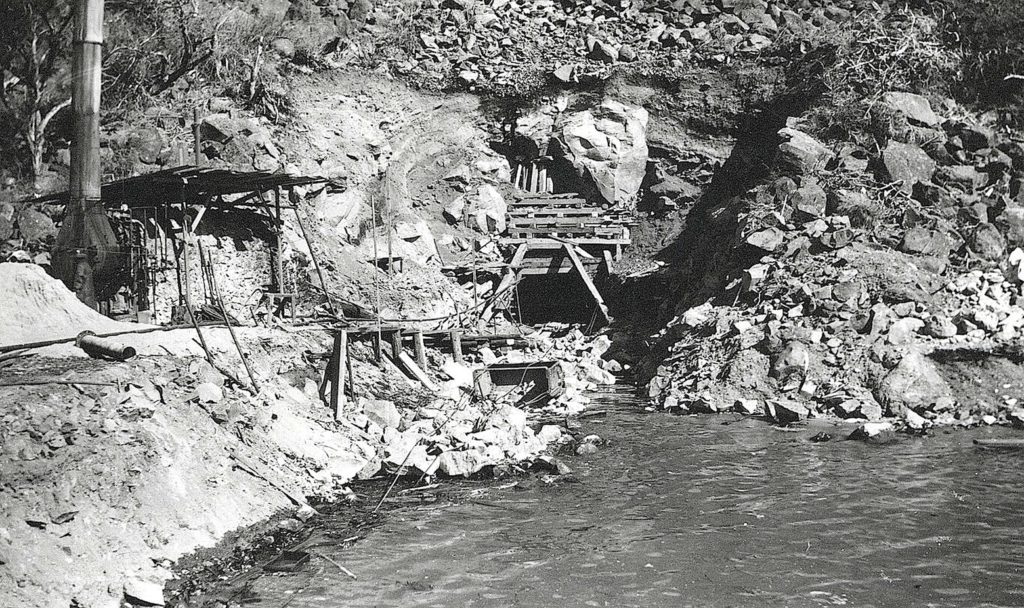
Bly tunnel inlet, 1921. Courtesy of Lola L. Tanner

The winter of 1923-24 was one of the driest for California since the1860s.  This was one was more profound than the earlier one, as California’s growth had been dramatic in the last six decades.

Like so many the  Golden State, the farmers and ranchers of the Honey Lake Valley were in a state of anxiety—with no snow pact, equalled dry reservoirs and low stream flows. One hand the future did not seem so bleak. The completion of the Baxter Creek and Tule Irrigation Districts Bly Tunnel at Eagle Lake could provide nearly everyone with an ample water supply. That water district agreed to sell 20,000 acre feet to the Lassen Irrigation District for $60,000–enough to irrigate 7,000 acres for that district.

While Eagle Lake had enough water to supply the irrigation needs of the Honey Lake Valley, there was a huge technical problem. The Bly Tunnel original design was the inlet was to tap the lake six feet below the surface—the contractor only did three feet. This forced Baxter and Tule Districts to hire an engineer to examine the situation.. When all as said and done, only a very limited water supply was delivered, leaving many literally high and dry.

Subscribe


The Evolution of the West End of Susanville’s Main Street

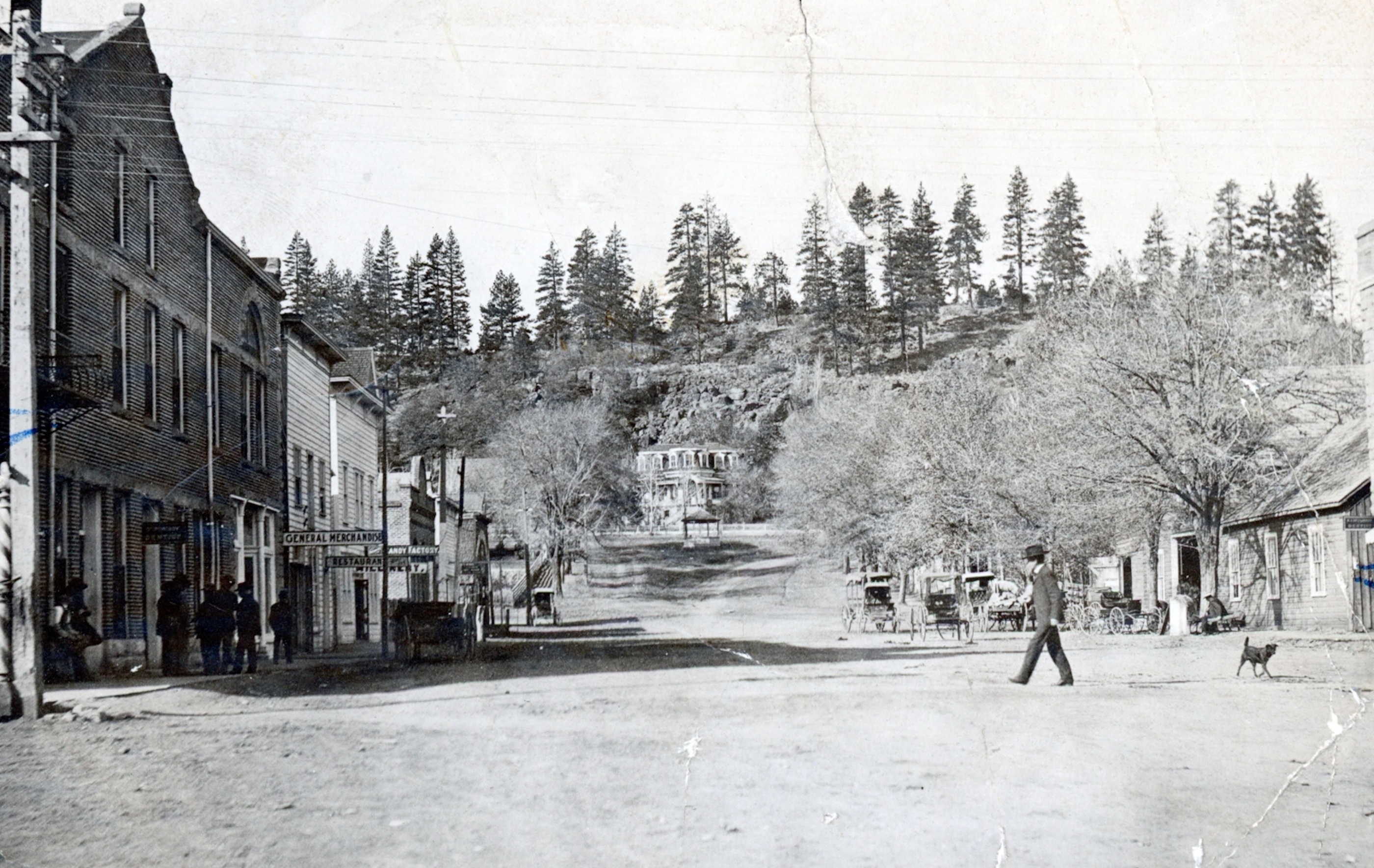
Main Street, 1906
Looking west on Main Street, at Lassen, 1906. You can see the bandstand in the background. By the way, the gentleman crossing the street is Dr. W.E. Dozier. Photograph courtesy of Betty Barry Deal

Awhile back we explored the origins of the triangle at the west end of Susanville’s Main Street. For a refresher, you can read about it here. In the coming weeks we will explore how this intersection evolved over the years.

The 500 block of Main Street was criticized by many of its unkept appearance, with sagebrush creating a median. The Mountain Echo Band had an idea to change the scruffy landscape. In September 1902, an octagonal bandstand was constructed there and even adorned with electrical lights. On September 14, 1902, the bandstand was dedicated by the Mountain Echo Band  with their first concert. Two weeks later it was focal point of a  royal pageant during one of the infrequent county fairs.  A few years later the Mountain Echo Band disbanded and the bandstand fell into disrepair. By 1906, one observer said the relic had become eyesore on the community. In 1908, it was torn down.

500 Block, Main Street, Susanville, 1911—C.R. Caudle Collection

Up Next: For nearly 80 years, the prominent Elks Lodge was street level.

Subscribe

Westwood Rod & Gun Club

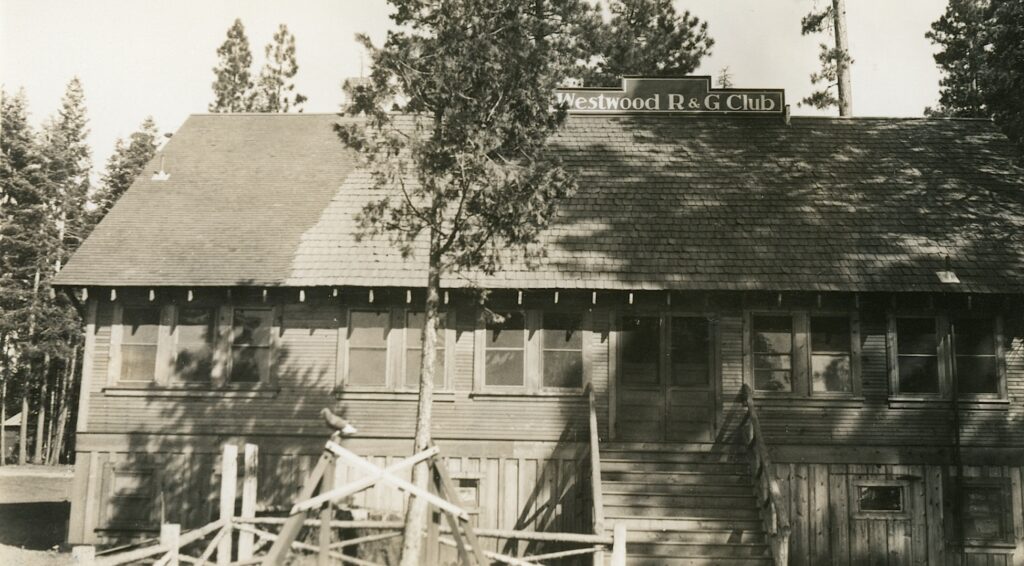
Westwood Rod & Gun Club building, September 30, 1928–H. Frodsham photograph

On March 13, 1922, the organizational meeting of the Westwood Rod & Gun Club was held. The principal players were George Peltier, Fletcher Walker, Ted Walker, Dr. F.J. Davis, Herb Smith, Rev. R.G. Green, R.H. Browne, Charlie Gardner and Bud Morrison, with Peltier serving as first president. Besides working on formalities of by-laws and such, the first objective was to build a clubhouse at Lake Almanor. At that time, Lake Almanor was only half the size that it is now. This, of course, influenced their decision as to the location. The site chosen was Bunnell’s point, close to the proximity presently known as the tip of the Lake Almanor peninsula.  By April construction began on the two-story clubhouse. By September the club boated a membership of 57. In addition, to the clubhouse Dr. Davis, George Peltier and Fletcher Walker had small cabins built next to it. Tents were also provided to the members, along with duck blinds at the lake. The clubhouse which featured an outside dance floor, became a scene of merriment, as numerous social gatherings were held there.

In 1925, the club received word that Great Western Power had plans to heighten the dam at Lake Almanor, doubling its size. A discussion ensued among members about moving the clubhouse. It was finally agreed to move it near Big Springs, thus making is more accessible by being only six miles from Westwood. Of course, before they could do that, they would need permission from the Red River Lumber Company to locate there, since the property in question was company owned. This was not a problem, as Fletcher Walker was Red River’s General Manager of Westwood and active member in the organization and gave his blessing. Equally important, they could use the barge Red River leased from Great Western Power to float over the clubhouse and existing cabins.

By 1940, changes were on the horizon  and the Westwood Rod & Gun Club days would be soon numbered. with the sale of the Red River to the Fruit Growers Supply Company. In1945, the club disbanded, and the clubhouse became the property of Red River. In 1947, Red River began subdividing its lakeshore property at Lake Almanor and one of the first pieces was at Big Springs. There 125 lots that were plotted. In May 1947, W.W. Davis of San Diego purchased the clubhouse. Davis remodeled the building into apartments. It was torn down in October 2010.

Subscribe


Lassen High’s Graduating Class of 1924

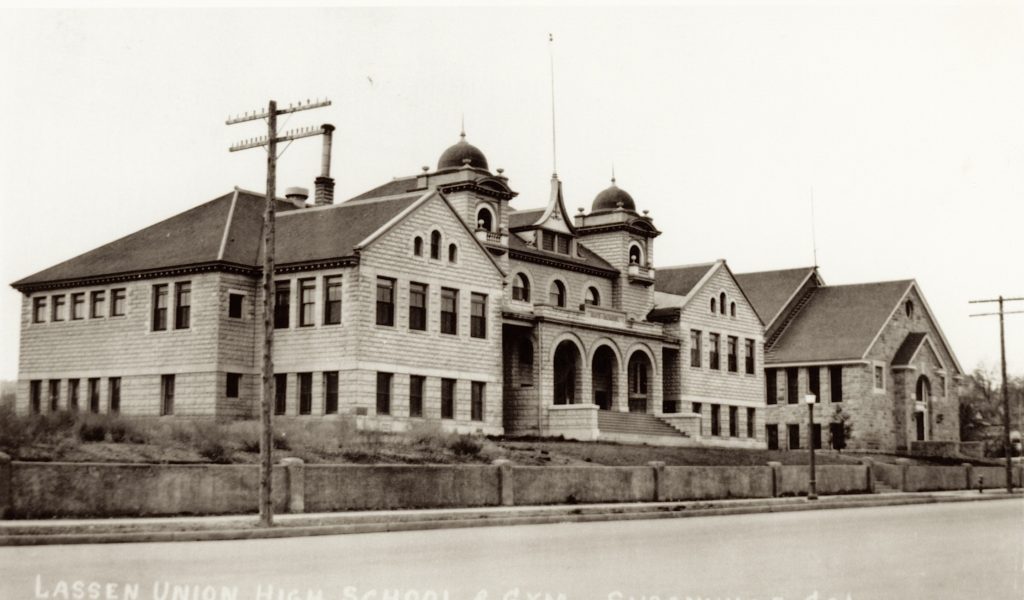
Lassen Union High School—Lola Tanner

It is graduation season, so a look back 100 years ago of Lassen Union High School Class of 1924. On June 13, 1924, twenty-five graduates received their diplomas. They were: Astrid Berglund, Gertrude Buffum, John Berglund, Mona Hartson, Edith Bowen, Edith Sisk, Dorothy Ferris, Trow Long, Erma French, Lucille Alexander, Frances Pearce, Dorothy Spring, Harold Holmes, Bernice Young, Margaret Jenkins, Edna Lawson, Helen Hibbert, John Hibbert, Marie Doyle, Eunice Woodward, Fae Bonner, Gladys Goodfellow, Alex Fry, Gladys Luke, and John Cramer.

Tim