Category Archives: History

Pullen Museum

Pullen Museum
The Pullen Museum, May 3, 2015

Granville Pullen first came to Lassen County in 1870 and worked at various jobs. In the 1880s he located to Sonoma County, but made frequent visits to Lassen County to see his sister, Susan Goumaz. In 1901, he moved back to Lassen County and bought a ranch near Janesville. In 1914, at the age of 76, he retired from ranching and bought a house in Janesville.

Pullen had been collecting various artifacts and curios for over forty years. Not to be idle he opened a small museum in Janesville to display his collection. People fascinated by his collection began donating items to him. In 1920, Granville and his wife Mary, moved to Susanville and bought a home on South Roop Street. Next to his new home, he had a small concrete building built to house his museum. On June 18, 1921, he opened the museum to the public.  When he passed away in 1926, and his wife kept the museum open for awhile, but she did not have the same passion as her husband. Over the years, she donated a portion of the collection to Lassen County. The items were displayed for a number of years in the Veteran’s building, and over time slowly disappeared.

Support this site and Subscribe today!

St. Mary’s Chapel

Constantia Church
St. Mary’s Chapel as it appeared in 1971. Courtesy of Robert Williams

Five miles south of Doyle is a place known as Constantia, though not much remains today. In 1896, Henry Butters purchased the ranch and gave the place its name of Constantia. Butters transformed the place into a small village and next to his home had a small Catholic church built—St. Mary’s Chapel.

As a child, Roberta Turritin Weaver lived at Constantia from 1913 to 1923 and recalled: “The church was beautiful with stained glass windows and the pews were made from the oak trees in back of the ranch. As long as were in the big house Father Horgan came out several times a year. We were all very fond of him. My twin sister, Catherine, and I considered him a good sport since he put up with all our didedos.”

By the mid-1920s services were discontinued and the church abandoned. In 1994, the Doyle Historical Society moved the church to Doyle and restored the building.

Support this site and subscribe today!

Oh My!

The carnage
The carnage

As a community service for the health and safety of those visiting the Lassen County Fairgrounds, no matter how careful one parks there are those reckless careful drivers that are of a different mindset.

Three years ago today, while part of the volunteer crew of the Lassen High Alumni Association in preparation of setting up for the all class reunion picnic in Jensen Hall, did I have one of those experiences. Some may recall when the fair manager backed into my parked 1964 TR4 Triumph.

Next came the trauma, or drama, to fix it. Needless to say, I was out thousands of dollars to repair it. More importantly, its all water under the bridge so to speak, and I am back to driving it again, though the intermittent rainy showers has made it a challenge with top down.

TR4
Before the carnage.

Support this site, Subscribe today!

Lassen Peak Eruptions

Lassen Peak
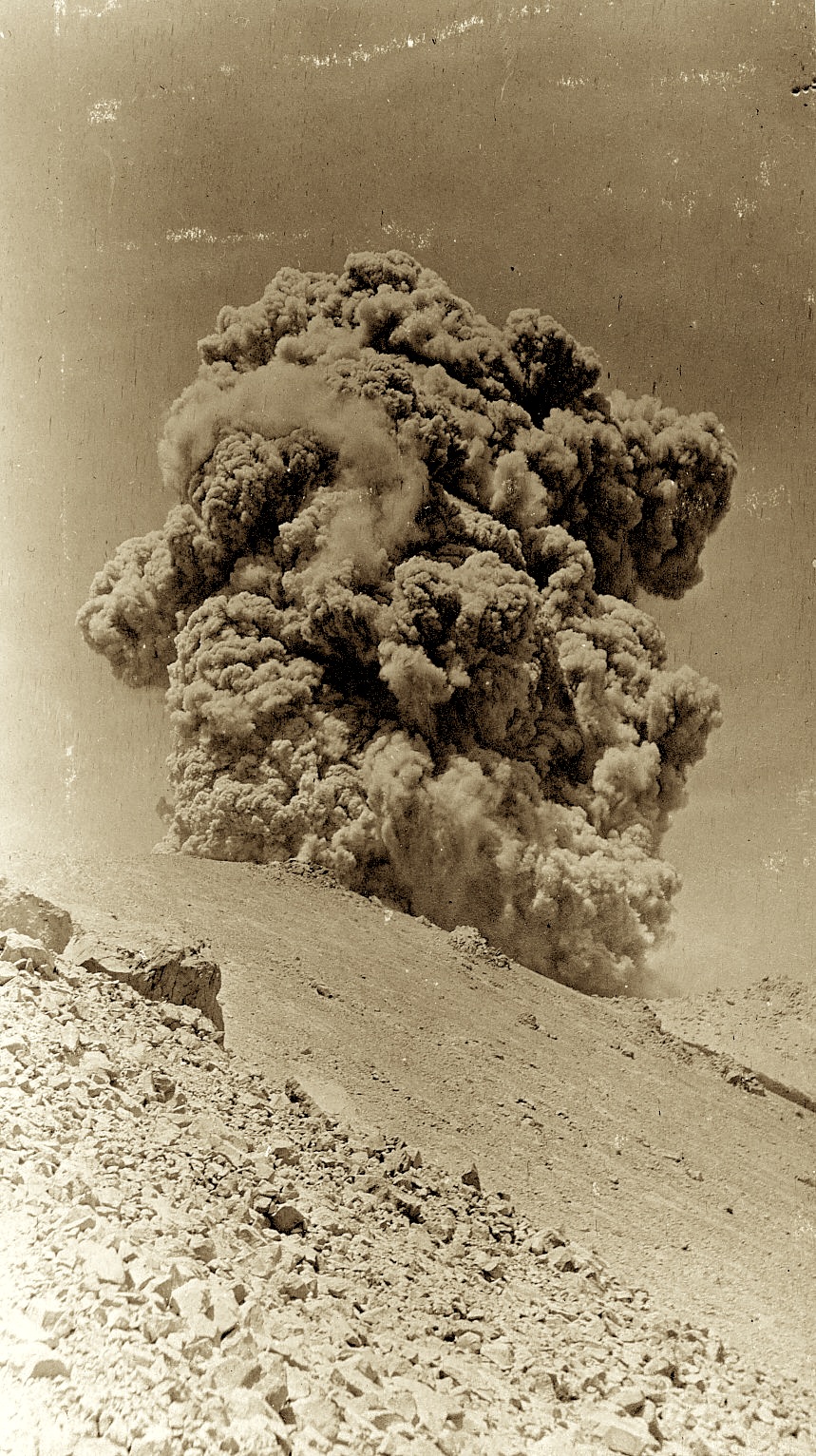
June 14, 1914 eruption.

On May 30, 1914, Lassen Peak awoke with its first volcanic eruption causing quite a commotion. In one sense for the locals, it was not a total surprise, as there had been many signs indicating that one day it would happen. What no one was prepared for how many times the peak would continue erupting or how violent they might be.

For the so-called “looky-loos” this was an exciting time. The adventerous and curious could not stay away, and a number of thrill seekers climbed the peak to get a closer look. While the forest service, (the park had not been created), attempted to stop them, but to no avail. What truly was remarkable, that Lance Graham was the only person to sustain injuries while on the peak during an eruption. There was a related fatality when Thomas Roseberry was making the descent from the peak and died from a heart attack. Roseberry is a perfect example of the kinds of obstacles one encounters while conducting research. His death occurred in Shasta County. However, his death certificate used the nearest populated place of Drakesbad, which is in Plumas County. Yet, that document was recorded in Lassen County where he resided.

To learn more about the eruptions and the park history, you might want to get a copy of Lassen Volcanic, as it will soon be out of print, with less than 20 copies in stock.

Support this site and subscribe today!

Gold Run Road Company

The Sage Brush
The June 2, 1866 issue of The Sage Brush measured only 6 inches by 12 inches and was printed only on one side.

This toll road had a very short life, and that existed only on paper no less. However, when the company was organized they deemed a life span of twenty years, but from the only record indicates, it did not survive twenty days.

Nevertheless, it was an admirable undertaking. It was spearheaded by a group of progressive residents of Honey Lake and Indian Valleys. During the 1850s and 1860s one of the most traveled routes was a road from Gold Run going over Diamond Mountain and following Light’s Creek into Indian Valley. The gentlemen intended to put a toll gate at the summit. As required by law, they published their intent in the Sage Brush newspaper. On June 13, 1866 they held an organizational meeting in Susanville and elected A.D. Headly, President, James Ford, Secretary and W.N. DeHaven, Treasurer. The following day they filed their Articles of Incorporation with the Lassen County Clerk.

The company’s lasting legacy is attached to the articles of incorporation, was a copy of the Susanville, Sage Brush, the forerunner to the Lassen Advocate. This is the oldest known copy in existence. The paper apologized for the small size of the issue, citing their paper supplies had not arrived.

Support this site and subscribe today!

Order of Camels

Zimmerman
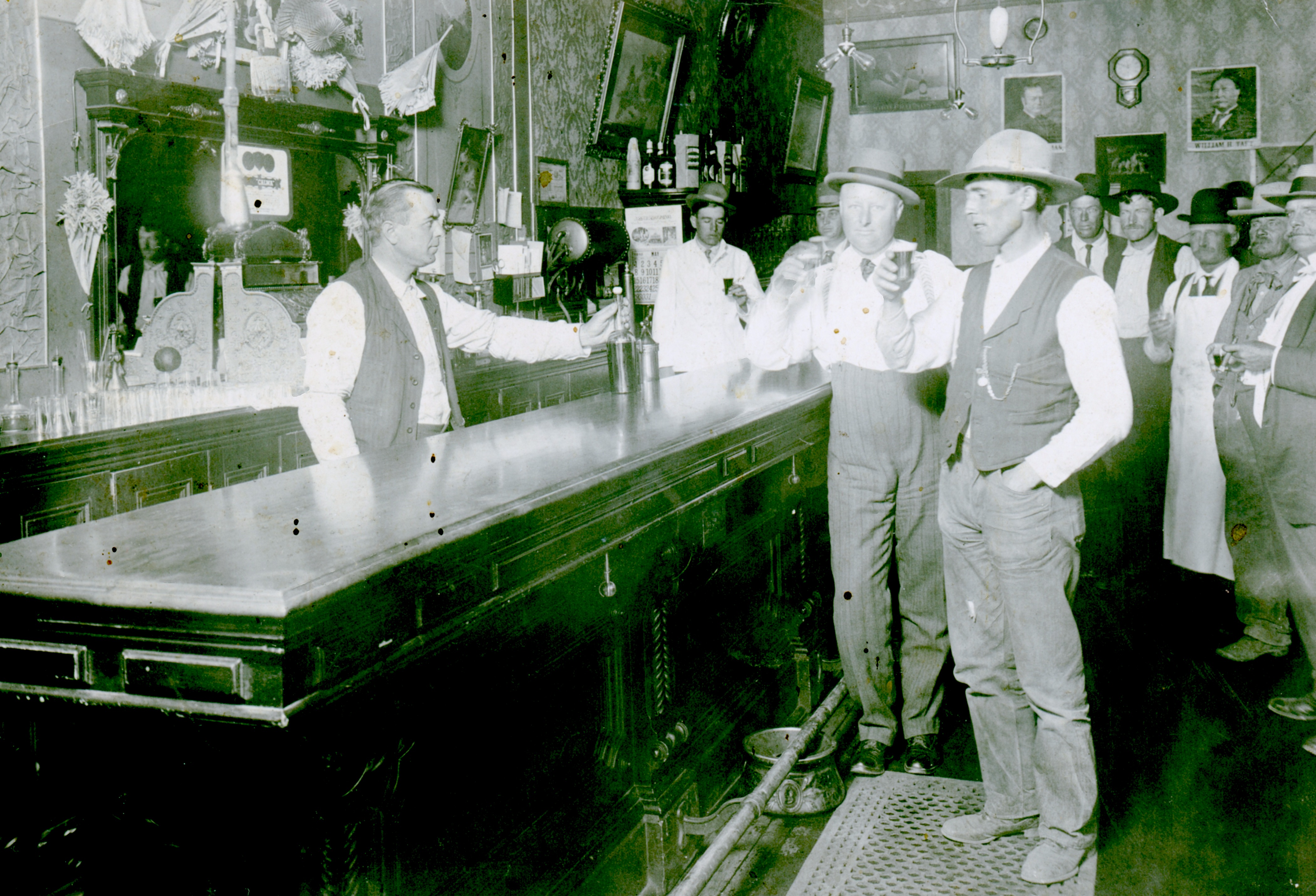
B.R. Zimmerman was a popular Susanville bar owner for many years. In 1919, he converted his famed Owl Saloon into a produce store.

Order of Camels was a fraternal organization opposed to prohibition. The camel was an ideal symbol as it could go for long spells without a drink. As we know they did not succeed in stopping prohibition. In a peculiar move, a local chapter was organized on June 10, 1920, nearly a year after prohibition took effect.

Support this site and Subscribe today!

Amedee Lime Kilns

Amedee Lime Kiln
Amedee Lime Kiln, 1975

In the early 1890s, when the railroad town of Amedee came into prominence, led to many interesting developments. One of these was the discovery of lime deposits, then a key ingredient used in cement. In 1893, a lime kiln was constructed on the hillside above Amedee. However, due to the nation’s economic depression and the NCO Railroad’s refusal to lower freight rates the enterprise abandoned.

In 1913, with another railroad at Amedee and a surging economy, Susanville businessmen fired up the abandoned lime kilns. After over a year in operation, this they discovered was not the most prudent business investment, and once again the kilns were abandoned.

If you don’t succeed the first time, try again and again. In the 1920s, Janesville resident William B. Hail operated the lime kilns. In 1927, he used the lime for construction of the Bigelow Apartments in Susanville. After that it they were finally abandoned once and for all. Hail stated it was due to the poor quality of the lime.

Support this site and Subscribe today!

Lassen’s Most Influential Person

railroad
The Fernley & Lassen Railroad under construction, February 1914.

On January 29, 1912 a contract was signed in San Francisco that would forever change Lassen County. On that historic date, T.B. Walker signed an agreement with the Southern Pacific for the construction of the Fernley & Lassen Railroad.

T.B. Walker with his need for a railroad transformed Lassen County in countless ways. It brought an era prosperity that has seen before or since. The huge influx of population provided a huge market for the local farmers and ranchers. Take for instance, there was not a single dairy, by 1920 there fifteen.

Of course, if opened the door to the timber industry, and transformed Susanville in a major lumber manufacturing center. What was thought with sustained yield and other forestry practices it was believed that it would remain the dominant industry for well over a hundred years if not more. Within fifty years, the writing was on the wall, and Lassen County’s citizens sought a new industry—prisons.

In future posts we will explore those exciting times, as well as T.B. Walker.

Support this site, Subscribe today!

A Main Street Problem

Main Street, 1909
Main Street looking west from Lassen High before the fill, circa 1909. Courtesy of the A.J. Mathews family.

In 1914 Susanville’s uptown business district went through a major transformation when such buildings as the Del Mar and the Star Hotel were constructed along with other properties. There was a byproduct from this construction. The buildings had basements and the problem was what to do with all the dirt piling up in the streets. It should be duly noted that the city ended at Weatherlow Street. In the winter months it could be rather hazardous to get to the east entrance. This was due to the fact that between Weatherlow and Grand it was mainly bottom land where Piute Creek flowed. At least for pedestrians an elevated wooden plank bridge spanned the creek crossing. So all the excess dirt from the excavations was used as a fill for that segment of Main Street.

Support this site and Subscribe today!

Lassen Flouring Mill

Lassen Flour
The Lassen Flouring Mill, 1901. Courtesy of the A.J. Mathews family.

Back in March 2015 I wrote about the first flour mill built in Lassen County at Milford. As promised, I would follow up with the other ones. The second mill was constructed in the spring of 1864 near Johnstonville, approximately where the defunct Gables is located. The machinery came from a mill located on Cow Creek, Shasta County, which belonged to John Briceland. The operation was leased to various individuals and it was not until the 1870s that stability of the ownership came to be. In 1875, William Hall and Henry Snyder became partners and remained until it closed.

In 1907, Snyder desired to retire and move to a milder climate. Hall purchased Snyder’s interest, but he too, decided to retire and by 1908, the mill shut down. The mill sat idle for over a decade, and in 1919, as part of the liquidation of Hall’s Estate the mill was sold to M.A. Taylor of Oakland. Taylor attempted to sale it, but there was no interest. He gutted the machinery and took it to the Bay area. Sam Alexander of Standish, salvaged some of the lumber from the building which he used to build a barn at his place.

Support this site and Subscribe today!