Category Archives: History

High Rock Springs, Lassen County – Update

High Rock Spring, April 1975

These springs in eastern Honey Lake Valley and near the Nevada border are quite unique. They are an ancient spring dating back to the time when the area was covered by Lake Lahontan in the Pleistocene epoch.

The second reason is it is a warm water spring with a constant temperature of 86F.  The springs supports two kinds of fish. First is the Lahontan tui chubs.  This, of course, is rather remarkable that the fish have adapted over the years to thrive in constant warm water in a confined space. Water from the spring then goes underground and re-surfaces 100 yards distant, maintaining a constant cooler temperature at 76F. At this point, again, which is also unusual, is found the Lahontan speckle dace, that was to be on the endangered species list. The Lahontan speckle dace in this spring is no more. In the 1990s, the spring  used as a fish farm. Some one planted  exotic fish in the springs channel, thus caused the speckle dace there to be extinct.

I found the newspaper article of interest from the Lassen Advocate May, 15, 1914 – Here From High Rock. Jas. Mapes and Jas. Dudley were there from High Rock last Monday. Mr. Mapes was proving up on his desert land claim before the officers of the land office. Jimmie is very enthusiastic over prospects down there, and is a very busy man. He says he has the dandy water system of the county, and the water problem is one which will not be a great worry him in the future. He has a chain of three dams, and these, by giving out their waters one at a time as needed, will probably prove sufficient for all purposes. In addition, however, he is contemplating building a dam to impound the waters  of the one spring, which will be a valuable addition to his water supply.

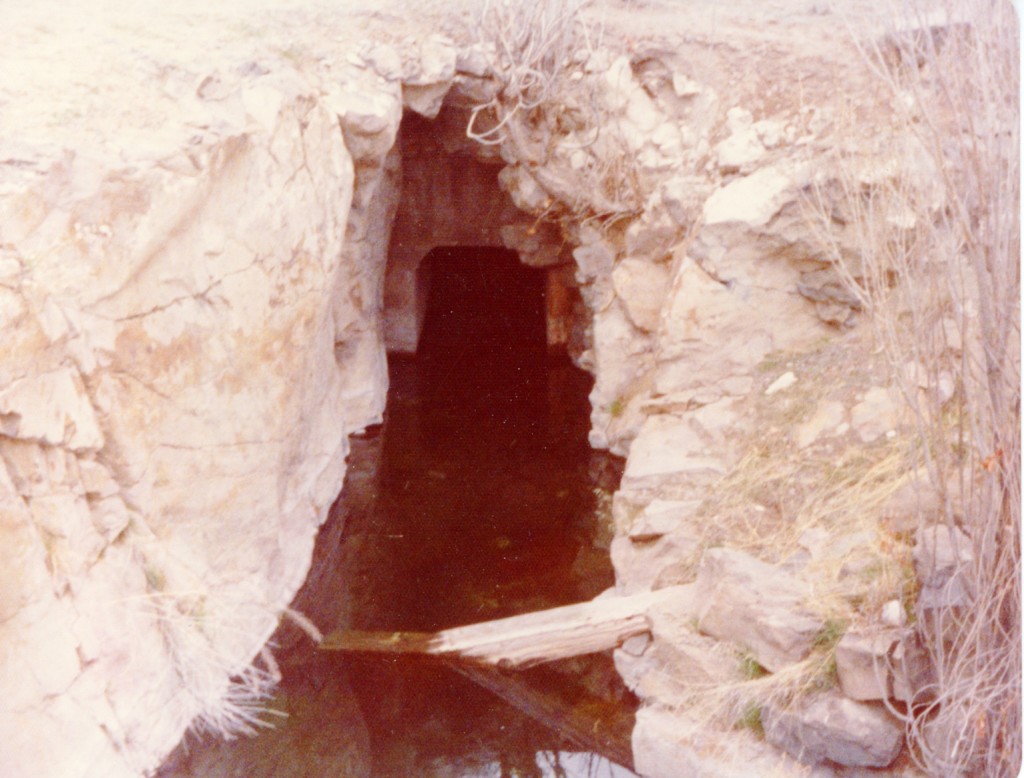
A portion of the tunnel outlet of High Rock Springs. April, 1975

It should be noted that in the 1920s, William Dicting was hired by the Rees Jenkins to develop the springs. He spent eight years to hand drill through the rock to develop the water tunnel to increase water flow.

Support by subscribing.


High Rock Ranch

High Rock Ranch in eastern Honey Lake Valley was a popular gathering place for rodeos in the late 1800s. Courtesy of Madelyn Mapes Dahlstrom

The High Rock Ranch in eastern Honey Lake adjoining the Nevada state line, owes a lot of its existence to the springs. Water in the desert makes a big difference.

Interesting enough, on February 7, 1862, U. Johnson Tutt laid claim to this remote outpost. Tutt made no improvements and abandoned his claim. In the late 1860s and 1870s, High Rock was a scene of rodeos, not quite the same as our modern day version. During this era, very few ranches had fences. It was customary, especially in the winter months to let their cattle and horses roam in search of feed. Each spring several localities were chosen for sites for round-ups and rodeos, and High Rock was one. Once the stray livestock were herded to a specific location, they were separated and branded. Continue reading High Rock Ranch

My Dinner With E.V. Spencer

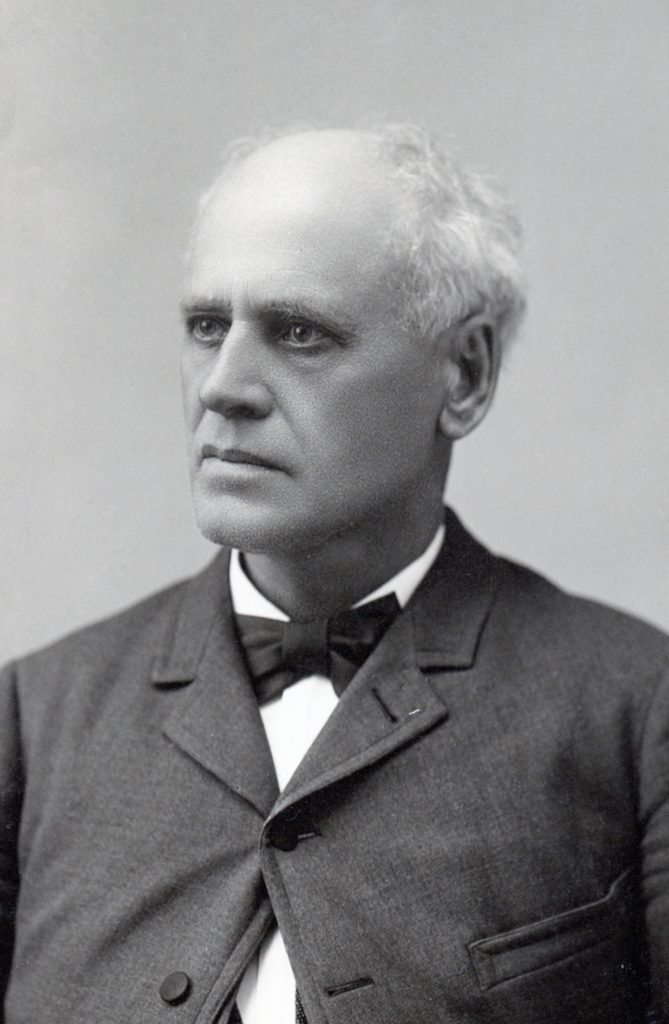
E.V. Spencer—Ivajean Wheeler

Ephraim Van Buren Spencer (1836 -1904) was a fascinating individual.  In his 1906 biography, as a testament this is the beginning sentence, “No name is more intimately associated with the history of Lassen County than that of Judge Spencer.”  I am going highlight four aspects of his life.

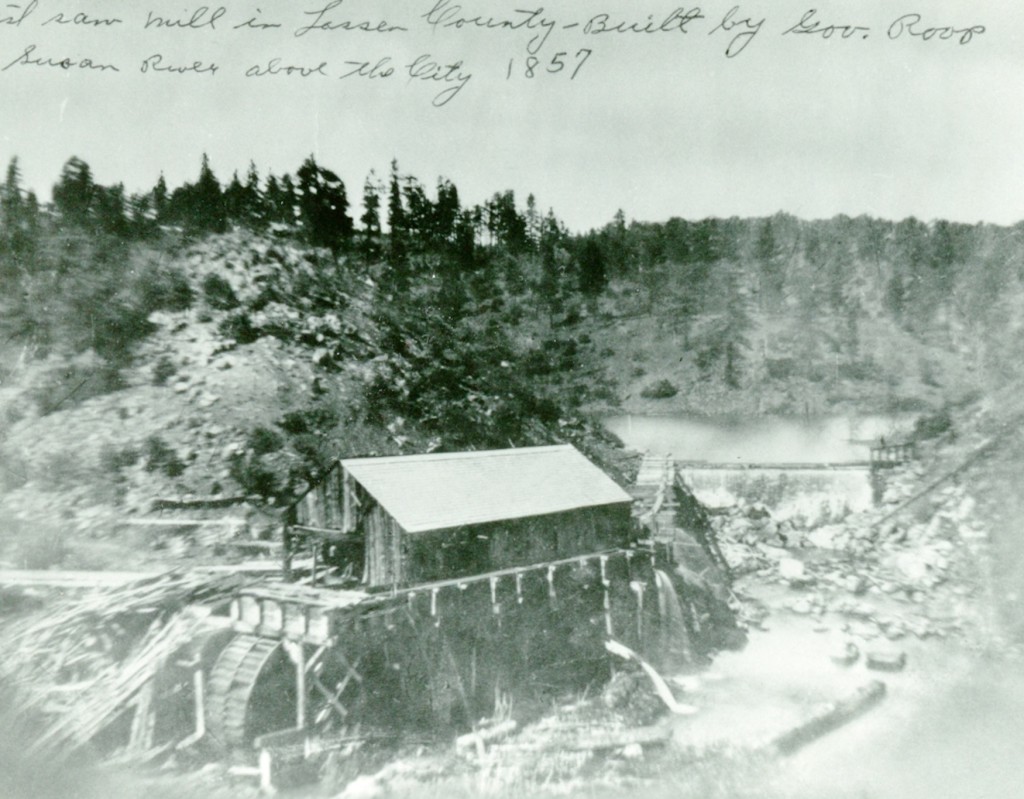
Roop's Mill
Roop’s mill taken in the early 1860s

The Lumberman. In 1859, E.V. and his brother, Luther Spencer, settled in Susanville. An opportunity arose, and they purchased the Roop Sawmill on the Susan River, just below Hobo Camp. Very little known as to mill’s operation. It should be noted that it burned down in 1868. What really intrigued me was one of the mill’s employee-Lemericus Wyatt. In April 1859, Wyatt along with Edward Clapper and Peter Lassen were on a prospecting trip in the Black Rock Desert. There was an early morning ambush that claimed the lives of Clapper and Lassen, and Wyatt escaped. Wyatt confided to E.V. Spencer what happened.

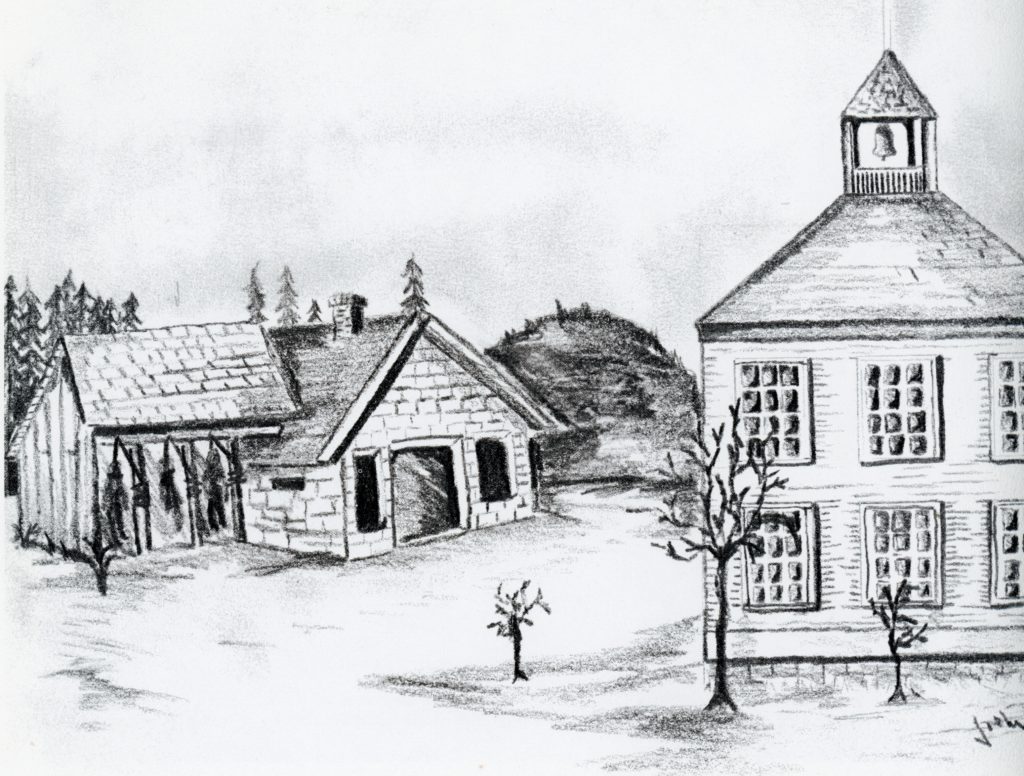
An artist sketch of the lynching of Holden Dick and Mexican Ben.

The Attorney. Spencer was a sawyer at the mill. He suffered a major arm injury that resulted in a career change. He became a lawyer. In 1864, he was elected the first Lassen County District Attorney. He only served one term. He was proud of the crackdown of gambling, and while it subsided, it never went away. As an attorney he was noted for his eloquent speaking abilities. He had an illustrious career as an attorney. One of his clients was the infamous Holden Dick who was accused of the gruesome murder of Samuel Shaw in 1883. Thus, the legend of the Holden Dick Mine was born. It was purported that Dick gave Spencer a map to the mine’s location.  A bit of trivia, Dick’s first name came from Thomas Holden, who was Spencer’s  wife’s relations..

The Assemblyman. In 1894, Spencer was elected to the California Assembly.  While he only served one term, he was admired by his colleagues who referred to him the as “Lassen County’s Grand Old Man.” One of his causes was the suffragette movement. He was instrumental in getting Amendment 6 on the ballot in 1896 to approve women’s rights in California, but the measure failed.

The Railroad Man.  Spencer was the probably the strongest advocate to have Susanville serviced by a railroad. It was his contention that Susanville would be just another “sleepy hollow” without one. In 1885, the residents of Susanville raised $500 to send Spencer negotiate with the Morans, the new owners of the Nevada & California Railroad (later to become the NCO). to build the line to Susanville. The Moran’s informed Spencer that they did not have the money to extend the line north. Spencer was optimistic, since the railroad did a preliminary survey along the west side of Honey Lake to Susanville. On March 31, 1887 Edgar Heriot the new general manager of the railroad announced they would commence work of 45 mile extension from Junction House to Brubeck’s Ranch on the east side of Honey Lake. Spencer did not sit idly by about the news of the bypass. It’s an interesting story for another time. In 1899, Spencer lobbied the railroad to build a branch line from Hot Springs (Wendel) to Susanville. It would be a most interesting dinner discussion about Spencer on this topic.

Summation. Spencer’s life was hardly dull. For instance, in the late 1880s his family would vacation at Drake’s Springs, today known as Drakesbad. The seed for creation of Lassen Volcanic National Park was planted via his son-in-law Congressman John Raker.

To Support, Please Donate or Subscribe

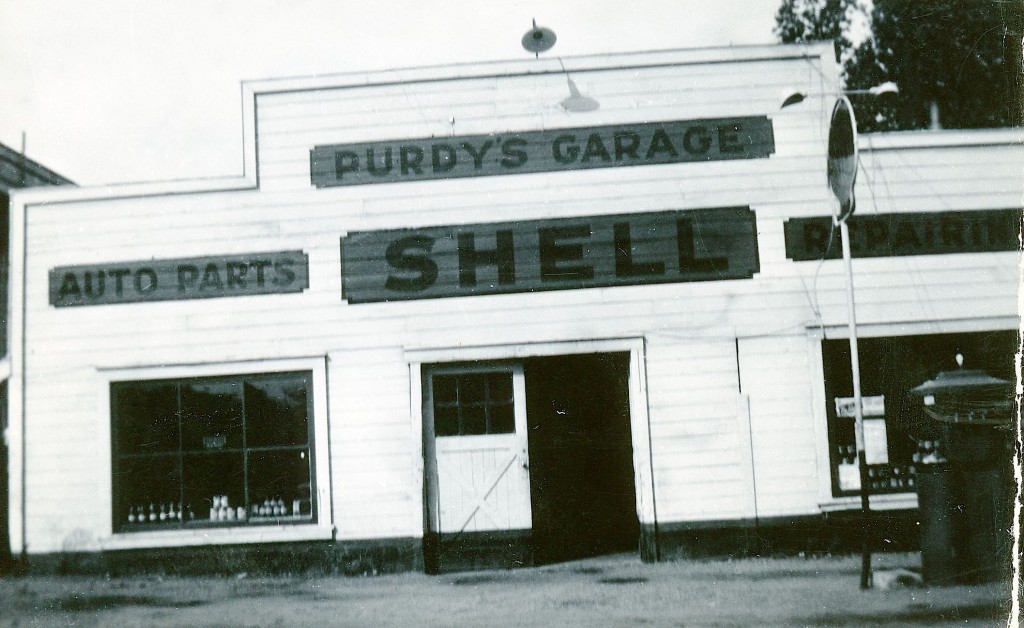
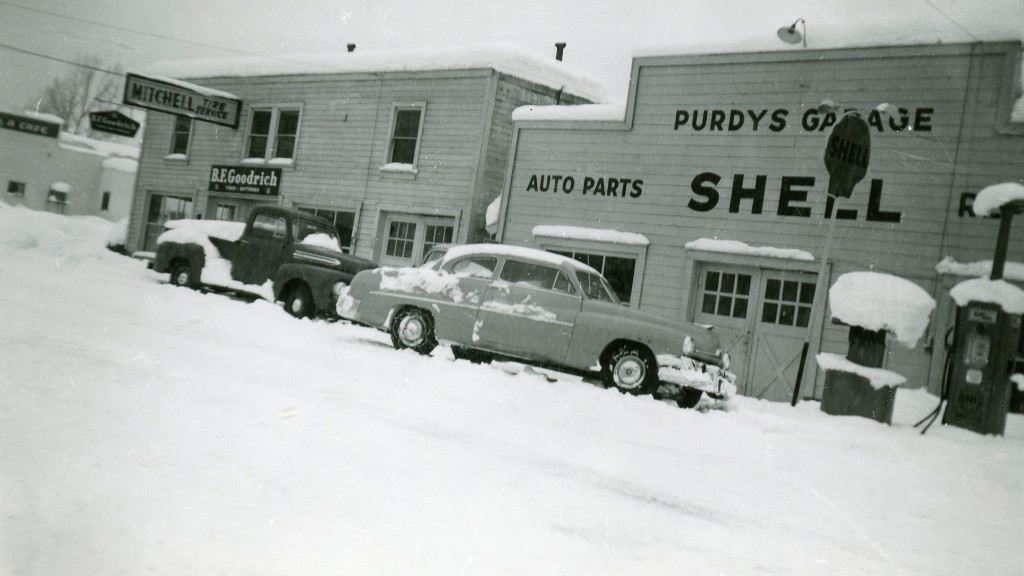
Susanville’s Purdy’s Garage

Purdy’s Garage, date unknown. Courtesy of Margaret Purdy

In June 1926, my grandfather and my name sake, Ira I. Purdy drove up from Sacramento to Susanville in search of employment. He was a mechanic by trade, a master one at that, which I may have inherited his name but not his mechanic skills.  He found employment at Doyle & Hunsinger’s, operators of the local Ford car dealership. Once settled in he moved his wife, Margaret and young son, James, to Susanville. My father, Leroy,  was born the following year on March 7, 1927 at Riverside Hospital, so hence this post on the annivasry of his birth.

Purdy's Garage, no date. Courtesy of Margaret Purdy
Purdy’s Garage, no date. Courtesy of Margaret Purdy

Like so many others Ira yearned to have his own operation. In 1939 he left Doyle Motor Company, (Hunsinger had moved to Reno), to establish his own service station. He purchased several lots on the north side of Main Street, between Sacramento and Spring Streets and established Purdy’s Garage. It remained in operation until the mid-1950s, when health conditions forced him to retire.  The property, that was Purdy’s Garage,  would later become the home of the Lassen Advocate and that building sits vacant.

Of note, in 1989 Caltrans did a major reconstruction of Main Street. Caltrans consulted me as gas tanks were. It should be noted that by 1960 there were some 17 plus service (gas) stations on Main Street. Caltrans removed some, though Purdy’s Garage gas tank was actually located underneath Main Street, Caltrans even aware of that fact, did not remove it. Will it become a future sink hole?

Support by subscribing.


The Three “S” Dilemma

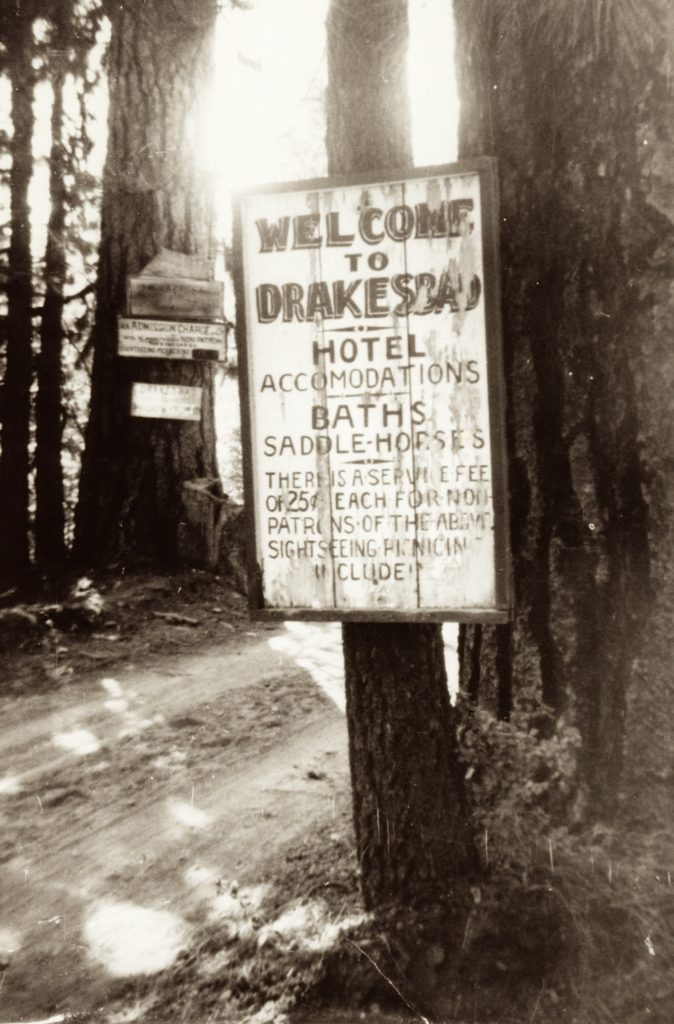
The sign entering Drakesbad—Sifford Collection

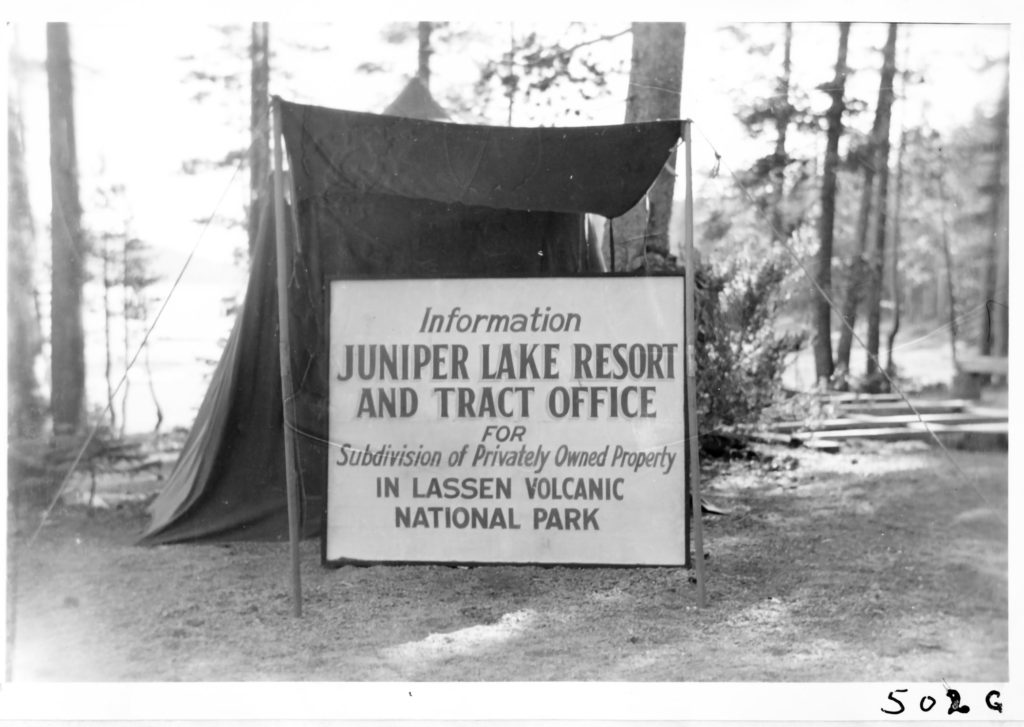
Lassen Volcanic National Park has a complex early history. Of course, funding was a barrier. Nearly a decade after the park’s inception, progress was made. Since the park was  virgin territory,  planners, such as George Goodwin, Civil Engineer of the National Park Service had a grandiose plans. There was a problem which I labeled it the three “S” dilemma. Many of key attractions inside the park boundary were privately owned, i.e. – Sifford of Drakesbad; Snell of Juniper Lake and Supan the Sulphur Works.

Snell’s advertisment of lots for sale at Juniper Lake

Access to the park was extremely limited. There were three stub roads-Drakesbad, Juniper Lake and the Sulphur Works. Goodwin initially proposed a highway through the entire park, that would also encompass the three private properties. It was noble idea, but it had a major flaw. The road development of the three “S” properties would increase their values making difficult for the park to acquire them.

1935 signage for the sulfur works.

There was a silver lining. Goodwin had negotiated with the Supan family and was able to secure of right-of-away through their property for one-dollar. Back to the drawing board for a park road.  It was a scaled back  grandiose plan from Goodwin. The route would be a north/south venue. The highlights were access to Lassen Peak and Bumpass Hell. It should be noted before the Park’s Highway, the easiest way to access Bumpass Hell and Lassen Peak was via Drakesbad where one had to pay to entrance fee.

Support

Who Would You Have Dinner With?

Susanville’s Walker’s Restaurant  during its formative years, 1958.

Last fall, the Los Angeles Times asked its readers who they would like to have dinner with a famous or infamous Californian, whether dead or alive. I contemplated that question but on a local level of a Lassenite. I was in a contemplative state for long time. So many interesting individuals to choose from. I strolled various cemeteries for inspiration. Roop or Lassen was not on even the radar due to fact their lives were cut short, and so their association was only for a short span.

Jules Alexander, Lassen Mail, March 1, 1935

The runner-up was Jules Alexander. In certain ways, one could say that Jules and Susanville grew up together. This plucky Frenchmen was only seventeen years old when he came to Susanville in May of 1877. He went to work as a clerk for Greehn & Asher one of the larger mercantile stores in town. He would follow this trade for decades to come. Jules was a member of Susanville Jewish community, so he could provide with an insight. He married Rae Knoch, daughter of David Knoch, a prominent Susanville merchant. In 1892, Jules and his brother-in-law, formed Alexander & Knoch and took over David Knoch’s business.

With the prosperous times approaching with the Fernley & Lassen Railroad Alexander & Knoch wanted to expand their horizons. At the end of 1911 the store was turned over to Alexander’s two sons-in-law, Jess Worley and Emil Fehr. In 1912, Jules and Ike formed the Lassen Industrial Bank and in 1922 constructed the former iconic building at the corner of Main and North Gay Streets., that was known as Bank of America. From that vantage point, the bank, known for its liberal loan policies, believed in Leon Bly’s enterprise to tap Eagle Lake for irrigation. The bank loaned a substantial amount of money to the farmers involved, only to see many of the bankrupt, and nearly caused the bank’s failure.

Prior to the banking business, Jules had become involved other business enterprises. For fifteen years he owned a ranch at Horse Lake. He was a director/investor in the California & Oregon Telegraph Company, the Susanville Creamery and later the Lassen Townsite Company, the former remains the largest Susanville subdivision.

Jules was a firm believer in civic engagement and pride. Just one example, of his many contributions was the placement of a new Lassen Monument, as the original one had been neglected all these years. In the fall of 1916, Jules launched a campaign to correct it and with a new monument. In September 1917, Jules hard fundraising work paid off and the new Lassen Monument was dedicated. Jules was certainly a multi-faceted individual.

In a few days, I will reveal my special interest. In the meantime, I encourage readers to chime in.

Support by subscribing.


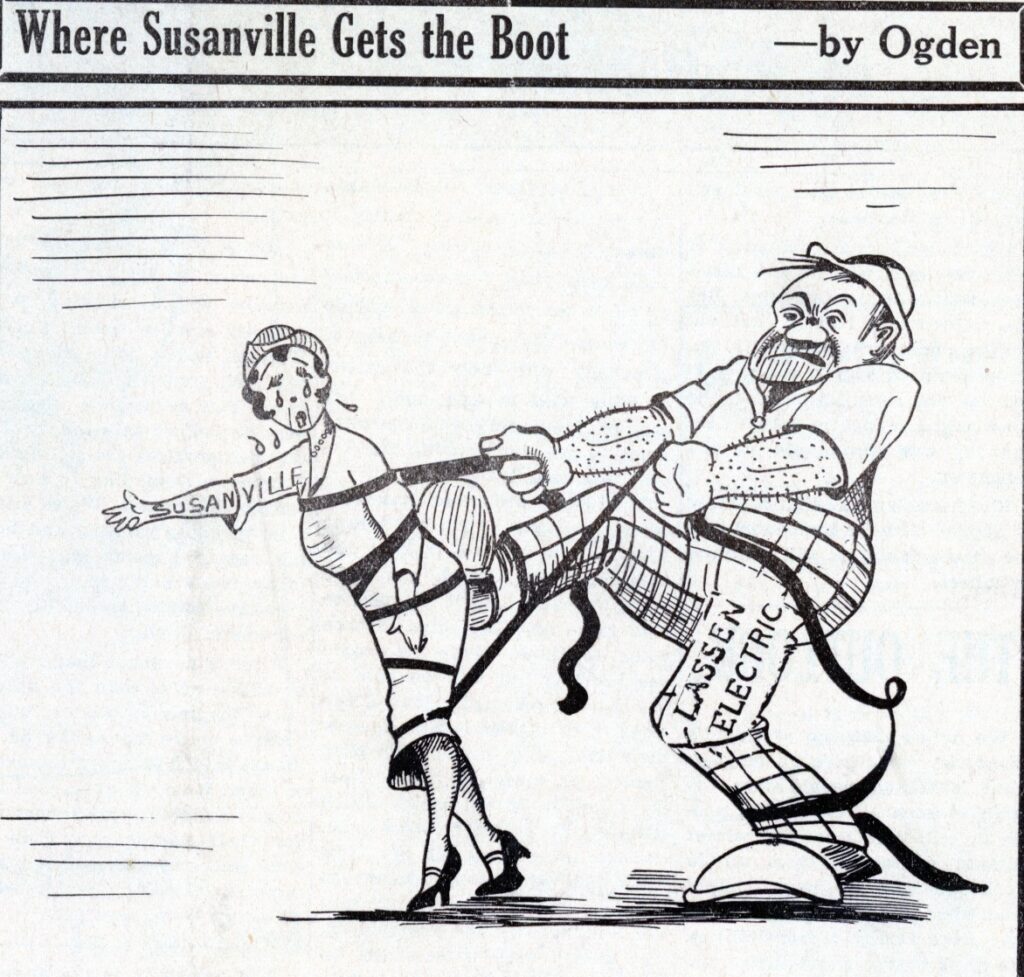
Susanville Gets The Boot

The editorial cartoon of the Lassen Mail, September 16, 1931

In the summer and fall of 1931 the heated and controversial topic  was the formation of a public utility district-Lassen Municipal Utility District. Robert Cook, editor and publisher of the Lassen Mail newspaper was an ardent supporter for the district. The Mail used a lot ink on the subject. In the September 21, 1931 issue a front page article titled Electric Prices for Bieber Half Susanville Rates:

“The Pacific Gas and Electric Company is rushing the construction of its line from Fall River Valley to Bieber.. The new line is 20 miles in length and will serve about 400 hundred people. The rates that will be in effect as soon as the line is established has been announced as follows:

“For the first 30 K.W.H the rate is 5 1/2 cents per K.W.H. and 3 cents thereafter. Greater reductions are made for large users of power.

“Susanville with its population of 4000 is paying 10 cents per K.W.H. and eight cents thereafter to the Lassen Electric Company.

“Just across the Susan River the employees of the two mills enjoy a still lower rate than the people of Bieber. The same condition prevails in Westwood. The only users of electricity in Lassen County that do not receive a decent electric light rate are the residents of Susanville and the Honey Lake Valley.”

Notes of note; The Cady family not only owned the Lassen Electric, but the water company and had an financial interest in the Lassen Advocate newspaper. That publication opposed the formation of a public utlity district.

Tim

A Good Question, Indeed

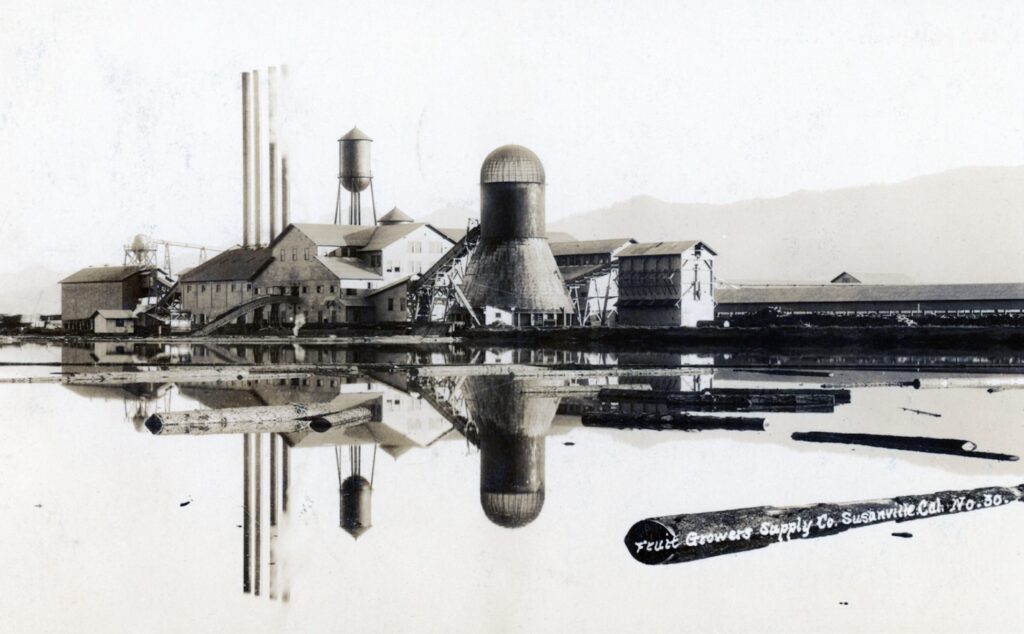
Fruit Growers Supply Company mill, Susanville, 1921

Awhile back we explored the closure of the Lassen Lumber Box & Company mill. It was acquired by its neighbor, Fruit Growers. That company purchased Lassen Lumber for its water rights, in case Fruit Growers wanted to convert its mill to a cardboard plant. While that event had never happened, Fruit Growers did operate a cardboard plant in Southern California.

The question posed was whatever became of those water rights. I would assume, and that can be dangerous, that when Fruit Growers sold their mill in 1963, the water rights would have been included.  This is where it gets tricky. One can with hold the water rights, and its done more often than one could think. Title companies do not include water rights in their property search.  If water rights are in an adjudicated system, like the Susan River watershed, there is. a water master to  oversee it. The water master fee is included in the county tax bill. I use of have list of the water users, but I am not sure how I filed it away.

Back of the question at hand. It would be interesting to know who possesses those water rights, since there is no mill, let alone a millpond.

Tim


What Kind of Spring It Will Be?

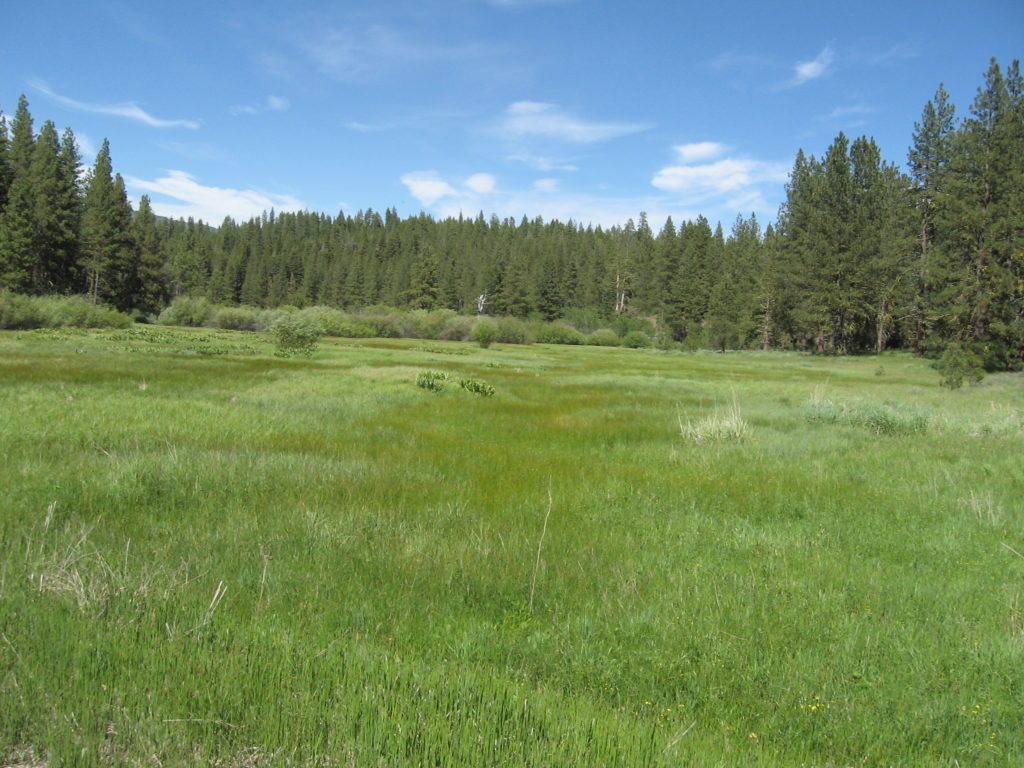
Crazy Harry Gulch, June 4, 2020

Today, marks the beginning of meteorological spring. If you have lived around these parts for very long, winter and spring are very unpredictable.

This past winter was of no exception. It was a very rainy November and December, followed a by cold, dry January. The first half of February was a weird. Take for instance, February 6. The forecast, high elevation snow. In Susanville, by 8 a.m. it was snowing ever so lightly. By noon, it was still snowing. However, at the same time, it was not only raining in Truckee, but on Donner Summit. By late afternoon, it was still snowing in Susanville, but snow conditions to our north got worse. By 4 p.m. Interstate 5 was closed at Yreka due to snow, while it was still raining on Donner!

Yesterday, it was spring like in Susanville and the temperature broke  60F, the first time  since early November. Today, the forecast is a repeat, and then a stormy pattern resumes. Appreciate the good weather wherever you live.

Tim

Amedee Goes Bust

Amedee, 1916
Amedee, January, 1916 courtesy of Marie Herring Gould

Awhile ago, we explored the topic of recipe of desert boomtown, i.e. Amedee.  Boomtowns are fascinating creatures, no two are alike. While Amedee’s heyday peaked in 1892. its downward spiral was slow. The country’s financial panic of 1893  was front and center. The regional reclamation projects had over extended credit and were forced into bankruptcy. Along the same lines, the nations railroads over expanded, and in 1893, and new railroad construction in the mid-1890s was kept to a minimum.

There was silver lining for Amedee about the railroad’s doldrums. The NCO Railway had no financial means to extend its line beyond Amedee, thus, the town had a major draw of the railroad’s terminus. In 1899, that came to an end as NCO extended its line north to the Madeline Plains.  At Amedee’s height it had a population to between 300 to 400. In 1900 the population dwindled to 49.  In 1905 the Amedee School closed for a  lack of students. There was a hope on on the horizon, and Amedee would go through a revival.

Tim