Category Archives: History

The Raker Act

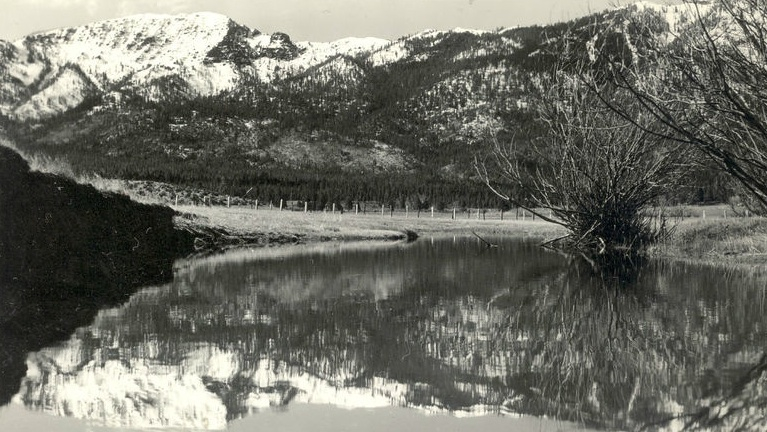
Hetch Hetchy Valley, 1911 ( I paid $12.00 for this photograph on Ebay)

United States Congressman, John Raker served the as the representative of California’s First District from 1911-1926. Raker primarily resided in Lassen and Modoc Counties. In fact upon his death in 1926, he became a permanent resident of Susanville since he is buried in that community’s cemetery.

Raker was known for many things. In 1990s environmental groups painted Raker as a villain for the author of the Raker Act that Congress passed in 1913. The Act authorized for the O’Shaunessy Dam, that would flood valley the Hetch Hechty Valley, a part of Yosemite National Park. The purpose was a water supply for San Francisco.

Of course, it was fraught with the usual politics. By 1880, San Francisco sought a reliable water supply for the growing city. As I wrote before, the City even had its eye on the abundant springs at Big Meadows,  Plumas County, now Lake Almanor. After the 1906 San Fransisco earthquake and fires, there was an urgent need for a abundant water supply.. One key player, that does not much draw attention is that of Franklin Lane. In 1912, President Wilson appointed Lane as Secretary of the Interior, which managed the National Parks, since the park service was not created until 1916. Previous to Lane’s appointment he served as the City Attorney of San Francisco, thus he was well aware of that city’s water supply issue. Lane, and others in the San Francisco water lobby sought out congressmen to support there cause, and they found Raker.

Raker, it should be noted that was an ardent supporter of Gifford Pinchot, the first director of the United States Forest Service.  Along that line, while Raker urged conservation, he thought multiple land uses could co-exist.

In 1911, Raker who was in his first term as congressman, authored a bill to establish Redwood National Park. It failed. It did draw attention to the majestic trees. In 1918, the Save the Redwood League was established. It was not until 1968, that Redwood National Park was created. For the record, it was Raker that was instrumental in the creation of Lassen Volcanic National Park.

To Support, Please Donate or Subscribe


Is Some Railroad, Sure

NCO Depot, Reno, Nevada circa 1911

In December, I wrote that I would reading the Lassen Advocate for 1898 and 1914. From time to time I will publish extracts that it may be of interest.

Lassen Advocate 2 January 1914 5;4 – Is Some Railroad, Sure. For a railroad that has been running trains for twenty-eight or thirty years, the NCO railroad has a “peacherino” as the following from the Reno Journal of December 27 will attest.

“Traveling at a rate of about twenty miles per hour, the NCO passenger train due in Christmas evening was wrecked that afternoon at Chat, a small station situated one mile south of Plumas Junction.

“Fortunately the wreck did not cause injury to the train hands or passengers, excepting slight hurts by fireman Bert Pratt, who sprained a leg where he jumped from the engine.

“The wreck was apparently caused by a spreading rail and the engine overturned, after plowing up the frozen ground to a depth of four feet distance of a car length.

“The mail car was partially overturned although the remaining coaches to the train remained on the track. The wreck occurred at 5:05 o’clock Thursday afternoon and the passengers reached Reno 25 hours late.”

It should be noted that Mother Nature played on a role. The Christmas Eve storm dumped 3 1/2 feet in Susanville. Reno is the banana belt” so to speak in terms of weather. Due to rain shadow effect of its location, it is much drier than other east slope communities of the region.

Tim

Susanville, 1958

Susanville, circa 1950

Awhile ago, I referenced the 1958 Standard industrial Survey for Susanville. I thought some may like to have peek of some information in the report. Times have certainly changed.

Of course, lumber was still king in Susanville. Here is some employment figures: Fruit Growers Supply Company, 350 employees; Paul Bunyan Lumber Company, 300; Susanville Logging Company, 150;  Wirth Lumber Products, 50; Lassen Lumber Products, 15 and Orr Wood Products, 5.

Housing Availability, Prices and Rentals. The housing census as of April 1950 showed 1,721 dwelling units, of which 22 percent in structures built since 1940 and 1,687 were occupied. Of these 1024 were owner occupied, or 61 percent and had a median value of $9,000. Of the renter dwellings, 14 precent rented for less $20 per month., 42 percent for $20 to $39 per month, 35 percent for $40 to $59 per month and 8 percent from $60 to $74 per month, with 2 percent in excess of $75  per month. Since 1950 rents have risen about 25 percent and permits have been issued for 106 new dwelling units.

Community Facilities. Susanville has 2 general hospitals with a bed capacity of 74. Other medical facilities include 7 physicians and surgeons, 5 dentists, and 1 chiropractor, new 25-bed County Hospital in planning stage. Education facilities include 4 elementary schools. 1 high school and 1 junior college–1 parochial school. There are 28 churches, 1 library, 1 newspaper, and 2 banks. Recreational facilities include 1 theater, 2 parks, 6 playgrounds and Roosevelt Swimming Pool.,

Tim

Honey Lake’s Sugar Beet Experiment

The Zarbock Brothers on their desert homestead near Stacy. Courtesy of Pam Zarbock Bell

In 1910, the Nevada Sugar Company of Fallon, Nevada came courting Honey Lake Valley farmers in the Standish district, as well those homesteaders on the east side of Honey Lake to plant sugar beets. One of the reasons, was the Nevada Sugar Company was in the midst of constructing a factory at Fallon.

As an enticement the company stated it would build a second factory at Standish if production was successful and needed transportation facilities. In 1912, with the announcement of Fernley & Lassen Railroad to be constructed through this section of the Honey Lake Valley solved that transportation issue.

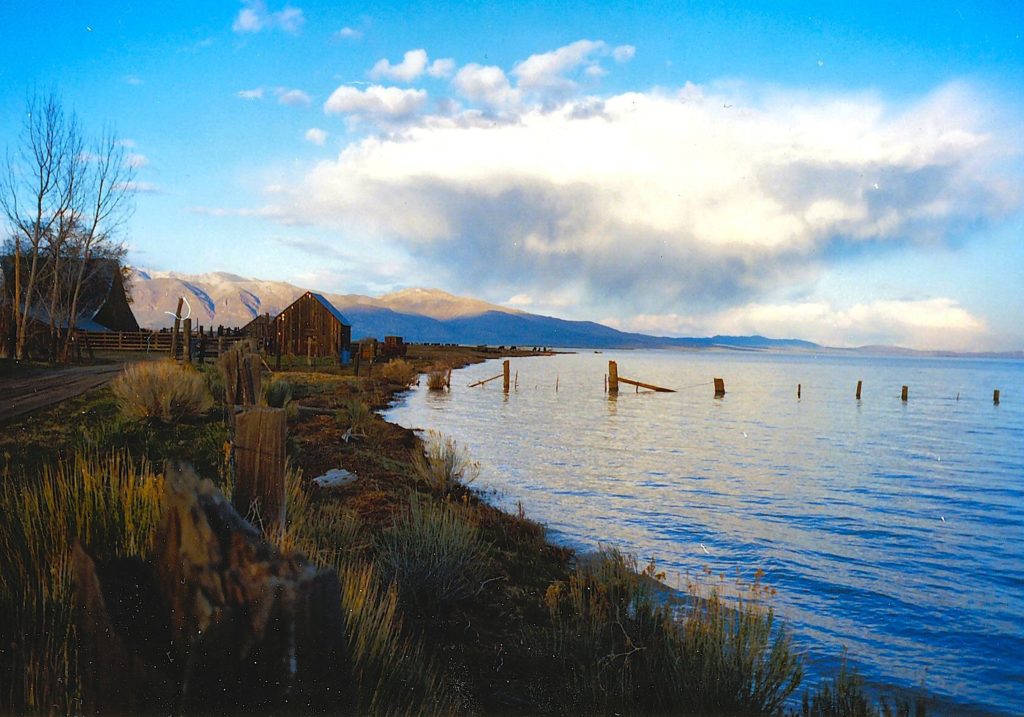
It should be noted that in 1911 was the first irrigation season of the Standish Water Company’s pumping plant on Honey Lake’s eastern shore.  In that year they provided water for 1,000 acres that was planted in sugar beets, with the Nevada Sugar Company providing the seed. No  one locally knew anything about growing sugar beets, but they learned quickly. One of the biggest problems encountered  with beet production was the amount of labor required. The problem was compounded as there was a local labor shortage, and then there were those who did not want to work in beet fields. To alleviate the problem 25 Japanese laborers were brought in to assist. Their tenure was brief, even though it was reported they worked twice as fast at a cheaper price.

There were two other problems that ended the experiment. First there was not an adequate water supply and the beets were substandard. It was not only a problem locally, but in Fallon as well for in 1917 the beet factory there closed.

Never miss a story, click here to subscribe.

The 1916 Railroad Blockade

Susanville Depot, January 1916

On January 2, 1916, it began to snow and depending where you were located, did it ever.  At Westwood, some records indicate fourteen feet of snow that month. That town was virtually cut-off, as the railroad in the winter months was the only link to the outside world. At Westwood Junction, the highest elevation of the Southern Pacific’s branch line had reported twenty feet of snow.  With the aid of a rotary snow plow, and four locomotives the line from Susanville to Westwood finally opened.

The NCO train near Amedee, January 1916. Courtesy of Marie H. Gould

The NCO Railroad that served eastern Lassen County was not as fortunate, because it had no backup like the Southern Pacific. It was just not the deep snow, but the  snow drifts and below zero temperatures that hampered efforts. After a twenty-one day blockade the NCO locomotives made it to Amedee and beyond.

Tim


Billiards . . .

From unknown photograph files

First, I have had this photograph in my archives for decades. It is frustrating because its unidentified. A great photograph., though.

There is some rich untold stories about the game of billiards and the discussions that took place during the games. . It is a facet locally, that has not been well chronicled. The Pioneer had a large billiard room with assorted snooker and pool tables. Those days are gone. In fact, I do not believe there is any public establishment that has a pool table in Susanville.

The billiard room, Story Club, Susanville, 1923. Courtesy of the Fruit Growers Supply Company

Tim

Susanville’s East Addition

North and Spruce Streets, Susanville, 1912-Mary Dale Folsom

On January 16, 1911, M.O, Folsom filed his map for the East Addition subdivision to Susanville. It was located east of the town and north of Halls Addition. The property was familiar to many, since it was the location of the racetrack and fairgrounds that had long since been abandoned. In the summer of 1912 work began to clear the property of sagebrush and grade streets. In addition, two speculative houses were built at North and Spruce Streets. The 300 lot subdivision created the following streets–First, Second, Third, Fourth, Fifth, Grand Avenue, Oak, Fir, Cedar, Spruce, Park and Ash. Folsom had North Street extended to his subdivision. The street had previously terminated at Weatherlow.

The East Addition contained a number of covenants. No property could be sold or transferred to foreigners, i.e. “Chinese, Japanese, negroes, Hindus or other objectionable races,” or as the Lassen Mail noted, “This addition will be for the Caucasian race only.” The East Addition promoted its healthy environment–one with a sewer system and which prohibited stables for livestock. Finally, and, what was important for property values, each house. constructed must cost at least $1,000, though in certain blocks that requirements was raised to $1,500.

To Support, Please Donate or Subscribe

The Roseberry House Re-opens

An early day advertisement when it was known the Green Tree House.

In 2020, the Roseberry House located at 609 North Street, Susanville which was the town’s only bed and breakfast operation was closed. After nearly a five year hiatus, it is now open again.

.The stately Roseberry House constructed in 1903, had a history over a hundred years ago catering to tourists. The house was constructed forThomas and Viola Roseberry. When Lassen Peak came alive as a real live volcano in 1914, area residents flocked to the mountain to take a look first hand. For Thomas Roseberry it was a fatal mistake for in August 1915, while climbing down the peak he died from a heart attack. Another  event occurred earlier in the month when the Emerson Hotel, located only two blocks from the Roseberry home was destroyed by fire.

Roseberry House, April 27, 2020

These circumstances forced Viola into action. She made some remodeling changes to her home and began to take in travelers and boarders alike, which she would do so for another decade.

Never miss a story click here.

European Immigration Patterns

Ben Neuhaus., a  native of Prussia came to Lassen County in 1865. Courtesy of Philip S. Hall

My catalogue filing bin is perpetually overflowing. Truth be known, filing and cataloging is not my favorite chore. There are some gems in those boxes, and this recent one has a tremendous wealth of material in a four page document, that would put to shame modern day planning documents, too much verbiage and light on facts. Just for record, I served as Lassen County Planning Commissioner from 2009 to 2020, so I am familiar with the topic.

With that introduction, I examined the July 1958 Standard Industrial Survey Summary Report for Susanville.  To understand fully of the fact filled document it even includes humidity levels of a given starting a 5.a.m, Noon and 5 p.m.  As to the community’s ethnic makeup of those foreign  born were from Italy, France and Canada. During the late 1800s, the foreign born residents were from  Ireland, Prussia and Great Britain.

Tim

P.S. – Another instance  of the details was an exact break ground as to the community’s ethnicity. It showed that Susanville had two Negro residents. Seasoned residents will know who they were, and as a matter of  fact a street is named in their honor.. Subscribers will receive this additional information.

The Williams Brothers–Morgan & William

The first Lassen County Courthouse and Hall of Records, 1908–David Zoller

These Welsh Brothers came to Susanville in the mid-1860s. The first to arrive William “Bill” in 1866, and followed by his brother, Morgan in 1867. The brothers, it should be noted, were carpenters. In February 1867, Bill Williams was awarded the contract to build Lassen County Courthouse at  cost of $9,850. The two men were kept busy, and the courthouse was completed on October 28, 1867. The brothers  dabbled in other pursuits including homesteading, Morgan filed on 160 acres, adjoining the Goodrich Ranch at Mountain Meadows, His brother, claimed land at Devils Corral along the Susan River, There is a small stream located there and is known as Williams Creek.

The documentation of their lives in the Susanville region is sporadic. For instance in fall of 1875, Morgan took his family on an extended trip to Europe. In 1877, the Williams Brothers were busy constructing rental houses in Susanville. By 1880, William Williams relocated to Sacramento where he died in 1883. In 1888, Morgan Williams sought greener pastures in New Mexico. He died in 1893.

Tim