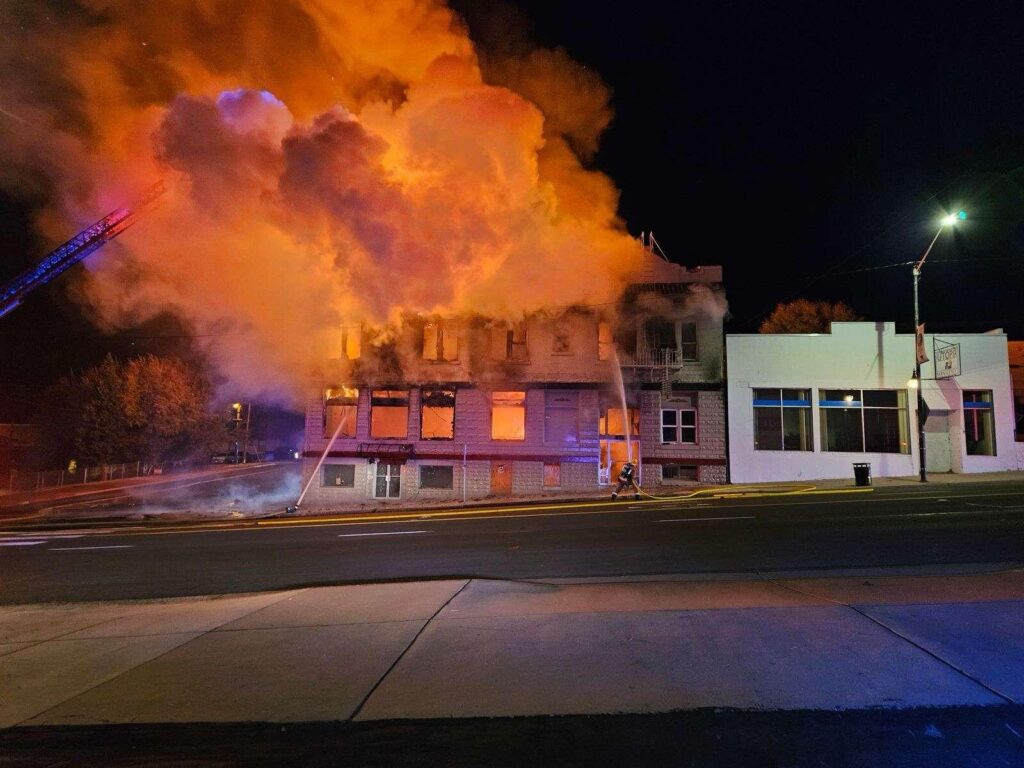
St. Francis Hotel fire, November 1, 2024-Susanville Fire Department
It was a year ago today, that Susanville’s St. Francis Hotel went up in flames. It was an arson fire, and suspect, Tahne Willow Orr was later arrested. Orr would later enter a guilty plea and on July 22, 2025 she was sentenced to eight years in prison.
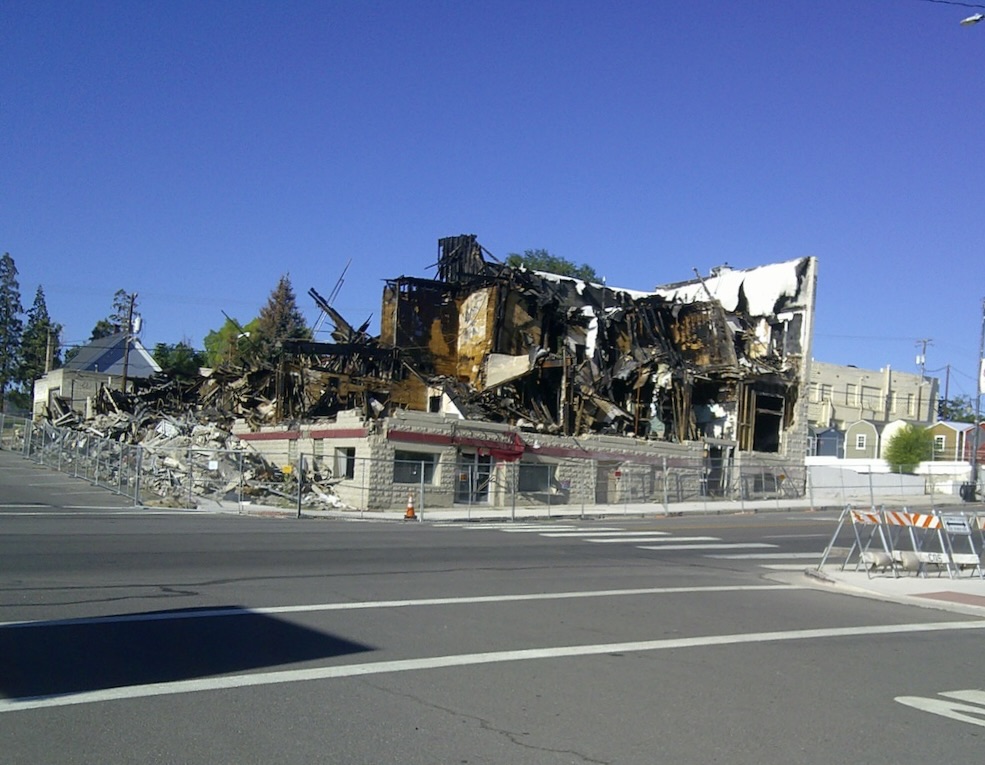
Ruins of the St. Francis Hotel, August 3, 2025
Cleanup of the burned out ruins was another matter. The City of Susanville would have to go through the abatement process to get job done as the owner was difficult. In July, Lassen County Superior Court appointed Dan Collins as Receiver to oversee the clean up that was estimated at $496,146.50.
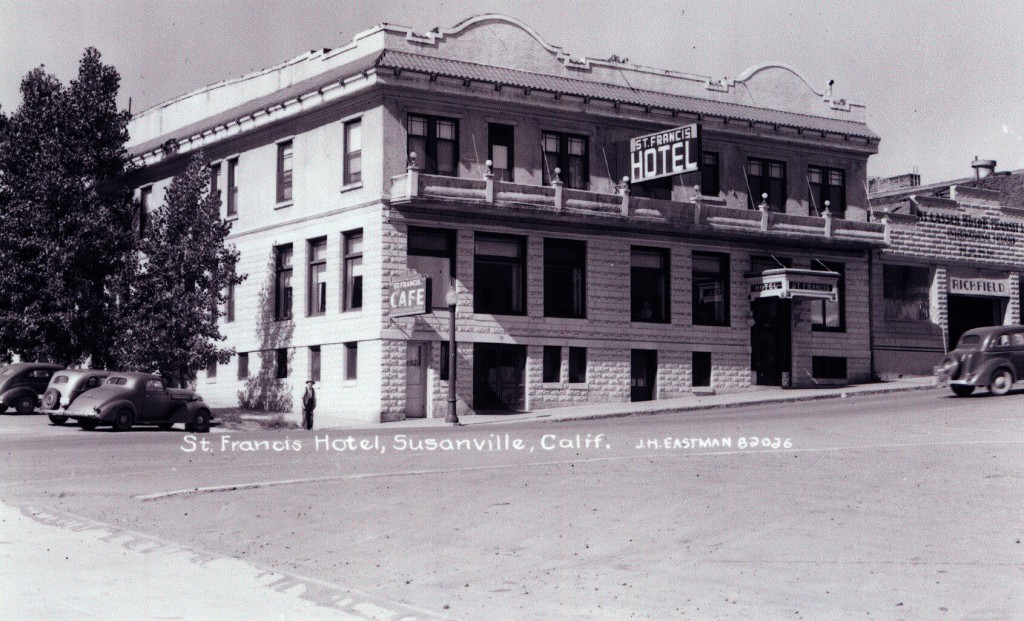
Saint Francis Hotel, circa 1940.
The actual work on cleaning up the site began in late September and it is almost complete. It is strange to see the site as a vacant lot. When I have an opportunity I will take a photograph to share with the out of area readers.
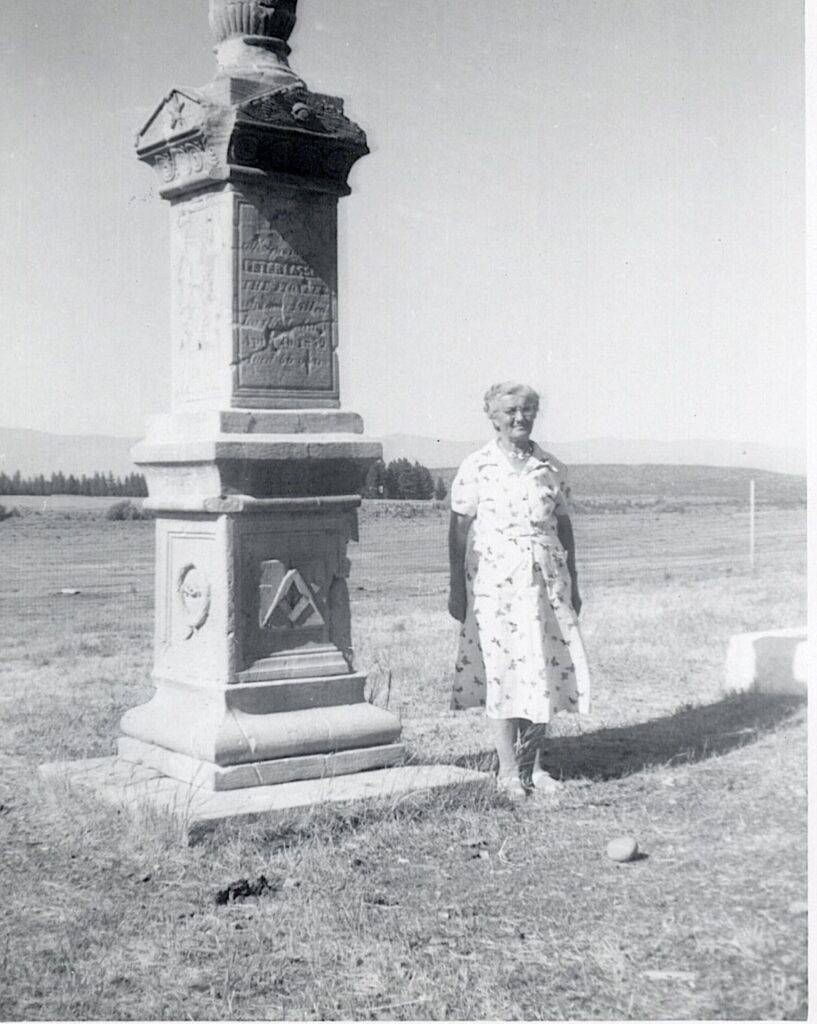
Today marks the 225th anniversary of Peter Lassen’s birth. A lot of ink has used chronicle his life, and some on his demise. Lassen met an untimely death on April 25, 1859 in the Black Rock Desert some 125 miles east of Susanville. In November his remains were brought back for burial in the Honey Lake Valley and placed near the majestic Ponderosa pine tree where he camped there in 1855.
Lassen’s funeral was chronicled in the Territorial Enterprise newspaper of Virginia City. The paper noted: “The remains of Peter Lassen, the old pioneer, were buried with Masonic honors, Sunday November 27, on his own ranch at Honey Lake. The attendance upon that occasion, was a very large one for that place.”
From time to time visitors were critical that the residents of the region did not maintain Lassen’s gravesite. In 1889, the Reno Evening Gazette commented: “A reporter visited the grave of old Peter Lassen and says the monument which is very soft rock rock is fast crumbling away and if neglected in a few years there will be no monument left to the mark the grave of the old pioneer. The monument bears date of April 14, 1859. We think that the citizens of Lassen County should in some manner raise sufficient money to purchase and erect a handsome monument in place of the old one.”
From that time forward suggestions were made to do something, not only for better care of the monument, but improvement to the grounds as well. Nothing ever materialized but talk, and no action. In the early 1900s, a proposal was made to move the monument and Lassen’s grave to a more fitting location–Sutter’s Fort, Sacramento. While a controversial hot topic for awhile, it too subsided.
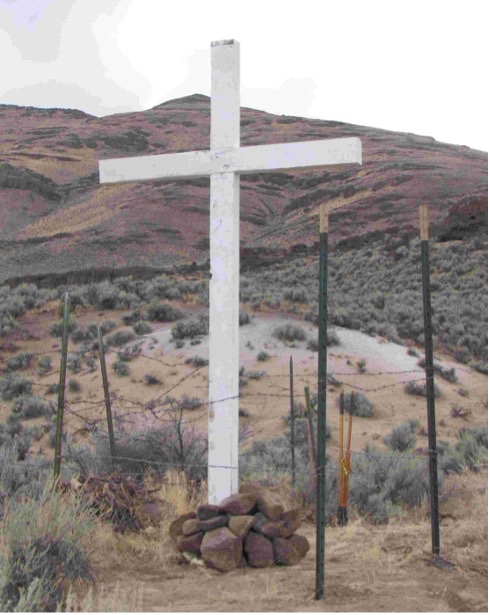
Smoke Creek Cross, October 11, 2025 Courtesy of David Davis
Note: The following information was provided to me by David Davis, who graciously allowed me to share with the readers herewith. We previously explored the Smoke Creek Cemetery. In 1968, a cross was built on the hillside by members of the Lassen County Historical Society. By the early 2000s the foundation of the cross rotted away and the cross toppled over. Here is a history of the topic and the cross replacement.
HISTORY AND MEMORIALS REPORT
October 19, 2025
David A. Davis, General William Passmore Carlin Camp 25 Camp Commander/Historian/Civil War Memorials Officer.
SMOKE CREEK CROSS
October 11, 2025
For background, the following is modified from my report of August 13, 2023: Camp Smoke Creek was located at the old Smoke Creek Station near the Nobles Emigrant Trail. It contains a burial plot that contains the grave of four soldiers:
Pvt. John Smith; Co. C, 2nd CA Cav., d. Jan. 18, 1863, shot by Lt. Williams at Deep Hole
Pvt. Gustavus W. Plass; Co. C, 2nd CA Cav., d. Nov. 9, 1863, typhoid at Smoke Creek
Serg. William McCoy; Co. D, 1st NV Cav., d. Jul. 3, 1864, unknown causes
Pvt. David O’Connell; Co. B, 2nd CC Cav., d. Nov. 17, 1865, Killed by Indians at Pine Forest
Following the history would take some doing. Co. C, 1st Nevada Cavalry was stationed there in late 1863; Co. A, 1st Nevada Infantry was stationed there July through October 1864; and Co. D, 2nd California Cavalry was stationed there July 1865 through April 1866. Co. B, 2nd California Cavalry was mainly stationed at Dun Glen June 1865 through April 1866. They made an incursion into the Black Rock Mountains in the Pine Forest District in November 1865 where O’Connell was killed. It does not say where he was buried. Detachments of other Nevada and California units were probably stationed there or passed through. Deep Hole was a station located about 20 miles east-northeast of Smoke Creek and a Nevada Cavalry detachment was stationed there in April 1865. 2nd Lt. Henry W. Williams of Co. C, stationed at Smoke Creek, shot Smith at Deep Hole and then deserted his command because of it. He was dishonorably discharged Jan. 27 9 days after the shooting.
Smoke Creek Cross 1981-Tim Purdy
The Smoke Creek Ranch 7.5′ quad has the ruins and a grave marked. The public land urvey location is T31N, R18E, Sec. 16, SW/4 of the NW/4. The Lassen County Historical Society located the graves in 1964 and placed a large wooden cross there in June 1868. The site is on property owned by Jackrabbit Properties.
In the intervening years, this cross rotted off and fell over. On October 11, Commander David A. Davis, JVC Donn Dalton, Don’s nephews Sonny and Heath Victor, and Jay Carter who helps with restoration work at the Hillside Cemetery made a trip to the site and erected a new cross.
The cross was made by Donn and SVC David Perdue from 4” by 6” redwood boards taken from a demolished deck and painted white. The boards were bolted together on site, and the cross was cemented into the ground with rocks piled around the base. Commander Davis made a temporary metal marker with the Camp name and dated punched into it that was nailed to the cross.
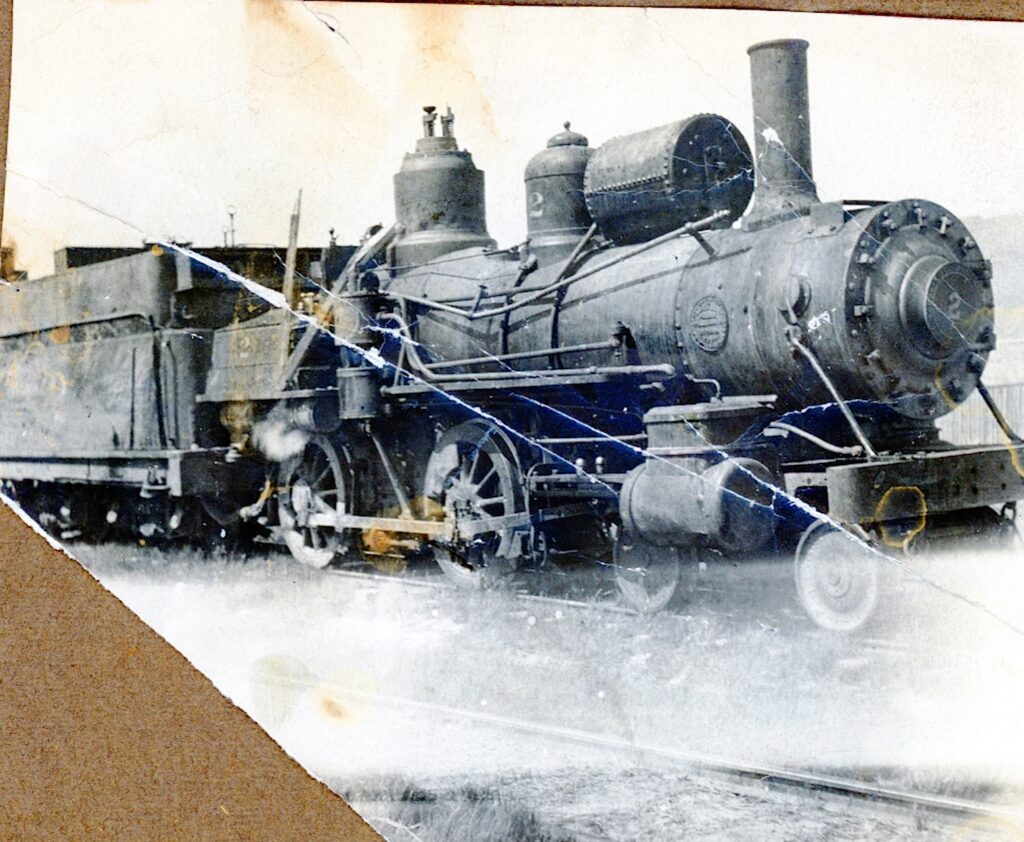
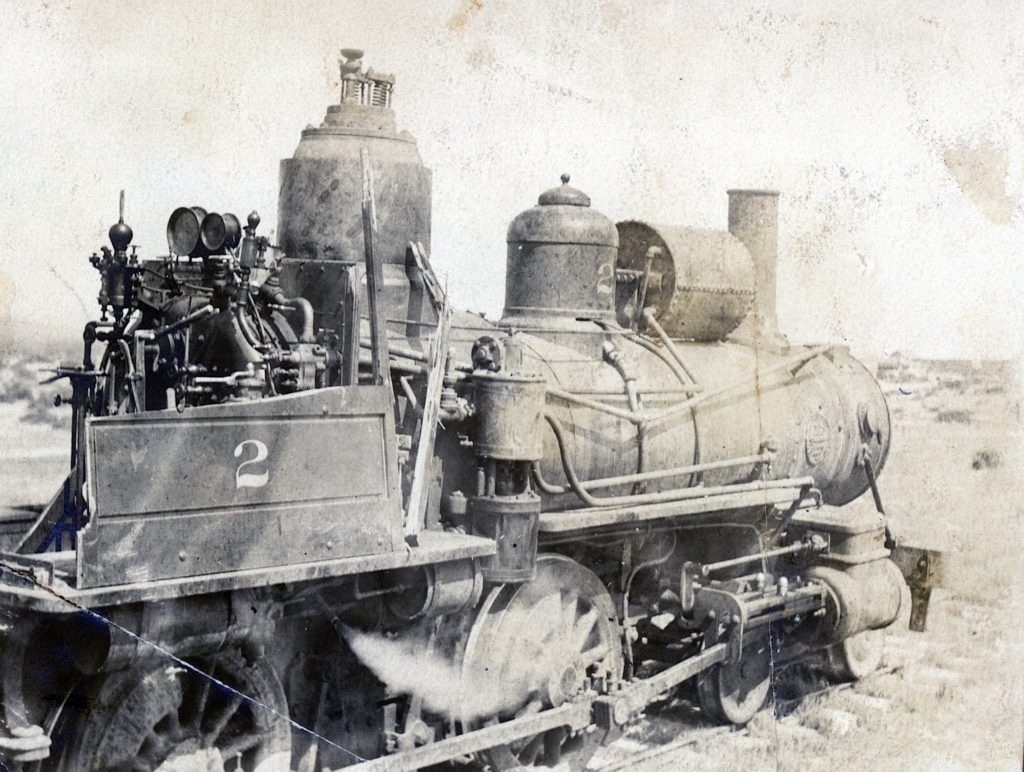
This is for the railfans out there. While going through the filing /catalog bin, I came across additional photograph of the NCO’s No. 2 locomotive. As a matter of fact I also came across a Western Pacific Railroad construction photograph taken near Constantia, that I might include in a possible 2027 Calendar, but that is just too far out me to contemplate.
The No. 2 at Amedee, 1909—Marie Gould
In 1884, the Nevada & Oregon purchased its No 2 Baldwin locomotive new for $4,750. According to David Myrick’s NCO railroad locomotive roster the No. 2 was retired on December 31, 1918—presumably scrapped.
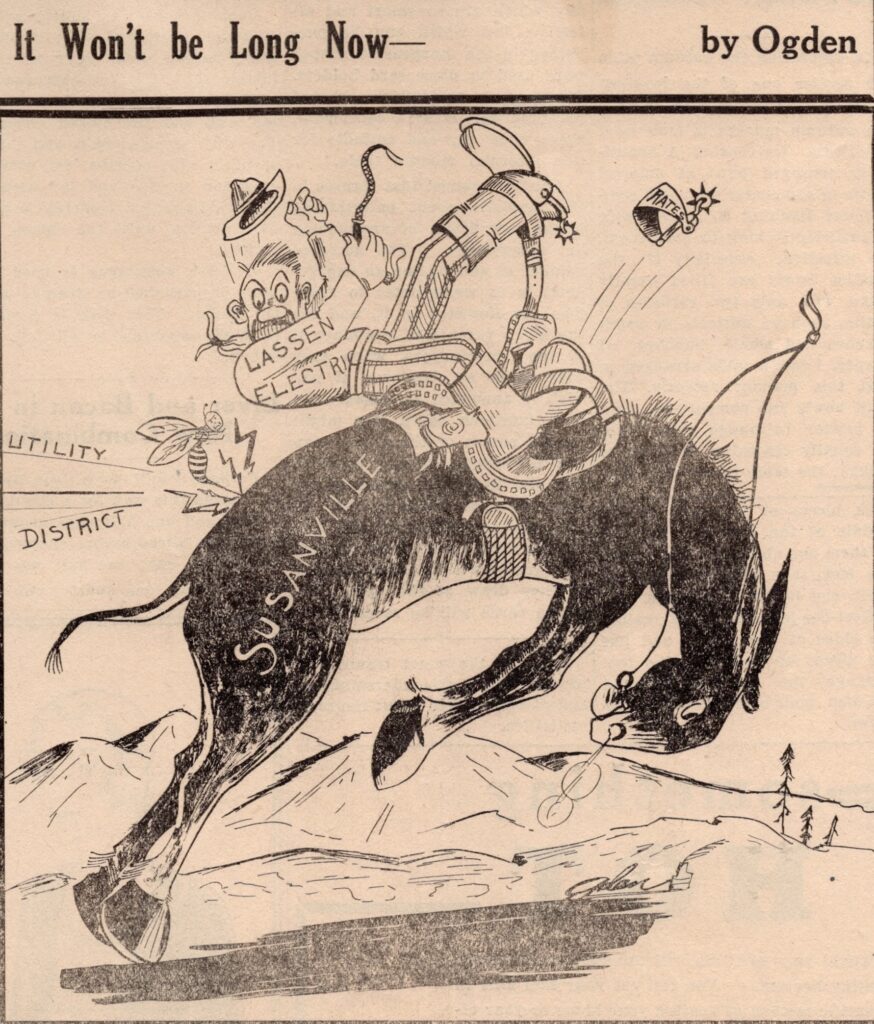
I thought this editorial cartoon seemed appropriate since tomorrow, at the Lassen Municipal Utility District (LMUD) board meeting will adopt rate increases. May be the rate payers will begin a stinging revolt that they did in the 1930s and the 1980s.
After all, the rate payers have a paid for the multi-million boondoggle of the Hayden Hill transmission line that is still not resolved. That line, it should be noted, is not even LMUD’s service area. It will be interesting to see the final costs associated with the former Bank of America building that is to be the future office of LMUD. That is what they say, is tip of the iceberg.
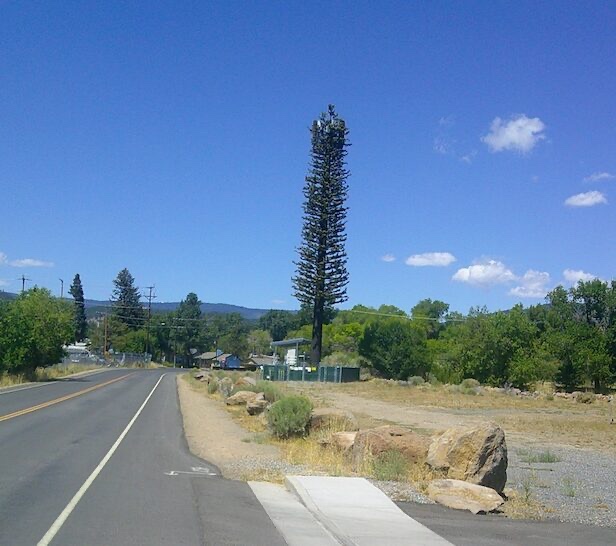
Well, it was bound to happen, though it was late in the game. Last year, at the strange intersection of Chestnut Street, Grand Avenue and Paul Bunyan Road sprouted Verizon’s cell tower. It was designed to look a like a tree, but it stands out like the proverbial sore thumb. There are about a dozen cell phone towers designed to look like a evergreen trees in Lassen County. The differences between those and one in Susanville is that they there in forested areas, and do not stand out. So there you have it, the town’s newest landmark.
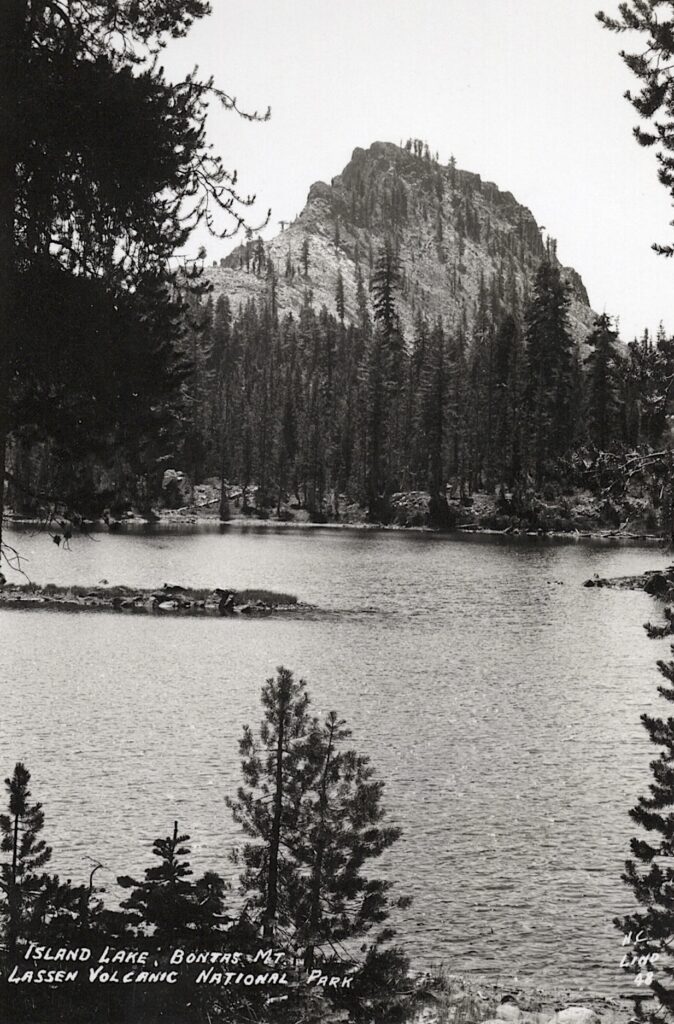
This rarely visited lake is located in the southeast section of Lassen Volcanic National Park. As there is a small island in the lake, hence the name. Civil Engineer, Arthur W. Keddie (1842-1924) named the peak after his good friend, Dr. J.H.C. Bonte, For many years, Bonte was the Rector of the St. Paul’s Episcopal Church in Sacramento and later Professor of Legal Ethics and Secretary of the Board of Regents of the University of California.
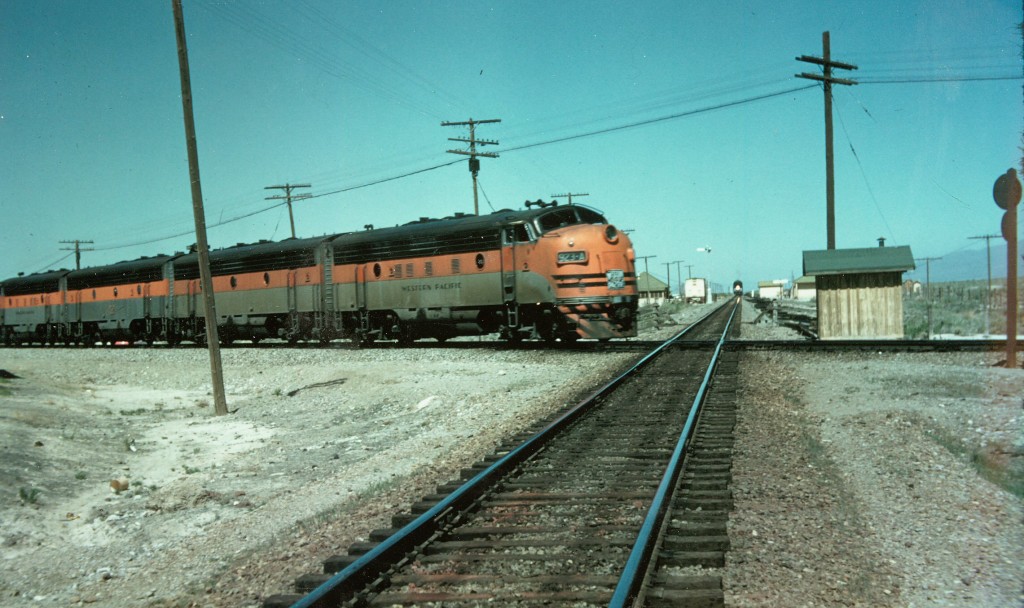
On September 2, 1931, a fifteen-year-old boy while hopping on a Western Pacific freight train at Flanigan fell under the wheels and was horribly mangled at the scene. Reports from the Coroner’s Inquest and newspapers accounts were sketchy.
Accordingly, 15 year old Paul McArthur left on a Southern Pacific freight at Reno. The Southern Pacific train stopped at Flanigan to allow the Western Pacific to travel through. At the point McArthur got off the Southern Pacific train and tried to hop on the moving Western Pacific train slipped and fell. After the Western Pacific passed through, Southern Pacific employees noticed the boy lying on the ground. They gave him first aid and took him to Wendel where the Allen & Edenholm ambulance was summoned. McArthur was apparently in a state shock and he told Edenholm, the ambulance driver, where he was from, and that he did not appear to suffer. He died shortly after his arrival at Riverside Hospital in Susanville.
When the Coronoer’s jury was summoned the next day, it deemed not necessary for the trainmen to testify, since no one actually saw what happened. When Edenhom concluded his testimony he stated, “McArthur was just his beating his way, and he didn’t have a cent to his name and he hadn’t eaten for several days. It is a pitiful case and very unfortunate.” The Coroner’s verdict” Shock from injury in railroad accident. He was a trespasser on freight train (Western Pacific R.R.) and accidentally fell under train. Train crushed both thighs.”
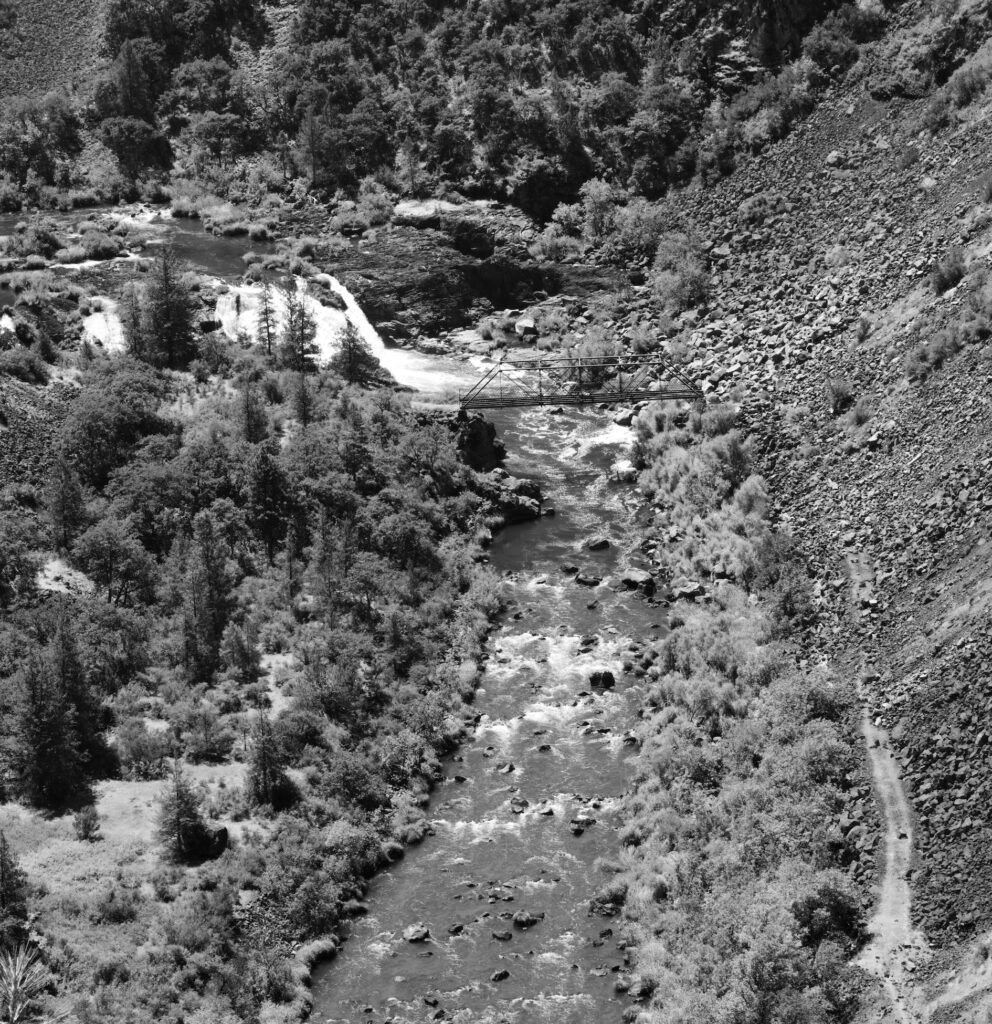
Personally, I think it is interesting to do a comparison of then and now scenes, to see what changes have occurred. I have a most wonderful volunteer who has been scanning my old negatives. Earlier this year, she was in the Fall River country and she took photograph from approximately where the one I had published a few years ago of the Pit River Falls. Of course in that post I noted that this original route to leave Fall River Mills to head west to the Sacramento Valley, In 1930, the route was abandoned when Highway 299 was constructed.
The final segment of the bear dance along Baxter Creek, 1900. Sponsored by Anna Stewart
“One of the truths about historical research is that it is never finished. So many sources are consulted, there are always more to be added. There are certainly more sources of information about early Bear Dances and about early Mountain Maidu life that I could not get to when researching this book.”— Leigh Ann Hunt, Preface for the 1996 Edition of Rite of Spring: A History of the Mountain Bear Dance .
Rites of Spring is Leigh Ann Hunt’s thesis for Master of Arts of Anthropology at California State Unversity, Sacramento, 1991. I met Leigh Ann back in the 1980s when she is doing her research. In 1996, the Lassen County Historical Society published Leigh Ann’s thesis. I am not if it is still available, though I highly recommend it.
One of notable inclusions is Edith Young’s notes, a field matron in Susanville, who was only such employee in the Greenville Agency of Bureau of Indian Affairs. Young was in Susanville during the 1910s, and I, too, have some of her observations, and I think a possible photograph of her. I will add it to my to do list.