Category Archives: History

Lassen County – Willow Creeks

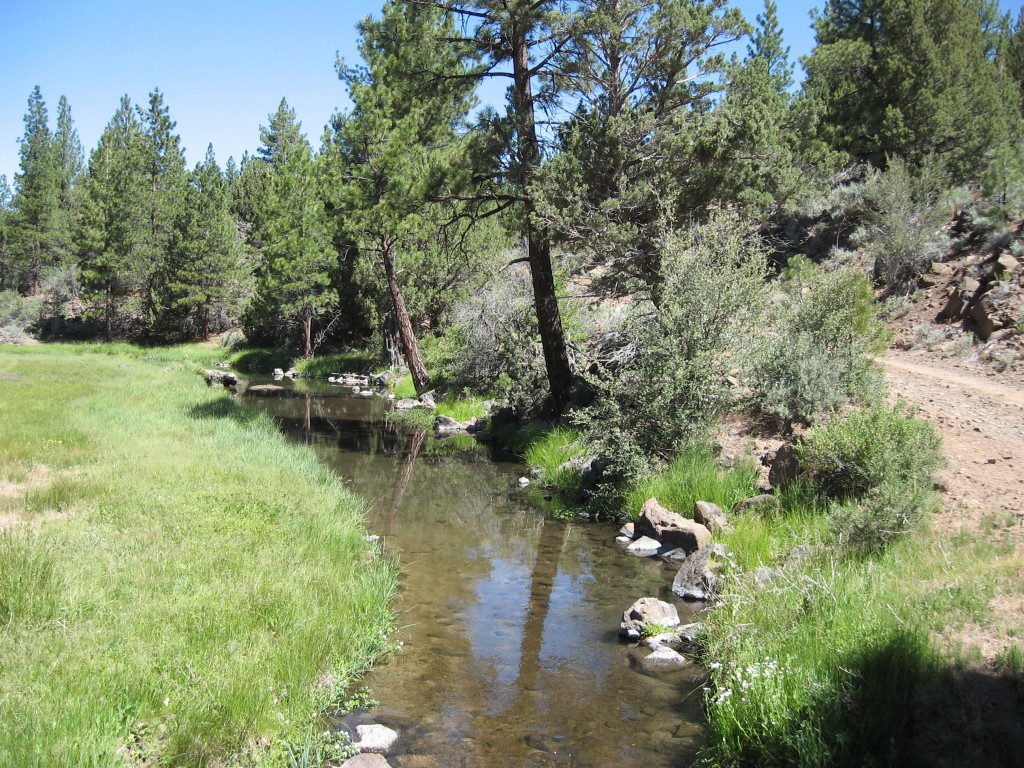
Upper Willow Creek, 2013. It was this creek that the various promoters of Eagle Lake project were to use the natural channel to deliver water to the Honey Lake Valley.

No, it is not a typo, but just to point out that in Lassen County there are three Willow Creeks, and over 200 in the State of California. It is also interesting all three Lassen County Willow Creeks flow in a different direction.  First you have Willow Creek in the northern portion of the county, with its headwaters near Hayden Hill as a reference point and flows in a northerly direction. The second Willow Creek begins on the east side of Eagle Lake and flows in a southeasterly direction. The third Willow Creek, the shortest of the the three is located near Doyle and flows in a easterly direction.  This creek, though of late, has been dubbed Willow Ranch Creek, to distinguish it from other Willow Creeks, and so named from the historic Willow Ranch, which is another story.
Never miss a tale, click here.

Malvena Gallatin

Gallatin, Malvena453
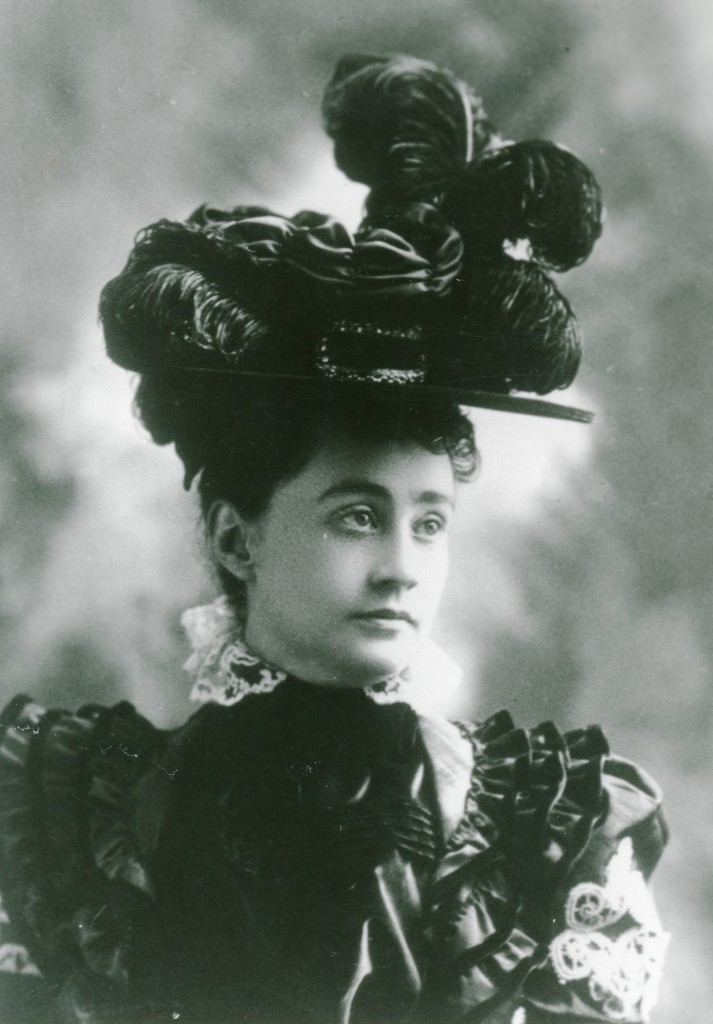
Malvena Gallatin. Courtesy of Wyn Wachhorst

This is certainly a tale of two Gallatins—Albert and Malvena. Last year I wrote about Albert and how he acquired the properties around Eagle Lake primarily for ranching purposes, i.e, summer grazing range. Malvena saw the lake for its aesthetic and recreational attributes. While she could have easily denied public access to the south shore, after all she owned nearly all of it, along with some 40 miles of shoreline, she did not. The south shore that later became known as Gallatin Beach was popular with the locals. This was to her benefit, more lake visitors equaled more complaints about the road conditions to the south shore. In 1913, she did a first at Eagle Lake—she built a summer home. More about the Gallatin House in the future. Yet, it was the increasing water level at Eagle Lake, that she accommodated Leon Bly and his proposed project to tap the lake to provide a water supply for the Honey Lake Valley. Years later she had regrets when the lake level dropped so low, reducing her property values. She sued and lost, to prevent further tapping of the lake. After all she had plans to sale the property, in the 1930s, for over a million dollars to developers for a recreational resort. The reason she lost was that the agreement she signed with Bly, the lake had not reached agreed upon lake level, but then no one thought the lake would ever drop so low.

Never miss a story, click here to subscribe.

Honey Lake Produce

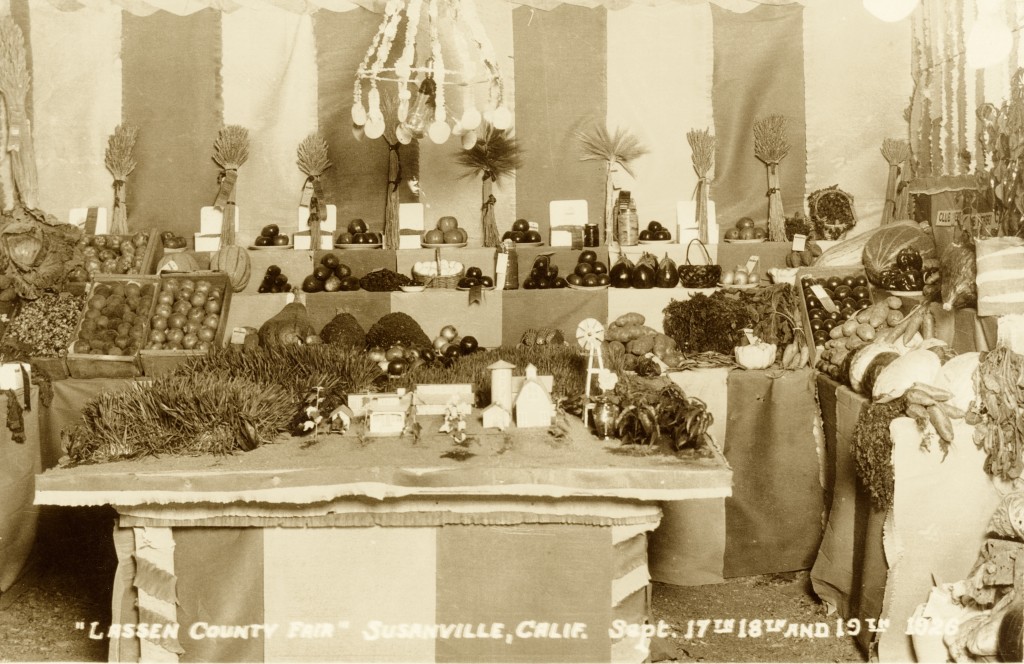
Produce exhibit Lassen County Fair, 1926.

Tomorrow marks the return of the farmer’s market in Susanville.  Please note the location has changed and it is on Pancera Plaza, Main and South Gay Streets, and not the Susanville Depot. When the big lumber mills were established it was a bonanza to the local agricultural community. In 1924, the Fruit Growers Supply Company purchased the following for its workforce.

300 pounds of fresh apricots 25,000 pounds of apples
500 pounds of asparagus 5,000 pounds of beets
4,000 pounds of green beans 21,000 pounds of cabbage
3,540 pounds of cucumbers 1,270 pounds of sweet corn
10,400 pounds of carrots 10,500 pounds of cauliflower
2,200 pounds of celery 5,200 pounds of grapes
12,600 pounds of watermelon 17,560 pounds of other melon
11,600 pounds ofgreen onion 50,000 sacks of dry onions
13,400 pounds of peaches 100 pounds of pears
1,000 pounds of peppers 13,800 pounds of tomatoes
89,200 pounds of beef 24,500 pounds of veal
33,600 pounds of pork 2,200 pounds of turkey
3,860 pounds of poultry 1,300 cases of eggs
21,800 pounds of butter 14,220 pounds of ham & bacon
117,500 pounds of flour

Never miss a story, click here to subscribe and support.


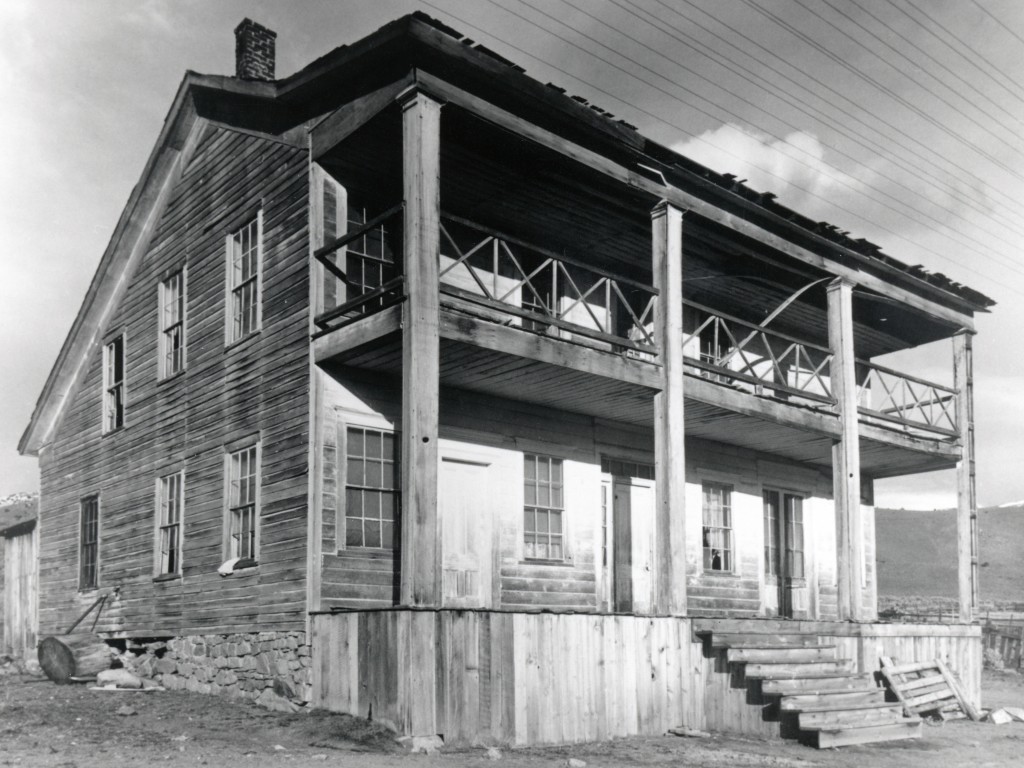
Antelope Station

The Antelope Station, date unknown. Courtesy of Nevada Historical Society

It was a popular stage station in the upper end of Long Valley on the Susanville–Reno Road.  It was established in the mid-1860s by Jonathon C. Roberts. In 1873, Roberts sold to David F. Evans and for many years it was known as the Evans Ranch. In 1882, when the Nevada-California-Oregon (NCO) constructed its railroad there, they established a station named Oneida, for the Sierra County Township of Oneida. On June 6, 1889, a post office was established there named Purdys—for Solomon Purdy who came to Sierra County in 1852, from Oneida, New York and eventually sold to David F. Evans. In 1891, the Purdy Post Office was moved to a site known today as Bordertown. Travelers of U.S. Highway 395 between 1931 and 1976 will know the location of the old Antelope Station as the first site of the California Agricultural Inspection “Bug” Station.

Never miss a story, click here.

At A Glance: A History of Susanville

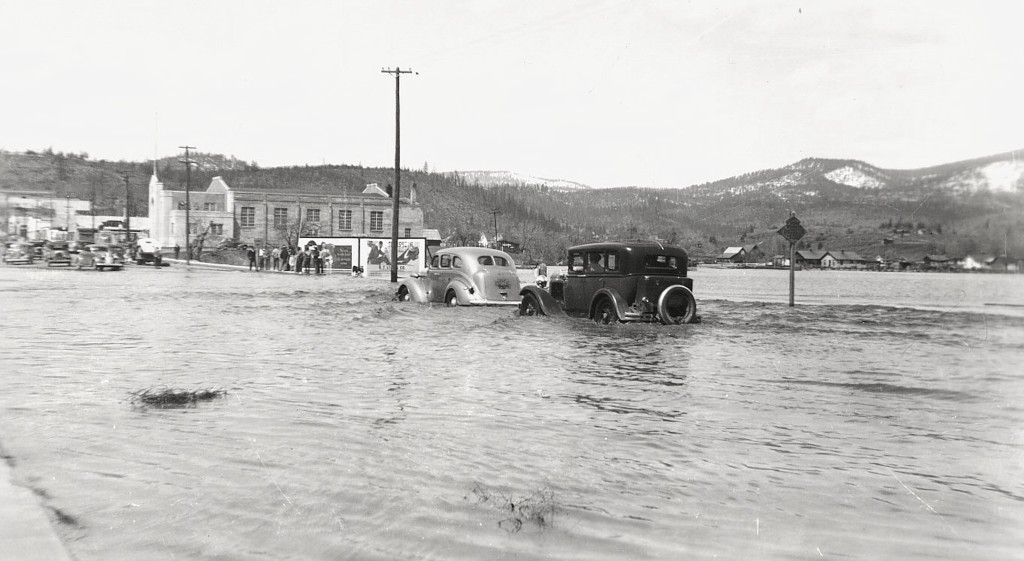
Piute Creek flood of April 9, 1938. Courtesy of Margaret A. Purdy

In February, I inaugurated  a book-of-the-month, that featured Sagebrush Reflections. After all proceeds from book sales not only help support operations, but help finance future publications, in this case the stories behind the brands of the Pioneer.

With that in mind, how well do you think you know Susanville? This book is a comprehensive look of one of the oldest communities of the western Great Basin may have you thinking twice. Weather is a universal topic, yet do you know what year there was only one winter storm or the other extreme with a record 36.7 inches of precipitation? This is the tip of the iceberg of topics explored.

Of course, major historic events from its fires that led to the creation of the city to when lumber was king and with its decline, the prison industry became a hot topic. Interspersed are fascinating tidbits—telephones introduced in 1911 to the last passenger train in 1933.

To learn more about this book and to order, simply click here.


June Preview

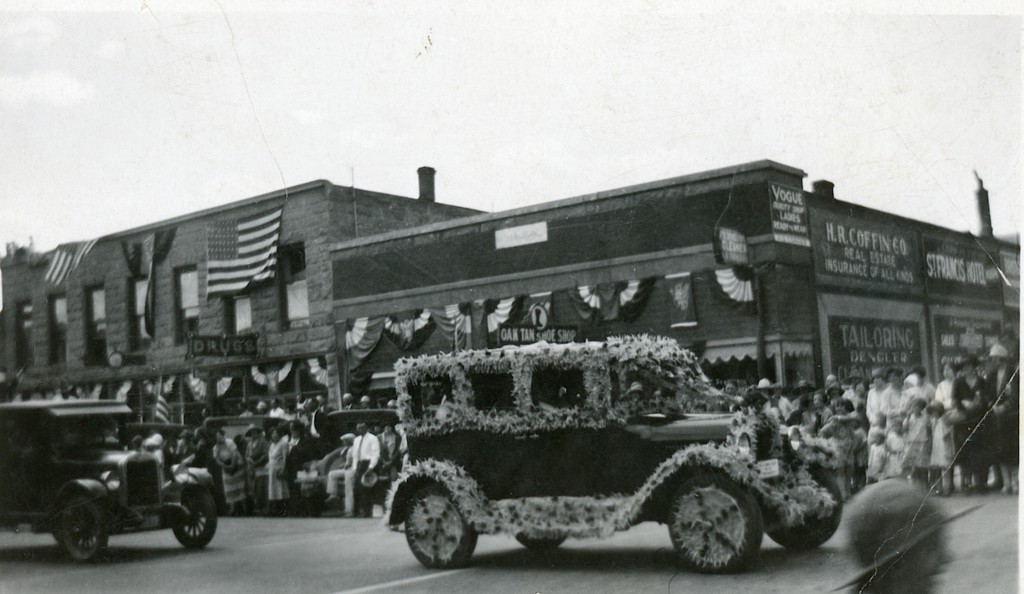
American Legion Convention Parade, Susanville, 1926. Courtesy of Margaret A. Purdy

A little bit of everything this month. Enjoy!

At A Glance: A Susanville History 6/1/16
Antelope Station 6/2/16
Honey Lake Produce 6/3/16
Malvena Gallatin 6/4/16
 Lassen County – Willow Creeks 6/5/16
 Knoch – End of an Era 6/6/16
 Lassen High Trivia 6/7/16
 Jeremiah Wood and a family legacy 6/8/16
 Sierra Army Depot 6/9/16
 Milford School 6/10/16
 Summer Solstice Tour 6/11/16
Standish – Then & Now 6/12/16
 Juniper Lake 6/13/16
 Rosebud, Nevada 6/14/16
 Lonely Graves – Rosie Ross 6/15/16
 That old barn 6/16/16
 Those rowdy camp followers 6/17/16
 Lassen County Acquires Property 6/18/16
 Antelope Lake 6/19/16
 Frederick Zarbock, a desert homesteader 6/20/16
 Susanville bans fireworks 6/21/16
 Homer Lake 6/22/16
 Adin 6/23/16
 Abe Jensen Ranch Brand 6/24/16
 Lake Almanor Country Club 6/25/16
 Susanville’s City Hall 6/26/16
 Susanville – Sunkist Street 6/27/16
 Painter’s Flat 6/28/16
 Sorsoli Hotel 6/29/16
July  Preview 6/30/16

Memorial Day

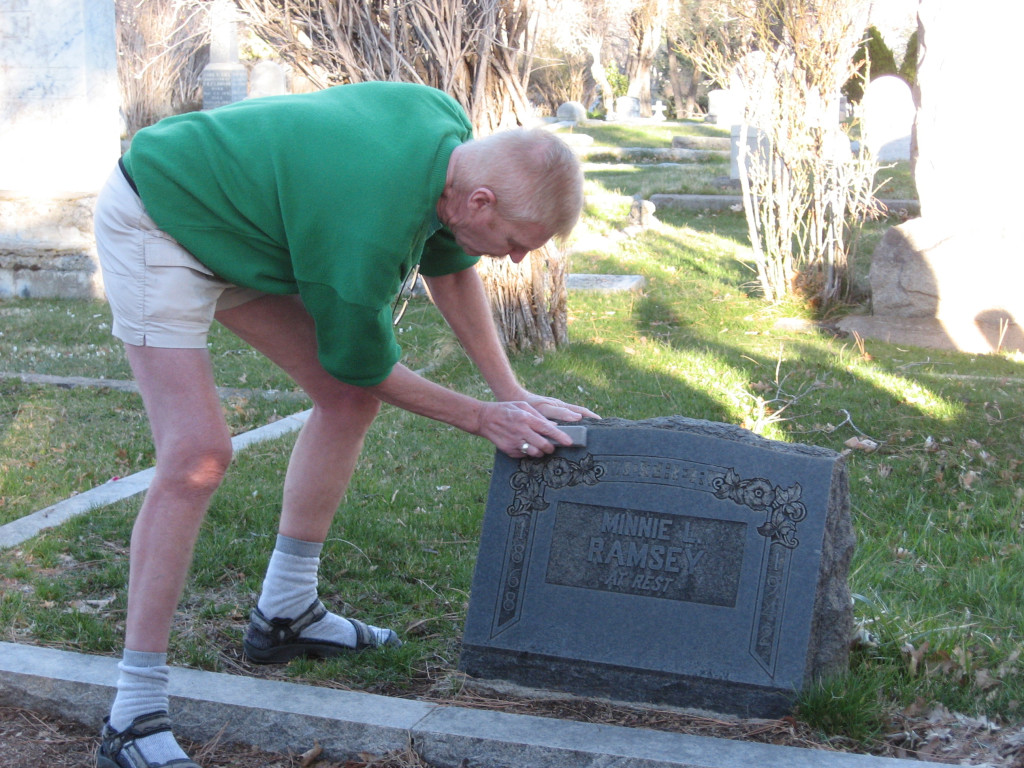
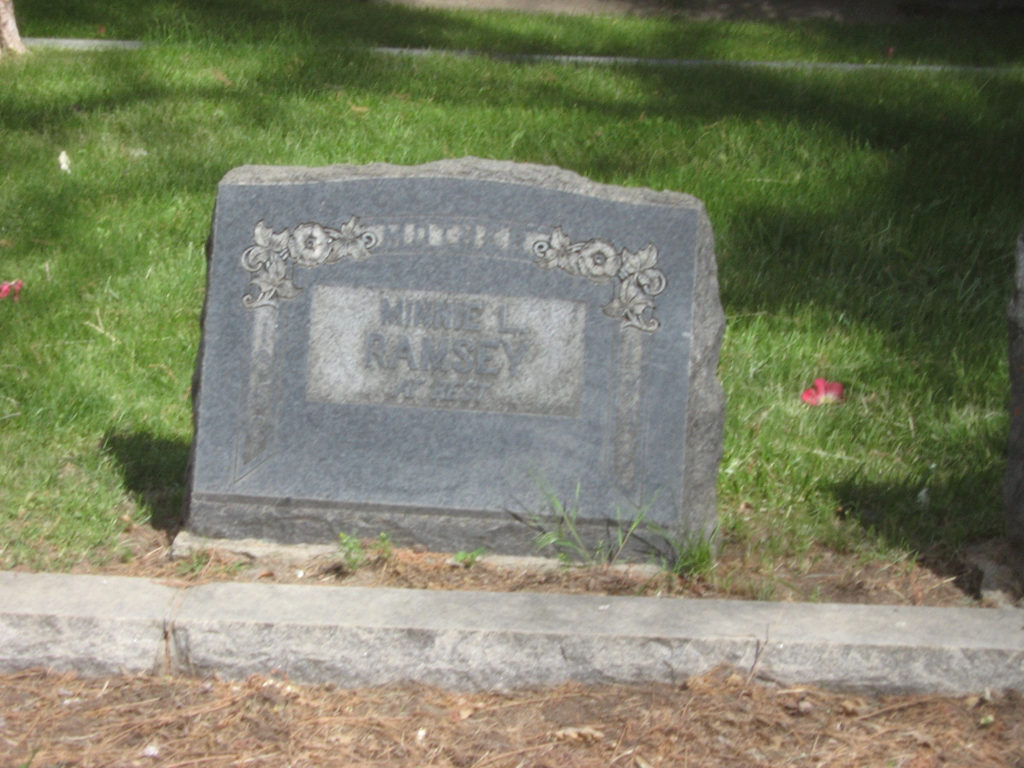
Demonstration cleaning a headstone during the St. Patrick’s Cemetery Tour, 2016.

I may never forgive Congress when they corrupted holidays to make three-day weekends.  One of the victims was Memorial Day.  As it was the custom, prior to the change, everyone went to the cemeteries on that day. Now, it is whenever you get around to do it, though unfortunately time has taken its toll and fewer people observe the original intent of the holiday.

However, I still follow tradition. Actually, it takes me several weeks to take care of everything.  One project that I am slowly working on is the polishing of headstones. It is slow and tedious but the final result is worth the effort.  During the St. Patrick’s Cemetery Tour I did a brief demo on the grave of Minnie Ramsey.  The technique is simple, a pumice stone and lots of elbow grease. One can spray the surface with water, but that is a messy procedure, and dissolves the pumice stone quickly. If you want to go the extra mile, once the grime is removed, spray with WD 40. Let it sit for awhile ten minutes or so, and then use a damp cloth to do the final cleaning. This removes any residue of the WD 40, which is necessary otherwise dust, etc would cling to the stone.

Progress, slow, but sure. May 19, 2016
Progress slow, but sure. May 19, 2016

Never miss a story, click here.

Thomas Tucker

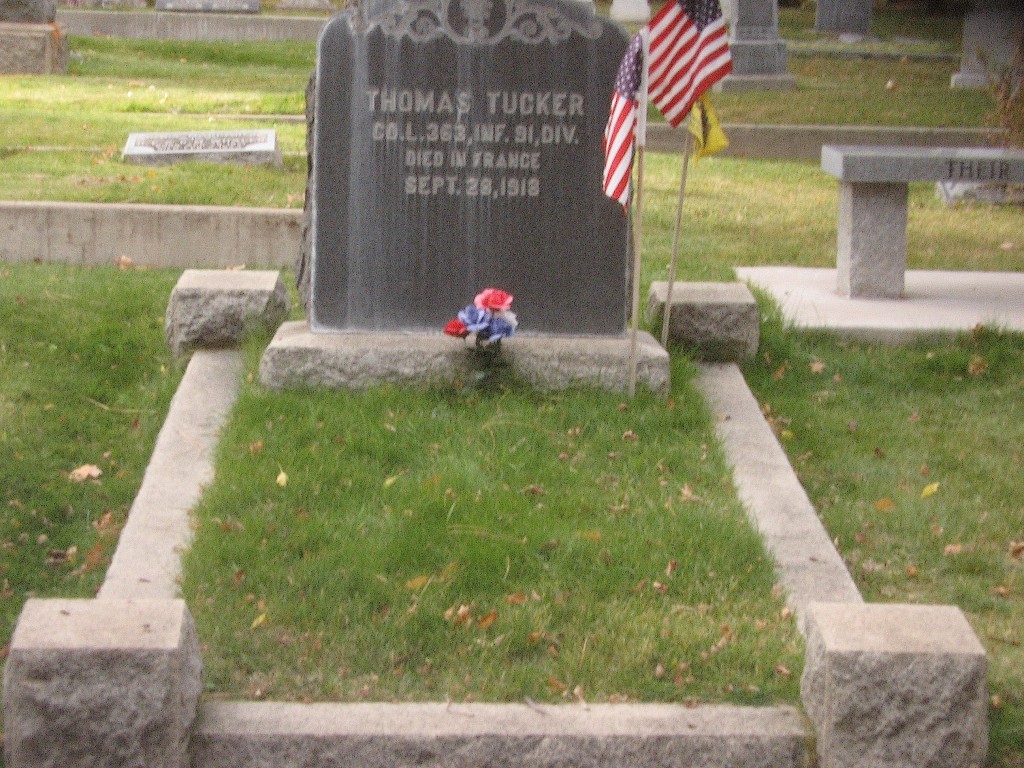
Thomas Tucker's headstone prior to cleaning.
Thomas Tucker’s headstone prior to cleaning, November 2014.

Thomas Tucker, a Maidu born at Big Meadows (now Lake Almanor) in 1895 and moved to Susanville at an early age, where he was raised by his aunt and uncle Cap and Emma DeHaven. He first attended the Greenville Indian School, where he excelled in his studies. He was noted for his gifted vocals in singing, as well as his athletic abilities. When the U.S. entered World War I, he enlisted. On the fateful day September 28, 1918 he was killed in action in France, becoming the first casualty from Susanville in the War. His comrades held him in high esteem and when the local American Legion Chapter was formed in 1920, it was named in his honor, Thomas Tucker Post No. 204. In 1940, a tree was planted in his memory at the Lassen County Courthouse, and a small marker placed with his name. Continue reading Thomas Tucker

Dan McClane – Hayden Hill Miner

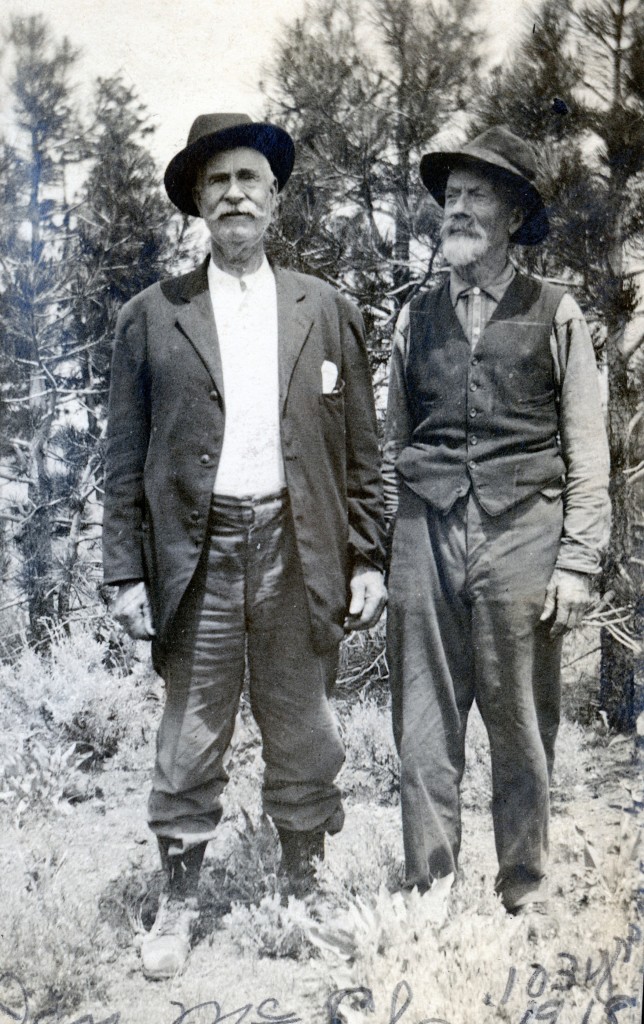
Dan McClane (left) and J.S. Underwood, Juniper Mine superintendent
Dan McClane (left) and J.S. Underwood, Juniper Mine superintendent, 1918 at Hayden Hill, 1918. B. Dorsey Collection

In the late spring of 1916, two men, Clarence Williams and Dan McClane set off on horseback on a prospecting trip. It does not appear on the face that remarkable, until you examine the ages of two men–Williams, 36 and McClane 101. That is correct a hundred year old man prospecting on horseback. The duo left the Williams Ranch in Willow Creek Valley, now owned by Five Dot and first ventured to look at the abandoned mines of adjacent Round Valley. From there they went all the way to the top of Green’s Peak looking for the fabled “Grabel’s hole.” The Grabel was a rich lode, that falls into the category of the lost mine tales.  They then ventured down to Rongstock Canyon, back up and over to Papoose Meadows and numerous crooks and crannies along the way. Then back over Gallatin Peak and back to Willow Creek Valley. In all, Williams estimated they traveled nearly forty miles that day. McClane it should be noted came to Lassen County in 1872, where he mined there for over forty years.

McClane’s advice for longevity, “Don’t worry about anything, don’t think about getting old, eat plenty of food, but not too much, take regular sleep four times a week and work like the devil at all times.” McClane died at the age of 105 in 1920.

Never miss a story, click here to subscribe.


Hallelujah Junction

The junction as it appeared in the 1950s.

It was not Orville Stoy’s original intention to establish Hallelujah Junction.  Stoy was involved in building a dance hall at Standish and before it was finished burned to the ground. Discouraged he moved to Long Valley and took up an 80-acre homestead. Since there was no gas station between Doyle and the Nevada State line, he established one there.  With the repeal of prohibition in 1933,  provided Stoy an incentive to expand his outpost. By 1940, a bar, restaurant and motel had been constructed. There was even the “Hallelujah International Airport” that consisted of a couple of airplane hangers and a runway that was an abandoned stretch of Highway 70. In 1973, the State of California purchased Hallelujah Junction. It was obliterated for the construction of the four-lane freeway from there to the Nevada State line.

Never miss a story, click here to subscribe.