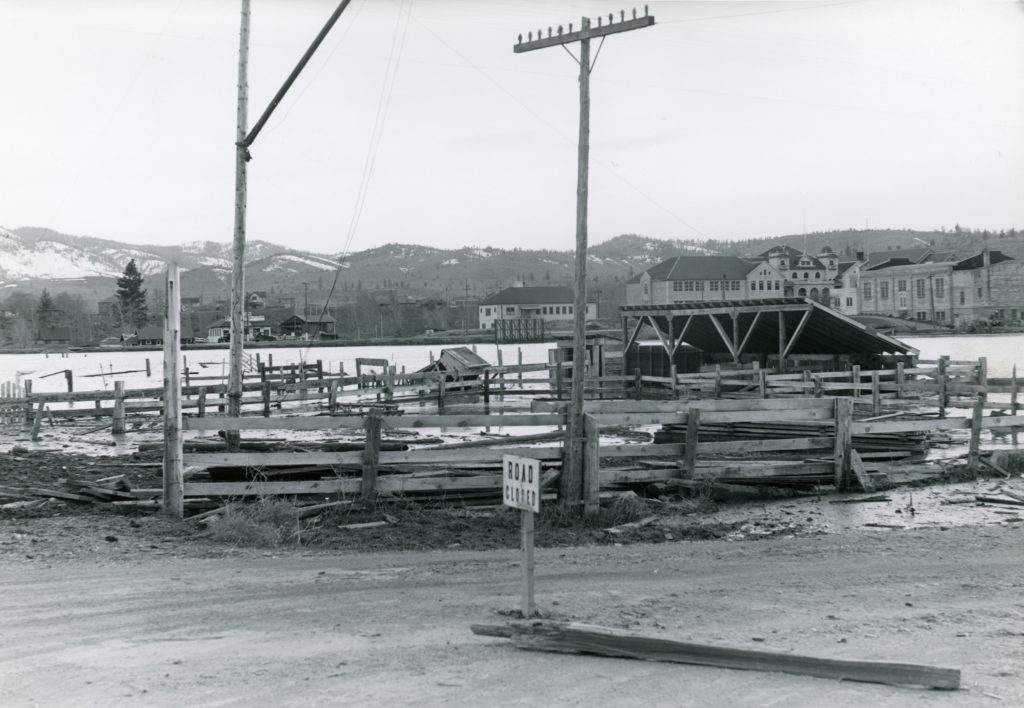
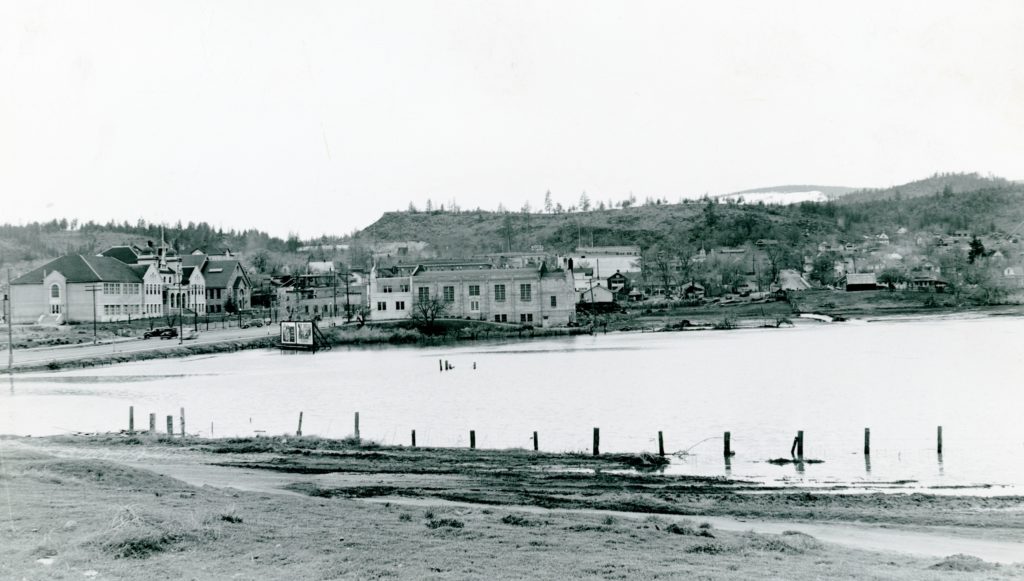
The flooded dairy, April 1938. Courtesy of Betty Barry Deal
In 1909, Cy Houghton arrived in Lassen County. After the establishment of Westwood, Cy went to work for the Red River Lumber Company. In 1934, he located to Susanville and opened a dairy, which is now Memorial Park. In 1938, the dairy received extensive damage from the Piute Creek flood. At one point he considered abandoning the dairy, but changed his mind. In 1942, Cy’s Dairy closed for business. Not one to be idle, Cy later went to work for Sierra Army Depot and retired from the place in 1957.
Another view. Most people know this site today as Susanville Supermarket. Courtesy of Betty Barry Deal
Western Pacific’s Mohallo Siding, south of Lake Almanor, July 18, 1931. Courtesy of Plumas County Museum
Lassen County was rather fortunate that it was not hit as hard as other places throughout the nation during the great depression of the 1930s. Yes, times were tough, but then again there were no Hoovervilles either. While the majority of the lumber mills on the West Coast closed, Lassen’s three mills-Fruit Growers Supply Company, Lassen Lumber & Box Company and the Red River Lumber Company remained open, though operations were curtailed. Those company executives understood the value of their employees. Sooner or later the economy would rebound, and they did the best they could under the circumstances to retain their skilled employees, rather than having to start all over again to re-train new ones at a critical time.
In Big Valley it was boom times. They were at the center of one of the last major railroad construction projects in the country. This was the Northern California Extension wherein the the Western Pacific extended its line north from Keddie to Bieber, to meet with the Great Northern who built their line south from Klamath Falls, Oregon. This opened a whole new rail corridor completed in 1931. In the future, I will do a piece on the Golden Spike Ceremony at Bieber.
This is one of the few times during the year in which I ask for you to consider supporting this site either by donation or subscription. I am very grateful for those who do, but the reality is they makes up less than .005% of the readership. I am flattered that readership continues to grow, now with an average of 10,000 a month. So taking a popular saying of the 1930s, “Buddy can you spare a dime?” For as a little as five dollars a month, you can subscribe and support this endeavor to not only assist to preserve the region’s history, but equally important to make it available. It is so easy, click here for the details. Don’t want to do an internet transaction, information is provided do so by mail, etc. Thank you.
The Belfast District. Courtesy of Bernard McCallister
In the 1870s, Captain C.A. Merrill began work on tapping Eagle Lake for irrigation in the Honey Lake Valley. Where Willow Creek enters the Honey Lake Valley he envisioned a great city there, he named Belfast. In the 1880s, he declared Belfast was destined to become a great commercial center, a city initially serving 25,000 people. One of his many proposals was the establishment of a lumber mill there. The source of timber was the Eagle Lake basin, which the logs would be floated across the lake and down a flume to Belfast. However, not much ever materialized.
In 1912, the Red River Lumber Company was in a hurry to establish a lumber mill in Lassen County. Fletcher Walker liked the Mountain Meadows location. No one else did.The problem was the winter weather was not conducive for much. Clinton Walker suggested Belfast, it had ample water, far removed from other communities and the future employees could even grow gardens. However, family patriarch, T.B. Walker, nixed that idea, as it was too far removed from the timber, thus added costs to transport logs to the mill. T.B. Walker was not keen on the Mountain Meadows site, but when Fletcher stated he would leave the company if Mountain Meadows was not selected. So much for a Belfast revival, and the town of Westwood was created over a temper tantrum.
Never miss a story, click here to subscribe and support.
Log landing at Coyote Hole, August 21, 1953. Courtesy of Hank Martinez
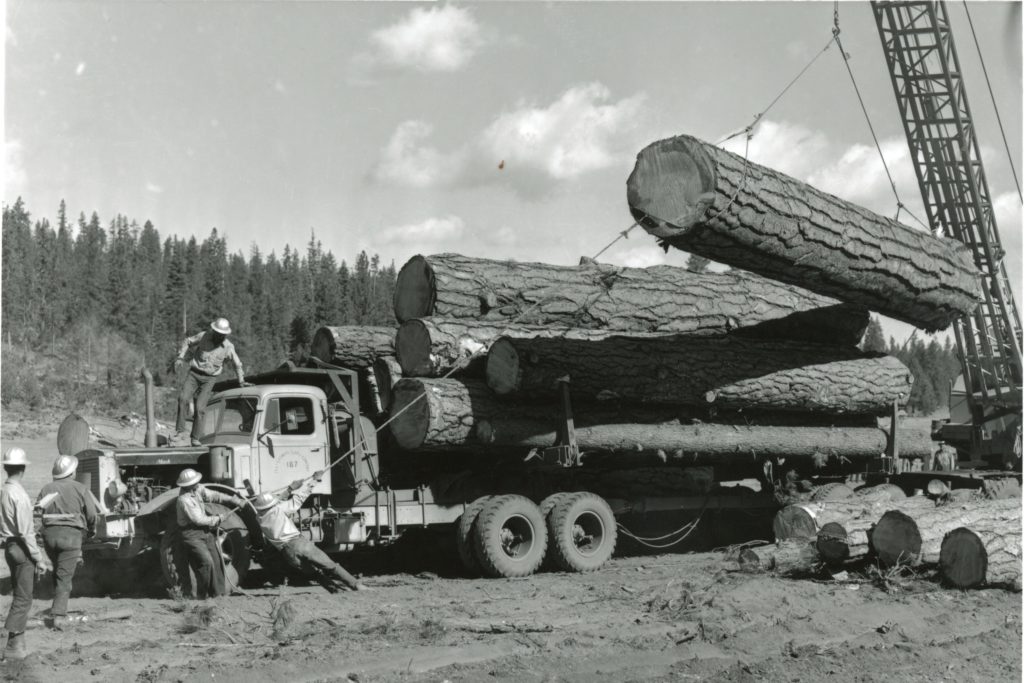
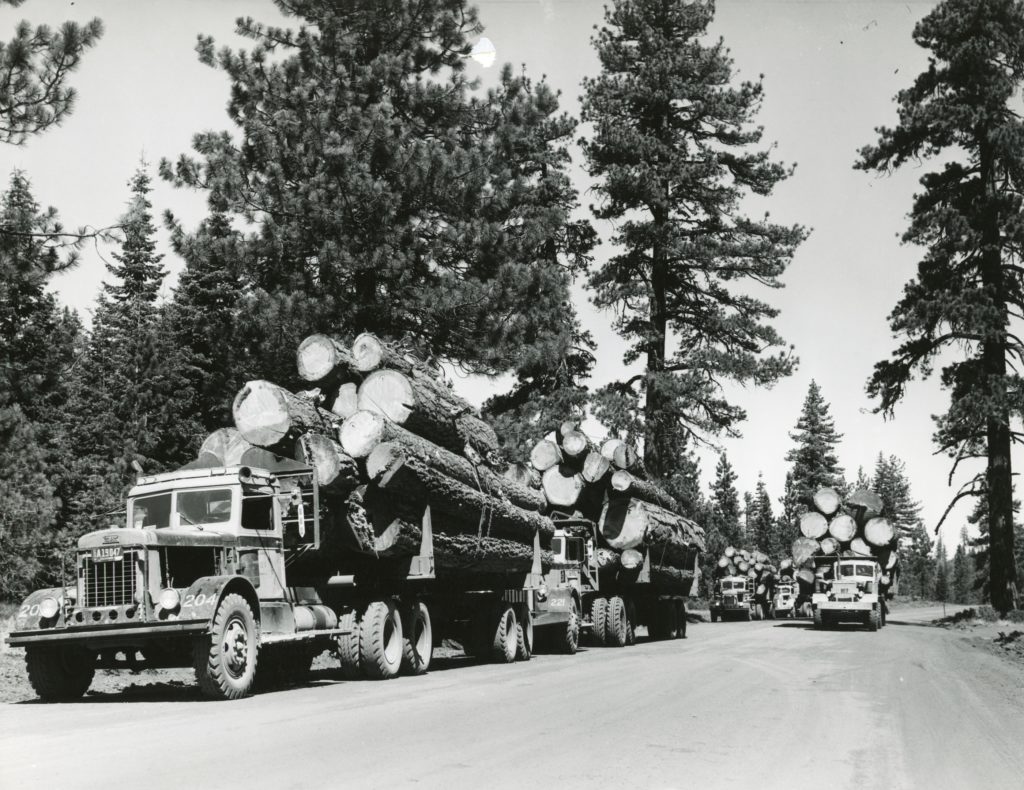
In 1940, Fruit Growers purchased its first fleet of logging trucks for the Lassen Operation (Susanville). Initially, the trucks hauled logs where it was impractical to construct a railroad logging spur. With improvements with trucks and a system of private logging roads, it was just a matter of time, when the logging trucks would make railroad logging obsolete. In 1952, the event happened, and saw the last year of railroad logging of Fruit Growers and Lassen County.
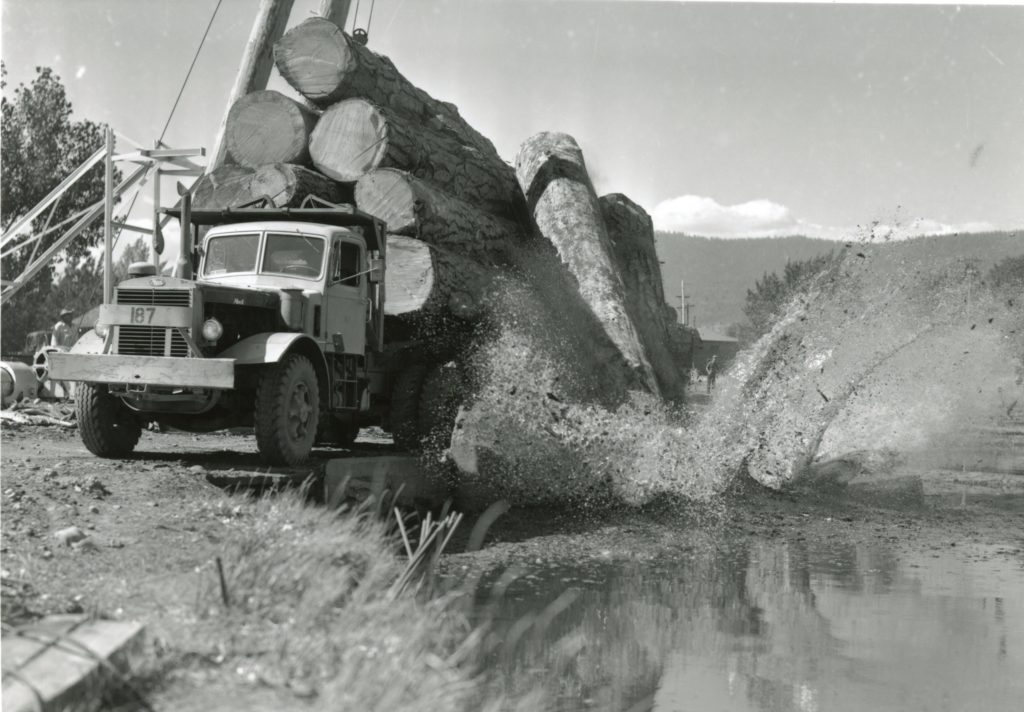
Lunch time at Dow Butte, August 21, 1953. Courtesy of Hank MartinezThe record load of 26,860 board feet being unloaded at the Fruit Growers millpond, Susanville, August 21, 1953. Courtesy of Hank Martinez
Incorporated in 1890, the Honey Lake Valley Land & Water Company proposed the construction of a dam on Long Valley Creek to reclaim the desert lands of the eastern Honey Lake Valley. The dam and reservoir site was situated on lands adjacent to that of Long Valley pioneer George Greeno (1817-1902). In the summer of 1892, work began on the dam—90 feet high, spanning a 1,000 feet with a 500-foot wide base. It was estimated that the reservoir would have a storage capacity of 1,281 acres, at an average depth of 14 feet. The project had its skeptics, especially with the regional dam failures of 1890—those of Ward Lake and Skedaddle. The Lassen Advocate noted in October 1892: “The great interest centers in the permanency and holding capacity of the storage reservoir. Will it withstand the winter torrents and the rush of spring freshets? Will it successfully defy the incursions of insidious rodents and stand firm against the pressure of the floods? When the location of the dam is taken into consideration, the scientific, practical and thorough nature of its construction gives conclusive evidence that it will prove permanent.” The Advocate concluded “It has been filled little at a time by fine quality of clay, water poured upon it and then puddle by means of horses, which renders it impervious to water.” The region experienced an unusual amount of heavy fall rains that added a considerable amount of water to the nearly completed reservoir—a delight to many. In late November 1892, the area was hit a deluge, an estimated seven and half inches of rain fell at the dam site alone! The floods from Long Valley Creek breached the dam and left a gaping hole 100 feet wide. The damage was estimated at $50,000. The Company had invested over $175,000 in the project and never recovered from that loss. The Company’s manager, president and owner Fred Lake remained committed to the project until his death in 1942.
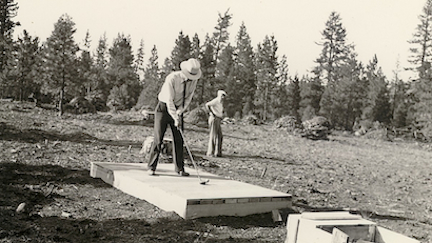
One would not normally associate the sport of golf in a community composed mainly of lumberjacks and sawmill workers like Westwood. However by 1920, the golfing phenomenon swept through Northern California and this lumber town was no exception.
The “divot diggers” as they were affectionaly known then took a little longer to take hold at Westwood. By the early 1920s, Susanville could boast three golf courses, albeit crude by modern day standards. Even Chester, then just a mere hamlet, had a golf course.
As early as 1921, Westwood’s golfing enthusiasts began the debate to establish a golf course. Yet, they just could not generate enough momentum to pull it off. This all changed in 1929 when Westwood’s golfing community organized a club. Those original duffers consisted of Ross Morehouse, Gene Huggins, Bob Pullman, F.W. Koerner, F.M. Jayne, Bill Corbett, Dan Taylor and C.C. Baptie. Continue reading The Westwood Golf Course→
Thompson Peak, 1911. It should be noted that Thompson Peak, and the Diamond Mountain Range is a part of the Honey Lake Fault Zone.
Some may recall that back in January I wrote about Sylvester Daniels. For a brief refresher Daniels arrived from Iowa in the spring of 1874 and spent time with his sister, Polly Parks, who resided just east of Buntingville. He kept a journal of his experiences that he wrote specifically for his daughter, Viroqua and the rest of his family who remained in Iowa. The following is his account of the first earthquake he experienced.
“Sunday, January 24, 1875 – Well, we are all alive yet. Now, I will tell you why I started as I did. You have heard of earthquakes I suppose. Well, I will tell on the sly that there was a live one came along here this morning early about 4 o’clock. It awoke me very suddenly, then such a crash. I thought the house was all breaking to pieces and it seemed to roll back and forth in bed. At any rate it shook things up pretty lively, while it lasted. But it was not near as long as I have written about. It seemed to roll back and forth and jar terribly. It seemed to pass towards the Mountain from the Valley.
The hens flew and cackled and the pigs squealed. Polly Parks said it shook every bottle and everything in the house. She said the cream was disturbed on every pan. So you see there was quite a commotion for a time. All the damage that I have heard of as of yet, is some chimneys are slightly rent and some were frightened. I have not heard anyone express themselves to wish it repeated. Polly and Elisha Parks say they are not as near as afraid of them as they used to be of thunderstorms and tornadoes in the East.”
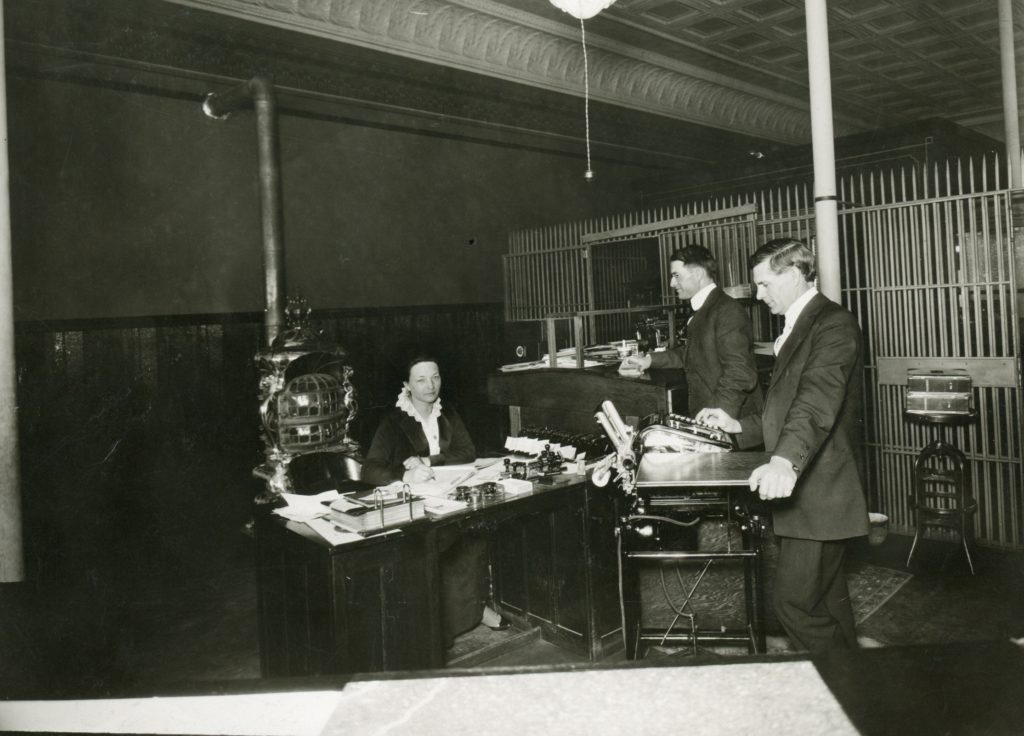
Standish Branch of the Bank of Lassen County inside the Wrede Hotel
For a time, Standish was a very prosperous community in the Honey Lake Valley. Not only did it have numerous businesses, but a hotel, and a creamery, too. Everything was so good, in fact, that it even had its own financial institution.
In 1892, the Bank of Lassen County was established in Susanville, the first of its kind in Lassen County. In the spring of 1915, the bank announced it was going to open its first branch in Standish. However, it encountered some delays, especially with the installation of big safe, inside the Wrede Hotel, where the branch office would be located. On August 30, 1915, the branch opened with W.H. “Wally” Fulton, as the manager. Fulton had a long association with the financial institution, and equally important was well-known in the Standish region, having been married to Kathryn Mapes. The Standish Branch operated for ten years, closing its doors on December 31, 1925.
Wally Fulton later moved to Susanville and in 1933 became the City’s Treasurer. He remained in that position until his untimely death in 1941 by suicide. He used a gun in the city vault, and waited until the noon whistle from the Fruit Growers mill to mute the sound of the gun shot.
Never miss a story, click here to support and subscribe.
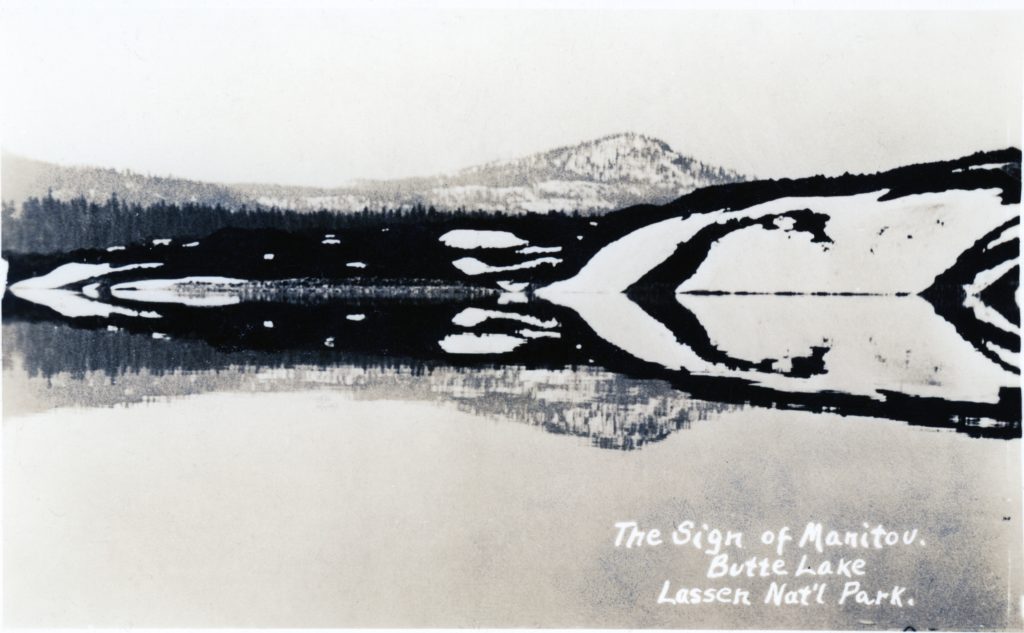
Butte Lake, circa 1920. Roy Sifford, of Drakesbad fame wrote: “The sign of the Manitou which means the sign of God. The shadows in the water made a long arrows which the Indians thought that was a sign of the Great Spirit (Manitou) or God gave them. Courtesy of the Sifford Collection.
This lake in the northeast portion of Lassen Park was originally referred as Black Butte Lake and Lake Bidwell. J.S. Diller named it Lake Bidwell in honor of General John Bidwell who came to California in 1841 and founded the town of Chico. The official name dates back to 1883 and no doubt received its name from two surrounding landmarks, Cinder Butte and Black Butte.
The French Canadian trappers of the Hudson Bay Company introduced the term “butte” to Western Americana. It was used to designate a landmark for an isolated peak, but not high or large enough to be a mountain.
Never miss a story, click here to subscribe for as little as five dollars a month.