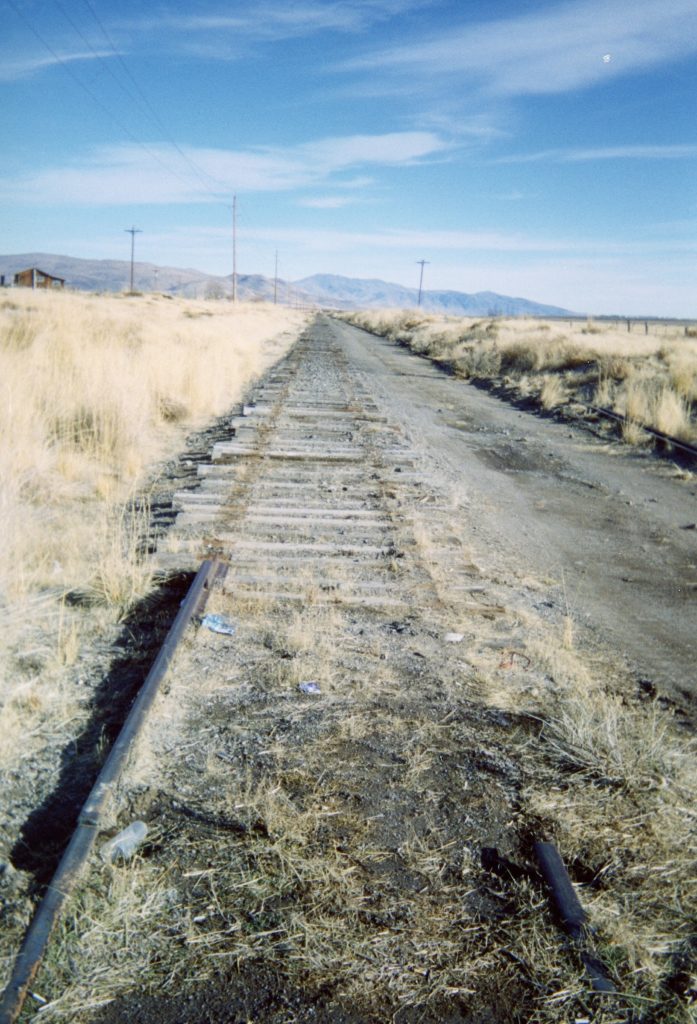
Looking east near the Leavitt Station, November 19, 2006
This month marks ten years since the last segment rails of the Fernley & Lassen Railroad, between Susanville and Wendel, were removed. The historic event went largely unnoticed. Yet, it was the railroad that had one of the most significant impacts on Lassen County. It was this particular line that created the communities of Litchfield and Westwood. Of course, it brought about the development of the timber industry. Two years prior to this event, the last lumber mill, Sierra Pacific Industries at Susanville shut down for good.
A view of the western Madeline Plains, August 4, 2016.
On August 4, 1883, 60 year old Butte County resident, Samuel B. Shaw investigated the western side of the Madeline Plains in search of a new home. To his amazement he came across a fine spring that no one had claimed. It appeared to be a golden opportunity and he wasted no time to file a claim with the Government Land Office in Susanville. With paper work in hand, Shaw began building himself a cabin. His neighbor, Jim Looper, and Looper’s employer, George Bayley was not pleased about this development. Looper thought he filed a claim to it, but it turned out he filed for the wrong parcel.
Whatever the case may be, some one did not like Sam Shaw. On October 13, 1883, an Indian mahala (woman) found Shaw’s decapitated body in his cabin. The woman notified authorities, and an investigation began. On October 22, 1883 a five man coroner’s jury was held in attempt to find more information about this grizzly murder. However, they rendered, the following result, “He came to his death by the hands of parties unknown. We would also suggest that the matter be further investigated by the proper authorities.”
If you recall earlier this year about the mining activity at Rosebud on the eastern edge of the Black Rock Desert, there was also considerable mining activity much closer to the Honey Lake Valley in the nearby Smoke Creek Desert. In 1882, the Cottonwood Mining District was established on the Fox Mountains on the east side of the Smoke Creek Desert. Due to its remoteness and lack of any substantial high grade ore, little mining was development. Continue reading Wild Horse Mine→
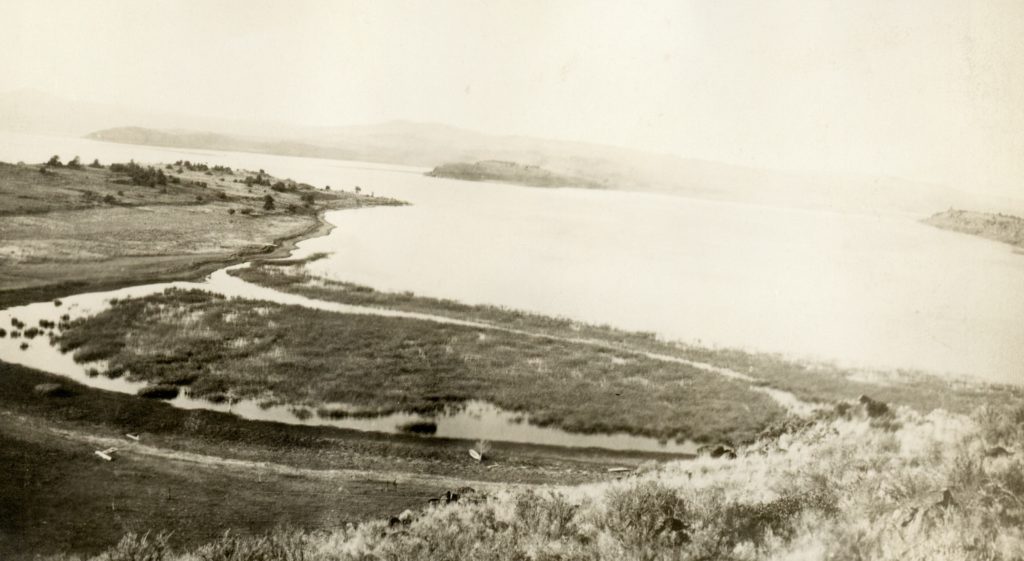
The north shore of Eagle Lake, 1920, where Udell proposed to build a dam. Courtesy of Lola L. Tanner
In 1910, San Francisco attorney Alva Udell came up with a novel approach to tap Eagle Lake without the aid of a tunnel. Udell proposed to tap the lake at the north end, only a mile from then Troxel’s residence (better known to many as Stones). The intention was to build a dam on the lake and a canal leading over to the Willow Creek springs. This route, it should be noted, is the lowest division separating Eagle Lake from the headwaters of Willow Creek. Continue reading Eagle Lake – The Udell Project→
Round Valley Reservoir is located north of Susanville in the Willow Creek Valley region. The private reservoir came about as a fall out of investors of Captain C.A. Merrill’s campaign to construct an Eagle Lake tunnel for irrigation. Two of Merrill’s associates and John L. Davie and Frederick Getchell severed ties with him. On December 3, 1884, Davie and Getchell purchased a ranch in Willow Creek Valley, which included adjoining Round Valley, from Susanville financier, William Greehn for $4,000. The locals dubbed the new enterprise, “The San Francisco Ranch” as the owners were from that fair city. The name stuck, though it would later be known as the Lonkey Ranch and today as Five Dot. Continue reading Where are we? – Round Valley Reservoir→
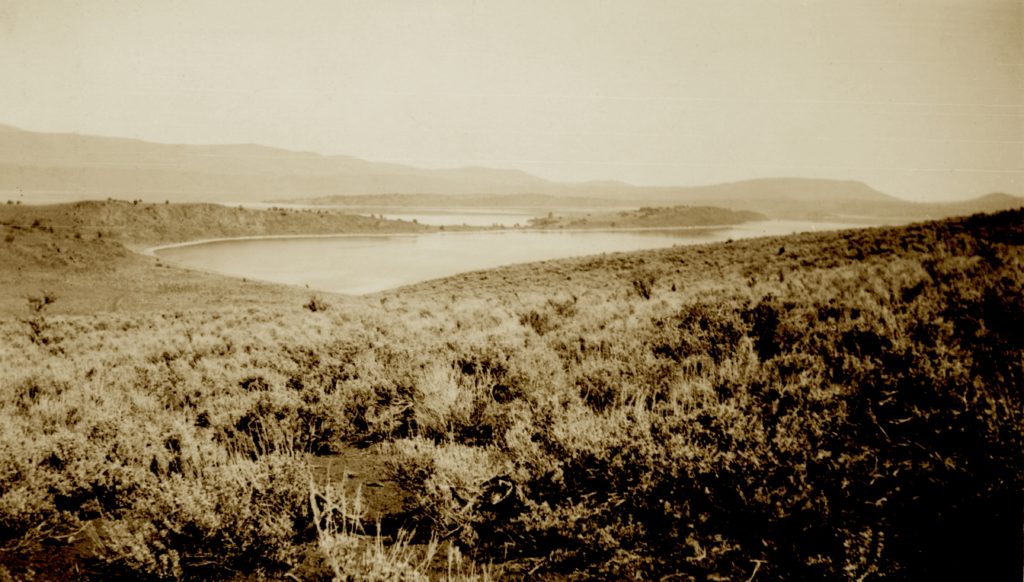
Bucks Bay, Eagle Lake, 1921. Courtesy of Lola L. Tanner
The Eagle Lake we know today was created by fault blocking, so its no wonder that earthquakes occur in the region. On June 19, 1889, a substantial earthquake was felt in the region, which was followed by twenty-eight aftershocks. Initially, it was believed that the quake originated from Mount Lassen, but upon further investigation it was determined the epicenter was at Eagle Lake.
The most remarkable finding of this earthquake was the lake dropped by two feet. Yet, the water flow of Bunnell, Cady and Willow Creek springs experienced increased water flows. The Lassen Advocate noted these springs: “had a soapy appearance, feeling oily to the touch.”
Thomas Ford, editor of Bieber’s Mountain Tribune newspaper traveled to Susanville at the time of the earthquake and wrote: “Arriving at Susanville at six o’clock in the evening, we found things pretty shaky; experienced four shocks that night, and was told that had not been a very good night earthquakes either. . . . Many were the accounts or what happened since the shaky season began–such as Eagle Lake sinking two feet, the waters of Willow Creek being higher than ever before.”
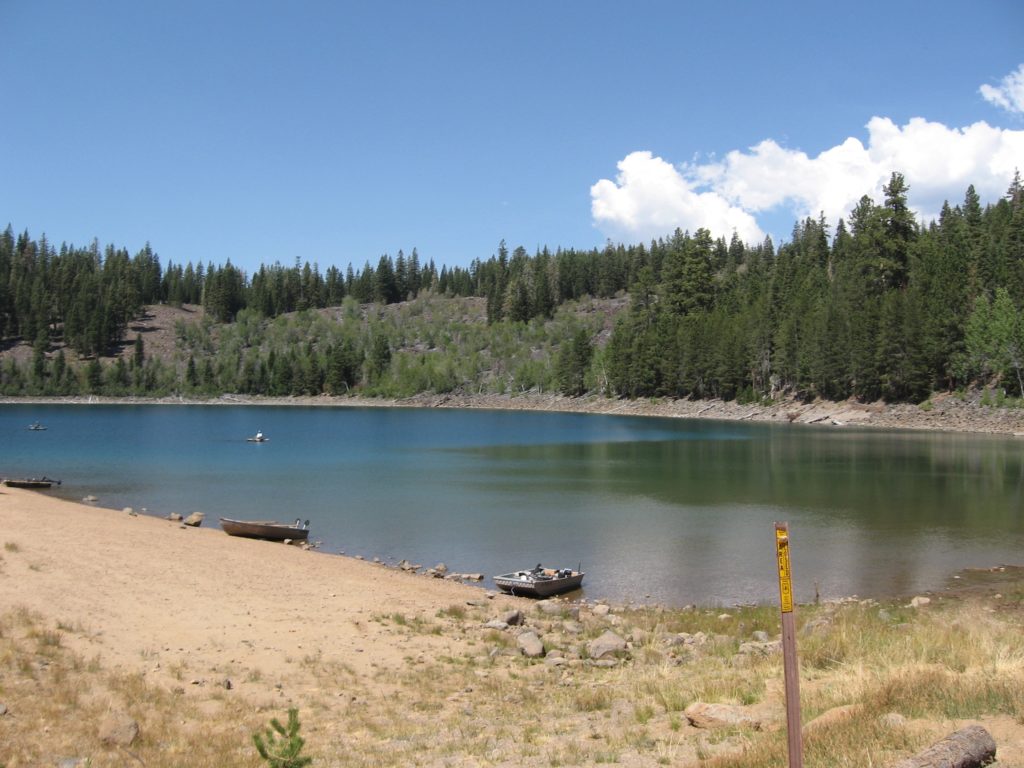
Crater Lake is located seven miles east of the Bogard Rest Area on Highway 44. In 1907, Lassen National Forest Supervisor, Louis A. Barrett, included this lake in his inventory of proposed National Monuments, the other two being Lassen Peak and Cinder Cone. The lake remained inaccessible for years, except for hardy hikers who climbed the mountain. In 1952, the Fruit Growers Supply Company constructed a logging road to the 35-acre lake that is situated in a volcanic crater, on lands owned by the Lassen National Forest. The Forest Service originally proposed to offer summer home sites, but established a campground instead.
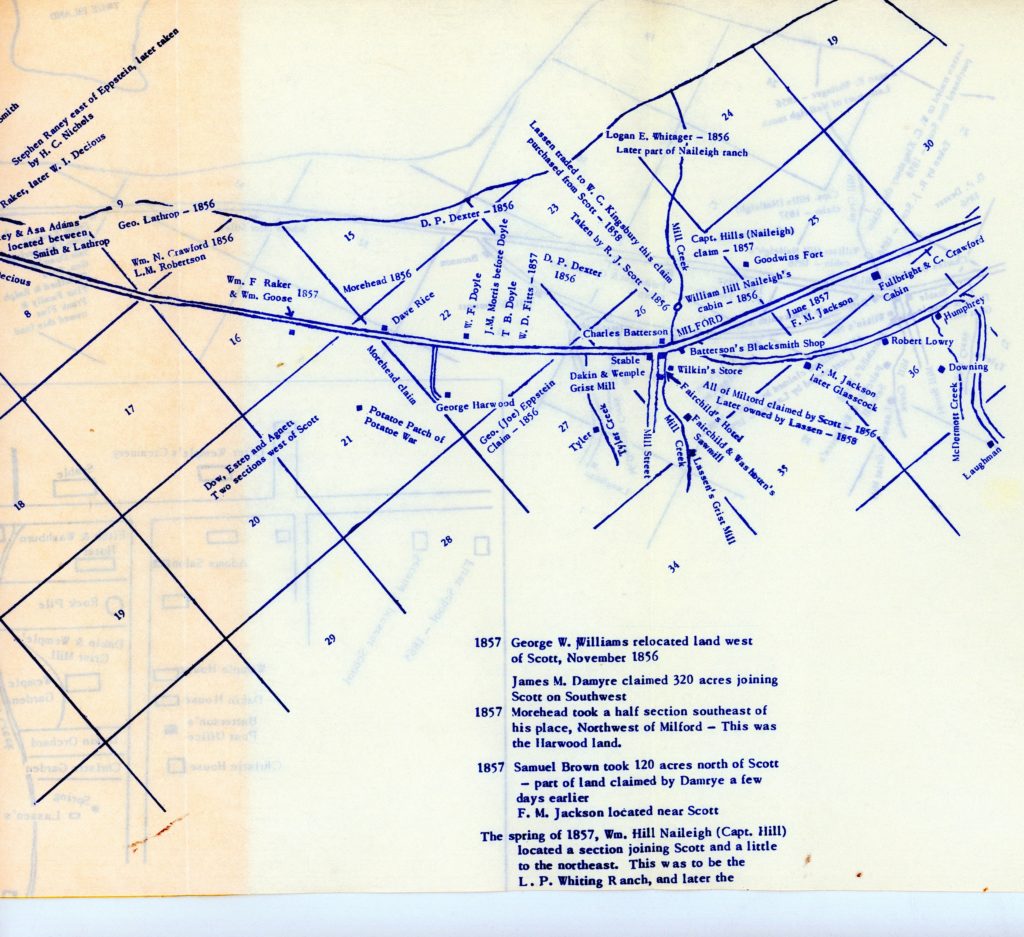
Claude Wemple’s historical map of the Milford region, shows not only the location of the Potato War, but numerous other sites.
Who knew that the almighty spud would be the cause of conflict? It all began in October 1857 when a band of Washo Indians visited William Morehead’s potato patch, some two miles northwest of Milford. When confronted by Morehead and others the Washo became belligerent and this did not go over well with the residents of the Milford district. The locals received re-enforcements from the California state arsenal, volunteer fighters from Sierra Valley, and a band of Piutes. During the skirmish several Washo were killed and many wounded. In the aftermath, the Washo withdrew from the lower end of Honey Lake Valley and never ventured north of Long Valley. Again, the residents petitioned for a permanent military fort after the Potato War, only to be ignored, again and again.
Spread the word, and encourage a friend to subscribe.
A view from the southern end of Grasshopper Valley, August 4, 2016.
Once you pass Eagle Lake north on Highway 139, the next broad expanse you see to your right is Grasshopper Valley. When intrepid explorer J. Goldsborough Bruff in 1850 noted it was lake, who later in 1876 stated it had to be what was later Eagle Lake. In wet years, the lower portion of the valley is flooded, and back in Bruff’s day especially so, since there were no dams at Said Valley or Slate Creek, so even a greater flow of water in the basin. Continue reading Grasshopper Valley→
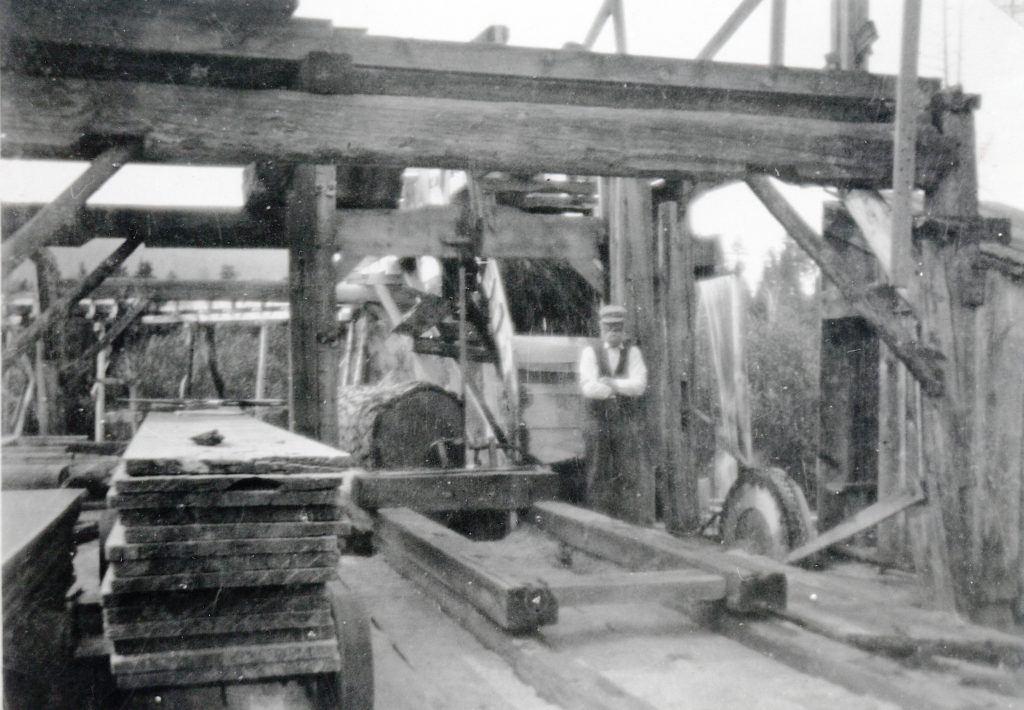
In 1872, Adam Jakobs saw the potential for the lumber market and built a sawmill along Willow Creek, two miles upstream from the Neuhaus Ranch. In 1878, Jakobs sold the mill to P.D. Hurlbut and Jakobs returned to his ranching activities in Willow Creek. Continue reading Hurlbut Sawmill→