From time to time we will examine the wide variety of homes in the region. Of course, this topic is long over due, and Barbara thank you for your patience, and I am working on your house, too!
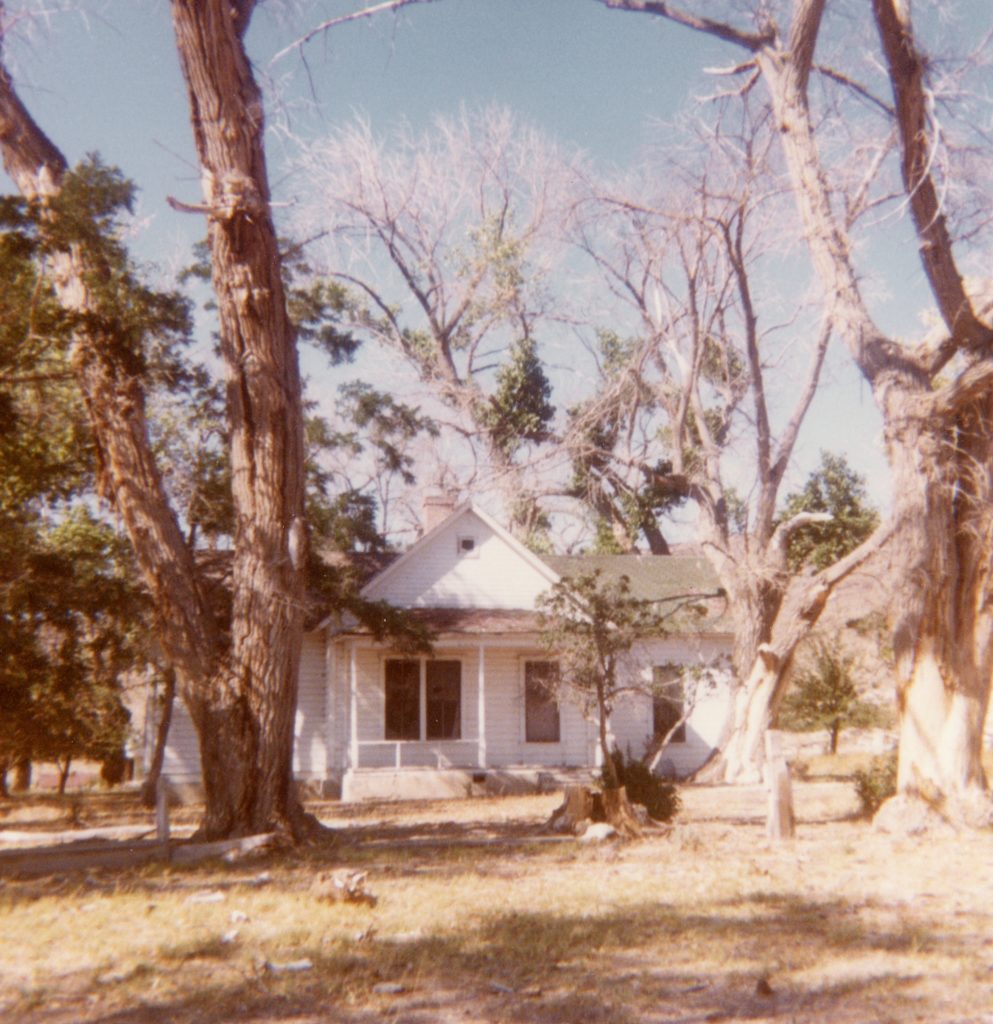
Featured above is the J.A. Gilman residence located at 1913 Main Street, Susanville and now the office of Town and Country Real Estate. It was built in 1898, and other family members built houses surrounding it. The Gilman’s were in the sheep business during its hey day, and retired from it before it collapsed in the 1920s and 1930s.
Honey Lake Valley, 1898. Courtesy of Betty Barry DealLong before, Lassen and Roop set foot in the Honey Lake Valley, numerous Anglos had frequented the area since the early 1820s. For a time, Honey Lake Valley was referred to as Hot Springs Basin. In July 1844, William Thomas Hamilton (1822-1908), member of a fur-trapping group, was one such early day visitor. Hamilton wrote in his memoirs: “We reached a beautiful valley called to-day Honey Lake Valley, but at that time without a name. We remained here three months, enjoying ourselves as only men can who love the grandeur of nature. Our time was spent in exploring, hunting, fishing, reading and practicing with all arms.”
Janesville Road Crew, 1910. Courtesy of Verna Tanner Haley*
Way before gasoline taxes were introduced as a funding mechanism to maintain roads, there was a $2 a year road tax applied to all males over the age of 21. Sometimes, it was confused with the Poll tax, for often one would pay the tax when one voted.
Janesville Road Crew, 1910. Courtesy of Verna Tanner Haley
However, one could opt of the road tax and provide labor in an exchange. Each county supervisor would appoint a road district overseer, who in turn would perform the work on in their respective districts, usually with the volunteer labor of those who did not pay the tax. Not the best system, especially in a large rural county like Lassen, but nevertheless it got the job done.
*To the far left is Satch Whitten, road overseer. The long time Janesville resident was married to Carrie DeWitt.
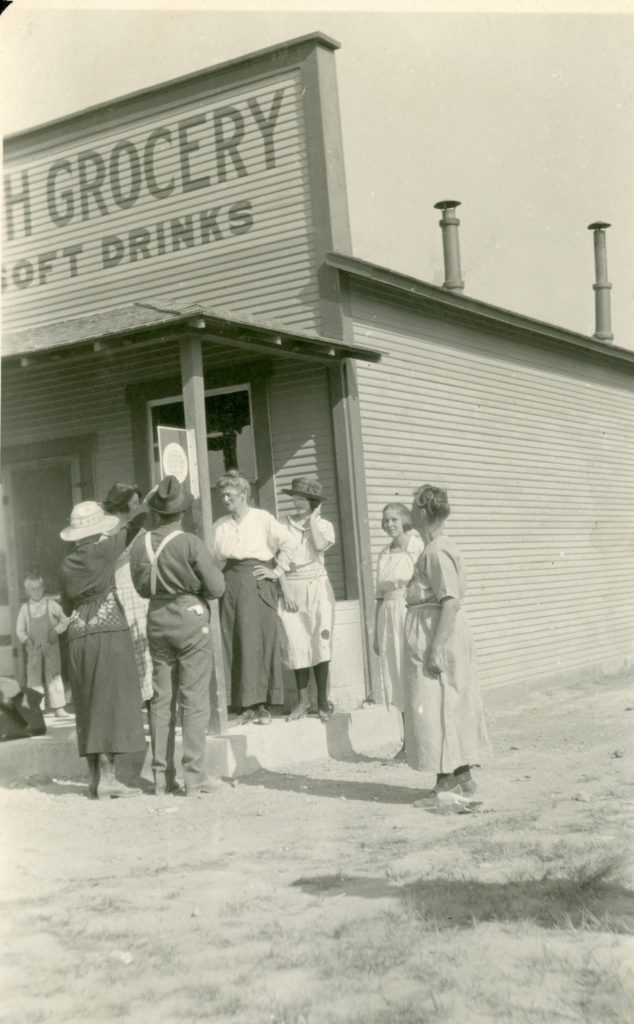
The landmark Termo Store.Termo came into existence with the arrival of the NCO Railroad. The post office was first established on September 18, 1900, with Edmund Welch as postmaster. The post office then was discontinued on August 1, 1908, because the small community suffered from illusion of grandeur that never prevailed. With the arrival of new homesteaders, the post office was once again re-established on September 2, 1915. On January 31, 1989, postal officials from Reno, Nevada inspected the premises. They feared that due to the snow and ice accumulations on the building that it might collapse, creating not only hazard to the postmaster, but to the patrons as well. On February 2, 1989, the post office was officially closed.
A view of Gallatin Beach circa 1918. Courtesy of Wyn WachhorstThis was not an attempt to take a photograph from the exact area 100 years ago. It is just that one day in June, I was coming down Gallatin Peak, and there was a break in the trees to take a photograph. While the lake did come up several feet this winter, one can see it is no where near its all time high.
Poison Lake, 1916I originally posted this back on March 27, 2015 and it received a number of comments. The original post: A shallow lake with water that was found to be unfit to drink by the emigrants on the Lassen Trail. The travelers also found that Lassen’s Trail was not “fit” for travel either. In 1916, it was part of the Honey Lake Valley Irrigation District’s scheme to tap into this and other lakes and small streams, to transport it all the way to the east side of Honey Lake for reclamation purposes.
On October 21, 2015 Jake Martin an archaeologist for the Eagle Lake Ranger District wrote: I use your Lassen County Almanac all the time to supplement my report writing with historical information! In the past I have run across an interesting note about the etymology of Poison Lake. This was found within the journal of Gorham Gates Kimball who was driving sheep to Idaho [in 1865], annotated by Edward N. Wentworth. It mentioned that Poison Lake ‘was so named from the effect of the bites of small red spiders which frequented the surface of the water.’ Apparently, merely washing your face and hands was enough to receive bites and experience red inflammation.
Unfortunately, my copy of that sheep drive has no reference to Poison Lake. It does make reference to being attacked by horse flies along Pine Creek.
A view of Pike’s Point, Eagle Lake, circa 1917. Courtesy of Wyn WachhorstThought many might enjoy this photograph of the south end of Eagle Lake during its high water mark of 1917-18. This is a part of the Gallatin/Wachhorst collection that I am slowly scanning. As to the origin of the name of Pike’s Point, is unknown to me, but documents indicate that it was so named prior to 1920. The 1979 Pikes Point Archaeological Report did not shed any light on the topic. Now is there any willing takers that want to locate approximately and take photograph of what the view looks like today?
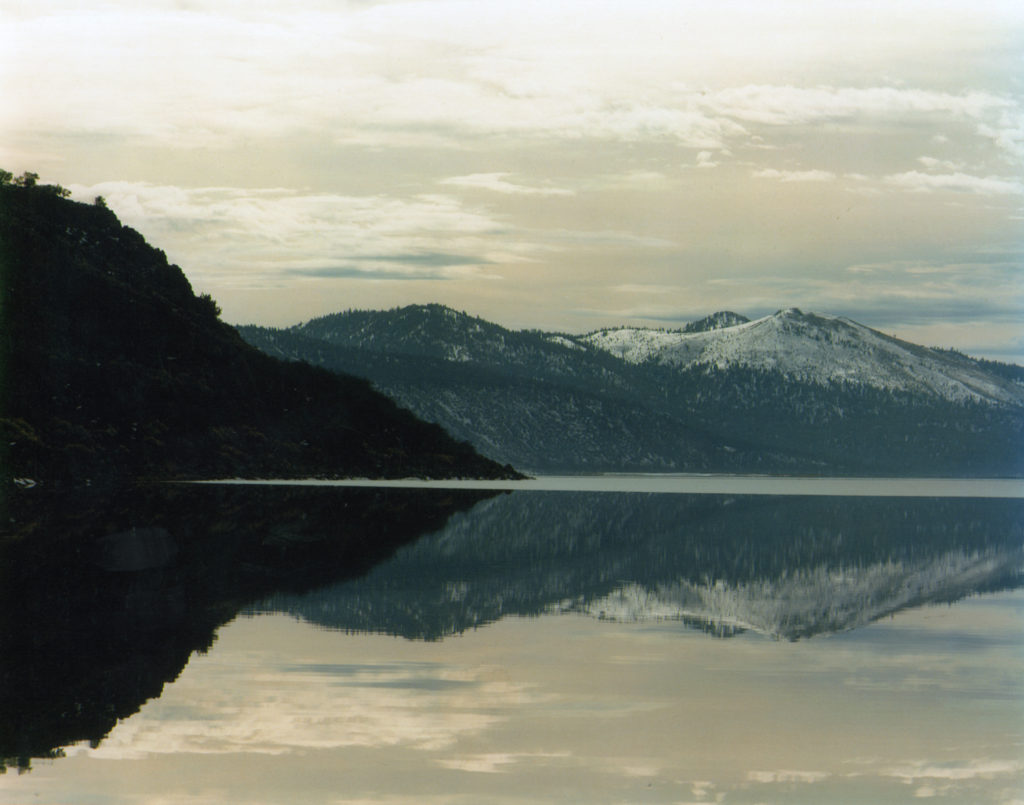
Honey Lake, February 1984. To the right is the Hartson Sand Ridge. Photograph courtesy of Bob SorvaagThere is no question that there is a lot of water in Honey Lake. For some it might seem something like a novelty, since the lake has been dry for so long. While levels of Eagle Lake are taken on a monthly basis, that is not the case with Honey. Anyhow, Honey Lake has been a lot higher, than it is presently.
The winter of 1906-07 ushered in a notorious wet cycle. March of 1907 was rather dramatic with over 12 inches precipitation—sometimes in the form and rain, and other times as snow. In January 1911, witnessed the first of two “big snows” wherein Susanville received 8 feet; Standish five feet, Wendel 8 feet. The lake flooded vast sections of land past Standish. This prompted B.F. Gibson of Litchfield to propose a canal from Honey Lake to Pyramid Lake as way to rid the area of excess water.
June 9, 2017This mountain not far from Susanville was a popular spot among deer hunters before there were zones, and one moved freely from one location to another in search of game.
Convention delegates arriving at the Susanville Depot. Courtesy of Nellygrace Stoll.The old time Honey Lakers were a resourceful lot. When they made up their minds to do something, they did it. In the near future, we will examine some of things they had taken on. One of the “biggies” was how a local bunch of legionnaires with the community support was able to land the California American Legion Convention in Susanville. This was no small feat and the competition was fierce. To this day, one can see many of the legacy’s from that 1926 convention.