Category Archives: History

Answers to some questions

Camp A
Camp A, Fruit Growers Supply Company, located just north of McCoy Flat Reservoir, 1921

There have been some interesting comments posted of late, so I take this opportunity to answer a few.

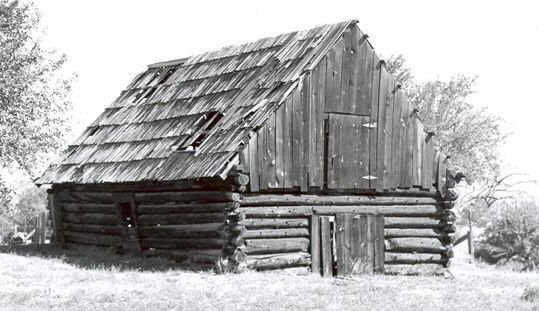
Seasoned residents may remember a row cabins near Cherry Terrace along Piute Creek, where Al & Joy Robbins is located. There was one large cabin, which was occupied by Dan Marmo. The smaller cabins, came from Fruit Growers Supply Company logging Camp 10, after it closed in 1952. Marmo rented out the cabins, some of those folks less fortunate than others. On occasion even a Lassen College student could be found there. There are still some of these old logging cabins located throughout Susanville.

One of the panels on the LMUD building, part of a forthcoming mural tour. The building depicted iwas the home of the Telephone Company . December 26, 2016

The Telephone Company building, is a reference I had not heard in years.  However, it just so happens I am writing about it. The is the two-story stone building located on the northeast corner of Main and Gay Streets. It was built in 1914 and originally known as the Star Hotel. For a number of decades it housed Susanville’s first telephone company. When Safeway came to Susanville in 1928, it was housed there.

Subscribe

Watch Our Smoke!

The slogan was incorporated in the Lassen County Chamber of Commerce stationery.

Harry Coleman possessed that wonderful “can do spirit” trait. He came to Susanville to manage Fruit Growers Story Club. In 1925, he became the post commander of the Thomas Tucker Post of the American Legion. Yet, it was previous year, that Coleman and four other post members made their ambitions known. In 1924, they attended the annual State Convention of the American Legion in Santa Cruz. They were not only there to promote Lassen County, but to put their bid in to become the host city for the 1926 convention. Initially, locally Coleman and company had a lot of critics who were skeptical about Susanville being a convention city. After all, it involved being host to some 2,500 people—more than double the town’s population.

The local Legionnaires began their campaign and traveled to various post throughout the state to obtain their support. In the beginning of 1925, four cities were in contention, including Susanville—the others being San Francisco, Santa Rosa and Stockton. By spring, San Francisco withdrew its bid and supported Susanville.

Their advertising campaign was called  “Watch Our Smoke” a reference to Mount Lassen’s famed eruptions. One of their many selling points was how the community was joined together to build a new three-story hotel for the convention—and that is how the Mt. Lassen Hotel came to be.

Next month, more on their campaign.

Subscribe

Cove Point, Eagle Lake

Cove Point, 1921

My grandmother, Lola Murrer Tanner, 1899-1973, referred to this east side landmark as Cove Point, which is just south of Bly Tunnel. While, it has no official designation as such, it is not unusual for some one to give a prominent spot a name for reference. This is more a photographic essay of the fluctuation of the water level at this particular spot over a span of nearly a century. The above photograph not only shows the point submerged but the tailing pile of the Bly Tunnel.

Cove Point, 1925

While not taken at the same angle, what a difference four years make with the drop of the lake level.

Cove Point, August 9, 2018

Finally, this is how it looked last summer.

Subscribe

Old Cameras

Alexander Howell
Alexander Howell, a professional photographer who operated a studio in Susanville during the early 1890s.courtesy of Donna Howell

There have been so many changes that have occurred in this digital age. This, of course, brings us today’s topic. Awhile back a friend and I were discussing cameras—the ancient kind that use film. We both have 35mm cameras. The question the both of us have, what do you do with these old cameras? As the readers of this site are a knowledgable lot, we look forward to anyone’s feed back.

Subscribe

Red River’s Camp 57

Camp 57, courtesy of Roy Rea

In certain ways, Red River Lumber Company’s logging Camp 57, was in one sense one of the best known, and least known. Why the paradox? It was located adjacent to Chester, though many in the region were not familiar with its initial designation.  It was established in 1922 and was one of the longest operating logging camps of Red River. Many logging camps of the era had a life span of one or two years. In addition, Camp 57 remained opened in the winter, even though logging had been suspended. During the 1920s, Westwood had a constant housing shortage, so the camp provided for additional housing in the winter months.

Subscribe

The B&T Railroad

Construction of the Western Pacific Railroad near Constantia. Courtesy of Marie H. Gould

In 1907 the Lassen Advocate provided some interesting statistics concerning the construction of the Western Pacific Railroad (WP). The paper’s editor/publisher, E.W. Hayden, was fascinated that there were to be 75 bridges, most of which were west of Wells, Nevada. The aggregate length of these bridges was estimated at three miles, that would require 20,000 tons of steel to construct.  Then there was the staggering amount of tunnels to be constructed. In a bit of tongue and cheek, Hayden suggested the WP should change its name to the B&T—Bridge and Tunnel Railroad.

Subscribe

Coppervale’s Pomo Lift

Mike Johnson, Lassen College student, checks a pulley atop the last post at the top of the mountain.

“This was our dream 30 years ago; to get a lift that would go clear to the top of the mountain, and where you didn’t have to hold onto a rope all the way.” Those were the sentiments expressed by Maurice Hertzig, Westwood’s Fire Chief and Harold Powell, Lassen College professor in December 1976 when nearing the completion of the Pomo lift at Coppervale.  The new lift powered by a 60 horsepower electric motor, will rise 1,560 vertical feet up the mountain and have a capacity to move 550 people per hour. The three month construction project cost $29,000.

Subscribe

The B&B

1935 Advertisement for B.B. Liquor Store

Seasoned residents will remember with fond memories of the B&B, a fine restaurant and bar located in the Knoch building. Before it became the B&B it as the B.B. Liquor Store. The B.B. stood for Brouillard’s Beverages, after the owner, E.H. Brouillard.

Some may recall in the banquet room, there was a rather large canvas mural 6’ x 20’ of Mount Lassen. It was painted by J.E. Lane, and the mural still exist, it being in storage. It should be noted that two other works of Lane have graced the walls of the Lassen County Courthouse since 1917. One is of Susanville as it appeared in 1864. The other is of Warner Valley, with Lassen Peak in the background. Why the County Board of Supervisors selected the latter has always confused me. First Warner Valley is in Plumas County. And, secondly, Lassen Peak is in Shasta County.

Subscribe

January Snowstorms

Amedee, January, 1911. The “x” indicates the town’s old dance hall. Courtesy of Madelyn Mapes Dahlstrom

According to the weather gurus, this week we may experience a decent storm. January, typically, is when some of the record breaking storms occur. Take for instance in 1911, when in one storm Susanville received eight feet of snow. What was truly remarkable was Amedee, on the desert east side of Honey Lake received the same amount. Johnstonville resident, Robert E. Trussell, who was fourteen at the time, recalled you could not see a single fence post in the valley.

Construction of the Fernley & Lassen Railroad, west of Susanville in eight feet of snow.

In January 1914, snow pummeled the region. This caught Southern Pacific Railroad officials off guard. Talk about panic mode, and they recruited  1,000 men to shovel eight feet of snow, so as to not hinder the construction of the railroad to Westwood, to honor the contract with the Red River Lumber Company.

North Pine Street, Susanville, January 1916

In January 1916, single storm dumped four feet of snow in Susanville. Westwood on the other hand had eight feet of snow. This storm was followed with bitter sub-zero temperatures. The snowstorm paralyzed the NCO railroad in eastern Lassen County that resulted in a twenty-one day blockade.

Subscribe

The Eagle Lake Golf Course

South shore, June 9, 2017

Last summer I had good intentions to visit various sites to take photographs of what they look like today. The Eagle Lake Golf Course of the late 1920s was one of them, but I never made it. However, the Whaleback Fire did hinder some expeditions. John “Burt” Christie, one of the early operaters of the Eagle Lake Resort, was an interesting figure at the lake’s south shore. Besides the resort, he eventually became the caretaker of Gallatin House and the Gallatin properties at the lake. Continue reading The Eagle Lake Golf Course