During the 1920s, Susanville’s two newspapers, Lassen Advocate and Lassen Mail published elaborate Christmas editions extolling the virtues of Lassen County. Concerning what the lumber industry meant to Lassen County, the Lassen Advocate provided this profile of the Red River Lumber Company in 1921: Continue reading What Red River Meant to Lassen County→
Looking toward’s Lawrence’s grave from Lassen’s Monument.
He is a little known figure in the early annals of Lassen County. He was one of six men to spend the winter of 1855-56 at Peter Lassen’s newly constructed a cabin. Prior to his arrival in the Honey Lake Valley, Lawrence had spent considerable time in Butte County where he earned the nickname “Commanche George,” though the circumstances behind the episode is not known. Like many prospectors he roamed the region, though never finding what he was looking for. In 1864, Lawrence and B.F. Murphy established the Buffalo Salt Works in the Smoke Creek Desert. In 1868, he was residing with the David Titherington family, who purchased Lassen’s ranch from the estate. On December 22, 1868, Lawrence died from small pox, that had become an epidemic in the area.. He was buried a short distance north of Peter Lassen’s grave, with no marker.
With the winter solstice upon us, I have been looking back when the days were longer and warmer. On an excursion to the east side of Eagle Lake provides for an interesting setting of the geology of Eagle Lake. This, of course, I am indebted to Michael Clynne of U.S.G.S who enlightened me. Continue reading Eagle Lake Geology 1.0→
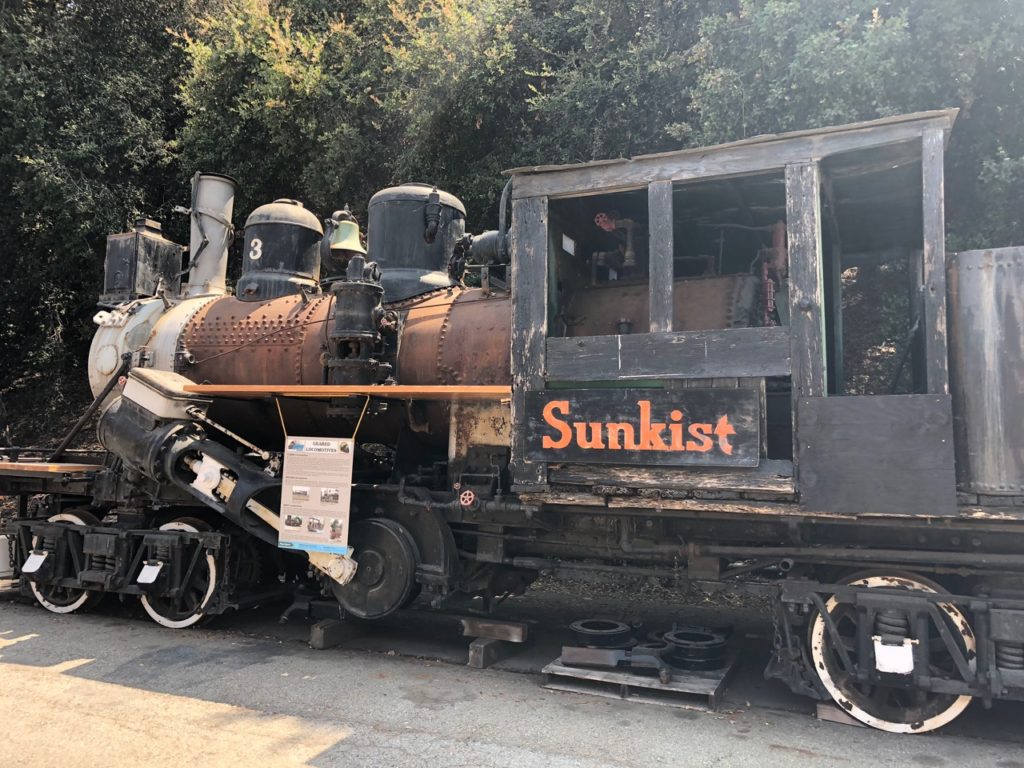
Earlier this year, Tim Stienmeier, while at the Los Angeles County Fairgrounds in Pomona sent along this photograph of the Climax No. 3 locomotive that the Fruit Growers Supply Company used at their Hilt Operation. It should be noted that Fruit Growers discontinued railroad logging at Hilt in 1933. For many years the No. 3 was parked along an old freight shed. In 1954, the Southern California Chapter of the Railway Locomotive Society became aware of this relic and inquired about its status. Fruit Growers agreed to donate it to the Society on the condition that organization would have the burden of the costs to move it from Hilt to Los Angeles. Once the mission accomplished the Climax No. 3 once cleaned up was put on permanent display at the Los Angeles County Fairgrounds, though it kind looks a bit neglected these days.
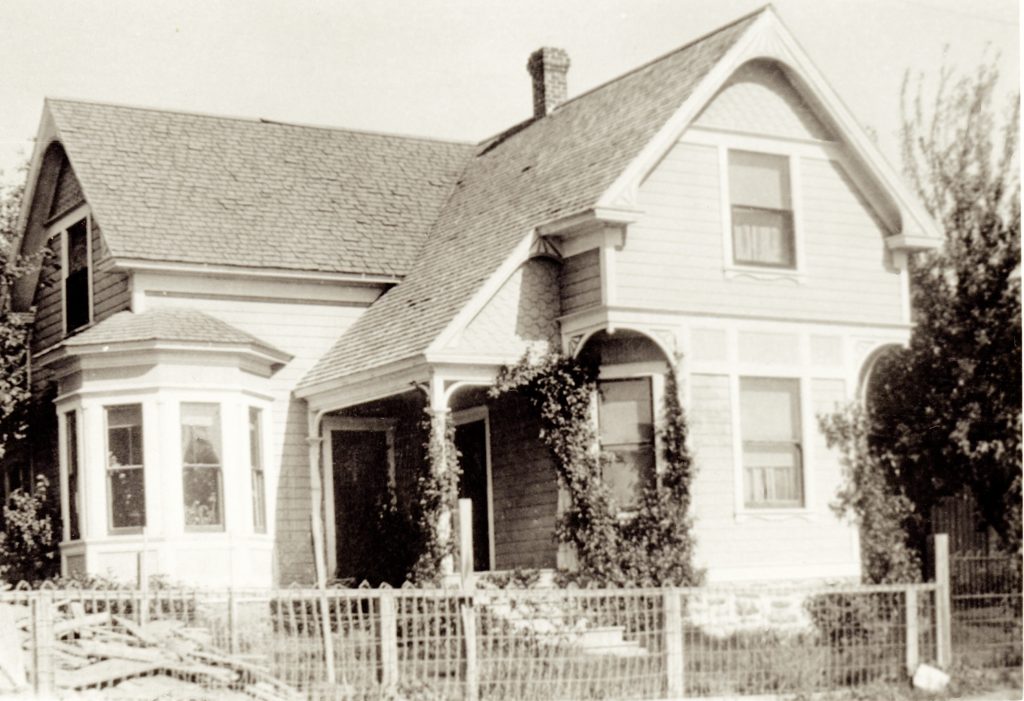
140 N. Roop Street, Susanville, circa 1911. Courtesy of Dick & Helen Harrison.
Constructed in 1906, it was the first house built on the west side of the 100 block of Roop Street. The home was built for Abel and Ella Bunnell. Two years later, his brother L.W. Bunnell had the house built kitty-corner from them. The home was passed down to Abel’s daughter and son-in-law, Georgia and Bert Jensen. At about noon, on Saturday, June 21, 1928, the Jensen’s nearly lost their house to fire. Bert, and his two sons, Jud and Abe, were away working at the family ranch, a few miles east of town. Fortunately, neighbors and onlookers began hauling out the furniture while waiting for the fire department to arrive. It was estimated the fire caused $5,000 worth of damage. The Jensen’s continued to make it their home for several decades. It has since been converted into three apartments.
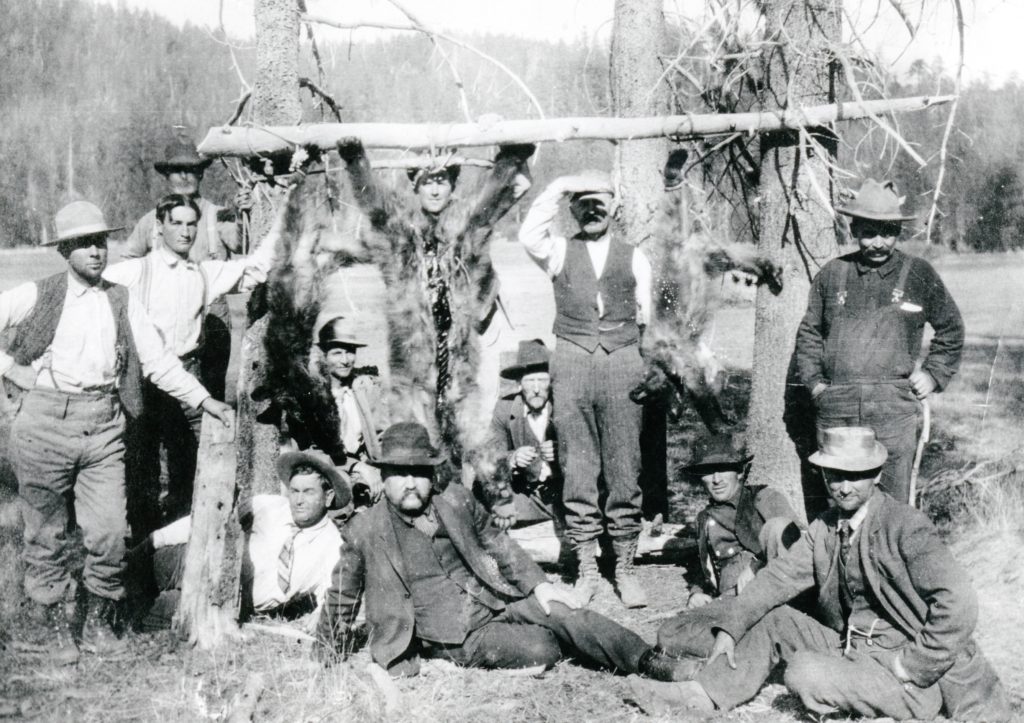
Pacific Coast Bear Club at Grizzly Valley, 1907. Courtesy of Ted Johnson
Lassen County over the years has witnessed an interesting array of organizations. How about the Order of Camels? The Loafer’s Society? The Pacific Coast Bear Club, headquartered at Spoonville, east of Janesville, would be considered an elite men’s club of the early 1900s. The founder, Captain E.C. “Ben” Brown had a colorful past, who experienced good and bad times with business ventures. Timing can be everything, and Brown was at the right place at the right time during the early discovery of gold at Goldfield, Nevada. He was not alone, which began the careers of many influential people in Nevada, including George Wingfield.
In 1906, Brown organized the club, with Nevada Governor John Sparks as its first president. For the next few years bear hunts were conducted at Grizzly Valley, Plumas County. One year they boasted a kill of nine bears—credit to Brown and his hound dogs.
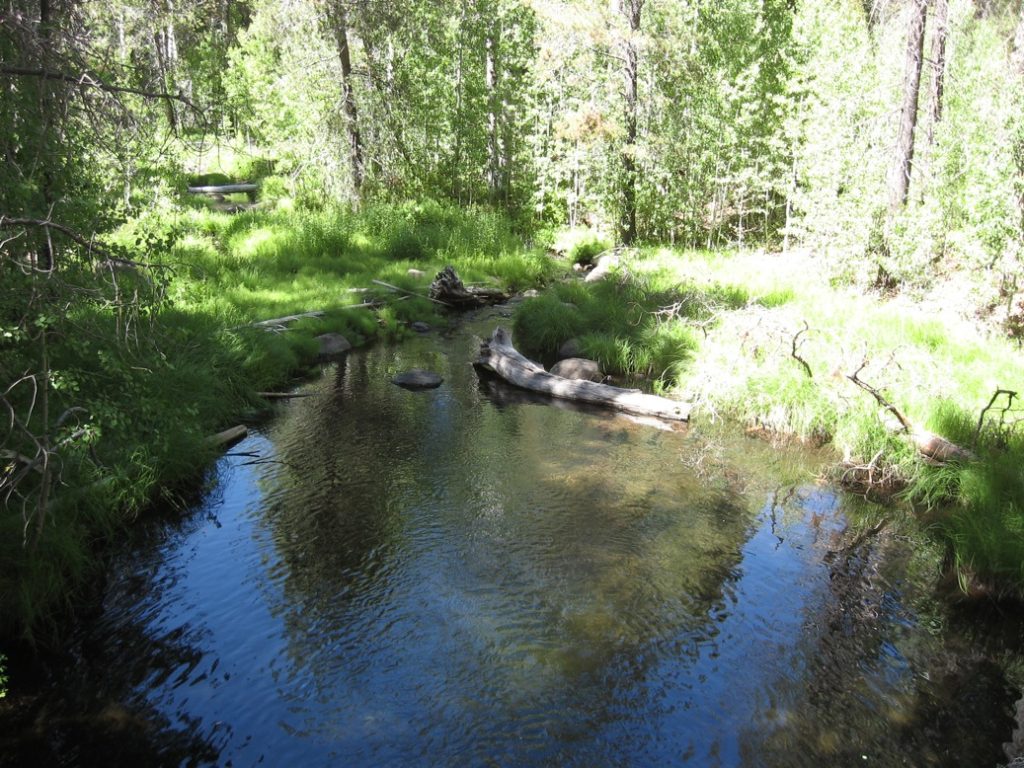
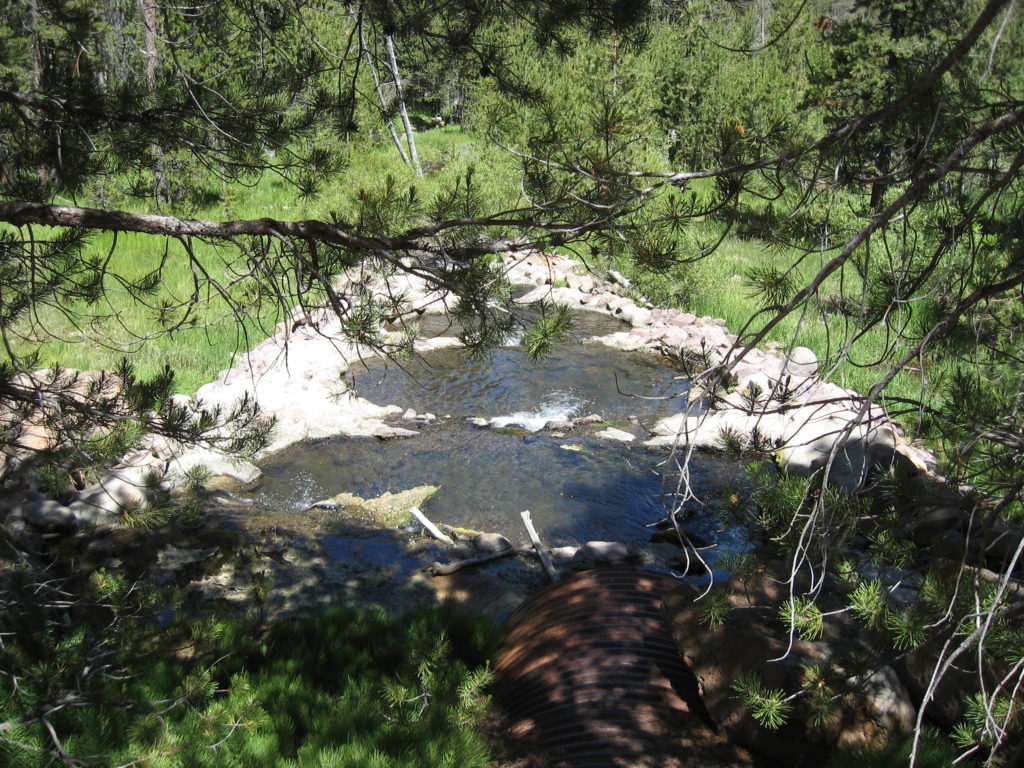
Upper Pine Creek flows year round. Eagle Lake Trout are known to make the journey upstream to spawn. It is my understanding, and I could be wrong, is the brook trout feast upon the eggs of the Eagle Lake trout—hence why some want to eradicate the brook trout.
Clapper Canyon, Black Rock Desert. Courtesy of D. Dickerson
There are certain questions that are destined to be left unanswered. One that has left me stumped was related to the deaths of Edward Clapper and Peter Lassen that occurred in April 1859 in the Black Rock Desert. In November 1859, three Honey Lake Valley residents, U. Johnson Tutt, Antone Storff and Joe Kitts made the 124 mile plus journey to retrieve the remains of Lassen’s body. For the life of me, that they went to all that trouble, why did leave Clapper’s remains behind?
It should be duly noted that in 1990 the skeletal remains of a human body were found in the region where Clapper and Lassen were murdered. After extensive analysis, it was determined it was the remains of Clapper. On May 30, 1992, a burial ceremony was held at Lassen’s Monument to inter the remains of Clapper.
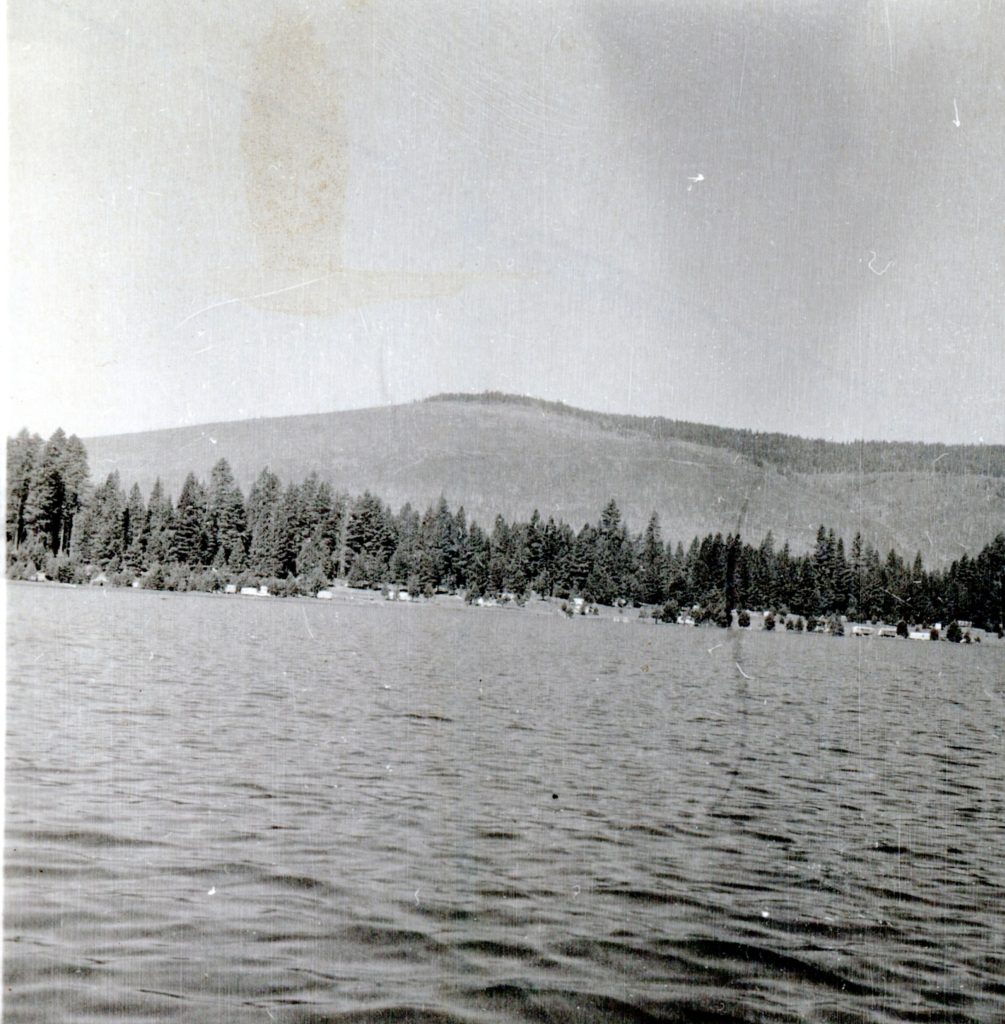
A early 1960s view from the lake of the Circus Grounds. Note the aftermath of the Merrill Fire in the background.
Located at the southwest corner of the lake, was an informal campground known as the Circus Grounds. During the early 1920s the big three lumber companies held a summer water carnival at Sunkist Lodge. The event drew thousands and this location became the overflow for campers. In the early 1960s, the forest service developed three campgrounds at the south shore—Aspen Grove, Eagle and Merrill. While the Circus Grounds, located on forest service property, was allowed to continue on, it having been a popular spot with the locals since the 1920s. By the 1970s, the writing was on the wall so to speak, and forest service converted the site as today’s Christie Campground.