Category Archives: History

Camp Bunyan & Halls Flat

Camp Bunyan
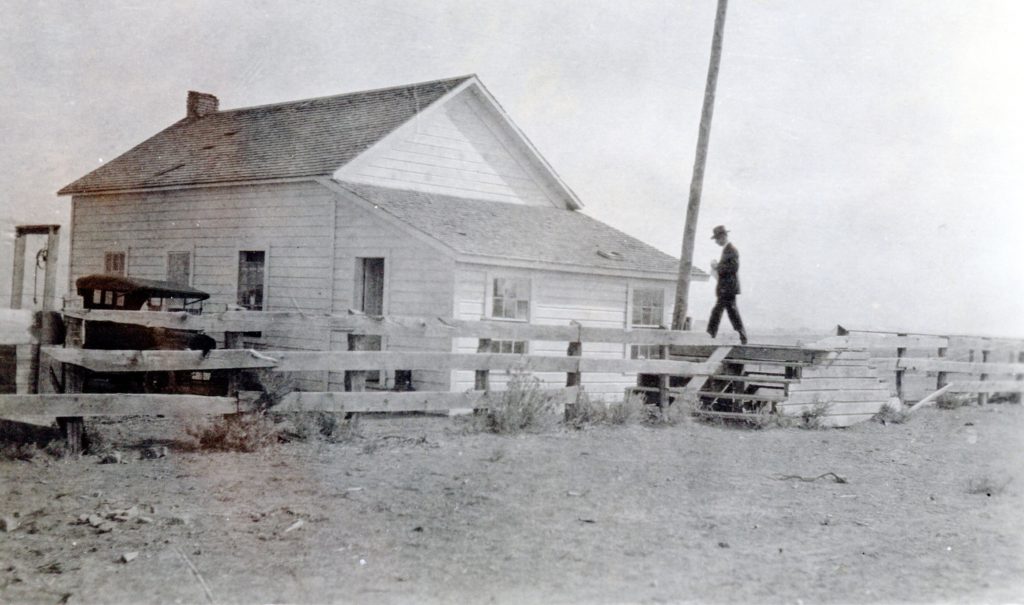
Camp Bunyan, courtesy of Bill Welder

In a very belated follow up on the history of Halls Flat. For a refresher for those new to the area, Halls Flat is located in western Lassen County, north of Poison Lake, which some times is a lake that Highway 44 skirts around the south shore.

Anyhow, Halls Flat came to life in a big way starting in August 1941 when the Red River Lumber Company established Camp Bunyan. This was a new experience for company. Its timber was no longer tributary to its Westwood mill—as a fact the camp alone was thirty-five miles to the north. The bottom line, this is where the timber was. Camp Bunyan was unique from other Red River logging camps. Not only did this camp have a name and not a number, it was their largest camp that consisted of both temporary and permanent buildings. At its peak time, it was the home to some 350 loggers, making it one of the largest seasonal communities in Lassen County. However, it got off to a rough start when not long after the loggers went on strike over wages and poor living conditions. Once those issues were resolved everything went smoothly. From Camp Bunyan a railroad logging line was constructed to the east in the company’s Blacks and Harvey Mountains tracts. In 1943, a second logging camp named Camp Harvey was established. At the end of the following of year, a major change happened when Red River sold to the Fruit Growers Supply Company. At the end of the 1946 logging season Camp Bunyan had served its intended purpose and was shut down. Its location remained a hub of activity since the log trains from Camp Harvey went to the Camp Bunyan site to connect with the Western Pacific Railroad that relayed the loaded log cars to the Westwood mill.

In the spring of 1948, though the hustle and bustle of the connections of the Harvey railroad line connecting with the Western Pacific at Halls Flat came to a sudden halt. In essence, it was similar to the opening of Camp Bunyan. This time, however, it was the cookhouse employees at Camps Harvey and Stanford that went on strike over wages. With no end in sight Fruit Growers permanently closed down those logging camps and the railroad logging line.
Subscribe

Juniper Lake Hydro-power?

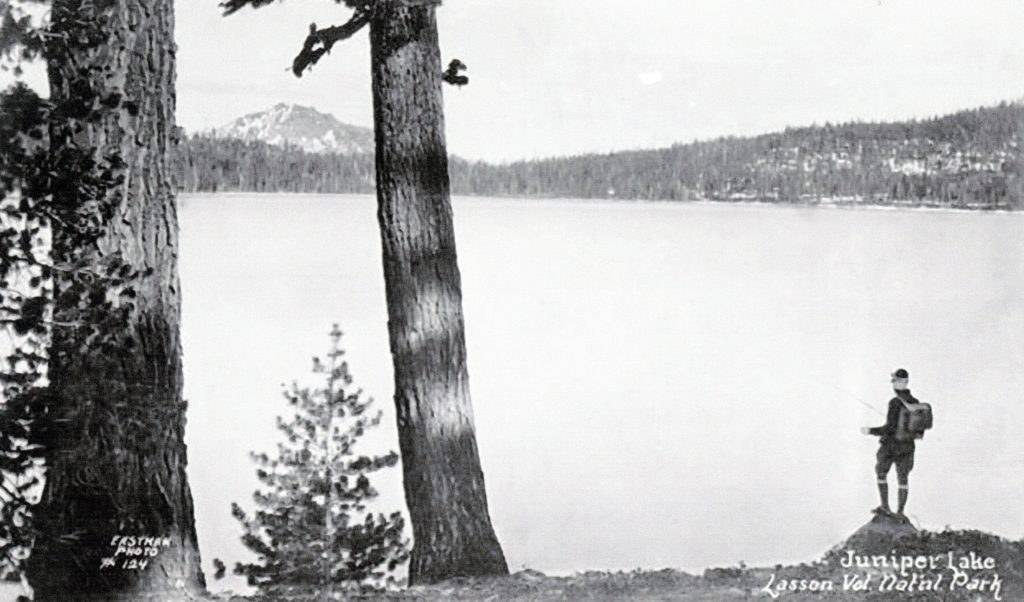
Juniper Lake, 1938

One of the gems of Lassen County, is Juniper Lake tucked away high in the mountains of Lassen Volcanic National Park. Due to its remoteness, it is just not on a lot of people’s radar to visit. It should be duly noted ever since the Anglo settlement there was always some one to figure out how to utilize the natural resources and Juniper Lake was of no exception.

In the early 1900s hydroelectric power was playing a prominent role in the Feather River watershed. One of those developments witnessed the creation of Lake Almanor as part of Great Western Power Company’s hydro-power system. In two separate instances in 1908 and 1909 two individuals claimed the water rights to Juniper Lake for hydro-electric power purposes. On paper it looked fine, especially the sharp drop of elevation from the lake’s outlet. However, there was one crucial element missing. For it to succeed, a sufficient flow of water needed to come into lake, as needed to sustain the flow leaving the lake to generate power. Juniper Lake receives spring run-off and that was not enough. Interest quickly faded, and the proposed project abandoned.

Never miss a story, click here to subscribe.

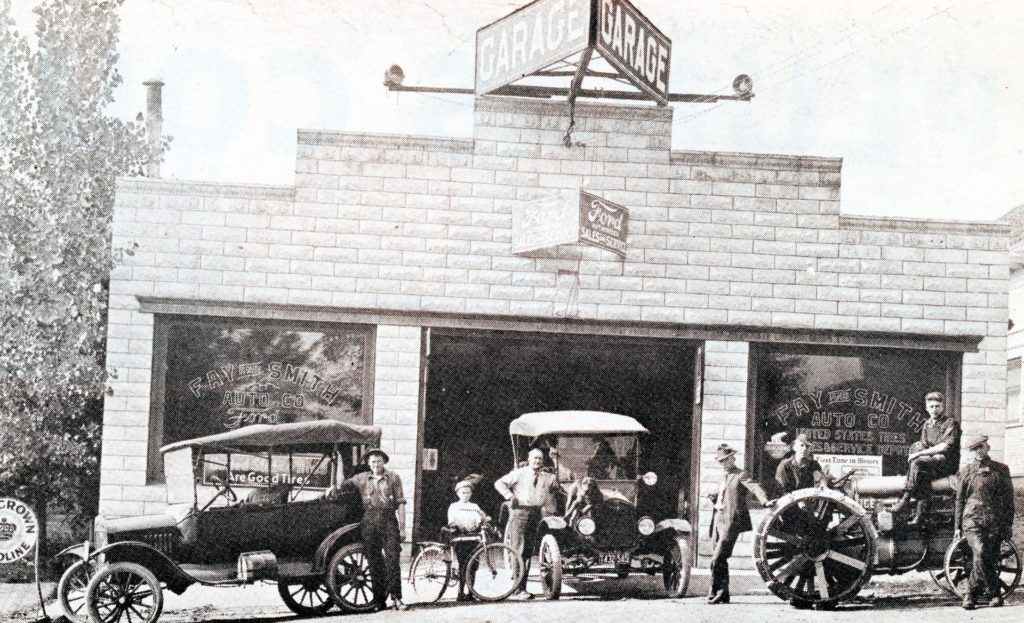
Fay & Smith Auto Company

822 Main Street, Susanville

In the early 1900s when the automobile was slowly making its debut in Lassen County, it was part novelty and somewhat of a luxury. There were two obstacles that needed to overcome the locals acceptance of this new method of transportation. A major one was there were no mechanics to service the automobile. In March 1910, Susanville’s first combination automobile garage and car dealership opened for business. It was named the Empire Auto Livery Company owned by Otto Wiencke and John Zimmerman. It was soon followed by J.S. Tremain’s garage. The other contributing factor were roads, but soon this would change. In 1916, California began an ambitious campaign to build a state highway system which would connect every county seat.

In 1917, Tremain put his business on the market for $7,000. Big Valley resident, Ernest “Ernie” Smith was interested. Smith was able to raise $6,000 from financial backers, but was short of the remaining $1,000. Another Big Valley resident, James Fay was looking for a business opportunity, and this venture appealed to him. On August 1, 1917, Tremain sold to new firm of Fay & Smith Auto Company. Shortly, thereafter they became the town’s first Ford dealership. After six years in business, Fay wanted out to move to Sacramento. In 1924, Smith obliged and renamed his new enterprise the Smith Auto Company.

Never miss a story, click here to subscribe.

Providence School

Providence School, 1916. D.M. Durst Collection

In 1871, the residents of Big Valley on the Lassen County side, petitioned the Lassen County Board of Supervisors for a school district there. While there was a public school in Adin, that was under the jurisdiction of Siskiyou County, as Modoc County had not yet been created. The Big Valley residents were included the Willow Creek Valley School District and that school house was nearly forty miles away. With that thought in mind, the petition stated, “It is frequently impossible for their children to attend school on account of high water, deep snows muddy roads, etc.” The petition was signed by seventeen residents and combined they had twenty children eligible for school. The Board obliged and created the Providence School District on November 10, 1871. A school house was built two miles south of Adin. In 1953, the school was annexed to the Adin Joint Unified District. The school house then became the property of the Providence Farm Bureau.

Subscribe

Bunnell’s Burns

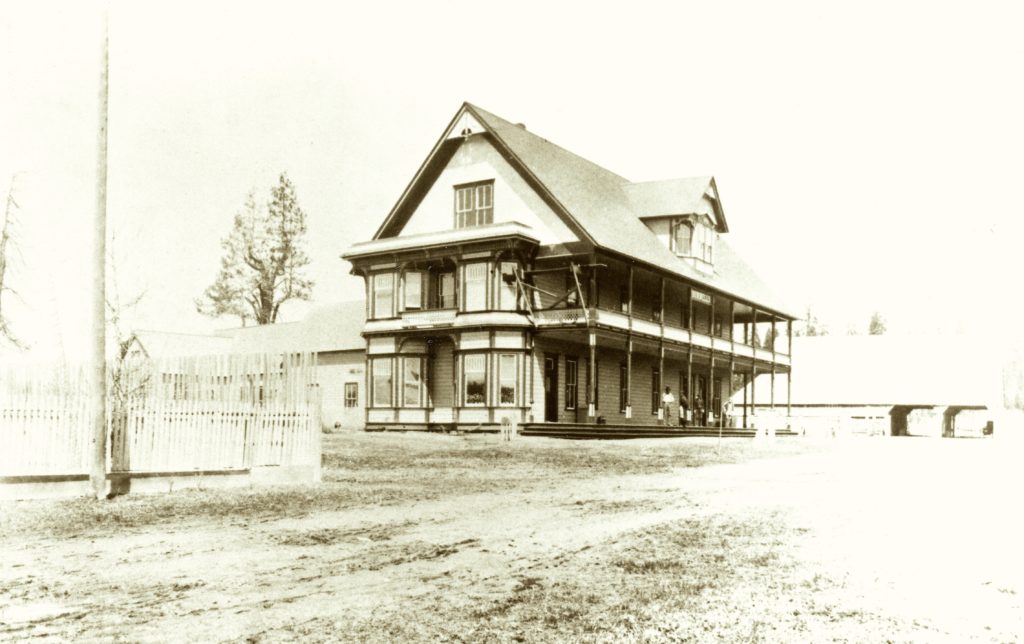
Bunnell’s, 1903. Courtesy of Philip S. Hall

Long before Lake Almanor came into existence (1914) it was known as Big Meadows. By the 1870s summer resorts were established and were quite popular, especially those folks escaping the scorching heat of the Sacramento Valley. One of those resorts was Bunnell’s that was located near the current tip of the Lake Almanor Peninsula. On June 10, 1899 it was destroyed by fire, caused a by a defective terra cotta flue. By the time the fire was discovered, the only thing that could be done was to try and save the contents. The fire was a terrible loss for the owner, L.W. Bunnell who placed a value of $15,000. A week later, Fireman’s Fund Insurance paid Bunnell $7,144.


The situation put Bunnell in a quandary. After all, it was just the beginning of the summer season and he would not be able to rebuild in time to provide accommodations for that year. Momentarily, he thought he would focus on his dairy operations, and just build a new home. However, that would not be the case, and he was back in the resort business in 1900.

Subscribe

Another Bear Dance Story

The final segment of the bear dance, 1900. Sponsored by Anna Stewart

This photograph is quite interesting on many fronts. First, this was the very end of the Honey Lake Maidu Bear Dance at Lone Pine, on the south side of Bass Hill, along Baxter Creek. The photograph was taken circa 1900, by Susanville resident, George McDow. There is not much historical documentation of this particular bear dance, versus those conducted by its Maidu neighbors. At the end of the ceremony, the Maidu go to the creek to wash their faces. The 1909 inscription on the back of this photograph, provides a little insight: “Last part of the Bear dance. The women put water on their heads to keep them good for the coming year.”

If you have happen to be an astute reader, you notice I provide credit to the source of the photograph. In this particular instance, instead of courtesy of, its replaced sponsored by. Anna Stewart, also known as Susanville Supermarket’s Green Grocerette,  annual subscription occurred at the same time this rare photograph appeared on Ebay, which those funds purchased it. Thank you, Anna for your support. The bottom line, is those who subscribe and/or donate help contribute to not only preserve our rich history, but to make it available through this forum for everyone to enjoy. Thank you all for your support.

Support

Governor Brown and the Bear Dance

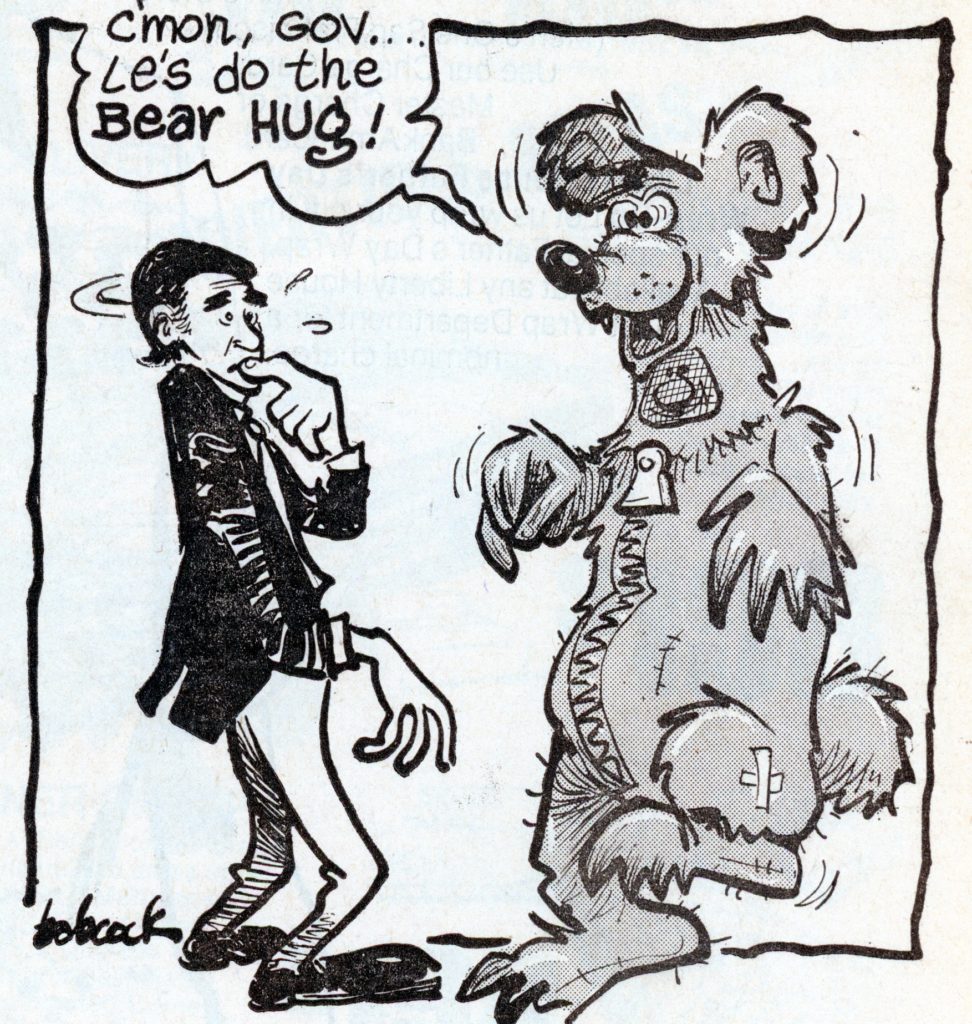
Sacramento Bee, June 9, 1975

On Sunday, June 8, 1975, California Governor Edmund G. Brown, Jr. made a surprise visit at the bear dance held on Gladys Mankins’ property near Janesville. It did come as a surprise to the some 500 people at the event. The ever so inquisitive Brown asked questions about the ancient ritual in which the Indians transfer their troubles and evil spirits to the bear figure impersonator, as some relay it as a form of thanksgiving. There is very little documentation about the event of years gone by, but a piece of 1909 documentation recently surfaced, which I will share tomorrow. As to Governor Brown he stayed at the dance for nearly three hours, then left with California National Guard to make a quick inspection at the nearby California Correctional Center, then returning to Sacramento.

Subscribe

Toad Town No More

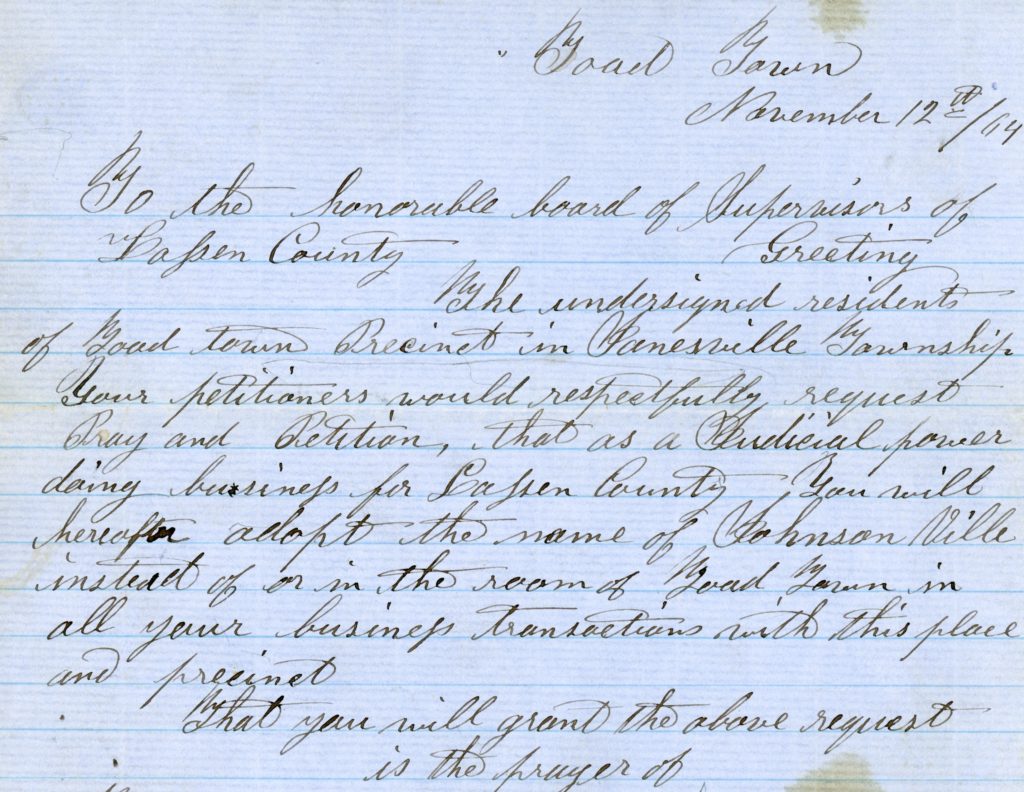
The November 12, 1864 petition.

In its earliest days, Johnstonville suffered an identity crisis. In the mid to late 1850s, a whenever a warm spring/ summer rain storm hit that area and its aftermath caused a swarm of frogs/toads to appear and someone gave that district the name of Toadtown. In 1864, when Lassen County Board of Supervisors were busy with the formation of the county, they named the voting precinct there Toad Town. At the same time, the board named the school district there Susan River. There were some people who did not like the monicker of Toad Town. A dated petition of November 12,1864 signed by 41 individuals asked the Board of Supervisors to change the name to Johnsonville, the “t” omitted. Another peculiar thing about this petition besides the spelling, was the majority of the people who signed it, lived in Susanville. On December. 7, 1864, meeting of the Board of Supervisors they approved the petition as submitted,  changing the Toad Town Voting Precinct to Johnsonville. As to the Susan River School, they did not change the name to Johnstonville until 1878.

Subscribe

Your Vote Counts

1927 holiday greeting card from the Lassen County Sheriff’s Office. Left to Right, Sheriff Jim Leavitt, Deputy Tom Massey and Deputy A.C. “Cass” Hunsinger.

Today, residents in far northern California will go the polls in a special election to elect a new State Senator. Having worked elections for many moons, so I want to give a special thanks to all the poll workers that make it possible.

With that in mind, here is a bit of local election history.  The race for Lassen County Supervisor, District No. 2 was a cliffhanger. On Thursday after the November 1936 election, incumbent Seymour Case had 1,055 votes and challenger, former Lassen County Sheriff Jim Leavitt had 1,026 votes. There were still ninety absentee ballots to be counted. When the final count was tallied Leavitt won by two votes—1094 to Case 1092.

Subscribe

Graduation Season

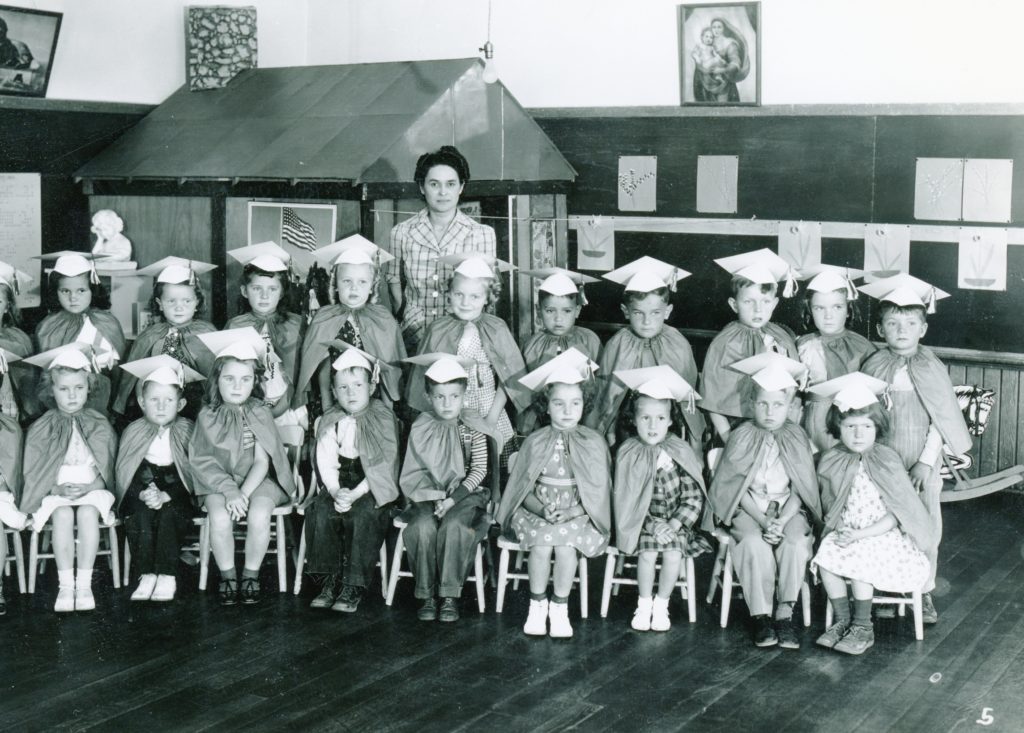
Remember When? In the 1940s, these youngsters had a graduation ceremony at Susanville’s Baptist Church.—Louise West Collection.

It is that time of year. The first graduation at Lassen High School was in 1906, a three year program. In 1907, a four year class schedule was fully implemented.  At Lassen College, the first graduation conducted there was in 1927.

The above photograph is from the Louise West collection. Unfortunately, it has no date. Miss West taught kindergarten and first grade at Susanville’s Washington School from the early 1940s to the early the 1960s.

Subscribe