Category Archives: History

Westwood’s Early Population Figures

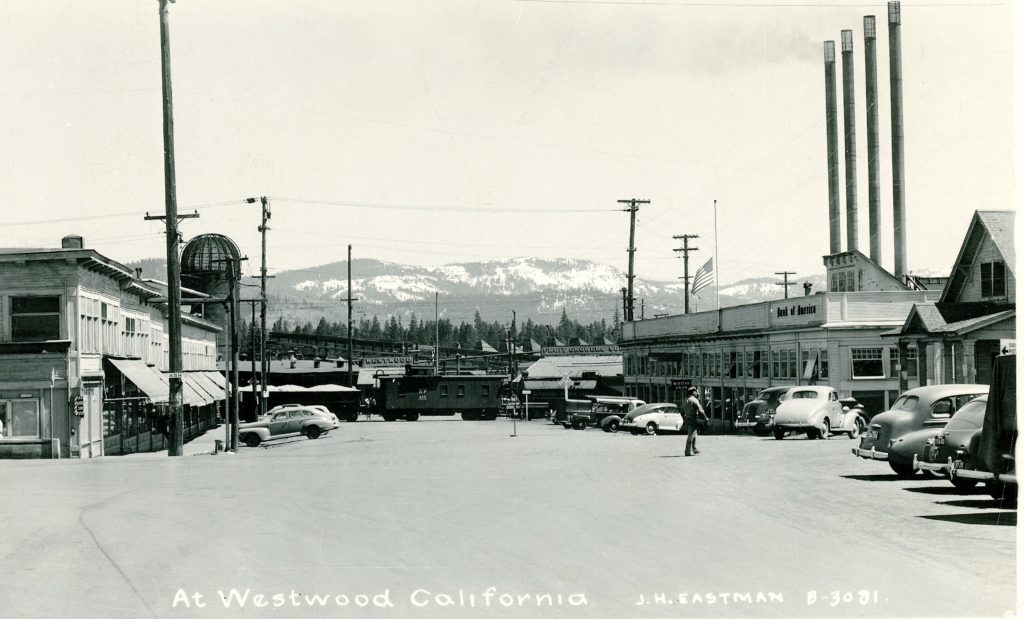
Westwood, 1915. Courtesy of Leona F. Byars

It just a few short years after Red River Lumber Company established Westwood in 1912, it became for awhile Lassen County’s largest town. This title would be short lived when Fruit Growers and Lassen Lumber established mills in Susanville, the greater Susanville region rivaled Westwood.

It was not until the summer of 1916 when an accurate head count was done to ascertain Westwood’s population. The Lassen County Board of Supervisors ordered a special census be conducted for Westwood to fulfill a requirement by California Political Code Section 4055. Westwood resident, Leo H. Donnelly, was commissioned by the Board take the census. On September 5, 1916, Donnelly reported to the Board that Westwood had a population of 2,319. Red River officials had estimated there were only 1,600 residents. The town continued to grow. 

The 1920 United States Census indicated there were 3,300 inhabitants in the Westwood Township. This included a small group of people residing on ranches in Mountain Meadows who were not associated with Red River. In 1921, Frank Graham, who held a variety of positions with Red River over the years, prepared a list of interesting statistics concerning Westwood. Graham stated it was not sawmill camp or sawmill town, but “ a little city that that has sprung up in the woods during the last few years.”

Graham duly noted the town’s population at 3,638 that another 800 inhabitants lived in logging camps making for a grand total of 4,438. Among other items, Graham observed there were 700 dwelling houses, 350 telephones and 400 cars. In summation, Graham remarked, “Not bad for a lumber jack town.”            

Westwood still had more growing pains. In July 1924 in order to have a better understanding how many people were in the community, Fletcher employed the services of Mrs. Sherwood (Winnie) Zinn to conduct a special census. In her findings she reported a population of 4,647. This included those who resided at the Goodrich Dairy, company ranches and Town Camp. In relaying this information to Willis, Fletcher wrote: “This count, along with absent and unfound citizens would justify a reckoning that we have over 5,000 people here.”            Over the years, folklore of imaginations run amuck held that in Westwood’s heyday it boasted a population of 10,000.  However, the Zinn census portrays an accurate record. The 1930 U.S. Census indicated a population of 4,602 and a similar number in 1940 before the population began a slow decline. In the meantime, while the population stabilized, production from the plant continued to increase. Innovations with machinery made the operations more efficient, thus no need to increase the workforce. In 1956, with the pending mill closure the population plummented to 600.
Never miss a story, click here to subscribe.

Fruit Growers Fire Breaks

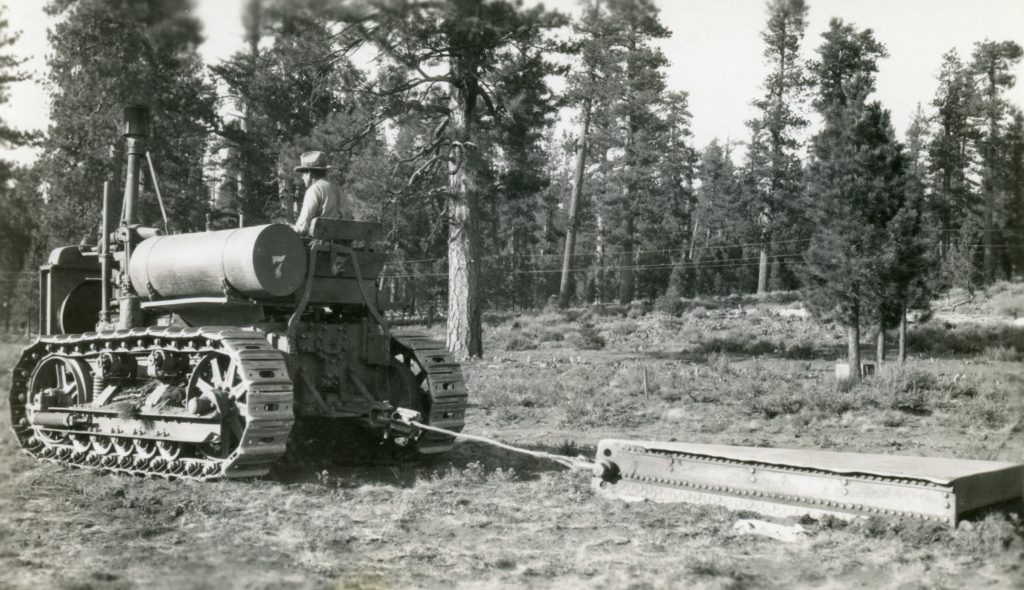
Fire trail V-drag plow, 1929. Courtesy of Fruit Growers Supply Company

After the 1924 fire on Antelope Mountain, west of Eagle Lake, Fruit Growers Supply Company (FGS) revaluated thier standard method of fire prevention. At that time they piled brush and slash (tree limbs and tops left behind once the logs were removed). They adopted a new method, building a series of fire lanes. The fire lanes were 100 feet wide and completely void of vegetation, each encircling 100-acre sections of timber. They were formed by a special V-drag plow hooked to a Caterpillar tractor which could clear up to six miles of fire lanes a day. The lanes not only served as firebreaks, but also provided quick access in case of a emergency.

After each 100-acre area was logged, all the dead trees, or snags were felled, because left standing, they deemed them a fire hazard. Once the snags were felled, however, they again became potential fuel, this time on the forest floor. After the first substantial snowfall, the fire crew burned the snags and slash.

During the fire season, two crews of eight to ten men work as a fire prevention team. It was their job to build fire lines, oversee brush and slash piling, remove dead snags and maintain the telephone lines. The telephone “boxes” were attached throughout the forest, to allow for daily monitoring between the logging camps and the mill. The telephone system was also used to report a fire or an accident when medical aid was required.

Never miss a story, click here to subscribe.

Susan River versus Roosevelt Pool

Roosevelt Pool
Roosevelt Pool, circa 1940

From time to time the local health officials raised concerns about swimming in the Susan River. Take for example of an incident that occurred in 1945. In early June, Dr. J.W. Crever, Lassen County Public Health Officer issued a polio alert. By mid-August, Crever noted that there was a decline of people using Roosevelt Pool and an increase of the same in the public using Susan River. Crever stressed swimming at the pool was much safer than the Susan River. Shortly thereafter he declared the polio threat over and only one case reported.

Never miss a story, click here to subscribe.

Secret Valley CCC Camp

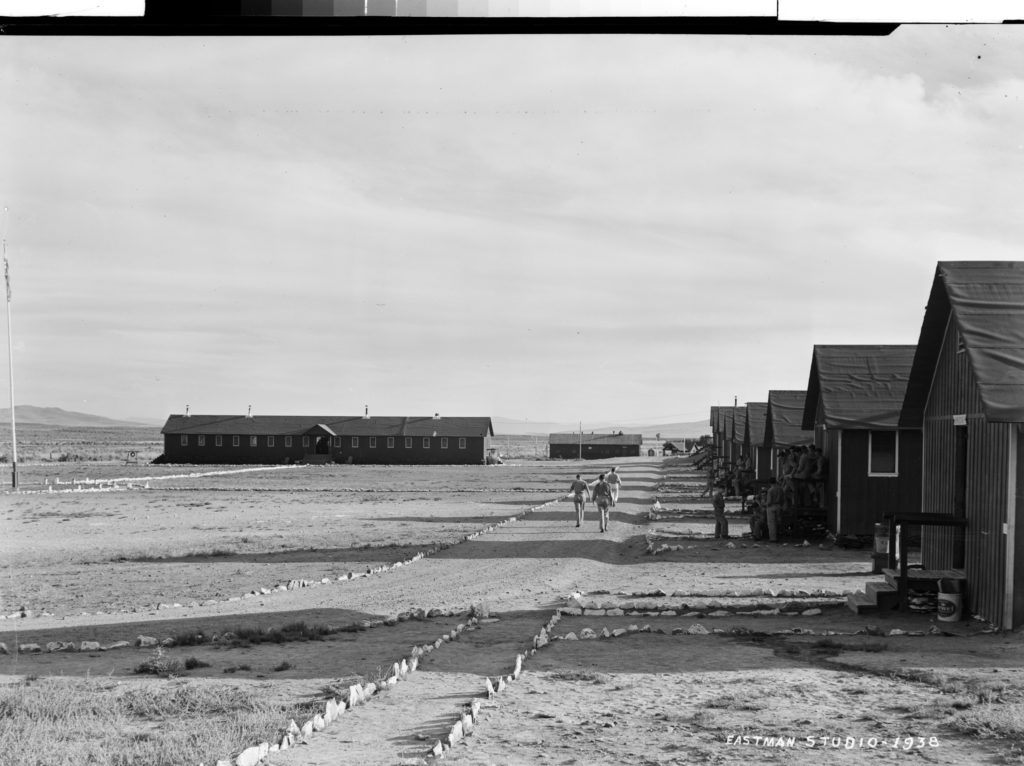
Secret Valley CCC Camp, 1938—Courtesy Special Collections, UC Davis

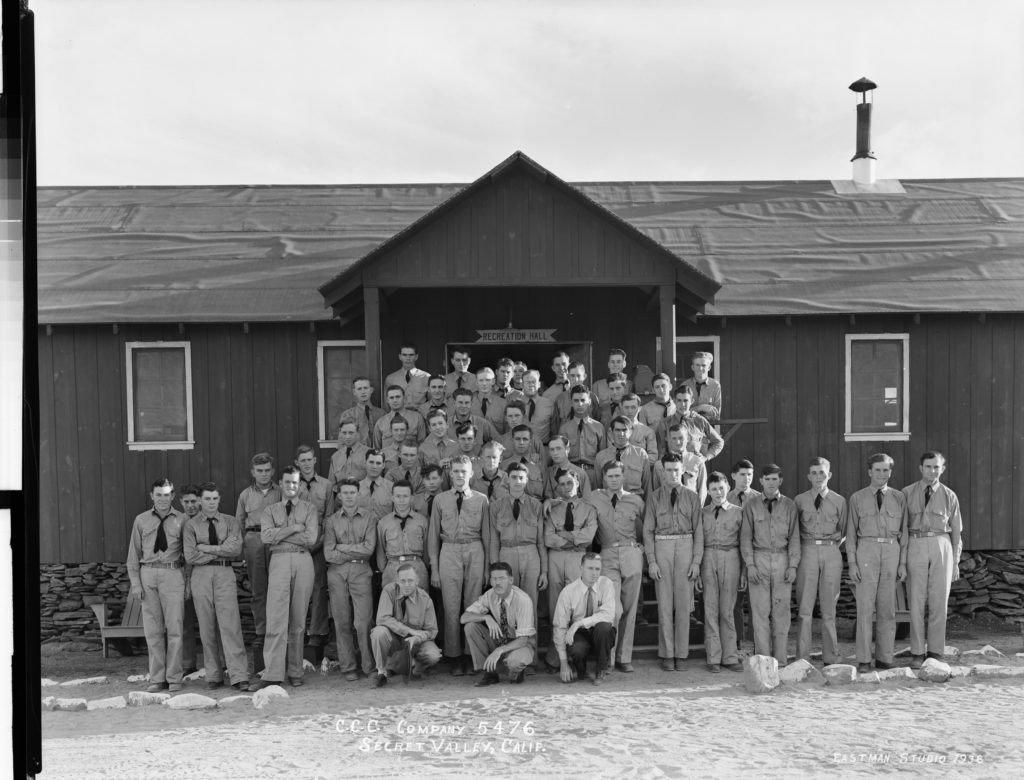
There were two Civilian Conservation Corp camps (CCC) in Lassen County—Halls Flat and Secret Valley. The Secret Valley camp was also referred to District Grazing Camp No. 13. It functioned a bit differently than other camps. Of course, a lot of the work done by men there focused on range mangement, whether building stock ponds, putting in wells to even water siphon repairs for the Baxter and Tule Irrigation Districts. It also operated temporary spike camps for certain projects. One opened in 1936 in Ash Valley and the project was to build a road from Ash Valley to the town of Madeline.

Secret Valley CCC Camp, 1938–Courtesy of Special Collections, UC Davis

Never miss a story, click here to subscribe.

Cardenas v. Red River Lumber Co.

Westwood, circa 1940.

In many respects the case of Manuel Cardenas versus the Red River Lumber Company appeared to be like so many others before seeking damages from injuries sustained. In 1936, Cardenas sued Red River for $50,000 from loss of his right eye due to an attack by him by Deputy Constable David Bohannon, a Red River employee. Thomas C. Ryan, a San Francisco attorney who represented Cardenas stated at the opening of the trial “Red River owns and controls Westwood.” Many folks thought that way, but feared publicly to say it. The Susanville business community had a code name for Red River—the Red octopus. It was a reference Red River’s tenactles were everywhere in Lassen County. Anyhow, Red River’s attorney, Hardin “Finn” Barry of Susanville retorted, “Every commercial business is operated by private business.” This was a recent event, as part of a reorganization of the company. Had this event occurred ten years ago, Ryan’s words would ring true. In the end, Cardenas was awarded $3,000.

Subscribe

Milwood and the Annexation Issue

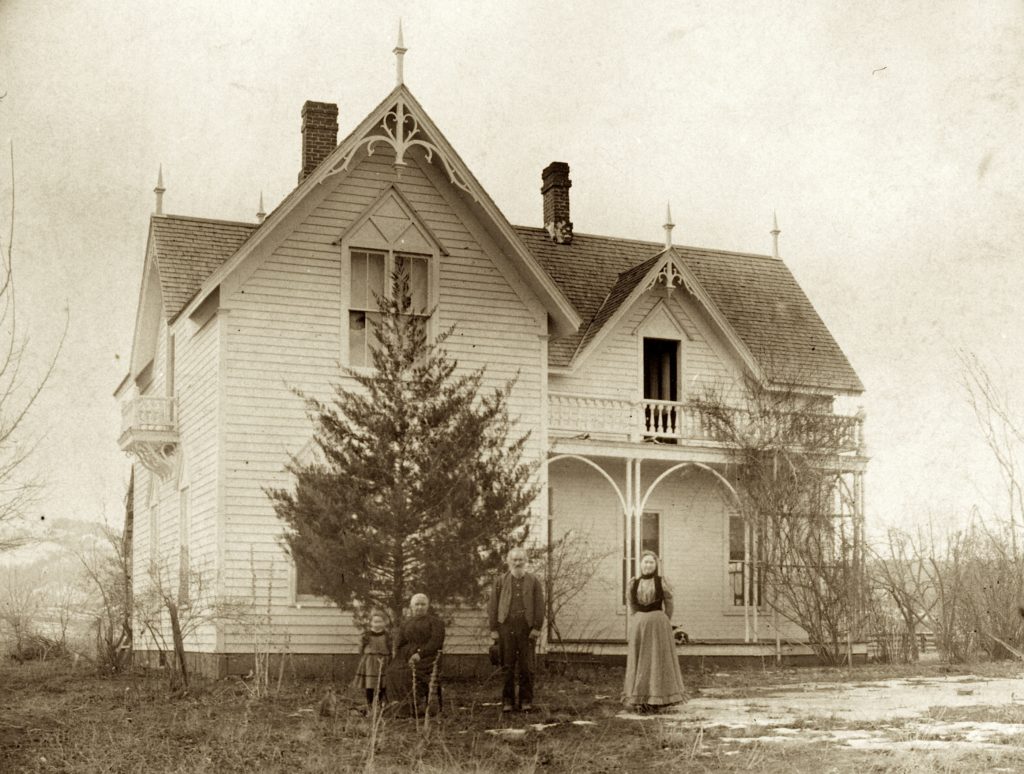
L.D. McDow Residence. Courtesy of George McDow, Jr.

It would take nearly a half century for Susanville, as a municipality, before it was able to expand its boundaries. Of course, politics played a pivotal role and the city’s most formible opponet was the Red River Lumber Company which owned the Milwood Tract east of the city limits.

Annexation efforts tried and failed with Red River’s influence. In the summer of 1928, the residence of J.A. Metz, who lived in the original McDow home in the Milwood Tract was destroyed by fire. Since it was outside the city limits there was no fire protection in Milwood and adjoining subdivisions. The fire prompted a petition drive for annexation. It was met with opposition and they were able to stop the movement in its tracts.

In 1930, an annexation campaign was resurrected. A committee was appointed to investigate the many issues and report back to a public meeting scheduled for March 10. It was decided to take a poll in the Halltown and Milwood Districts to obtain the residents’ pulse on the measure. For the proponents it was not good news. The initial poll showed 156 against annexation to 47 for it. End of discussion and remained that way for nearly a decade.

Never miss a story, click here to subscribe.

Milwood Tract-Susanville

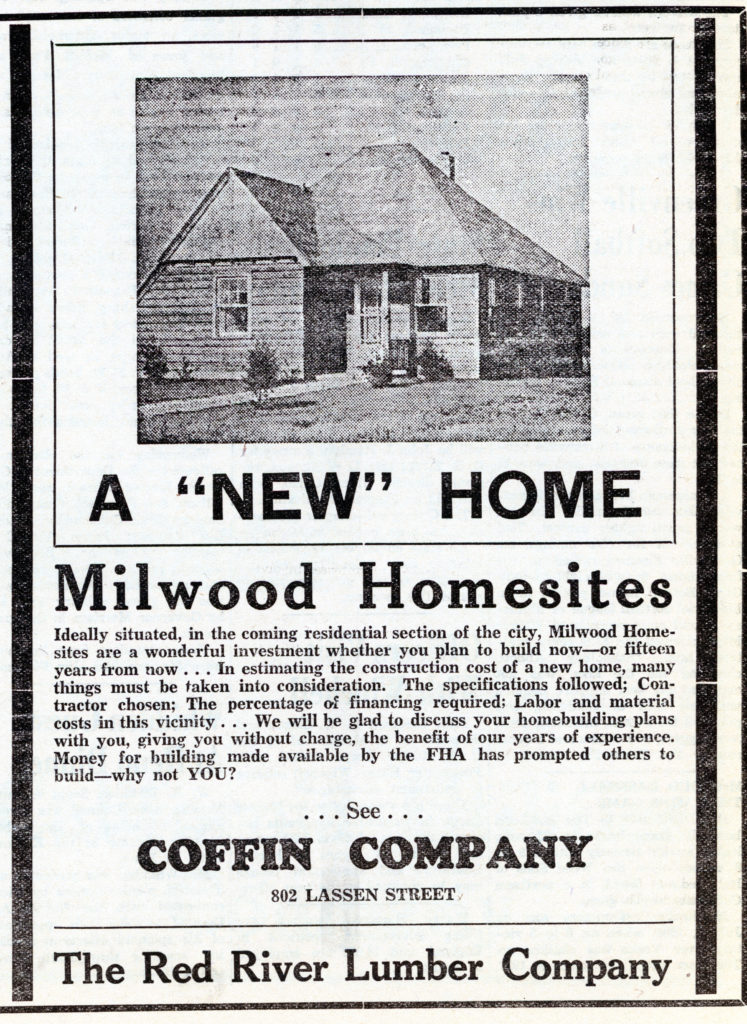
1938 Advertisement from the Lassen Mail

During the 1910s, real estate developers went through a crazy period putting together subdivisions adjacent to Susanville with the anticipation of a major “boom” once the railroad arrived. For a brief time it subsided, but went crazy again when it was announced the Fruit Growers Supply Company was to build a substantial lumber manufacturing adjacent to Susanville.

Enter George McDow, owner of the local title company, Lassen Abstract, and his best friend, Russell Brownell, the latter known for his salesman skills. Having inside knowledge they acquired property on the north side of the Susan River of the proposed Fruit Growers millsite. They created the Milwood Tract subdivision, that adjoined Halltown. This subdivision extended Second, Third and Fourth Streets. It also created the streets of River, Sacramento, Spring, Fairfield, Mesa and Gilman. The developers designated the east end as Milwood Farms. They were made 34 two-acre lots for those who desired extra room to raise chickens, plant gardens and the like. Two streets were created, but never named until later. One became known as Russell Avenue, after Russell Brownell, who died unexpectedly in 1923. The other became Fair Drive, since it would be the main thoroughfare to the fairgrounds that were built in 1922, adjacent to Milwood Farms.

Things did not go according as plan. In September 1922, they sold 260 acres of the tract to the Red River Lumber Company, who bought as speculative property as a future millsite. That transaction had a major impact on the history of Susanville, which we will explore tomorrow.

Never miss a story, click here to subscribe.

It’s official, Chester made into a town

Chester, California, 1914. Courtesy of Dolores Gasperoni

By 1911, there was no doubt in anyone’s mind that shortly the Great Western Power Company would transform what was known as Big Meadows into Lake Almanor. The area had been undergoing a major transformation when the power company purchased many of the ranches and resorts that would be submerged once the dam was built.

At the northern end of Big Meadows, the Olsen family were on the fringe and while they sold the majority of their ranch to Great Western they still retained the property around their home. Their neighbor, Edith Martin had witnessed a large amount of campers at her place with the demise of the town of Prattville. In August 1911 Edith Martin and the Olsens hired Everett M. Cameron to survey and subdivide their respective properties, thus officially forming the town of Chester.

Support

Where are we—Camp Harvey

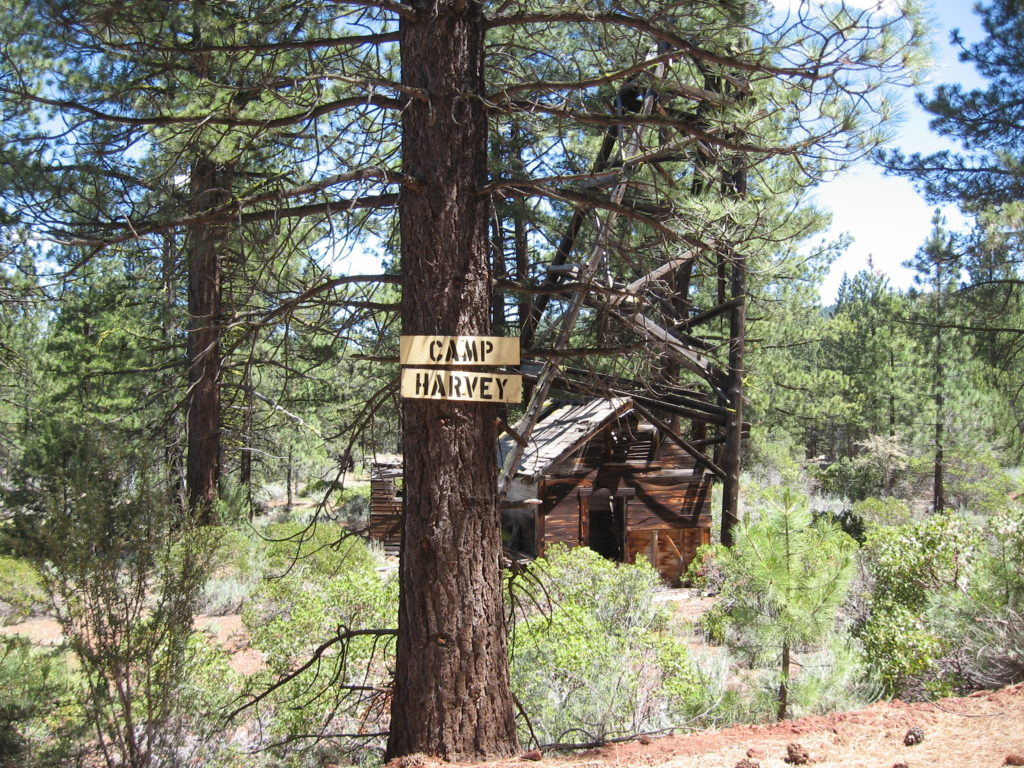
Camp Harvey, July 11, 2019

In 1943, the Red River Lumber Company established this logging camp, nineteen miles east of Camp Bunyan on the north slope of Harvey Mountain. In 1944, the Red River sold it to the Fruit Growers Supply Company.  

The cookhouse operations at logging camps operated at a substantial loss for the company.  However, the food served in the logging camps played a pivotal role.  Poorly fed loggers would move to a different logging company, and thereby impact the former company’s production.  In 1948, Fruit Growers experimented at Camp Harvey by raising the price of a meal to one dollar.  Complaints were loud and long.  But now, instead of losing thirty-six cents per meal, they now lost only eight cents.  The result was substantial and at the end of the year, Fruit Growers’ operating losses for the cookhouses at Camps Harvey and Stanford was $63,500.

On May 2, 1949, Camps Harvey and Stanford opened for another season.  In an effort to further reduce the cookhouse expenses, Fruit Growers leased them along with the commissaries, to H.S. Anderson Company for one dollar.  Fruit Growers thought perhaps an outside company could handle the meals more efficiently.  They would never find out the answer.

 Just three weeks into the logging season all operations on the Harvey line shut down.  The cookhouse crews, represented by Local 768 of the Bartenders and Culinary Workers Union, walked off the job in a wage and hour dispute with H.S. Anderson Company.  As the weeks passed with no end of the strike in sight, Fruit Growers closed down Camp Harvey and Stanford permanently, as well as its Harvey railroad logging line.

Harvey Cookhouse
Camp Harvey Cookhouse, 1947

Support