Category Archives: History

Historic Ranch Houses

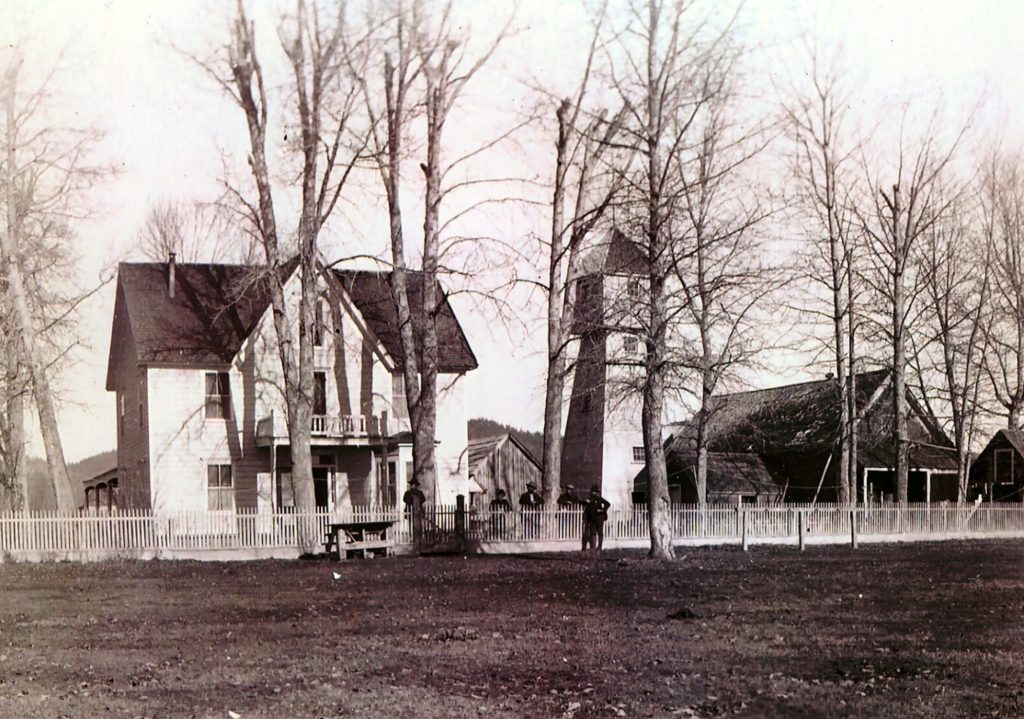
The Charles Hartson ranch house, circa 1915. Courtesy of Dorothy Stone

While we have explored some of the historic homes in Susanville, we should not neglect those of similar stature that graced the Honey Lake Valley. Some still standing, while others for numerous reasons did not stand the test of time.

For example was the ranch house of Charles Hartson built in 1884. Then, it was located in the Tule District of the Honey Lake Valley, but a more apt location today it was located adjacent to the Dakin Unit of the Honey Lake Wildlife Refuge. It should be duly noted that Hartson’s daughter, Elsie who was married to Pete Dakin, was an adjoining ranch that comprises the Dakin Unit. His sons, George and William Hartson also had adjoining ranches to the home place. Eldest son, Frank Hartson took over the original homestead when his parents retired to Susanville.

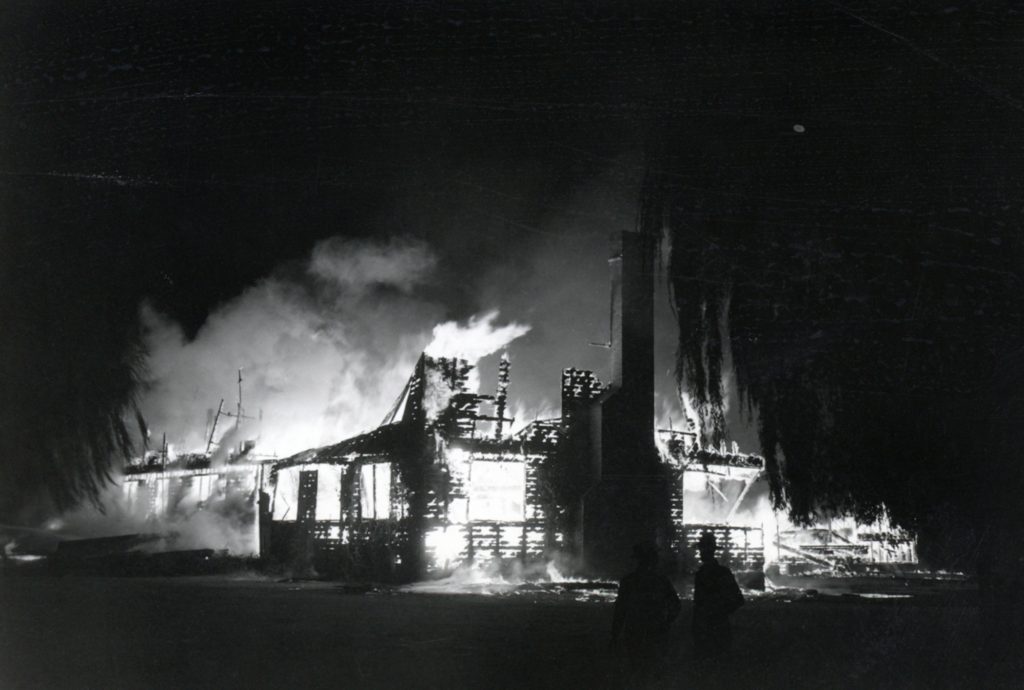
In 1926, Frank Wood acquired the original Hartson Ranch and resided there for awhile. On the morning of May 4, 1935 the house caught fire and was completely destroyed, along with one outhouse. The origin of the fire was never determined and the loss estimated at $4,000.

Support

Don’t Forget Books!

A Susanville merchant 1892 advertisement

Guess what, I can inform you that I offer a wide variety of local history books, in keeping with the above theme, I told you so. This is a good time as any to remind you dear reader that there are many features on this site besides the daily postings. There is a special listing for local history books that you may want to check out either for yourself or surprise a friend with some local history as a holiday gift. To make it simple click Books

Never miss a story, click here to subscribe.

The Road to Camp 10, 1938

Camp 10 cabins, January 10, 1952.

Okay, so it is kind out of whack to write about opening a railroad logging camp, while the calendar indicates we are heading into winter. However, the material is fresh at hand, and spring is not.

For those not aware, Camp 10, was a railroad logging camp of the Fruit Growers Supply Company, located west of Eagle Lake in Pine Creek Valley. One of the items that make Camp 10 unique was its longevity—most logging camps existed less than five years, and the logging company moved to a new a location. Camp 10 was established in 1928 and did not close down until 1952.

George Moore digging out a speeder at Camp 10, January 10, 1952.

On May 6, 1938, Lassen National Forest Ranger P.D. Hook boarded Fruit Growers logging train to plow the road open to Camp 10. Not only was there plenty of snow to be encountered in early May, but as expected downed trees across the railroad tracks. Hook noted in the Feather Lake area, north and east of McCoy Flat Reservoir there was still four feet on the ground. Also impressive was that Pine Creek Valley was still covered with a foot of snow.

Pine Creek Valley, June 27, 2015

Support

Lassen County Courthouse Technology

In the 1890s, the Lassen County Recorder began using a typewriter, which was basically used for transcribing and recording deeds. Many other documents whether is be a death certificate were handwritten.

In 1912, witnessed the installation of telephones at the courthouse. However, not all offices had telephones installed. While the District Attorney’s did receive a telephone, their office was located in the nearby Emerson Hotel. Those offices that did have telephones were charged a monthly fee of $2.50. For reasons unknown, the telephone for the Superior Court Judge was $2.75.

The contracts had specific clauses such as foul, abusive and profane language was prohibited. In addition, telephone calls were limited to five minutes.

Support

Inspiration point improvements

Inspiration Point
Inspiration Point, 1930s.

Yesterday, it was mentioned that the local American Legion dedicated a flag pole on Inspiration Point on November 11, 1935. This was not the only improvements being made there, for Susanville’s first park. During the early 1930s, the Monticola Club adopted a beautification project for the entire bluff. One year they scattered hollyhock and poppy seeds. They also bought trees for the reforestation of the bluff. In its first year, the forestry students of Lassen College adopted Inspiration Point as a project. It was their intent to provide picnic tables, benches and fireplaces. They even discussed the possibility of a amphitheater there. While there intentions were good, they never completed the project. However, three years later the college students developed Willard Ski Hill.

Subscribe

Armistice Day, 1935

Veteran’s Memorial Building, Susanville, 1926

Just as Memorial Day was once referred to as Decoration Day Veterans Day was once known as Armistice Day. In Susanville, in 1935 this particular day, was a two-day event.

The night before was billed a “Night in Paris” held at the Memorial Building. A variety of entertainment was on hand for the attendees, so as to what one promotional of the event announced for the veteran’s to make “whoopee.” The basement of the building was transformed into a Monte Carlo casino.

At ten o’clock the next morning a parade of the veterans marched from the Memorial Building to the head of Main Street (Elks Lodge). Located there was a bronze plaque with the name of Lassen County soldiers who lost their lives in World War I. This was followed by a flag raising ceremony at Inspiration Point. The Thomas Tucker Post of the American Legion had installed a flag pole there, and this was a formal dedication as a gift to Susanville. The day concluded with a dinner banquet at the Memorial Building.

Subscribe

It’s pheasant season

1919 Hunt
My great uncle Charley Tanner’s 1919 license.

The month of November means many things to many people. For hunters it is beginning of pheasant season in Lassen County. It was not until the 1930s when there was a major push by the California Department of Fish & Game to introduce pheasants into the Honey Lake Valley. Conditions for the birds were exceptional as a considerable amount of grain was being grown. In 1934, the agency with the aid of the Lassen County Fish and Game Conservation League released 572 birds. It was repeated again in 1935 and 1936. During the late 1930s, Fish & Game paid ranchers to raise the birds. That practice ended in 1941 when Fish & Game purchased the Fleming Ranch and turned it into a wildlife refuge.

It should be noted, however, in 1929, the Westwood Rod & Gun Club had 800 pheasants planted on various ranches in the Honey Lake Valley.

Subscribe

The Madeline Hotel – A Preview

Illustration by R. Herrera

Today, while traveling Highway 395 one passes through the hamlet of Madeline, one of three communities to dot the Madeline Plains. A long time ago, it did experience its glory days. By the 1880s it was known as Van Loans stage stop and the Madeline Post Office was moved there in 1887 from its previous location in the Grasshopper Valley.

In 1902, the Nevada-California-Oregon Railroad (NCO) arrived at Van Loans and it became a hub of activity. No time was wasted in plotting out the Madeline townsite. Before the ink was dry on the Madeline subdivision map, Van Loan & Spargur built a two-story “L” shaped hotel to accommodate all the travelers arriving to check out the territory. The good times were short-lived and within fifteen years the town Madeline began to decline.

Support

Diamond Mountain Mining

An abandoned Diamond Mountain mine, 1977.

In 1855, gold was discovered in what would be known as Hills Creek at the base of Diamond Mountain. However, the prospecting was soon suspended by summer when the stream went dry. This temporary setback allowed the handful of miners to return over the mountain to Indian Valley to prepare for next year.

In 1856, as word of the new gold discovery spread brought an influx of miners to the Honey Lake Valley. Placer mining was abundant in three streams—Gold Run, Hills and Lassen Creeks. By the early 1860s the easy pickings of the placer deposits had been cleaned out. Thus, lode mining of gold bearing quartz was ushered in and continue until 1942 when President Roosevelt’s Executive Order suspended gold mining during World War II.

Never miss a story, click here to subscribe.

Nevis Island, Lake Almanor

Nevis Island, 1914 – Courtesy of the Plumas County Museum

This was a short-lived man made island during the creation of Lake Almanor, it received its name from dam so named that created the lake. It was located at the southern portion of Big Meadows, prior to the creation of Lake Almanor. It should be duly noted, that in the late 1800s, the region consisted of dairies, ranches and summer resorts. After all, one has to remember this was back in the day when there was no such thing as air conditioning and those who could afford to escape the heat of the Sacramento Valley in the summer flocked to the cooler mountain regions.

Prior to becoming “Nevis Island” it started as a resort known as Meadow View established in 1882 by A.R and Clara Bidwell. It was an investment for Bidwell, and the hotel was leased. In 1902, it was acquired by Great Western Power Company who subsequently closed the hotel. For a brief time in came back to life, and in 1909, Great Western made improvements to the building and it became their local headquarters. In the fall of 1913, Great Western closed it down. Due to an unusually heavy precipitation in January 1914, the new reservoir, later to be named Lake Almanor, began filling up unexpectedly and thus created Nevis Island for a brief time, until was finally submerged.

Never miss a story, click here to subscribe.